
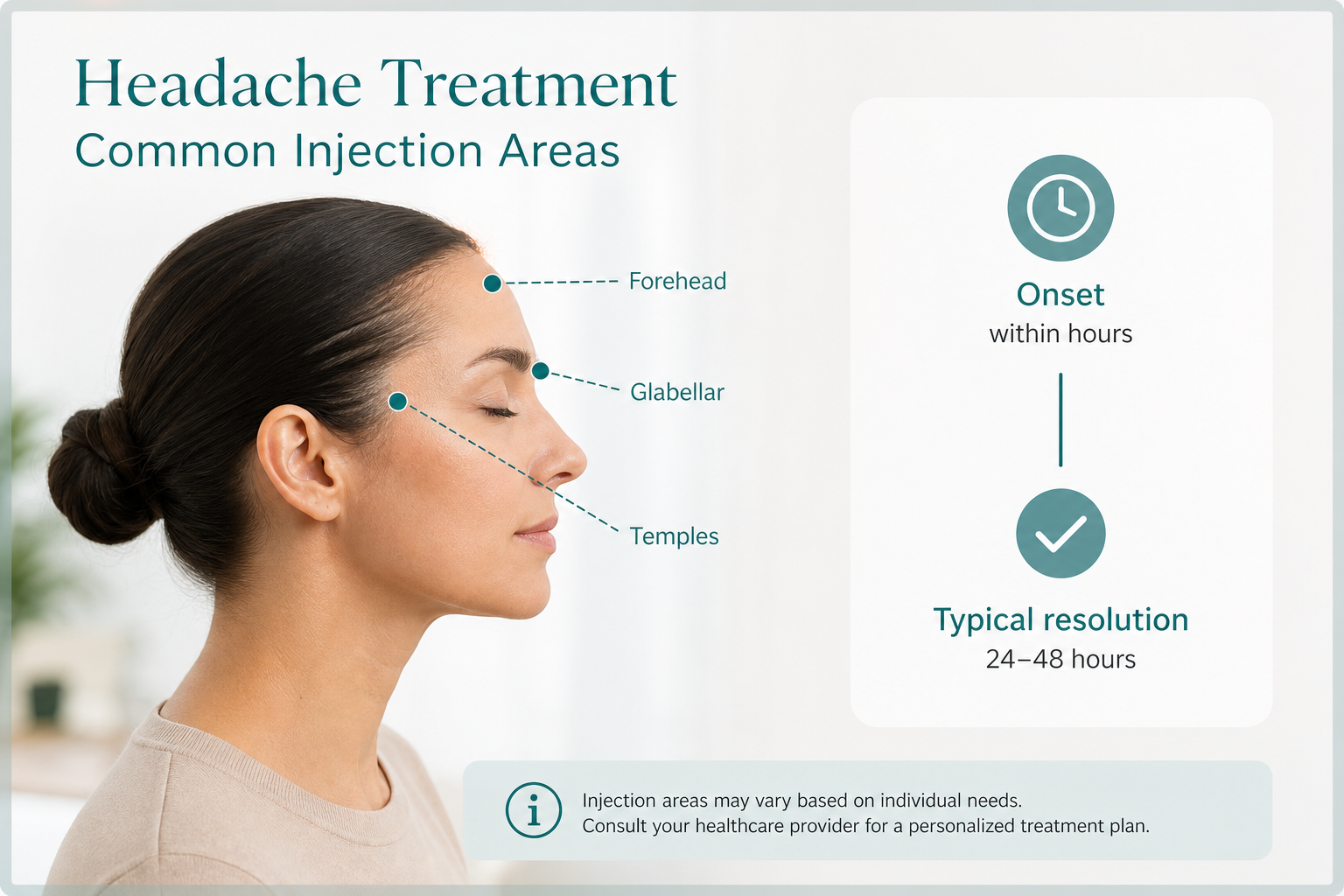

A headache after a Botox appointment is one of the most commonly reported side effects, and for most people it is mild and temporary, resolving within a day or two without any specific treatment. Understanding why it happens, how long it typically lasts, and what you can do to feel more comfortable can help you manage the experience with confidence and know when — if ever — a call to your practitioner is warranted.
Key Takeaways
- Most post-Botox headaches resolve within 24 to 48 hours and do not require prescription treatment.
- Headaches after Botox are caused by a combination of needle micro-trauma, muscle tension changes, and a mild inflammatory response at the injection site — not by the toxin spreading to the brain.
- First-time recipients are more likely to experience a headache than patients who have had Botox before.
- Over-the-counter pain relievers such as acetaminophen, a cold compress, rest, and good hydration are usually sufficient for relief.
- A severe headache, one that worsens over time, or one accompanied by vision changes, fever, or stiff neck warrants prompt medical attention.
How Long Does a Post-Botox Headache Last?
For the majority of patients, a post-Botox headache begins within a few hours of the appointment and clears up within 24 to 48 hours. This is the most commonly reported duration across clinical observations and is consistent with what the FDA Medication Guide for Botox Cosmetic lists as a known side effect. The headache typically feels like a dull pressure or tension-type headache rather than a sharp or severe pain, and it tends to resolve on its own without any intervention beyond basic comfort measures.
A smaller number of patients — particularly those who are prone to migraines or who are receiving Botox for the first time — may experience a headache that persists for several days. In rare cases, a migraine-like headache following cosmetic Botox can last up to one to two weeks. This longer duration is uncommon and is more likely to occur in individuals with a pre-existing headache disorder. Headaches lasting beyond two weeks after a cosmetic Botox treatment are not typical and should be discussed with a healthcare provider.
| Duration | Headache Type | Likely Cause | How Common |
|---|---|---|---|
| A few hours to 48 hours | Tension-type headache | Needle micro-trauma, muscle tension changes, mild inflammation | Most common (~9–10% of cosmetic patients) |
| 3–7 days | Persistent tension or pressure headache | Prolonged muscle adjustment, anxiety response, first-time treatment | Less common |
| Up to 1–2 weeks | Migraine-like headache | Pre-existing migraine susceptibility, muscle overcompensation | Uncommon; more likely in migraine-prone individuals |
| Beyond 2 weeks | Atypical / requires assessment | Unrelated cause or complication requiring evaluation | Rare; seek medical advice |
What Causes a Headache After Botox?
Several overlapping mechanisms can contribute to a headache following a Botox injection, and in most cases more than one factor is at play simultaneously.
Needle Micro-Trauma
The most straightforward cause is the physical act of injection itself. When a fine needle passes through the skin and into the underlying muscle, it creates a small amount of tissue disruption — sometimes called needle micro-trauma. In areas such as the forehead, glabellar lines between the brows, and temples, the needle can come close to the periosteum (the sensitive membrane covering the bone) or small superficial nerves. This localized irritation can trigger a headache that typically begins within hours of the appointment and settles as the tissue heals.
Muscle Tension Changes and Overcompensation
Botulinum toxin type A — the active ingredient in Botox, technically known as onabotulinumtoxinA — works by temporarily blocking the release of acetylcholine at the nerve-muscle junction, reducing muscle activity. In the hours and days immediately after injection, before the toxin has fully taken effect, the treated muscles may go through a brief period of adjustment. Surrounding muscles can overcompensate for the reduced activity in the injected area, creating muscle tension changes that manifest as a dull, pressure-like headache. This is particularly noticeable when Botox is placed in the frontalis muscle of the forehead or the muscles around the temples.
Injection Site Reaction and Inflammatory Response
Any injection into soft tissue can trigger a mild local inflammatory response as the body reacts to the needle and the introduced substance. This injection site reaction is usually minor and self-limiting, but it can contribute to the sensation of pressure or aching in the treated area. The immune response involved is not an allergic reaction in most cases; it is simply the body’s normal healing process.
Anxiety and the Stress Response
For some patients — especially those receiving Botox for the first time or those with needle anxiety — the stress of the appointment itself can contribute to a tension-type headache. Muscle bracing, jaw clenching, and elevated cortisol during a stressful experience are all recognized triggers for tension headaches, independent of any injection.
The Placebo Effect in Reverse
An interesting finding from clinical research is that approximately 5% of patients who receive saline (placebo) injections — with no active toxin at all — also report headaches afterward. This suggests that the injection process itself, rather than onabotulinumtoxinA specifically, accounts for a meaningful proportion of post-treatment headaches. This context is reassuring: it underscores that a headache after Botox does not necessarily mean the toxin is causing harm.
Who Is More Likely to Get a Headache After Botox?
Not everyone who receives Botox will develop a headache. Clinical data suggests that approximately 9–10% of cosmetic Botox patients report a headache as a side effect, which means the majority of patients do not experience one at all. However, certain factors appear to increase the likelihood.
First-time recipients are significantly more susceptible than patients who have had Botox on multiple occasions. A prospective study found that headache occurrence was notably higher among those receiving their first treatment, possibly because the muscles and nervous system have not previously encountered the effects of botulinum toxin and the adjustment period is more pronounced. Repeat patients tend to tolerate subsequent treatments with fewer side effects as their muscles become accustomed to the periodic reduction in activity.
People with a personal or family history of migraines or chronic headache disorders may also be more prone to a longer or more intense post-injection headache. The treatment areas most commonly associated with headache are the forehead, glabellar region, and temples — all areas where the injected muscles are in close proximity to nerves involved in headache pathways. Patients who receive injections in the neck or shoulder region as part of a migraine prevention protocol may also notice temporary discomfort in those areas.
How to Relieve a Headache After Botox
Most post-Botox headaches respond well to simple, conservative measures. The following approaches are generally considered appropriate for managing mild to moderate discomfort in the hours and days after treatment.
Over-the-Counter Pain Relievers
Over-the-counter pain relievers are the most commonly recommended first-line option. Acetaminophen (paracetamol / Tylenol) is generally preferred because it does not carry the same risk of bruising at the injection site as anti-inflammatory medications. Ibuprofen (Advil, Motrin) or naproxen can also be effective for headache relief, but non-steroidal anti-inflammatory drugs (NSAIDs) are typically advised against in the days immediately before a Botox appointment because they can increase bruising risk. After the injection has been given, using ibuprofen or naproxen for headache relief is generally considered acceptable, though it is worth confirming this with your practitioner if you have any concerns.
A combination product such as Excedrin — which contains acetaminophen, aspirin, and caffeine — is sometimes used for tension headaches. If you are considering this, check with your practitioner first, as the aspirin component carries a mild blood-thinning effect that some providers prefer to avoid in the immediate post-injection period.
Cold Compress
Applying a cold compress or ice pack wrapped in a cloth to the forehead or temples for 15 to 20 minutes can help reduce localized discomfort and mild swelling at the injection site. Cold therapy is a simple, low-risk comfort measure that many patients find helpful in the first few hours after treatment.
Hydration and Rest
Dehydration is a well-established headache trigger, and the mild stress of a medical appointment can sometimes leave patients feeling depleted. Drinking adequate water and resting in a quiet, low-light environment after your Botox appointment can support recovery and may help a headache resolve more quickly. Limiting strenuous physical activity for the remainder of the day is also generally recommended after Botox, both to reduce headache risk and to minimize the chance of the toxin dispersing beyond the intended injection site.
Caffeine as a Mild Adjunct
A moderate amount of caffeine — such as a cup of coffee or tea — may provide mild relief for some people, as caffeine has a recognized vasoconstrictive effect that can help with certain types of headache. This is not a primary recommendation, and excessive caffeine can itself contribute to dehydration, so it is best used in moderation alongside the other measures described above.
Prescription Options for Severe Cases
If a post-Botox headache is particularly severe or resembles a migraine, a healthcare provider may consider prescription medications such as triptans or, in appropriate patients, CGRP antagonists. These are not routinely needed for the typical mild and temporary headache that follows cosmetic Botox, but they may be relevant for patients with a pre-existing migraine disorder who experience a more significant headache response.
Can You Prevent a Headache Before Your Appointment?
Some practitioners suggest that patients who are prone to headaches may benefit from taking a dose of acetaminophen approximately one hour before their Botox appointment. The rationale is that pre-treating with acetaminophen may blunt the initial discomfort associated with needle micro-trauma and reduce the likelihood of a post-injection headache developing. This approach is not universally recommended and should be discussed with your provider beforehand, as individual circumstances vary.
It is important to avoid NSAIDs such as ibuprofen, naproxen, and aspirin for approximately one to two weeks before a Botox appointment, as these medications can increase bruising at the injection site. This means that while NSAIDs are useful for headache relief after the appointment, they are not appropriate as a pre-treatment preventive measure.
Arriving at your appointment well-hydrated, having eaten a light meal, and minimizing caffeine intake on the day of treatment can also help reduce the likelihood of a stress- or dehydration-related headache. Communicating any anxiety about needles to your practitioner beforehand allows them to take steps to make the experience as comfortable as possible, which may in turn reduce the tension-related component of post-injection headache.
Botox for Cosmetic Use vs. Botox for Migraine Prevention
A common source of confusion is the apparent paradox that Botox can both cause headaches as a side effect and be used as a treatment for chronic migraines. Understanding the distinction between these two applications helps clarify why this is not contradictory.
The active ingredient — onabotulinumtoxinA — is the same molecule in both cases, but the protocols, doses, and treatment goals are entirely different. Cosmetic Botox uses relatively small doses injected into a limited number of sites to relax specific facial muscles for aesthetic purposes. The post-injection headache that some cosmetic patients experience is a transient side effect of the injection process and the initial muscle adjustment.
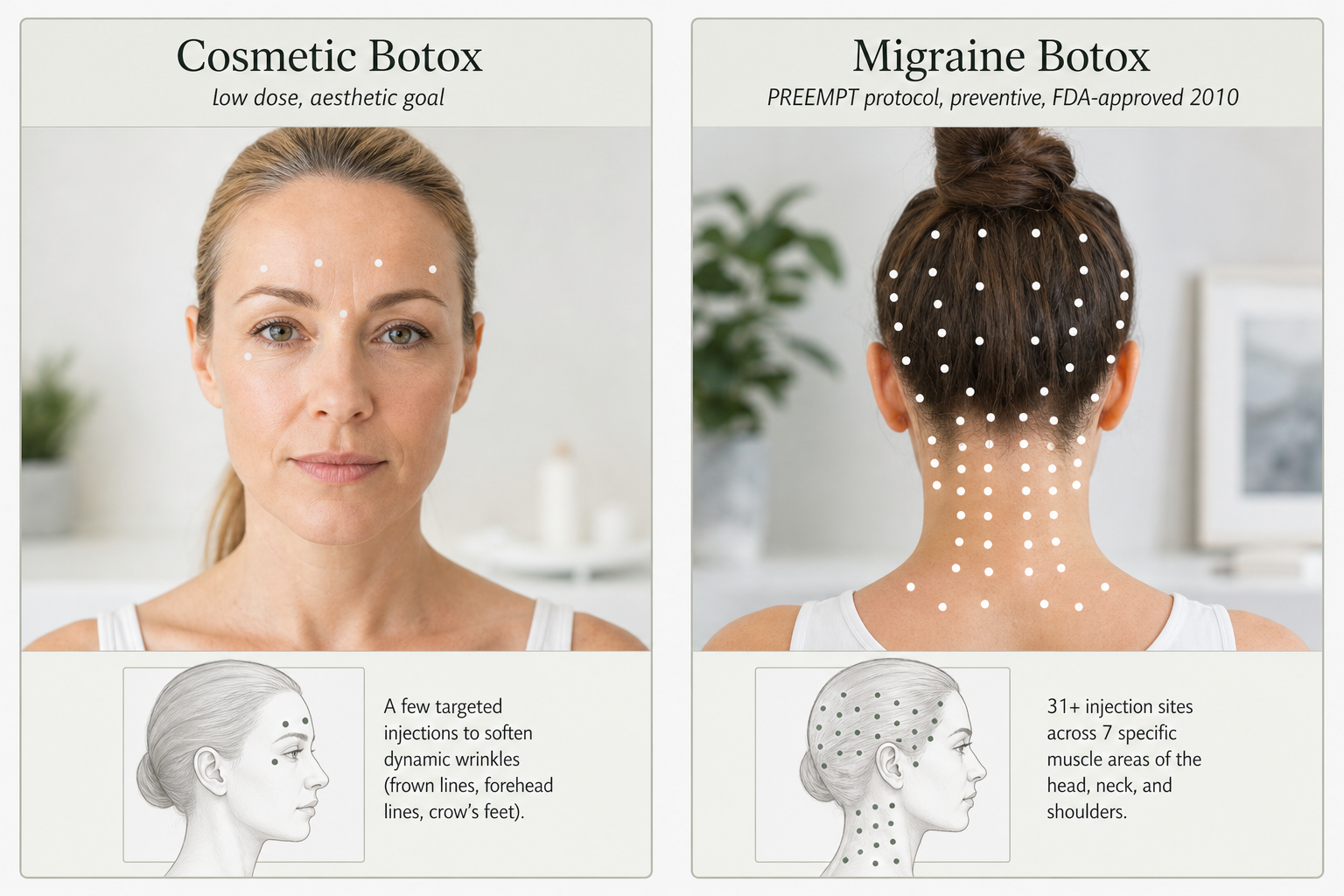
Botox for chronic migraine prevention, by contrast, was FDA-approved in 2010 and follows the PREEMPT protocol — a standardized approach involving injections across 31 or more sites in the head, neck, and shoulder muscles, using a significantly higher total dose than cosmetic treatments. This protocol is specifically designed for adults who experience 15 or more headache days per month, and it works as a preventive treatment rather than an acute pain reliever. Patients receiving migraine Botox typically have injections every 12 weeks, and meaningful headache reduction often becomes apparent after two or three treatment cycles.
It is worth noting that patients receiving Botox under the PREEMPT protocol may also experience some temporary soreness or headache in the days immediately following their injections, for the same mechanical reasons that apply to cosmetic patients. This does not mean the treatment is failing; it is a recognized and usually short-lived injection site reaction that is distinct from the chronic migraine pattern the treatment is intended to address.
What Not to Do After Botox
Certain behaviors in the hours and days after a Botox appointment can worsen a headache or interfere with the treatment outcome. Strenuous exercise increases blood flow to the face and may intensify injection site discomfort; most practitioners recommend avoiding vigorous physical activity for at least 24 hours. Lying flat or bending forward repeatedly in the first few hours after treatment is also generally discouraged, as it may affect where the toxin settles.
Rubbing or massaging the treated areas should be avoided, as this can potentially cause the toxin to migrate beyond the intended injection site. Alcohol consumption in the immediate post-treatment period can contribute to dehydration and may worsen headache symptoms. If you are taking any blood-thinning medications or supplements, discuss these with your practitioner before your appointment rather than stopping them without medical advice.
When to Contact a Doctor
The vast majority of post-Botox headaches are mild, self-limiting, and resolve on their own within 48 hours. However, certain features should prompt you to seek medical advice promptly rather than waiting for the headache to pass.
- A headache that is severe, sudden in onset, or described as the worst headache of your life
- A headache that worsens progressively over 24–48 hours rather than improving
- A headache lasting more than two weeks after a cosmetic Botox treatment
- Headache accompanied by fever, stiff neck, or sensitivity to light (possible signs of meningitis, which requires urgent assessment)
- Headache accompanied by vision changes, double vision, or drooping eyelid
- Headache accompanied by dizziness, numbness, or weakness in the face or limbs
- Signs of a possible allergic reaction, such as rash, hives, swelling of the face or throat, or difficulty breathing
- Headache accompanied by difficulty swallowing or speaking
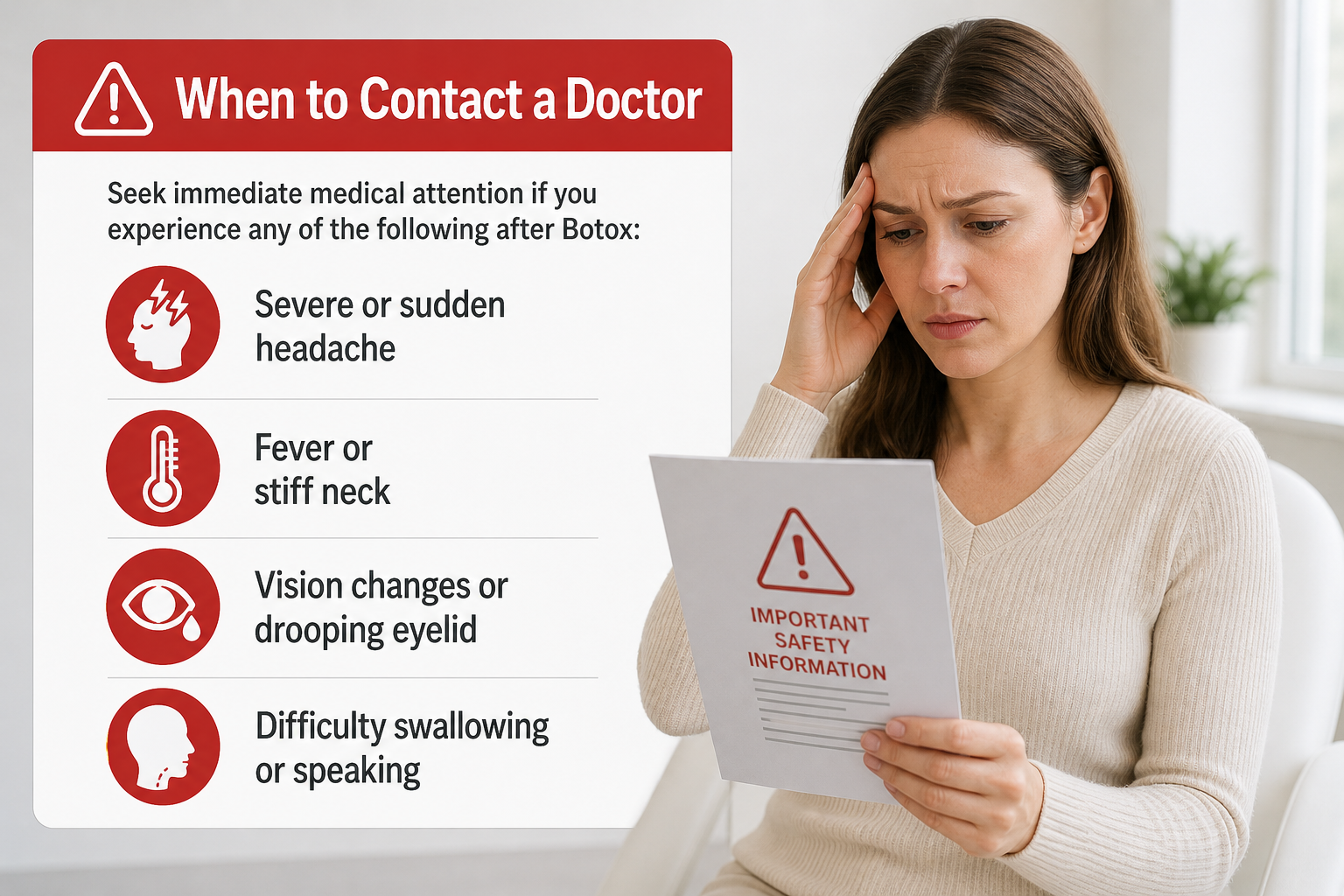
These symptoms are not typical of a routine post-Botox headache and may indicate a complication or an unrelated medical condition that requires prompt evaluation. When in doubt, contact your treating practitioner or seek medical attention rather than waiting.
Frequently Asked Questions
Is it normal to have a headache for 2 weeks after Botox?
A headache lasting two weeks after cosmetic Botox is uncommon and falls outside the typical duration of 24 to 48 hours. While a small number of patients — particularly those with a pre-existing migraine disorder — may experience a prolonged headache, a two-week duration warrants a conversation with your practitioner to rule out other causes and discuss appropriate management.
Can I take ibuprofen after Botox for a headache?
Ibuprofen and other NSAIDs are generally avoided in the one to two weeks before a Botox appointment because they can increase bruising risk. After the injection has been given, using ibuprofen for headache relief is usually considered acceptable, but acetaminophen is often the preferred first choice. Confirm with your practitioner if you are unsure.
Can I take Excedrin after Botox?
Excedrin contains acetaminophen, aspirin, and caffeine. The aspirin component has mild blood-thinning properties, which some practitioners prefer to avoid in the immediate post-injection period. If you are considering Excedrin for a post-Botox headache, check with your provider first. Plain acetaminophen is a simpler and generally well-tolerated alternative.
Why do first-time Botox patients get more headaches?
First-time recipients appear to experience headaches more frequently than repeat patients, likely because the muscles and nervous system are encountering the effects of onabotulinumtoxinA for the first time. The adjustment period — during which muscles begin to respond to the toxin — may be more pronounced in patients who have not previously had the treatment. Many patients find that headaches are less noticeable or absent in subsequent sessions.
Does a headache after Botox mean it is not working?
No. A post-Botox headache is a side effect of the injection process and the initial muscle adjustment, not an indicator of treatment failure. The headache typically resolves within 48 hours, well before the full cosmetic effect of Botox becomes visible, which usually takes three to seven days and may continue to develop over two weeks.
Can Botox cause a headache even if I have never had headaches before?
Yes. The needle micro-trauma, muscle tension changes, and mild injection site reaction associated with Botox can trigger a headache even in people who do not ordinarily experience them. This type of headache is generally mild and short-lived and does not mean you are developing a chronic headache condition.
How is a post-Botox headache different from a Botox migraine treatment headache?
A headache following cosmetic Botox is a transient side effect caused by the injection process and muscle adjustment. Botox used under the PREEMPT protocol for chronic migraine prevention involves a much higher dose across many more injection sites and is intended to reduce the frequency of migraines over time. Patients receiving migraine Botox may also experience some temporary post-injection discomfort, but this is distinct from the chronic migraine pattern the treatment is designed to address.
Managing a Post-Botox Headache: What to Realistically Expect
For most people, a headache after Botox is a brief and manageable inconvenience rather than a serious concern. The typical experience involves a mild tension-type headache beginning within a few hours of the appointment and resolving within 24 to 48 hours with rest, adequate hydration, and over-the-counter pain relievers if needed. The headache does not affect the cosmetic outcome of the treatment, and the majority of patients who experience one go on to have subsequent Botox appointments without the same side effect.
If you are considering Botox for the first time and are concerned about the possibility of a headache, discussing this with your practitioner before the appointment is worthwhile. A qualified and experienced injector can explain what to expect, advise on pre-treatment steps that may reduce discomfort, and ensure that the treatment is appropriate for your individual circumstances. Choosing a practitioner with relevant training and experience in aesthetic injectables is one of the most meaningful factors in minimizing the risk of side effects, including post-injection headache, as precise technique reduces unnecessary tissue trauma.
If your headache does not follow the expected pattern — if it is severe, worsening, or accompanied by any of the red-flag symptoms described above — do not hesitate to contact your practitioner or seek medical attention. A post-Botox headache that resolves on its own within a day or two is a recognized and generally benign side effect; one that behaves differently deserves prompt professional assessment.
