
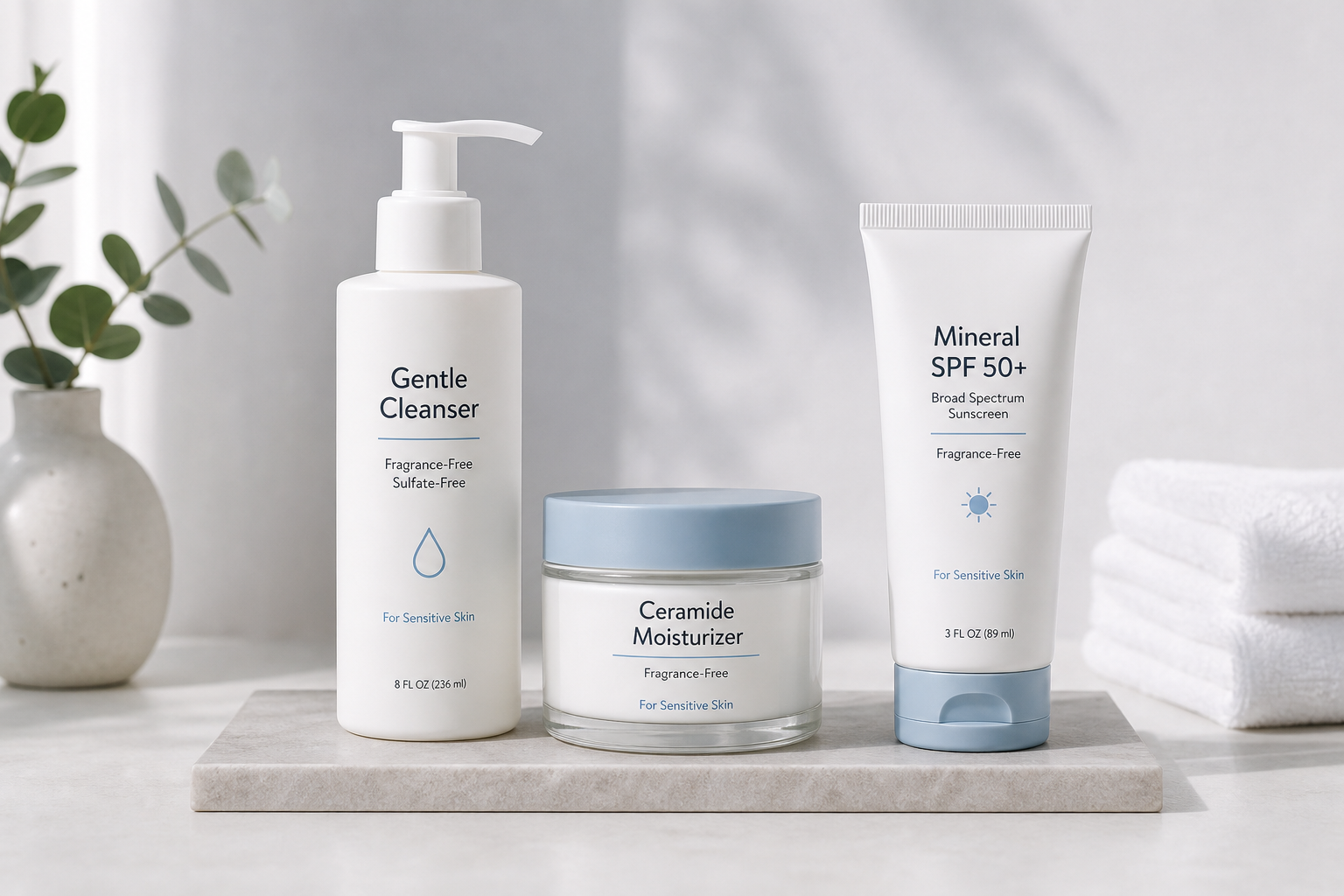

Sensitive skin is one of the most commonly reported skin concerns, yet it remains one of the most misunderstood. Unlike a fixed skin type, sensitivity describes how your skin behaves — reacting to products, environmental changes, or lifestyle factors with redness, stinging, tightness, or dry flaky patches. The good news is that a carefully structured, minimalist routine can significantly reduce reactivity and help restore a more resilient skin barrier over time.
Key Takeaways
- Sensitive skin is a behaviour, not a fixed skin type — oily, dry, and combination skin can all be reactive.
- A gentle, pared-down skincare routine with fragrance-free, sulfate-free products is the most effective starting point.
- Ceramides, niacinamide, and hyaluronic acid are among the most evidence-supported ingredients for barrier repair and soothing reactive skin.
- Patch testing every new product and introducing one product at a time are essential habits for managing sensitive skin safely.
- If your skin does not improve with a simplified routine, a dermatologist assessment is worthwhile to rule out underlying conditions such as rosacea, eczema, or contact allergy.
What Is Sensitive Skin?
Sensitive skin is best understood as a state of heightened skin reactivity rather than a distinct skin type. Research suggests that approximately 50% of women and 38% of men self-report some degree of skin sensitivity, making it one of the most prevalent concerns in dermatology. The underlying mechanism in most cases involves a compromised skin barrier — the outermost layer of the skin, known as the stratum corneum, which normally acts as a protective shield against irritants, allergens, and moisture loss.
When the skin barrier is weakened, irritants penetrate more easily, triggering an inflammatory response that manifests as redness, burning, stinging, or dry flaky patches. This barrier disruption can result from genetics, chronic over-exfoliating, harsh product use, environmental stress, or a combination of these factors. Importantly, sensitive skin is not the same as dry skin. Oily skin can be equally reactive, and many people with combination skin experience sensitivity in specific zones. Conditions such as rosacea, eczema, and atopic dermatitis are distinct diagnoses that often overlap with sensitive skin behaviour but require their own clinical management.
Common Triggers to Recognise
Understanding what provokes your skin’s reactivity is as important as knowing which products to use. Common triggers include synthetic fragrance and parfum, sulfates such as sodium lauryl sulfate, drying alcohols, physical scrubs, hot water, and high-strength exfoliating acids. Environmental factors — abrupt weather changes, indoor heating, air conditioning, and pollution — can also destabilise the skin barrier without any product involvement.
Lifestyle factors are frequently overlooked. Chronic stress elevates cortisol levels, which can impair barrier function and increase skin reactivity. Hormonal fluctuations, poor sleep, and a diet low in omega-3 fatty acids and antioxidants may also contribute to increased sensitivity over time. Staying well hydrated supports barrier function from within, though topical barrier repair remains the most direct intervention.
Ingredients to Seek and Ingredients to Avoid
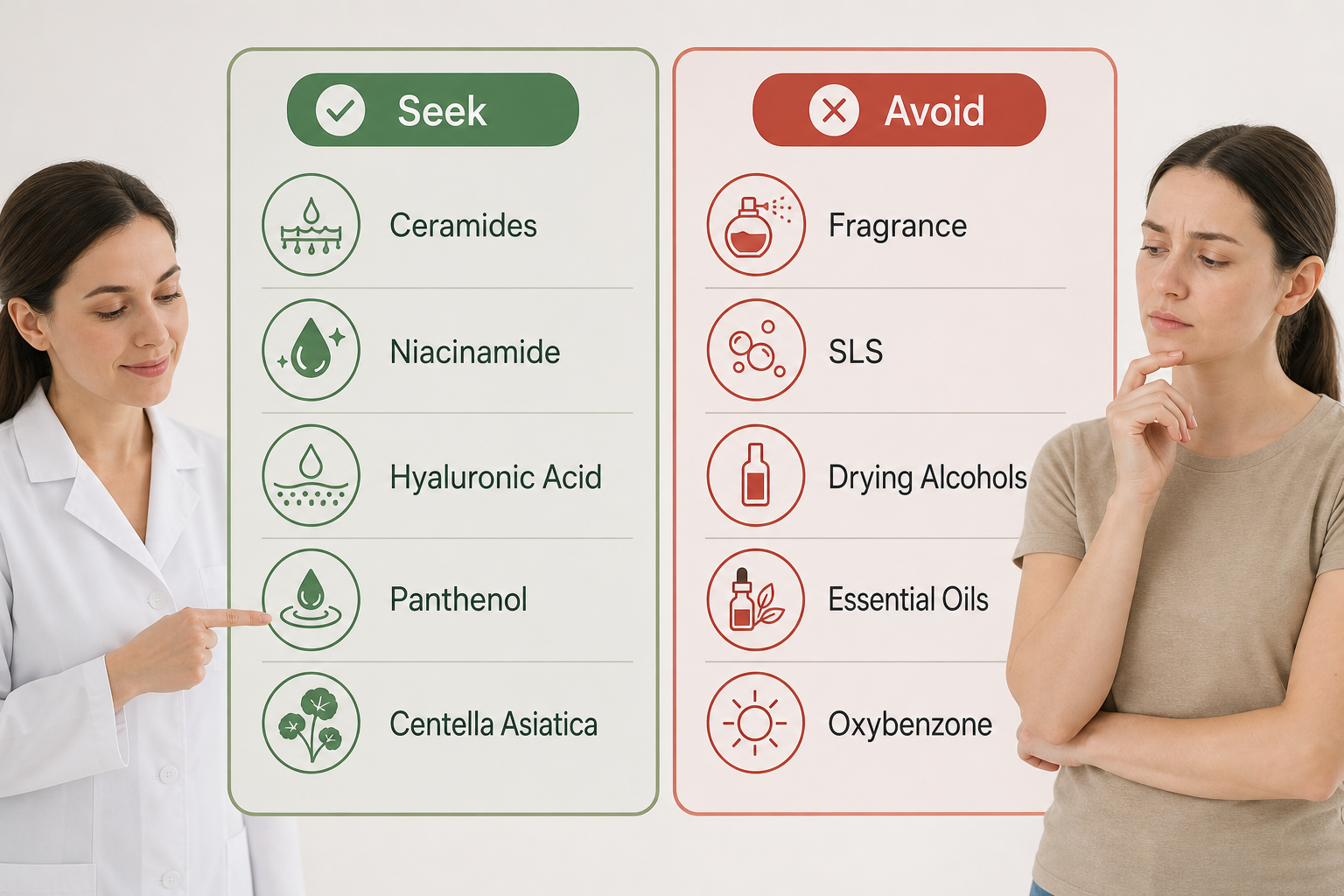
Choosing the right ingredients is the foundation of any effective sensitive skin routine. The table below summarises the most clinically relevant choices.
| Seek | Why It Helps | Avoid | Why It Irritates |
|---|---|---|---|
| Ceramides | Replenish barrier lipids, reduce water loss | Synthetic fragrance (parfum) | Leading cause of contact sensitisation |
| Niacinamide | Anti-inflammatory, strengthens barrier | Sodium lauryl sulfate (SLS) | Strips natural oils, disrupts acid mantle |
| Hyaluronic acid | Draws moisture into the skin | Drying alcohols (denatured, SD) | Dehydrates and damages barrier |
| Glycerin | Humectant, supports hydration | Essential oils and botanical fragrances | Common sensitisers despite being “natural” |
| Panthenol (vitamin B5) | Soothing, promotes repair | Methylisothiazolinone (MI) | Preservative linked to allergic contact dermatitis |
| Centella asiatica (cica) | Calming, supports wound healing | Chemical sunscreen filters (oxybenzone, avobenzone) | Can cause stinging or allergic reactions in reactive skin |
| Oat extract, allantoin, bisabolol | Soothing, reduce redness | High-strength AHAs and physical scrubs | Over-exfoliating damages barrier and worsens sensitivity |
One important myth worth addressing: a product labelled “natural”, “organic”, or “herbal” is not automatically safe for reactive skin. Essential oils, botanical extracts, and plant-based fragrances are among the most common contact sensitisers. Always evaluate an ingredient list rather than relying on marketing claims.
Morning Routine for Sensitive Skin (Step-by-Step)
The morning routine for sensitive skin should prioritise hydration, barrier support, and sun protection. Every step should use fragrance-free, non-comedogenic formulations.
Step 1: Cleanse Gently (or Skip)
For most sensitive skin types, a simple rinse with lukewarm water is sufficient in the morning. If you prefer a cleanser, choose a gentle cleanser that is sulfate-free and non-foaming. Micellar water applied with a soft cotton pad is another low-irritation option. Avoid hot water, which can trigger flushing and strip the acid mantle — the skin’s naturally slightly acidic protective film.
Step 2: Apply a Hydrating Serum
A lightweight soothing serum containing hyaluronic acid, niacinamide, or panthenol applied to slightly damp skin can meaningfully improve hydration and reduce redness. Niacinamide at concentrations of 2–5% is well tolerated by most reactive skin types and has good evidence for reducing inflammation and supporting the skin barrier. Avoid vitamin C serums formulated at a low pH, as high-concentration ascorbic acid can sting sensitised skin.
Step 3: Moisturise
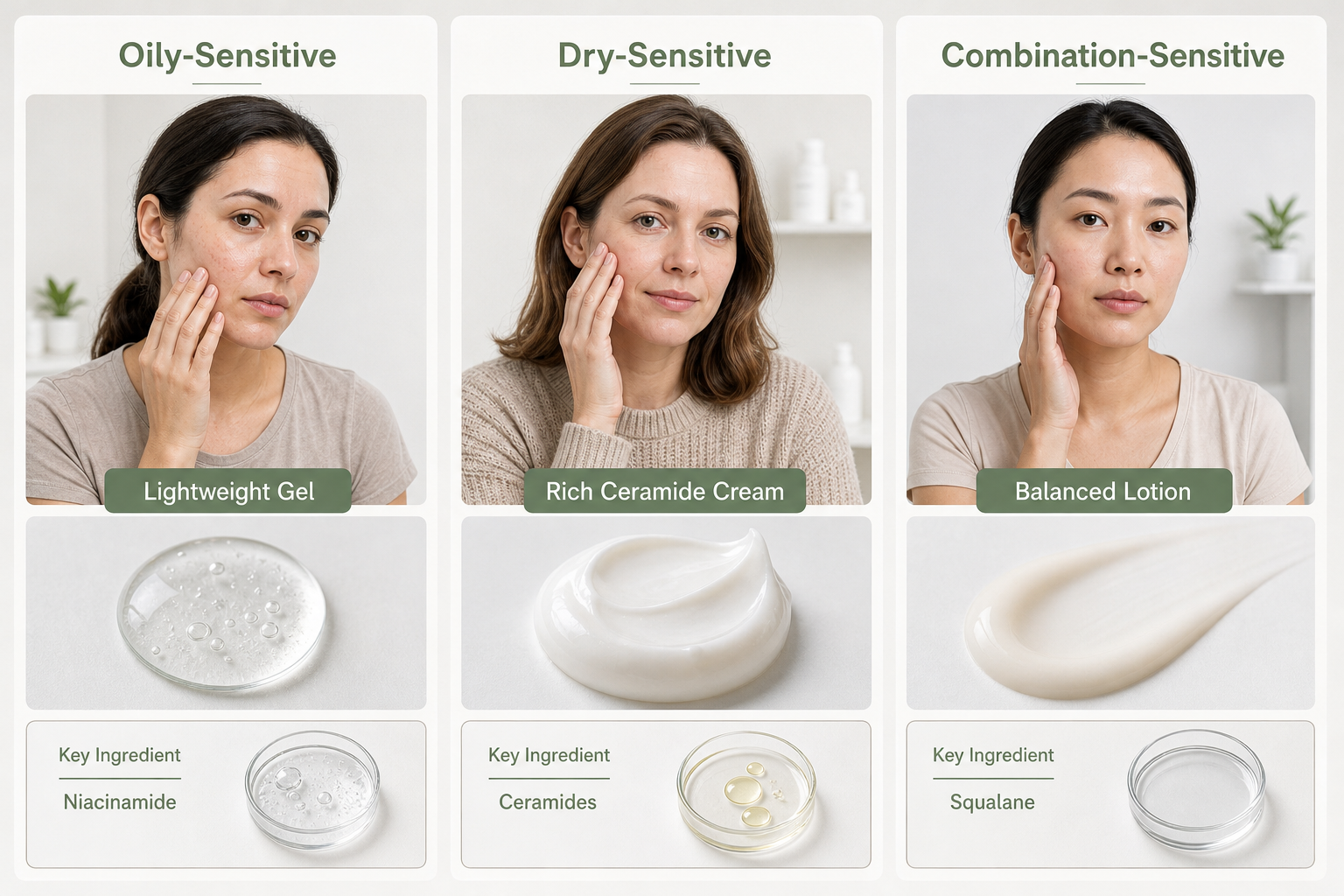
A barrier-repairing moisturizer containing ceramides and glycerin is the cornerstone of a sensitive skin routine. Ceramides are lipid molecules that naturally occur in the stratum corneum; replenishing them topically helps reduce transepidermal water loss and restore barrier integrity. Choose a texture suited to your skin sub-type: a lightweight gel-cream for oily-sensitive skin, a richer cream for dry-sensitive skin, and a balanced lotion for combination-sensitive skin.
Step 4: Apply Mineral Sunscreen
Sun protection is non-negotiable, and for sensitive skin, mineral sunscreen is the preferred choice. Mineral sunscreens use zinc oxide or titanium dioxide as active filters, which sit on the skin’s surface rather than being absorbed, making them less likely to cause stinging or allergic reactions. Choose a broad-spectrum SPF 50+ formula that is explicitly fragrance-free and tested for sensitive skin. Avoid chemical sunscreen filters such as oxybenzone, avobenzone, and octinoxate if your skin is reactive.
Evening Routine for Sensitive Skin (Step-by-Step)
The evening routine allows for slightly more targeted repair, but the principle of less is more remains central. Avoid layering multiple active ingredients, particularly when your skin is already reactive.
Step 1: Remove Makeup and SPF
If you have worn makeup or sunscreen during the day, a gentle double cleanse is appropriate. Begin with a fragrance-free micellar water or a gentle oil cleanser to dissolve SPF and makeup, then follow with a mild non-foaming cleanser. Avoid rubbing or tugging at the skin; press and lift motions reduce mechanical irritation. If you have not worn makeup or SPF, a single rinse with lukewarm water is sufficient.
Step 2: Apply a Soothing Serum or Treatment
The evening is the appropriate time to introduce any targeted actives, applied cautiously and infrequently. If your skin tolerates it, a soothing serum with centella asiatica, oat extract, or niacinamide can be applied at this stage. If you are using a retinoid, apply it here — but read the guidance on actives below before starting.
Step 3: Apply a Barrier-Repair Night Cream
A richer barrier-repairing moisturizer at night supports the skin’s natural overnight repair cycle. Look for formulations containing ceramides, glycerin, and panthenol. Avoid products with added fragrance, essential oils, or preservatives known to cause sensitisation. Applying moisturizer while the skin is still slightly damp from cleansing can improve absorption.
Exfoliation and Sensitive Skin
Sensitive skin can tolerate gentle exfoliation, but the approach matters significantly. Physical scrubs with abrasive particles and high-percentage AHAs or BHAs are likely to cause irritation and worsen barrier damage through over-exfoliating. A better approach is to use a mild lactic acid product at a low concentration (around 5%) once or twice per week, or to choose polyhydroxy acids (PHAs) such as gluconolactone, which are larger molecules that penetrate more slowly and are generally better tolerated by reactive skin. Enzyme-based exfoliants derived from papaya or pineapple offer another low-irritation alternative. Always patch test any exfoliant before applying it to the full face, and avoid exfoliating during an active flare.
Can Sensitive Skin Use Retinol and Other Actives?
Retinoids are among the most evidence-supported ingredients in skincare, but they require a careful introduction for reactive skin. Starting with a low-concentration encapsulated retinol (around 0.2%) or retinaldehyde (0.05%) twice a week is a more appropriate entry point than standard retinol formulations. The “sandwich method” — applying moisturizer before and after the retinoid — can buffer the skin and reduce the likelihood of irritation. Build frequency gradually over 12 or more weeks, and avoid retinoids entirely during active flares or periods of significant skin reactivity.
Bakuchiol, a plant-derived compound, is increasingly used as a retinol alternative for sensitive skin. Some clinical studies suggest it may offer comparable benefits to low-strength retinol with a lower risk of irritation, though the evidence base is still developing. It may be a reasonable starting point for those who find even low-strength retinoids too irritating.
High-concentration vitamin C formulations (ascorbic acid above 10% at a low pH) can sting reactive skin. If you want to include vitamin C, look for derivative forms such as ascorbyl glucoside or sodium ascorbyl phosphate, which are generally better tolerated.
The 2-Week Skin Reset: A Diagnostic Starting Point
If your skin is currently reactive and you are unsure which products are causing the problem, a structured reset can help identify the source. For 14 days, use only three products: a gentle, fragrance-free non-foaming cleanser, a simple ceramide-containing moisturizer, and a fragrance-free mineral sunscreen. Avoid all actives, toners, serums, and exfoliants during this period.
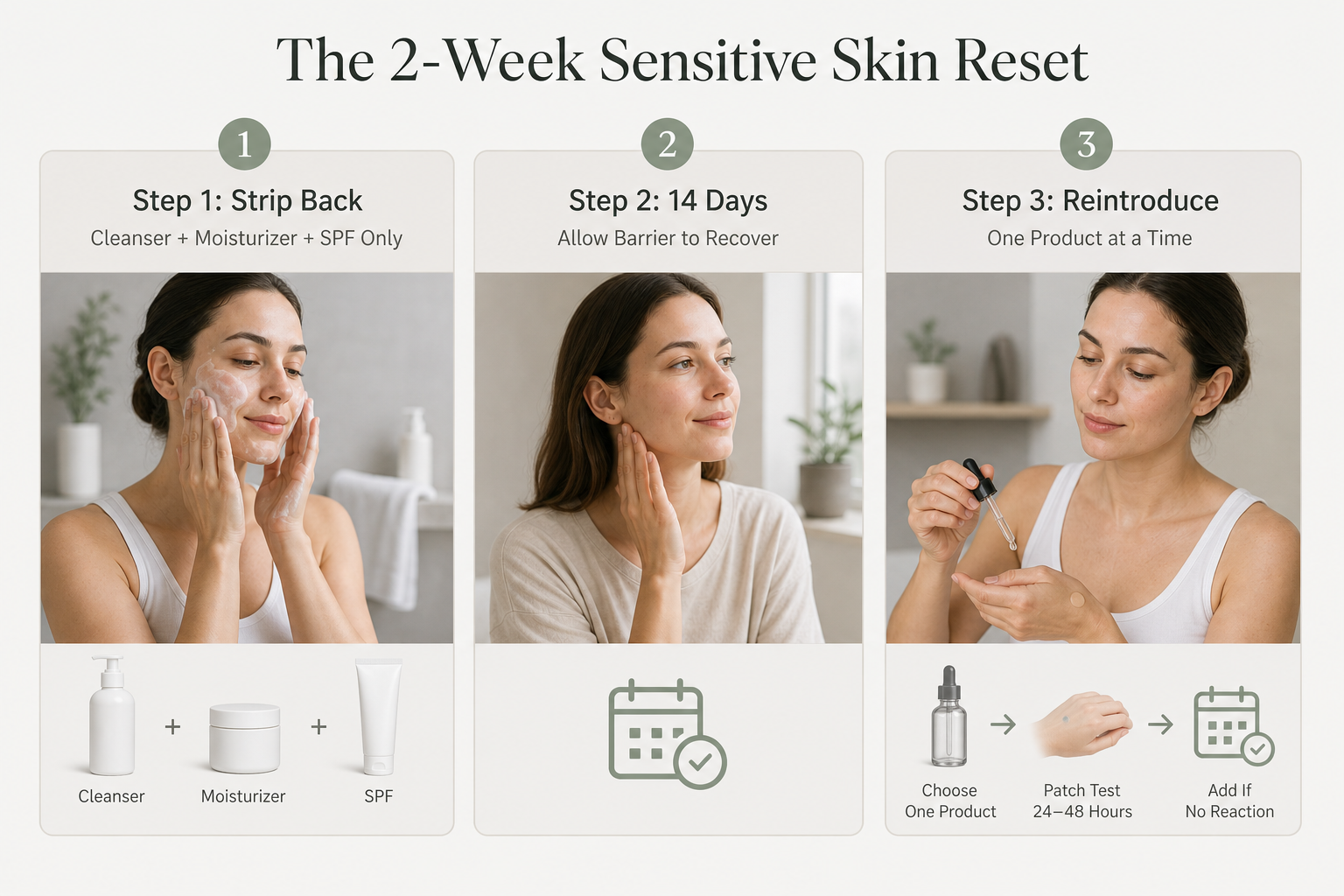
This stripped-back approach allows the skin barrier time to recover and provides a clean baseline. After two weeks, if your skin has calmed, you can begin reintroducing products one at a time, waiting at least one week between each new addition. This process makes it much easier to identify which product, if any, is responsible for triggering reactivity. This is also the moment to establish a consistent patch test habit: apply a small amount of any new product to the inner forearm or behind the ear for 24 hours before using it on the face.
Sensitive Skin by Sub-Type
Most routine guides treat sensitive skin as a single category, but the texture and formulation of products should be adjusted based on your specific skin sub-type.
- Oily-sensitive skin tends to produce excess sebum but still reacts to harsh ingredients. Choose lightweight, non-comedogenic gel or fluid formulations for both moisturizer and sunscreen. Avoid heavy occlusives such as petrolatum or mineral oil as primary moisturising agents.
- Dry-sensitive skin is the most common sub-type and benefits most from richer ceramide-based creams and gentle oil cleansers. Avoid any foaming cleansers, which can strip already-depleted skin lipids.
- Combination-sensitive skin may require different products for different zones, or a single balanced formulation that avoids the most problematic ingredients across the board. A lightweight lotion with ceramides and niacinamide often works well for this sub-type.
Sensitive Skin as You Age
Skin naturally becomes thinner, drier, and more prone to sensitivity with age. The production of ceramides and natural moisturising factors in the stratum corneum declines over time, meaning that a routine that worked well in your twenties may need adjustment as you get older. Older skin often benefits from richer barrier-repair formulations, a gentler approach to exfoliation, and a greater emphasis on hydration. The minimalist routine principle becomes even more relevant with age: fewer products, chosen carefully, tend to outperform complex layered routines for reactive mature skin.
Makeup and Sensitive Skin
Choosing makeup carefully is an extension of your skincare routine. Look for foundations, concealers, and powders labelled fragrance-free and non-comedogenic. Mineral makeup formulations based on zinc oxide or titanium dioxide are often better tolerated by reactive skin. Avoid products containing synthetic fragrance, dyes, or preservatives such as methylisothiazolinone. When removing makeup, use a fragrance-free micellar water or a gentle oil cleanser rather than makeup wipes, which often contain alcohol or fragrance and can cause stinging on sensitised skin.
Seasonal Adjustments for Sensitive Skin
Sensitive skin often requires routine adjustments as seasons change. In winter, cold air and indoor heating reduce ambient humidity, accelerating transepidermal water loss. Switching to a richer moisturizer, using a humidifier in dry indoor environments, and reducing exfoliation frequency can help maintain barrier function during colder months. In summer, heat and humidity may make lighter formulations more comfortable, but sun protection becomes even more critical. Sweat can also act as an irritant for some reactive skin types, so a gentle post-exercise cleanse with lukewarm water is advisable.
When to See a Dermatologist
A simplified, fragrance-free routine resolves or significantly reduces reactivity for many people. However, if your skin does not improve after four to six weeks of a consistent minimalist routine, or if you experience persistent redness, swelling, intense itching, or skin that worsens despite gentle care, a dermatologist assessment is appropriate. A dermatologist can perform patch testing to identify specific contact allergens, rule out underlying conditions such as rosacea, seborrhoeic dermatitis, or atopic dermatitis, and recommend prescription-strength barrier repair or anti-inflammatory treatments where clinically indicated. Self-managing a condition that has a treatable underlying cause can delay effective care.
Frequently Asked Questions
How do I know if my skin is sensitive or just dehydrated?
Dehydrated skin lacks water and typically feels tight, looks dull, and may show fine surface lines — but it usually responds quickly to a good moisturizer. Sensitive or reactive skin tends to sting, burn, or flush in response to products or environmental changes, and these reactions persist even when the skin is well hydrated. The two can overlap, but if your skin reacts to products rather than simply feeling dry, sensitivity is the more likely issue.
Can I use niacinamide every day on sensitive skin?
Niacinamide at concentrations of 2–5% is generally well tolerated daily by most sensitive skin types. It has anti-inflammatory properties and supports the skin barrier without the irritation risk associated with stronger actives. A small number of people experience mild flushing at higher concentrations; if this occurs, reducing the concentration or frequency usually resolves it.
Is fragrance-free the same as unscented?
No. “Unscented” products may still contain masking fragrances added to neutralise the smell of other ingredients. “Fragrance-free” means no fragrance compounds have been added, making it the safer choice for reactive skin. Always check the ingredient list rather than relying on front-of-pack claims.
How long does it take for a sensitive skin routine to show results?
Skin barrier repair is a gradual process. Most people notice a reduction in reactivity and improved comfort within two to four weeks of consistently using a gentle, fragrance-free routine. Significant improvement in redness or texture may take six to twelve weeks. Introducing actives too quickly during this period can reset progress, so patience and consistency are important.
Can sensitive skin use SPF every day without irritation?
Yes, with the right formulation. Mineral sunscreens containing zinc oxide or titanium dioxide are the most appropriate choice for reactive skin, as they are less likely to cause stinging or allergic reactions than chemical filters. Look for a broad-spectrum SPF 50+ product that is explicitly fragrance-free and tested for sensitive skin. Daily use is strongly recommended regardless of skin type.
Should I avoid all exfoliation if my skin is sensitive?
Not necessarily. Gentle exfoliation once or twice a week using a low-concentration lactic acid or a PHA such as gluconolactone can be beneficial for sensitive skin without causing barrier damage. The key is to avoid over-exfoliating, to skip exfoliation during active flares, and to patch test any new exfoliant before applying it to the full face.
Building a Sensitive Skin Routine That Works for You
Managing sensitive or reactive skin is less about finding the perfect product and more about building consistent, low-irritation habits. A gentle, pared-down skincare routine — built around a sulfate-free cleanser, a ceramide-rich moisturizer, and a fragrance-free mineral sunscreen — provides the most reliable foundation for most people with reactive skin. The principle of less is more applies at every stage: fewer products, simpler formulations, and a slow, methodical approach to introducing anything new.
If you are unsure where to start, the two-week reset protocol offers a practical diagnostic baseline. From there, introduce one product at a time, patch test consistently, and give each addition at least a week before drawing conclusions. If your skin remains persistently reactive despite these measures, a consultation with a dermatologist or aesthetic medicine practitioner can help identify whether an underlying condition is contributing and whether prescription or clinic-based treatments may be appropriate for your situation.
