

A double chin is one of the most common aesthetic concerns among adults, and one of the most resistant to diet and exercise. Freezing chin fat — using a technique called cryolipolysis — has become a widely sought non-surgical option for reducing submental fullness without needles, surgery, or significant downtime. This guide explains how the procedure works, what the clinical evidence shows, who is likely to benefit, and what limitations to consider before booking a consultation.
Key Takeaways
- Cryolipolysis uses controlled cooling to destroy subcutaneous fat cells beneath the chin without surgery or injections.
- The CoolMini applicator is the FDA-cleared device specifically designed for the submental area; clinical studies suggest a mean fat volume reduction of roughly 20–27% per treated area per session.
- Results develop gradually over 10–12 weeks as the lymphatic system clears away treated fat cells; the reduction is considered permanent for those cells, provided weight remains stable.
- Fat freezing does not tighten loose skin — patients with significant skin laxity may need a different or combined approach.
- Alternatives including deoxycholic acid (Kybella), radiofrequency treatments, and chin liposuction each suit different goals and anatomical profiles.
What Is Cryolipolysis and How Does It Apply to the Chin?
Cryolipolysis is a non-invasive body contouring technology that selectively destroys fat cells by exposing them to precisely controlled cooling. The science behind it originated from research at Harvard Medical School and Massachusetts General Hospital, where scientists observed that fat tissue is more vulnerable to cold temperatures than the surrounding skin, nerves, and blood vessels. By cooling subcutaneous fat cells to a specific temperature range — typically between −5°C and −10°C — the procedure triggers a process called fat cell apoptosis, a form of programmed cell death in which the fat cells gradually break down and are cleared from the body over the following weeks.
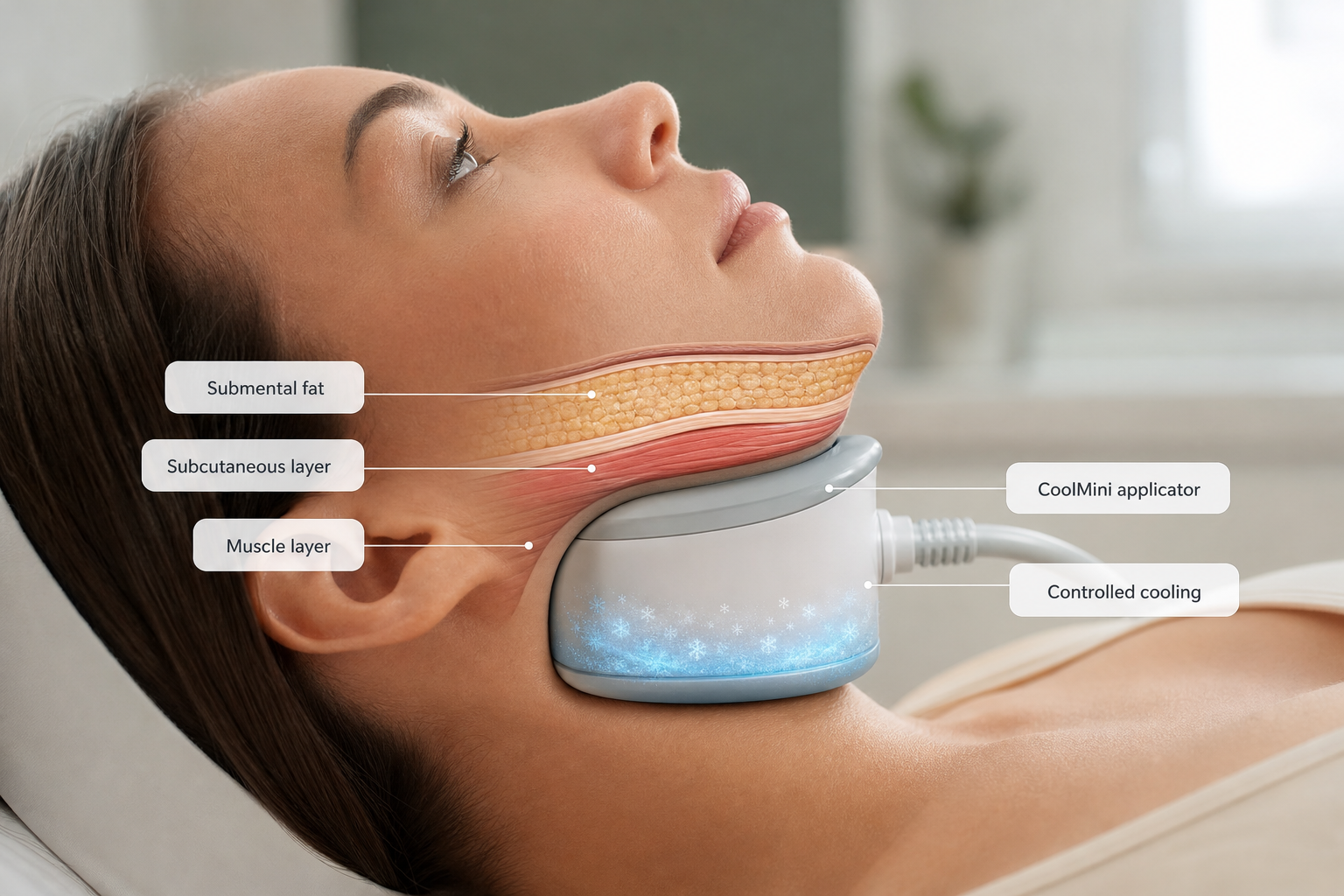
When applied to the chin and neck area, cryolipolysis targets the pocket of submental fat that sits beneath the skin and above the deeper muscle layer. This is the fat responsible for the appearance of a double chin. The CoolMini applicator — a smaller, curved version of the standard device — was developed specifically to fit the contours of the submental area, making it possible to treat this anatomically distinct region with the same controlled cooling mechanism used on larger body areas such as the abdomen or flanks.
What Causes a Double Chin?
Submental fat accumulates for several reasons, and understanding the cause matters when choosing a treatment. Genetics play a significant role: some people carry fat preferentially in the submental area regardless of their overall body weight, which is why a double chin can appear even in individuals who are otherwise lean. Aging contributes by reducing skin elasticity and allowing fat to shift downward. Weight gain can increase the volume of submental fat, though the area often remains resistant to reduction even after weight loss. Posture and anatomical factors — including the position of the hyoid bone and the angle of the jaw — also influence how prominent the submental area appears.
This distinction between genetically stubborn fat and fat caused primarily by weight gain is clinically important. Cryolipolysis is most effective for the former: a localized, pinchable fat pocket that persists despite a healthy lifestyle. It is not a weight-loss solution and is unlikely to produce satisfying results if the double chin is primarily driven by overall excess body weight or significant skin laxity.
How the Procedure Works: Step by Step
A chin fat freezing session typically follows a structured sequence. Understanding what happens at each stage helps set realistic expectations and reduces anxiety about the appointment.
- Consultation and assessment: A qualified practitioner evaluates the submental area, assesses the amount and type of fat, checks skin laxity, and discusses medical history to confirm suitability. Photographs are usually taken for comparison.
- Treatment area marking: The practitioner marks the chin and neck area to guide applicator placement and ensure symmetrical coverage.
- Gel pad application: A protective cooling gel pad is placed over the skin before the applicator is positioned. This protects the surface skin from direct contact with the cooling plates.
- Applicator placement and suction: The CoolMini applicator is placed against the submental area. Gentle suction draws the tissue into the applicator cup, bringing the subcutaneous fat into contact with the cooling panels.
- Controlled cooling phase: The device cools the tissue to the target temperature for approximately 35 to 45 minutes. Most patients experience an initial intense cold sensation and mild pulling, which typically subsides within the first few minutes as the area becomes numb.
- Post-treatment massage: Once the applicator is removed, the practitioner performs a brief manual massage of the treated area. This step is considered important for breaking up the crystallized fat cells and may improve the overall reduction achieved.
The entire appointment, including preparation and aftercare discussion, usually takes around 60 to 90 minutes. Most people return to normal activities the same day.
What the Clinical Evidence Shows
The evidence base for cryolipolysis on the submental area has grown substantially. A 2025 systematic review drawing on 30 clinical trials and 3,158 participants found that cryolipolysis produced statistically significant reductions in submental fat volume, with a mean reduction of approximately 19.57 cm³ per treated area. Individual results varied considerably across the studies — some participants showed reductions of up to 5.9 mm in fat layer thickness, while a small number showed no meaningful change or a slight increase. This variability underscores that outcomes are not uniform and that patient selection and applicator technique influence results.
Across multiple studies, the average fat reduction per session in the submental area is generally cited in the range of 20–27%, consistent with results seen in other body areas treated with cryolipolysis. Most clinical assessments report high patient satisfaction scores, though it is worth noting that satisfaction studies are subject to expectation bias and placebo effects. Independent photographic assessments by blinded evaluators tend to show more modest but still meaningful improvements in the majority of treated patients.
Results Timeline: What to Expect and When
Fat freezing does not produce immediate visible changes. The mechanism — fat cell apoptosis followed by lymphatic elimination — is a biological process that unfolds over weeks. Understanding this timeline prevents premature disappointment.
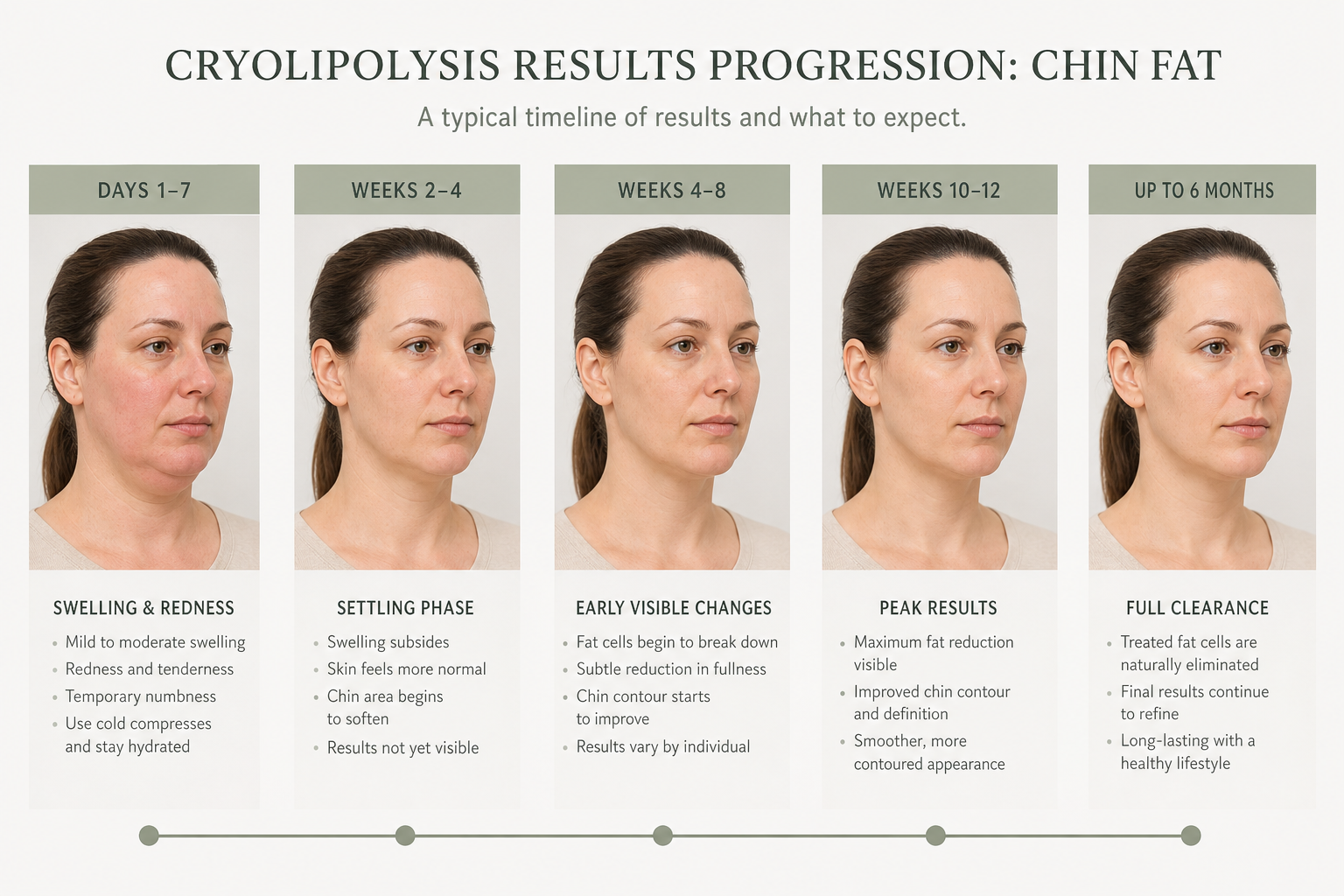
- Days 1–7: The treated area may appear slightly swollen, red, or bruised. Some patients notice temporary firmness or a sensation described as a “frozen” texture beneath the skin. These effects are normal and resolve on their own.
- Weeks 2–4: Swelling subsides. The area may look similar to before treatment at this stage, which can be discouraging. The fat cell breakdown process is underway but not yet visible.
- Weeks 4–8: Early visible changes typically begin to appear as the lymphatic system progressively clears destroyed fat cells. The jawline may start to look slightly more defined.
- Weeks 10–12: Most patients see their clearest results at this point. The submental area is noticeably reduced in volume for suitable candidates, and the jawline appears more contoured.
- Up to 6 months: Some patients continue to see gradual improvement for up to six months post-treatment as the body completes the elimination process.
Because results develop slowly, practitioners typically schedule a follow-up assessment at 10–12 weeks to evaluate the outcome and discuss whether a second session would be beneficial.
Is the Fat Reduction Permanent?
The fat cells destroyed by cryolipolysis do not regenerate. In that sense, the reduction in the number of fat cells in the treated area is permanent. However, the remaining fat cells in the submental area — and elsewhere in the body — can still enlarge if a person gains weight. Significant weight gain after treatment can diminish or reverse the visible improvement. Maintaining a stable weight is therefore an important factor in preserving long-term results. Cryolipolysis reduces the number of fat cells; it does not prevent the remaining cells from expanding.
Side Effects and Risks
Cryolipolysis on the chin is generally well tolerated, but it is not without side effects or risks. Patients should be aware of both the common temporary effects and the rarer but more significant complications.
Common Temporary Side Effects
- Redness and skin flushing immediately after treatment
- Swelling and mild bruising in the submental area
- Numbness, tingling, or reduced sensation that may persist for several weeks
- Temporary tenderness or soreness when touching the treated area
- A sensation of firmness or stiffness beneath the skin in the days following treatment
These effects are expected and typically resolve within a few days to a few weeks without intervention.
Paradoxical Adipose Hyperplasia (PAH)
Paradoxical adipose hyperplasia is a rare but clinically significant complication in which the treated fat tissue paradoxically increases in volume rather than decreasing. Instead of undergoing apoptosis, the fat cells appear to enlarge and harden, forming a firm, painless mass in the shape of the applicator. PAH is estimated to occur in roughly 1 in 3,000 to 1 in 20,000 treatments, though some analyses suggest the rate may be higher in real-world practice. It appears to be more common in male patients and in certain anatomical areas. PAH does not resolve on its own and typically requires surgical correction such as liposuction. Any patient who notices a progressive increase in volume or firmness in the treated area weeks after treatment should return to their practitioner promptly for assessment.
Other Risks
Less commonly, patients may experience prolonged numbness lasting several months, hyperpigmentation of the treated skin, or asymmetry in fat reduction between the two sides of the chin. Asymmetry is more likely when the initial fat distribution is uneven or when applicator placement is not precisely symmetrical. Choosing an experienced, qualified practitioner significantly reduces the risk of technical errors that contribute to asymmetry.
Who Is a Good Candidate?
Cryolipolysis for the chin produces the most satisfying results in a specific patient profile. A thorough clinical assessment is essential before proceeding.

Likely suitable candidates:
- Adults with a localized, pinchable fat pocket beneath the chin that is resistant to diet and exercise
- Individuals at or near a healthy, stable weight — not seeking overall weight loss
- Those with mild to moderate submental fullness rather than a very large volume of fat
- Patients with good to moderate skin elasticity in the neck and chin area
- People who prefer a non-surgical approach and are comfortable with gradual results
This treatment may not be suitable if you:
- Have significant skin laxity or loose skin in the neck area — fat reduction without skin tightening can make laxity more visible
- Are significantly overweight, as cryolipolysis is a contouring tool, not a weight-loss treatment
- Have cryoglobulinemia, cold agglutinin disease, or paroxysmal cold hemoglobinuria — conditions in which cold exposure can trigger serious reactions
- Are pregnant or breastfeeding
- Have active skin conditions, open wounds, or infections in the treatment area
- Have implanted devices such as a pacemaker near the treatment area
- Have very little pinchable fat — the applicator requires sufficient tissue to create suction
The Skin Laxity Consideration
One of the most underappreciated limitations of chin fat freezing is its effect — or rather, its lack of effect — on skin laxity. Cryolipolysis reduces the volume of subcutaneous fat but does not stimulate collagen production or tighten the overlying skin. For patients whose double chin involves a meaningful degree of loose or sagging skin, removing fat without addressing the skin can sometimes make the laxity more apparent. This is a critical factor that is often not discussed clearly during consultations. Patients with noticeable skin laxity may achieve better overall results with a treatment that combines fat reduction with skin tightening — such as radiofrequency microneedling (Morpheus8) or high-intensity focused ultrasound — or may be better served by a surgical approach such as a neck lift.
Post-Treatment Aftercare
Aftercare following a chin cryolipolysis session is straightforward, but following guidance carefully may support the best possible outcome. In the days immediately after treatment, the submental area may be sensitive to touch, and patients are generally advised to avoid applying pressure or tight clothing around the neck. Gentle massage of the area in the weeks following treatment is sometimes recommended by practitioners to support lymphatic elimination of treated fat cells, though protocols vary between clinics. Staying well hydrated and maintaining a balanced diet supports the body’s natural clearance process. Strenuous exercise and alcohol are sometimes advised against for 24–48 hours post-treatment, though evidence on the impact of these restrictions on outcomes is limited. Patients should follow their specific practitioner’s aftercare instructions rather than generic online advice.
Comparing Chin Fat Reduction Options
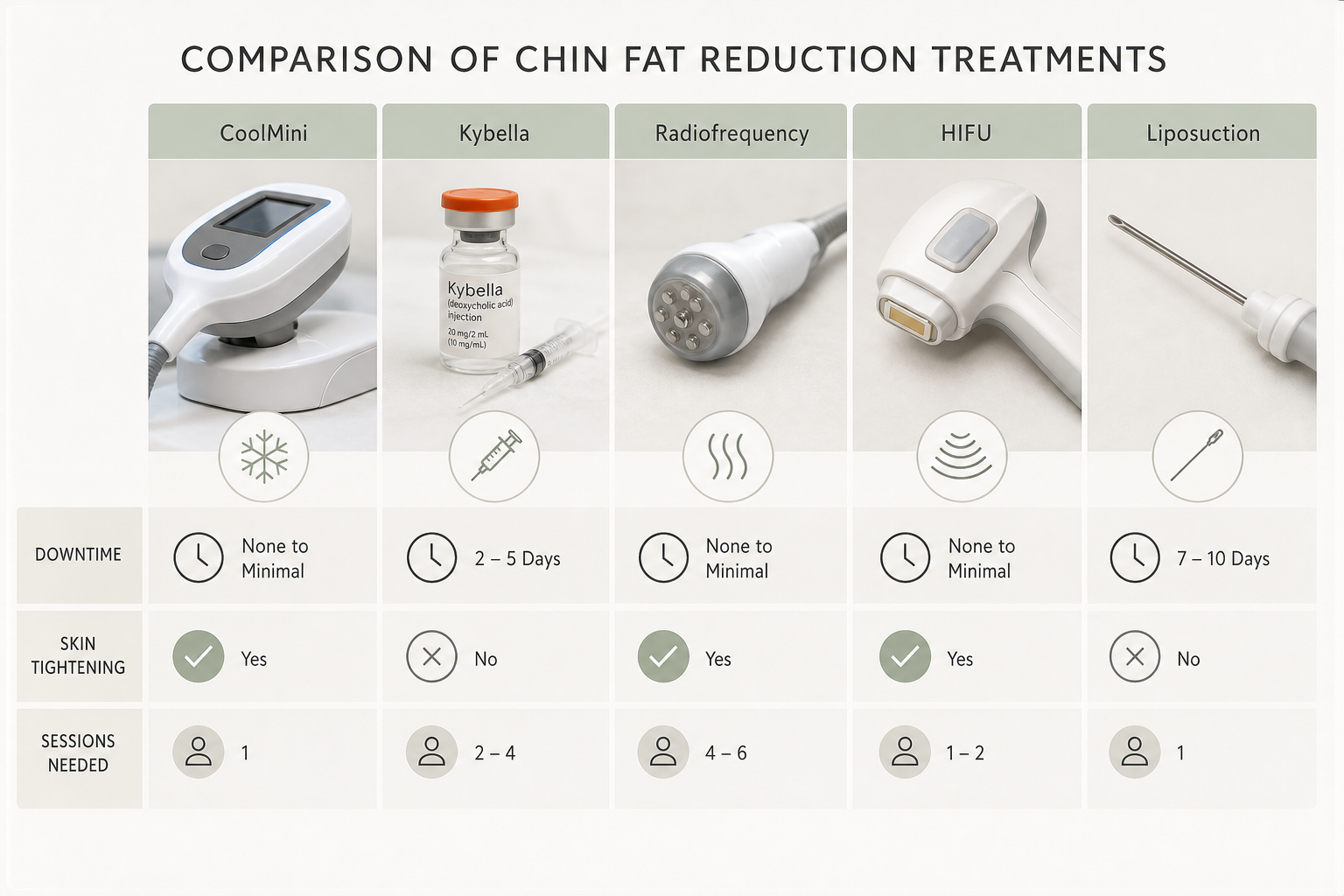
Cryolipolysis is one of several effective approaches to reducing submental fat. The right choice depends on the amount of fat, the degree of skin laxity, tolerance for downtime, and individual goals.
| Treatment | Mechanism | Downtime | Sessions Needed | Skin Tightening | Best Suited For |
|---|---|---|---|---|---|
| Cryolipolysis (CoolMini) | Controlled cooling / fat cell apoptosis | Minimal (1–3 days mild swelling) | 1–2 | No | Localized pinchable submental fat, good skin tone |
| Deoxycholic acid (Kybella) | Chemical fat cell destruction via injection | Moderate (swelling 1–2 weeks) | 2–4+ | Minimal | Mild to moderate submental fat, tolerates swelling |
| Radiofrequency (e.g., Morpheus8, Evoke) | RF energy — fat reduction and collagen stimulation | Low to moderate | 3–4 | Yes | Fat with concurrent skin laxity |
| HIFU (e.g., Ultraformer III) | Focused ultrasound — tissue tightening | Minimal | 1–2 | Yes (primary goal) | Skin laxity with mild fat, jawline lifting |
| Chin / neck liposuction | Surgical fat removal | Significant (1–2 weeks) | 1 (surgical) | Partial | Larger fat volumes, faster definitive results |
| Neck lift (surgery) | Surgical fat removal and skin tightening | Significant (2–4 weeks) | 1 (surgical) | Yes (primary goal) | Significant laxity and fat, comprehensive correction |
Deoxycholic acid (Kybella) works through a different mechanism — it is an injectable solution that chemically destroys fat cell membranes — and tends to cause more pronounced swelling in the weeks following each session. It may require more sessions than cryolipolysis to achieve comparable results, but it can be useful for patients who are not suitable for the suction-based applicator or who prefer an injectable approach. Chin liposuction offers more immediate and predictable fat removal but involves surgical risks, anaesthesia, and a longer recovery period. For patients with both submental fat and skin laxity, a combination approach — such as cryolipolysis followed by radiofrequency skin tightening — may address both concerns more effectively than either treatment alone.
A Note on At-Home Chin Freezing Devices
Some consumers search for at-home alternatives to clinical fat freezing, including DIY cold packs or consumer-grade cooling devices marketed for chin contouring. These products do not replicate the controlled, calibrated cooling of medical-grade cryolipolysis devices. Applying ice or unregulated cold directly to the skin carries a genuine risk of cold burns, frostbite, and nerve damage without delivering the precise temperature range required to trigger fat cell apoptosis. There is no credible clinical evidence that at-home cold application reduces submental fat. Clinical treatment in a regulated setting with a qualified practitioner and a properly calibrated device is the only evidence-supported approach to fat freezing for the chin.
Cost Considerations
The cost of a CoolMini treatment for the submental area varies by clinic, location, and practitioner experience. In the United Kingdom and Australia, a single session typically ranges from approximately £700 to £1,500 (or AUD $1,200 to $2,500). In the United States, the average cost per session is often cited between $1,350 and $3,000. Many patients require two sessions to achieve their desired outcome, which means realistic total costs can range from $2,700 to $6,000 or more depending on the market and provider. Cryolipolysis is a cosmetic procedure and is not covered by health insurance. Clinics offering significantly below-market pricing should be evaluated carefully, as device calibration, practitioner training, and aftercare quality all influence both safety and results.
Frequently Asked Questions
How many sessions are needed to freeze chin fat?
Many patients see meaningful improvement after a single session with the CoolMini applicator. However, those with a larger volume of submental fat or who want a more pronounced result may benefit from a second session, typically scheduled no sooner than 10–12 weeks after the first to allow full results to develop. A qualified practitioner can advise on the likely number of sessions based on an in-person assessment.
Does freezing chin fat hurt?
The initial application of the CoolMini causes an intense cold sensation and mild pulling from the suction. Most patients find this uncomfortable for the first few minutes, after which the area becomes numb and the sensation subsides. Post-treatment, the area may feel tender and sore for several days. The procedure is generally described as tolerable rather than painful, though individual sensitivity varies.
Will the double chin come back after fat freezing?
The fat cells destroyed by cryolipolysis do not return. However, if a patient gains significant weight after treatment, the remaining fat cells in the submental area can enlarge, and the double chin may become more prominent again. Maintaining a stable weight is the most important factor in preserving long-term results.
Can fat freezing tighten loose skin under the chin?
No. Cryolipolysis reduces fat volume but does not stimulate collagen or tighten skin. Patients with noticeable skin laxity in the neck and chin area should discuss this with their practitioner, as they may need a skin-tightening treatment — such as radiofrequency or HIFU — either instead of or alongside fat freezing.
What is paradoxical adipose hyperplasia and how common is it?
Paradoxical adipose hyperplasia (PAH) is a rare complication in which the treated fat tissue enlarges rather than reducing. It presents as a firm, painless mass that develops gradually in the weeks after treatment. Estimated rates vary, but PAH is generally considered to affect fewer than 1% of treatments. It does not resolve without intervention and typically requires liposuction to correct. Patients should report any progressive increase in volume or firmness to their practitioner promptly.
Is there a difference in how chin fat freezing works for men versus women?
Men tend to have denser, more fibrous submental fat tissue than women, which can make the area slightly more resistant to treatment. Men may also have a higher rate of paradoxical adipose hyperplasia, though the reasons for this are not fully understood. These anatomical differences are worth discussing with a practitioner during the consultation, as they may influence the treatment plan and expected results.
Is Freezing Chin Fat the Right Approach for You?
Cryolipolysis using the CoolMini applicator is a clinically supported, non-invasive option for reducing localized submental fat in suitable candidates. The evidence suggests meaningful fat reduction for most patients — typically in the range of 20–27% per session — with a low risk of serious complications when performed by a qualified practitioner using a properly calibrated device. The gradual results timeline, the absence of skin tightening, and the variability in individual response are all important factors to weigh honestly before proceeding.
The treatment is most likely to meet expectations in patients with a defined, pinchable pocket of submental fat, good skin elasticity, and realistic goals. It is less likely to be the right choice for those with significant skin laxity, a large volume of fat, or expectations of dramatic or immediate transformation. For patients who fall into a grey zone — some fat and some laxity — a combination approach or an alternative such as radiofrequency or deoxycholic acid injections may be worth exploring.
A thorough consultation with a qualified aesthetic practitioner who can assess your specific anatomy, discuss your goals, and explain the realistic range of outcomes for your individual profile is the essential first step before committing to any chin contouring treatment.
