
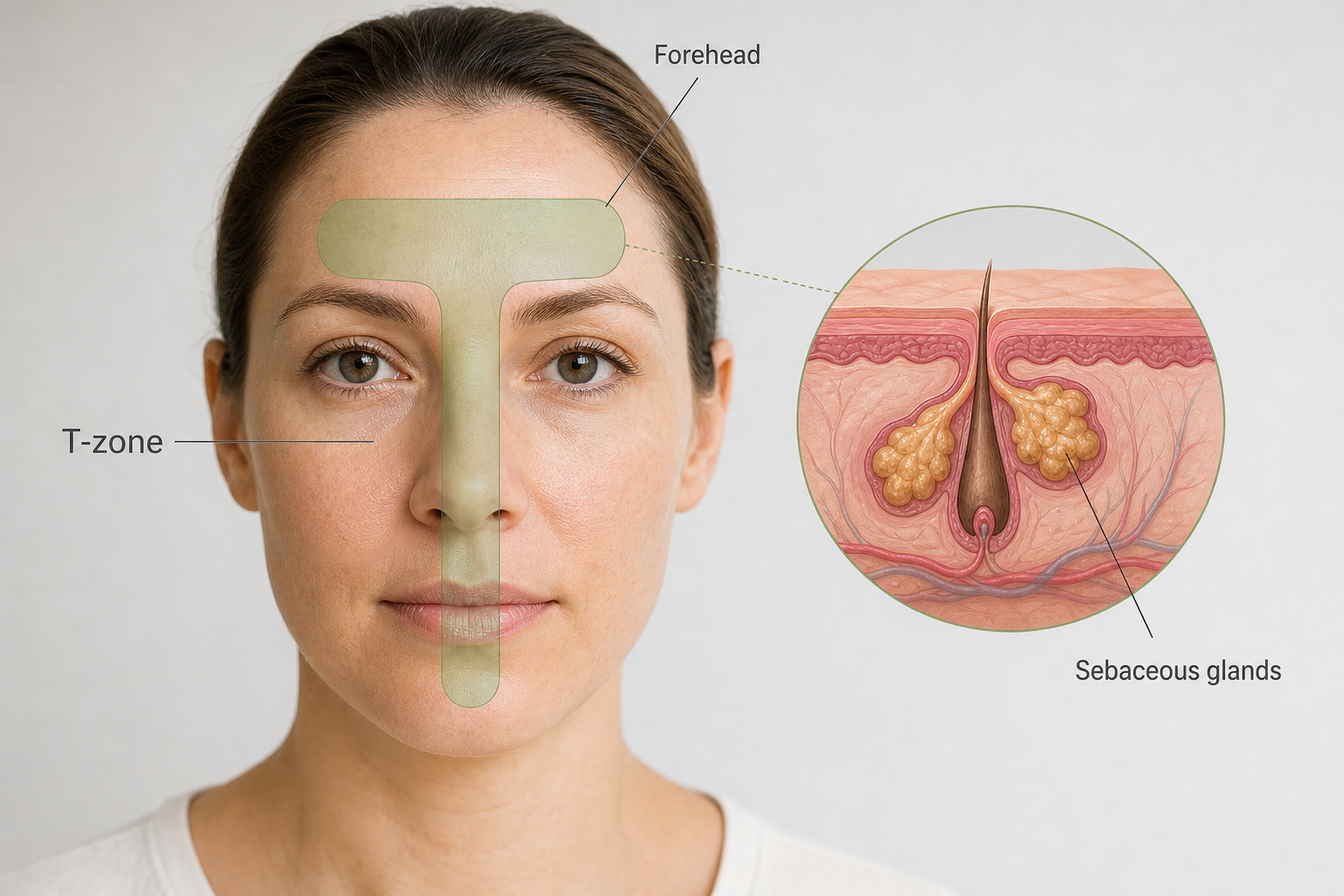

Spots on the forehead are one of the most common skin complaints across all age groups, yet the underlying cause is not always straightforward. The forehead sits within the T-zone, an area naturally rich in sebaceous glands that produce more oil than most other parts of the face. That biological tendency, combined with daily exposure to hair products, friction, hormonal fluctuations, and environmental stressors, makes the forehead particularly vulnerable to recurring breakouts. Understanding what is actually driving your forehead breakout is the first step toward choosing an approach that works.
Key Takeaways
- The forehead is part of the T-zone and contains a high density of sebaceous glands, making it naturally prone to excess sebum production and clogged pores.
- Common triggers include hormonal changes, hair products, friction from hats or headbands, stress, diet, and poor sleep — often in combination.
- Not every bump on the forehead is acne; milia, fungal acne, folliculitis, and rosacea can all look similar but require different treatments.
- Over-the-counter ingredients such as salicylic acid and benzoyl peroxide help many people, but persistent or cystic breakouts benefit from professional assessment.
- Identifying your specific trigger is more effective than treating symptoms alone.
Why the Forehead Is Prone to Breakouts
The T-zone — which runs across the forehead and down the nose and chin — contains a higher concentration of sebaceous glands than the cheeks or temples. These glands secrete sebum, a natural oil that lubricates and protects the skin. When sebum production is well-regulated, it supports a healthy skin barrier. When sebaceous glands become overactive, excess sebum mixes with dead skin cells inside hair follicles, creating the congestion that leads to blackheads, whiteheads, and inflamed pimples.
The forehead also has a relatively large surface area exposed to hair, hats, and hands throughout the day. Each of these contact points can introduce comedogenic substances, friction, or bacteria directly onto skin that is already producing more oil than average. This combination of internal biology and external exposure explains why forehead breakouts are so persistent even when the rest of the face remains clear.
The Main Causes of Spots on the Forehead
1. Excess Sebum Production and Clogged Pores
The most fundamental cause of forehead spots is the overproduction of sebum by the sebaceous glands. When too much oil is produced, it accumulates inside hair follicles alongside shed dead skin cells. This mixture forms a plug — a comedone — that can remain closed (a whitehead) or open and oxidise at the surface (a blackhead). If Cutibacterium acnes, the bacterium naturally present on skin, proliferates within a blocked follicle, the immune system responds with inflammation, producing the red, tender papules and pustules most people recognise as spots.
Excess sebum production is influenced by genetics, hormones, climate, and skincare habits. Using heavy or occlusive moisturisers and skipping cleansing after sweating can worsen congestion even when sebum levels are not unusually high.
2. Hormonal Changes
Hormonal acne is a well-established phenomenon. Androgens — male sex hormones present in both men and women — stimulate the sebaceous glands to enlarge and produce more sebum. During puberty, androgen levels rise sharply, which is why teenage acne so frequently appears on the forehead and T-zone. In adult women, fluctuations across the menstrual cycle, particularly the rise in progesterone after ovulation, can trigger a forehead breakout in the days before a period. Pregnancy, perimenopause, and conditions associated with elevated androgens can all produce similar effects.
Insulin-like growth factor 1 (IGF-1), which rises in response to high-glycaemic foods and dairy, also stimulates androgen activity and sebum production, linking diet to hormonal acne through a shared biological pathway.
3. Hair Products and Pomade Acne
Hair products are a frequently overlooked cause of spots along the hairline and across the forehead. Gels, oils, dry shampoos, leave-in conditioners, pomades, and styling sprays can migrate from the hair onto the forehead skin, particularly during exercise, sleep, or when wearing a fringe. When these products contain comedogenic ingredients, they block pores and trigger the characteristic small, uniform bumps known as pomade acne.
Specific ingredients worth checking on labels include coconut oil, cocoa butter, lanolin, isopropyl myristate, and certain silicones. Switching to non-comedogenic hair products and washing the hairline thoroughly after styling can produce a noticeable improvement within a few weeks. People with a fringe or long hair that rests on the forehead are particularly susceptible to this pattern of hairline breakout.
4. Stress and Cortisol
Psychological stress activates the hypothalamic-pituitary-adrenal (HPA) axis, prompting the adrenal glands to release cortisol. Elevated cortisol and sebum production are directly linked: cortisol stimulates the sebaceous glands to increase oil output, and it also promotes inflammation throughout the body, including within the skin. This is why many people notice a forehead breakout during periods of intense work pressure, exam stress, or significant life events.
Stress also impairs the skin barrier by reducing the production of ceramides and other lipids that keep the barrier intact. A weakened skin barrier allows acne-causing bacteria to penetrate more easily, increases transepidermal water loss, and can trigger compensatory sebum production as the skin attempts to compensate for lost moisture. Managing stress through sleep, exercise, and relaxation techniques is therefore not just general wellness advice — it has a direct physiological effect on skin behaviour.
5. Sleep Deprivation
Poor sleep is closely related to the cortisol pathway but deserves separate consideration. Sleep deprivation raises cortisol levels independently of daytime stress, and it also reduces the skin’s overnight repair capacity. During deep sleep, the body increases cell turnover and repairs damage from UV exposure and environmental pollutants. When sleep is consistently disrupted, this repair process is incomplete, dead skin cells accumulate more rapidly, and the skin’s inflammatory response becomes less regulated. People who notice their forehead spots worsening during periods of poor sleep are likely experiencing this combined effect of elevated cortisol and impaired skin regeneration.
6. Friction and Mechanical Acne
Repeated physical pressure or friction on the forehead can cause mechanical acne — a pattern of breakouts triggered not by internal biology but by external contact. Wearing tight hats, helmets, headbands, or sweatbands creates sustained pressure and traps sweat and heat against the skin. This environment encourages bacterial growth and disrupts the follicle wall, producing spots that follow the exact outline of the item causing friction.
Mechanical acne tends to appear in a clear geometric pattern corresponding to the contact area. Reducing or eliminating the source of friction, keeping the affected area clean after wearing headgear, and choosing moisture-wicking fabrics can help resolve this type of forehead breakout without the need for topical treatments.
7. Diet and High-Glycaemic Foods
The relationship between diet and acne has been studied more rigorously in recent years. High-glycaemic index (GI) foods — including white bread, sugary drinks, processed snacks, and refined carbohydrates — cause rapid spikes in blood glucose and insulin. Elevated insulin stimulates IGF-1, which in turn increases androgen activity and sebum production. Some research also suggests that dairy products, particularly skimmed milk, may contribute to acne through IGF-1 pathways, though the evidence is less consistent than for high-GI foods.
Dietary changes alone are unlikely to clear established acne, but reducing high-GI foods and monitoring whether specific foods correlate with flares can be a useful part of a broader management strategy, particularly for people whose breakouts do not respond fully to topical treatments.
8. Touching Your Face and Pillowcase Hygiene
The hands carry bacteria, oils, and residues from everything they touch throughout the day. Resting the forehead on the hands, pushing hair back repeatedly, or touching spots directly transfers these substances onto skin that may already be congested. Phone screens pressed against the face during calls are another underappreciated source of bacterial transfer.
Pillowcases accumulate sebum, dead skin cells, hair product residue, and bacteria over several nights of use. Sleeping on the same pillowcase for a week or more means the forehead is in prolonged contact with this build-up for several hours each night. Changing pillowcases every two to three days, using a clean towel to pat the face dry, and being conscious of face-touching habits are simple hygiene measures that can meaningfully reduce the bacterial load on forehead skin.
Types of Spots That Appear on the Forehead
Not all forehead spots are the same, and identifying the type helps guide the right approach.
| Type | Appearance | Likely Cause | General Approach |
|---|---|---|---|
| Blackheads | Open, dark-tipped pores | Oxidised sebum plug | Salicylic acid, gentle exfoliation |
| Whiteheads | Closed, flesh-coloured bumps | Closed comedone | Salicylic acid, retinoids |
| Papules | Small, red, raised bumps | Inflamed follicle | Benzoyl peroxide, topical antibiotics |
| Pustules | Red base with white/yellow tip | Bacterial inflammation | Benzoyl peroxide, professional assessment |
| Cystic spots | Deep, painful, large nodules | Severe inflammation | Dermatologist assessment recommended |
| Pomade acne | Small uniform bumps at hairline | Comedogenic hair products | Remove product trigger, salicylic acid |
| Fungal acne | Uniform itchy follicular bumps | Malassezia yeast overgrowth | Antifungal treatment (ketoconazole) |
When Forehead Spots Are Not Acne
Several skin conditions can produce bumps on the forehead that resemble acne but have different causes and require different treatments. Applying standard acne products to these conditions may be ineffective or even irritating.
Milia are small, hard, white cysts that form when keratin becomes trapped beneath the skin surface. Unlike whiteheads, milia are not caused by blocked sebaceous glands and do not respond to salicylic acid or benzoyl peroxide. They are most common around the eyes but can appear on the forehead, particularly after skin trauma or heavy occlusive products.
Fungal acne, more accurately called Malassezia folliculitis, is caused by an overgrowth of Malassezia yeast within hair follicles rather than by Cutibacterium acnes. It typically presents as clusters of small, uniform, itchy bumps that do not vary much in size. Fungal acne does not respond to standard antibacterial acne treatments and may actually worsen with certain skincare ingredients that feed the yeast. Antifungal treatments such as ketoconazole shampoo used as a wash, or prescription antifungal creams, are the appropriate approach. If your forehead spots are uniformly sized, persistently itchy, and have not improved with conventional acne products, fungal acne is worth discussing with a dermatologist.
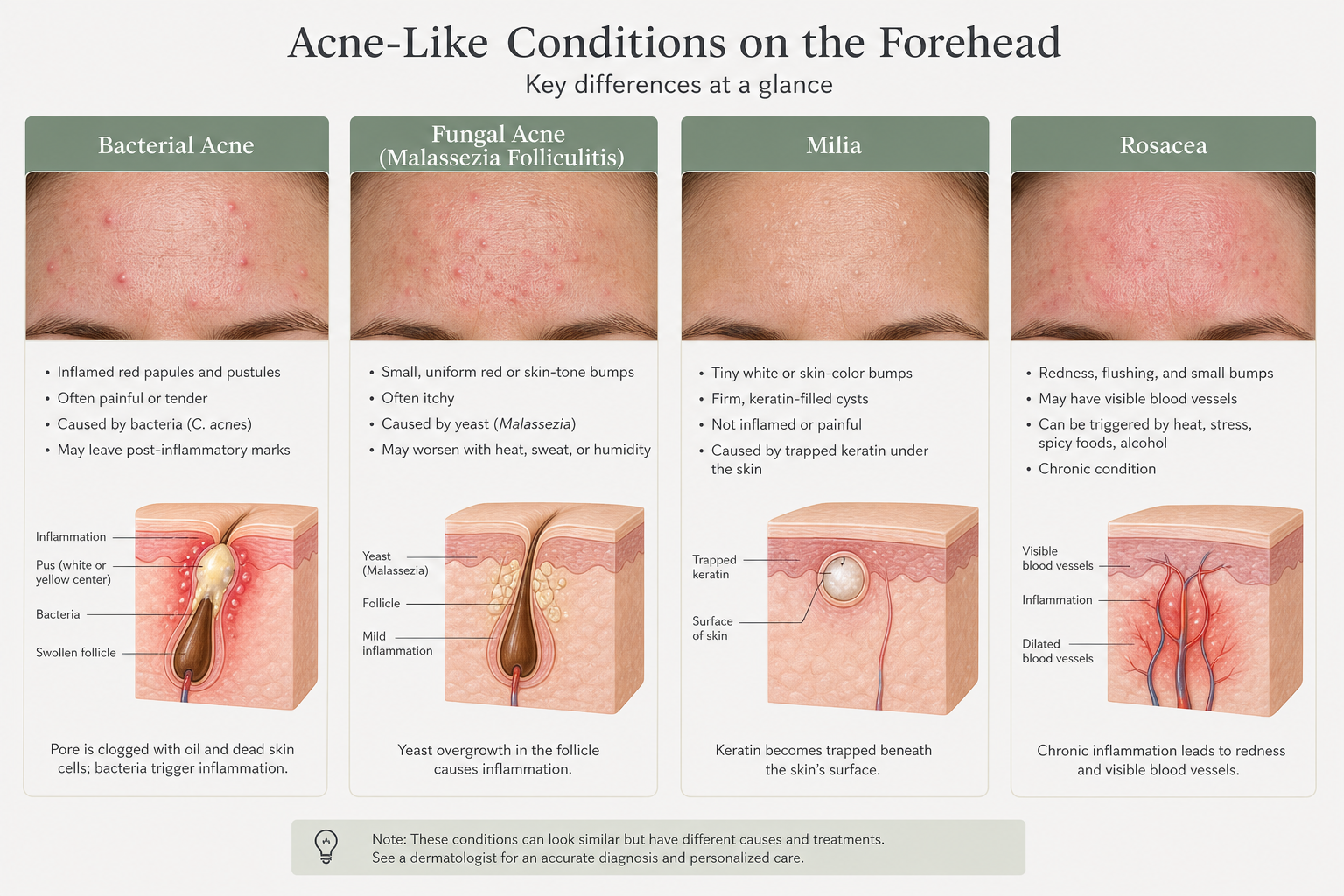
Folliculitis is an infection or inflammation of the hair follicle, often caused by bacteria or fungi, and can appear as red, tender bumps similar to acne papules. It is more common after shaving, waxing, or wearing occlusive headgear.
Rosacea can produce red papules and pustules on the forehead that closely resemble acne, but rosacea is typically accompanied by persistent facial redness, flushing, and visible blood vessels. Standard acne treatments may aggravate rosacea, so accurate diagnosis matters.
Contact dermatitis from a new skincare product, hair product, or hat material can produce an itchy, inflamed rash with small bumps that is sometimes mistaken for a breakout. The distribution often follows the area of contact precisely.
The Skin Barrier and Forehead Breakouts
The skin barrier — the outermost layer of the epidermis — plays a more significant role in forehead acne than is often acknowledged. A healthy skin barrier retains moisture, regulates the skin microbiome, and limits the penetration of irritants and bacteria. When the barrier is compromised, whether by over-cleansing, harsh exfoliants, environmental stress, or elevated cortisol, several things happen simultaneously: transepidermal water loss increases, the skin becomes more susceptible to colonisation by acne-causing bacteria, and the sebaceous glands may increase oil production in a compensatory response to perceived dryness.
This means that aggressive cleansing routines intended to reduce oiliness can paradoxically worsen forehead breakouts by disrupting the barrier. Using a gentle, non-stripping cleanser twice daily, incorporating barrier-supporting ingredients such as niacinamide and ceramides, and avoiding over-exfoliation can help restore barrier function and reduce the frequency of breakouts over time.
Forehead Spots by Life Stage
The most likely cause of forehead spots varies meaningfully by age, which can help narrow down the trigger.
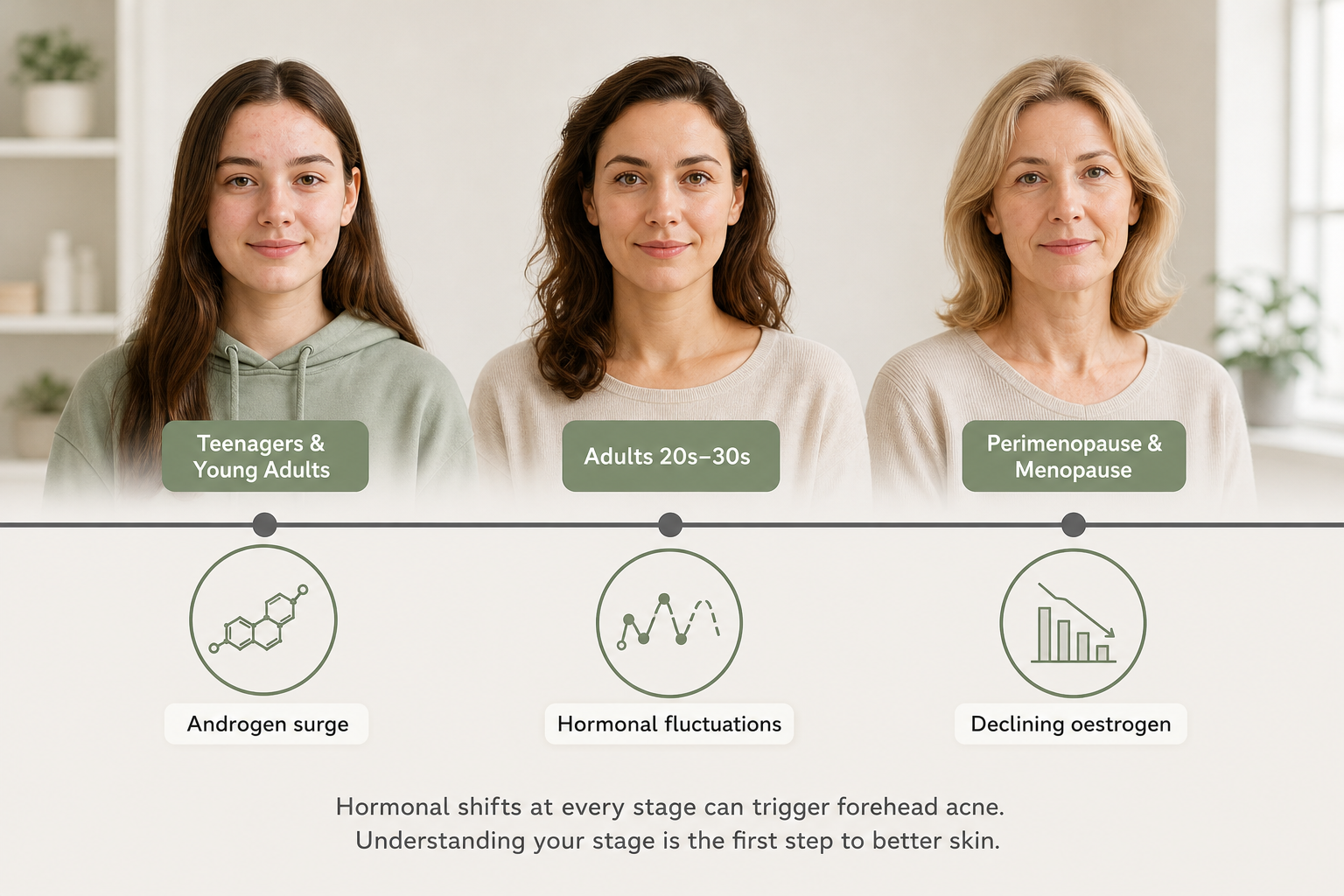
Teenagers and young adults most commonly experience forehead breakouts driven by the surge in androgen levels during puberty. Sebaceous glands enlarge and become more active, producing the excess sebum that characterises teenage acne. The T-zone is typically the first area affected. Consistent cleansing, non-comedogenic products, and over-the-counter salicylic acid or benzoyl peroxide are appropriate first steps, with a GP or dermatologist referral warranted for moderate to severe cases.
Adults in their twenties and thirties may find that hormonal fluctuations related to the menstrual cycle, contraceptive changes, or stress are the primary driver. Hair product use and lifestyle factors such as diet and sleep quality also become more relevant in this group. Adult acne that persists or appears for the first time after the mid-twenties often benefits from professional assessment to rule out underlying hormonal conditions.
Perimenopausal and menopausal women can experience a resurgence of forehead spots as oestrogen levels decline and the relative influence of androgens increases. This hormonal shift can reactivate sebaceous gland activity after years of clear skin. Skincare routines that worked in earlier decades may need to be reassessed, and a dermatologist or GP can advise on whether hormonal or prescription treatments are appropriate.
Treatment Options for Forehead Breakouts
Treatment should be matched to the type and likely cause of the spots rather than applied uniformly.
Salicylic acid is a beta-hydroxy acid that penetrates into the pore lining and dissolves the sebum and dead skin cell mixture that causes clogged pores. It is particularly effective for blackheads, whiteheads, and mild inflammatory spots. Concentrations of 0.5–2% are available over the counter in cleansers, toners, and spot treatments.
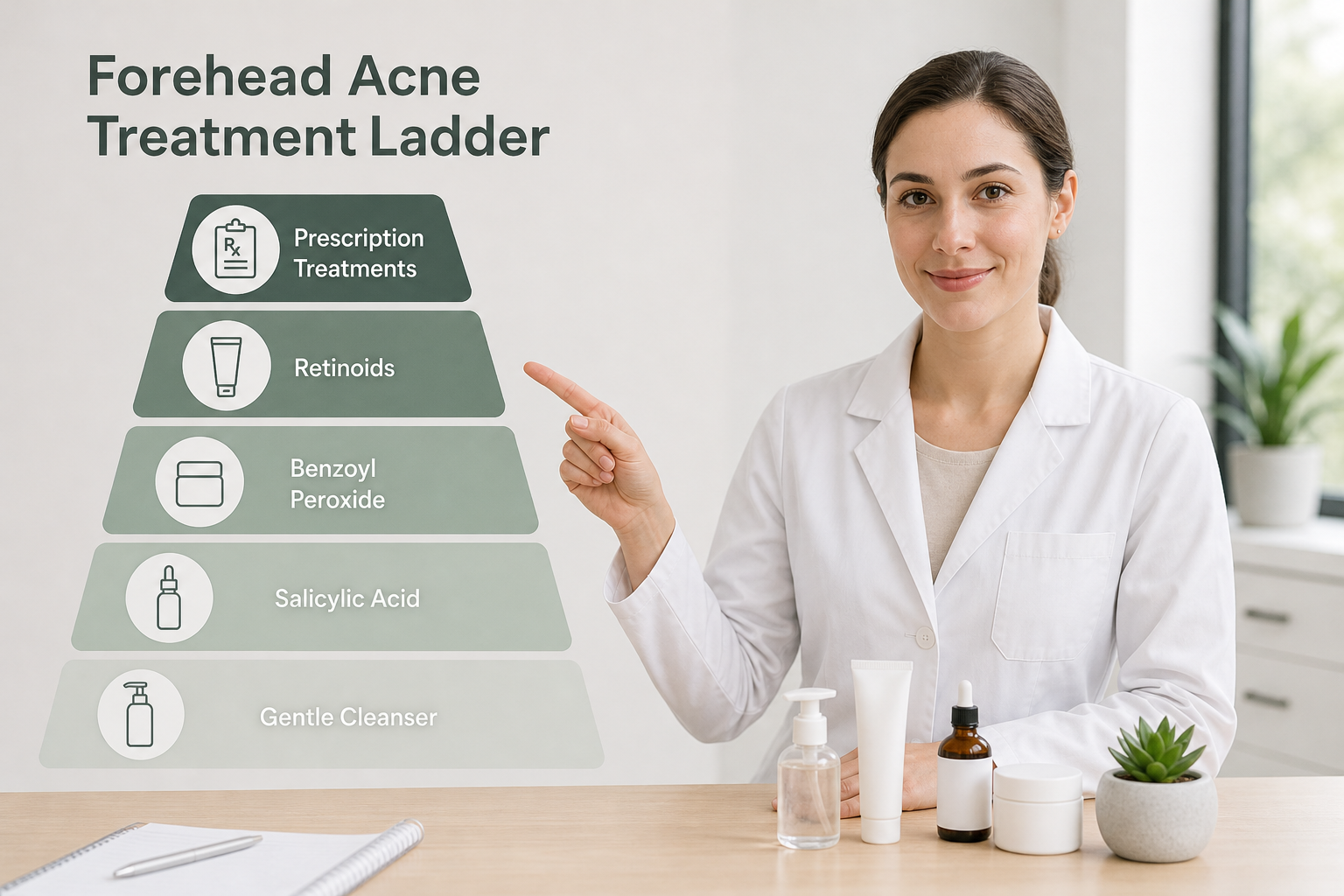
Benzoyl peroxide works by releasing oxygen within the follicle, which kills Cutibacterium acnes and reduces inflammation. It is effective for inflammatory papules and pustules and is available in concentrations from 2.5% to 10%. Higher concentrations are not necessarily more effective and carry a greater risk of dryness and irritation. Starting at a lower concentration and building tolerance is advisable.
Retinoids, including over-the-counter retinol and prescription tretinoin, increase cell turnover, prevent the formation of new comedones, and reduce inflammation over time. They are among the most evidence-supported topical treatments for acne but require consistent use over several weeks before results become apparent, and they can cause initial dryness and purging.
Niacinamide (vitamin B3) helps regulate sebum production, supports the skin barrier, and has mild anti-inflammatory properties. It is well tolerated and can be used alongside other active ingredients.
Topical antibiotics such as clindamycin are available on prescription and are effective for inflammatory acne, though they are generally recommended in combination with benzoyl peroxide to reduce the risk of antibiotic resistance.
Antifungal treatments including ketoconazole are the appropriate choice when fungal acne (Malassezia folliculitis) is suspected or confirmed.
For persistent, cystic, or treatment-resistant forehead acne, a dermatologist may consider oral antibiotics, hormonal therapies, or isotretinoin, depending on the severity and the individual’s medical history.
Practical Prevention Strategies
Preventing forehead breakouts involves addressing the specific triggers relevant to the individual rather than following a generic routine.
- Cleanse the forehead gently twice daily with a non-comedogenic, pH-balanced cleanser, and always cleanse after exercise or heavy sweating.
- Check hair product labels for comedogenic ingredients and switch to non-comedogenic formulations where possible.
- Change pillowcases every two to three days, or use a clean towel over the pillow as a practical alternative.
- Avoid resting the forehead on the hands and minimise touching the face throughout the day.
- If wearing hats or helmets regularly, clean the contact area of the skin promptly afterwards and choose moisture-wicking liners where available.
- Reduce high-GI foods and monitor whether specific dietary patterns correlate with flares.
- Prioritise consistent sleep and stress management as part of a skin health strategy, not just general wellbeing.
- Avoid over-cleansing or using harsh physical scrubs, which can disrupt the skin barrier and worsen breakouts.
Frequently Asked Questions
Why do I only get spots on my forehead and nowhere else?
The forehead is part of the T-zone, which has a higher density of sebaceous glands than the cheeks or temples. This makes it naturally more prone to excess sebum production and clogged pores. Hair product migration, friction from hats or headbands, and the habit of touching the forehead can all concentrate triggers in this specific area without affecting the rest of the face.
Can hair products really cause forehead spots?
Yes. Products containing comedogenic ingredients such as coconut oil, cocoa butter, lanolin, or isopropyl myristate can migrate from the hair onto the forehead, particularly along the hairline. This pattern — known as pomade acne — typically produces small, uniform bumps concentrated at the hairline. Switching to non-comedogenic hair products and cleansing the hairline thoroughly after styling often resolves this type of breakout.
How can I tell if my forehead spots are fungal rather than bacterial acne?
Fungal acne (Malassezia folliculitis) tends to present as clusters of small, uniform bumps that are often itchy. Unlike bacterial acne, the spots do not vary much in size and do not include the deeper, more painful nodules associated with cystic acne. Fungal acne typically does not respond to standard antibacterial acne treatments and may worsen with certain skincare ingredients. If your spots are uniformly sized, itchy, and have not improved with conventional products, a dermatologist can confirm the diagnosis and recommend appropriate antifungal treatment.
Is forehead acne always hormonal?
Not always. While hormonal changes are a significant driver — particularly during puberty, the menstrual cycle, pregnancy, and perimenopause — forehead breakouts can also be caused by hair products, friction, stress, diet, poor sleep, and disrupted skin barrier function. Identifying the specific trigger or combination of triggers is more useful than assuming a hormonal cause without investigation.
Should I use the same acne products on my forehead as on the rest of my face?
Generally yes, but the forehead may tolerate active ingredients differently depending on skin thickness and sebum levels. If you are using retinoids or benzoyl peroxide, starting with a lower concentration and monitoring for irritation is sensible. If the bumps on your forehead are not responding to standard acne products, consider whether the spots might be milia, fungal acne, or another condition that requires a different approach.
When should I see a dermatologist about forehead spots?
Consider seeking professional assessment if spots are deep, cystic, or painful; if over-the-counter treatments have not produced improvement after eight to twelve weeks of consistent use; if breakouts are leaving post-inflammatory marks or scarring; if you suspect the spots may not be standard acne; or if forehead breakouts are significantly affecting your quality of life. A dermatologist can confirm the diagnosis, identify underlying causes, and recommend prescription treatments where appropriate.
Getting to the Root of Your Forehead Breakouts
Persistent spots on the forehead rarely have a single cause. For most people, the pattern reflects a combination of the forehead’s natural biology — its high sebaceous gland density and T-zone position — and one or more specific triggers such as hormonal fluctuations, hair products, friction, stress, or diet. Addressing the symptom with a topical product while the underlying trigger continues is why many people find their breakouts return as soon as they stop treatment.
Taking time to identify which factors are most relevant to your own pattern — whether that means reviewing hair product ingredients, adjusting sleep habits, or monitoring dietary triggers — tends to produce more durable results than a generic skincare routine. For breakouts that are persistent, inflammatory, or not responding to over-the-counter measures, a consultation with a dermatologist or aesthetic medicine practitioner can provide a clearer diagnosis and access to prescription-strength treatments that are not available without professional guidance.
