

Key Takeaways
- Botox in the cheeks is used for three distinct purposes: creating a subtle lift, slimming the lower face via the masseter muscle, and softening cheek lines or bands.
- The cheek lift effect works by relaxing downward-pulling depressor muscles, allowing upward-acting muscles to have greater influence — the resulting lift is subtle, typically in the range of 1–3 mm.
- Cheek Botox is an off-label use of botulinum toxin type A, meaning injector skill and facial anatomy knowledge are especially important.
- Results generally last 3–6 months and are best suited to patients with mild to moderate concerns and reasonable skin elasticity.
- Dermal fillers address volume loss; Botox does not add volume. A combination treatment may be recommended when both muscle-related sagging and hollowness are present.
What Does Botox in the Cheeks Actually Do?
Botox — the brand name for botulinum toxin type A — is widely associated with forehead lines and crow’s feet, but its use in the cheek area has grown considerably as practitioners have developed a more nuanced understanding of facial ageing. The term “cheek Botox” covers three meaningfully different treatments, and understanding which one applies to your concern is essential before booking a consultation.
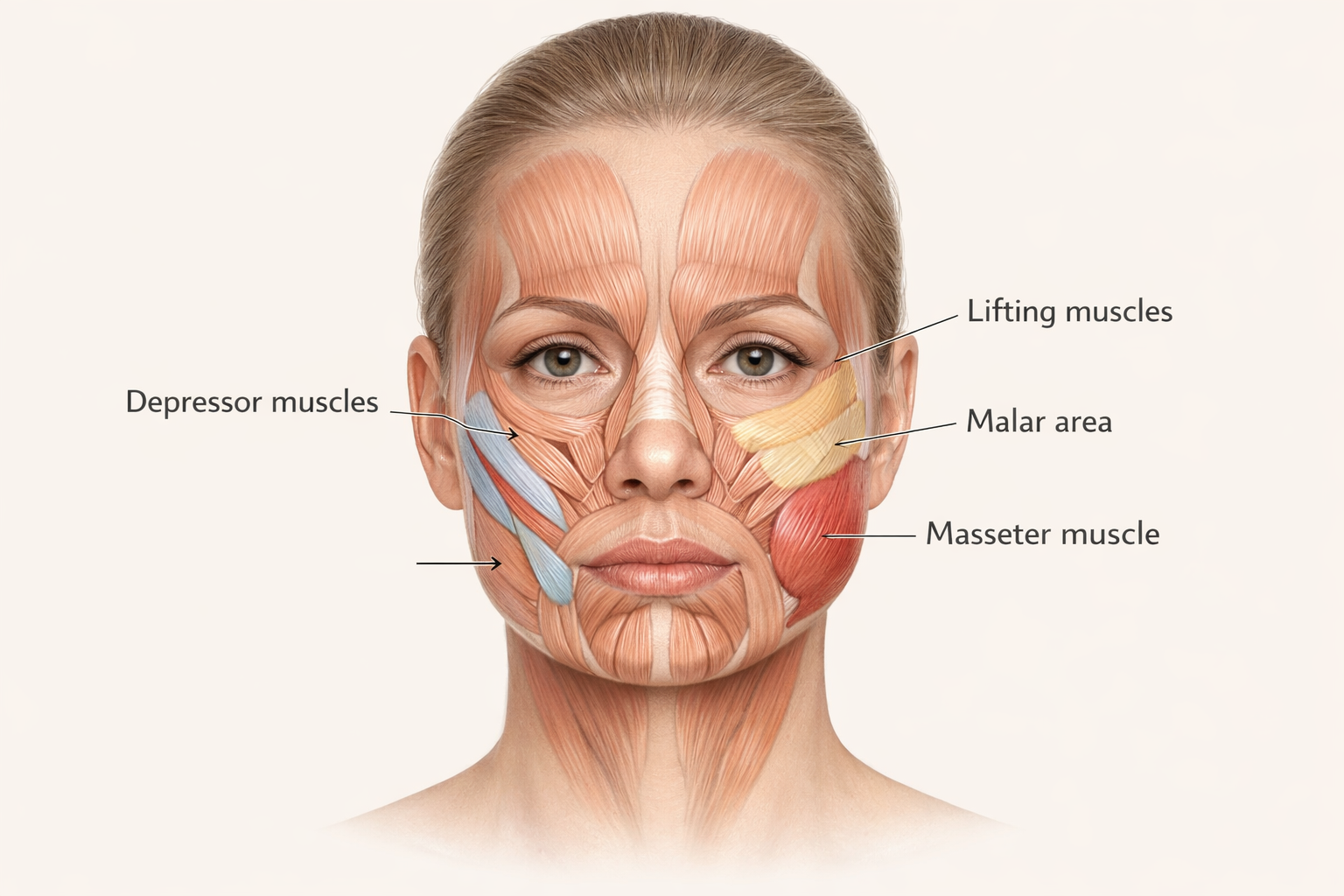
The first use is the Botox cheek lift, which targets the muscles that pull the midface downward. By temporarily relaxing these depressor muscles, the procedure allows the opposing upward-acting muscles to exert slightly more influence, producing a gentle repositioning of the malar area. The second use is masseter Botox, which slims the lower face by reducing the bulk of the masseter muscle — the large chewing muscle that sits at the jaw angle. The third use involves injecting small amounts of botulinum toxin into the cheek itself to soften fine lines, dimpling, or muscle bands that form across the cheek surface during movement.
Each approach has its own mechanism, candidacy criteria, and risk profile. They are often described together on clinic websites, but they are not interchangeable, and the right option depends entirely on what the patient is trying to address.
How the Botox Cheek Lift Works
Facial ageing involves a combination of volume loss, skin laxity, bone resorption, and changes in how the facial muscles interact. In younger faces, the muscles responsible for lifting the midface are relatively dominant. With age, the downward-pulling depressor muscles — particularly around the lower cheek and mouth corners — can become comparatively more active, contributing to mild drooping of the cheek tissue.
The Botox cheek lift addresses this muscle imbalance rather than adding volume or surgically repositioning tissue. Small doses of botulinum toxin type A are injected into carefully identified depressor muscles. As those muscles are temporarily relaxed over the following days, the lifting muscles are less opposed, and the cheek position improves slightly. The lift is real but modest — clinical assessments suggest an improvement in the region of 1–3 mm, which is perceptible to the eye without looking artificial when performed correctly.
This approach is an off-label use of botulinum toxin, meaning it falls outside the standard licensed indications for the product. Off-label treatments are routine in aesthetic medicine and are not inherently unsafe, but they do place greater responsibility on the practitioner. Detailed knowledge of facial anatomy, muscle function, and injection depth is essential, and this is not a treatment to approach with an inexperienced injector.
Masseter Botox and Facial Contouring
Masseter Botox is technically applied to the jaw rather than the cheek itself, but it directly influences the appearance of the lower cheek and is frequently discussed in the same context. The masseter is a powerful chewing muscle; when it is enlarged — due to genetics, teeth grinding (bruxism), or habitual jaw clenching — it creates a wide, squarish lower face. Injecting botulinum toxin type A into the masseter causes the muscle to reduce in bulk gradually over 6–8 weeks, producing a narrower, more V-shaped lower face.
The facial contouring effect of masseter Botox can be significant and is one of the more reliably consistent outcomes in aesthetic practice. However, there is one risk that deserves more attention than it typically receives in patient-facing information: sunken cheek appearance. When the masseter reduces substantially in volume, the overlying cheek tissue can lose structural support, creating a hollowed or gaunt look in the submalar region. Peer-reviewed research has documented this as a genuine adverse effect, particularly in patients who already have low cheek volume or who undergo repeated treatments over many years. Selecting an experienced injector who assesses cheek volume before treatment — and who can adjust dosing accordingly — significantly reduces this risk.
Who May Be a Good Candidate for Cheek Botox
Patient selection matters considerably with cheek Botox because the treatment can only address concerns that are muscle-related. A thorough assessment is needed to determine whether the visible change a patient wants is caused by muscle activity, volume loss, or skin laxity — and these often coexist.
Patients who may be suitable for the cheek lift approach:
- Adults with mild to moderate drooping of the midface that is primarily muscle-related rather than caused by significant volume loss
- Patients generally under 50–55, where skin elasticity is still adequate to respond to positional improvement
- Those experiencing early signs of ageing who want a non-surgical alternative to facelift surgery
- Patients who have realistic expectations about a subtle, natural-looking improvement
Patients who may be less suitable:
- Those with significant volume loss in the midface — hollowness and sunken cheeks are better addressed with a hyaluronic acid filler or other volumising treatment
- Patients with advanced skin laxity, where the degree of sagging exceeds what muscle relaxation can meaningfully improve
- Those hoping for a dramatic transformation comparable to a surgical facelift
- Patients who are pregnant, breastfeeding, or have certain neuromuscular conditions
- Individuals on blood-thinning medications (who may need to pause these under medical guidance before treatment)
For masseter Botox specifically, patients with very low cheek volume or a naturally slender face may be at higher risk of the sunken cheek outcome described above and should discuss this carefully with their practitioner before proceeding.
Botox vs. Dermal Fillers for the Cheeks
One of the most common points of confusion is whether Botox or dermal fillers are the better option for cheek concerns. The two treatments work entirely differently and are not straightforward alternatives to each other — in many cases, they complement one another.
| Characteristic | Cheek Botox | Cheek Dermal Filler |
|---|---|---|
| Mechanism | Temporarily relaxes muscles; no volume added | Adds or restores volume directly |
| Active substance | Botulinum toxin type A | Hyaluronic acid (e.g. Juvederm Voluma, Restylane) or calcium hydroxylapatite (Radiesse) |
| Best suited for | Muscle-related sagging, facial slimming, surface lines | Volume loss, hollow cheeks, cheekbone definition |
| Onset of results | 3–7 days; peak at approximately 2 weeks | Immediate, with final result within 2–4 weeks as swelling resolves |
| Duration | 3–6 months | 12–24 months depending on product and patient |
| Downtime | Minimal; minor bruising or swelling possible | Minimal to moderate; bruising and swelling more common |
| Reversibility | Wears off naturally | Hyaluronic acid fillers can be dissolved with hyaluronidase |
| Risk of overcorrection | Asymmetry, frozen appearance, sunken cheek (masseter) | Overfilling, migration, vascular occlusion (rare but serious) |
Botox does not restore lost volume. If the primary concern is hollowness or flattened cheekbones — common after the natural fat pad changes of midlife — a hyaluronic acid filler targeting the malar area is the more appropriate first-line option. Botox is better suited to situations where muscle dynamics are contributing to the aesthetic concern.
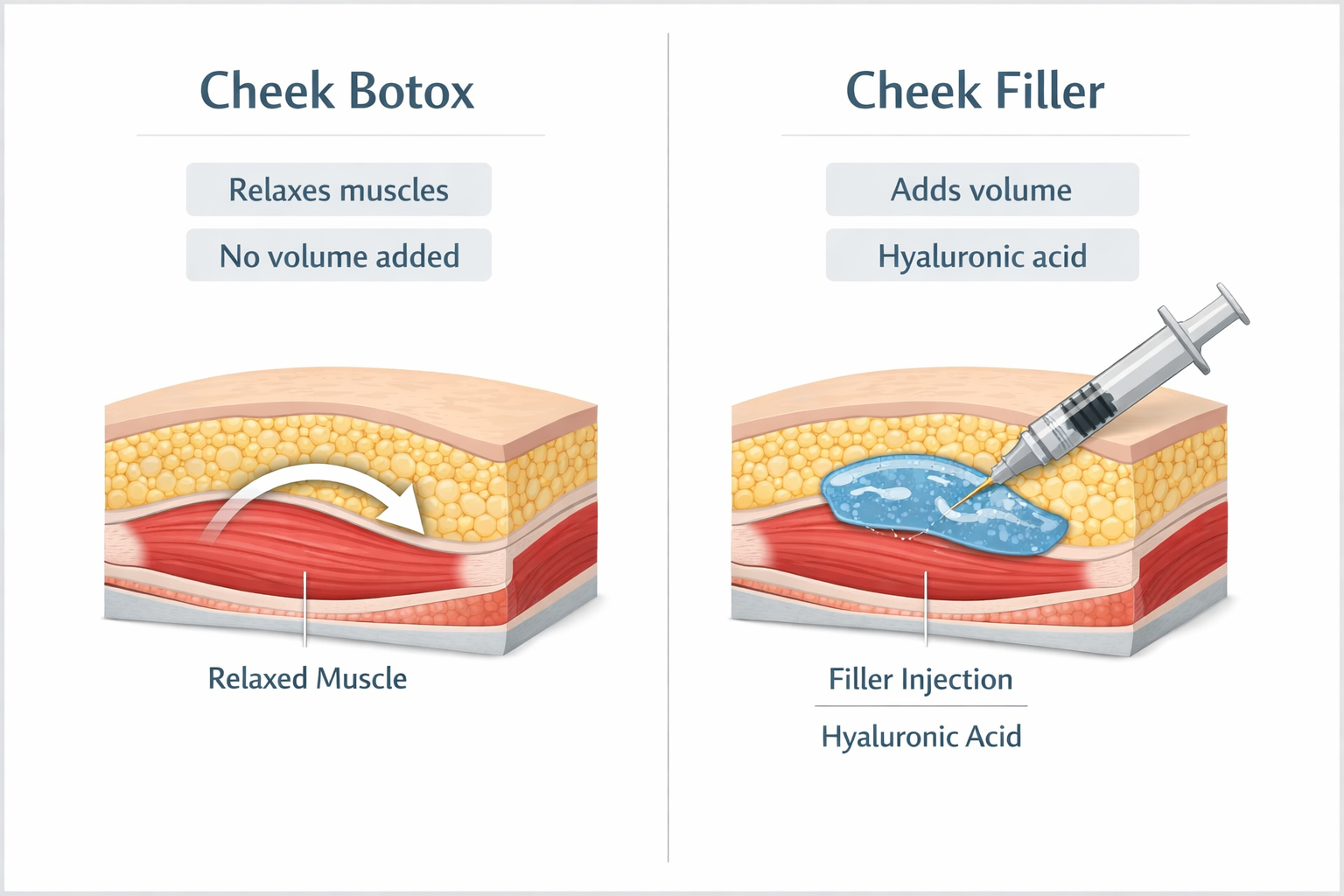
A combination treatment approach, using small amounts of botulinum toxin alongside targeted filler, is increasingly used in clinical practice for patients where both volume loss and muscle-related sagging are present. When planned correctly by a skilled practitioner, combining these treatments can produce a more balanced result than either alone. This approach requires a clear treatment plan and careful sequencing, and is typically discussed over more than one consultation.
What Happens During a Cheek Botox Appointment
A cheek Botox appointment typically begins with a thorough consultation, during which the practitioner assesses facial structure, muscle activity, skin quality, and the patient’s specific goals. This assessment stage is particularly important for cheek treatments because the anatomy in this area is more complex than the forehead, and the margin for error is smaller.
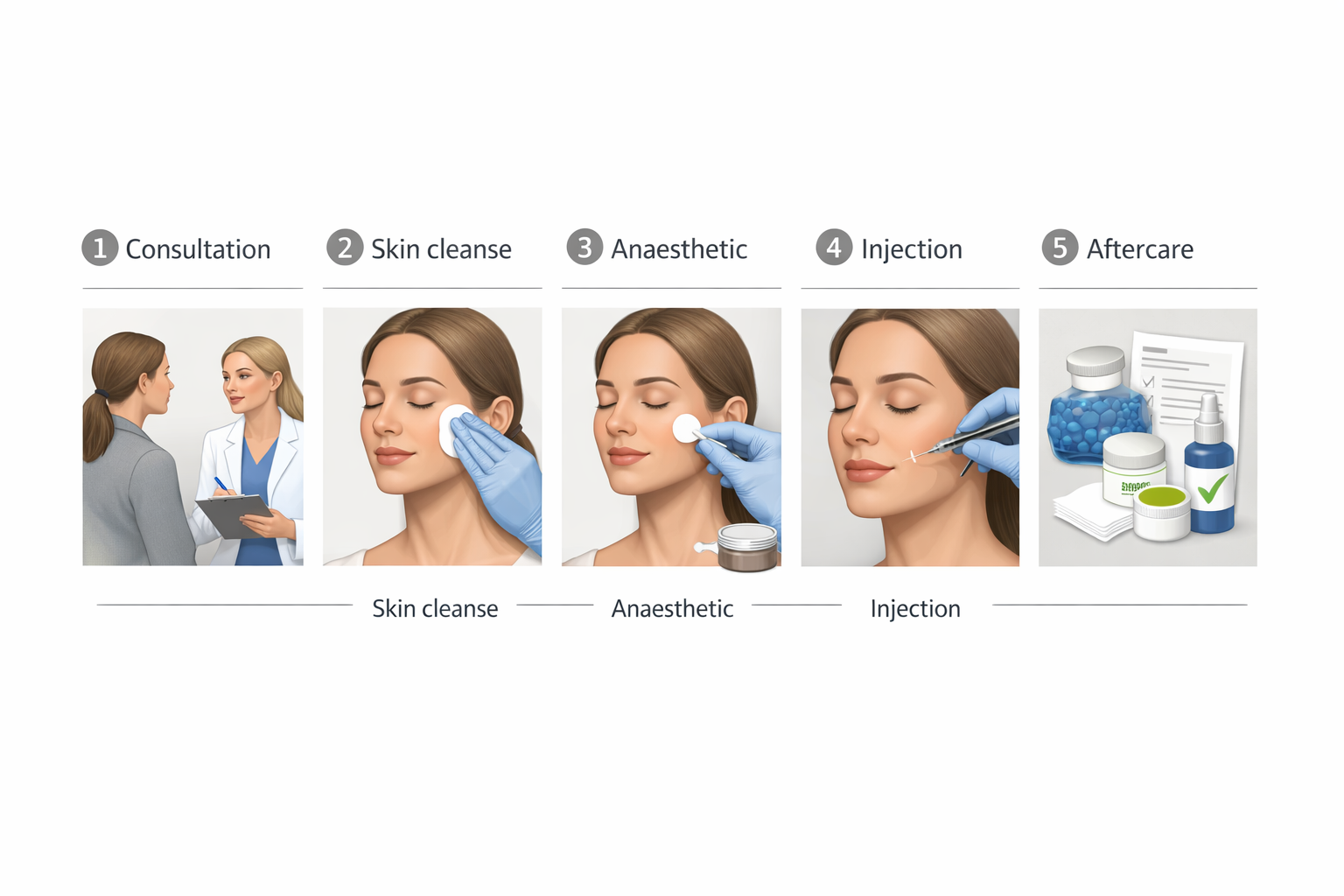
Once the treatment plan is agreed, the skin is cleansed and a topical anaesthetic cream may be applied for comfort, though many patients find the injections tolerable without it. Botulinum toxin is delivered via a fine needle into the targeted muscle or muscles. The number of injection points and the doses used will vary based on the individual assessment — no two treatment plans are identical.
The appointment itself is generally brief, often 20–30 minutes including consultation time for returning patients. There is no requirement for sedation or a clinical facility beyond a clean treatment room. Patients can typically return to most daily activities immediately.
Recovery, Aftercare, and What to Avoid
Cheek Botox involves no significant downtime. Some patients experience minor bruising, swelling, or tenderness at the injection sites for a few days, but these effects are generally mild and resolve on their own. The following aftercare guidance is commonly recommended, though patients should always follow the specific instructions provided by their own practitioner:
- Remain upright for at least 4 hours after treatment — avoid lying flat or bending the head forward for prolonged periods
- Avoid strenuous exercise and significant heat exposure (saunas, steam rooms, hot baths) for 24–48 hours
- Avoid flying for approximately 24 hours post-treatment where possible
- Do not massage or apply pressure to the treated area in the first 24 hours
- Avoid alcohol for the remainder of the treatment day to reduce bruising risk
- Monitor for any unexpected side effects and contact the clinic if anything causes concern
Results from cheek Botox begin to become visible within 3–7 days as the botulinum toxin takes effect, with the full result typically apparent at around two weeks. Some clinics offer a follow-up review at this stage to assess the outcome and, if needed, make minor adjustments.
How Long Do Results Last and What Affects Longevity?
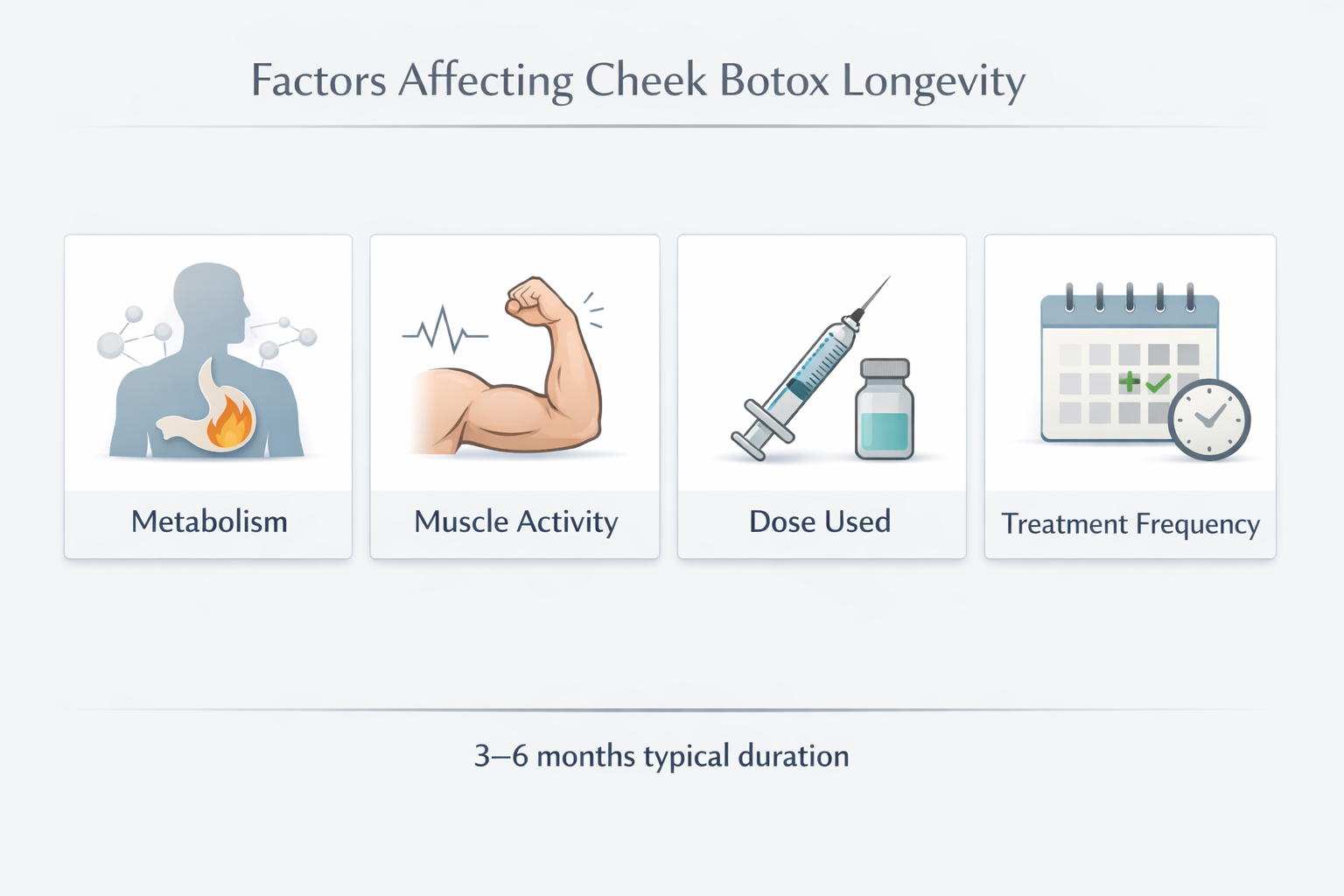
Cheek Botox results generally last between 3 and 6 months, though this varies between individuals. Several factors influence how quickly the effects wear off. Patients with high levels of physical activity or a faster general metabolism tend to break down botulinum toxin more quickly. The muscle mass in the treated area also plays a role — larger, more active muscles may require higher doses and may reassert their function sooner. The specific dose used and the injection technique both contribute to the duration as well.
For masseter Botox, repeat treatments over time can lead to progressive muscle weakening, meaning later sessions may require lower doses to maintain the same result. This is generally considered beneficial, but it does mean that patients who stop treatment entirely may find the masseter gradually returns to its original size, particularly if bruxism or jaw clenching continues.
For the cheek lift effect, repeat treatments are typically needed every 3–6 months to maintain the outcome. Some practitioners find that consistent treatment over time can produce longer intervals between sessions, though individual response varies considerably. Patients should discuss a realistic maintenance schedule during their consultation and factor this into their decision-making.
Risks and Side Effects to Understand Before Treatment
Cheek Botox is generally well-tolerated, but it carries risks that should be clearly understood before proceeding. The most common side effects are mild and temporary: bruising, localised swelling, redness, and tenderness at injection sites. These typically resolve within a few days.
More significant risks include:
- Facial asymmetry — if botulinum toxin spreads to unintended muscles or if dosing is uneven, visible asymmetry can result. This is technique-dependent and underlines the importance of choosing an experienced injector.
- Frozen or flattened appearance — over-treatment or imprecise placement can reduce natural facial movement in a way that looks unnatural.
- Sunken cheek — as discussed in the masseter Botox section, significant muscle reduction can leave the cheek tissue without adequate support, resulting in a hollowed appearance. This risk is higher in patients with low baseline cheek volume.
- Ptosis — unwanted drooping of adjacent structures if botulinum toxin migrates beyond the intended area. This is rare with appropriate technique but possible.
- Unexpected migration — in the complex musculature of the midface, toxin can occasionally diffuse to neighbouring muscles and affect nearby expressions or movements temporarily.
All of these risks are reduced significantly by selecting a practitioner with specific training and demonstrable experience in lower-face and cheek Botox, not simply general aesthetic injection experience. Before treatment, it is reasonable to ask about the practitioner’s qualifications, their specific experience with cheek treatments, and how they manage complications if they arise.
Alternatives to Cheek Botox
Cheek Botox is one option among several for midface rejuvenation and facial contouring, and for some patients an alternative treatment will be more appropriate.
Cheek dermal fillers (using hyaluronic acid products such as Juvederm Voluma or Restylane, or a biostimulatory filler such as Radiesse) are the most commonly recommended alternative when volume loss is the primary concern. They can restore cheekbone definition, lift the appearance of the midface, and improve the malar area in ways that Botox cannot.
PDO threads offer a mechanical lift by inserting dissolvable threads beneath the skin to physically reposition tissue. Results tend to last longer than Botox — typically 12–18 months — and may be more appropriate for patients with moderate skin laxity who are not yet ready for surgery.
Surgical facelift remains the most effective long-term solution for significant skin laxity and tissue descent. For patients whose concerns fall outside what non-surgical treatments can realistically address, referral for a surgical consultation is appropriate.
Buccal fat removal is a surgical option that reduces midface fullness by removing fat pads from inside the cheek — relevant for a small subset of patients who want a more defined midface and are not concerned about future volume loss with age.
How to Choose a Qualified Practitioner
Because cheek Botox is an off-label treatment involving the complex anatomy of the midface, practitioner selection is more important here than for routine forehead treatments. When evaluating a practitioner or clinic, consider the following:
- Verify that the practitioner holds a relevant medical, dental, or nursing qualification and is registered with the appropriate regulatory body in your country
- Ask specifically about their experience with lower-face and cheek injections — general aesthetic training is not always sufficient
- Look for practitioners who offer a thorough consultation rather than a quick booking process — facial assessment before treatment is non-negotiable for cheek work
- Ask how they manage adverse events and whether they hold appropriate indemnity insurance
- Be cautious of significantly discounted treatments or providers who cannot clearly explain the mechanism, risks, and alternatives
Before and after cheek Botox photographs from actual patients treated by the practitioner can provide useful context, though individual results will always vary based on anatomy, skin quality, and treatment goals.
Frequently Asked Questions
Can Botox actually lift the cheeks?
Yes, but the effect is subtle. By relaxing the depressor muscles that pull cheek tissue downward, botulinum toxin type A allows the opposing lifting muscles to have slightly more influence. The resulting lift is typically in the range of 1–3 mm — noticeable and natural-looking in appropriate candidates, but not comparable to a surgical procedure or dermal filler volumisation.
How long does cheek Botox last?
Results typically last between 3 and 6 months. Factors including individual metabolism, the muscle treated, physical activity levels, and the dose used all influence exactly how long effects persist in any given patient.
Does cheek Botox hurt?
Most patients describe the injections as mildly uncomfortable rather than painful. A fine needle is used, and topical anaesthetic cream can be applied beforehand if the patient prefers. The cheek area may be more sensitive than the forehead, and some patients notice more tenderness here post-treatment.
What is the difference between cheek Botox and cheek filler?
Cheek Botox temporarily relaxes muscles to address muscle-related sagging or to slim the lower face; it does not add volume. Cheek filler physically restores or adds volume to the malar area using a hyaluronic acid or biostimulatory product. The two treatments address different concerns and may be used together when both muscle dynamics and volume loss are present.
Is cheek Botox safe?
When performed by an experienced injector with thorough knowledge of facial anatomy, cheek Botox is generally considered safe. It is an off-label use of botulinum toxin, which means outcomes are more technique-dependent than for standard licensed indications. Side effects such as bruising and swelling are common but temporary; more significant complications such as asymmetry or sunken cheek can occur and are reduced by careful patient selection and precise technique.
Will masseter Botox make my cheeks look sunken?
This is a genuine risk for some patients, particularly those who already have limited volume in the lower cheek or who undergo repeated treatment over several years. When the masseter reduces substantially in size, the overlying cheek tissue may lose structural support. A qualified practitioner should assess your baseline cheek volume before treatment and discuss whether this risk is relevant in your case.
Is Cheek Botox Worth Discussing With a Practitioner?
Cheek Botox can be a well-chosen treatment for the right patient, but “the right patient” depends on an honest assessment of what is causing the concern — muscle activity, volume loss, or skin laxity — and whether the expected magnitude of improvement aligns with what the patient is hoping to achieve.
For patients with mild to moderate muscle-related sagging, good skin elasticity, and realistic expectations about a 1–3 mm lift rather than a dramatic transformation, the Botox cheek lift can provide a worthwhile, natural-looking improvement with minimal downtime. For those seeking lower-face slimming, masseter Botox has a stronger evidence base and more consistent outcomes, provided the risk of sunken cheek is properly assessed beforehand.
Patients with significant volume loss, advanced skin laxity, or expectations beyond what any botulinum toxin treatment can deliver are better served by alternative treatments — fillers, PDO threads, or surgical consultation — and a good practitioner will say so clearly during assessment.
If you are considering cheek Botox, the most useful first step is a thorough consultation with a qualified practitioner who can assess your facial anatomy, explain which specific treatment approach applies to your concern, and outline realistic before and after cheek Botox expectations for your individual situation.
