
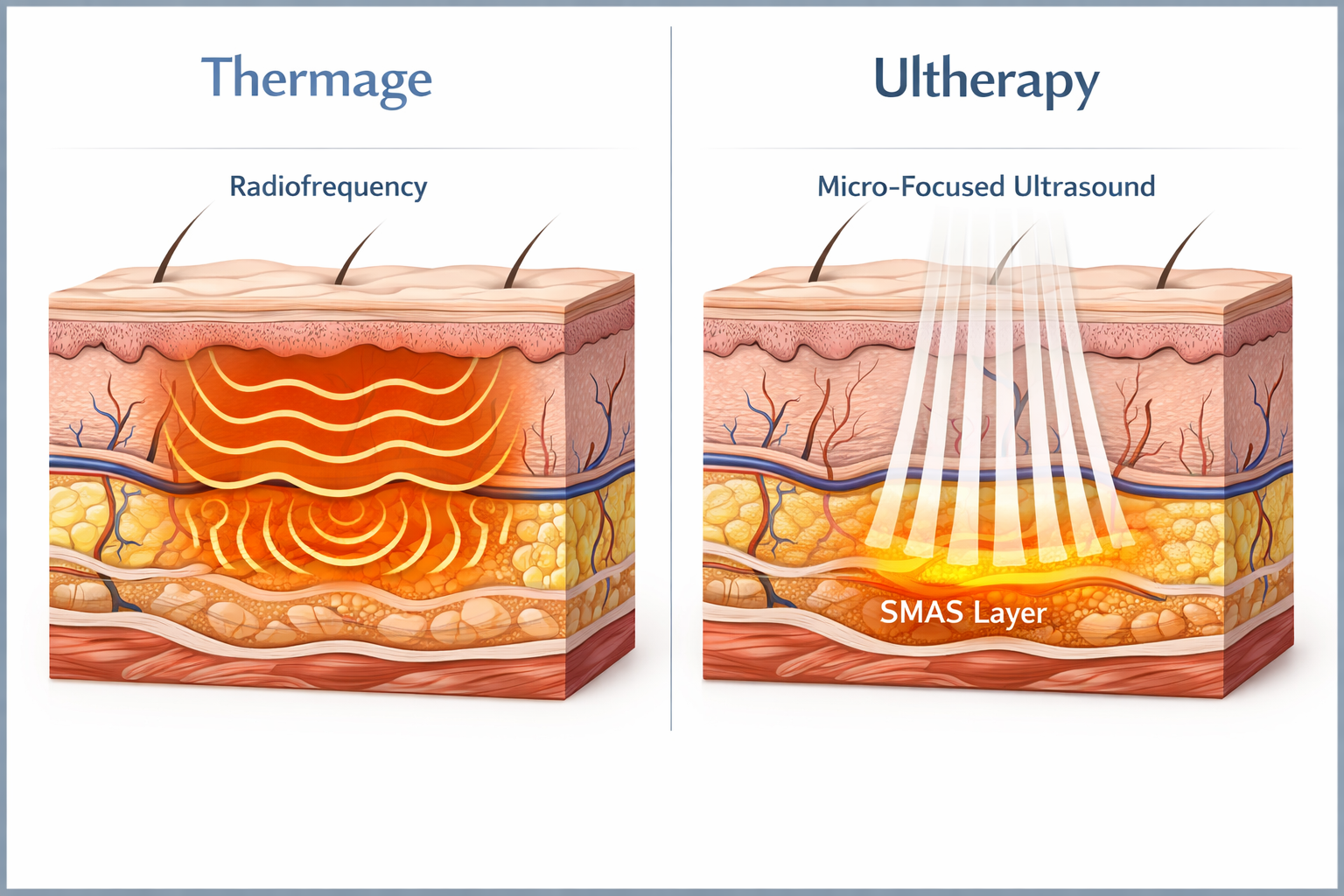

Quick Comparison
| Feature | Thermage | Ultherapy |
|---|---|---|
| Technology | Monopolar radiofrequency (RF) | Micro-focused ultrasound (MFU) |
| Primary mechanism | Bulk heating of dermis and deeper tissue | Targeted thermal coagulation points at precise depths |
| Treatment depth | Dermis and subcutaneous tissue (up to ~4.5mm) | Dermis, subcutaneous layer, and SMAS (up to ~4.5mm, customizable) |
| Real-time imaging | No | Yes — ultrasound visualization guides delivery |
| FDA clearance | Yes — face, eyes, body | Yes — face, neck, décolletage, brow |
| Best suited for | Skin texture, crepey skin, broader laxity, body areas | Jawline, jowls, neck, brow lifting, SMAS-level laxity |
| Sessions typically needed | Usually one treatment session per year | Usually one treatment session; may repeat annually |
| Results onset | Gradual; up to 4–6 months | Gradual; 2–3 months, continuing to 6 months |
| Results longevity | Up to 1–2 years; some patients report longer | Up to 1–2 years with annual maintenance |
| Downtime | Minimal — redness may last a few hours | Minimal — temporary redness, swelling possible |
| Body treatment | Established for abdomen, thighs, arms, knees | Primarily face and neck; body use is off-label |
| Comfort | Warm, prickling sensation; vibrating tip reduces discomfort | Distinct heat and tingling at treatment points; varies by area |
What Is Thermage and How Does It Work?
Thermage is an energy-based treatment that uses monopolar radiofrequency technology to heat the deeper layers of the skin from the surface downward. The device delivers controlled RF energy through a single treatment tip, creating what is often described as bulk heating — warming a broad column of tissue rather than targeting a precise point. This thermal energy heats collagen fibers within the dermis, causing them to contract immediately and triggering a wound healing response over the following weeks and months. The body interprets this controlled thermal injury as a signal to produce new collagen and elastin, gradually improving skin firmness, texture, and tone.
The current generation device, Thermage FLX, incorporates a vibrating handpiece tip and integrated cooling technology to improve comfort during treatment. The cooling protects the surface of the skin while the RF energy travels into the dermis and subcutaneous layers. Thermage FLX also uses an AccuREP algorithm that adjusts energy delivery in real time based on tissue feedback, though it does not use visual imaging the way Ultherapy does.
Thermage is FDA-cleared for non-surgical skin tightening on the face, around the eyes (using a specialized eye tip), and across multiple body areas including the abdomen, thighs, arms, and knees. Its ability to treat larger surface areas in a single session, combined with its effectiveness on crepey or textured skin, makes it a particularly versatile option for patients with broader skin laxity concerns.
What Is Ultherapy and How Does It Work?
Ultherapy is a non-invasive treatment that uses micro-focused ultrasound energy to stimulate collagen production at precise depths within the skin and underlying tissue. Unlike radiofrequency devices that heat tissue broadly, Ultherapy concentrates ultrasound energy into small, discrete thermal coagulation points — tiny areas of controlled thermal injury positioned at specific tissue depths. These coagulation points trigger a collagen remodeling and wound healing cascade that progressively tightens and lifts the skin over the months that follow.
One of Ultherapy’s defining features is its use of real-time ultrasound imaging. Before and during treatment, the practitioner can visualize the tissue layers on a screen, confirming that energy is being delivered to the correct anatomical depth and avoiding structures such as bone or nerves. This precision is a meaningful clinical advantage: it allows treatment to be tailored to each patient’s individual anatomy rather than applying a standardized approach.
Ultherapy can reach the SMAS layer — the Superficial Muscular Aponeurotic System, the same fibromuscular layer that surgeons address during a surgical facelift. The SMAS acts as a foundational skin layer connecting facial muscles to the overlying skin; tightening it can produce a more structural lift compared to treatments that work only within the dermis. This depth capability is a key reason Ultherapy is often positioned as a non-invasive facelift alternative for patients with jawline, jowl, and neck laxity.
Ultherapy holds FDA clearance for lifting the brow, chin, and neck, and for improving the appearance of lines and wrinkles on the chest (décolletage). It is used widely for the lower face, jawline, and submental (under-chin) area.
Treatment Depth: Why It Matters
Treatment depth is one of the most clinically meaningful differences between these two devices. Thermage delivers radiofrequency energy into the dermis and superficial subcutaneous tissue, working at depths generally up to approximately 4mm depending on the tip used. Ultherapy offers multiple transducer options that allow the practitioner to select specific depths — typically 1.5mm, 3mm, or 4.5mm — and can reach the SMAS at 4.5mm on areas where the tissue is thick enough to allow safe delivery.
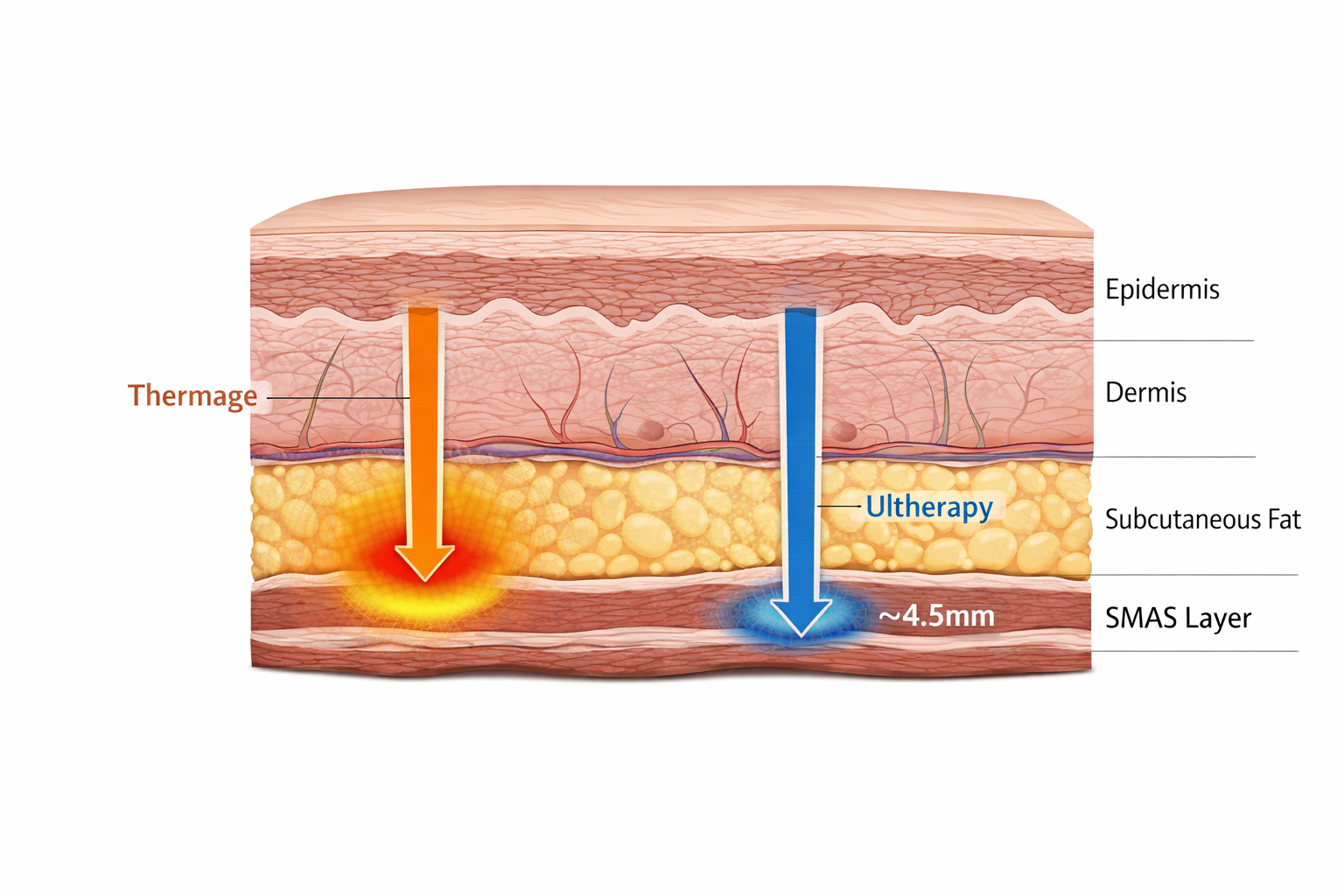
Reaching the SMAS layer matters because this is the anatomical structure responsible for providing structural support to the face. Skin laxity that originates at this deeper level — producing jowls, a heavy jawline, or a drooping brow — may respond more predictably to a treatment that can directly address that foundational layer. Treatments working only in the dermis improve skin quality and surface firmness but do not produce the same degree of structural repositioning.
Thermage’s bulk heating approach is not without its own depth advantage: the broad thermal column it creates can improve a wide area of skin simultaneously and is particularly effective for improving skin texture, reducing the appearance of crepey skin, and treating larger body surfaces efficiently. Ultherapy’s customizable, point-specific energy delivery offers precision for anatomically defined lifting goals, but covers smaller areas per pass.
Treatment Areas: Where Each Device Is Used
Thermage Treatment Areas
Thermage is approved and commonly used for the full face, including the lower face, jawline, and cheeks. A specialized eye tip allows careful treatment around the delicate periorbital area to address hooded lids and crepey eyelid skin — a distinction Thermage holds over many competing devices. For the body, Thermage is well established for treating the abdomen (particularly post-pregnancy or weight-loss crepey skin), inner and outer thighs, upper arms, buttocks, and knees. If you have skin laxity concerns across a larger body area, Thermage is generally the more practical choice of the two.
Ultherapy Treatment Areas
Ultherapy is primarily a facial and neck device. Its FDA-cleared indications cover the brow, full face and lower face including jowls and jawline, the neck and submental area, and the décolletage. Body applications of Ultherapy exist but are largely off-label and less commonly performed. Ultherapy’s real strength lies in anatomically precise lifting of the face, particularly where SMAS-level tightening is the goal. For patients specifically concerned about jowling, a heavy jawline, or neck laxity, it is one of the most targeted non-surgical options available.
What to Expect During Treatment
Both Thermage and Ultherapy are performed in a clinical setting, typically without general anaesthesia. Neither requires incisions, injections, or significant preparation beyond a clean face and occasionally a mild pain reliever taken beforehand.
A Thermage FLX session involves applying a treatment grid to the skin, then passing the vibrating handpiece over the area systematically. The vibration mechanism helps to counteract the heat sensation, making the procedure more comfortable than older Thermage generations. Most patients describe the sensation as a warm, deep prickling. Sessions typically last between 45 and 90 minutes depending on the area treated. A cooling spray protects the skin surface throughout.
An Ultherapy session begins with the practitioner applying ultrasound gel and using the imaging function to assess the tissue before treatment starts. The transducer is then passed across the treatment area, delivering focused ultrasound pulses. Patients often describe the sensation as sharp heat or tingling at the precise moment energy is deposited. This can be noticeable — particularly along the jawline and neck — and comfort tolerance varies between individuals. Sessions typically last 60 to 90 minutes for the full face and neck. Some clinics offer nitrous oxide (PRO-NOX) or pre-treatment ibuprofen to manage discomfort.
Both treatments carry minimal downtime. Temporary redness, mild swelling, or slight tenderness can occur after either procedure and generally settles within a few hours to a day. Most patients return to normal activities the same day. Neither treatment requires wound care, dressings, or extended recovery periods.
Results: Timeline, Longevity, and Realistic Expectations
Because both treatments work by stimulating the body’s natural collagen production process, results are gradual rather than immediate. A small degree of tightening may be visible immediately due to collagen contraction, but the primary improvement develops over weeks and months as new collagen and elastin are laid down and the skin remodeling process matures.
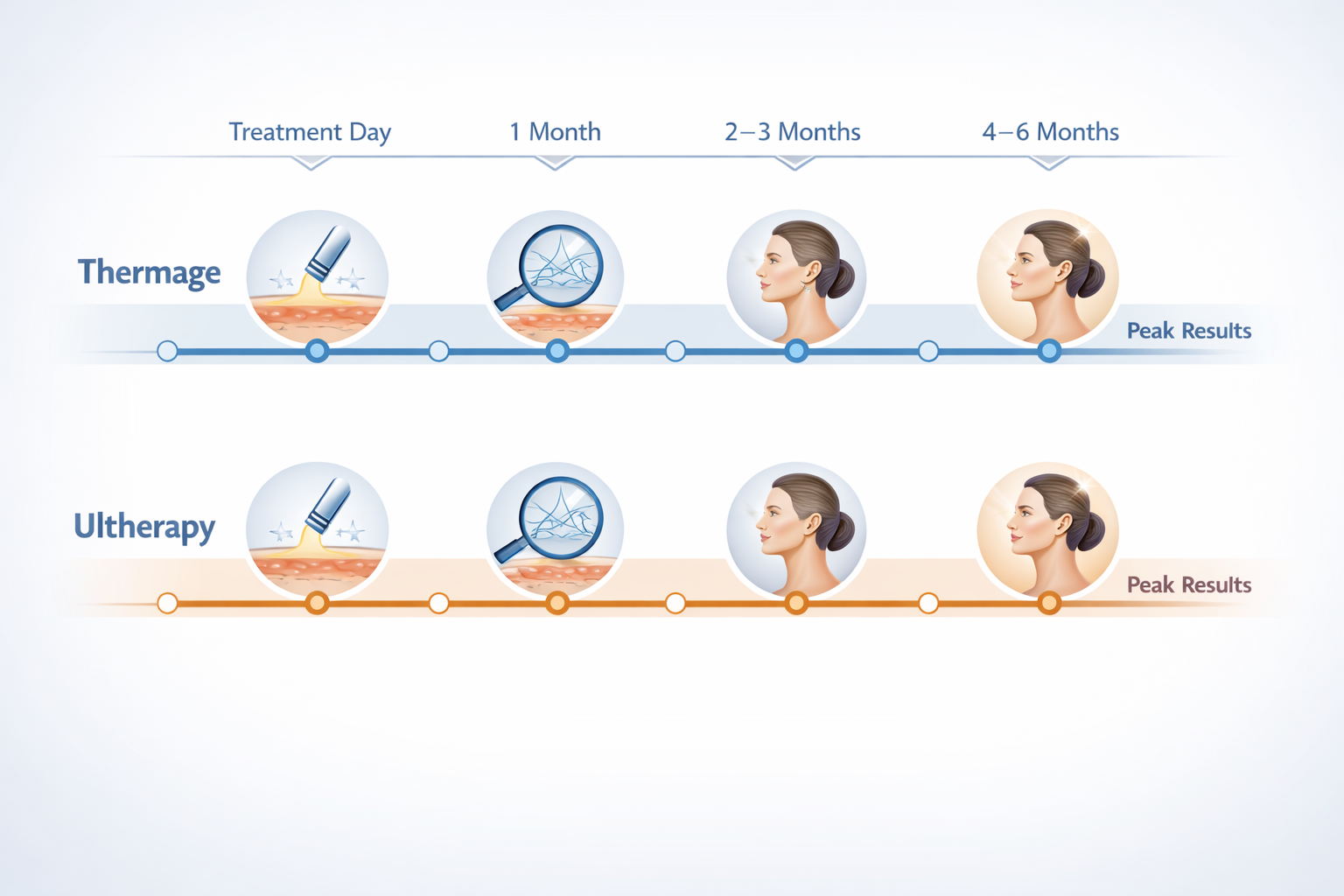
With Ultherapy, most patients begin to notice changes at around 2 to 3 months, with results continuing to develop for up to 6 months post-treatment. Thermage results also take time, with improvements typically peaking between 3 and 6 months after the single treatment session. Both treatments produce natural-looking results — a gradual improvement in skin firmness, definition, and texture rather than an overnight transformation.
Longevity depends on individual factors including skin condition at the time of treatment, age, lifestyle habits such as sun exposure and smoking, and genetics. Results from either treatment generally last in the range of 1 to 2 years for most patients, with some reporting benefit for longer. Annual maintenance sessions are commonly recommended to sustain the collagen renewal cycle. Neither treatment stops the natural aging process, and results will gradually diminish without periodic maintenance.
Both treatments are most effective for patients with mild to moderate laxity. Patients with significant sagging, deep volume loss, or advanced structural aging are unlikely to achieve surgical-level outcomes from either device and may be better served by a consultation that includes surgical options or a combination approach.
Combining Thermage and Ultherapy
A combination treatment using both Thermage and Ultherapy in the same treatment plan is practised at some specialist clinics, with the rationale that the two devices target different tissue depths and mechanisms. Ultherapy addresses the deeper SMAS layer and produces structural lifting, while Thermage improves surface-level skin quality, texture, and tone across the dermis. Together, they may address a broader range of concerns than either device alone.
Combination approaches are typically scheduled either in a single session or across staged appointments, depending on the clinic’s protocol and the patient’s tolerance. This strategy does increase the overall cost and treatment burden, and it is not universally recommended — whether it makes sense depends on a thorough clinical assessment of individual skin condition, goals, and budget. There is currently limited independent clinical evidence evaluating combination Thermage-Ultherapy protocols, so expectations should be discussed realistically with your practitioner.
Pain, Comfort, and Side Effects
Comfort tolerance varies considerably between patients and between treatment areas. As a general pattern, Ultherapy tends to involve more noticeable discomfort — particularly along the bony areas of the jaw and chin — because of the precise, pulsed nature of the energy delivery. Thermage FLX, with its vibrating tip and continuous cooling, is often reported as more tolerable for most patients, though individual experience varies.
Common temporary side effects for both treatments include redness, mild swelling, and occasional tenderness at the treatment site. These typically resolve within hours to a day. Less commonly, patients may experience bruising, numbness, or tingling that can last a few days to a few weeks. Serious adverse events are uncommon when treatments are performed by a qualified and experienced practitioner using appropriate technique and patient selection.
Thermage around the eyes carries specific considerations given the proximity to the eye itself; only a practitioner experienced with the specialized eye tip should perform this application. Ultherapy’s real-time imaging capability is a meaningful safety advantage in that practitioners can verify they are treating the intended tissue layer and avoid unwanted structures.
Cost Considerations
Both Thermage and Ultherapy are premium energy-based treatments and are priced accordingly. Neither is covered by health insurance as they are elective cosmetic procedures. Exact pricing varies significantly by geographic location, clinic, the area being treated, and the number of treatment passes included.
As a general indication, full-face treatments for either device typically range from approximately £1,500 to £4,000 in the UK, and from roughly $2,000 to $5,000 or more in the United States. Body treatments with Thermage can vary further depending on the surface area. These figures are ballpark ranges; actual costs should be confirmed during a consultation at a specific clinic.
Because both treatments are typically performed as a single session per year, the annual cost commitment is relatively contained compared to monthly maintenance treatments. However, the upfront investment is significant, and patients should weigh realistic benefit expectations against the cost before proceeding.
Who May Be Suitable — and Who May Not
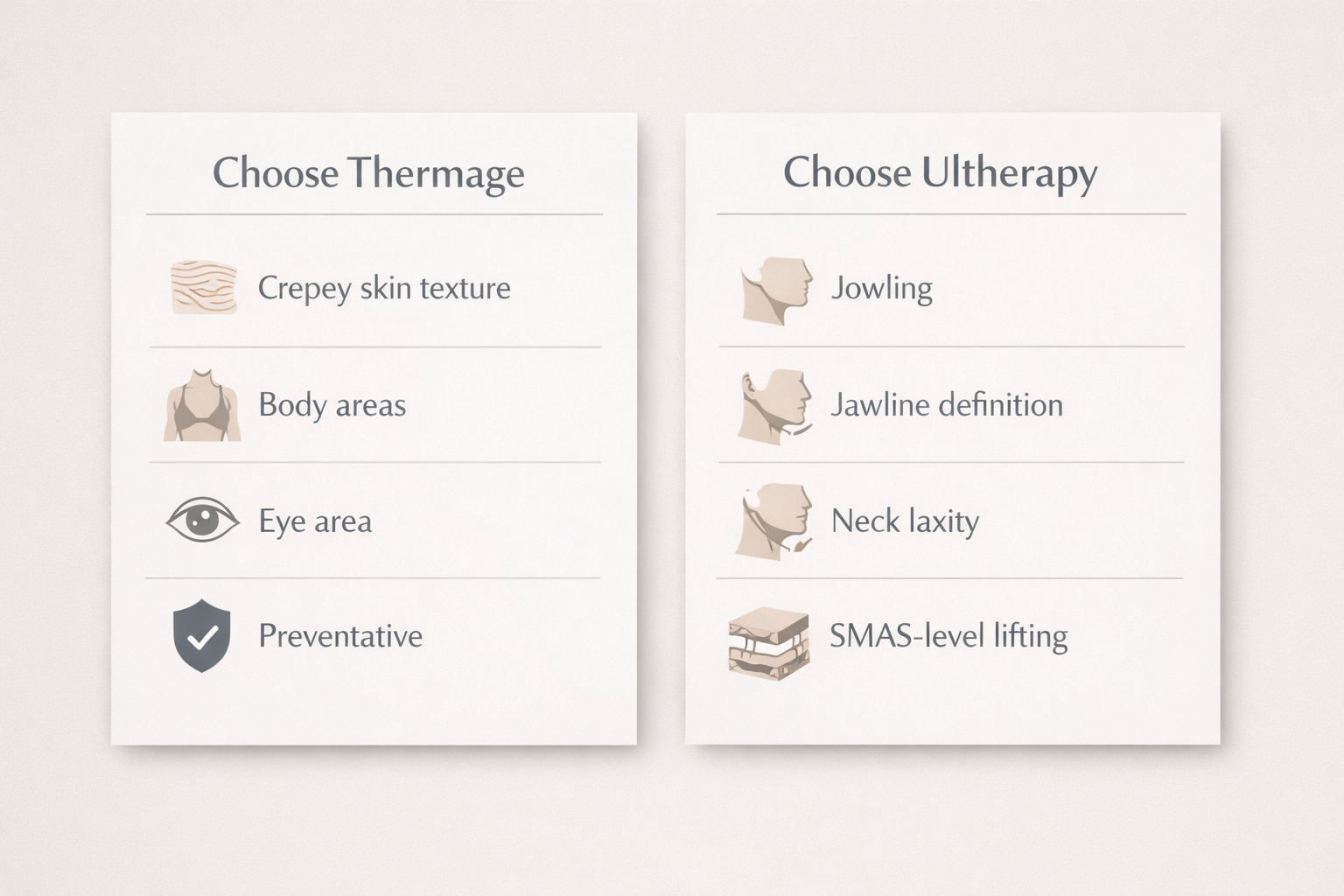
Both treatments are generally appropriate for adults of any skin type or tone who have mild to moderate skin laxity and are not ready for or interested in surgical intervention. Thermage may suit younger patients looking for a preventative treatment to slow the visible signs of aging, as well as patients with crepey skin texture or body skin concerns. Ultherapy tends to be favoured for patients with visible jowling, jawline definition concerns, or neck laxity where reaching the SMAS layer is clinically relevant.
Neither treatment is appropriate during pregnancy or breastfeeding. Patients with active skin infections, open wounds, or inflammatory skin conditions in the treatment area should delay until these have resolved. Those with implanted electrical devices such as pacemakers or defibrillators should discuss both treatments with their cardiologist before proceeding, as radiofrequency energy in particular may pose a risk. Metal implants near the treatment area (excluding dental work) may also be a contraindication for Thermage depending on their nature and location.
Patients with very thin skin, very little subcutaneous tissue, or significant structural aging are less likely to achieve meaningful results from either device and should receive an honest assessment of expectations during consultation. Both treatments are designed as non-surgical alternatives, not surgical replacements — a distinction that is important to understand before booking.
Sofwave: A Third Option Worth Knowing About
Sofwave is a newer ultrasound-based skin tightening device that has gained regulatory clearance and is increasingly available alongside Thermage and Ultherapy at aesthetic clinics. Sofwave uses parallel, synchronous ultrasound beam technology to heat tissue at a mid-dermal depth (approximately 1.5mm), making it less targeted at the SMAS but generally better tolerated in terms of comfort than Ultherapy. It may suit patients who want an ultrasound-based collagen stimulation treatment with a more comfortable experience, though it does not offer the same depth of treatment as Ultherapy for structural SMAS lifting. Sofwave is worth discussing if either Thermage or Ultherapy does not seem appropriate for your specific concerns or comfort tolerance.
Frequently Asked Questions
How many sessions of Thermage or Ultherapy are needed?
Both treatments are typically performed as a single treatment session, with repeat treatments recommended annually or as advised by your practitioner based on how results develop. Unlike some energy-based treatments that require a course of sessions, one session per year is the standard maintenance model for both devices.
Can Thermage or Ultherapy replace a surgical facelift?
Neither treatment replicates the results of a surgical facelift. Both are effective for mild to moderate skin laxity and can produce meaningful natural-looking improvement, but patients with significant structural sagging, jowling, or loose neck skin are unlikely to achieve equivalent outcomes to surgery. They are best understood as non-surgical alternatives that delay or reduce the perceived need for surgery rather than direct replacements.
Is one treatment better for the neck than the other?
Ultherapy is generally considered more targeted for neck and submental laxity because of its ability to reach the SMAS layer and its real-time imaging guidance. Thermage is also used on the neck but typically addresses surface skin quality and firmness rather than deeper structural lifting. For a drooping or heavy neck, a clinical assessment would help clarify which approach, or which combination, is more appropriate.
Will I see results immediately?
A small degree of immediate tightening can occur due to collagen contraction, but neither treatment produces dramatic instant results. The primary benefit develops gradually over 2 to 6 months as new collagen and elastin form. Patience and realistic expectations are important with both treatments.
Which treatment is more comfortable?
This varies by individual, but Thermage FLX with its vibrating handpiece is generally reported as the more comfortable of the two. Ultherapy can produce noticeable sharp heat sensations along bony areas of the face and jaw. Clinics offering Ultherapy may use pre-treatment analgesia or nitrous oxide to improve comfort. Discussing your pain tolerance with the clinic beforehand is worthwhile.
Are there risks of skin damage from either treatment?
Both treatments are designed to deliver controlled thermal energy that triggers healing without causing lasting skin damage. Serious adverse events are uncommon when performed correctly. However, burns, nerve irritation, or changes in skin texture are possible risks with any energy-based treatment and are more likely when the device is used incorrectly or at inappropriate settings. Choosing a qualified, experienced practitioner who uses a properly maintained device is the most important safety factor.
Thermage or Ultherapy: Choosing the Option That Fits Your Goals
The choice between Thermage and Ultherapy is not straightforwardly a question of which is better — it depends on what you want to treat, how your skin currently presents, and what your priorities are. Neither treatment is universally superior, and both have genuine clinical merit within their appropriate patient group.
Ultherapy may be worth discussing if your primary concern is jowling, jawline definition, neck laxity, or brow heaviness — particularly where reaching the SMAS layer could make a meaningful difference. Its real-time ultrasound imaging adds a layer of precision and safety that is difficult to match with other non-surgical devices. It is the more targeted of the two for structural facial lifting.
Thermage may be worth discussing if your concerns are more about skin texture, crepey skin quality, or broader surface laxity — especially on the face and body. It is the more versatile device for body applications and is a practical choice when a large area needs to be treated efficiently in a single session. The eye-area tip also makes it uniquely suited for periorbital skin concerns.
If you have both structural and textural concerns, a combination treatment plan or a staged approach may be worth exploring with a qualified practitioner. Budget, comfort tolerance, and treatment area should all form part of that conversation. A thorough in-person assessment remains the only reliable way to determine which option is most likely to deliver the outcome you are looking for.
