

Key Takeaways
- Dark circles can result from four distinct mechanisms — pigmentation, vascular visibility, structural shadowing, and skin thinning — and the right treatment depends on identifying the correct cause.
- Topical treatments with ingredients such as vitamin C, retinol, kojic acid, and hydroquinone can improve pigmentation-related dark circles, but typically require consistent use over weeks to months.
- Clinical options including tear trough filler, laser therapy, chemical peels, and platelet-rich plasma (PRP) can address causes that topical products cannot fully correct.
- Skin tone matters when selecting a treatment — certain laser and chemical peel options carry a higher risk of post-inflammatory hyperpigmentation in darker skin tones.
- A consultation with a qualified practitioner is the most reliable way to determine which treatment — or combination — is appropriate for your specific presentation.
What Are Dark Circles and Why Do They Form?
Dark circles under the eyes are one of the most common cosmetic concerns across all age groups, yet they are frequently misunderstood as a single problem with a single solution. In reality, infraorbital dark circles can develop through several different mechanisms, which is why an eye cream that works well for one person may produce no visible improvement in another.
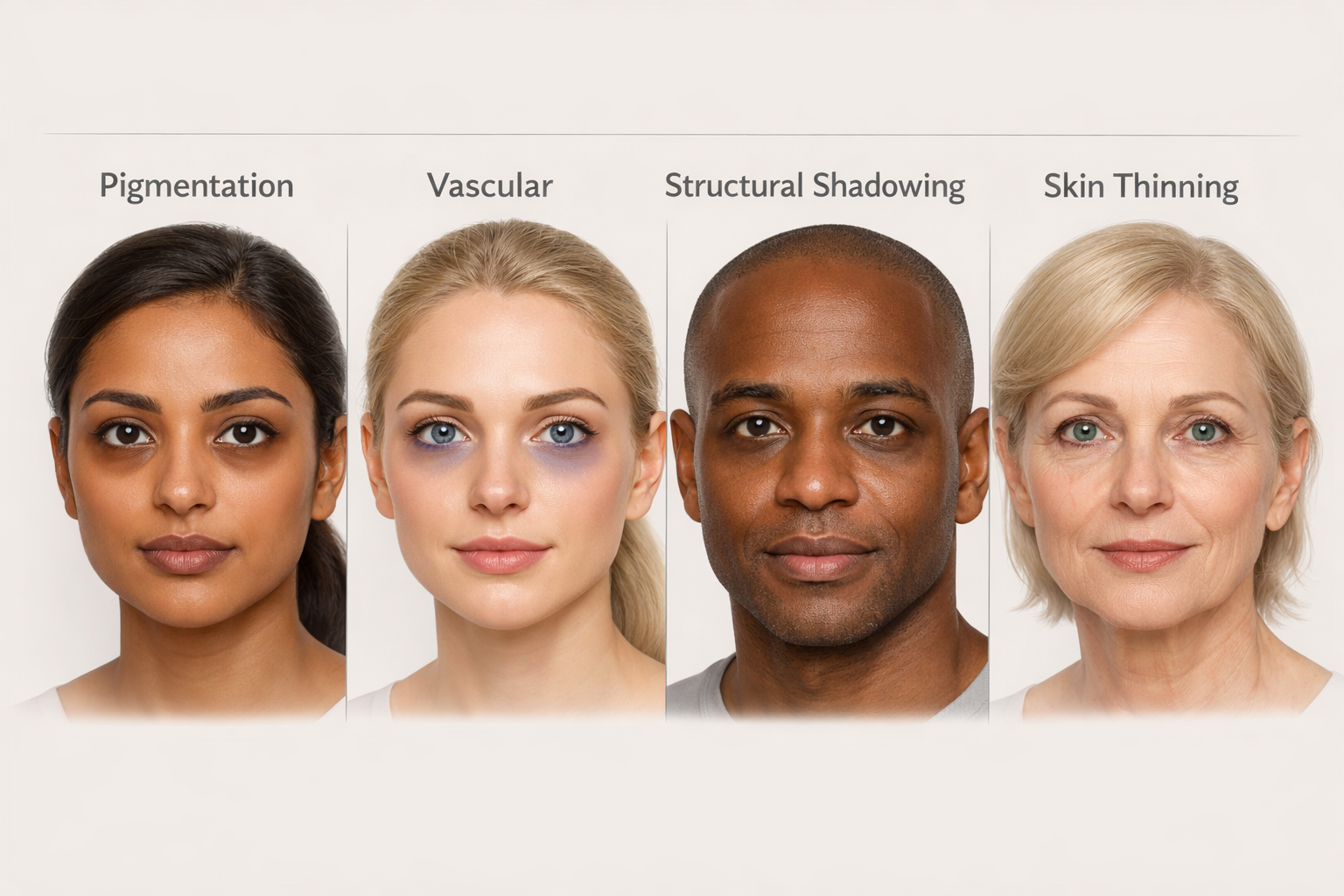
Clinically, there are four main categories that explain why dark circles form. Understanding which category applies to you is the essential first step toward choosing a treatment that is likely to help.
The Four Types of Dark Circles
1. Pigmentation (periorbital hyperpigmentation): This type involves an excess of melanin deposited in the skin of the lower eyelid area. It tends to appear as a brownish discolouration and is more prevalent in people with medium to darker skin tones. Genetics plays a significant role, and sun exposure can worsen it. Post-inflammatory hyperpigmentation — discolouration that follows skin irritation or repeated rubbing — also falls within this category.
2. Vascular dark circles: The skin beneath the eyes is the thinnest on the body, and underlying blood vessels can show through it. When blood pools or congestion occurs — due to poor sleep, allergies, or sinus problems — the periorbital skin takes on a bluish or purplish tint. Chronic allergies or nasal congestion can cause what are sometimes called allergic shiners, a specific form of vascular discolouration caused by congestion in the nasal and paranasal cavities.
3. Structural shadowing: As the face ages, fat compartments beneath the eyes shift or diminish, and collagen and elastin loss reduces skin support. This creates under-eye hollowness and a sunken appearance that casts a shadow — giving the look of dark circles even when skin pigmentation is normal. This is a structural issue, not a pigmentation one, which is why brightening creams have no meaningful effect on it.
4. Eye area skin thinning: With age, the under-eye skin becomes progressively thinner and more translucent, making blood vessels more visible and worsening the appearance of all the above types. Collagen and elastin loss accelerates this process over time.
Some people experience a combination of more than one type, which is why a clinical assessment by a dermatologist or aesthetic practitioner is genuinely useful before investing in treatments.
Common Contributing Factors
Beyond the underlying mechanism, several lifestyle and medical factors can worsen dark circles or trigger them in people who are otherwise not prone to them. Sleep deprivation is one of the most widely cited causes — when the body is fatigued, blood vessels beneath the thin under-eye skin dilate, increasing the visibility of vascular dark circles. Chronic dehydration has a similar effect, making the skin appear dull and sunken.
Alcohol consumption and smoking can both impair circulation and accelerate collagen breakdown, contributing to both the vascular and structural types. Fluid retention — particularly in the mornings — may cause puffiness that creates a shadow beneath the eye, sometimes confused with true dark circles.
Genetics is a significant factor that is often underappreciated. If close family members have prominent dark circles, there is a meaningful chance the underlying cause is structural or pigment-related and will require more than lifestyle adjustments to address effectively.
Children and adolescents can also develop dark circles, most commonly due to thin under-eye skin inherited genetically, habitual eye rubbing, or allergies — rather than the age-related volume loss seen in adults.
At-Home and Topical Treatments
For mild-to-moderate dark circles — particularly those driven by pigmentation or early vascular changes — consistent use of evidence-supported topical ingredients can produce gradual improvement. Results from topical treatments are rarely dramatic, and most require regular use over at least eight to twelve weeks before visible changes occur.
Key Ingredients and What They Target
| Ingredient | Mechanism | Best For |
|---|---|---|
| Vitamin C | Inhibits melanin synthesis; antioxidant protection | Pigmentation, dullness |
| Retinol / Tretinoin | Stimulates collagen production; increases cell turnover | Skin thinning, fine lines, mild pigmentation |
| Hydroquinone | Depigmenting agent; reduces melanin production | Periorbital hyperpigmentation |
| Kojic acid | Inhibits tyrosinase enzyme (melanin pathway) | Pigmentation, darker skin tones |
| Azelaic acid | Reduces melanin synthesis; anti-inflammatory | Pigmentation, sensitive skin |
| Glycolic acid / Lactic acid | Exfoliates surface pigmentation | Mild surface hyperpigmentation |
| Caffeine | Vasoconstriction; reduces fluid retention | Vascular dark circles, puffiness |
| Vitamin K | May support vascular integrity | Vascular dark circles (limited evidence) |
| Hyaluronic acid (topical) | Hydrates and plumps skin surface | Skin thinning, dehydration |
| Arbutin | Mild melanin inhibitor | Pigmentation, sensitive skin |
Hydroquinone and tretinoin are prescription-strength depigmenting agents and should only be used under medical supervision, particularly in the delicate eye area. Over-the-counter alternatives such as kojic acid, vitamin C, and azelaic acid may be gentler options for mild hyperpigmentation. For anyone with sensitive skin, introducing new eye-area products gradually reduces the risk of irritation, which could worsen post-inflammatory hyperpigmentation.
Practical Application Tips
Apply eye creams and serums with a gentle tapping motion using the ring finger, which exerts the least pressure. Avoid pulling or rubbing the skin. Use a broad-spectrum SPF of at least 30 every morning, including on cloudy days — UV exposure worsens pigmentation and accelerates collagen breakdown in the thin periorbital skin. Elevating the head slightly with an extra pillow at night can reduce morning puffiness caused by overnight fluid pooling beneath the eyes.
Professional and Clinical Treatments
When topical products have not produced sufficient improvement, or when the underlying cause is structural or vascular rather than superficial pigmentation, professional treatments are worth considering. Cause-specific treatment is the guiding principle in clinical practice — no single procedure addresses all types of dark circles equally well.
Tear Trough Filler for Structural Shadowing
For dark circles driven primarily by under-eye hollowness and volume loss, tear trough filler is one of the most established non-invasive treatment options. A hyaluronic acid gel is injected carefully into the tear trough — the groove between the lower eyelid and the cheek — to restore volume, soften the shadow, and improve the transition between the eyelid and mid-face.
Results are typically visible immediately and can last between nine and eighteen months depending on the product used, the individual’s metabolism, and how much volume was placed. Hyaluronic acid fillers such as Restylane or Juvéderm Volbella are commonly selected for this area because they are dissolvable with hyaluronidase if correction is needed. Tear trough filler is one of the more technically demanding injectable treatments, and practitioner experience is particularly important given the anatomy of this area.
Possible side effects include bruising, temporary swelling, and — in inexperienced hands — the Tyndall effect, where filler placed too superficially gives a bluish tint to the skin. A thorough consultation to assess whether there is sufficient mid-face support is important before proceeding.
Laser Therapy
Laser treatment can address both pigmentation and vascular dark circles, though the appropriate device depends on the cause. For pigmentation, fractional laser resurfacing and treatments such as Fraxel or fractional CO2 lasers can help reduce melanin deposition and improve skin quality. For vascular dark circles, pulsed dye lasers (such as Vbeam) or diode lasers may reduce the visibility of superficial blood vessels.
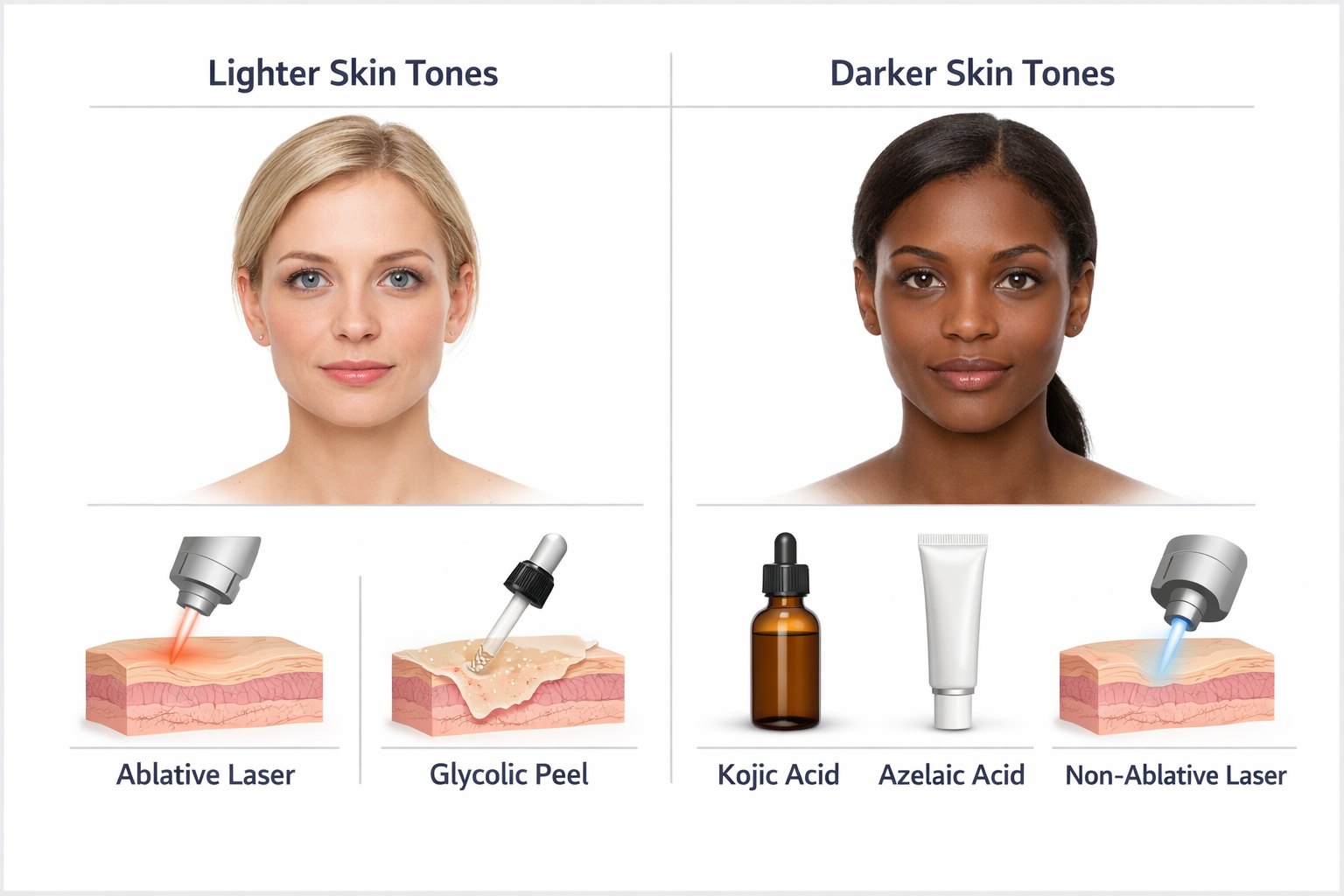
Skin tone is a critical safety consideration with laser therapy. Certain laser wavelengths carry a higher risk of adverse effects — including post-inflammatory hyperpigmentation — in medium to darker skin tones. For people with darker complexions, a practitioner experienced in treating diverse skin tones should select devices and settings carefully. Non-ablative options are generally considered safer for darker skin than ablative resurfacing lasers.
Multiple sessions are typically required, and results develop gradually. Temporary redness, peeling, or mild scabbing can occur after laser treatments, usually resolving within days to a couple of weeks depending on the intensity of the treatment.
Chemical Peels
Chemical peels using alpha-hydroxy acids — such as glycolic acid or lactic acid — can reduce surface pigmentation and improve overall skin texture in the periorbital area. They work by accelerating exfoliation of the outermost skin layers where excess melanin is concentrated. Superficial peels are generally well tolerated in the under-eye area, while deeper peels carry greater risk and are rarely recommended for this delicate zone.
As with laser treatments, peel selection must account for skin tone. In darker skin tones, chemical peels that are too aggressive can trigger post-inflammatory hyperpigmentation and worsen the very discolouration they are meant to treat. A patch test and careful patient assessment are standard practice before proceeding.
Platelet-Rich Plasma (PRP)
Platelet-rich plasma (PRP) injections involve drawing a small amount of the patient’s own blood, processing it to concentrate the growth factors, and injecting it back into the under-eye area. PRP may stimulate collagen production, improve skin quality, and contribute to a gradual reduction in hollowness and fine lines. Some clinical evidence supports its use for skin rejuvenation, though the evidence base specifically for under-eye dark circles remains developing, and results tend to be more modest and gradual than those seen with filler.
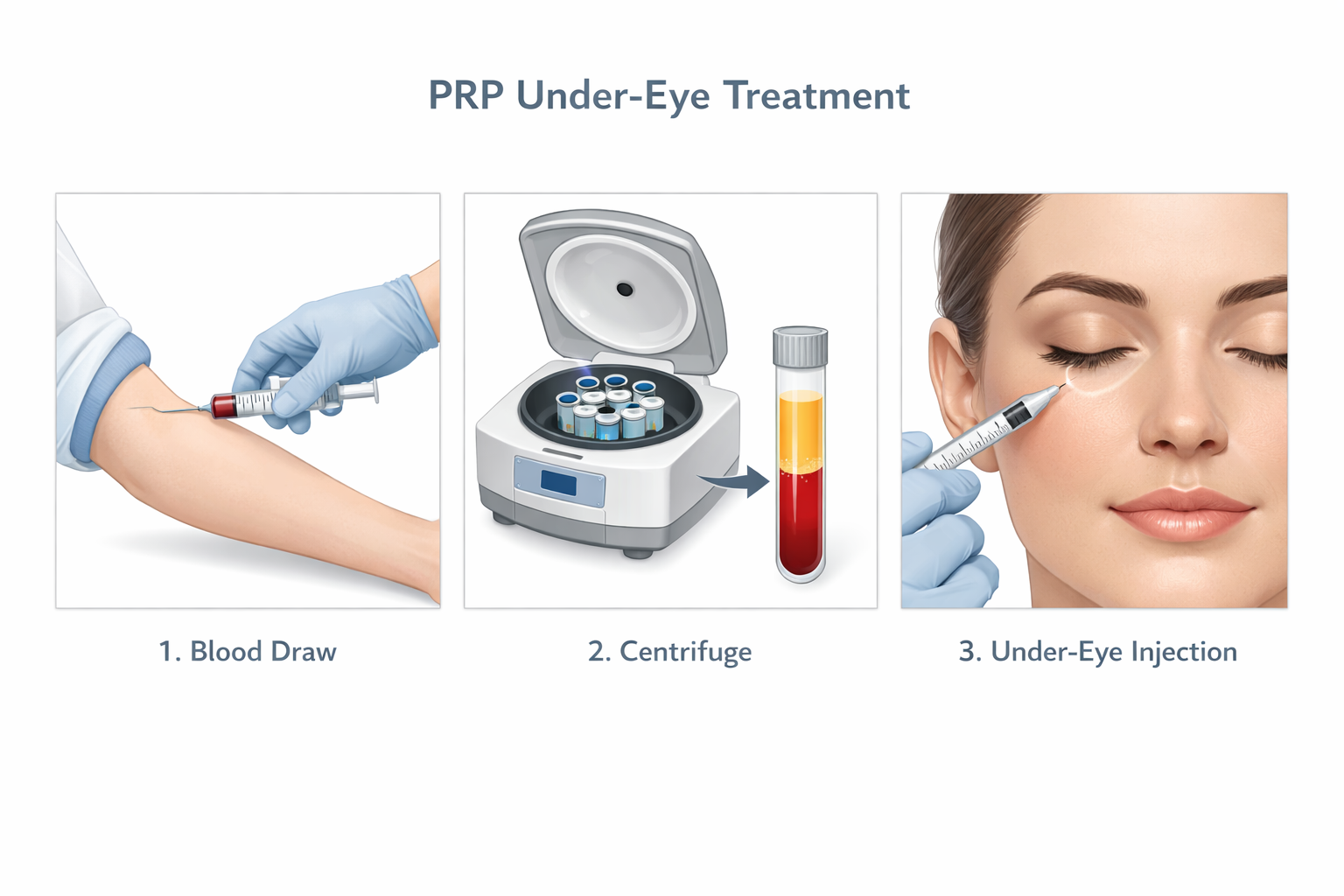
Because PRP uses the patient’s own blood, allergic reactions are extremely unlikely. Multiple sessions — typically three to four — are usually recommended, with improvements becoming more apparent over three to six months as collagen accumulates.
Microneedling
Microneedling creates controlled micro-injuries in the skin to stimulate collagen and elastin production. In the under-eye area, it may help improve skin thickness, texture, and the overall quality of the periorbital skin over time. It is sometimes combined with topical skin-lightening ingredients or PRP to enhance results. Several sessions are typically required, and realistic expectations should be set during consultation — improvements in this area tend to be gradual rather than immediate.
Skin Tightening Devices
Energy-based non-invasive treatment options such as radiofrequency (including Thermage FLX) and focused ultrasound (such as Ultherapy) can stimulate collagen production and improve skin laxity in the lower eyelid area. These treatments do not add volume or directly address pigmentation, but they may improve the overall appearance of the under-eye area in patients with early skin laxity and skin thinning. Results from collagen-stimulating treatments of this type are typically more apparent after three to six months, as collagen remodelling takes time.
Blepharoplasty
For patients with significant structural changes — such as prominent fat herniation causing puffy lower eyelids or severe skin laxity — surgical lower blepharoplasty may be considered. This is generally reserved for cases where non-surgical options are insufficient, and it carries the considerations associated with any surgical procedure, including recovery time, anaesthetic risk, and the need for a surgeon experienced in oculoplastic or aesthetic surgery.
Choosing the Right Treatment by Cause
The most important principle in managing dark circles is matching the treatment to the specific cause. Applying a brightening cream to structurally caused shadowing, for example, is unlikely to produce any meaningful change. The following overview illustrates how cause-specific treatment selection works in clinical practice:
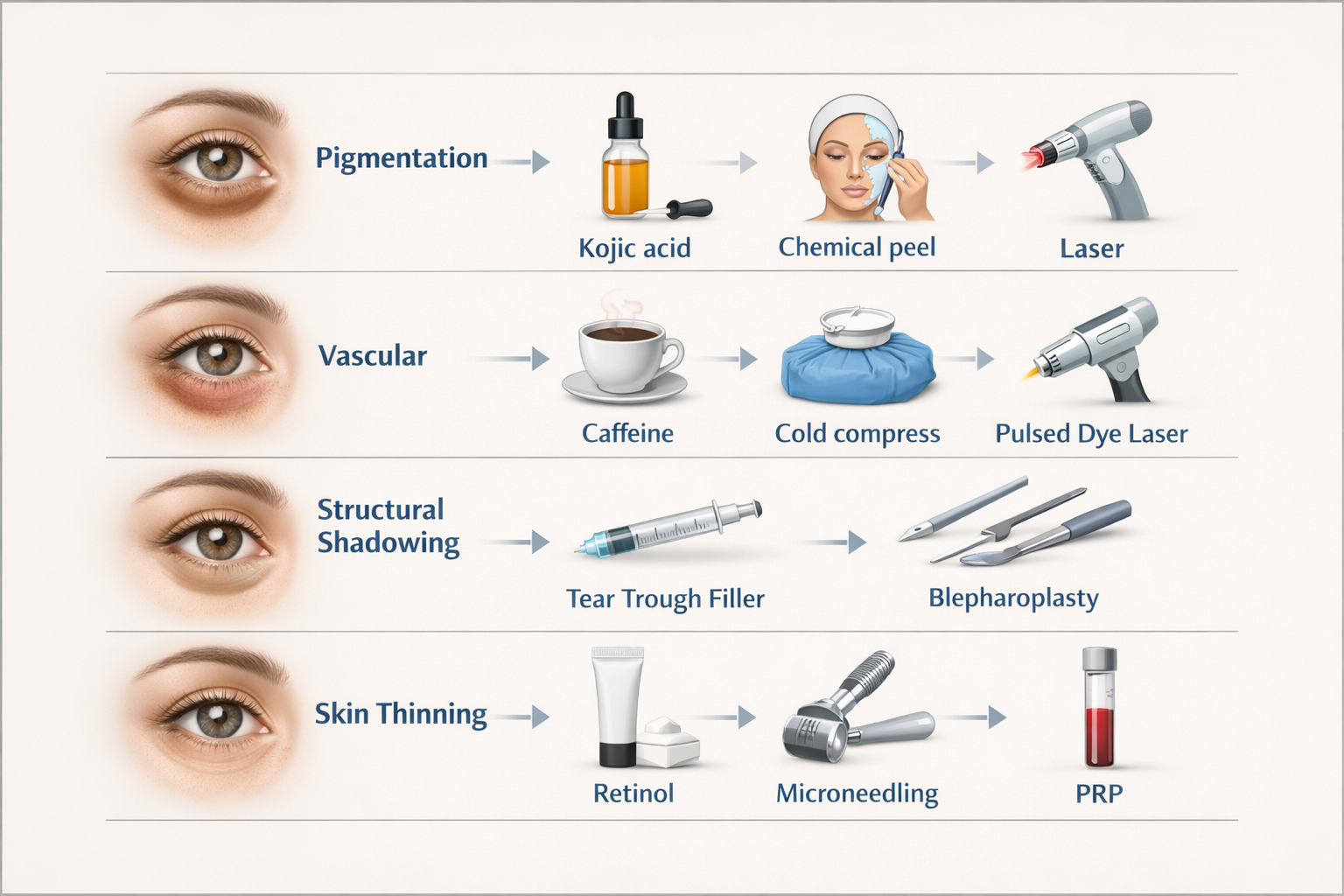
- Pigmentation / periorbital hyperpigmentation: Dermatologist-recommended skin-lightening ingredients (hydroquinone, kojic acid, vitamin C, azelaic acid), chemical peels, fractional laser, PRP
- Vascular dark circles: Cold compresses to reduce vessel dilation acutely, topical caffeine, pulsed dye laser or diode laser, addressing underlying allergies or nasal congestion
- Structural shadowing / under-eye hollowness: Tear trough filler (hyaluronic acid), mid-face volumisation, lower blepharoplasty in advanced cases
- Skin thinning / collagen and elastin loss: Retinol or tretinoin topically, microneedling, PRP, radiofrequency or ultrasound skin tightening
Skin Tone Considerations
Periorbital hyperpigmentation is more prevalent in people with medium to darker skin tones, and it can be one of the most persistent and treatment-resistant presentations of dark circles. It is important that treatment selection accounts for skin tone carefully. Aggressive laser treatments and deep chemical peels that are appropriate for lighter skin types can cause worsening discolouration through post-inflammatory hyperpigmentation in darker complexions.
For people with darker skin tones, gentler depigmenting agents — such as kojic acid, azelaic acid, and arbutin — are typically preferred as first-line topical options. When laser treatment is considered, non-ablative wavelengths and practitioners experienced with diverse skin tones are essential. A thorough assessment of Fitzpatrick skin type and treatment history should form part of any consultation.
Home Remedies vs Clinical Treatments: A Practical Comparison
| Approach | Best For | Effectiveness | Downtime | Typical Cost | Longevity |
|---|---|---|---|---|---|
| Eye creams (OTC actives) | Mild pigmentation, skin quality | Modest; requires consistency | None | Low | Requires ongoing use |
| Prescription topicals | Moderate hyperpigmentation | Moderate with time | Possible mild irritation | Low–moderate | Requires ongoing use |
| Chemical peel | Surface pigmentation | Moderate | Few days of peeling | Moderate | Months; maintenance needed |
| Laser treatment | Pigmentation, vascular type | Good for selected cases | Days to 1–2 weeks | Moderate–high | Variable; touch-ups may be needed |
| Tear trough filler | Hollowness, structural shadow | Good for volume loss | Minimal (bruising possible) | Moderate–high | 9–18 months typically |
| PRP injections | Skin quality, early hollowness | Moderate; gradual | Minimal | Moderate | Up to 12 months; course needed |
| Microneedling | Skin thinning, texture | Moderate; gradual | 1–3 days redness | Moderate | Months; maintenance useful |
| Skin tightening devices | Laxity, collagen loss | Moderate; gradual | Minimal | High | 1–2 years; single or repeat sessions |
When to See a Doctor About Dark Circles
Most dark circles are a cosmetic concern rather than a sign of underlying illness. However, there are circumstances where a medical assessment is genuinely warranted. Consult a doctor if dark circles appear suddenly without an identifiable cause, worsen rapidly over a short period, or are accompanied by swelling, itching, redness, pain, or any changes in vision. These features may indicate an allergic, inflammatory, or less commonly a systemic cause that warrants investigation beyond cosmetic management.
It is also worth seeking professional advice before starting prescription-strength skin-lightening ingredients, planning any injectable or laser treatment, or if you have a history of keloid scarring, skin conditions such as eczema or rosacea near the treatment area, or are taking medications that affect bleeding or pigmentation.
Colour Correction as a Practical Bridge
While clinical or topical treatments take effect, a colour-correcting concealer can be a useful and immediate strategy for managing the appearance of dark circles day-to-day. For bluish or purplish vascular dark circles, a peach or orange-toned colour corrector applied before foundation neutralises the underlying tone before concealer is layered over it. For brownish pigmentation-related dark circles, a yellow-toned corrector typically works more effectively. Setting with a light powder helps the product last through the day without settling into fine lines.
Frequently Asked Questions
Can dark circles be permanently removed?
Truly permanent removal is unlikely for most people, particularly when genetics is a contributing factor. Some treatments — such as certain laser procedures for pigmentation — may produce long-lasting results, but maintenance is usually needed over time. Structural improvements from tear trough filler are temporary and require repeat treatment as the product is gradually absorbed. Managing expectations realistically is an important part of any consultation.
How long do treatments take to show results?
This varies considerably by treatment type. Tear trough filler produces visible improvement almost immediately. Topical treatments such as vitamin C, retinol, or kojic acid typically require eight to twelve weeks of consistent use before meaningful change is visible. PRP and collagen-stimulating treatments such as radiofrequency or microneedling often show the most noticeable improvements at three to six months, as collagen remodelling is a gradual biological process.
Are dark circles worse in darker skin tones?
Periorbital hyperpigmentation is more prevalent in people with medium to darker skin tones and can be more challenging to treat. Certain treatments that are effective in lighter skin tones — particularly ablative lasers and aggressive chemical peels — carry a higher risk of worsening discolouration in darker complexions. Skin-tone-specific treatment planning is essential, and a practitioner experienced with diverse skin types should be consulted.
What is the difference between dark circles and eye bags?
Dark circles refer to discolouration or shadowing beneath the lower eyelid. Eye bags refer to puffiness or swelling caused by fluid retention or fat herniation in the lower eyelid. The two can occur together and are sometimes confused, but they have different causes and require different treatments. Filler, for example, may help hollowness contributing to dark circle shadowing but is generally not the appropriate treatment for true fat-related eye bags.
Is tear trough filler safe?
Tear trough filler using hyaluronic acid is considered a well-established treatment when performed by an experienced injector with a thorough understanding of the anatomy of this area. Possible side effects include bruising, swelling, and in rare cases vascular complications. The use of hyaluronic acid also offers the safety advantage of reversibility — the filler can be dissolved with hyaluronidase if necessary. Choosing a qualified and experienced practitioner significantly affects both safety and outcome.
Can allergies cause dark circles?
Yes. Chronic allergies and nasal congestion are a recognised cause of vascular dark circles, sometimes called allergic shiners. The congestion creates a backflow of blood in the periorbital veins, resulting in a bluish or purplish discolouration beneath the eyes. Treating the underlying allergy — whether through antihistamines, nasal sprays, or environmental modifications — can improve this specific type of dark circle more effectively than any topical cosmetic product.
Finding the Right Approach for Your Dark Circles
Dark circles are a genuinely complex cosmetic concern because the same appearance can stem from very different underlying causes. A treatment that delivers excellent results for one person may have no effect for another — not because the treatment is ineffective, but because it is targeting the wrong mechanism. This is why identifying your specific type of dark circle, ideally with the help of a qualified dermatologist or aesthetic practitioner, is the most practical starting point.
For mild or primarily pigmentation-related dark circles, a consistent routine using dermatologist-recommended topical ingredients alongside diligent broad-spectrum SPF use is a reasonable and accessible first step. For those with visible hollowing, structural shadowing, or concerns that have not responded to topical approaches, professional options — including tear trough filler, laser therapy, PRP, or skin tightening — may provide more meaningful and lasting improvement.
No single treatment eliminates dark circles for everyone, and realistic expectations are central to a satisfying outcome. A professional consultation allows for a proper assessment of the cause, a discussion of the most appropriate treatment options for your skin type and concerns, and a treatment plan that reflects both your goals and your safety. That assessment is always worth seeking before committing to any clinical procedure.
