

Chemical peel aftercare is one of the most important factors in determining how well your skin heals and how good your results will look. The peel itself takes only minutes to apply, but the recovery period that follows requires consistent, informed skincare to protect the skin barrier, minimise complications, and support the renewal process. This guide explains what happens to the skin after a chemical peel, what a responsible aftercare routine involves, what side effects are normal versus concerning, and how to protect your results long term.
Key Takeaways
- Aftercare requirements vary significantly depending on the depth of the peel — superficial, medium, or deep — and your skin type.
- Gentle cleansing, consistent moisturisation, and strict sun protection are the foundations of post-peel skin recovery for all peel depths.
- Peeling, redness, and temporary sensitivity are expected; signs such as blistering, spreading redness, or signs of infection require prompt professional assessment.
- Picking or forcibly removing peeling skin increases the risk of scarring and post-inflammatory hyperpigmentation.
- Most superficial peels involve minimal downtime, while medium and deep peels may require one to three weeks of more intensive recovery.
What Happens to Your Skin After a Chemical Peel?
A chemical peel works by applying an acid solution — such as glycolic acid, salicylic acid, lactic acid, trichloroacetic acid (TCA), or phenol — to the skin at a controlled concentration and contact time. The acid causes a controlled injury to the outer layers of the skin, prompting the body to shed damaged cells and stimulate the production of new collagen and healthier skin cells beneath. The depth of this controlled injury determines how significant the recovery process will be.
Superficial peels, which use lower concentrations of alpha-hydroxy acids or beta-hydroxy acids, affect only the outermost layer of the epidermis. Medium-depth peels, typically using TCA at moderate concentrations or a combination of agents, penetrate into the upper dermis. Deep peels, such as high-concentration phenol peels, reach the mid-dermis and produce the most dramatic results alongside the most significant recovery period. Understanding which type of peel you have received is essential for setting realistic aftercare expectations.
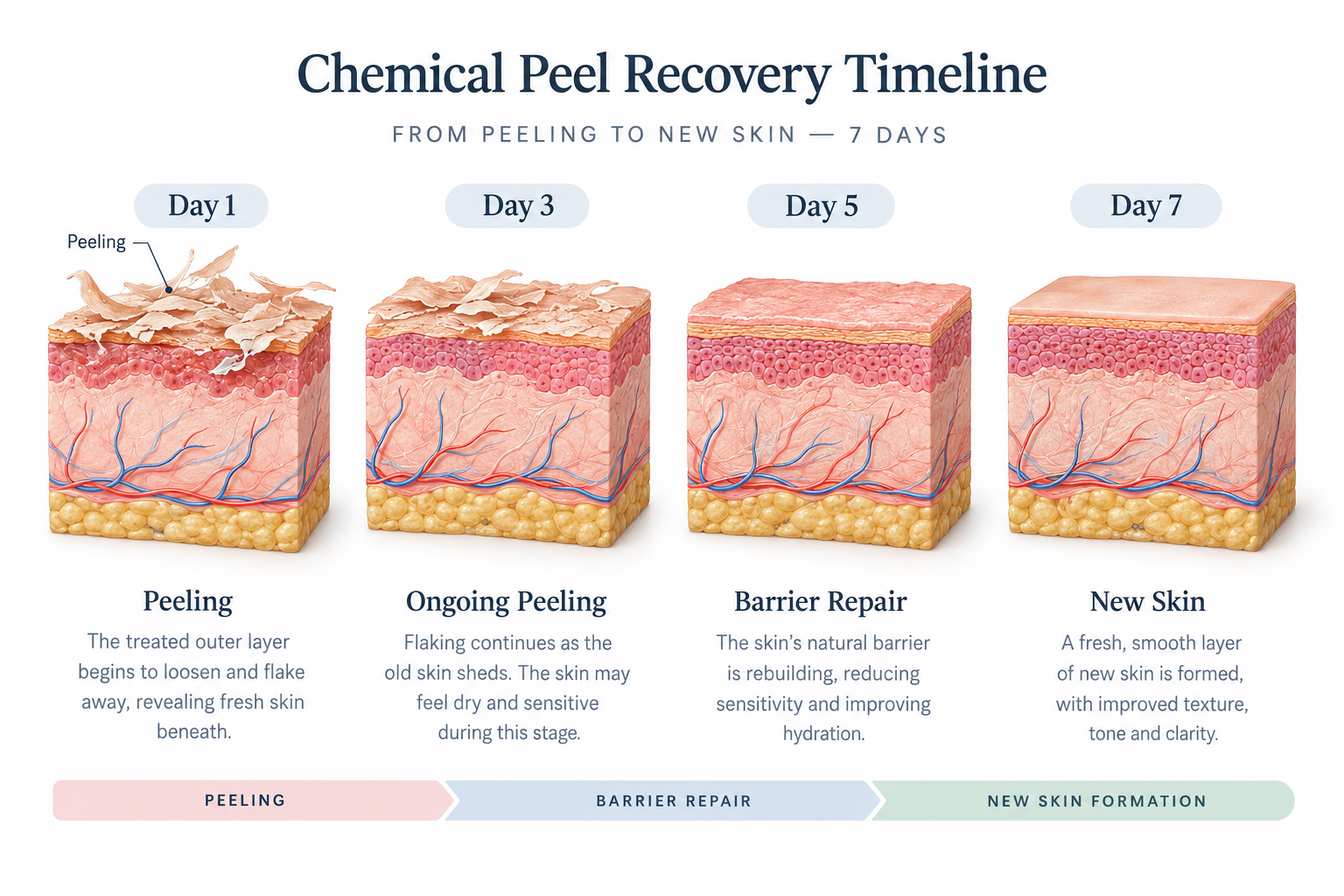
In the hours and days following a peel, the skin typically becomes red, tight, and sensitive. Visible flaking or peeling usually begins between day two and day five, depending on peel depth. This shedding is the natural result of the treated skin separating from the new skin forming beneath it. The skin barrier is temporarily compromised during this period, making it more vulnerable to irritation, infection, and UV damage.
The First 24 to 48 Hours: Immediate Post-Peel Care
The first two days after a chemical peel are when the skin is at its most reactive. Redness, warmth, and a sensation similar to mild sunburn are common and expected, particularly after medium-depth treatments. Your practitioner will usually apply a soothing product immediately after the peel and provide specific instructions for the first evening.
During this initial window, the priority is to avoid anything that could further irritate or compromise the skin. This means using only the gentle cleanser and moisturiser recommended by your practitioner, avoiding hot water, steam rooms, saunas, and vigorous exercise that causes significant sweating. Makeup should generally be avoided for at least the first 24 hours, and in many cases longer, depending on peel depth. Touching the face unnecessarily should be minimised to reduce the risk of introducing bacteria to a compromised skin barrier.
Keeping the skin well hydrated during this phase is important. Barrier-supporting ingredients such as ceramides, hyaluronic acid, and petrolatum-based ointments can help maintain moisture and reduce the sensation of tightness. Your practitioner may recommend a specific post-procedure product rather than your usual skincare routine.
Managing Peeling and Flaking Skin
Visible skin peeling is one of the most discussed aspects of chemical peel recovery, and managing it correctly has a direct impact on your outcome. Peeling typically begins around day two to four after a superficial or medium peel and may continue for up to a week or longer after deeper treatments. The skin may peel in small flakes or, after medium and deep peels, in larger sheets.
The most important rule during this stage is to avoid picking, pulling, or forcibly removing peeling skin. Skin that is not yet ready to detach is still attached to living tissue beneath it. Removing it prematurely can cause micro-tears, increase the risk of scarring, and significantly raise the likelihood of post-inflammatory hyperpigmentation — a darkening of the skin that can be difficult to treat, particularly in medium and darker skin tones.
Instead, allow peeling skin to shed naturally. Applying a gentle, fragrance-free moisturiser several times a day helps soften the peeling skin and reduces the urge to pick. Some practitioners recommend soaking the face gently with cool water and patting dry before reapplying moisturiser. Avoid using exfoliating products, retinoids, vitamin C serums, or any active ingredients during the peeling phase unless your practitioner has specifically advised otherwise.
Sun Protection After a Chemical Peel
Sun protection is arguably the single most critical element of chemical peel aftercare. The newly revealed skin after a peel is significantly more sensitive to ultraviolet radiation than normal skin, and UV exposure during the recovery period can cause lasting pigmentation changes, reduce the effectiveness of the treatment, and increase the risk of complications.
A broad-spectrum sunscreen with an SPF of 30 or higher should be applied every morning once the skin is ready to tolerate it — typically from day two or three for superficial peels, or as directed by your practitioner for deeper treatments. Physical sunscreens containing zinc oxide or titanium dioxide are often better tolerated during recovery than chemical UV filters, which can occasionally cause stinging on sensitised skin. Reapplication every two hours when outdoors is important, regardless of cloud cover.
Beyond sunscreen, minimising direct sun exposure for at least two to four weeks after a peel is advisable. Wearing a wide-brimmed hat and seeking shade during peak UV hours provides additional protection. This guidance is particularly important for patients who have received a peel to address hyperpigmentation, melasma, or uneven skin tone, as UV exposure can directly counteract the treatment’s intended effect.
Building Your Post-Peel Skincare Routine
Returning to a full skincare routine too quickly is a common mistake that can irritate healing skin and compromise results. The timeline for reintroducing products depends on peel depth and individual skin response, but some general principles apply across most situations.
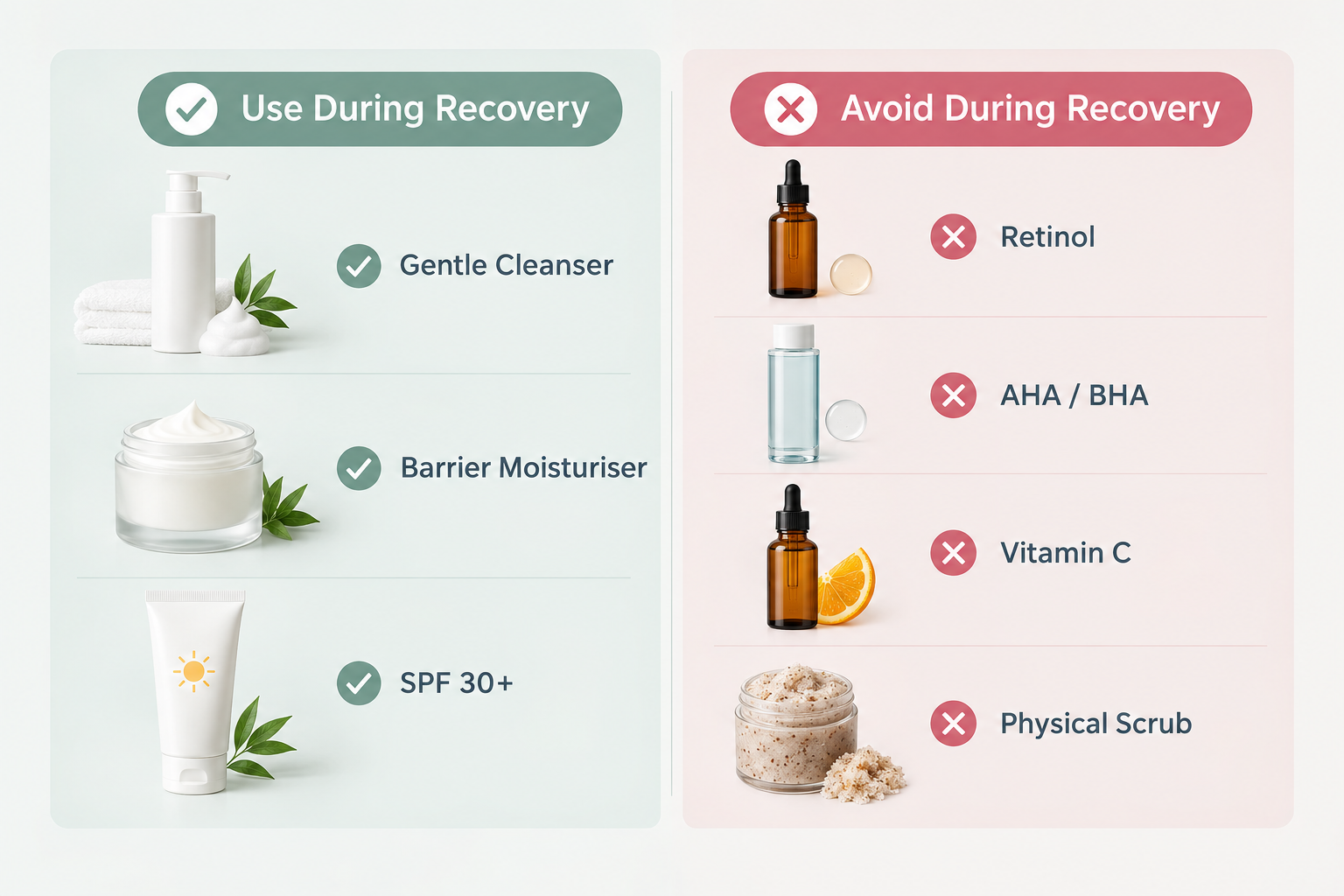
What to Use During Recovery
- Gentle, low-pH cleanser: A mild, fragrance-free cleanser that does not strip the skin barrier. Avoid foaming cleansers with sulphates during the first week.
- Barrier-repair moisturiser: Products containing ceramides, niacinamide, hyaluronic acid, or squalane help support the skin barrier and reduce transepidermal water loss.
- Broad-spectrum SPF 30+ sunscreen: Applied every morning and reapplied throughout the day when outdoors.
- Practitioner-recommended post-procedure products: Some clinics provide specific recovery serums or ointments formulated for post-peel skin.
What to Avoid During Recovery
- Retinoids and retinol: These accelerate cell turnover and can cause significant irritation on post-peel skin. Most practitioners advise avoiding them for at least one to two weeks after a superficial peel and longer after medium or deep peels.
- Alpha-hydroxy acids and beta-hydroxy acids: Exfoliating acids should not be used until the skin has fully healed.
- Vitamin C serums (ascorbic acid): High-concentration vitamin C can sting and irritate sensitised skin, though gentler derivatives may be reintroduced earlier.
- Benzoyl peroxide and salicylic acid treatments: These can be drying and irritating during recovery.
- Physical exfoliants and scrubs: Mechanical exfoliation should be avoided entirely until the skin has fully recovered.
- Fragrance and essential oils: These are common irritants and should be avoided in all products used during recovery.
Recovery Timelines by Peel Depth
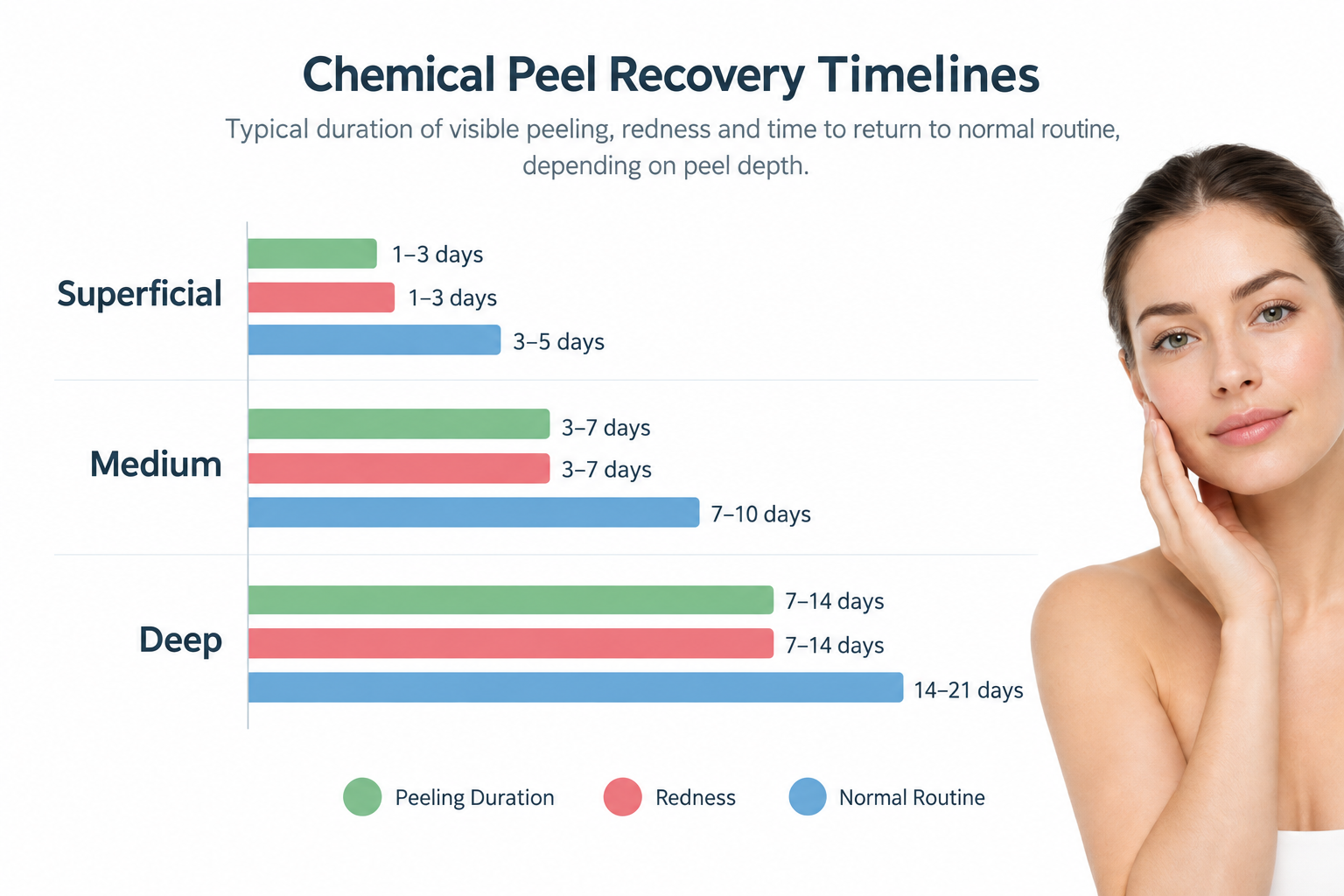
Understanding the typical recovery timeline for your specific peel type helps set realistic expectations and reduces unnecessary concern during normal stages of healing.
| Peel Type | Common Agents | Visible Peeling | Redness Duration | Return to Normal Routine | Downtime |
|---|---|---|---|---|---|
| Superficial | Glycolic acid, lactic acid, low-concentration salicylic acid | Mild flaking, days 2–5 | 24–48 hours | 5–7 days | Minimal to none |
| Medium | TCA 20–35%, Jessner’s solution | Moderate peeling, days 3–7 | 5–10 days | 10–14 days | 7–10 days |
| Deep | Phenol, high-concentration TCA | Significant, up to 2–3 weeks | Several weeks | 3–4 weeks or longer | 2–3 weeks or more |
These timelines are approximate and individual healing varies. Factors including skin type, age, general health, the specific peel formulation used, and how closely aftercare instructions are followed all influence recovery speed. Your practitioner is the most reliable source of guidance for your specific situation.
Normal Side Effects Versus Signs That Need Attention
Distinguishing between expected post-peel reactions and signs of a complication is an important part of aftercare. Most patients experience some degree of redness, tightness, sensitivity, and peeling — these are normal parts of the healing process. However, certain signs warrant prompt contact with your practitioner.
Expected Side Effects
- Redness and warmth in the treated area
- Skin tightness and a feeling of dryness
- Mild swelling, particularly around the eyes, in the first 24–48 hours
- Itching as the skin heals and new cells form
- Visible flaking or peeling between days two and seven
- Temporary increased sensitivity to skincare products
Signs That Require Professional Assessment
- Blistering or open sores beyond what your practitioner described as expected
- Spreading redness, warmth, or swelling that worsens after the first 48 hours
- Pus, crusting with yellow or green discharge, or signs of bacterial infection
- Cold sore outbreak in or around the treated area (relevant for patients with a history of herpes simplex)
- Significant pain that is not controlled by over-the-counter pain relief
- Persistent darkening of the skin beyond the expected post-peel period
Patients with a known history of herpes simplex virus (cold sores) should inform their practitioner before treatment, as chemical peels can trigger an outbreak. Antiviral prophylaxis is commonly prescribed in advance for medium and deep peels in these patients.
Post-Inflammatory Hyperpigmentation and Skin Tone Considerations
Post-inflammatory hyperpigmentation (PIH) is one of the more common complications of chemical peels, particularly in patients with Fitzpatrick skin types III to VI — that is, medium, olive, brown, and darker skin tones. PIH occurs when the inflammatory response triggered by the peel stimulates excess melanin production, resulting in darkened patches that can persist for weeks to months.
The risk of PIH is not a reason to avoid chemical peels entirely in patients with medium to darker skin tones, but it does influence peel selection, concentration, and aftercare. Superficial peels with agents such as mandelic acid or low-concentration salicylic acid are often preferred for these skin types. Strict sun avoidance and consistent broad-spectrum sun protection during and after recovery are particularly important for reducing PIH risk. Some practitioners recommend a pre-treatment course of topical agents such as hydroquinone, azelaic acid, or kojic acid to prepare the skin and reduce the likelihood of PIH.
If PIH does develop after a peel, it is important not to attempt to treat it with aggressive exfoliation or high-strength actives without professional guidance, as this can worsen the discolouration. A follow-up appointment with your practitioner allows for an appropriate management plan.
Lifestyle Factors That Affect Healing
Several lifestyle factors can influence how quickly and effectively the skin recovers after a chemical peel. Staying well hydrated supports overall skin health and barrier function. A diet adequate in protein and micronutrients — particularly vitamins C and E, zinc, and omega-3 fatty acids — provides the building blocks for skin repair, though no specific dietary supplement has been proven to accelerate post-peel healing in robust clinical trials.
Smoking impairs wound healing and skin repair by reducing blood flow and oxygen delivery to tissues. Patients who smoke may experience slower recovery and potentially less satisfactory results. Alcohol consumption can contribute to dehydration and may exacerbate post-peel redness and inflammation, so moderation is advisable during the recovery period.
Vigorous exercise should be avoided for at least 48 to 72 hours after a superficial peel and for longer after medium or deep treatments. Sweating can irritate healing skin, introduce bacteria, and increase the risk of infection. Swimming in chlorinated pools or the sea should also be avoided until the skin has fully healed, as both chlorine and salt water can be significantly irritating to compromised skin.
When Can You Wear Makeup After a Chemical Peel?
The timing for returning to makeup use depends on peel depth and individual healing. After a superficial peel, many patients can apply mineral-based makeup from around day three to five, once active peeling has subsided and the skin is no longer broken or raw. Mineral makeup is generally preferred during early recovery because it is less likely to contain irritating ingredients and sits on the skin rather than penetrating it.
After medium-depth peels, makeup is typically avoided for at least seven to ten days. After deep peels, the skin may not be ready for makeup for two to three weeks or longer. Your practitioner will advise on the appropriate timeline for your specific treatment. When you do return to makeup, choose fragrance-free, non-comedogenic formulations and apply and remove them gently to avoid disturbing healing skin.
Frequently Asked Questions
How long does skin peeling last after a chemical peel?
Visible peeling typically lasts between three and seven days after a superficial peel. Medium-depth peels may produce peeling that continues for up to ten days, while deep peels can involve shedding for two to three weeks. The duration varies between individuals and depends on the specific peel used.
Can I moisturise immediately after a chemical peel?
In most cases, yes. Applying a gentle, fragrance-free moisturiser is an important part of post-peel care and helps support the skin barrier. Your practitioner will advise on the specific product and timing appropriate for your treatment. Avoid rich or occlusive products that your practitioner has not recommended, as some formulations may not be suitable immediately after certain peel types.
Is it normal for skin to feel itchy during recovery?
Mild itching is a common and normal part of the healing process as new skin cells form. Keeping the skin well moisturised can help reduce itching. Avoid scratching, as this can damage healing skin and increase the risk of scarring or infection. If itching is severe or accompanied by other concerning symptoms, contact your practitioner.
Can I have a chemical peel if I have darker skin?
Chemical peels can be performed on a range of skin tones, but peel selection, concentration, and aftercare need to be carefully tailored to reduce the risk of post-inflammatory hyperpigmentation. A practitioner experienced in treating diverse skin tones should assess your skin and recommend the most appropriate peel type. Superficial peels are generally considered lower risk for medium to darker skin tones than medium or deep peels.
When can I use retinol again after a chemical peel?
Most practitioners advise waiting at least one to two weeks after a superficial peel before reintroducing retinol, and four to six weeks or longer after medium or deep peels. Reintroducing retinol too soon can cause significant irritation and compromise healing. Follow your practitioner’s specific guidance rather than a general timeline.
How many chemical peels will I need?
This depends on your skin concern and the type of peel used. Superficial peels are often performed as a course of four to six treatments spaced two to four weeks apart for concerns such as mild acne, uneven texture, or dullness. Medium and deep peels may produce more significant results from a single treatment. Your practitioner will recommend a treatment plan based on your individual goals and skin assessment.
What should I do if my skin reacts badly after a peel?
Contact your practitioner promptly if you experience signs of infection, unexpected blistering, severe pain, or a cold sore outbreak. Do not attempt to self-treat a suspected complication with over-the-counter products without professional advice, as some products can worsen certain reactions. Most reputable clinics provide aftercare support and a point of contact for post-treatment concerns.
Getting the Most from Your Chemical Peel Recovery
The outcome of a chemical peel is shaped not only by the treatment itself but by how carefully the skin is supported during recovery. Following your practitioner’s aftercare instructions consistently — particularly around sun protection, gentle cleansing, and avoiding active ingredients too soon — gives the skin the best environment to heal and renew effectively. Cutting corners during recovery, whether by returning to a full skincare routine too early, picking at peeling skin, or skipping sunscreen, can reduce results and increase the risk of complications such as hyperpigmentation or scarring.
If you are considering a chemical peel or have recently had one and have questions about your recovery, a follow-up consultation with your treating practitioner is the most reliable source of personalised guidance. Skin responses vary considerably between individuals, and advice tailored to your specific peel type, skin tone, and healing progress will always be more accurate than general information alone. A qualified aesthetic practitioner or dermatologist can also advise on whether additional treatments, maintenance peels, or complementary skincare adjustments may help you achieve and sustain your skin goals over time.
