
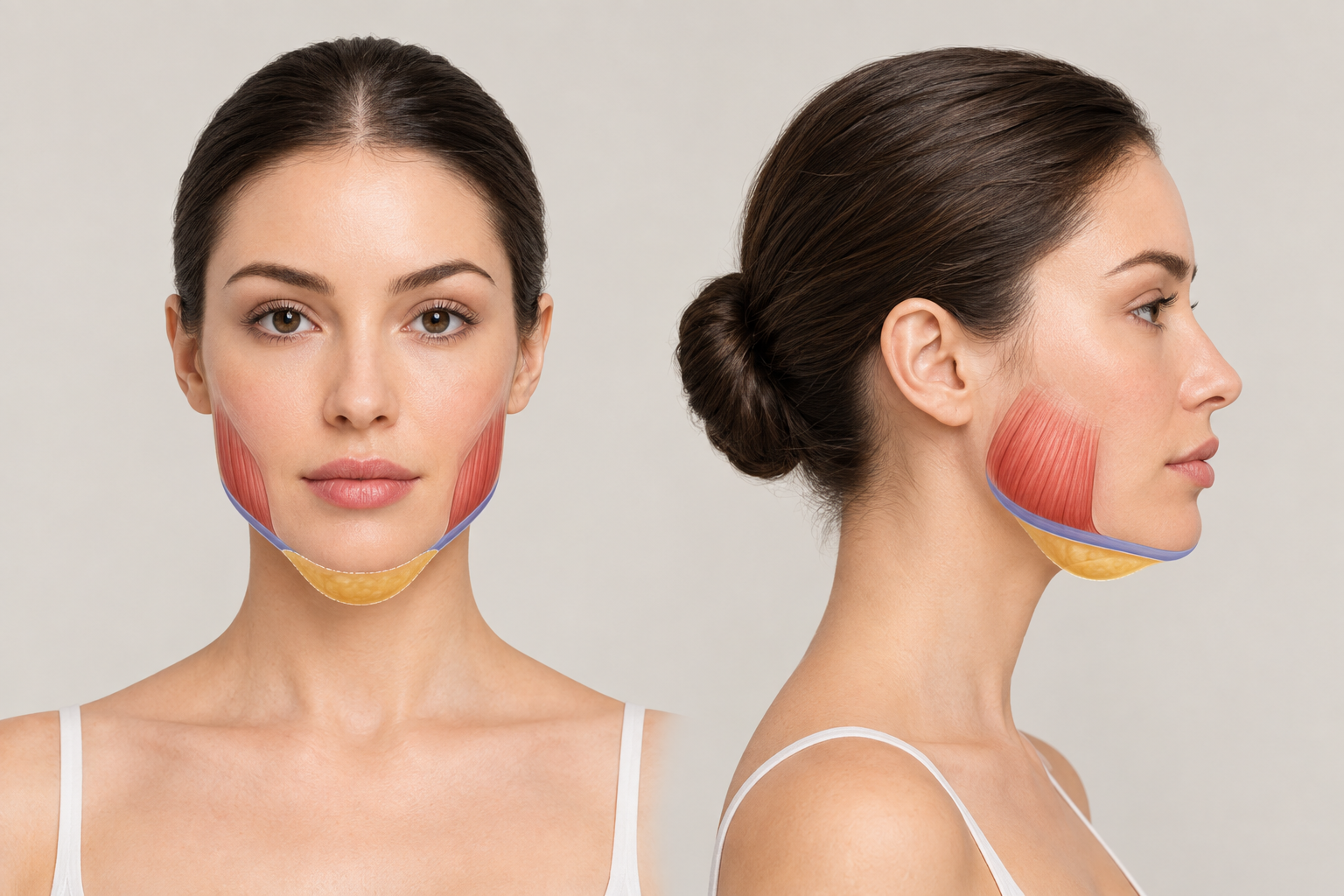

A slimmer, more defined facial appearance is one of the most common aesthetic goals, yet many people are reluctant to consider surgery. Non-surgical face slimming encompasses a range of clinic-based treatments that may reduce facial fullness, soften a wide jawline, or improve overall facial contour without incisions or general anaesthesia. Understanding how each approach works, what it can realistically achieve, and where its limitations lie is essential before deciding whether any of these options is appropriate for you.
Key Takeaways
- Non-surgical face slimming is not a single treatment — it includes botulinum toxin injections for masseter reduction, injectable fat-dissolving treatments, and energy-based contouring devices, each targeting different causes of facial fullness.
- Results are typically temporary and require maintenance; no non-surgical treatment permanently restructures facial bone or eliminates fat cells with the same certainty as surgery.
- Patient selection matters significantly — the most suitable treatment depends on the underlying cause of facial fullness, whether that is muscle bulk, localised fat, skin laxity, or a combination.
- Risks and side effects exist for every approach and should be discussed in detail with a qualified practitioner before treatment.
- A thorough consultation and facial assessment are necessary to determine which option, if any, is appropriate for your anatomy and goals.
What Causes a Wide or Full-Looking Face?
Facial width and fullness can result from several different anatomical factors, and identifying the correct cause is the first step toward choosing an appropriate treatment. The masseter muscles — the large chewing muscles located at the sides of the jaw — can become enlarged through habitual teeth grinding (bruxism), jaw clenching, or simply through genetics. When these muscles are hypertrophied, they create a square or wide lower face appearance that is unrelated to body weight or fat distribution.
Localised submental fat (commonly called a double chin) or buccal fat — the fat pads that sit in the mid-cheek area — can also contribute to a rounder or heavier facial appearance. Separately, reduced skin elasticity and soft tissue descent with age can create jowling or a loss of jawline definition that gives the impression of a wider or heavier face even when underlying structures have not changed significantly. Understanding which of these factors is most relevant to your appearance will directly influence which treatment approach a practitioner may recommend.
Botulinum Toxin for Jawline Slimming
Botulinum toxin injections into the masseter muscles are one of the most established non-surgical approaches to lower face slimming. The treatment works by temporarily reducing the activity of the masseter muscle, which over several weeks causes the muscle to reduce in bulk — a process known as muscle atrophy. The result is a softening of the lower face and a more tapered or oval facial shape, particularly noticeable in patients with significant masseter hypertrophy.
Botulinum toxin for masseter reduction is sometimes referred to as jaw slimming, jawline contouring, or masseter botox, though the active ingredient — botulinum toxin type A — is the same substance used for wrinkle relaxation. Several brands are available, including Botox (onabotulinumtoxinA), Dysport (abobotulinumtoxinA), and Azzalure, among others. Units between different brands are not directly interchangeable, and the appropriate product and dose should be determined by a qualified practitioner based on individual muscle size and treatment goals.
Results from masseter botulinum toxin treatment typically begin to appear within two to four weeks, with the most noticeable reduction in muscle bulk often visible at around six to eight weeks. The effect is temporary; most patients find that results last between four and six months initially, though with repeated treatments some patients report longer intervals between sessions as the muscle gradually reduces in size over time. Maintenance injections are generally required to sustain the effect.
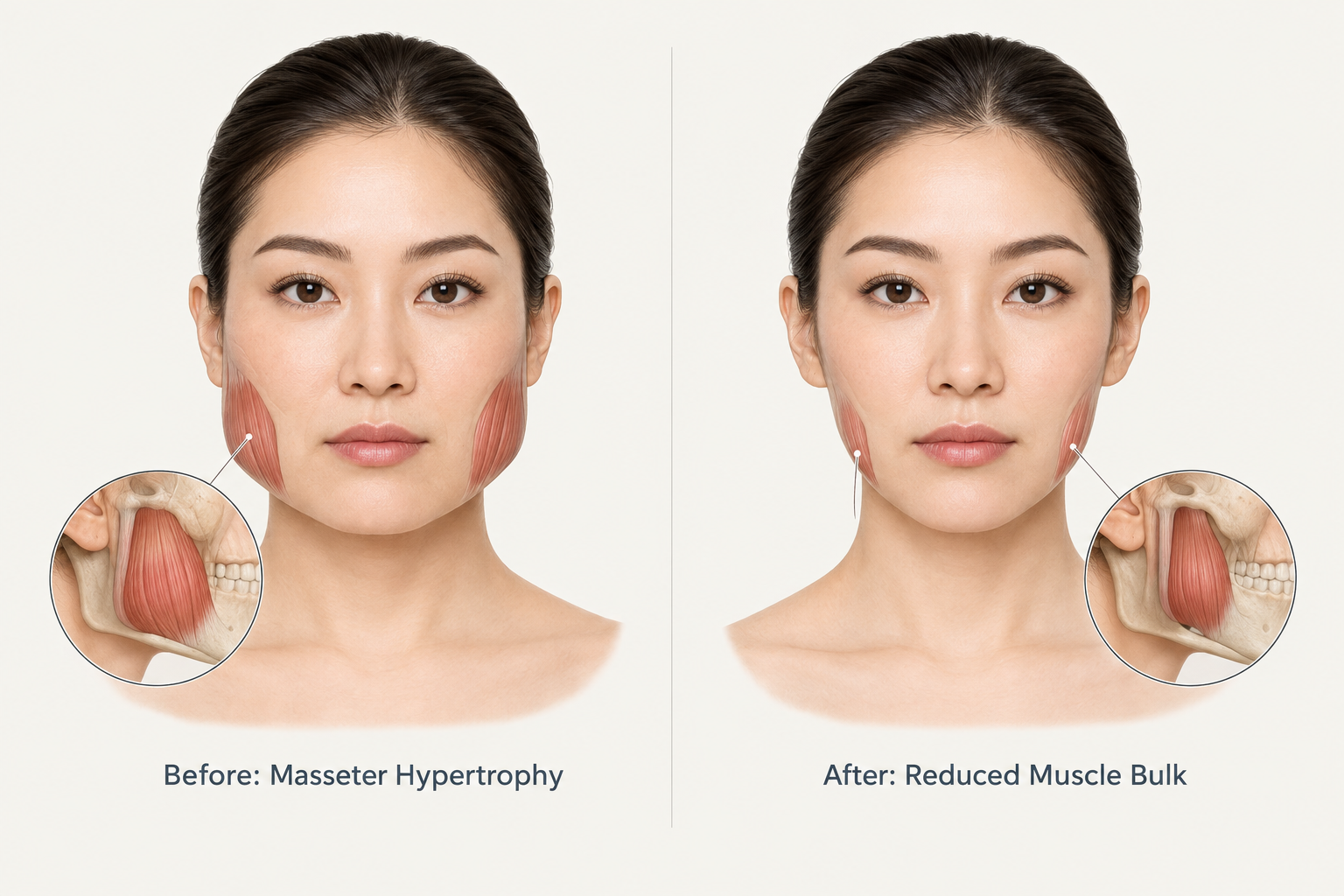
This treatment is generally well tolerated. Common side effects include mild swelling, bruising, or tenderness at the injection sites. Less commonly, some patients experience temporary changes in chewing strength or mild asymmetry. A thorough assessment of jaw function, dental history, and any existing temporomandibular joint (TMJ) concerns is important before treatment, as botulinum toxin in this area may not be appropriate for everyone.
Injectable Fat Dissolving for the Face
Injectable fat-dissolving treatments use compounds that disrupt fat cell membranes, causing localised fat cells to break down and be gradually cleared by the body’s lymphatic system. In the context of facial slimming, these treatments are most commonly used beneath the chin to address submental fat, though some practitioners also use them in the jowl area or lower cheeks depending on the product and clinical assessment.
Deoxycholic acid is the most widely studied active ingredient in this category. It is a naturally occurring bile acid that, when injected into subcutaneous fat, causes cell lysis — the breakdown of fat cell membranes. Branded formulations such as Kybella (available in some markets) contain synthetic deoxycholic acid and have been evaluated in clinical trials specifically for submental fat reduction. Other injectable lipolytic products are also used in aesthetic practice, and their evidence base and regulatory status vary by country and formulation.
Fat-dissolving injections for the face typically require a course of treatments rather than a single session. The number of sessions needed depends on the volume of fat present and the individual’s response to treatment. Swelling after each session can be significant and may last one to two weeks, which is an important practical consideration. Bruising, numbness, and firmness in the treated area are also common in the days following treatment. Results develop gradually as the body processes the disrupted fat cells, and the timeline for visible improvement is typically measured in weeks to months rather than days.
It is important to understand that injectable fat dissolving is a localised contouring treatment, not a weight loss intervention. It is most appropriate for patients who have a specific, defined area of unwanted facial fat and who are otherwise at or near a stable weight. Significant changes in body weight after treatment can affect results.
Buccal Fat and Non-Surgical Alternatives
Buccal fat pads are naturally occurring fat deposits located in the mid-cheek area. When prominent, they can contribute to a rounder or fuller facial appearance, particularly in the lower cheek and around the mouth. Surgical buccal fat removal (bichectomy) is a procedure that permanently removes these fat pads, but non-surgical options for reducing buccal fat volume are limited and less predictable.
Some practitioners use injectable fat-dissolving compounds in the buccal area, though this is considered an off-label application in most markets and carries specific risks given the proximity of important facial nerves and structures. The evidence base for non-surgical buccal fat reduction is considerably less robust than for submental fat treatment, and the risk of unintended effects — including asymmetry or over-reduction — is a meaningful concern. Any practitioner offering this treatment should have detailed anatomical knowledge and significant experience with facial injectable treatments.
It is also worth noting that buccal fat naturally reduces with age. Aggressive removal or reduction in younger patients may lead to an overly gaunt appearance in later years, which is a consideration that a responsible practitioner should discuss during consultation.
Energy-Based and Device Treatments for Facial Contouring
Several non-invasive device-based treatments are used in aesthetic practice with the aim of improving facial contour, skin tightening, or modest fat reduction. These include high-intensity focused ultrasound (HIFU), radiofrequency (RF) treatments, and cryolipolysis devices adapted for smaller facial areas. Each works through a different mechanism and addresses different concerns.
High-intensity focused ultrasound (HIFU) delivers focused ultrasound energy to targeted depths within the skin and underlying tissue, stimulating collagen production and causing tissue contraction. HIFU is primarily used for skin lifting and tightening rather than direct fat reduction, and its contribution to facial slimming is largely through improving skin firmness and definition rather than reducing tissue volume. Results are gradual and may take two to three months to become fully apparent. The treatment can be uncomfortable, and results vary considerably between individuals.
Radiofrequency treatments use controlled heat energy to stimulate collagen remodelling and may improve skin laxity and jawline definition over a course of sessions. Like HIFU, RF treatments are better suited to patients whose facial fullness is partly related to skin laxity rather than significant fat or muscle bulk. Evidence for meaningful fat reduction from RF treatments in the face is limited, and expectations should be calibrated accordingly.
Cryolipolysis — the controlled cooling of fat cells to induce their breakdown — is well established for body contouring but has a more limited role in facial fat reduction. Applicators designed for smaller areas such as the submental region exist, but the evidence for facial cryolipolysis is less extensive than for body applications, and patient selection is important.
Facial Contouring with Dermal Fillers
Dermal fillers do not reduce facial volume, but they can be used strategically to improve the perception of facial shape and definition. By adding structure to areas such as the chin, jawline, or cheekbones, a skilled practitioner may create the visual impression of a slimmer or more contoured face through redistribution of proportions rather than actual volume reduction. This approach is sometimes called non-surgical facial contouring or liquid facelift.
Hyaluronic acid fillers are the most commonly used products for this purpose, as they are reversible with hyaluronidase enzyme if needed. Results are immediate but temporary, typically lasting between twelve and eighteen months depending on the product used, the area treated, and individual metabolism. Filler-based contouring is not appropriate for patients whose primary concern is genuine facial fullness or excess fat — adding volume to create the illusion of definition has clear limits and may not be suitable for all face shapes or concerns.
Combining Treatments for Facial Slimming
In practice, many patients seeking facial slimming benefit from a combination approach rather than a single treatment. For example, botulinum toxin for masseter reduction may be combined with chin filler to improve lower face proportions, or fat-dissolving injections beneath the chin may be paired with a skin-tightening treatment to address any skin laxity that becomes more apparent as submental fat reduces. A combination plan should be developed by a qualified practitioner following a thorough assessment of facial anatomy, skin quality, and individual goals.
Combination treatments require careful planning to avoid over-treatment, which can result in an unnatural appearance. The sequence and timing of treatments also matters — for example, significant swelling from fat-dissolving injections may temporarily obscure the results of other treatments performed at the same time. A staged approach is often more appropriate than attempting to address multiple concerns simultaneously.
Who May Be Suitable for Non-Surgical Face Slimming?
Suitability for non-surgical face slimming treatments depends on the specific treatment being considered, the underlying cause of facial fullness, and individual health factors. In general, candidates who tend to respond well to these treatments are adults in good general health who have a specific, identifiable concern — such as masseter hypertrophy, submental fat, or mild skin laxity — that is amenable to the chosen treatment approach.
Factors that may affect suitability include:
- Pregnancy and breastfeeding: Most injectable and energy-based treatments are not recommended during pregnancy or breastfeeding.
- Active skin infections or inflammation: Treatment should not be performed over areas of active infection, inflammation, or unhealed skin.
- Neuromuscular conditions: Conditions such as myasthenia gravis may be a contraindication to botulinum toxin treatment.
- Bleeding disorders or anticoagulant medications: These may increase the risk of bruising and should be discussed with a practitioner.
- Previous facial surgery or implants: Prior procedures may affect treatment planning and safety.
- Unrealistic expectations: Non-surgical treatments produce more modest changes than surgery; patients expecting dramatic transformation may not be well suited to these approaches.
- Significant skin laxity: Patients with considerable loose skin may not achieve satisfactory results from treatments that primarily target fat or muscle, and surgical options may be more appropriate.
Risks and Side Effects
Every non-surgical face slimming treatment carries potential risks and side effects, and these should be discussed in detail before proceeding. The specific risks vary by treatment type.
Botulinum toxin injections for masseter reduction carry risks including bruising, swelling, asymmetry, temporary changes in chewing function, and — rarely — unintended spread to adjacent muscles. The effect is temporary, so any unwanted outcome will resolve as the toxin wears off, though this may take several months.
Injectable fat-dissolving treatments are associated with more significant post-treatment swelling, bruising, and discomfort than botulinum toxin. Numbness in the treated area is common and usually temporary. Rare but more serious risks include nerve injury, skin irregularity, and — in the case of submental treatment — marginal mandibular nerve injury, which can cause temporary weakness of the lower lip. Choosing a practitioner with specific experience in facial fat-dissolving treatments is important to minimise these risks.
Energy-based treatments such as HIFU and radiofrequency carry risks including temporary redness, swelling, and discomfort during and after treatment. Rare adverse effects include burns, blistering, or paradoxical fat changes, though these are uncommon when treatments are performed correctly on appropriate candidates.
Dermal filler complications, while uncommon, can include bruising, swelling, asymmetry, nodule formation, and — in rare but serious cases — vascular occlusion, which requires immediate treatment. Filler should only be administered by practitioners with appropriate training and access to hyaluronidase for emergency reversal.
Realistic Results and Longevity
Managing expectations is one of the most important aspects of any non-surgical face slimming consultation. These treatments can produce meaningful improvements in facial contour for appropriate candidates, but they are not equivalent to surgical procedures in terms of the degree of change achievable.
Botulinum toxin for masseter reduction can produce a noticeable softening of the lower face in patients with genuine masseter hypertrophy, with results typically lasting four to six months per treatment cycle. Fat-dissolving injections for submental fat can reduce chin fullness over a course of sessions, with results that may be long-lasting if body weight remains stable, since treated fat cells do not regenerate. Skin-tightening treatments produce more subtle improvements that develop gradually and may require multiple sessions to achieve and maintain.
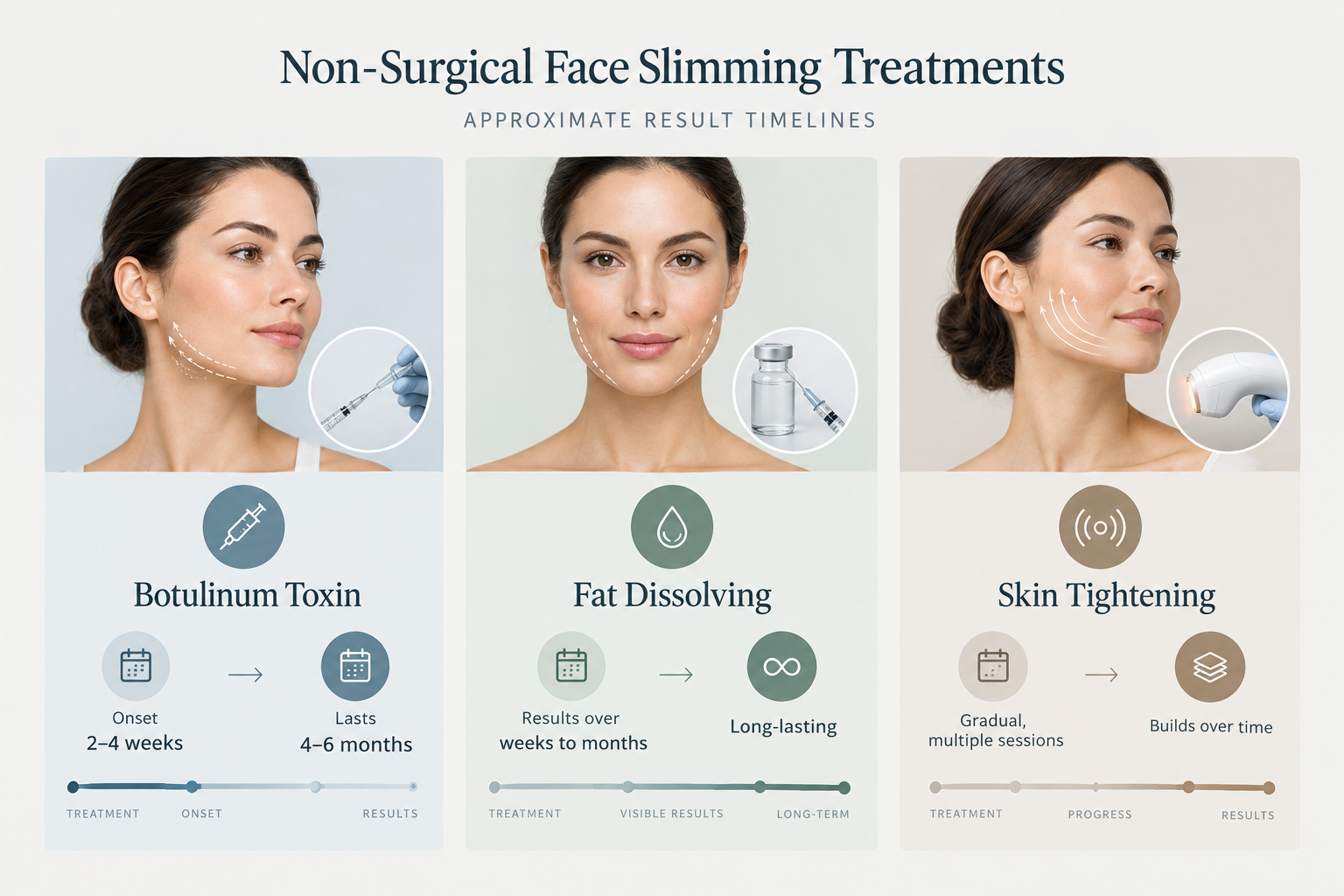
Results are individual and cannot be guaranteed. Factors including anatomy, skin quality, age, lifestyle, and the specific products or devices used all influence outcomes. A practitioner should provide an honest assessment of what is realistically achievable for your specific concerns before treatment begins.
Frequently Asked Questions
How many sessions of botulinum toxin are needed for jaw slimming?
Most patients require an initial treatment followed by a review appointment at six to eight weeks to assess the response. Maintenance treatments are typically needed every four to six months to sustain the effect, though some patients find the interval extends with repeated treatments as the muscle gradually reduces in size.
Is non-surgical face slimming painful?
Discomfort levels vary by treatment. Botulinum toxin injections involve a brief stinging sensation at each injection point. Fat-dissolving injections can cause more significant discomfort during and after the procedure, including swelling and tenderness that may persist for one to two weeks. Energy-based treatments such as HIFU can be uncomfortable during the session. Topical anaesthetic cream is often applied before injectable treatments to improve comfort.
How long does swelling last after fat-dissolving injections in the face?
Swelling after facial fat-dissolving injections is common and can be pronounced, particularly in the submental area. Most patients experience noticeable swelling for one to two weeks, with residual firmness or mild swelling potentially lasting several weeks beyond that. Planning treatment well in advance of any important events is advisable.
Can non-surgical treatments replace surgery for face slimming?
Non-surgical treatments can achieve meaningful improvements for specific concerns such as masseter hypertrophy or mild submental fat, but they cannot replicate the degree of change achievable through surgical procedures such as bichectomy, liposuction, or a lower face lift. Patients with significant skin laxity, large volumes of fat, or structural concerns may find that surgical options are more appropriate for their goals.
Will my face look natural after these treatments?
When performed by an experienced practitioner on appropriate candidates, non-surgical face slimming treatments are generally designed to produce a natural-looking improvement rather than a dramatic transformation. Over-treatment — for example, excessive masseter reduction or aggressive fat dissolving — can result in an unnatural appearance, which is one reason why choosing a qualified and experienced practitioner and having realistic expectations are both important.
Are the results of fat-dissolving injections permanent?
Fat cells that are destroyed by injectable lipolytic treatments do not regenerate. In this sense, the reduction in fat cell number in the treated area may be long-lasting. However, remaining fat cells can still enlarge with weight gain, and significant changes in body weight after treatment may affect the appearance of results. Maintenance of a stable weight supports longer-lasting outcomes.
Is Non-Surgical Face Slimming the Right Approach for You?
Non-surgical face slimming treatments offer genuine options for patients with specific, identifiable concerns — particularly masseter hypertrophy responding to botulinum toxin, or localised submental fat amenable to injectable fat-dissolving treatment. For these concerns, evidence supports meaningful improvement in appropriate candidates, and the treatments are well established in aesthetic practice.
The decision to pursue any of these treatments should begin with a thorough consultation with a qualified aesthetic practitioner who can assess your facial anatomy, identify the underlying cause of your concern, and recommend a treatment plan — or advise that non-surgical options may not be the most appropriate route for your goals. Treatments that work well for one patient may produce limited results or carry unnecessary risk for another, depending on anatomy, skin quality, and the nature of the concern.
If you are considering non-surgical face slimming, look for a practitioner with specific experience in facial aesthetics, a transparent approach to discussing realistic outcomes and risks, and a willingness to recommend alternatives — including no treatment — when appropriate. A well-informed decision made after a thorough assessment is always the safest starting point.
