
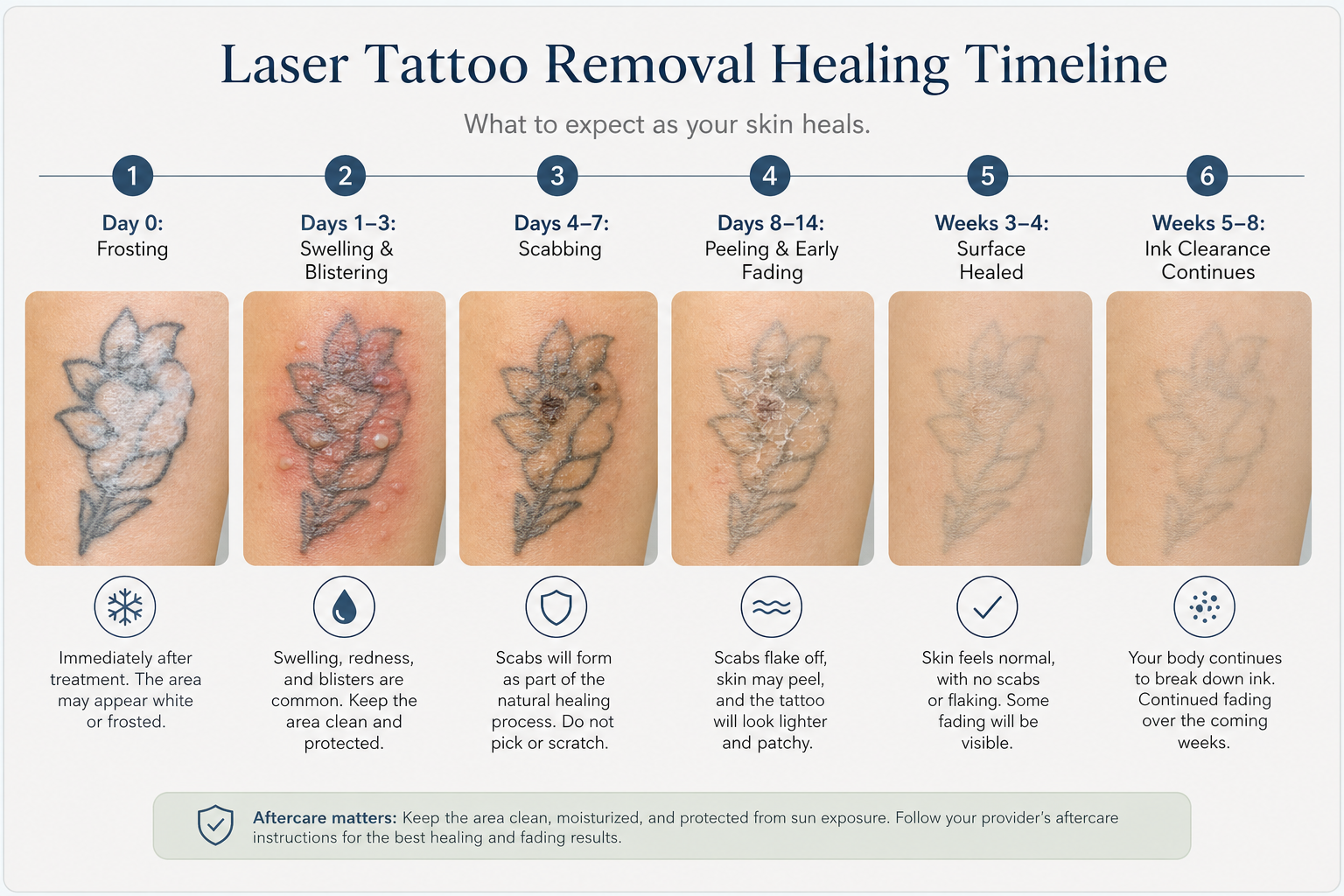

Laser tattoo removal works by breaking ink into fragments that your body gradually clears away — but the skin goes through a predictable sequence of changes before it settles. Understanding the day-by-day tattoo removal healing process helps you distinguish normal recovery from signs that need attention, follow aftercare correctly, and set realistic expectations for how your skin will look between sessions.
Key Takeaways
- The laser tattoo removal healing process follows a consistent timeline: frosting immediately after treatment, peak swelling and blistering in the first three days, scabbing through days four to seven, and gradual fading from week two onward.
- Surface healing — when the skin looks normal again — typically takes two to four weeks, but deeper lymphatic clearance of fragmented ink particles continues for weeks beyond that.
- Aftercare is straightforward but important: keep the area clean, apply a healing ointment, avoid sun exposure, and do not pick or scratch any scabs or blisters.
- Skin type, tattoo age, ink colour, body location, and lifestyle factors such as smoking and hydration all influence how quickly healing progresses.
- Most concerning symptoms — pus, spreading redness, fever, or red streaks — are uncommon but require prompt clinical assessment.
How Laser Tattoo Removal Affects the Skin
Before examining the day-by-day timeline, it helps to understand what the laser actually does. Q-switched and picosecond lasers deliver extremely short pulses of light energy that are selectively absorbed by tattoo pigment. This rapid energy absorption causes the ink to shatter into much smaller fragmented ink particles. The surrounding tissue experiences a controlled injury — enough to trigger an immune response, but not enough to destroy the skin when the treatment is performed correctly.
Once the ink is fragmented, the immune system takes over. Macrophages — specialised white blood cells — engulf the smaller particles and transport them through the lymphatic system for gradual clearance. This process is not instant. It continues for weeks after each session, which is why tattoo fading becomes more visible over time rather than immediately after treatment. The healing you observe on the skin surface and the deeper biological clearance happening beneath it are two separate processes running on different timescales.
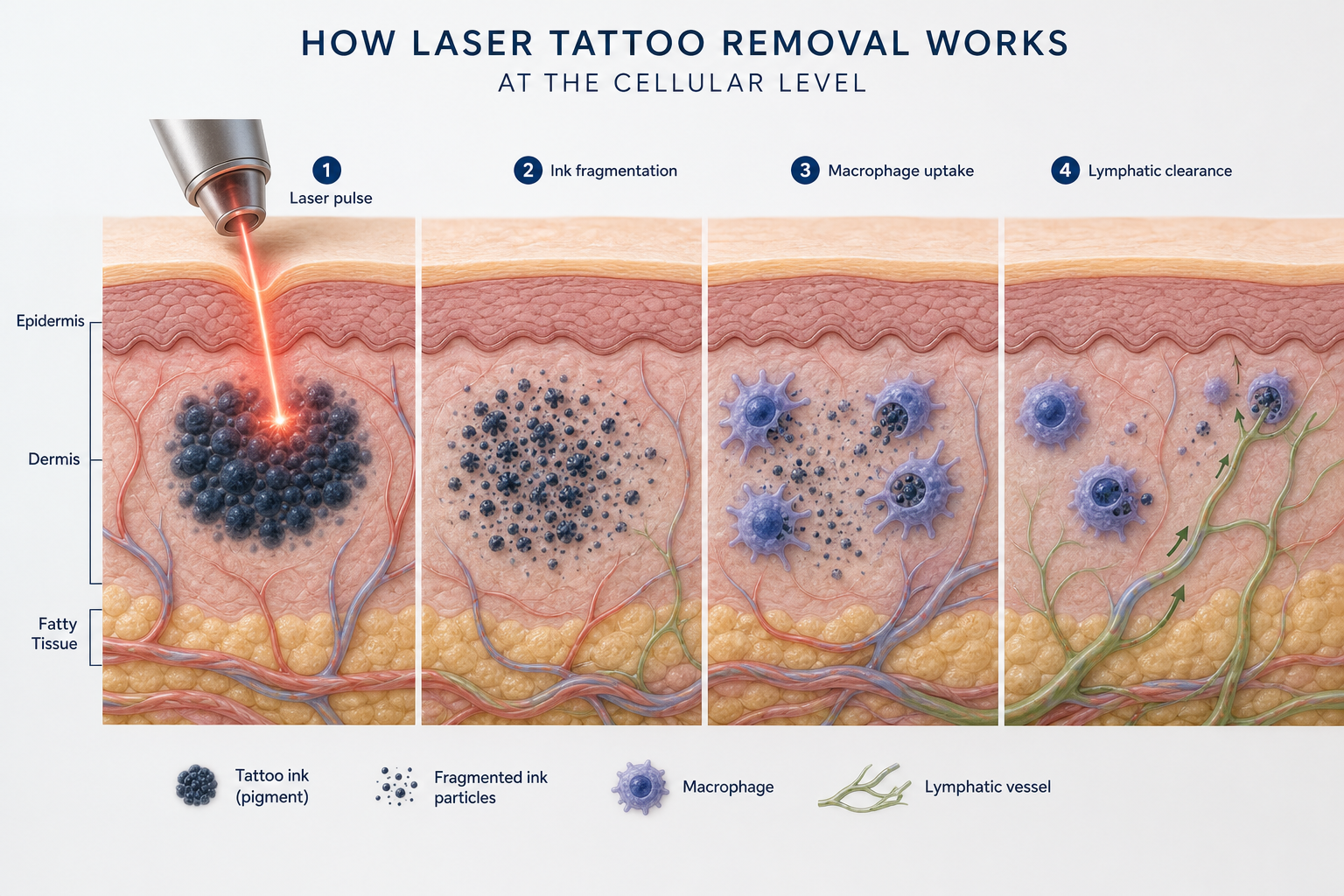
Picosecond lasers deliver pulses in trillionths of a second, compared to the nanosecond pulses of Q-switched lasers. Some evidence suggests picosecond technology fragments ink more efficiently and may produce a shorter inflammatory response for certain ink colours and skin types, though individual results still vary considerably.
The Day-by-Day Healing Timeline
Treatment Day (Day 0): The First Two Hours Matter
Immediately after the laser passes over the treated area, a white or greyish discolouration appears on the skin. This is called the frosting effect, and it results from carbon dioxide gas bubbles forming rapidly as the laser energy interacts with the ink and water in the skin. Frosting is a normal and expected response — it typically fades within 20 to 30 minutes of treatment ending.
In the first two hours after your session, the skin will feel warm, tight, and tender, similar to a mild sunburn. Applying a cold compress or ice pack wrapped in a clean cloth for 10 to 15 minutes at a time can reduce discomfort and limit early swelling. Avoid applying ice directly to the skin. The clinic will usually apply a sterile dressing before you leave; keep this in place for the first few hours unless instructed otherwise. Avoid heat sources, exercise, and alcohol during this window, as these can increase blood flow to the area and worsen swelling.
Days 1–3: Peak Swelling and Possible Blistering
Redness and swelling typically peak within the first 24 to 48 hours. The treated area may look raised, feel warm to the touch, and appear similar to a moderate sunburn. This inflammatory response is the immune system mobilising to begin clearing the fragmented ink particles — it is a sign that the treatment has triggered the intended biological response.
Blistering is common during this phase, particularly over areas with dense or dark ink. Blisters form because the laser energy causes fluid to accumulate between skin layers. They can range from small pinpoint bubbles to larger fluid-filled sacs. Do not puncture blisters intentionally. If a blister breaks on its own, keep the area clean with a fragrance-free soap and apply a thin layer of healing ointment such as Vaseline or Aquaphor to protect the exposed skin. Cover with a non-stick sterile dressing. Pinpoint bleeding or pinpoint haemorrhage — tiny spots of blood at the surface — may also appear and is generally considered a normal part of the healing response at this stage.
Days 4–7: Scabbing, Itching, and Dryness
As the initial inflammation subsides, the skin begins to dry out and form scabs or crusts over the treated area. This epidermal crusting is the skin’s natural repair mechanism — the scabs protect the healing tissue underneath. The area may feel itchy and tight as new skin forms beneath the surface.
The most important rule during this phase: do not pick or scratch the scabs. Removing scabs prematurely disrupts the healing process, increases the risk of infection, and can lead to scarring or uneven pigmentation. If itching is uncomfortable, a gentle pat over the dressing or a cool compress can provide relief. Continue applying a thin layer of healing ointment and keep the area covered if clothing or friction might disturb it. Avoid swimming, saunas, and hot baths during this period, as prolonged moisture can soften scabs and increase infection risk.
Days 8–14: Peeling, Flaking, and Early Fading
By the second week, scabs begin to flake away naturally, revealing newer, pinker skin underneath. The treated area may look slightly shiny or feel sensitive. Early tattoo fading becomes visible at this stage — the ink will appear lighter than before treatment, though the full extent of fading from this session will not be apparent for several more weeks.
Continue gentle cleansing with a mild, fragrance-free soap and apply healing ointment until the skin feels fully comfortable without it. Sun protection becomes especially important now: the newly healed skin is more vulnerable to UV damage, which can trigger hyperpigmentation — a darkening of the treated area. Apply a broad-spectrum SPF 30 or higher sunscreen to the area whenever it is exposed to daylight, even on overcast days.
Weeks 3–4: Surface Healing Resolves
For most people, the visible side effects of laser tattoo removal — redness, scabbing, and peeling — have resolved by the end of week three or four. The skin surface looks largely normal, though it may still appear slightly pink or feel mildly sensitive compared to surrounding skin. Tattoo fading continues to become more noticeable as the lymphatic system clears more of the fragmented ink particles.
This is an important distinction: surface healing and deeper recovery are not the same thing. The skin may look healed, but the immune system is still actively processing and transporting ink fragments away from the treated area. This is why session spacing of at least six to eight weeks — and sometimes up to twelve weeks — is recommended. Treating the skin again before this clearance window closes reduces the effectiveness of each session and increases the risk of adverse effects.
Weeks 5–8: Continued Ink Clearance and Preparation for the Next Session
Between weeks five and eight, the skin is fully healed at the surface level and the lymphatic system continues its clearance work. Tattoo fading may still be progressing visibly during this period. Staying well hydrated, maintaining a balanced diet, and avoiding smoking can support immune function and lymphatic clearance during this window. When the skin has fully recovered and the recommended interval has passed, the treated area is ready for the next session.
Surface Healing vs. Deeper Recovery: An Important Distinction
One of the most commonly misunderstood aspects of the laser tattoo removal healing process is the difference between what the skin looks like and what is happening beneath it. Surface healing — the resolution of redness, blistering, scabbing, and peeling — typically takes two to four weeks. Deeper recovery, meaning the ongoing lymphatic system clearance of fragmented ink particles, continues for weeks or months beyond that.
Patients sometimes feel discouraged when their skin looks healed but the tattoo still appears dark. This is normal. The full result of each session only becomes visible once the immune system has had adequate time to clear the ink. Rushing into the next session before this process is complete is counterproductive. Clinicians recommend waiting the full recommended interval not just for skin safety, but to allow the maximum amount of fading to occur before assessing how much more treatment is needed.
Normal Healing Symptoms vs. Warning Signs
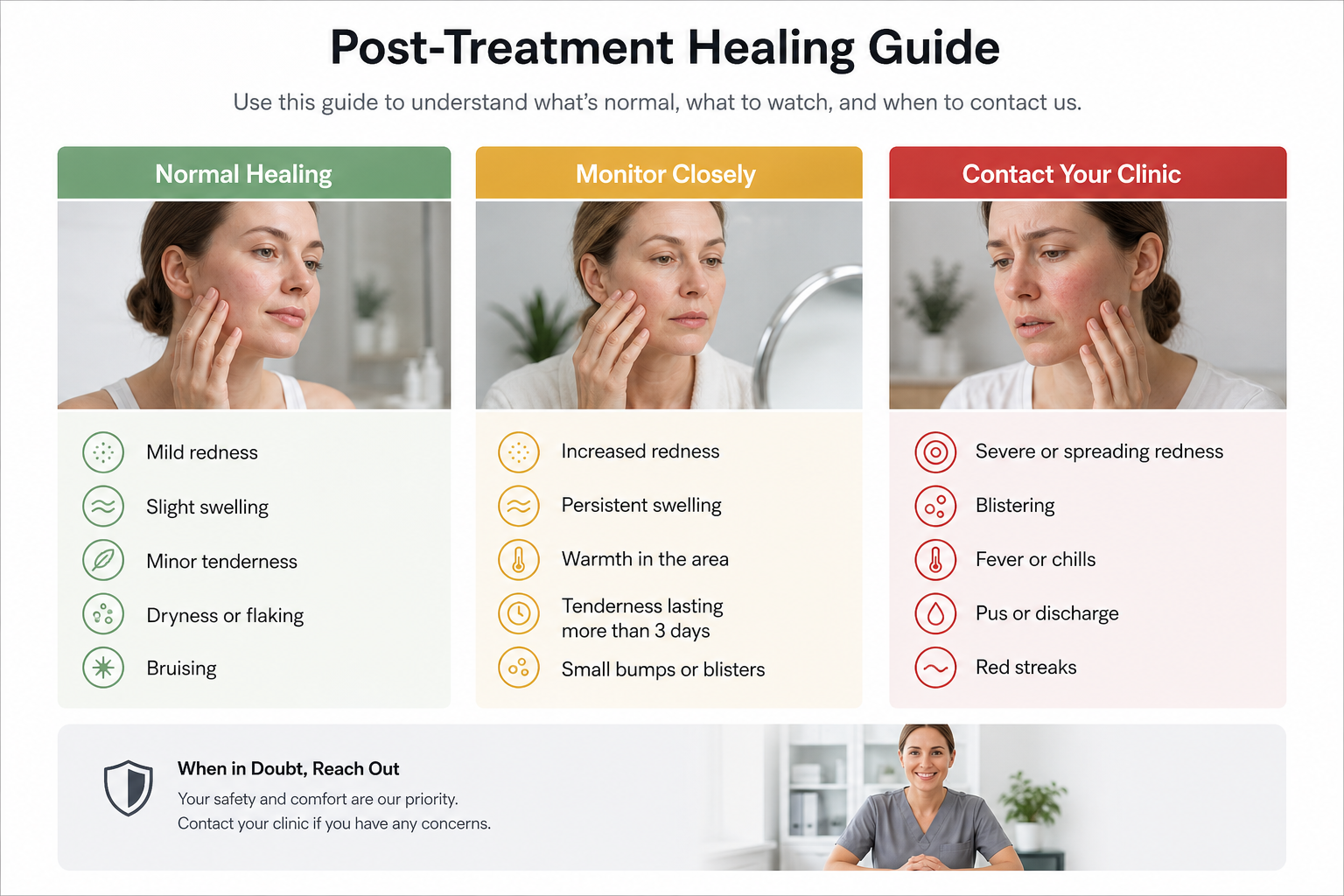
Most people experience only the expected side effects of laser tattoo removal. However, knowing which symptoms are normal and which require clinical attention is important for safe recovery.
| Symptom | Normal Healing | Monitor Closely | Contact Your Clinic |
|---|---|---|---|
| Redness | First 1–3 days | Persists beyond 5 days | Spreading, worsening after day 5 |
| Swelling | Peaks days 1–2, resolves by day 4–5 | Slow to reduce | Increasing swelling after day 3 |
| Blistering | Days 1–5, intact blisters | Large or numerous blisters | Blisters with cloudy or yellow fluid |
| Scabbing | Days 4–14, dry and intact | Thick or slow-healing scabs | Scabs with discharge or odour |
| Itching | Days 4–10, mild | Persistent or intense | Itching with rash or hives |
| Skin colour change | Temporary pinkness or darkening | Persistent hyperpigmentation | Rapid darkening or white patches |
| Pain | Mild soreness, days 1–3 | Moderate pain beyond day 3 | Severe or worsening pain at any stage |
| Systemic symptoms | None expected | — | Fever, red streaks, pus, or chills |
Red streaks extending from the treated area, fever, pus or discharge, and significant worsening pain are potential signs of infection such as cellulitis and require prompt medical assessment. These complications are uncommon when aftercare instructions are followed, but they should not be ignored.
Aftercare: What to Do and What to Avoid
What to Do
- Apply a cold compress or ice pack (wrapped in cloth) for the first 24 hours to reduce swelling and discomfort.
- Keep the treated area clean by gently washing with a fragrance-free, mild soap and patting dry.
- Apply a thin layer of healing ointment such as Vaseline or Aquaphor to keep the skin moisturised and protected.
- Cover the area with a sterile non-stick dressing, especially if clothing might rub against it.
- Apply broad-spectrum SPF 30 or higher sunscreen to the healed area whenever it is exposed to daylight.
- Stay hydrated and maintain a balanced diet to support immune function and lymphatic clearance.
- Wear loose, soft clothing over the treated area to minimise friction.
What to Avoid
- Do not pick or scratch scabs, blisters, or peeling skin — this is the single most important aftercare rule.
- Avoid direct sun exposure on the treated area until it is fully healed and protected with sunscreen.
- Avoid swimming pools, hot tubs, saunas, and steam rooms until the skin has fully healed.
- Avoid vigorous exercise for the first 24 to 48 hours, as increased blood flow can worsen swelling.
- Do not apply perfumed products, exfoliants, or retinoids to the treated area during healing.
- Avoid alcohol in the first 24 hours, as it can increase inflammation.
Factors That Affect Healing Speed and Fading
The laser tattoo removal healing process varies between individuals. Several factors influence both how quickly the skin recovers and how effectively the ink clears between sessions.
Tattoo characteristics: Older tattoos tend to respond faster than newer ones because the ink has already partially dispersed over time. Black and dark blue inks absorb laser energy most efficiently and typically fade faster than green, yellow, or light blue pigments. Deeply placed ink or high-density ink requires more sessions and may produce a more pronounced healing response.
Body location: Areas with strong blood circulation — such as the upper back, chest, and upper arms — tend to heal faster and show better fading than areas with poorer circulation, such as the hands, feet, and ankles. Tattoos on the extremities often require longer session spacing and may heal more slowly between treatments.
Fitzpatrick skin type: Skin type affects both the laser settings used and the risk of pigmentation changes during healing. People with lighter skin tones (Fitzpatrick types I–III) generally have a lower risk of post-treatment hyperpigmentation or hypopigmentation. Those with medium to darker skin tones (Fitzpatrick types IV–VI) require more conservative laser settings and careful monitoring, as the risk of temporary or, in rare cases, longer-lasting pigmentation changes is higher. A qualified practitioner will adjust the treatment protocol accordingly.
Immune system health: Because ink clearance depends on macrophages and the lymphatic system, anything that suppresses immune function can slow fading between sessions. Smoking is particularly relevant — it impairs circulation and immune response, and research consistently associates smoking with slower tattoo removal outcomes. Chronic illness, certain medications, and poor nutrition may also affect the pace of clearance.
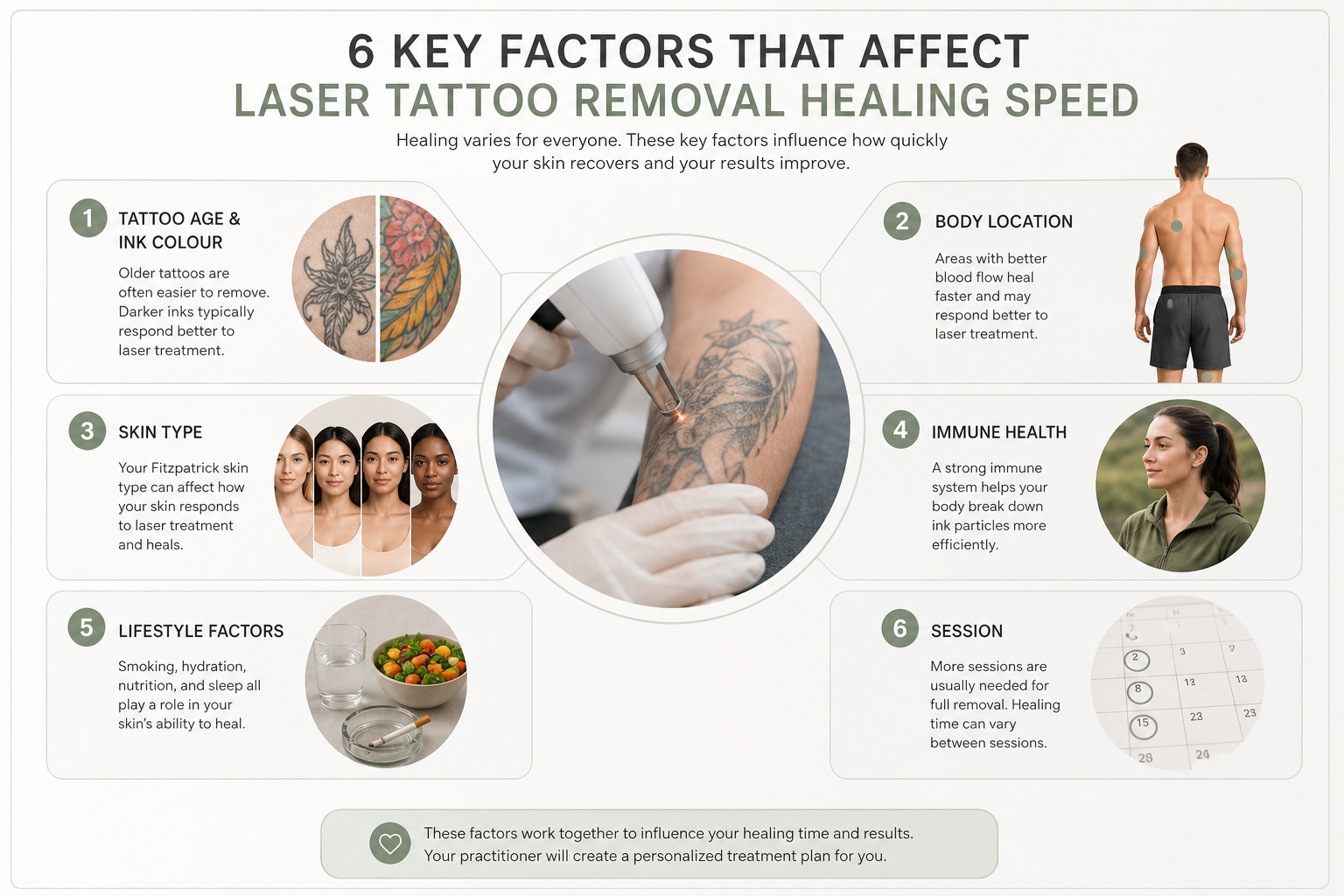
Lifestyle factors: Staying well hydrated supports lymphatic function. Regular moderate exercise improves circulation. A diet adequate in vitamins C and E and zinc may support skin repair, though no specific supplement has been clinically proven to accelerate tattoo removal healing. Avoiding alcohol and smoking during the recovery period is advisable.
Session number: Healing patterns can change across a course of treatment. Earlier sessions often produce more pronounced blistering and swelling because the ink density is higher. Later sessions — typically from session five onward — may produce a milder inflammatory response as less ink remains, though this varies depending on the original tattoo and individual skin response.
Hyperpigmentation and Hypopigmentation: What They Mean
Temporary changes in skin colour are among the most common side effects of laser tattoo removal. Hyperpigmentation — darkening of the treated area — occurs when the inflammatory response stimulates excess melanin production. It is more common in people with medium to darker skin tones and in areas exposed to sun during healing. In most cases, hyperpigmentation fades gradually over several months with consistent sun protection.
Hypopigmentation — lightening of the skin — occurs when laser energy affects the melanocytes responsible for skin colour. It is less common than hyperpigmentation but can be more persistent. Both conditions are usually temporary, but in rare cases they may be prolonged. This is one reason why Fitzpatrick skin type assessment before treatment and appropriate laser settings are clinically important. If you notice significant colour changes that are not resolving, discuss them with your treating clinician before proceeding with further sessions.
How Many Sessions Are Needed and How Long Between Them
The total number of laser tattoo removal sessions required depends on the tattoo’s size, ink colours, ink depth, age, and the individual’s skin type and immune response. Most professional tattoos require between six and twelve sessions, though some may need more. Amateur tattoos, which tend to have shallower and less dense ink, often respond in fewer sessions.
Session spacing of at least six to eight weeks is standard, and some clinicians recommend extending this to ten or twelve weeks for larger tattoos or for patients whose skin takes longer to recover. This interval allows the skin to heal fully at the surface and gives the lymphatic system adequate time to clear fragmented ink before the next treatment. Spacing sessions too closely together does not accelerate results and increases the risk of cumulative skin damage.
Frequently Asked Questions
Is it normal for the tattoo to look darker immediately after treatment?
Yes. The frosting effect and post-treatment inflammation can temporarily make the tattoo appear more prominent immediately after a session. This resolves within hours to days. Meaningful fading becomes visible from around week two onward and continues for weeks after that as the immune system clears the ink.
What should I do if a blister breaks?
If a blister breaks on its own, gently clean the area with a mild fragrance-free soap, apply a thin layer of healing ointment, and cover with a sterile non-stick dressing. Do not attempt to drain blisters deliberately. Contact your clinic if the area shows signs of infection such as cloudy fluid, increasing redness, warmth, or pain.
Can I exercise after a laser tattoo removal session?
Light activity is generally acceptable after 48 hours, but vigorous exercise that causes significant sweating or friction over the treated area should be avoided for the first two to three days. Increased blood flow and sweat can worsen swelling and irritate healing skin. Follow your clinic’s specific guidance.
Why does my tattoo still look dark after several sessions?
Fading is cumulative and gradual. Each session fragments more ink, and the immune system clears it over the following weeks. Some ink colours — particularly greens, yellows, and light blues — are more resistant to laser energy and fade more slowly. The full result of each session may not be visible until four to eight weeks after treatment.
How do I protect the treated area from the sun?
Once the skin has healed sufficiently (usually from week two onward), apply a broad-spectrum SPF 30 or higher sunscreen to the treated area every day it is exposed to daylight. During active healing, keep the area covered with clothing or a dressing. Sun exposure during healing significantly increases the risk of hyperpigmentation and can interfere with the removal process.
Does the healing process change with later sessions?
It can. Earlier sessions often produce more pronounced swelling and blistering because the ink density is higher. As the tattoo fades across multiple sessions, the inflammatory response may become less intense. However, individual variation is significant, and some patients experience similar healing responses throughout their course of treatment.
When should I be concerned about infection?
Contact your clinic or a medical professional if you notice pus or cloudy discharge from the treated area, red streaks extending outward from the site, fever or chills, rapidly increasing pain, or swelling that worsens after the third day. These symptoms are uncommon when aftercare is followed correctly but should be assessed promptly if they occur.
Planning Your Recovery Realistically
The laser tattoo removal healing process is manageable for most people, but it requires patience and consistent aftercare across multiple sessions spanning several months. Understanding that surface healing and deeper ink clearance happen on different timescales — and that fading accumulates gradually rather than appearing all at once — helps set realistic expectations and reduces anxiety during recovery.
If you are considering laser tattoo removal, a consultation with a qualified practitioner is the appropriate starting point. They can assess your tattoo’s characteristics, your Fitzpatrick skin type, and your medical history to give you a realistic treatment plan, an estimated number of sessions, and personalised aftercare guidance. The day-by-day healing process described here reflects typical patterns, but individual variation is real — your clinician is best placed to advise on what to expect for your specific situation.
