


Key Takeaways
- Cryolipolysis (fat freezing) uses controlled cooling to destroy subcutaneous fat cells without surgery, and clinical studies report an average fat layer reduction of 15–28% per treated area.
- Fat freezing is a body contouring tool, not a weight-loss treatment — it targets localised fat deposits and cannot reduce visceral fat or treat obesity.
- Results develop gradually over 3–6 months as the lymphatic system clears away destroyed fat cells; the process is not immediate.
- Side effects are usually mild and temporary, but a rare complication called paradoxical adipose hyperplasia can occur and requires professional management.
- Suitability depends on individual health, body composition, and goals — a qualified practitioner assessment is essential before proceeding.
What Is Fat Freezing?
Fat freezing, known clinically as cryolipolysis, is a non-invasive body contouring procedure that uses precisely controlled cooling to selectively target and destroy stubborn fat cells beneath the skin. The technique was developed following research at Harvard Medical School, where scientists observed that fat tissue is more sensitive to cold temperatures than the surrounding skin and other structures. This discovery — partly inspired by a phenomenon called cold panniculitis, where children developed dimples from sucking on ice lollies — led to the development of a device that could apply this principle in a controlled clinical setting.
CoolSculpting is the most widely recognised brand name for FDA-cleared cryolipolysis technology, though other devices using the same mechanism are available. During a treatment session, a practitioner positions an applicator over the target area. The device draws the tissue between two cooling panels and holds the skin at a precisely calculated low temperature — typically around minus 11 degrees Celsius — for a set period. This controlled exposure triggers a biological process that gradually eliminates the treated fat cells.
How Does Cryolipolysis Actually Work?
The mechanism behind fat freezing relies on a well-established biological principle: fat cells (adipocytes) are more vulnerable to cold injury than skin, nerve, or muscle tissue. When subcutaneous fat is exposed to controlled cooling within a specific temperature range, lipid crystallisation occurs inside the fat cells. This triggers a natural cell death process called adipocyte apoptosis — a programmed, orderly form of cell death that does not cause the inflammation associated with tissue damage from frostbite or other forms of cold injury.
Following apoptosis, the body’s immune system responds by sending macrophages — specialised white blood cells — to clear away the debris from the destroyed fat cells. These cellular remnants are gradually processed and eliminated through the lymphatic system over the weeks and months following treatment. Importantly, the structural tissue around the treated fat — including skin, nerves, and blood vessels — remains unaffected by the cooling process, which is why cryolipolysis can be performed without anaesthesia or surgical incisions.
The fat cells destroyed during cryolipolysis do not regenerate. The total number of fat cells in a treated area is permanently reduced. However, the remaining fat cells in that area can still enlarge if a person gains significant weight, which is why maintaining a stable weight after treatment helps preserve results.
Does Fat Freezing Really Work? What the Evidence Shows
The clinical evidence for cryolipolysis is more robust than for many other non-invasive body contouring treatments. Multiple peer-reviewed studies, systematic reviews, and meta-analyses support its effectiveness at reducing localised fat deposits in appropriate candidates.
A frequently cited figure from the Cleveland Clinic reports an average fat reduction of 15–28% in the treated area following a course of cryolipolysis. WebMD references studies suggesting reductions of approximately 20–25% per session in the target fat layer. A 2024 systematic review and meta-analysis drawing on 30 clinical studies involving over 3,000 participants found statistically significant reductions in fat layer thickness, with high patient satisfaction rates across the included trials. Another 2024 PRISMA-compliant meta-analysis also reported measurable BMI-related improvements alongside fat layer reductions, although researchers noted that cryolipolysis alone should not be positioned as a primary obesity treatment.
Real-world safety data published in 2025 from a cohort of over 3,000 patients broadly aligned with findings from controlled clinical trials, suggesting that outcomes and safety profiles observed in research settings translate reasonably well to clinical practice. Patient satisfaction rates in observational studies have generally been high, particularly among individuals who were well-selected candidates at the outset.
The key qualifier across all these findings is that cryolipolysis produces meaningful spot fat reduction in the treated area — not overall body weight loss. Individuals who expect to see dramatic changes on the scales are likely to be disappointed. Those who want to reduce a specific, pinchable area of stubborn fat that has not responded to diet and exercise are the population for whom the evidence is most favourable.
What Areas Can Be Treated?
Cryolipolysis can be applied to a range of body areas where localised subcutaneous fat is present and can be drawn into the applicator. Commonly treated areas include the lower and upper abdomen, flanks (often called love handles), inner and outer thighs, upper arms, and the area beneath the chin (the submental region, which contributes to a double chin appearance). Some devices are designed for bra rolls, the lower back, and the region beneath the buttocks.
A critical distinction is that fat freezing can only address subcutaneous fat — the fat stored directly beneath the skin that can be physically pinched. It cannot treat visceral fat, which lies deep within the abdominal cavity surrounding internal organs. Visceral fat is associated with metabolic health risks and is reduced primarily through sustained lifestyle changes, not body contouring procedures. Attempting to use cryolipolysis as a substitute for addressing excess visceral fat would not produce meaningful results and is not an appropriate application of the treatment.
What to Expect During and After a Session
A cryolipolysis session typically lasts between 35 and 60 minutes per applicator placement, though this varies by device and treated area. During the procedure, most patients describe an initial sensation of intense cold, suction, and possible tingling or mild aching as the tissue cools. These sensations generally subside within the first few minutes as the area becomes numb. Most people read, use their phone, or rest comfortably during the session.
After the applicator is removed, the treated area is typically firm and may appear temporarily reddened. Practitioners often manually massage the area immediately after treatment to help disperse the treated tissue and improve the effectiveness of the procedure — this is the part of the session that some patients find most uncomfortable. Redness, swelling, bruising, temporary numbness, and a sensation of firmness or mild tenderness in the area are common in the days following treatment. These effects are generally self-resolving and do not require time off work or significant downtime for most people.
Results Timeline: When Will You See a Difference?
Fat freezing results develop gradually because the clearance of destroyed fat cells through the lymphatic system is a biological process that takes time. Most patients begin to notice some early changes at around three weeks after treatment. More noticeable reduction in the treated area typically becomes visible between six and ten weeks post-treatment, as the lymphatic elimination process continues. Optimal results — the full extent of fat reduction achievable from that session — are generally reached between three and six months after the procedure.

This gradual results timeline is actually one of the benefits from a natural-looking outcome perspective, as the change develops slowly rather than appearing abrupt. However, it also requires patients to have realistic expectations about how soon they will see a difference and to avoid making judgements about effectiveness too early in the process.
Multiple treatment sessions may be needed to achieve a patient’s goals, particularly for larger areas or where a more significant reduction is desired. Practitioners typically recommend waiting six to eight weeks between sessions in the same area to allow the initial inflammatory and clearance process to progress before assessing whether further treatment is warranted.
How Long Do Results Last?
The fat cells destroyed by cryolipolysis do not return. In that sense, the reduction in fat cell number in the treated area is permanent. However, the longevity of the visible result depends heavily on whether the patient’s overall weight remains stable following treatment. If significant weight gain occurs, the remaining fat cells in the treated area — and throughout the body — can enlarge, partially reversing the contour improvement achieved.
For patients who maintain a stable weight, results can last for several years and may be considered long-lasting rather than truly permanent. Cryolipolysis is not a solution for ongoing weight management; it works best as a body contouring tool for individuals who are already close to their target weight and want to address specific stubborn fat pockets that have not responded to a balanced diet and regular exercise.
Risks and Side Effects
Cryolipolysis has a well-established safety profile in clinical practice, and serious adverse events are uncommon. Common side effects — redness, swelling, bruising, temporary numbness, and skin sensitivity in the treated area — are typically mild and resolve within a few days to a few weeks without any specific intervention.
The most clinically significant rare complication is paradoxical adipose hyperplasia (PAH). This occurs when the treated fat tissue responds to the cooling stimulus by increasing in volume rather than reducing — the opposite of the intended effect. PAH results in a firm, enlarged area of fat beneath the skin in the treated region, which does not resolve spontaneously and typically requires surgical correction. It is estimated to affect a small percentage of treatments, and it appears to occur more often in male patients, though the precise reasons are not fully understood. Patients should be informed of this risk before proceeding.
Skin laxity is another consideration. In individuals with significantly loose skin in the target area, cryolipolysis may not produce a satisfactory contour result, and the reduction in underlying fat volume could potentially make existing skin laxity more visible. A thorough pre-treatment assessment should address this factor.
Cryolipolysis is generally not recommended for individuals with cryoglobulinaemia, cold agglutinin disease, paroxysmal cold haemoglobinuria, or certain other conditions where cold exposure could cause systemic effects. Individuals with nerve disorders, implanted devices such as pacemakers in or near the treatment area, open wounds, or active skin conditions in the target area should discuss these factors with a practitioner before proceeding.
Who Is a Good Candidate?
Cryolipolysis tends to produce the most satisfying results in individuals who are at or near a healthy body weight and have specific, pinchable localised fat deposits that have not reduced despite consistent exercise and a healthy diet. Good candidates are generally in stable overall health, have realistic expectations about the degree of change achievable, and understand that the treatment is a contouring tool rather than a weight-loss intervention.

Individuals who are significantly overweight, who carry most of their excess weight as visceral fat, or who are looking for weight loss rather than body contouring are not well-suited to cryolipolysis. The treatment works on subcutaneous adipose tissue that can be drawn into the applicator; if there is insufficient pinchable fat in the target area, or if the primary concern is overall body weight rather than a specific contour issue, alternative approaches are more appropriate.
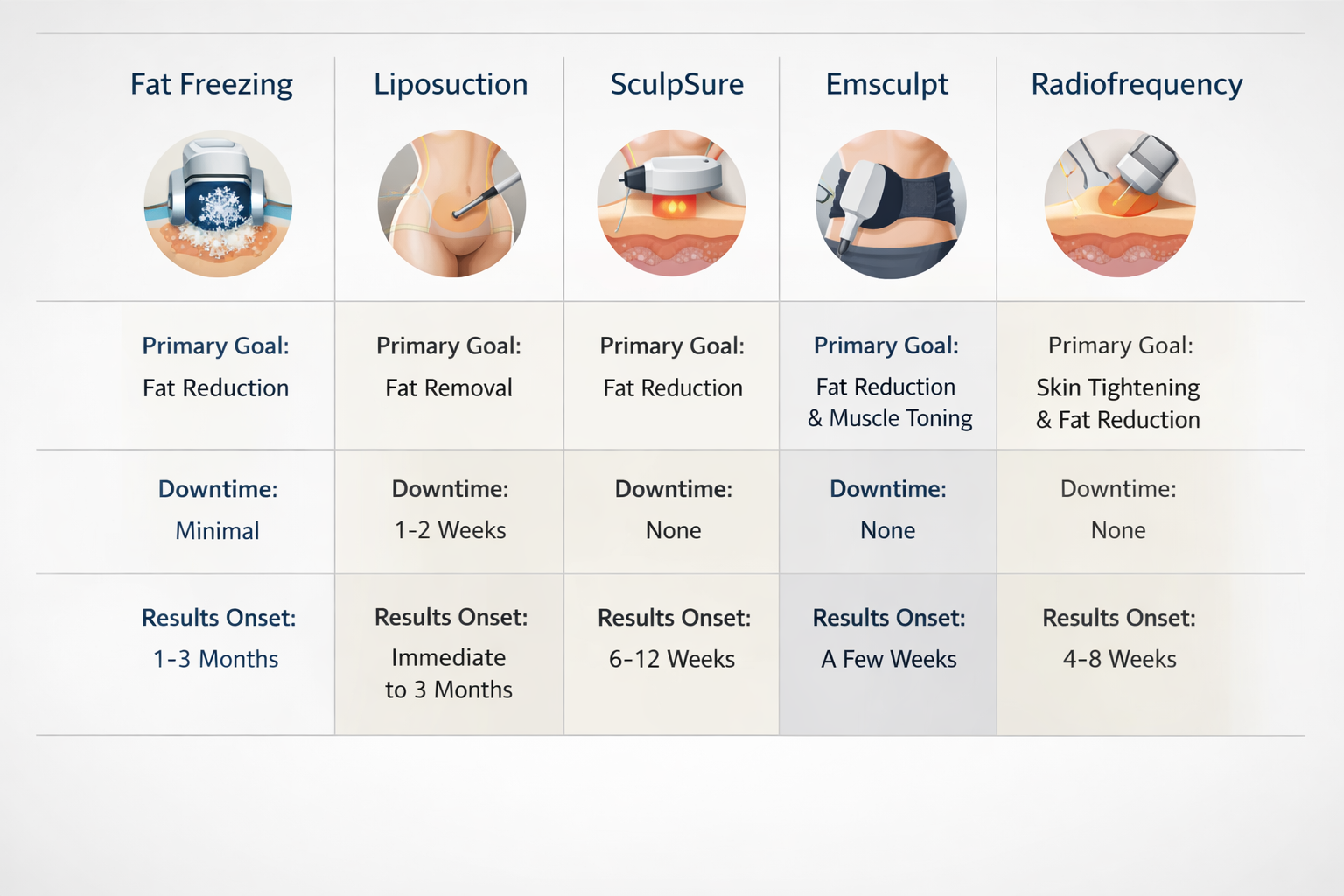
Fat Freezing vs. Other Body Contouring Options
| Treatment | Mechanism | Primary Goal | Downtime | Results Onset | Key Consideration |
|---|---|---|---|---|---|
| Cryolipolysis (fat freezing) | Controlled cooling destroys fat cells | Spot fat reduction | Minimal | 3–6 months | Cannot treat visceral fat; risk of PAH |
| Liposuction | Surgical removal of fat | Larger-volume fat reduction | Days to weeks | Weeks to months (post-swelling) | Surgical risks; greater volume change possible |
| SculpSure / Laser lipolysis | Laser heat disrupts fat cells | Spot fat reduction | Minimal | 6–12 weeks | Different sensation; flat applicator suits some areas better |
| Emsculpt / Emsculpt Neo | Electromagnetic energy stimulates muscle | Muscle toning; some fat reduction | Minimal | 4–6 weeks | Primarily muscle building, not fat removal |
| Radiofrequency (RF) body sculpting | Heat energy tightens tissue | Skin tightening; mild fat reduction | Minimal | 2–3 months | Better for skin laxity than significant fat reduction |
Cryolipolysis is specifically aimed at reducing localised subcutaneous fat without surgery. It does not build muscle, and it provides limited skin tightening compared to radiofrequency-based treatments. For patients whose primary concerns include both fat reduction and skin laxity, combining cryolipolysis with a radiofrequency or energy-based skin tightening treatment in a staged plan may be worth discussing with a qualified practitioner. Similarly, individuals who want to improve both fat distribution and muscle definition may benefit from considering Emsculpt-type treatments alongside or after cryolipolysis, as the two technologies address different tissue types.
Are Home Fat Freezing Devices Safe?
Home fat freezing devices are available online but should be approached with significant caution. Consumer-grade devices do not deliver the same controlled, calibrated cooling temperatures as medical-grade cryolipolysis equipment. Without precise temperature control and proper applicator design, attempts to replicate the clinical procedure at home carry a real risk of cold injury, frostbite, nerve damage, and tissue burns. There is no reliable clinical evidence supporting the safety or effectiveness of home fat freezing devices for meaningful fat reduction. Professional treatment in a regulated clinical environment, performed by a trained practitioner using validated technology, is a fundamentally different proposition from any currently available consumer product in this category.
Frequently Asked Questions
Does fat freezing hurt?
Most patients experience intense cold, suction pressure, and possible tingling or aching at the start of a session, which typically subsides as the area becomes numb. The post-treatment massage that some practitioners perform immediately after removing the applicator can be more uncomfortable. Overall, cryolipolysis is generally well-tolerated without anaesthesia, though individual pain tolerance varies.
How many sessions will I need?
The number of sessions depends on the treatment area, the volume of fat present, and the result being sought. Some patients achieve their goals with a single session per area; others benefit from two or more treatment cycles. A practitioner assessment is needed to provide a realistic treatment plan.
Is fat freezing permanent?
The fat cells destroyed by cryolipolysis do not regenerate. In that respect, the reduction in fat cell number is permanent. However, remaining fat cells can enlarge with weight gain, so maintaining a stable weight is important for preserving results over the long term.
Can fat freezing help me lose weight?
No. Cryolipolysis is not a weight-loss treatment. It reduces the volume and thickness of subcutaneous fat in a specific area but does not produce meaningful changes in overall body weight. It is a body contouring tool best suited to individuals already near their healthy weight.
How soon will I see results after fat freezing?
Early changes may be visible from around three weeks after treatment, with more noticeable improvement typically appearing between six and ten weeks. Full results generally develop over three to six months as the body gradually eliminates the destroyed fat cells through the lymphatic system.
What is paradoxical adipose hyperplasia and how common is it?
Paradoxical adipose hyperplasia (PAH) is a rare complication in which the treated fat increases in volume rather than reducing, resulting in a firm, enlarged area. It does not resolve on its own and typically requires surgical correction. It is more frequently reported in male patients. Patients should discuss this risk with their practitioner before treatment.
Is cryolipolysis covered by health insurance or the NHS?
Cryolipolysis is a cosmetic procedure and is not covered by the NHS or standard health insurance policies. Costs vary depending on the clinic, the size of the treatment area, and the number of sessions required. A consultation will typically clarify expected costs before any commitment is made.
Is Fat Freezing the Right Choice for Your Body Goals?
Cryolipolysis is one of the most clinically supported non-invasive fat reduction treatments available, with a substantial body of peer-reviewed evidence showing meaningful reductions in localised subcutaneous fat for well-selected patients. The evidence suggests an average reduction of 15–28% in treated fat layer thickness, which is a clinically relevant change for people troubled by specific stubborn fat pockets that have not responded to lifestyle measures.
The treatment is not suitable for everyone. It is not a weight-loss solution, it cannot address visceral fat, and it works best when expectations are realistic and the patient is close to their target weight. Skin laxity, overall body composition, health history, and individual goals all influence whether cryolipolysis is likely to produce a satisfying outcome in any specific case.
If you are considering fat freezing, a thorough consultation with a qualified and experienced practitioner is the essential first step. A proper assessment of the treatment area, your health history, and your goals will determine whether cryolipolysis is appropriate for you, which areas can realistically be treated, how many sessions may be needed, and what level of change is achievable. Realistic expectations, good candidate selection, and professional treatment are the factors most consistently associated with positive outcomes in the clinical literature.
