
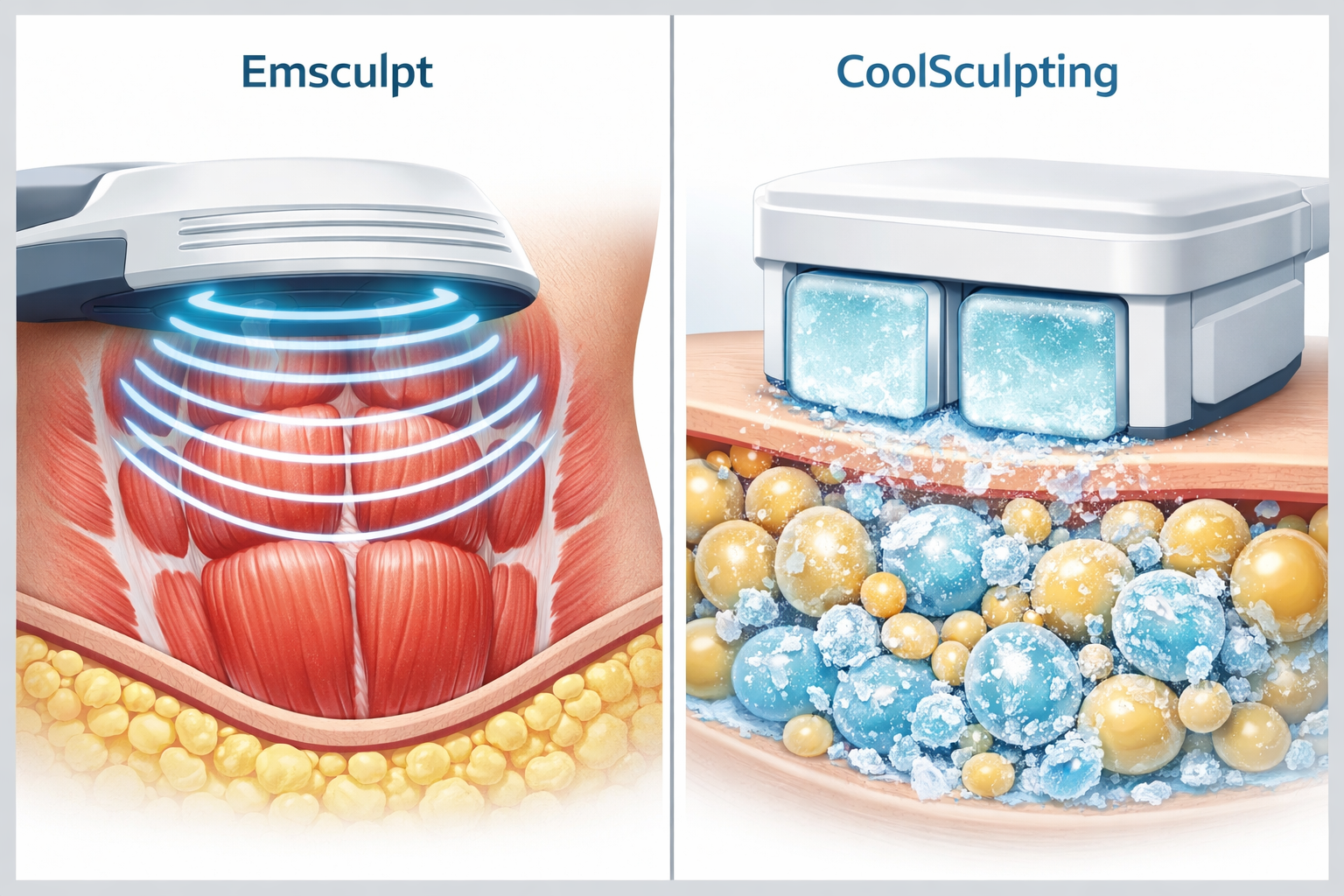

Quick Comparison
| Feature | Emsculpt / Emsculpt NEO | CoolSculpting / CoolSculpting Elite |
|---|---|---|
| Technology | HIFEM (High-Intensity Focused Electromagnetic) energy; NEO also adds radiofrequency (RF) energy | Cryolipolysis (controlled cooling / fat freezing) |
| Primary target | Muscle tissue (also reduces fat; NEO reduces more) | Fat cells only |
| Main goal | Muscle definition and tone; supplementary fat reduction | Reduction of stubborn fat deposits; no muscle effect |
| FDA clearance | FDA-cleared for muscle stimulation and fat reduction (NEO) | FDA-cleared for fat reduction across multiple areas |
| Typical treatment areas | Abdomen, buttocks, thighs, calves, upper arms | Abdomen, flanks, thighs, chin, bra fat, back fat, inner/outer thighs |
| Ideal candidate | Lean to moderately active individuals seeking definition; non-surgical butt lift | Those with pinchable fat bulges resistant to diet and exercise |
| Sessions typically needed | 4 sessions (2–3 days apart) | 1–3 sessions per area (varies by target) |
| Results visible | From 4 weeks; optimal at 3 months | From 3–4 weeks; optimal at 2–3 months |
| Downtime | None; mild post-workout muscle soreness possible | None; temporary redness, swelling, or numbness possible |
| Approximate cost per session | £600–£900+ per session | Variable by applicator and area; often comparable per area |
| Can they be combined? | Yes — often used together in a complementary sequence | |
What Is Emsculpt and How Does It Work?
Emsculpt is a non-invasive body contouring device that uses HIFEM technology — High-Intensity Focused Electromagnetic energy — to stimulate muscle contractions at an intensity that cannot be achieved through voluntary exercise. During a single 30-minute session, the device induces approximately 20,000 supramaximal muscle contractions in the targeted area. These contractions force the muscle tissue to adapt by remodelling its fibres, increasing both muscle mass and density over a course of treatment.
The original Emsculpt device primarily targets muscle, with a secondary effect on overlying fat. Clinical data associated with the original device suggests an average increase in muscle mass of approximately 16% and a fat reduction of around 19% in treated areas, though individual results vary. These figures should be understood as study averages rather than guaranteed personal outcomes.
Emsculpt NEO is an upgraded version of the device that combines HIFEM with radiofrequency (RF) energy delivered simultaneously. The addition of RF generates heat in both the fat layer and the muscle tissue. Published clinical data associated with Emsculpt NEO suggests up to approximately 25% increase in muscle volume and up to 30% reduction in fat in treated areas. Because NEO addresses both tissue types more aggressively, it may be particularly suited to patients who want meaningful fat reduction alongside muscle building in a single treatment series.
Both Emsculpt and Emsculpt NEO are FDA-cleared devices with no downtime. The sensation during treatment is often described as intense rhythmic muscle clenching — unusual but generally not painful. Mild muscle soreness in the days following a session is common, similar to the feeling after a demanding workout.
What Is CoolSculpting and How Does It Work?
CoolSculpting is an FDA-cleared non-invasive fat reduction treatment based on the science of cryolipolysis — the controlled application of cold to selectively damage fat cells without harming the surrounding skin or muscle. Fat cells are more vulnerable to cold temperatures than other tissue types. When exposed to precise controlled cooling, fat cells undergo a natural cell-death process called apoptosis. The body then gradually eliminates the damaged cells through the lymphatic system over the following weeks and months.
A CoolSculpting applicator is placed against the skin and uses suction to draw the tissue between cooling panels. Patients typically feel an intense cold sensation and pressure during the first few minutes, which generally subsides as the area becomes numb. A single session for one applicator placement typically lasts 35–60 minutes, depending on the applicator used. Some providers use multiple applicators simultaneously to treat more than one area in a single visit.
CoolSculpting Elite is the current upgraded platform featuring redesigned dual-applicator technology, allowing two areas to be treated at the same time and potentially reducing overall appointment duration. Clinical evidence associated with CoolSculpting estimates an average fat reduction of up to 25% in the treated area per session, with results becoming visible from around three to four weeks as the body processes eliminated fat cells. Full results are typically apparent at two to three months.
CoolSculpting does not affect muscle tissue. It is purely a fat-reduction technology, making it fundamentally different in purpose from Emsculpt, despite both being categorised as non-surgical body contouring treatments.
Treatment Areas: Where Can Each Be Used?
Understanding which areas each device can address is important for setting realistic expectations.
Emsculpt and Emsculpt NEO are commonly used on the abdomen, buttocks (where it functions as a non-surgical alternative to a traditional butt lift), anterior and posterior thighs, calves, and upper arms. The buttock application is particularly notable because CoolSculpting cannot be used in that area — suction-based applicators are not suitable over the gluteal muscle — making Emsculpt the default non-invasive option for patients seeking to lift and define the buttocks without surgery.
CoolSculpting and CoolSculpting Elite have a broader range of fat-reduction areas, including the abdomen, flanks (love handles), inner and outer thighs, upper arms, submental area (double chin), bra fat, and back fat. The diversity of applicator shapes means it can contour areas where fat is superficial and pinchable — meaning the tissue can be gathered between the cooling panels.
Neither device is a substitute for surgical procedures where significant skin laxity or large volumes of excess fat are present. Both treatments work best when targeting localised, stubborn fat deposits or specific muscle groups rather than addressing overall weight or significant body mass changes.
Who Is a Good Candidate for Each Treatment?
Treatment candidacy differs meaningfully between these two options, and understanding this distinction is one of the most important steps before booking either treatment.
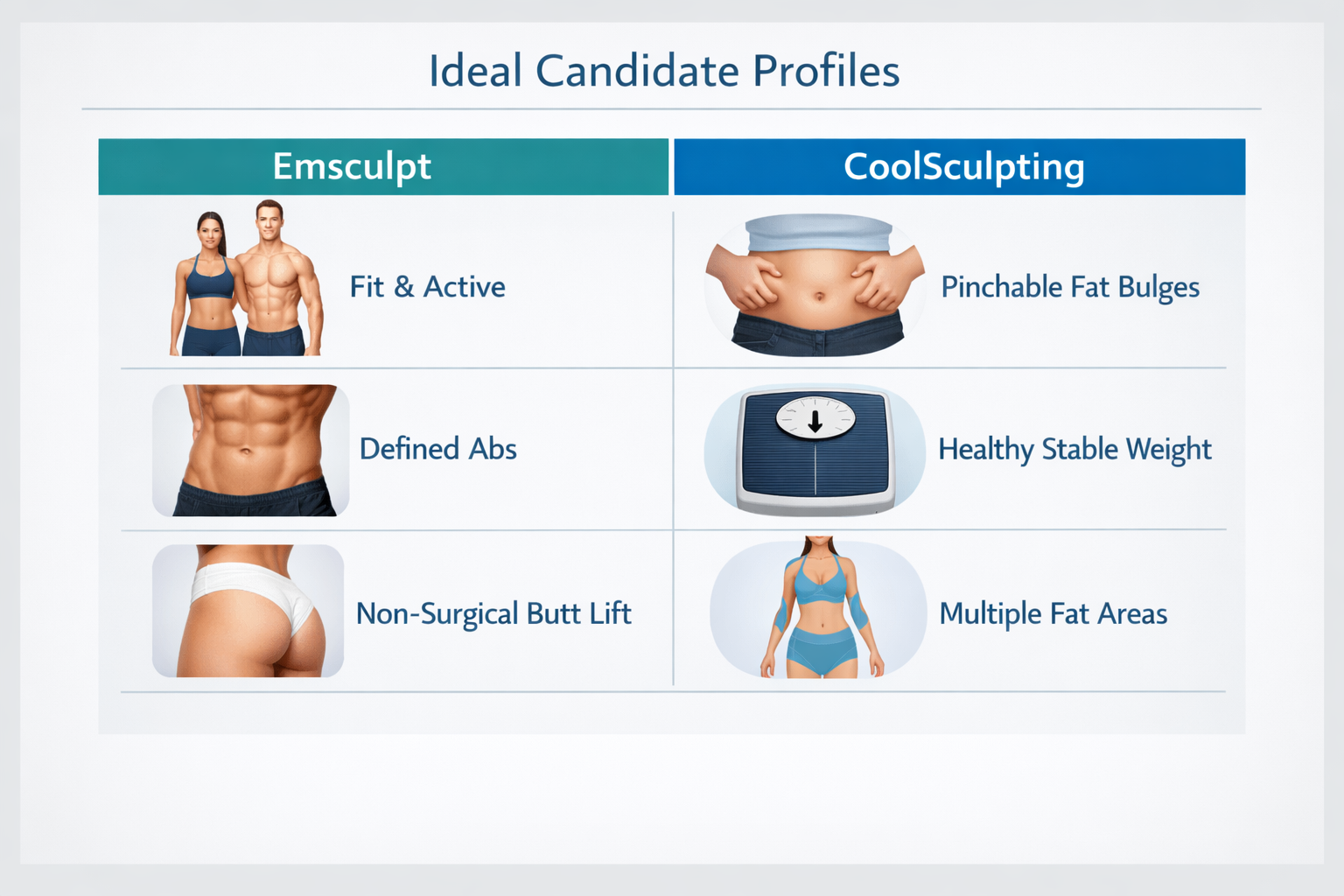
Emsculpt is generally most suitable for individuals who are already relatively lean or physically active and want to enhance muscle definition and tone in specific areas. It is often sought by gym-goers who have reached a plateau in visible muscle definition despite regular training, or by individuals looking for a non-surgical option to lift and shape the buttocks. Because HIFEM technology targets muscle directly, the treatment is less appropriate for individuals who primarily want to reduce fat rather than improve muscle architecture.
CoolSculpting is generally most suitable for individuals who have localised areas of stubborn fat that have not responded adequately to diet and exercise. Ideal candidates have visibly pinchable fat in the target area, are at or near a stable, healthy weight, and are not seeking a weight-loss solution. CoolSculpting may be more accessible for patients with a slightly higher BMI than the typical Emsculpt candidate, provided the fat layer is accessible to the applicator.
Neither treatment is appropriate as a primary intervention for significant obesity, and neither addresses loose or excess skin. A clinical assessment by a qualified practitioner is required to determine which option, if either, is appropriate for a given patient.
Who Should Avoid Each Treatment?
Emsculpt and Emsculpt NEO are contraindicated for individuals with implanted electronic devices such as pacemakers or defibrillators, metal implants in or near the treatment area, and those who are pregnant or breastfeeding. The intense muscle contractions may also be unsuitable for individuals with certain musculoskeletal conditions or recent surgical procedures near the intended area.
CoolSculpting is contraindicated for individuals with cryoglobulinaemia, cold agglutinin disease, or paroxysmal cold haemoglobinuria — conditions that make exposure to cold medically unsafe. It should also be avoided over areas with compromised skin integrity, open wounds, or active dermatological conditions. Pregnancy is also a contraindication. Individuals with nerve sensitivity disorders may find the treatment’s temporary numbness and cold sensation more problematic.
Side Effects and Safety Considerations
Both Emsculpt and CoolSculpting are considered safe non-invasive treatments when performed by appropriately trained practitioners using FDA-cleared devices. However, both carry possible side effects that patients should understand before proceeding.
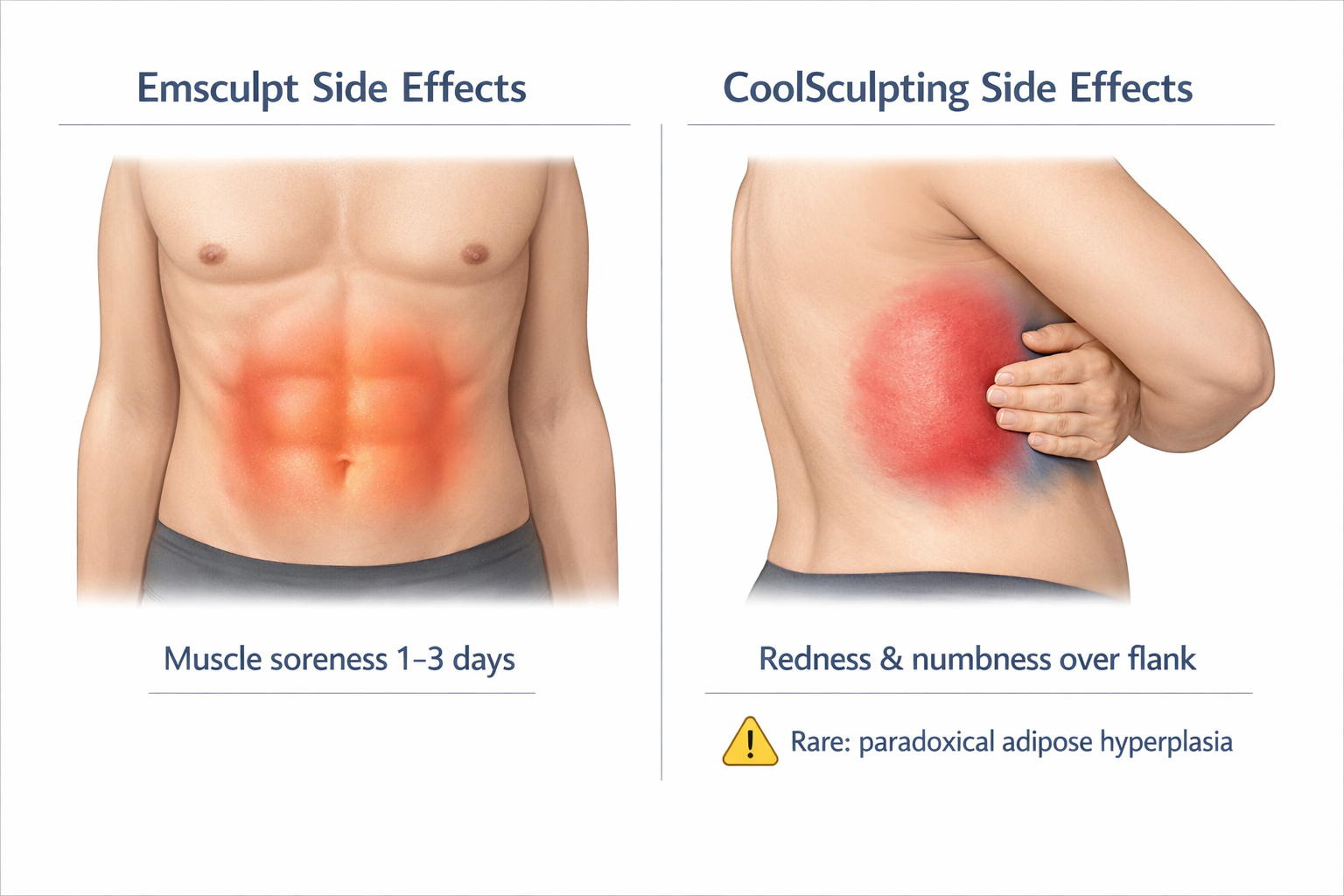
After Emsculpt, the most frequently reported effect is muscle soreness or fatigue in the treated area, typically resolving within one to three days. This is a direct consequence of the supramaximal muscle contractions and is generally considered a normal physiological response. Temporary muscle twitching or the unusual sensation during the procedure itself can be surprising for first-time patients but is not typically described as painful.
After CoolSculpting, common short-term side effects include redness, temporary swelling, bruising, tingling, and numbness at the treatment site. These effects usually resolve within days to a few weeks. A rare but important risk associated with CoolSculpting is paradoxical adipose hyperplasia — a condition in which the treated fat tissue enlarges rather than reducing, believed to occur in a small minority of patients. It is more frequently reported in male patients and in abdominal treatments. This condition is not dangerous, but it does require surgical intervention to correct and represents a meaningful limitation that prospective patients should discuss with their provider before proceeding.
Results: What to Realistically Expect
Neither Emsculpt nor CoolSculpting produces immediate visible results. Both treatments rely on gradual biological processes — muscle remodelling and fat cell elimination, respectively — that take weeks to months to become apparent.
With Emsculpt, early changes in muscle tone may be felt from around two to four weeks after completing the recommended course, with optimal results typically visible at the three-month mark. Results in muscle definition and tone can be maintained with healthy lifestyle habits and periodic maintenance sessions, though the treated muscle will gradually return to its baseline state if training and activity are not sustained.
With CoolSculpting, fat reduction in the treated area typically becomes visible from three to four weeks after treatment as eliminated fat cells are processed through the lymphatic system. Full results are usually apparent at two to three months. Because the treated fat cells are permanently eliminated, the fat reduction in the treated area is lasting — provided weight remains stable. Significant weight gain after treatment can cause remaining fat cells in adjacent or other areas to expand, altering the overall body contour achieved.
Both treatments are body sculpting tools, not weight-loss solutions. Patients typically do not lose significant weight from either procedure, and results are most appreciable in terms of shape, definition, and contour rather than on the scales.
Cost: What to Expect for Each Treatment
Cost varies considerably by provider, geographic location, number of areas treated, and the specific device generation used. The figures below are general ranges intended to support informed decision-making rather than precise quotes.
Emsculpt typically requires a minimum of four sessions per treatment area, often scheduled two to three days apart. Per-session costs commonly range from approximately £600 to £900 or more in the UK, meaning a standard course can represent a total investment of £2,400 to £3,600 or above. Emsculpt NEO sessions may be priced differently given the additional RF technology.
CoolSculpting costs are typically quoted per applicator placement or per area. Because fewer sessions per area are often needed — sometimes a single session for mild to moderate fat deposits — the total cost may be lower than a full Emsculpt course, depending on how many areas are treated. Patients targeting multiple areas with CoolSculpting can find costs escalate quickly, and CoolSculpting Elite’s dual-applicator capability may influence how providers package treatment pricing.
Reputable clinics will provide a detailed, personalised cost plan during a consultation. Be cautious of providers offering heavily discounted packages without a thorough clinical assessment, as appropriate candidacy evaluation is an important part of responsible practice.
Can You Combine Emsculpt and CoolSculpting?
A combination treatment approach using both technologies is a legitimate and increasingly discussed strategy for patients with body sculpting goals that neither treatment can fully achieve alone. The rationale is straightforward: CoolSculpting is used first to reduce the fat layer in the target area, and Emsculpt is then used to build and define the muscle underneath. This sequenced approach — sometimes described as “de-bulk, then define” — may produce more comprehensive contouring results than either treatment achieves independently.
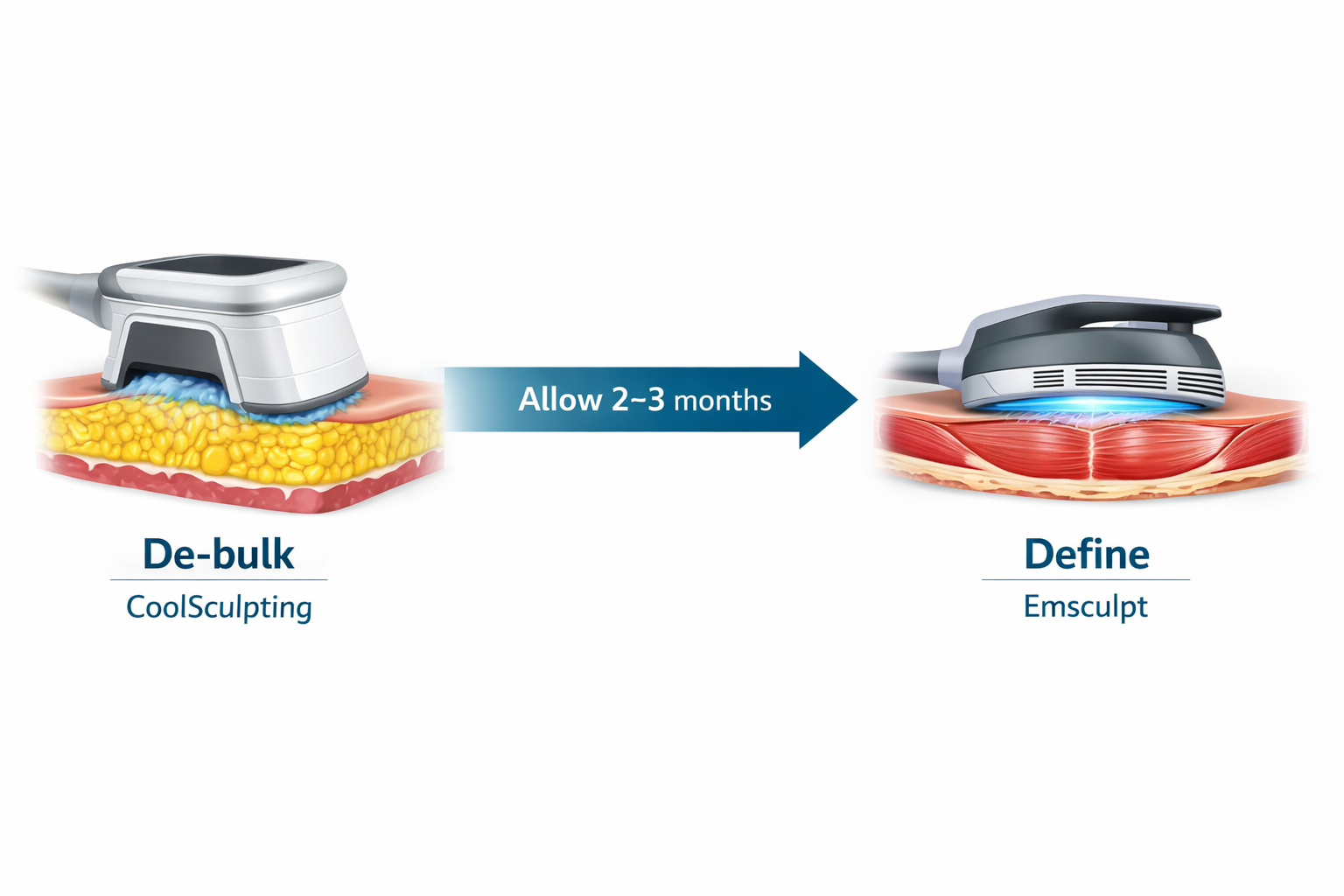
For example, a patient with both a moderate amount of lower abdominal fat and relatively underdeveloped core muscle might benefit from a CoolSculpting course targeting the lower abdomen first, followed by an Emsculpt course once the fat reduction has taken effect. By addressing the fat layer first, the subsequent muscle definition achieved with HIFEM technology becomes more visually apparent.
The timing of this combination approach matters. Because CoolSculpting results continue to develop for up to three months, practitioners often recommend allowing adequate time for fat elimination to complete before assessing whether to proceed with Emsculpt. A combined treatment plan should always be guided by a qualified practitioner who can evaluate both starting anatomy and realistic goals.
Men, Women, and Gender-Specific Goals
Both Emsculpt and CoolSculpting are used by patients of all genders, though the goals sought can differ. Men most commonly seek Emsculpt for abdominal definition — the appearance of a more defined “six-pack” — and increasingly for arm and chest muscularity. CoolSculpting among male patients is frequently requested for the flanks (love handles) and abdomen.
Among female patients, Emsculpt is frequently sought for the buttocks as a non-surgical lifting and shaping option, as well as for abdominal toning after lifestyle changes or following pregnancy. CoolSculpting is commonly requested by women for the inner and outer thighs, lower abdomen, and bra fat. The note on paradoxical adipose hyperplasia being more commonly reported in male abdominal treatments is worth raising with a practitioner when a male patient is considering CoolSculpting for the abdomen specifically.
Frequently Asked Questions
Is Emsculpt painful?
Emsculpt is not generally described as painful. The supramaximal muscle contractions feel intense and unusual — comparable to extremely forceful, rapid muscle clenching — but most patients tolerate treatment without significant discomfort. The intensity can typically be adjusted during the session. Post-treatment muscle soreness is common but usually mild and short-lived.
Does CoolSculpting permanently remove fat cells?
The fat cells destroyed by cryolipolysis are permanently eliminated from the treated area through the lymphatic system over several weeks. However, remaining fat cells in the body can still enlarge with weight gain, which may alter the results achieved. Permanent fat cell elimination in the treated area is not the same as permanent immunity to future fat accumulation elsewhere.
How many sessions of each treatment will I need?
Emsculpt protocols typically involve four sessions per treatment area, spaced two to three days apart. CoolSculpting sessions vary by area and the degree of fat present — some areas may show satisfactory results from one session, while others may benefit from two or three. Your practitioner should assess your anatomy and goals to advise on an appropriate treatment plan.
Can I return to normal activities immediately after treatment?
Both treatments involve no meaningful downtime. After Emsculpt, some patients prefer to avoid strenuous exercise for a day or two while muscle soreness resolves. After CoolSculpting, most patients can resume normal activities immediately, though the treated area may be temporarily tender, numb, or red.
How long will results last?
CoolSculpting’s fat reduction results are lasting in the treated area as long as weight remains stable. Emsculpt’s muscle-building results are maintained more effectively when supported by regular physical activity; without continued training or occasional maintenance sessions, muscle volume can gradually return toward its pre-treatment state. Both treatments benefit from a stable, healthy lifestyle to preserve outcomes.
Is Emsculpt NEO better than the original Emsculpt?
Emsculpt NEO delivers both HIFEM and RF energy simultaneously, which clinical data suggests produces greater fat reduction alongside muscle building compared with original Emsculpt. For patients who want meaningful improvement in both tissue types, NEO may offer an advantage. However, clinical suitability, contraindications, and personal goals all influence which version — if either — is appropriate. Your practitioner should guide this decision.
Emsculpt or CoolSculpting: Choosing the Treatment That Fits Your Goal
Emsculpt and CoolSculpting are genuinely different treatments serving different primary purposes. Emsculpt — particularly in its NEO form — is the more appropriate choice for patients whose primary goal is improving muscle definition and tone, with secondary fat reduction. CoolSculpting is the more appropriate choice when the primary goal is reducing a localised area of stubborn fat that has proven resistant to lifestyle measures, with no interest in altering the underlying muscle.
If both goals are relevant — reducing fat and improving definition — a sequential combination treatment approach may be worth discussing with a qualified practitioner, as the two technologies can complement each other meaningfully. Neither treatment replaces a sustainable approach to diet and exercise, and neither is a solution for significant excess weight or loose skin.
A thorough consultation with an experienced clinician is the most reliable way to determine which option, or which combination, may reasonably match your body sculpting goals, anatomy, and expectations. Bring specific questions about candidacy, realistic outcomes, the number of sessions likely required for your individual situation, and how to maintain results over time.
