

Many new mothers consider resuming cosmetic treatments in the postpartum period, and dermal fillers are among the most commonly asked-about procedures. The short answer is that most medical professionals advise against getting filler while breastfeeding — not because there is clear evidence of harm, but because formal safety data in nursing mothers simply does not exist. Understanding why that gap exists, what it means for different filler types, and what your realistic options are can help you make a well-informed decision.
Key Takeaways
- No clinical trials have established the safety of dermal fillers during breastfeeding, and most manufacturers explicitly state that safety has not been confirmed in nursing mothers.
- Hyaluronic acid fillers are considered lower risk than biostimulatory fillers such as Sculptra, Radiesse, and Bellafill, but a precautionary approach still applies to all filler types.
- Lidocaine, which is present in many filler formulations, is a small molecule capable of limited systemic absorption, though the quantities used in a typical filler procedure are very low.
- Postpartum hormonal changes can affect how long filler lasts and how results appear, making timing an important practical consideration beyond safety alone.
- Most board-certified providers recommend waiting until after weaning before booking an elective cosmetic procedure such as dermal filler.
Why There Are No Clear Safety Guidelines
The absence of definitive guidance on filler use during breastfeeding is not an oversight by regulators or medical societies. Formal safety studies in breastfeeding women are lacking because ethical considerations prevent conducting controlled clinical trials that would expose nursing infants to substances with unknown risk profiles. This structural research limitation means that neither the FDA nor professional bodies such as the American Society of Plastic Surgeons or the American Academy of Dermatology have issued specific breastfeeding guidance for dermal fillers. The FDA classifies dermal fillers as medical devices rather than drugs, which means they are not subject to the same pharmacokinetic studies that would normally generate breast milk transfer data.
Because no clinical trials in breastfeeding women exist, the medical community relies on a precautionary principle: when safety cannot be confirmed for an elective cosmetic procedure, the conservative approach is to postpone it. This is the position reflected in the product labeling for most major filler brands, including Restylane, Juvederm, Sculptra, Radiesse, and Bellafill, all of which state that safety during pregnancy and breastfeeding has not been established.
How Fillers Would Need to Affect Breast Milk to Pose a Risk
To understand the actual level of concern, it helps to trace the pathway any injected substance would need to follow before it could affect a nursing infant. For a filler component to reach a baby through breast milk, it would need to be absorbed from the injection site into the maternal bloodstream in meaningful concentrations, transfer from the bloodstream into breast milk, survive digestion in the infant’s gastrointestinal tract, and be present in sufficient quantity to produce a biological effect. Each of these steps represents a barrier, and different filler ingredients clear those barriers to very different degrees.
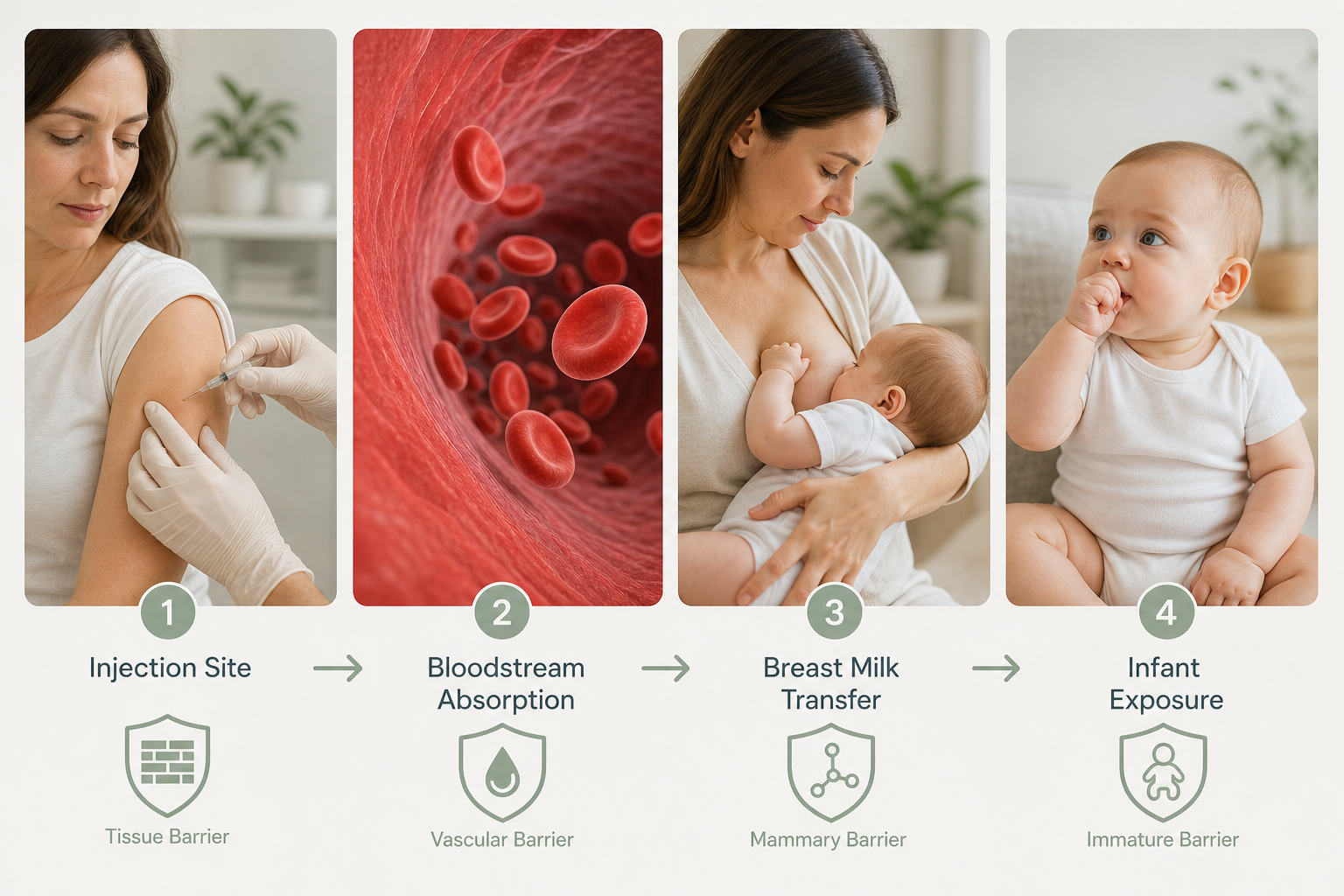
This chain of events is why filler type matters considerably when assessing relative risk. A large, cross-linked molecule that stays at the injection site presents a fundamentally different risk profile from a smaller molecule that can enter systemic circulation. The distinction between localized injection effects and systemic absorption is central to how clinicians think about this question.
Filler Types and Their Relative Safety Concerns During Breastfeeding
Not all dermal fillers are the same, and the level of concern during breastfeeding varies meaningfully by filler category. The table below summarises the main filler types and their current safety classification for nursing mothers.
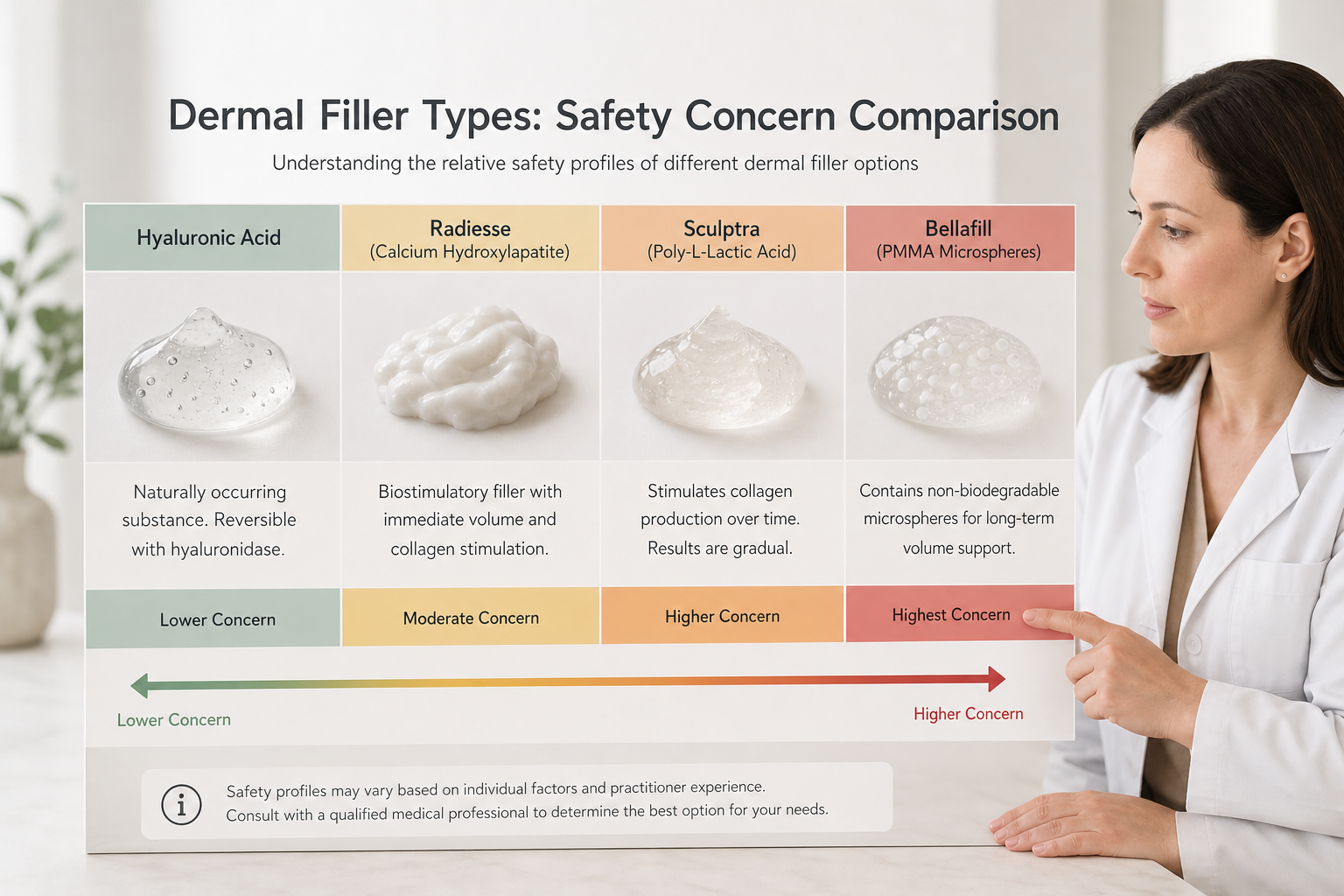
| Filler Type | Common Brands | Mechanism | Breastfeeding Concern Level |
|---|---|---|---|
| Hyaluronic acid (HA) | Juvederm, Restylane, Belotero Balance | Volumising; cross-linked HA stays at injection site | Lower relative concern; still no safety data |
| Calcium hydroxylapatite (CaHA) | Radiesse | Volumising and collagen stimulation; biostimulatory | Higher concern; safety not established |
| Poly-L-lactic acid (PLLA) | Sculptra | Collagen stimulator; gradual inflammatory response | Higher concern; safety not established |
| PMMA microspheres | Bellafill | Permanent scaffold with bovine collagen carrier | Highest concern; permanent, no reproductive safety data |
Hyaluronic Acid Fillers
Hyaluronic acid fillers such as Juvederm and Restylane are the most commonly used category and carry the lowest relative concern during breastfeeding, though this does not mean they are confirmed safe. Cross-linked hyaluronic acid is a large molecule that is designed to remain at the injection site rather than disperse systemically. Because of its molecular size, cross-linked HA is considered unlikely to be absorbed into the bloodstream in significant quantities, and even less likely to transfer into breast milk. The InfantRisk Center at Texas Tech University, which is one of the most authoritative sources on medication and substance safety during lactation, has noted that HA fillers are unlikely to pose a meaningful risk through breast milk transfer based on these molecular characteristics. However, the InfantRisk Center also acknowledges that no formal studies confirm this, and the precautionary approach remains appropriate for an elective procedure.
Biostimulatory Fillers: Sculptra, Radiesse, and Bellafill
Biostimulatory fillers work differently from HA fillers. Rather than simply adding volume, they trigger an inflammatory or collagen-stimulating response in the tissue. Sculptra (poly-L-lactic acid) and Radiesse (calcium hydroxylapatite) both stimulate the body’s own collagen production over weeks to months. Bellafill contains permanent PMMA microspheres suspended in a bovine collagen carrier. These fillers have longer durations, more complex biological mechanisms, and a complete absence of reproductive safety data. The inflammatory mechanism of biostimulatory fillers raises additional theoretical concerns during breastfeeding that do not apply to HA fillers. Most clinicians consider Sculptra, Radiesse, and Bellafill to be contraindicated during both pregnancy and breastfeeding, and their manufacturer labeling reflects this position.
Lidocaine in Filler: What Nursing Mothers Should Know
Many filler formulations — including Juvederm with Lidocaine and Restylane-L — contain a small quantity of the local anesthetic lidocaine to reduce discomfort during injection. Unlike cross-linked hyaluronic acid, lidocaine is a smaller molecule with the potential for limited systemic absorption. This means lidocaine in filler deserves its own consideration separate from the filler itself.
The total volume and concentration of lidocaine used in a typical filler procedure is very low — considerably lower than the doses used in dental anaesthesia or surgical procedures, where lidocaine is generally considered compatible with breastfeeding. The InfantRisk Center classifies lidocaine as low risk during lactation at the doses used in clinical practice. The amount that would transfer into breast milk from a cosmetic filler procedure is expected to be minimal, and oral bioavailability in an infant is also low. While this is reassuring, it does not change the overall recommendation to postpone elective filler treatment until after weaning, since the lidocaine question is only one component of the broader safety picture.
Can You Dissolve Filler While Breastfeeding?
Some nursing mothers who received filler before discovering they were pregnant, or before they began breastfeeding, ask whether dissolving the filler with hyaluronidase is safe during lactation. Hyaluronidase is an enzyme that breaks down hyaluronic acid at the injection site. Because hyaluronidase acts locally at the injection site and any small amount that enters the bloodstream is rapidly broken down by the body, it is generally considered to carry a low risk profile during breastfeeding. The InfantRisk Center has indicated that hyaluronidase is unlikely to pose a meaningful risk to a nursing infant.
Dissolving filler while breastfeeding may be appropriate in specific circumstances — for example, if a complication such as vascular occlusion has occurred or if the filler is causing significant distress. In these situations, the clinical need to dissolve the filler would typically outweigh the theoretical concern about hyaluronidase during lactation. This is a decision that should be made in shared decision-making with a board-certified provider who can assess the individual situation rather than a general rule applied to all cases.
What If You Already Got Filler While Breastfeeding?
If you received a hyaluronic acid filler before realising you were breastfeeding, or before you were aware of the precautionary guidance, the most important thing to understand is that a single treatment is unlikely to have caused harm based on what is currently known about HA molecular size and systemic absorption. There is no established evidence that HA filler has caused adverse effects in nursing infants.
That said, it is reasonable to monitor for any unusual symptoms in yourself or your baby following the procedure. Signs that would warrant prompt medical attention include any signs of infection at the injection site such as increasing redness, warmth, swelling, or discharge; any systemic symptoms such as fever; or any unusual changes in your baby’s feeding, behaviour, or health. Vascular occlusion is a rare but serious complication of filler that requires immediate treatment regardless of breastfeeding status. If you have any concerns, contact your treating provider or your baby’s paediatrician promptly. Do not attempt to self-manage a suspected complication.
Postpartum Hormonal Changes and Filler Results
Beyond the safety question, there is a practical reason why many experienced injectors recommend waiting until after breastfeeding before getting filler: postpartum hormonal changes can significantly affect how filler looks and how long it lasts. During pregnancy and breastfeeding, elevated levels of oestrogen, progesterone, and prolactin can cause facial tissues to retain more fluid and appear fuller than usual. This means that the volume deficit a patient wants to correct may look different — or may not be present at all — while hormones are elevated.
Once breastfeeding ends and hormone levels normalise, the face may lose volume more rapidly than expected, and the results of filler placed during the breastfeeding period may appear uneven or may not last as long as anticipated. Filler longevity is also influenced by metabolic rate, which tends to be elevated during lactation, potentially causing HA fillers to break down more quickly. Waiting until hormones have stabilised after weaning gives both the patient and the injector a more accurate baseline from which to plan treatment and set realistic expectations.
Alternatives to Filler While Breastfeeding
For nursing mothers who want to address skin concerns during the breastfeeding period, several options are generally considered lower risk than injectable fillers, though individual suitability should always be confirmed with a qualified provider.
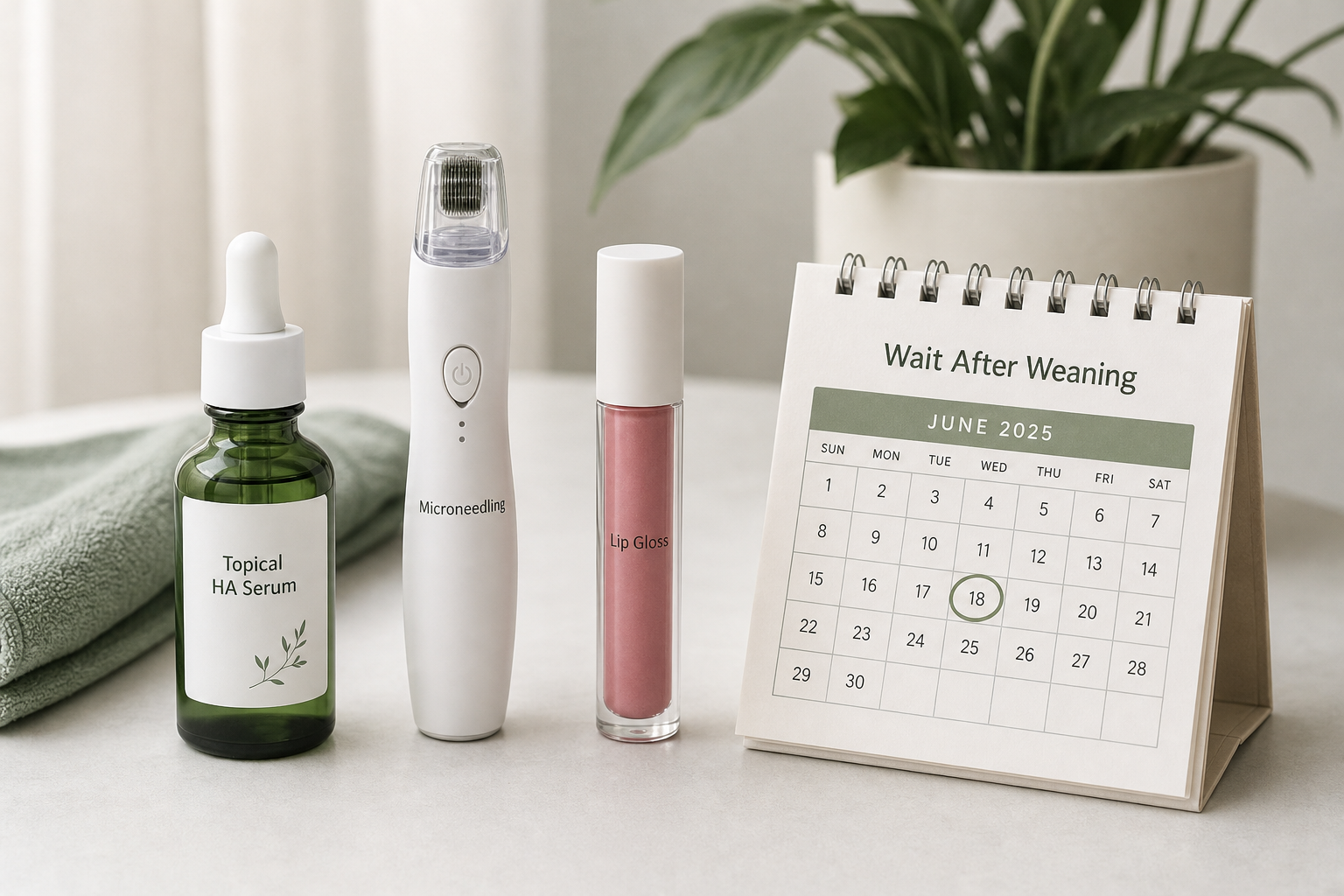
- Topical hyaluronic acid serums: Applied to the skin surface, topical HA does not involve injection and is not absorbed systemically in meaningful quantities. It can help with surface hydration and skin texture.
- Microneedling: Mechanical microneedling without the addition of topical actives such as retinol or vitamin C derivatives is generally considered acceptable during breastfeeding, though this should be confirmed with your provider.
- Lip plumping glosses and non-injectable options: Cosmetic products that create a temporary plumping effect through ingredients such as peppermint or cinnamon oil are a low-risk alternative for those concerned about lip volume.
- Skincare with pregnancy-safe ingredients: Bakuchiol (a plant-based retinol alternative), niacinamide, and azelaic acid are among the ingredients considered compatible with breastfeeding and can support skin quality during the postpartum period.
- Waiting until after weaning: For most patients, the most practical and clinically sound approach is to plan filler treatment for after breastfeeding has ended, when safety concerns are resolved and results are more predictable.
How Long After Stopping Breastfeeding Can You Get Filler?
There is no universally agreed waiting period after weaning before getting dermal filler, and this is an area where competitor content is almost entirely silent. Most board-certified providers suggest allowing at least four to six weeks after fully stopping breastfeeding before booking an elective cosmetic procedure. This allows time for prolactin levels to normalise, for any residual fluid retention to resolve, and for the face to settle into a more stable baseline. Some providers prefer to wait two to three months to ensure hormonal fluctuations have fully subsided before assessing volume loss and planning treatment.
The timing also depends on the individual. If you stopped breastfeeding abruptly, hormonal changes may take longer to stabilise than if weaning was gradual. A consultation with a board-certified dermatologist or plastic surgeon after weaning is the most reliable way to assess when your skin and facial anatomy are ready for filler treatment and what approach would be most appropriate for your goals.
Botox vs Filler While Breastfeeding: A Brief Comparison
Many patients ask about both botulinum toxin and dermal fillers during breastfeeding, and the two are often searched together. Botulinum toxin (Botox, Dysport) and dermal fillers are distinct treatments with different mechanisms, and the safety considerations during breastfeeding differ in important ways. Botulinum toxin is a neurotoxic protein that works by temporarily blocking nerve signals to muscles. Like fillers, botulinum toxin treatments are elective cosmetic procedures with no established safety data in breastfeeding women, and the same precautionary approach applies. The molecular size of botulinum toxin is very large, making systemic absorption and breast milk transfer theoretically unlikely, but the absence of clinical data means most providers advise postponing both treatments until after weaning. Neither Botox nor dermal fillers should be considered confirmed safe during lactation based on current evidence.
Frequently Asked Questions
Should I pump and dump after getting filler while breastfeeding?
Pump and dump — expressing and discarding breast milk for a period after a substance is administered — is sometimes used to reduce infant exposure to medications or substances that transfer into milk. For hyaluronic acid fillers, the theoretical risk of meaningful breast milk transfer is considered very low based on molecular size, so pump and dump is not a standard recommendation. However, if lidocaine was used as part of the procedure, some providers suggest a brief precautionary period of a few hours, since lidocaine has a short half-life and clears quickly. Discuss this with your provider and your baby’s paediatrician if you have specific concerns.
Is lip filler while breastfeeding different from other filler areas?
The treatment area does not fundamentally change the safety considerations. Lip filler typically uses hyaluronic acid and often contains lidocaine, so the same principles apply regardless of whether filler is placed in the lips, cheeks, or under-eye area. The total volume injected in a lip filler procedure is generally small, which limits the theoretical amount of lidocaine involved.
Can postpartum hormones affect whether filler is suitable for me?
Yes. Postpartum hormonal changes can cause temporary facial fullness, fluid retention, and changes in tissue quality that make it difficult to accurately assess volume loss or predict how filler will look. This is one reason why experienced injectors often recommend waiting until hormones have stabilised after weaning before planning treatment.
What is the InfantRisk Center and why is it relevant?
The InfantRisk Center at Texas Tech University Health Sciences Center is a leading research and information resource on the safety of medications and substances during pregnancy and breastfeeding. It is frequently consulted by healthcare providers when assessing lactation risk. The InfantRisk Center has addressed dermal fillers and hyaluronidase, generally noting that HA fillers are unlikely to pose meaningful risk through breast milk transfer, while still acknowledging the absence of formal clinical data.
Are there any fillers that are confirmed safe during breastfeeding?
No dermal filler currently has confirmed safety data for use during breastfeeding. The absence of clinical trials means that no filler type can be described as established safe for nursing mothers. Hyaluronic acid fillers are considered lower risk than biostimulatory fillers based on their molecular characteristics, but this is a theoretical assessment rather than a confirmed safety finding.
What should I tell my injector if I am breastfeeding?
Always disclose that you are breastfeeding before any cosmetic procedure. A responsible, board-certified provider will factor this into their assessment and will typically recommend postponing elective filler treatment until after weaning. If a provider proceeds without acknowledging your breastfeeding status or dismisses the concern, that is a reason to seek a second opinion.
Making an Informed Decision About Filler After Breastfeeding
The evidence on filler safety during breastfeeding points consistently in one direction: the lack of clinical data, combined with the elective nature of cosmetic filler treatment, makes postponing the procedure until after weaning the most defensible approach. This is not a finding that fillers are harmful to nursing infants — it is a recognition that safety cannot be confirmed, and that an elective cosmetic procedure does not justify accepting an unquantified risk when a straightforward alternative exists.
Hyaluronic acid fillers such as Juvederm and Restylane carry a lower theoretical concern than biostimulatory fillers such as Sculptra, Radiesse, and Bellafill, which should be avoided during both pregnancy and breastfeeding. Lidocaine in filler formulations is considered low risk at the doses used in cosmetic procedures, but does not change the overall recommendation. Dissolving existing filler with hyaluronidase while breastfeeding may be appropriate in specific clinical circumstances and is generally considered low risk.
If you are approaching the end of your breastfeeding journey and are planning to resume cosmetic treatments, a consultation with a board-certified dermatologist or plastic surgeon is the right starting point. A qualified provider can assess your facial anatomy once hormones have stabilised, discuss realistic goals, and recommend the most appropriate treatment plan for your individual situation. Shared decision-making with an experienced clinician — rather than a self-directed decision based on general information — is always the safest approach for any elective cosmetic procedure in the postpartum period.
