
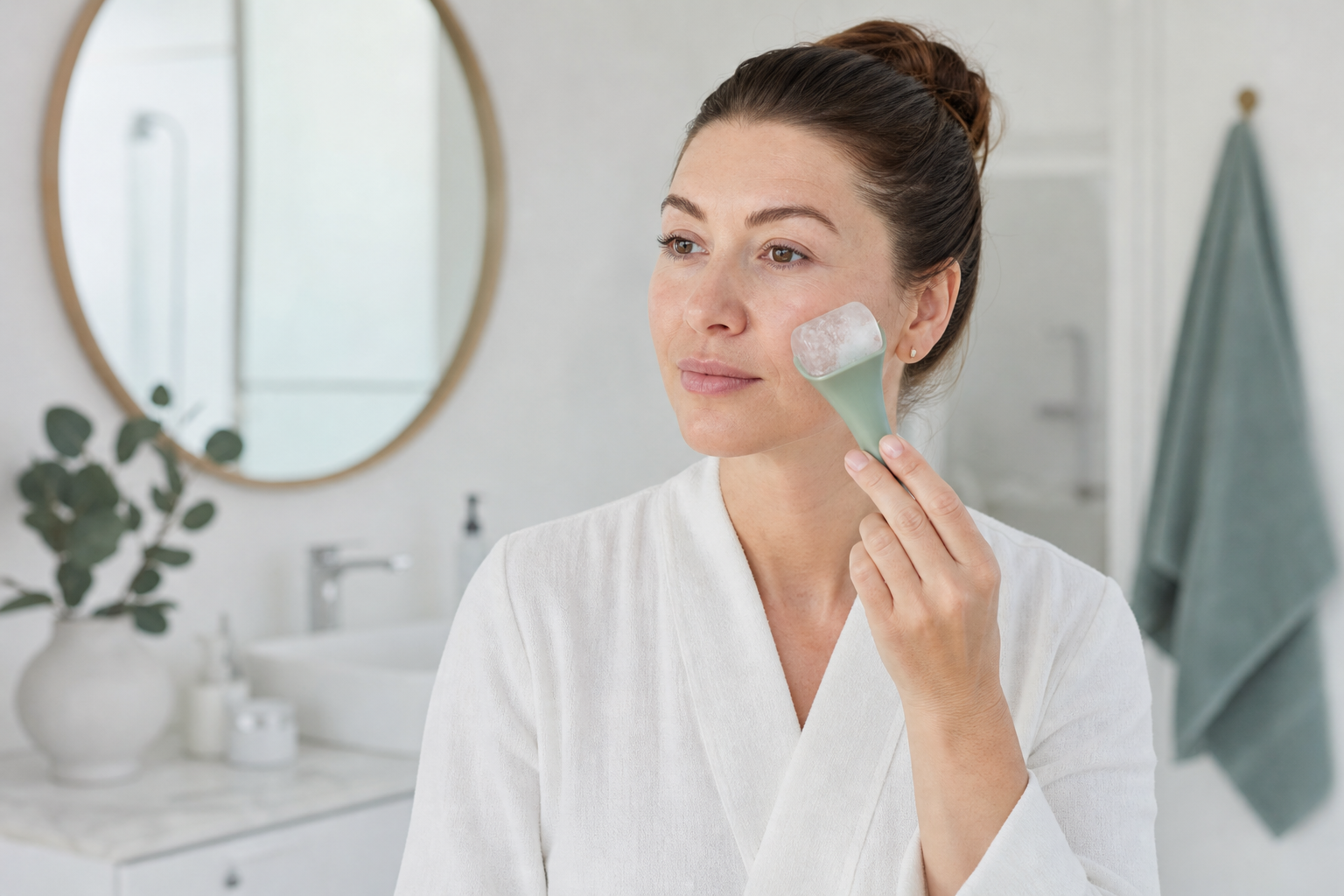

Applying ice to the face has been used as a simple skincare practice for decades, and interest in cold therapy for skin has grown considerably alongside trends like ice rollers, cryo globes, and professional cryo facials. The appeal is understandable: ice is inexpensive, immediately accessible, and produces visible short-term effects. But separating genuine, evidence-supported benefits from overstated claims requires a closer look at what cold actually does to facial skin, how long those effects last, and when the practice may cause more harm than good.
Key Takeaways
- Facial icing produces real but temporary effects — including reduced puffiness, calmed redness, and a brief tightening sensation — that fade as the skin rewarms.
- No current evidence supports claims that ice permanently shrinks pores, stimulates collagen, or produces structural changes in the skin.
- Direct ice-to-skin contact carries a genuine risk of ice burn or frostbite; always wrap ice in a cloth or use a purpose-made tool.
- Certain skin conditions and medical histories — including rosacea, Raynaud’s syndrome, eczema, and post-procedure skin — make facial icing inadvisable.
- Skin-type-specific guidance matters: what works well for oily or acne-prone skin may worsen dryness or sensitivity in others.
What Happens When You Apply Ice to Your Face?
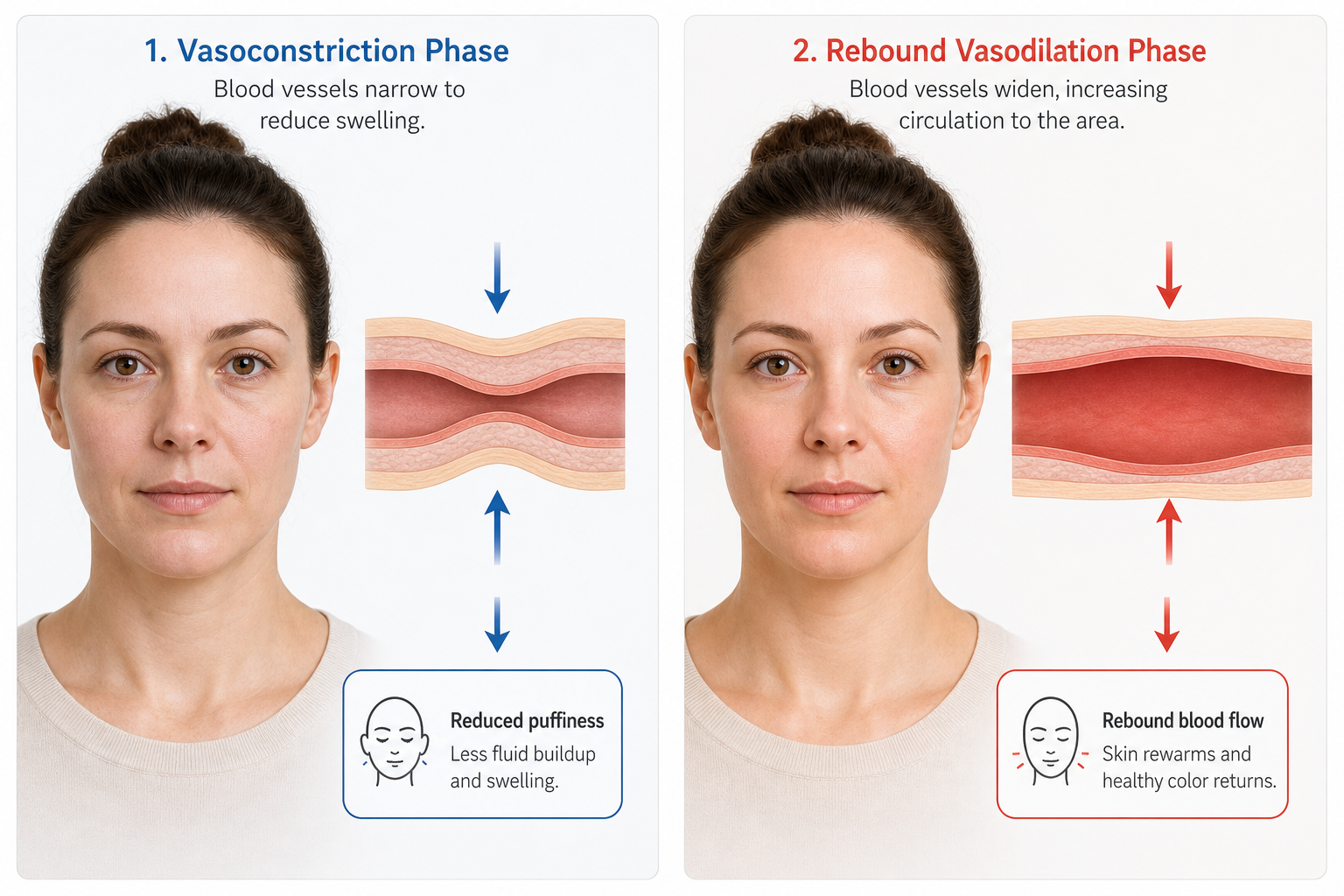
The immediate effect of cold therapy on facial skin is vasoconstriction — the narrowing of blood vessels near the skin’s surface in response to a drop in temperature. This reduces local blood flow, which is why skin looks temporarily less red and feels firmer after icing. Swelling and puffiness diminish because constricted vessels leak less fluid into surrounding tissue, and lymphatic drainage may be mildly encouraged by the gentle pressure of moving an ice tool across the face.
What is less commonly explained is what happens next. Once the cold stimulus is removed and the skin begins to rewarm, the blood vessels dilate again — sometimes beyond their resting state — in a process sometimes called rebound blood flow. This vasodilation phase delivers a fresh surge of oxygenated blood to the skin, which may contribute to the temporary brightening or glow effect that many people notice after facial icing. The skin is not structurally changed; it is responding to a temperature shift and then returning to baseline.
Cold also has a mild numbing effect on nerve endings, which can reduce the sensation of pain or irritation. This is why applying something cold to an inflamed blemish or a sunburned area feels soothing. Sebum production may be temporarily slowed by cold temperatures, which can make skin feel less oily immediately after icing, though this effect is short-lived.
Evidence-Supported Benefits of Facial Icing
The following benefits have a plausible physiological basis and are consistently reported, though it is important to understand that most are temporary and reverse as the skin returns to its normal temperature.
Reducing Morning Puffiness
Morning puffiness — particularly around the eyes and cheeks — results from fluid accumulating in facial tissue during sleep, often worsened by lying flat, high sodium intake, or disrupted sleep. Vasoconstriction from cold therapy causes blood vessels to constrict and reduces this fluid retention relatively quickly. Applying an ice roller or wrapped ice cube to puffy areas in the morning can visibly de-puff the face within a few minutes. The effect is genuine but temporary, typically lasting one to three hours depending on the individual and the underlying cause of puffiness.
Calming Redness and Inflammation
Cold reduces local inflammatory activity by slowing the release of pro-inflammatory mediators and constricting the vessels that carry them to the skin’s surface. This makes skin icing useful for calming post-exercise flushing, mild reactive redness, or the heat associated with a new blemish. Applying a cold compress or ice wrapped in a cloth to an active spot may reduce its size and redness more quickly than leaving it untreated. However, people with rosacea should approach this with caution, as the rebound vasodilation after icing can trigger a flare in sensitive, reactive skin.
Temporary Skin Tightening and Fine Line Smoothing
The firming sensation after facial icing is real, but it is a temporary mechanical effect of vasoconstriction rather than any structural change to collagen or elastin. Skin appears smoother and slightly tighter for a short period, which is why some people use ice as a makeup prep step to create a smoother canvas before foundation. This effect typically lasts 20 to 60 minutes. Claims that regular facial icing builds collagen or produces lasting anti-aging changes are not supported by current clinical evidence.
Minimizing the Appearance of Pores
Pore size is largely determined by genetics, skin type, and the amount of sebum produced. Cold does not change pore structure, but vasoconstriction can temporarily make pores appear smaller by reducing the surrounding tissue’s volume and slowing sebum flow. This is a cosmetic, short-term effect. Pores return to their usual appearance once the skin rewarms. The widely repeated claim that ice permanently shrinks pores is a myth.
Soothing Acne and Blemishes
Applying cold to an inflamed blemish can reduce swelling, redness, and discomfort by constricting the blood vessels feeding the inflamed area and numbing local nerve endings. This does not treat the underlying cause of acne — excess sebum production, bacterial activity, or follicular blockage — but it can make an active spot less visible and less painful in the short term. Ice should not be applied directly to open or broken skin.
Enhancing Product Absorption After Icing
There is a practical window immediately after facial icing when the skin may absorb certain skincare ingredients more effectively. The rebound blood flow phase increases circulation to the skin’s surface, and the temporary reduction in sebum can make the skin’s surface less occlusive. Applying a hydrating serum — such as one containing hyaluronic acid or niacinamide — immediately after icing may improve its uptake. Vitamin C serums are also commonly applied at this stage. This sequencing is not clinically proven in robust trials, but it has a plausible physiological rationale and is unlikely to cause harm in most skin types.
What the Evidence Does Not Support
Several claims about facial icing circulate widely online but are not backed by clinical evidence. Understanding these distinctions helps set realistic expectations.
| Claim | Evidence Status | What Is Actually Happening |
|---|---|---|
| Ice permanently shrinks pores | Not supported | Temporary vasoconstriction reduces pore appearance briefly; pores return to baseline on rewarming |
| Ice stimulates collagen production | Not supported for home icing | Professional cryotherapy devices operate at controlled temperatures; home ice does not replicate this |
| Ice dissolves fat (like cryolipolysis) | Not supported | Cryolipolysis requires sustained, precisely controlled temperatures; ice cubes cannot achieve this |
| Ice permanently reduces redness | Not supported | Redness reduction is temporary; rebound vasodilation can worsen redness in reactive skin types |
| Ice detoxifies the skin | Not supported | No physiological mechanism exists for topical cold to remove toxins |
Tools for Facial Icing: A Practical Comparison
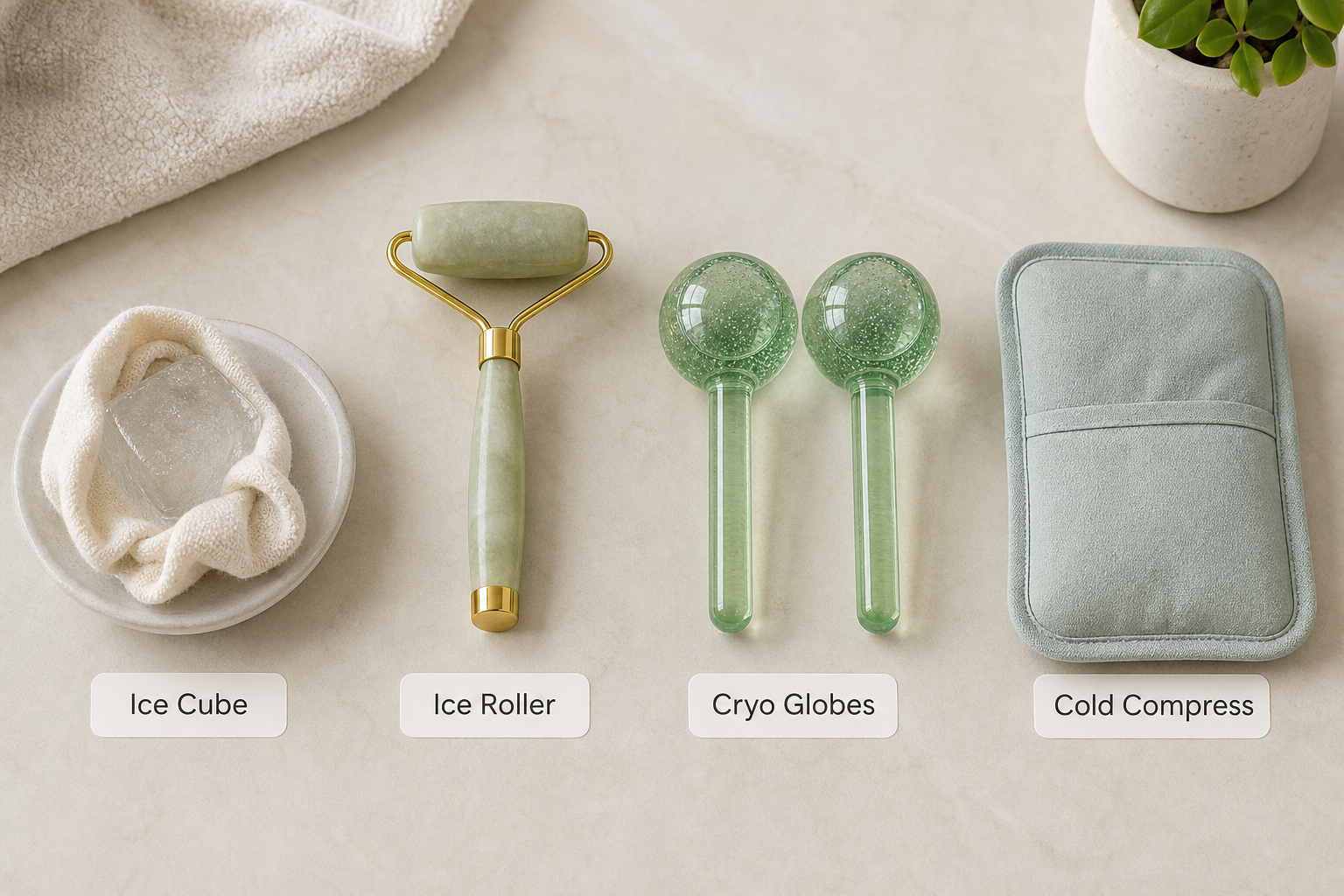
Several tools are used for cold therapy on the face, each with different practical characteristics. The right choice depends on your skin type, budget, and how you intend to use cold therapy in your routine.
| Tool | Cooling Duration | Best For | Hygiene | Approximate Cost | Key Consideration |
|---|---|---|---|---|---|
| Ice cube (wrapped in cloth) | 3–8 minutes | Spot treatment, blemishes, morning puffiness | Use a clean cloth each time | Minimal | Never apply directly to skin; risk of ice burn |
| Ice roller | 15–25 minutes | Full-face de-puffing, morning routine, product absorption | Wipe head after each use; store in freezer | £10–£30 | Consistent, controlled pressure; easy to use |
| Cryo globes | 20–30 minutes | Lymphatic drainage, contouring, relaxation | Wipe after use; store in freezer or ice water | £20–£60 | Gliding motion; good for larger facial areas |
| Cold compress / chilled cloth | 5–10 minutes | Sensitive skin, post-procedure soothing | Wash cloth after each use | Minimal | Gentlest option; suitable for reactive skin |
| Ice water face dunk | 30–60 seconds | Full-face cold shock, morning alertness | Use clean water each time | Minimal | Bradycardia risk; not suitable for cardiovascular conditions |
Ice rollers are the most practical everyday option for most people: they maintain a consistent temperature, allow controlled pressure, and are easy to glide across the face in circular motions without the risk of direct ice contact. Cryo globes offer a similar experience with a larger surface area and are particularly popular for lymphatic drainage massage techniques. The ice water face dunk produces a strong cold shock response but carries a small risk of bradycardia (a slowing of the heart rate) due to the diving reflex triggered by cold water on the face, making it unsuitable for anyone with a heart condition.
How to Use Ice on Your Face Safely
Safe facial icing follows a straightforward sequence. The most important rule is to never apply ice directly to bare skin, as prolonged direct contact can cause frostbite or an ice burn even within a few minutes.
- Cleanse first. Start with a clean face so that ice or your chosen tool does not drag bacteria or makeup across the skin.
- Wrap ice in a cloth. Place one or two ice cubes in a clean, soft cloth or flannel. Alternatively, use a purpose-made ice roller or cryo globes stored in the freezer.
- Move continuously. Glide the wrapped ice or tool across the skin in gentle circular motions. Do not hold it stationary on one area for more than 15–20 seconds.
- Focus on target areas. Spend extra time on areas of puffiness, redness, or active blemishes, but keep the tool moving.
- Limit session duration. One to three minutes per area is sufficient for most purposes. A full-face session should not exceed five to ten minutes.
- Pat dry and apply skincare. Gently pat the skin dry and apply your chosen serum or moisturiser while the skin is still slightly cool to take advantage of the post-icing absorption window.
Infused Ice Cubes: Matching Ingredients to Skin Concerns
Infused ice cubes — made by freezing skincare-friendly liquids or diluted ingredients — are a popular extension of basic facial icing. The active ingredients in these preparations are unlikely to penetrate deeply given the brief contact time, but some may offer mild surface-level benefits suited to specific skin concerns. Always dilute concentrated ingredients and perform a patch test before applying anything new to your face.
- Green tea: Rich in antioxidants and caffeine; may help calm under-eye puffiness and reduce surface inflammation. Suitable for most skin types including acne-prone skin.
- Aloe vera (diluted): Soothing and hydrating; well suited to sunburned, irritated, or sensitive skin. Use food-grade or cosmetic-grade aloe vera gel diluted in water.
- Rose water: Mildly astringent and brightening; a gentle option for sensitive or normal skin. Commonly used for its scent and calming properties.
- Cucumber water: Hydrating and mildly anti-inflammatory; suitable for most skin types and particularly popular for de-puffing the eye area.
- Chamomile tea (cooled): Anti-inflammatory properties make it a reasonable choice for reactive or redness-prone skin.
- Witch hazel (diluted): Mildly astringent; may temporarily reduce the appearance of pores and control surface oiliness. Best suited to oily or combination skin; avoid on dry or sensitive skin.
- Lemon juice (heavily diluted): Sometimes cited for brightening, but the acidity poses a real risk of irritation and photosensitivity. Use with significant caution and only on normal skin; avoid if skin is sensitive or compromised.
Skin-Type Guidance for Facial Icing
Most articles on facial icing suggest it works equally well for all skin types, but this is an oversimplification. The appropriate frequency and method vary meaningfully depending on your skin’s baseline characteristics.
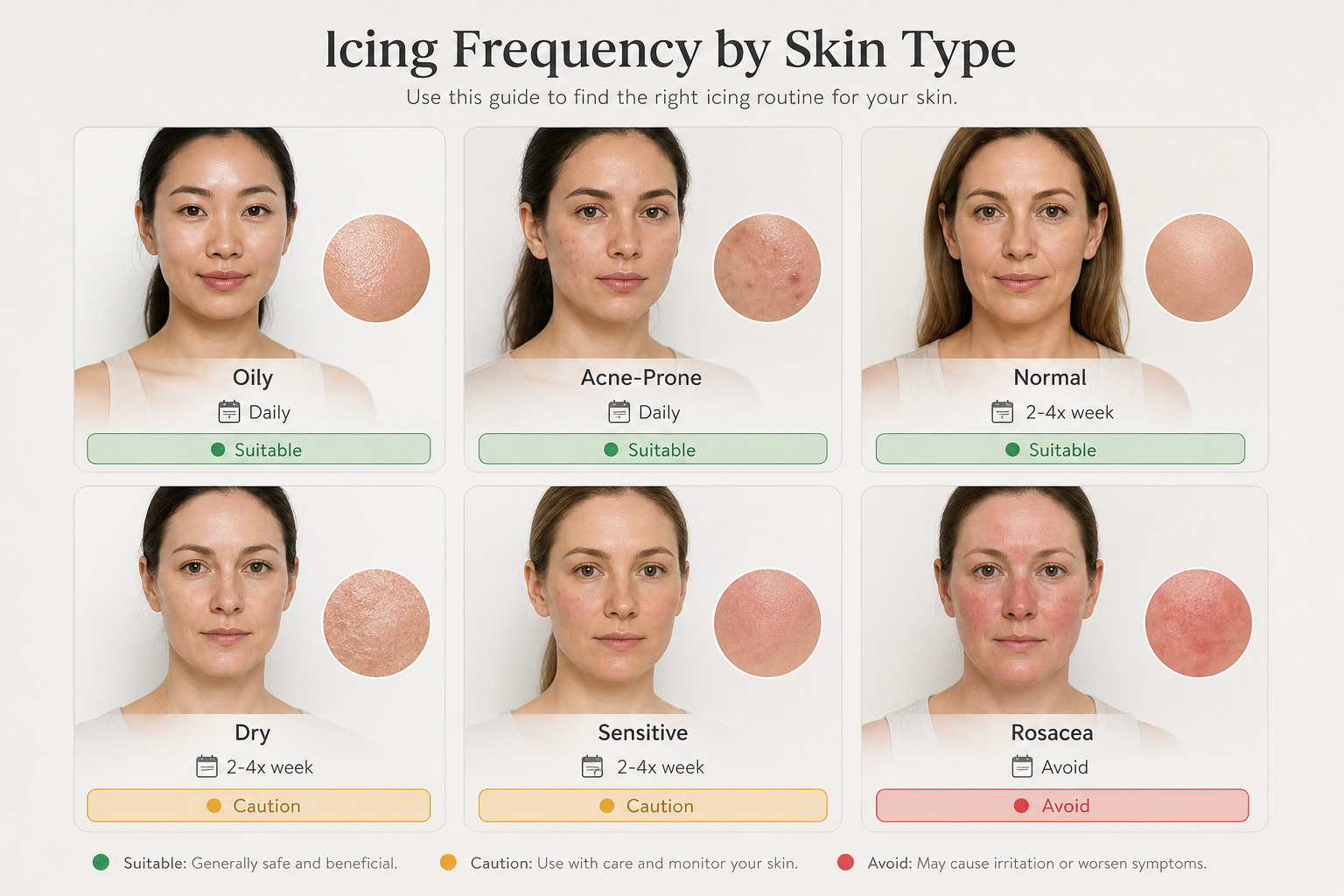
- Oily or combination skin: Likely to benefit most from regular facial icing. Daily use in the morning can temporarily reduce sebum production and minimize the appearance of pores. An ice roller is a practical daily tool.
- Acne-prone skin: Cold therapy can calm active blemishes and reduce inflammation. Avoid applying ice to open or broken spots. Two to four sessions per week is a reasonable starting frequency.
- Normal skin: Can tolerate facial icing two to four times per week without significant risk. Infused ice cubes with rose water or green tea are well suited to this skin type.
- Dry skin: Cold can temporarily impair the skin barrier and increase transepidermal water loss (TEWL) — the rate at which moisture evaporates from the skin. Limit icing to once or twice per week and always follow with a rich moisturiser. A cold compress is gentler than direct ice contact.
- Sensitive or reactive skin: Proceed with caution. The rebound vasodilation after icing can trigger flushing or reactive redness. Use a cold compress rather than ice, limit sessions to once or twice per week, and monitor your skin’s response carefully.
- Rosacea-prone skin: Facial icing is generally not recommended. The cycle of vasoconstriction followed by rebound blood flow can exacerbate rosacea symptoms. Consult a dermatologist before attempting cold therapy if you have rosacea.
Risks, Side Effects, and Who Should Avoid Facial Icing
Facial icing is low-risk when performed correctly, but several genuine risks exist that are worth understanding before making it part of your routine.
Ice Burn and Frostbite
Holding ice directly against skin — particularly in one spot — can cause frostbite or an ice burn within minutes. The skin may initially feel numb, making it difficult to detect damage until after the ice is removed. Always wrap ice in a cloth and keep it moving. If skin becomes white, waxy, or blistered, seek medical attention.
Broken Capillaries
Repeated aggressive cold exposure may stress the small blood vessels near the skin’s surface. While occasional gentle icing is unlikely to cause capillary damage, very frequent or prolonged sessions — particularly with very cold tools applied with heavy pressure — may contribute to visible broken capillaries over time, especially in people with already fragile or thin skin.
Contact Urticaria
Some individuals experience contact urticaria — an allergic-type reaction to cold contact — characterized by hives, itching, or swelling at the site of cold application. This is a genuine condition and a reason to discontinue facial icing immediately if these symptoms appear.
Skin Barrier Disruption
Excessive or very frequent cold exposure can temporarily disrupt the skin barrier, increasing TEWL and leaving skin more vulnerable to irritants. This is particularly relevant for people with dry or eczema-prone skin.
Who Should Avoid Facial Icing
- Raynaud’s syndrome: Cold triggers exaggerated vascular responses in people with Raynaud’s, making facial icing potentially harmful.
- Diabetes: Reduced sensation in some people with diabetes means ice burn may not be felt until damage has already occurred.
- Post-procedure skin: Skin that has recently undergone a chemical peel, laser resurfacing, microdermabrasion, or microneedling is compromised and should not be exposed to ice without explicit guidance from the treating practitioner.
- Eczema flares: Active eczema can be worsened by cold exposure and the subsequent barrier disruption.
- Rosacea: As noted above, the rebound vasodilation cycle is likely to aggravate rosacea symptoms.
- Cardiovascular conditions: The ice water face dunk specifically carries a bradycardia risk due to the diving reflex; anyone with a heart condition should avoid this method.
How Often Should You Ice Your Face?
Conflicting advice on frequency — ranging from daily use to once or twice per week — reflects the fact that optimal frequency depends on skin type and the method used. The following guidance consolidates the most reasonable approach based on available information.
| Skin Type | Recommended Frequency | Session Duration | Best Method |
|---|---|---|---|
| Oily / combination | Daily (morning) | 3–5 minutes | Ice roller |
| Acne-prone | 2–4 times per week | 2–5 minutes | Wrapped ice cube (spot) or ice roller |
| Normal | 2–4 times per week | 3–5 minutes | Ice roller or cryo globes |
| Dry | 1–2 times per week | 1–3 minutes | Cold compress |
| Sensitive / reactive | 1–2 times per week maximum | 1–2 minutes | Cold compress |
| Rosacea-prone | Not recommended | — | Consult a dermatologist |
Frequently Asked Questions
Can I apply ice directly to my face without a cloth?
Direct ice-to-skin contact is not recommended. Ice can reach temperatures well below zero degrees Celsius, and holding it against bare skin — even briefly — risks ice burn or frostbite, particularly if you keep it in one spot. Always wrap ice in a clean, soft cloth or use a purpose-made tool such as an ice roller or cryo globes.
Does ice actually tighten pores permanently?
No. Pore size is determined by genetics, skin type, and sebum production — not by temperature. Cold causes temporary vasoconstriction that makes pores appear smaller for a short time, but this reverses completely as the skin rewarms. No topical cold treatment can permanently alter pore structure.
Is it safe to ice your face every day?
Daily facial icing may be appropriate for oily or combination skin types using a gentle tool like an ice roller, but it is not suitable for dry, sensitive, or rosacea-prone skin. Excessive frequency can disrupt the skin barrier and increase moisture loss. If you notice increased dryness, redness, or irritation, reduce frequency.
When is the best time to ice your face — morning or evening?
Morning is generally the more practical time for facial icing, particularly for reducing overnight puffiness and preparing skin for makeup. Evening icing can help calm redness or inflammation after a long day, but the temporary tightening and de-puffing effects will not persist through sleep regardless of timing.
Can facial icing help with acne?
Cold therapy can reduce the redness, swelling, and discomfort of active blemishes by constricting blood vessels and numbing the area. It does not treat the underlying causes of acne — such as excess sebum, bacterial activity, or blocked follicles — and should not replace evidence-based acne treatments. It is a useful complementary step for managing the appearance of individual spots.
Is an ice roller better than using ice cubes?
For most people, an ice roller is more practical and safer than ice cubes. It maintains a consistent temperature, allows controlled pressure, and eliminates the risk of direct ice contact with skin. Ice cubes remain useful for targeted spot treatment when wrapped in a cloth, but an ice roller is the more versatile everyday option.
Can I ice my face after a facial treatment or procedure?
Not without guidance from your practitioner. Post-procedure skin — following chemical peels, laser treatments, microneedling, or similar procedures — is compromised and more vulnerable to cold injury and barrier disruption. Always check with the clinician who performed your treatment before applying any cold therapy to recently treated skin.
Is Facial Icing Worth Adding to Your Skincare Routine?
Facial icing offers genuine, if temporary, benefits for many people: reduced morning puffiness, calmed redness, a brief tightening effect, and a practical way to soothe inflamed blemishes. These effects are real and physiologically explainable, even if they are not permanent or structural. For oily, combination, acne-prone, or normal skin types, incorporating cold therapy into a morning routine — using an ice roller or cryo globes rather than bare ice cubes — is a low-cost, low-risk addition that many people find worthwhile.
The practice is less suitable for dry, sensitive, or rosacea-prone skin, and it carries meaningful contraindications for people with Raynaud’s syndrome, diabetes, cardiovascular conditions, or recently treated skin. Understanding what facial icing can and cannot do — and matching the method and frequency to your skin type — is the difference between a useful habit and an unnecessary irritant.
If you are dealing with persistent puffiness, chronic redness, acne, or visible signs of ageing that do not respond to home care, a consultation with a qualified aesthetic practitioner or dermatologist will provide a more targeted assessment. Professional treatments such as cryo facials, medical-grade skin treatments, or injectable options may offer more meaningful and lasting results depending on your specific concerns.
