
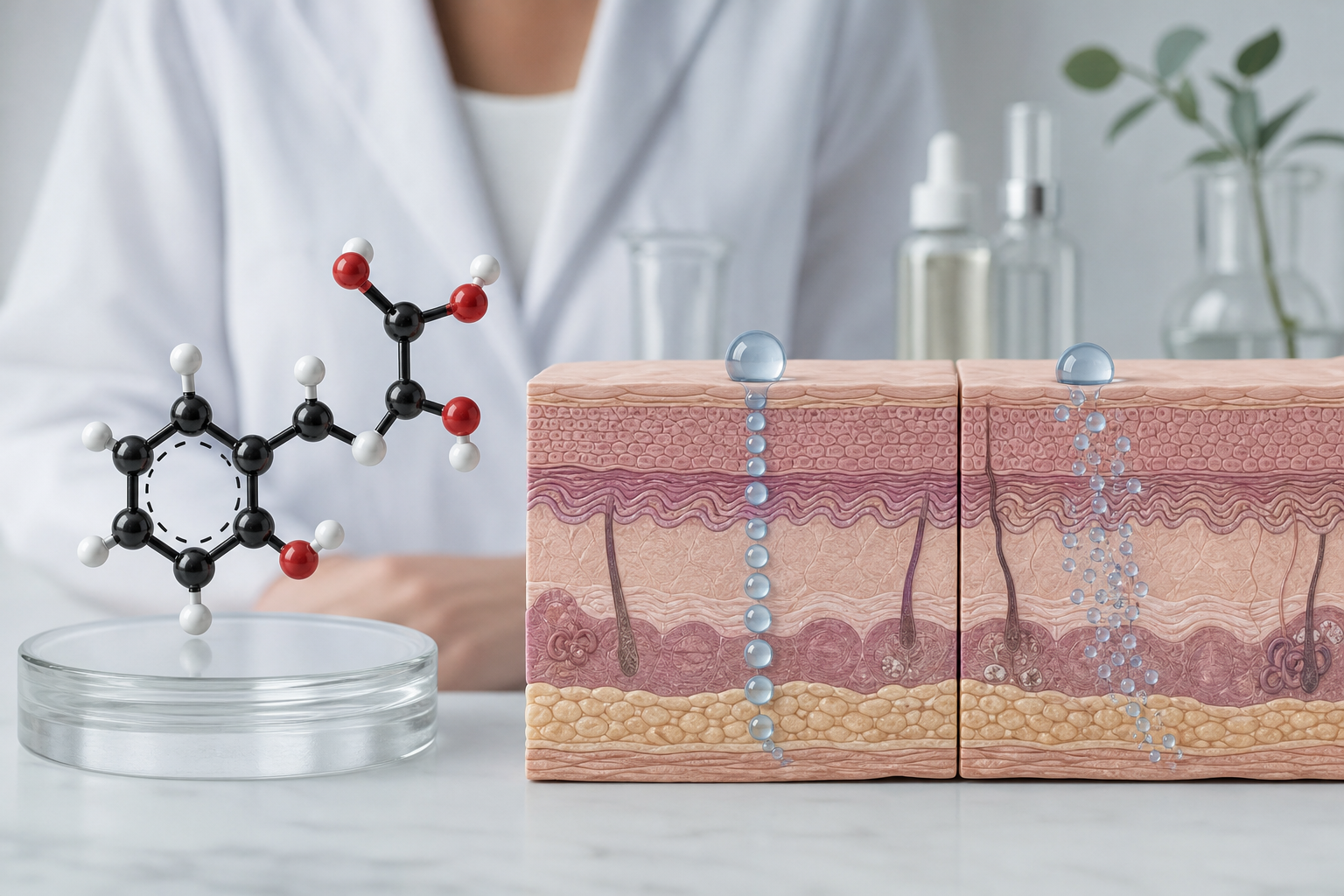

A mandelic acid peel is one of the gentler options in the chemical peel category, yet it addresses a surprisingly wide range of skin concerns — from acne and uneven tone to fine lines and melasma. Because mandelic acid penetrates the skin more slowly than most other alpha hydroxy acids, it tends to cause less irritation, making it a practical choice for people who have previously found chemical exfoliation too harsh or who have sensitive, rosacea-prone, or darker skin tones. This article explains how mandelic acid works, what the evidence says about its benefits, who is likely to benefit most, and what to realistically expect from a course of treatment.
Key Takeaways
- Mandelic acid is an alpha hydroxy acid (AHA) derived from bitter almonds. Its larger molecular weight means it penetrates the skin more slowly than glycolic or lactic acid, reducing the risk of irritation.
- A mandelic acid peel can help improve acne, post-inflammatory hyperpigmentation, melasma, uneven skin texture, and early signs of ageing, often with minimal downtime.
- It is one of the few superficial chemical peels considered suitable for darker skin tones (Fitzpatrick types IV–VI) because it carries a lower risk of triggering post-inflammatory hyperpigmentation than stronger acids.
- At-home formulations typically range from 5–25%, while professional in-clinic peels use higher concentrations. Patch testing is recommended before any new peel.
- Results develop gradually over several weeks; a series of treatments usually produces more noticeable improvement than a single session.
What Is Mandelic Acid and How Does It Work?
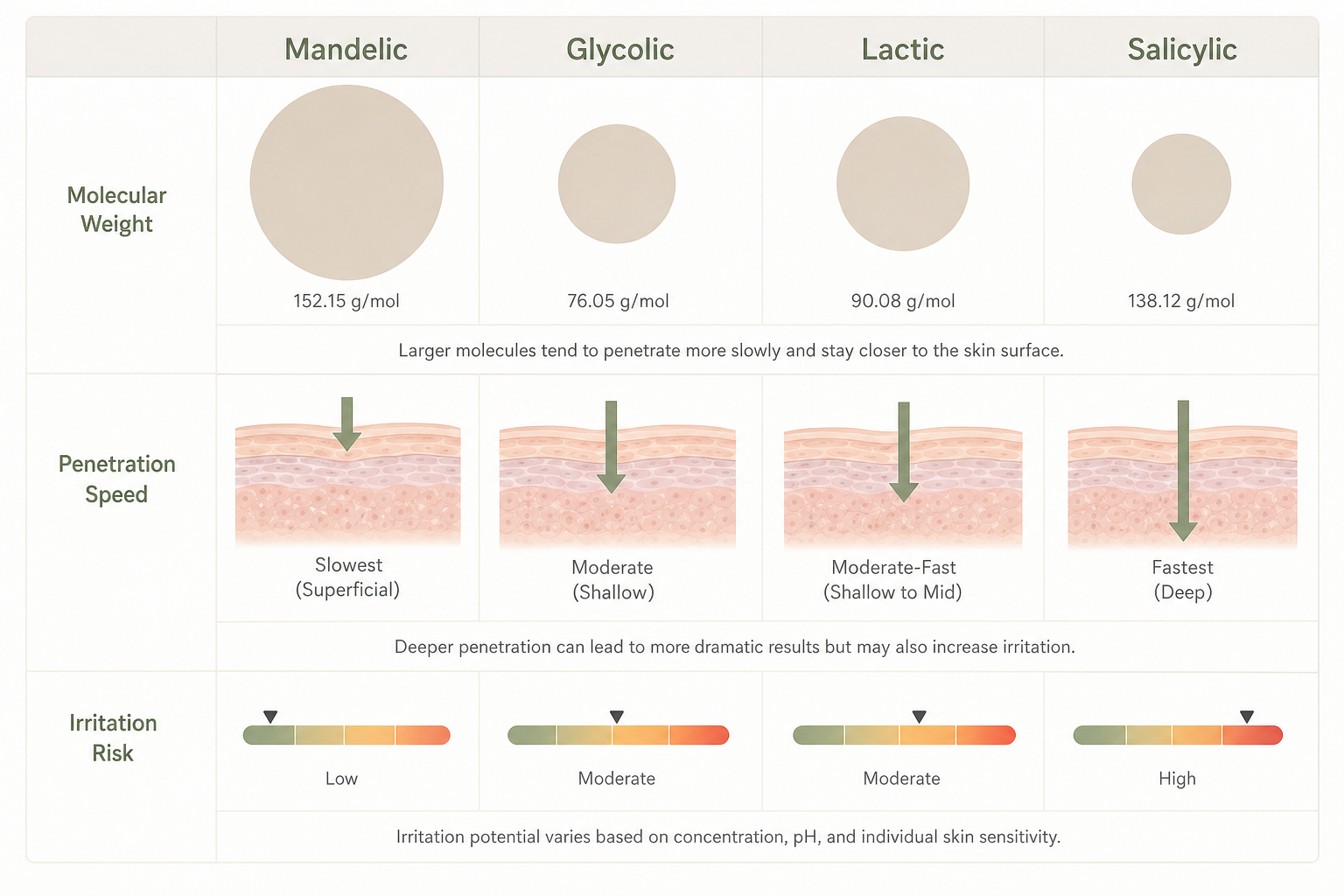
Mandelic acid is an aromatic alpha hydroxy acid (AHA) derived from the hydrolysis of bitter almonds — the name comes from Mandel, the German word for almond. Its molecular weight is approximately 152 daltons, which is roughly twice that of glycolic acid (around 76 daltons) and notably larger than lactic acid (around 90 daltons). This larger molecular weight is the key to understanding why mandelic acid behaves differently from other AHAs: it cannot pass through the outer layers of the skin as quickly, resulting in slow, even penetration rather than a rapid, concentrated influx of acid.
Like all AHAs, mandelic acid works primarily by loosening the bonds between dead skin cells in the stratum corneum — the outermost layer of the skin. This accelerates cell turnover, helping the skin shed older, dull surface cells and replace them with fresher ones beneath. At a superficial chemical peel depth, the acid acts within the epidermis rather than reaching the deeper dermis, which limits both the intensity of the result and the degree of recovery required. Beyond exfoliation, mandelic acid has documented antibacterial properties that are relevant to acne treatment, and it appears to inhibit tyrosinase — an enzyme involved in melanin production — which helps explain its usefulness for hyperpigmentation and melasma.
The working pH of a mandelic acid peel is typically between 2.0 and 3.2. At this pH, the acid is active enough to exfoliate effectively while remaining within a range that most skin types can tolerate. The combination of slow penetration, antibacterial activity, and tyrosinase inhibition makes mandelic acid a genuinely multi-functional gentle exfoliant rather than simply a milder version of glycolic acid.
Mandelic Acid vs. Other Chemical Peels
Understanding how mandelic acid compares to other common peel acids helps clarify when it may be the most appropriate choice and when an alternative might be considered.
| Acid | Molecular Weight | Penetration Speed | Best Suited For | Irritation Risk | Suitable for Darker Skin Tones |
|---|---|---|---|---|---|
| Mandelic acid | ~152 daltons | Slow, even | Sensitive skin, acne, PIH, melasma, beginners | Low | Yes — lower PIH risk |
| Glycolic acid | ~76 daltons | Fast | Fine lines, texture, photoageing | Moderate–High | Caution — higher PIH risk |
| Lactic acid | ~90 daltons | Moderate | Dry skin, mild texture, hydration | Low–Moderate | Generally suitable |
| Salicylic acid | ~138 daltons | Moderate (oil-soluble) | Oily, acne-prone, clogged pores | Low–Moderate | Generally suitable |
Glycolic acid is often considered the benchmark AHA for anti-ageing and texture improvement, but its small molecular size means it penetrates quickly and can cause significant redness, stinging, and post-inflammatory hyperpigmentation — particularly in people with darker skin tones or reactive skin. Mandelic acid produces a more gradual result but with considerably less risk of adverse reactions, making it a more practical starting point for many patients.
Salicylic acid is a beta hydroxy acid (BHA) rather than an AHA, and its oil-soluble nature allows it to penetrate sebaceous follicles directly, making it particularly effective for comedonal acne. Mandelic acid does not share this oil-solubility, but its antibacterial properties and comedolytic action — meaning it helps prevent and clear blocked pores — make it a useful alternative for acne-prone skin, especially when salicylic acid causes dryness or irritation. Some professional peel protocols combine mandelic and salicylic acids to address both the follicular and surface components of acne simultaneously.
Key Benefits of a Mandelic Acid Peel
Acne and Congested Skin
Mandelic acid addresses acne through two complementary mechanisms. Its comedolytic action helps loosen and clear clogged pores, reducing the formation of blackheads and whiteheads. Its antibacterial properties help reduce the population of Cutibacterium acnes (formerly Propionibacterium acnes), the bacterium associated with inflammatory acne lesions. Mandelic acid also appears to reduce sebum production over time, which may help prevent new breakouts in oily skin types. A randomised controlled trial comparing a 45% mandelic acid peel with a 30% salicylic acid peel for mild-to-moderate acne found comparable efficacy between the two, suggesting mandelic acid can be a clinically meaningful option for acne management, particularly for patients who do not tolerate salicylic acid well.
Hyperpigmentation and Post-Inflammatory Hyperpigmentation
Post-inflammatory hyperpigmentation (PIH) — the dark marks left behind after acne, injury, or inflammation — is one of the most common concerns treated with mandelic acid peels. Mandelic acid addresses PIH through two routes: accelerating cell turnover to shed pigmented surface cells more quickly, and inhibiting tyrosinase to slow the overproduction of melanin that causes dark spots to form or deepen. Importantly, mandelic acid itself carries a low risk of triggering new PIH, which is a meaningful advantage over faster-penetrating acids like glycolic acid. Clinical data suggest that mandelic acid peels can reduce melasma — a more complex, deeper form of hyperpigmentation — by a meaningful degree over a series of treatments, with one study reporting approximately 50% improvement in melasma severity using a 10% formulation over four weeks. Results vary depending on melasma type, skin tone, and sun exposure habits.
Skin Texture and Tone
By accelerating cell turnover and removing the accumulation of dead skin cells from the surface, mandelic acid peels can improve uneven skin texture, rough patches, and dullness. Many patients notice a brighter, more luminous complexion after a series of treatments. Mandelic acid may also support collagen synthesis over time, contributing to modest improvements in fine lines and early signs of skin ageing, though the evidence for significant anti-ageing effects is less robust than for more aggressive peel depths.
Keratosis Pilaris
Keratosis pilaris (KP) — the rough, bumpy texture commonly found on the upper arms, thighs, and buttocks caused by keratin plugging hair follicles — responds well to regular AHA exfoliation. Mandelic acid’s gentle exfoliant action can help soften and reduce KP over time, and its tolerability makes it suitable for use on body areas where skin may be more sensitive or prone to irritation than the face. This is an underappreciated application that is rarely discussed but clinically logical given mandelic acid’s mechanism.
Rosacea-Prone Skin
Rosacea-prone skin is notoriously reactive, and most chemical peels carry a risk of triggering flares. Mandelic acid’s slow penetration and anti-inflammatory properties make it one of the few exfoliating acids that may be tolerated by people with mild rosacea, particularly when used at lower concentrations and with appropriate intervals between treatments. It is not a treatment for rosacea itself, and anyone with active rosacea should seek clinical guidance before using any chemical peel. However, for patients with rosacea-prone skin who need gentle exfoliation, mandelic acid is often better tolerated than glycolic or lactic acid alternatives.
Who Is a Mandelic Acid Peel Suitable For?
Mandelic acid peels are among the most broadly suitable superficial chemical peels available. They are particularly well-matched to the following groups:
- Sensitive skin: The slow penetration and lower irritation potential make mandelic acid a practical first-choice exfoliant for reactive skin types.
- Darker skin tones (Fitzpatrick types IV–VI): Mandelic acid carries a lower risk of inducing post-inflammatory hyperpigmentation compared to glycolic acid, making it one of the safer AHA peel options for skin of color. This is supported by comparative clinical data showing reduced PIH incidence in higher Fitzpatrick skin types treated with mandelic versus glycolic acid.
- Acne-prone and oily skin: The combination of comedolytic action, antibacterial properties, and sebum-regulating effects makes mandelic acid well-suited to congested, breakout-prone skin.
- Beginners to chemical peels: People who have not used chemical peels before often find mandelic acid a more comfortable introduction than stronger acids.
- Mature skin with mild texture concerns: Mandelic acid can support cell turnover and may offer modest anti-ageing benefits with minimal recovery time.
- Rosacea-prone skin: At appropriate concentrations and frequencies, mandelic acid may be tolerated where other acids are not, though individual assessment is essential.
Who Should Avoid a Mandelic Acid Peel?
Despite its gentle profile, mandelic acid peels are not appropriate for everyone. The following contraindications and cautions are relevant:
- Almond allergy: Mandelic acid is derived from bitter almonds. Anyone with a known tree nut or almond allergy should avoid mandelic acid products and discuss alternatives with a clinician.
- Pregnancy and breastfeeding: The safety of chemical peels during pregnancy has not been established. Most clinicians advise avoiding elective peel treatments during this period.
- Active skin infections, open wounds, or broken skin barrier: Applying an acid peel to compromised skin can worsen irritation, delay healing, and increase infection risk.
- Active inflammatory skin conditions: Eczema flares, active rosacea, or severe inflammatory acne may be worsened by chemical exfoliation.
- Recent use of isotretinoin: Patients who have recently completed a course of isotretinoin (oral acne medication) typically need to wait several months before undergoing chemical peels, as the skin barrier may remain fragile.
- Recent cosmetic procedures: Laser treatments, microneedling, or other resurfacing procedures in the same area may require a recovery interval before a peel is appropriate.
A thorough consultation and patch test before beginning any peel protocol helps identify individual sensitivities and contraindications that may not be apparent from a general list.
Professional Peel vs. At-Home Peel: Concentration and Context
Mandelic acid is available across a wide range of concentrations, and the appropriate level depends on the individual’s skin tolerance, experience with chemical exfoliation, and treatment goals.
| Level | Concentration Range | Setting | Typical Use |
|---|---|---|---|
| Beginner / Maintenance | 5–10% | At-home | Gentle daily or weekly exfoliation; first-time users |
| Intermediate | 10–25% | At-home (experienced users) | Acne, mild PIH, texture; used weekly or fortnightly |
| Advanced at-home peel | 25–40% | At-home (with experience) | More targeted exfoliation; requires careful timing and neutralisation |
| Professional / In-clinic | 40%+ | Clinic only | Acne, melasma, PIH, texture; supervised application and neutralisation |
An at-home peel at lower concentrations can be a practical way to maintain results between professional sessions or to introduce the skin gradually to chemical exfoliation. However, higher-concentration professional peels applied in a clinical setting offer more controlled conditions, including proper skin preparation, timed application, and post-peel neutralisation. For concerns such as melasma, significant PIH, or moderate acne, a series of professional treatments is likely to produce more consistent results than at-home use alone.
Regardless of concentration, a patch test on a small area of skin 24–48 hours before full application is a sensible precaution, particularly for first-time users or those with sensitive or reactive skin.
What to Expect: The Treatment Experience and Recovery
A professional mandelic acid peel appointment typically begins with thorough cleansing to remove makeup, oils, and surface debris. The practitioner may apply a pre-peel solution to degrease the skin and ensure even acid penetration. The mandelic acid solution is then applied to the treatment area and left for a defined period — usually between 5 and 15 minutes depending on concentration and individual skin response — before being neutralised or removed.
During the application, most patients experience mild tingling or a slight warming sensation. Significant burning or stinging is less common with mandelic acid than with glycolic acid peels at equivalent depths, which is one reason it is often better tolerated. After neutralisation, a soothing moisturiser and broad-spectrum SPF are typically applied before the patient leaves.
Recovery after a mandelic acid peel is generally straightforward. Mild redness and a feeling of tightness are common in the first 24 hours. Light flaking or peeling may occur between days 2 and 5 as the exfoliated skin sheds. This is usually subtle — more like dry skin than dramatic peeling — and can be managed with a gentle, fragrance-free moisturiser. Most people are comfortable returning to normal activities the same day or the following day, making minimal downtime one of the practical advantages of this peel type.
Realistic Results Timeline
Mandelic acid produces gradual rather than dramatic results, which is consistent with its gentle mechanism. A realistic timeline for a series of professional treatments looks broadly as follows:
- Weeks 1–2: Skin texture may begin to feel smoother; some initial brightness as surface dead skin cells are shed.
- Week 4: Improvements in skin tone may become more noticeable; early reduction in active breakouts and mild PIH in acne-prone skin.
- Weeks 6–8: More visible improvement in hyperpigmentation, pore appearance, and overall radiance; continued acne reduction.
- Weeks 8–10 (optimal): Most patients see the clearest cumulative benefit after a series of 4–6 treatments spaced 2–4 weeks apart. Melasma improvement, where it occurs, typically requires this full course.
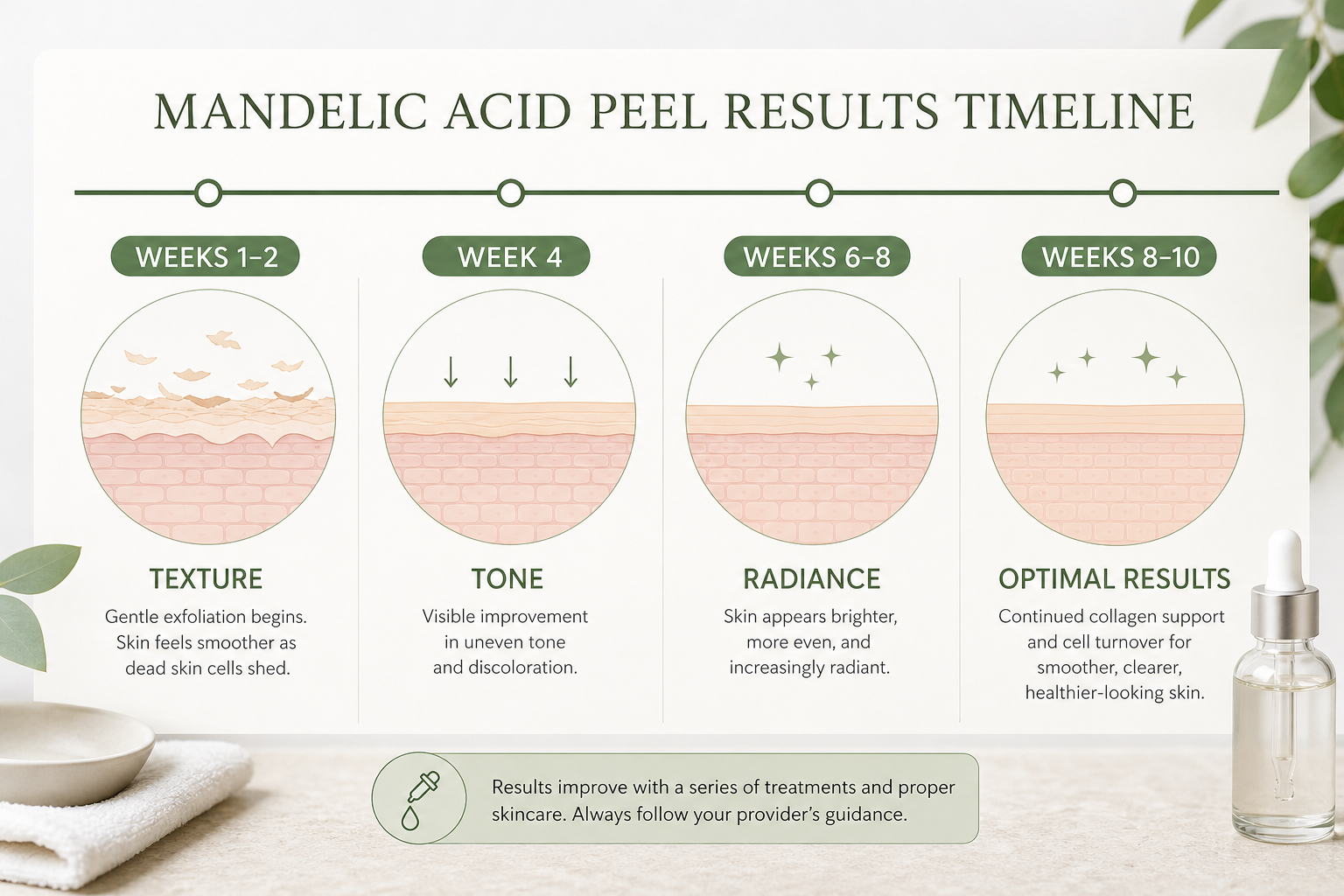
Individual results vary depending on skin type, concern severity, treatment frequency, at-home skincare, and sun protection habits. Mandelic acid is not a one-session solution for significant hyperpigmentation or established acne scarring; it works best as part of a consistent treatment plan.
Aftercare and Ingredient Pairing
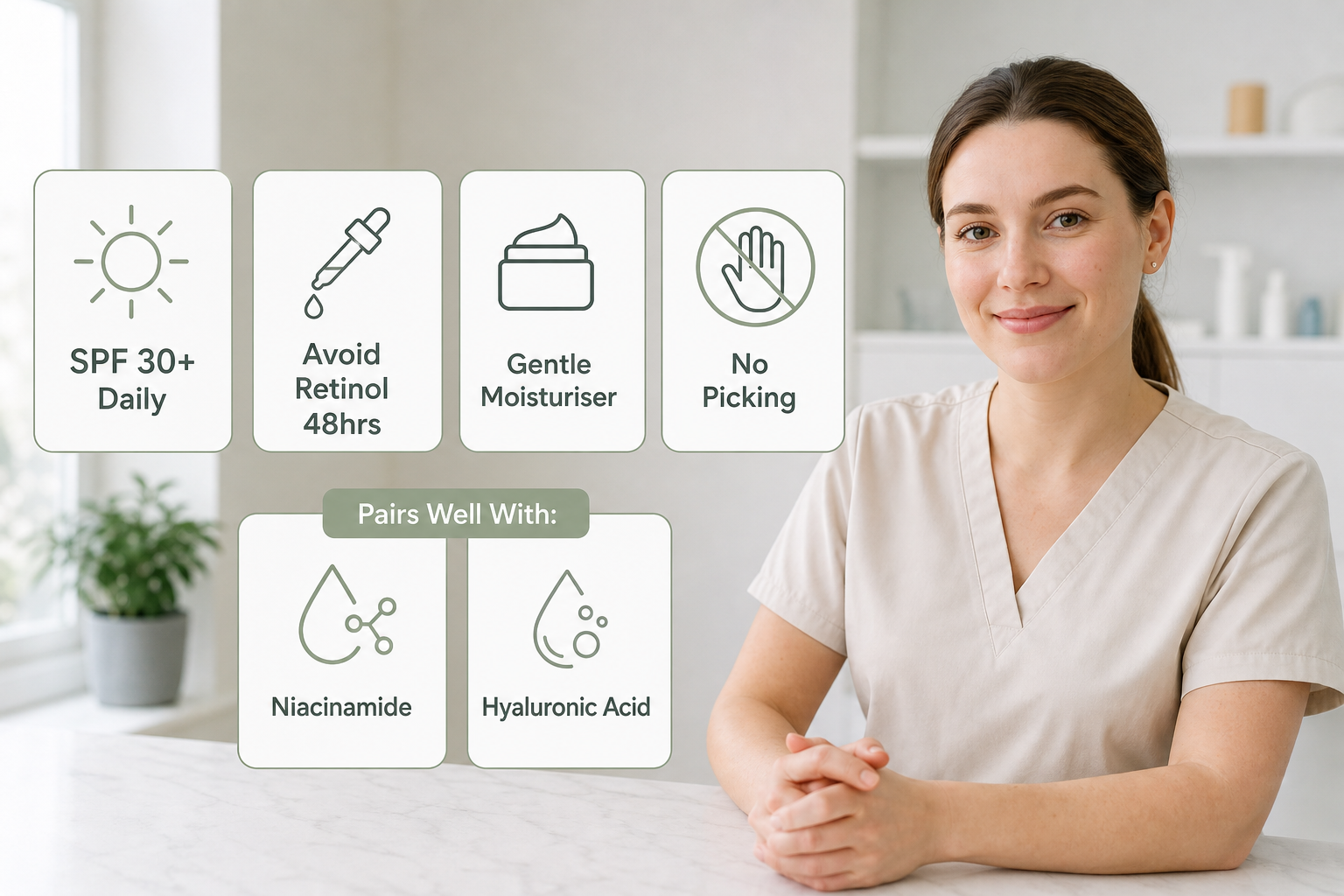
Post-peel care directly affects both comfort and results. The skin barrier is temporarily more vulnerable after a chemical peel, and the following guidance applies in the 48–72 hours after treatment:
- Apply a broad-spectrum SPF 30 or higher every morning without exception. Photosensitivity is increased after any chemical peel, and unprotected sun exposure can worsen hyperpigmentation and compromise results.
- Use a gentle, non-acid, non-retinoid moisturiser to support the skin barrier during recovery.
- Avoid retinol, vitamin C, other AHAs, BHAs, and any other active ingredients for at least 48 hours after treatment.
- Do not pick or forcibly remove any flaking skin, as this can cause irritation or PIH.
When building a longer-term skincare routine around mandelic acid, certain ingredients pair well with it. Niacinamide complements mandelic acid’s brightening and barrier-supporting effects. Hyaluronic acid helps maintain hydration, which is useful given that some exfoliating acids can be drying. Azelaic acid and tranexamic acid both target hyperpigmentation through different mechanisms and can work alongside mandelic acid in a broader pigmentation management protocol, though layering multiple actives on the same day is generally not recommended. Retinol and vitamin C are best used on alternate days or evenings rather than immediately before or after a mandelic acid treatment.
Seasonal Timing Considerations
Chemical peel series are often best planned for autumn and winter months, when UV exposure is naturally lower and consistent daily SPF use is easier to maintain. Starting a course of mandelic acid peels during a period of high sun exposure — summer holidays, for example — increases the risk of photosensitivity reactions and can counteract the pigmentation improvements the peel is intended to achieve. This does not mean mandelic acid peels cannot be performed in summer, but diligent broad-spectrum SPF use becomes even more critical, and outdoor activities immediately after treatment should be minimised.
Frequently Asked Questions
Is a mandelic acid peel safe for dark skin tones?
Mandelic acid is considered one of the safer AHA peel options for darker skin tones, including Fitzpatrick types IV–VI. Its slow penetration and lower irritation potential reduce the risk of triggering post-inflammatory hyperpigmentation — a significant concern with faster-acting acids like glycolic acid in skin of color. Clinical studies comparing mandelic acid with glycolic acid in higher Fitzpatrick skin types have reported a lower incidence of PIH with mandelic acid. A professional consultation is still recommended to assess individual suitability and select the appropriate concentration.
How is mandelic acid different from glycolic acid?
The primary difference is molecular size. Glycolic acid has a much smaller molecular weight (~76 daltons) and penetrates the skin rapidly, producing faster but potentially more irritating results. Mandelic acid’s larger molecular weight (~152 daltons) means it penetrates more slowly, causing less redness and irritation. Glycolic acid may produce more dramatic anti-ageing results at equivalent depths, but mandelic acid is generally better tolerated by sensitive skin, acne-prone skin, and darker skin tones.
Does a mandelic acid peel cause visible peeling?
At superficial concentrations, visible peeling is usually mild — more like dry, flaking skin than dramatic shedding. Some patients notice very little visible peeling at all, particularly at lower concentrations. More pronounced flaking may occur with higher-concentration professional peels, typically appearing between days 2 and 5 after treatment. This is a normal part of the exfoliation process and should resolve within a week.
How often can I have a mandelic acid peel?
Professional peels are typically spaced 2–4 weeks apart, with a series of 4–6 sessions recommended for most concerns. At-home peels at lower concentrations can be used more frequently — weekly or fortnightly — depending on skin tolerance. Overuse of any chemical peel can compromise the skin barrier, so following the guidance of a qualified practitioner is advisable, particularly when combining professional and at-home treatments.
Can mandelic acid help with body acne or keratosis pilaris?
Yes, mandelic acid can be used on body areas as well as the face. Its gentle exfoliant action makes it suitable for addressing keratosis pilaris on the arms and thighs, and its antibacterial and comedolytic properties may help with back or chest acne. Body skin is generally thicker and may tolerate slightly higher concentrations than facial skin, but patch testing is still recommended, particularly on sensitive areas.
Can I use mandelic acid if I have rosacea?
Mandelic acid is better tolerated by rosacea-prone skin than most other chemical peel acids, largely because of its slow penetration and anti-inflammatory properties. However, it is not a treatment for rosacea, and applying any chemical peel during an active flare is not advisable. Anyone with rosacea should discuss chemical exfoliation with a dermatologist or qualified aesthetic practitioner before starting treatment.
Is a Mandelic Acid Peel the Right Choice for Your Skin?
A mandelic acid peel occupies a genuinely useful position in the chemical peel landscape: it offers meaningful clinical benefits for acne, hyperpigmentation, melasma, and skin texture, while remaining accessible to skin types that cannot tolerate more aggressive exfoliation. Its suitability for sensitive skin, rosacea-prone skin, and darker skin tones addresses a real gap that faster-acting acids like glycolic acid cannot fill as safely. The evidence base, while not as extensive as for some established peel acids, includes comparative clinical trials supporting its use for acne and pigmentation, and its safety profile in higher Fitzpatrick skin types is better documented than many alternatives.
The limitations are worth acknowledging: results are gradual, a single session is unlikely to produce dramatic change, and consistent sun protection is non-negotiable for anyone using chemical exfoliation for pigmentation concerns. Mandelic acid is also not the strongest option for deep wrinkles, significant acne scarring, or advanced photoageing, where deeper peel depths or other resurfacing modalities may be more appropriate.
If you are considering a mandelic acid peel — whether as a standalone treatment or as part of a broader skincare plan — a consultation with a qualified aesthetic practitioner or dermatologist will help determine whether it is the right approach for your specific skin concerns, tone, and history. A patch test before any new peel is a sensible first step regardless of skin type.
