

A fungal infection on skin is one of the most common reasons people visit a doctor or pharmacist, yet it is frequently misidentified, undertreated, or confused with conditions such as eczema or psoriasis. Tinea infections, caused by dermatophytes, and candida infections, caused by yeast, behave differently, respond to different treatments, and appear in different locations on the body. Understanding which type you are dealing with is the first step toward effective treatment and preventing recurrence.
Key Takeaways
- Tinea infections are caused by dermatophytes — fungi that feed on keratin — while candida infections are caused by yeast, most commonly Candida albicans.
- The two types of superficial fungal infection look different, affect different body sites, and require different antifungal treatments; nystatin works for candida but not tinea.
- Most mild-to-moderate cases respond well to topical antifungal cream, but scalp ringworm, nail infections, and widespread disease usually require oral antifungal medication.
- Applying corticosteroid cream to an undiagnosed tinea infection can mask symptoms and create a misleading presentation known as tinea incognito, making diagnosis harder.
- Completing the full treatment course and addressing underlying risk factors — such as moisture, tight clothing, and blood sugar control — are essential to prevent recurrence.
What Is a Fungal Skin Infection?
A superficial fungal infection is one that affects only the outermost layers of the skin, hair, or nails, rather than invading deeper tissues. These infections are caused by two broad categories of fungi: dermatophytes and yeasts. Dermatophytes are keratinophilic organisms — meaning they digest keratin, the structural protein found in the stratum corneum, hair shafts, and nails. Yeasts such as Candida albicans do not require keratin and instead thrive in warm, moist environments where skin surfaces meet, such as skin folds and mucous membranes.
Globally, superficial fungal infections affect a significant proportion of the population at any given time. They are not dangerous in most healthy individuals, but they cause considerable discomfort, can spread to others, and tend to recur if the underlying conditions that allowed them to develop are not corrected. In immunocompromised individuals — including those with diabetes, HIV, or those taking long-term corticosteroids — fungal infections can be more persistent, more widespread, and harder to treat.
Tinea vs Candida: Key Differences at a Glance
| Feature | Tinea (Dermatophyte) | Candida (Yeast) |
|---|---|---|
| Causative organism | Microsporum, Trichophyton, Epidermophyton | Candida albicans (70–80% of cases) |
| Preferred body sites | Scalp, trunk, groin, feet, nails, beard | Skin folds, mouth, genitals, nappy area |
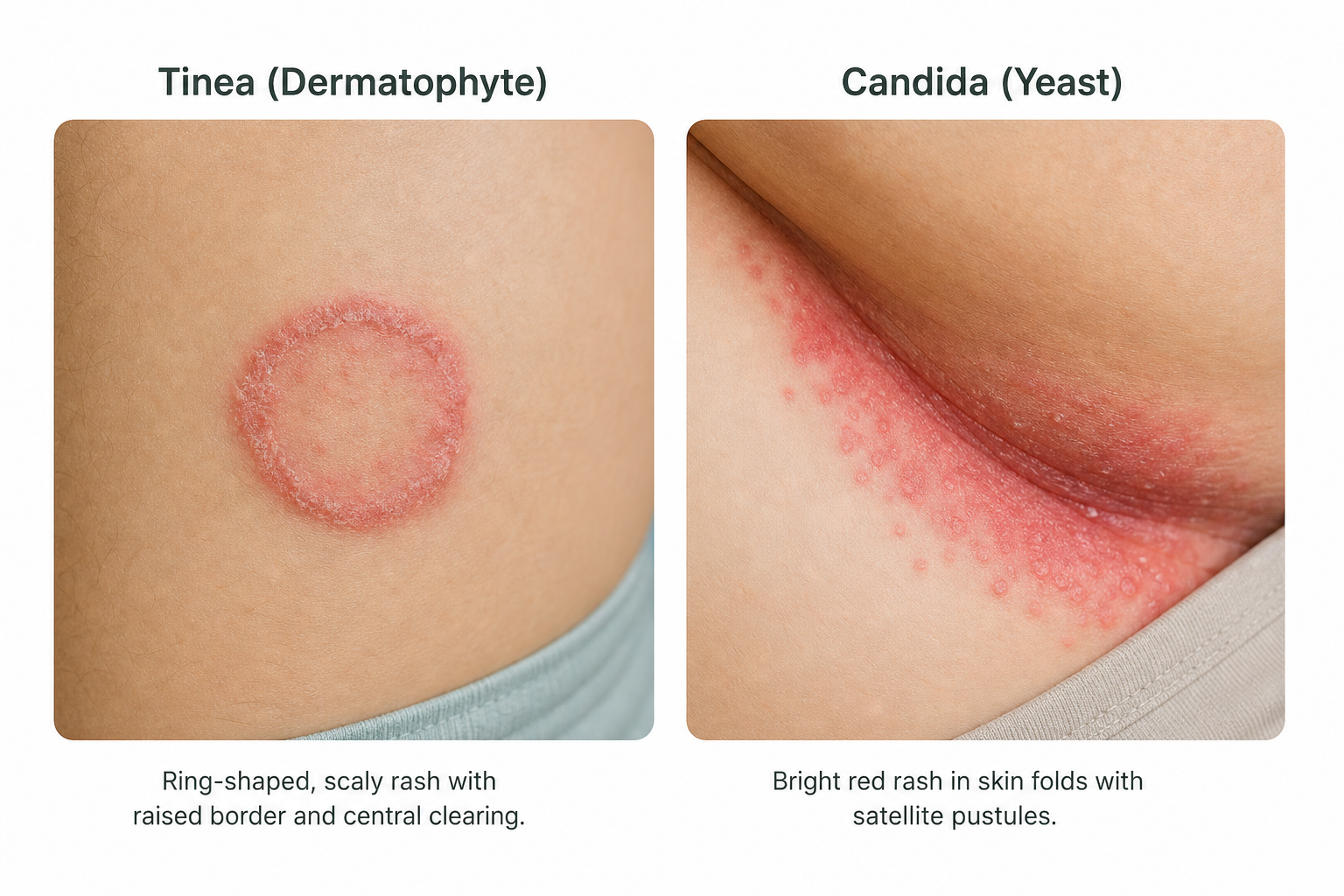
| Typical appearance | Scaly, ring-shaped rash with raised border and central clearing | Red, well-defined rash with satellite pustules at the edges |
| Environment favoured | Warm, moist; shared surfaces; contact sport | Warm, moist intertriginous areas; skin maceration |
| KOH preparation finding | Hyphae (branching filaments) | Pseudohyphae and budding yeast cells |
| First-line topical treatment | Terbinafine, clotrimazole, miconazole | Clotrimazole, miconazole, nystatin |
| Does nystatin work? | No — dermatophytes are resistant to nystatin | Yes — nystatin is often effective |
| Oral treatment options | Terbinafine, griseofulvin, itraconazole, fluconazole | Fluconazole, itraconazole |
Types of Tinea Infection
The word tinea simply means a fungal infection of the skin, and it is classified by the body site affected. All tinea infections are caused by dermatophytes — primarily species of Trichophyton, Microsporum, and Epidermophyton — but the clinical appearance and treatment approach can vary depending on location.
Ringworm (Tinea Corporis)
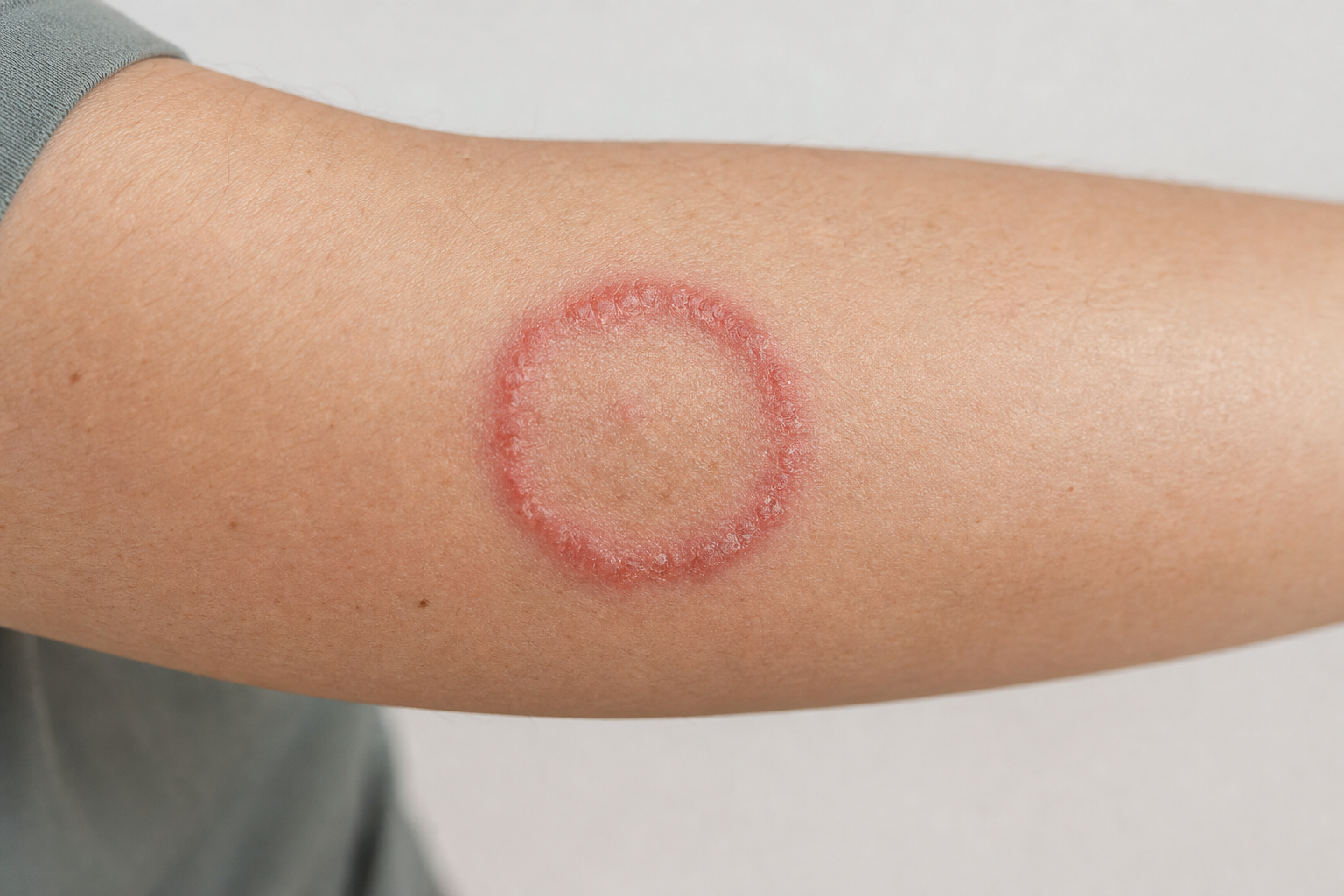
Tinea corporis is the classic ringworm infection of the trunk, limbs, or face. Despite its name, no worm is involved. The infection produces a circular or oval, scaly, itchy rash with a raised, well-defined border and a tendency toward central clearing as it expands outward. It spreads through direct skin contact with an infected person or animal, or through contact with contaminated surfaces. Children and people who participate in contact sports are at higher risk. Most cases of tinea corporis respond well to a topical antifungal cream applied twice daily for two to four weeks.
Athlete’s Foot (Tinea Pedis)
Tinea pedis is one of the most prevalent superficial fungal infections worldwide. It typically begins between the toes — particularly the fourth and fifth web spaces — where warmth and moisture accumulate. Symptoms include itching, scaling, a red rash, skin peeling, and in more severe cases, blisters, fissures, or ulcers. Excessive sweating and poor circulation are recognised predisposing factors. Walking barefoot in communal areas such as swimming pools, gym changing rooms, and shared showers significantly increases the risk of acquiring tinea pedis. Wearing breathable, moisture-wicking footwear and drying the feet thoroughly after bathing are important preventive measures.
Jock Itch (Tinea Cruris)
Tinea cruris affects the groin, inner thighs, and sometimes the buttocks. It produces a red, scaly, itchy rash with a clearly defined, raised border. The central area may appear less inflamed than the advancing edge. Tinea cruris is more common in men and in people who sweat heavily, wear tight non-breathable clothing, or are overweight. It is often associated with concurrent tinea pedis, as the same fungus can be transferred from the feet to the groin. Treatment with a topical antifungal cream is usually effective, though recurrence is common if the underlying moisture and friction are not addressed.
Scalp Ringworm (Tinea Capitis)
Tinea capitis is a superficial fungal infection of the skin of the scalp, eyebrows, and eyelashes that attacks the hair shaft and follicles. It is most common in children and can cause patchy hair loss, scaling, and inflammation. In severe cases, a boggy, tender inflammatory mass called a kerion may develop. Unlike other tinea infections, tinea capitis cannot be adequately treated with topical antifungal cream alone because the infection is embedded within the hair follicle. An oral antifungal medication — typically griseofulvin or terbinafine — is required, and this should be combined with a sporicidal shampoo containing selenium sulfide or ketoconazole to reduce the spread of spores. A Wood’s lamp examination may help identify certain species of tinea capitis, as some fluoresce under ultraviolet light, though not all causative species do so.
Nail Fungus (Onychomycosis)
Onychomycosis, or tinea unguium, is a fungal infection of the nails, most commonly the toenails. It causes thickening, discolouration (yellow, white, or brown), brittleness, and separation of the nail from the nail bed. Onychomycosis is notoriously difficult to treat because topical antifungal creams penetrate the nail plate poorly. Oral antifungal medication — usually terbinafine or itraconazole — taken for several months is typically required. Treatment success rates vary, and recurrence is common, particularly in older adults and those with diabetes or poor circulation.
Tinea Versicolor (Pityriasis Versicolor)
Tinea versicolor, also called pityriasis versicolor, is caused not by a dermatophyte but by Malassezia yeasts — naturally occurring skin flora that can overgrow under certain conditions. It produces small, discoloured patches on the trunk, shoulders, and upper arms that may appear lighter or darker than the surrounding skin. The patches are often more noticeable after sun exposure. Tinea versicolor is not contagious and is not related to poor hygiene. It responds to topical antifungal treatments such as ketoconazole or selenium sulfide shampoo, but pigmentation changes may persist for months after the infection has cleared.
Types of Candida Skin Infection
Cutaneous candidiasis refers to a yeast infection of the skin caused predominantly by Candida albicans, which accounts for approximately 70–80% of all candidal infections. Unlike dermatophytes, Candida does not digest keratin; instead, it exploits disrupted skin barriers and altered immune environments to establish infection.
Candida Intertrigo
Candida intertrigo is an infection of the intertriginous areas — the skin folds where two skin surfaces rub together, such as beneath the breasts, in the groin, between the buttocks, and in the abdominal folds. These areas are prone to skin maceration from moisture and friction, creating an ideal environment for Candida albicans overgrowth. The rash typically appears as a well-defined, bright red, moist area with a slightly irregular border. A characteristic feature is the presence of satellite pustules — small, isolated pustules or papules just beyond the main rash border — which help distinguish candidal intertrigo from tinea or other rashes. Candida intertrigo may occur in patients with conditions that alter host immunity, including pregnancy, diabetes mellitus, malignancy, and those receiving glucocorticoid therapy.
Oral Thrush
Oral candidiasis, commonly called oral thrush, presents as white, creamy plaques on the tongue, inner cheeks, or palate that can be wiped away to reveal a red, sometimes bleeding surface beneath. It is common in infants, elderly individuals, people wearing dentures, and those who are immunocompromised or taking broad-spectrum antibiotics or inhaled corticosteroids. Nystatin oral suspension or lozenges are often used as first-line treatment, with fluconazole reserved for more resistant or widespread cases.
Candida Paronychia and Nail Involvement
Candida can infect the skin around the nails (paronychia), causing redness, swelling, and tenderness of the nail fold. This is distinct from dermatophyte onychomycosis and is more common in people whose hands are frequently immersed in water, such as healthcare workers, cleaners, and food handlers. Treatment involves keeping the area dry and applying a topical antifungal; oral fluconazole may be needed for persistent cases.
Nappy Rash and Infant Candidiasis
In infants, Candida is a common cause of nappy (diaper) dermatitis, particularly when a simple irritant nappy rash has been present for more than 72 hours. The candidal form typically produces a bright red rash with satellite pustules extending beyond the main rash area. Topical nystatin or clotrimazole cream is usually effective. Oral thrush often coexists and should be treated simultaneously to prevent reinfection.
Causes and Risk Factors
Both tinea and candida infections require a combination of exposure to the organism and conditions that allow it to establish itself on or within the skin. Understanding these risk factors helps explain why some people experience repeated infections.
- Warm, moist environments: Fungi thrive where heat and moisture accumulate — between the toes, in skin folds, and in areas covered by tight clothing.
- Weakened immune system: Immunocompromised individuals, including those with HIV, those undergoing chemotherapy, and transplant recipients, are at significantly higher risk of persistent or widespread fungal infections.
- Diabetes mellitus: Elevated blood glucose levels impair immune function and create a favourable environment for Candida albicans overgrowth. People with diabetes should maintain good blood sugar control as part of fungal infection prevention.
- Antibiotic use: Broad-spectrum antibiotics disrupt the normal bacterial flora of the skin and mucous membranes, allowing Candida to overgrow.
- Corticosteroid use: Systemic or topical corticosteroids suppress local immune responses and can predispose to both tinea and candida infections.
- Obesity: Excess skin folds increase the surface area of intertriginous areas, raising the risk of candidal intertrigo.
- Shared surfaces and personal items: Tinea infections spread readily through shared towels, clothing, footwear, and gym equipment.
- Contact sports: Skin-to-skin contact in sports such as wrestling increases the risk of tinea corporis (sometimes called tinea gladiatorum).
- Pregnancy: Hormonal changes and altered immunity during pregnancy increase susceptibility to candidal infections.
How Are Fungal Skin Infections Diagnosed?
Clinical diagnosis of a fungal infection on skin can be unreliable because tinea infections have many mimics, including eczema, psoriasis, contact dermatitis, and seborrhoeic dermatitis. A doctor will usually begin with a visual assessment, but laboratory confirmation is often needed when the appearance is atypical or when treatment has already been attempted.
Potassium Hydroxide (KOH) Preparation
The potassium hydroxide (KOH) preparation is the most widely used bedside diagnostic test for superficial fungal infections. A skin scraping is taken from the active edge of the rash, placed on a glass slide, and treated with KOH solution, which dissolves skin cells while leaving fungal structures intact. Under a microscope, branching hyphae confirm a dermatophytic infection, while pseudohyphae and budding yeast cells indicate Candida. The test is quick and inexpensive, though it requires some experience to interpret accurately.
Wood’s Lamp Examination
A Wood’s lamp examination uses ultraviolet light to assess the skin in a darkened room. Certain species of dermatophytes that cause tinea capitis — particularly Microsporum species — produce a characteristic green fluorescence under Wood’s lamp, making it a useful screening tool in children with scalp hair loss. However, Trichophyton species, which are now the most common cause of tinea capitis in many countries, do not fluoresce, so a negative Wood’s lamp result does not rule out infection.
Fungal Culture and Skin Biopsy
When the KOH preparation is inconclusive or the diagnosis remains uncertain, a fungal culture can identify the specific organism and guide treatment. Culture results typically take two to four weeks. Skin biopsy with periodic acid-Schiff (PAS) staining is occasionally used when other methods have failed, particularly for nail infections or unusual presentations.
Tinea Incognito: A Common Diagnostic Pitfall
Tinea incognito refers to a tinea infection that has been altered in appearance by the inappropriate application of topical corticosteroids or immunosuppressants. When a patient or clinician mistakes a tinea infection for eczema or another inflammatory condition and applies a steroid cream, the inflammation is temporarily suppressed, making the rash look less typical. The characteristic raised, scaly border may disappear, the rash may spread more widely, and the usual ring-shaped pattern may be lost entirely. The result is a lesion that appears atypical and is much harder to diagnose correctly. Tinea incognito is an important reason why a new or persistent rash should be assessed by a clinician before steroid treatment is started, and why laboratory confirmation is valuable when the diagnosis is uncertain.
Treatment Options
The choice between topical and oral antifungal treatment depends on the type of infection, its location, its severity, and the patient’s overall health. Most mild-to-moderate tinea and candida skin infections can be managed with a topical antifungal cream, but certain infections require systemic treatment.
Topical Antifungal Treatments
Topical antifungals are the first-line treatment for most superficial fungal infections of the skin. Commonly available options include terbinafine, clotrimazole, and miconazole. Terbinafine is fungicidal against dermatophytes and is often preferred for tinea infections because shorter treatment courses may be effective. Clotrimazole and miconazole are broad-spectrum azole antifungals that work against both dermatophytes and Candida. Nystatin is effective against Candida but has no activity against dermatophytes, so it should not be used for tinea infections.
Correct application technique matters. The cream should be applied to clean, dry skin, extending beyond the visible border of the rash by at least one centimetre. Treatment should continue for one to two weeks after symptoms have completely resolved — not just until the rash appears to have cleared — to reduce the risk of recurrence. Stopping treatment too early is one of the most common reasons for relapse.
Oral Antifungal Medications
Oral antifungal medication is required when the infection involves the scalp or nails, when it is widespread, when topical treatment has failed, or when the patient is immunocompromised. Options include terbinafine, fluconazole, itraconazole, ketoconazole, griseofulvin, and ciclopirox. The choice depends on the causative organism, the site of infection, potential drug interactions, and the patient’s medical history. Oral antifungals carry a risk of side effects including gastrointestinal upset and, less commonly, liver enzyme changes, so they are generally prescribed under medical supervision with appropriate monitoring for longer courses.
Why OTC Treatment Sometimes Fails
Over-the-counter antifungal treatments fail for several reasons. The most common is an incorrect diagnosis — the rash may not be fungal at all, or the wrong antifungal may have been chosen (for example, nystatin for a tinea infection). Incomplete treatment courses are another frequent cause of apparent failure and subsequent recurrence. Antifungal resistance, while less common in superficial infections than in systemic ones, does occur and may require culture-guided treatment. Finally, persistent risk factors — ongoing moisture, tight clothing, uncontrolled diabetes — will allow the infection to re-establish even after successful initial treatment.
Differential Diagnosis: When It Might Not Be Fungal
Several common skin conditions can closely resemble a fungal infection on skin, and distinguishing between them is important because the treatments differ significantly.
- Eczema (atopic dermatitis): Produces an itchy, red, scaly rash but typically lacks the well-defined raised border of tinea. It often affects the flexural surfaces and is associated with a personal or family history of atopy. Steroid creams are appropriate for eczema but can worsen tinea.
- Psoriasis: Produces thick, silvery-scaled plaques, often on the elbows, knees, and scalp. It is a chronic inflammatory condition rather than an infection and does not respond to antifungals.
- Contact dermatitis: Caused by an allergic or irritant reaction to a substance that has touched the skin. The distribution often follows the pattern of contact with the offending substance.
- Seborrhoeic dermatitis: Affects oily areas such as the scalp, face, and chest. It involves Malassezia yeasts but is not a true infection in the same sense as tinea versicolor; it responds to antifungal shampoos and mild topical steroids.
If a rash does not respond to antifungal treatment within two to four weeks, or if the diagnosis is uncertain, a clinical assessment with laboratory testing is advisable before continuing or changing treatment.
Prevention: Breaking the Cycle of Recurrence
Fungal skin infections have a well-recognised tendency to recur, particularly in people with ongoing risk factors. Prevention requires both good hygiene practices and addressing the underlying conditions that allow fungi to thrive.
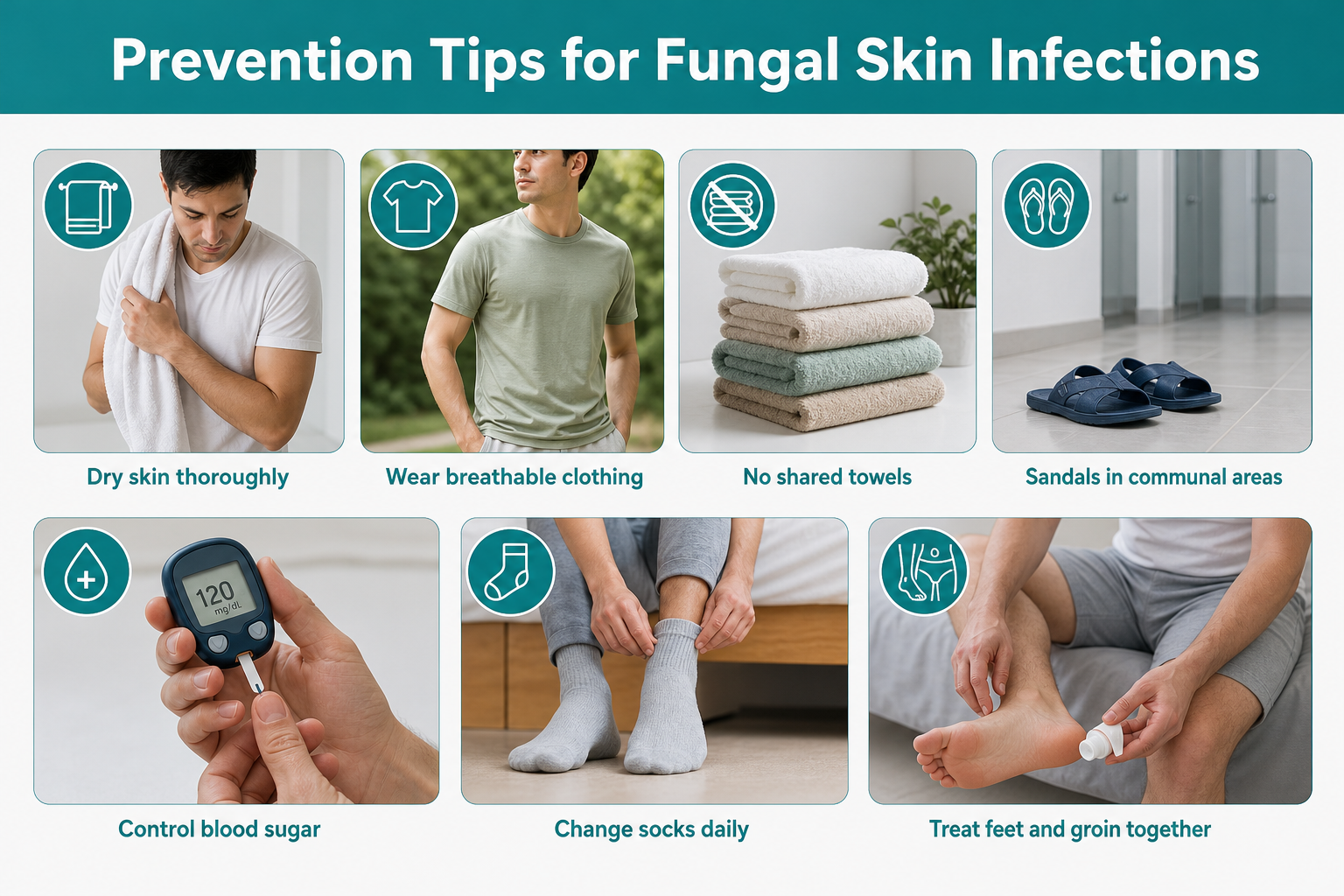
- Dry the skin thoroughly after bathing, paying particular attention to skin folds, between the toes, and the groin.
- Wear breathable clothing and moisture-wicking socks to reduce sweat accumulation.
- Change clothing and socks daily, and avoid wearing the same shoes on consecutive days to allow them to dry out.
- Wear sandals or flip-flops in communal changing rooms, swimming pools, and gym showers.
- Do not share towels, clothing, footwear, or other personal items.
- Wipe down shared gym equipment before use.
- People with diabetes should maintain good blood sugar control, as elevated glucose levels significantly increase the risk of candidal infections.
- If you have had a previous fungal infection, consider using an antifungal powder or spray in high-risk areas during warm weather or periods of heavy activity.
- Treat any concurrent tinea pedis when managing tinea cruris, as the foot is often the source of reinfection in the groin.
When to See a Doctor
Many mild fungal skin infections can be managed safely with over-the-counter antifungal treatments, but professional assessment is advisable in the following situations:
- The rash has not improved after two to four weeks of appropriate OTC treatment.
- The infection involves the scalp or nails, which typically require oral antifungal medication.
- The rash is spreading rapidly, is very inflamed, or is associated with pain, swelling, or fever.
- You are immunocompromised, pregnant, or have diabetes.
- The diagnosis is uncertain — particularly if you have already applied a steroid cream, which may have altered the appearance of the rash.
- The infection keeps returning despite completing full treatment courses.
- A child has patchy hair loss or scalp scaling, which may indicate tinea capitis requiring prescription treatment.
Frequently Asked Questions
Is ringworm caused by a worm?
No. Ringworm is a common name for tinea corporis, a fungal infection caused by dermatophytes. The name comes from the ring-shaped appearance of the rash, not from any parasitic worm. It is entirely caused by fungi and is treated with antifungal medication, not antiparasitic drugs.
How long does treatment for a fungal skin infection take?
Treatment duration depends on the type and location of the infection. Tinea corporis and tinea cruris typically respond to two to four weeks of topical antifungal cream. Tinea pedis may require up to six weeks. Tinea capitis and onychomycosis require oral antifungal medication for several weeks to several months. Candida intertrigo often improves within one to two weeks of topical treatment, provided the underlying moisture and friction are also addressed.
Can I treat a fungal skin infection at home?
Mild tinea infections of the body, groin, and feet can often be treated effectively with over-the-counter topical antifungal creams. However, scalp infections, nail infections, widespread disease, and infections in immunocompromised individuals require prescription treatment. If you are unsure of the diagnosis or if OTC treatment has not worked, a clinical assessment is the appropriate next step.
Are fungal skin infections contagious?
Tinea infections are contagious and can spread through direct skin-to-skin contact, contact with infected animals, or contact with contaminated surfaces and personal items. Candida infections are generally not considered contagious in the same way, as Candida albicans is a normal part of the body’s flora that causes infection when local conditions allow overgrowth rather than through external transmission in most cases.
Why does my fungal infection keep coming back?
Recurrence is common and usually results from one or more of the following: stopping treatment too early before the infection is fully cleared, persistent risk factors such as moisture or tight clothing, reinfection from a household contact or shared surface, an underlying condition such as diabetes that has not been adequately managed, or an initial misdiagnosis meaning the correct treatment was never given. Addressing these factors alongside completing a full treatment course is essential to prevent recurrence.
What is the difference between tinea versicolor and other tinea infections?
Despite sharing the tinea name, pityriasis versicolor (tinea versicolor) is caused by Malassezia yeast — a normal skin inhabitant — rather than by dermatophytes. It produces discoloured patches rather than a ring-shaped rash and is not contagious. It responds to antifungal treatments but is prone to recurrence, and pigmentation changes may persist for months after the yeast has been eliminated.
Getting the Right Diagnosis and Treatment for a Fungal Skin Infection
A fungal infection on skin is rarely dangerous in an otherwise healthy person, but choosing the wrong treatment — or stopping the right one too soon — can lead to persistent symptoms, spreading infection, and repeated relapses. The distinction between tinea and candida matters practically: nystatin will not clear a dermatophyte infection, and a steroid cream applied to an undiagnosed tinea rash can transform it into the difficult-to-recognise tinea incognito. For straightforward cases in healthy adults, a correctly identified infection treated with an appropriate topical antifungal cream for the full recommended duration is usually sufficient. For infections involving the scalp or nails, for widespread or recurrent disease, or for anyone with a weakened immune system or poorly controlled diabetes, a consultation with a doctor or dermatologist will ensure the correct diagnosis, the right treatment choice, and guidance on preventing the infection from returning.
