

Key Takeaways
- Masseter Botox uses botulinum toxin type A (BoNT-A) to reduce the activity of the masseter muscle, helping to relieve jaw pain, teeth grinding, and related symptoms such as tension headaches.
- Results for pain and jaw tension typically begin within one to two weeks; any aesthetic slimming of the jawline becomes more visible over two to four weeks and beyond.
- Effects generally last three to six months, and repeat treatments may gradually reduce the severity of masseter hypertrophy over time.
- Masseter Botox is an off-label treatment for bruxism, though clinical evidence — including recent systematic reviews — supports its effectiveness for reducing pain, bite force, and grinding frequency.
- It is not a cure for bruxism and is best considered alongside a broader management plan, which may include a night guard, physiotherapy, or stress management.
What Is the Masseter Muscle and Why Does It Matter?
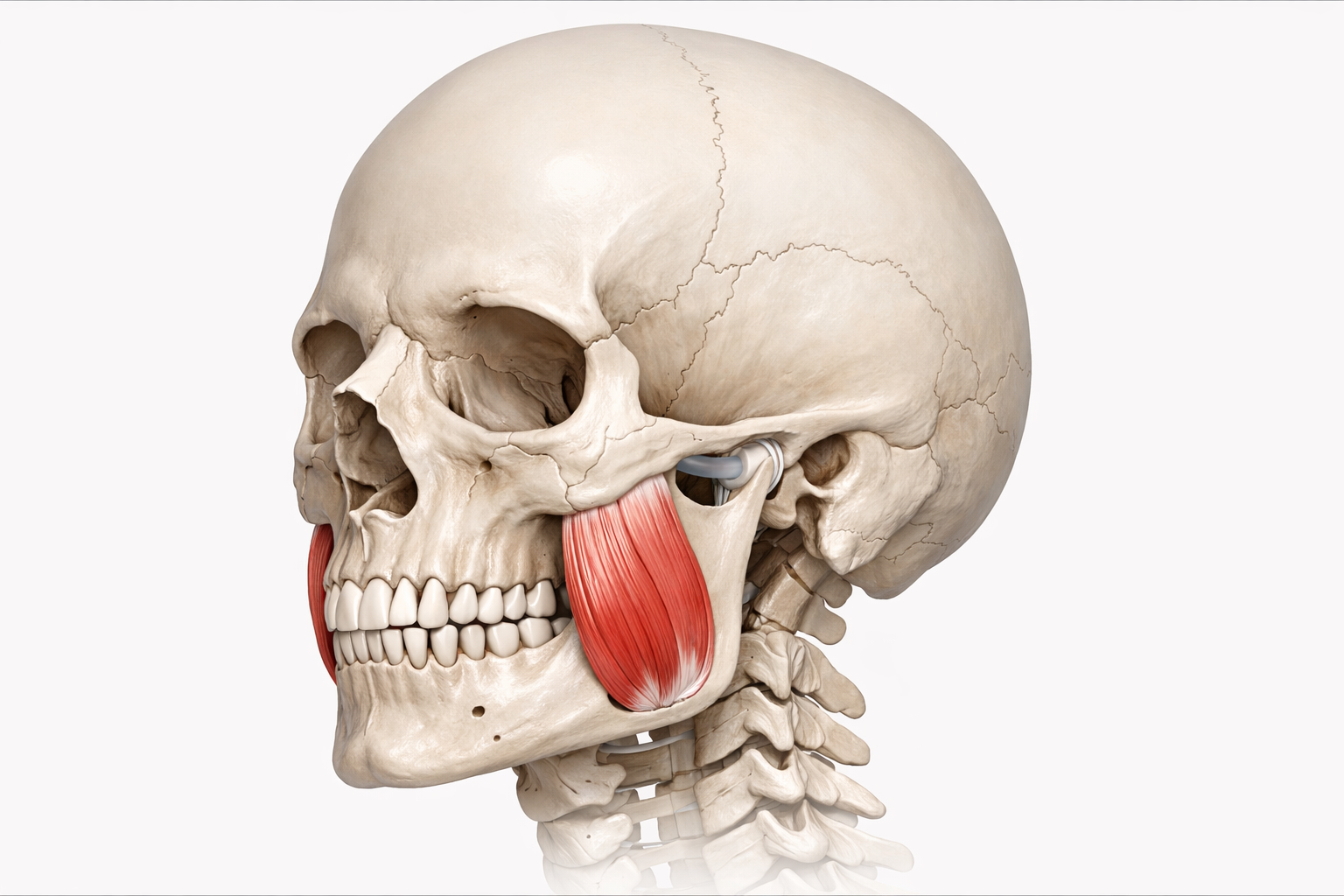
The masseter is a powerful muscle on either side of the jaw, connecting the cheekbone to the lower jaw (mandible). Its primary role is to generate bite force during chewing. In people who grind or clench their teeth frequently — whether during sleep or while awake — the masseter is repeatedly overworked. Over time, this constant muscular activity can cause the masseter to enlarge, a condition known as masseter hypertrophy. The result is often a visibly wider or squarer jawline, and more significantly, a range of symptoms including chronic jaw pain, facial tension, worn tooth surfaces, and headaches.
The temporomandibular joint (TMJ) sits directly in front of the ear and acts as the hinge connecting the jaw to the skull. Persistent jaw clenching places excessive strain on this joint and the surrounding muscles — including the temporalis muscle at the side of the head — which can contribute to TMJ dysfunction (TMD), earache, and myofascial pain that radiates through the face and neck.
Understanding Bruxism: Sleep and Awake Forms
Bruxism is the medical term for involuntary teeth grinding and jaw clenching. It is broadly divided into two types. Sleep bruxism — also called nocturnal bruxism — occurs during sleep and is classified as a sleep-related movement disorder. Sufferers are often unaware of it until a partner notices the sound or a dentist identifies enamel erosion and tooth wear. Awake bruxism refers to daytime clenching, which can be triggered by stress, concentration, or habit, and tends to involve clenching rather than lateral grinding.
Both forms can cause similar consequences: enamel erosion, tooth attrition, jaw muscle soreness, tension headaches, and — over time — TMJ dysfunction. Prevalence estimates vary, but bruxism is considered a common condition affecting a meaningful proportion of the adult population. It is also worth noting that an emerging body of clinical literature has highlighted a link between sleep bruxism and obstructive sleep apnea (OSA). If you suspect sleep-disordered breathing alongside jaw grinding, discussing both concerns with a clinician is important, as managing OSA may independently reduce bruxism activity in some patients.
How Does Masseter Botox Work for Teeth Grinding?
Botulinum toxin type A (BoNT-A) works by temporarily blocking the nerve signals that tell a muscle to contract. When injected into the masseter muscle, it reduces the muscle’s ability to generate forceful contractions without removing chewing function entirely. The masseter remains capable of normal, everyday chewing — the difference is that the intense, involuntary clenching and grinding that occurs during bruxism is significantly dampened.
The reduction in muscle activity serves two purposes. First, it relieves the excessive bite force and mechanical strain on the teeth, TMJ, and surrounding structures, which typically leads to a reduction in jaw pain, facial tension, and associated tension headaches. Second, because the overactive masseter muscle is no longer being exercised at the same intensity, it may gradually reduce in size — a process sometimes described as muscle atrophy — which can produce a visible slimming of the lower face over repeated treatment cycles.
Clinical evidence supporting BoNT-A for bruxism has grown substantially. A 2025 overview drawing on multiple systematic reviews found that botulinum toxin injections into the masseter can reduce pain scores, decrease occlusal bite force, and lower the frequency of grinding episodes compared with placebo. A separate 2025 prospective clinical study reported measurable improvements in mouth opening, pain intensity, and masseter muscle thickness following treatment. While the evidence base continues to develop and study designs vary, the overall direction supports BoNT-A as a meaningful option for bruxism management.
The Dual Benefit: Therapeutic Relief and Jawline Slimming
One of the distinctive features of masseter Botox is that it addresses both a functional concern and, for many patients, an aesthetic one simultaneously. People seeking relief from jaw clenching and teeth grinding often notice — as a secondary outcome — that the lower face appears slimmer and more contoured as the masseter reduces in size. This is particularly relevant for individuals with prominent masseter hypertrophy, where the enlarged muscle creates a wide or square lower jaw.
The aesthetic change — sometimes described as a V-shaped jawline or oval facial contour — develops more gradually than the therapeutic benefit. Pain relief and reduced jaw tension tend to be felt within one to two weeks of treatment; visible facial slimming typically becomes noticeable from two to four weeks onward, and may continue to develop over several months as the muscle gradually atrophies. Some patients who seek masseter Botox primarily for facial contouring also find they experience incidental relief from jaw-related symptoms they had not considered significant.
It is important to set realistic expectations: the degree of aesthetic change depends on how much of the jaw width is determined by the masseter muscle itself versus bone structure. Patients with significant masseter hypertrophy tend to see a more pronounced difference than those whose jaw shape is primarily bony.
What the Treatment Involves
A masseter Botox appointment is typically brief, often completed within 15 to 30 minutes, and requires no general anaesthesia or significant preparation. The process usually follows these steps:
- Consultation and assessment: The practitioner evaluates your jaw muscles, discusses your symptoms, reviews your medical history, and confirms suitability. They may ask you to clench your teeth to locate and assess the masseter muscle precisely.
- Skin preparation: The injection sites are cleaned. A topical anaesthetic cream may be applied if desired, though many patients find the injections tolerable without it due to the use of a fine needle.
- Injection: Botulinum toxin is injected bilaterally — into both sides of the jaw — using a fine needle. The number of injection points varies based on anatomy and clinical judgement.
- Aftercare advice: The practitioner will typically advise avoiding vigorous facial massage, intense exercise, and lying flat for a few hours after treatment. Normal activities can usually be resumed immediately.
There is effectively no downtime. Masseter Botox is often referred to as a lunchtime treatment because most people return to work or daily activities straight away. Mild redness or minor swelling at injection sites is possible but usually resolves quickly.
Dosage Considerations
The amount of botulinum toxin used depends on the size and activity of the masseter, the severity of bruxism symptoms, and whether the goal is primarily therapeutic, primarily aesthetic, or both. Typical doses for masseter treatment range from approximately 20 to 50 units per side, though individual anatomy and response vary. It is worth noting that different botulinum toxin brands — such as Botox and Dysport — use different unit scales, so the units are not interchangeable between products. A qualified injector will determine the appropriate dose based on clinical assessment rather than a fixed formula.
When bruxism involves significant headache symptoms or the temporalis muscle is notably overactive, a practitioner may recommend also treating the temporalis — the fan-shaped muscle at the side of the head — in addition to the masseter to provide more comprehensive relief. This decision requires careful anatomical assessment.
Results: What to Expect and When
The timeline for masseter Botox outcomes follows two tracks: a therapeutic track and an aesthetic track.
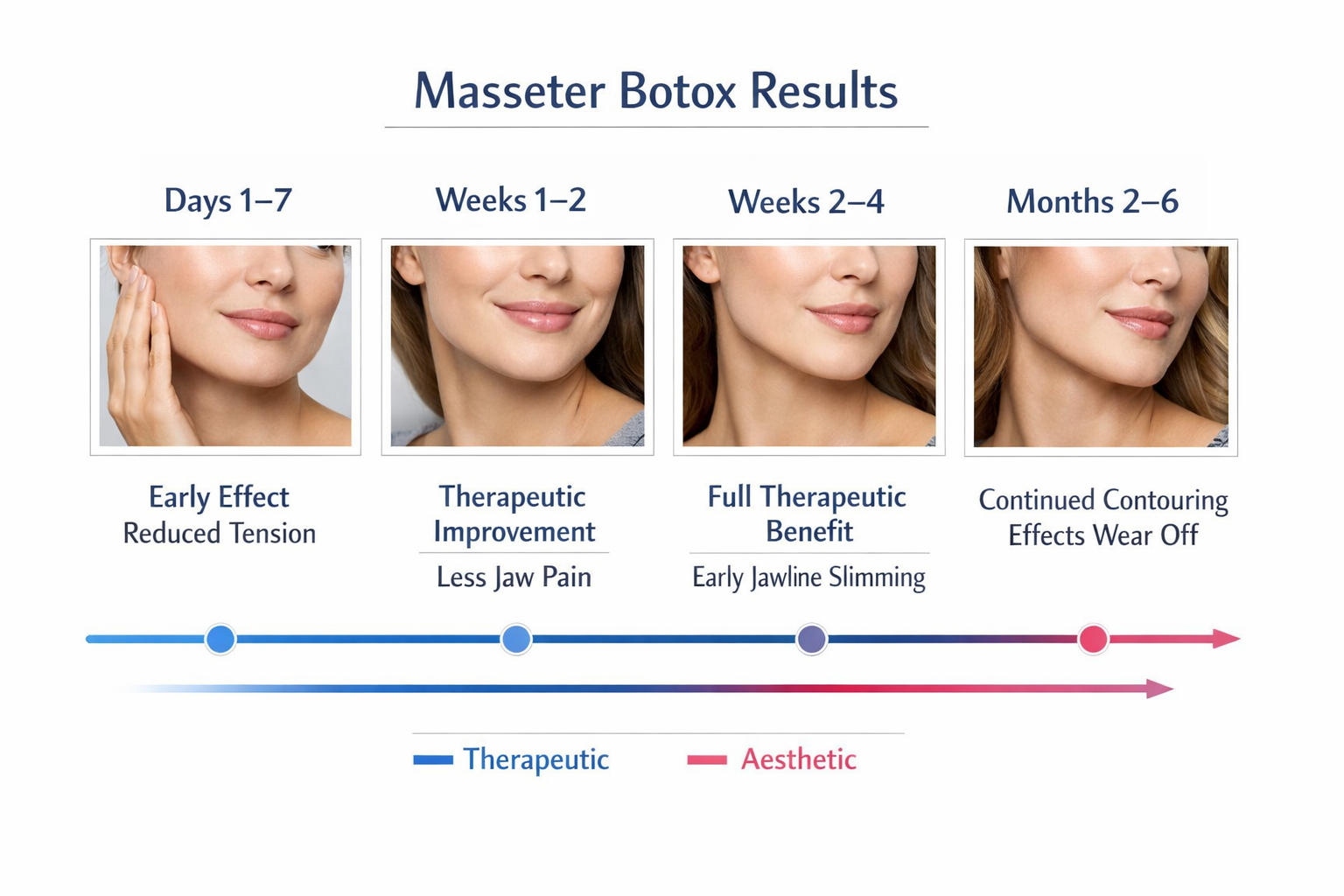
- Days 1–7: The botulinum toxin begins taking effect as neuromuscular blocking progresses. Some patients notice reduced jaw tension within the first few days.
- Weeks 1–2: Therapeutic effects become more apparent. Jaw pain, morning soreness, and tension headaches often begin to improve. Grinding during sleep may reduce noticeably.
- Weeks 2–4: Full therapeutic benefit is typically established. Any facial slimming begins to become visible as the masseter muscle starts to reduce in bulk.
- Months 2–6: The masseter continues to reduce in activity and — with repeat treatments — in size. Aesthetic contouring is most visible in this window. Effects gradually wear off as the neurotoxin is metabolised.
Results generally last between three and six months, after which repeat treatments are needed to maintain the effect. With consistent repeat treatments over time, some patients find that the masseter muscle remains somewhat smaller between sessions, potentially allowing for lower maintenance doses or longer intervals — though individual variation is significant.
Masseter Botox vs. Other Bruxism Treatments
Masseter Botox is not the only option for managing bruxism. Understanding how it compares to alternatives helps in making an informed decision alongside a clinician.
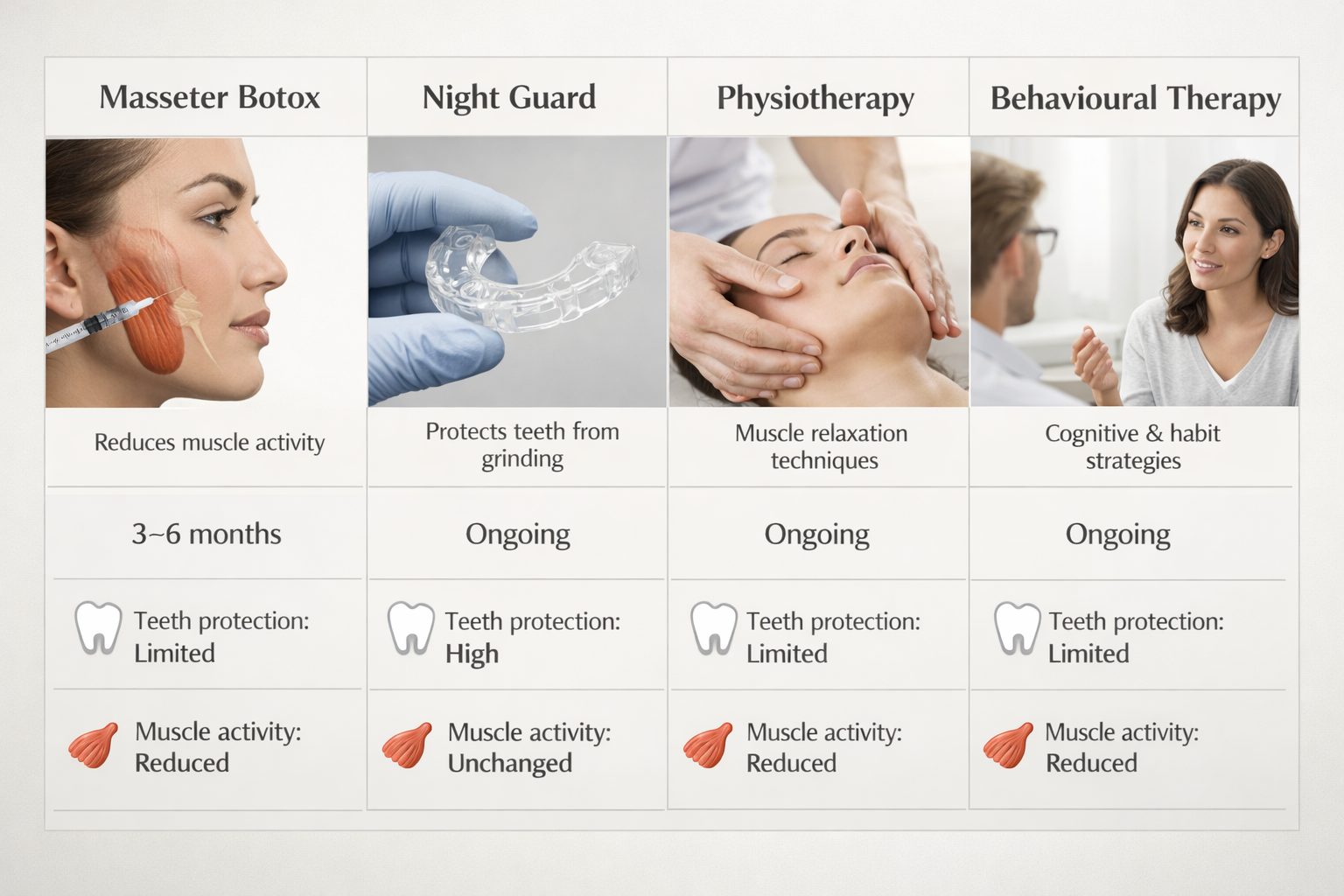
| Treatment | Mechanism | Downtime | Duration of Effect | Protects Teeth | Reduces Muscle Activity | Aesthetic Benefit | Notes |
|---|---|---|---|---|---|---|---|
| Masseter Botox | Reduces muscle contraction via botulinum toxin | None | 3–6 months | Indirectly (reduces grinding force) | Yes | Possible jawline slimming | Off-label for bruxism; repeat treatments required |
| Occlusal splint / night guard | Physical barrier protecting tooth surfaces | None | Ongoing (worn nightly) | Directly | No | None | Does not reduce grinding; protects from damage |
| Physiotherapy / jaw exercises | Muscle retraining and tension release | None | Variable; requires ongoing practice | No | Partially | None | Useful adjunct; evidence base varies |
| Pharmacotherapy | Muscle relaxants, anxiolytics, or other agents | Varies | Short-term; side effects possible | No | Partially | None | Generally short-term use; not a standalone solution |
| Behavioural therapy / stress management | Addresses psychological and habitual triggers | None | Long-term potential | No | Potentially | None | Particularly relevant for awake bruxism |
An occlusal splint (night guard) is the most commonly recommended first-line approach for protecting the teeth and joints from grinding damage — but it does not reduce the underlying muscle activity causing bruxism. Masseter Botox, by contrast, addresses the muscular source of the problem and can provide relief from pain and tension that a splint alone does not offer. Many clinicians recommend using both approaches in combination, particularly for patients with significant TMJ dysfunction or severe nocturnal bruxism. Masseter Botox should generally be regarded as part of a broader management strategy rather than a standalone cure.
Who May Be a Suitable Candidate?
Masseter Botox may be worth discussing with a qualified practitioner if you experience one or more of the following:
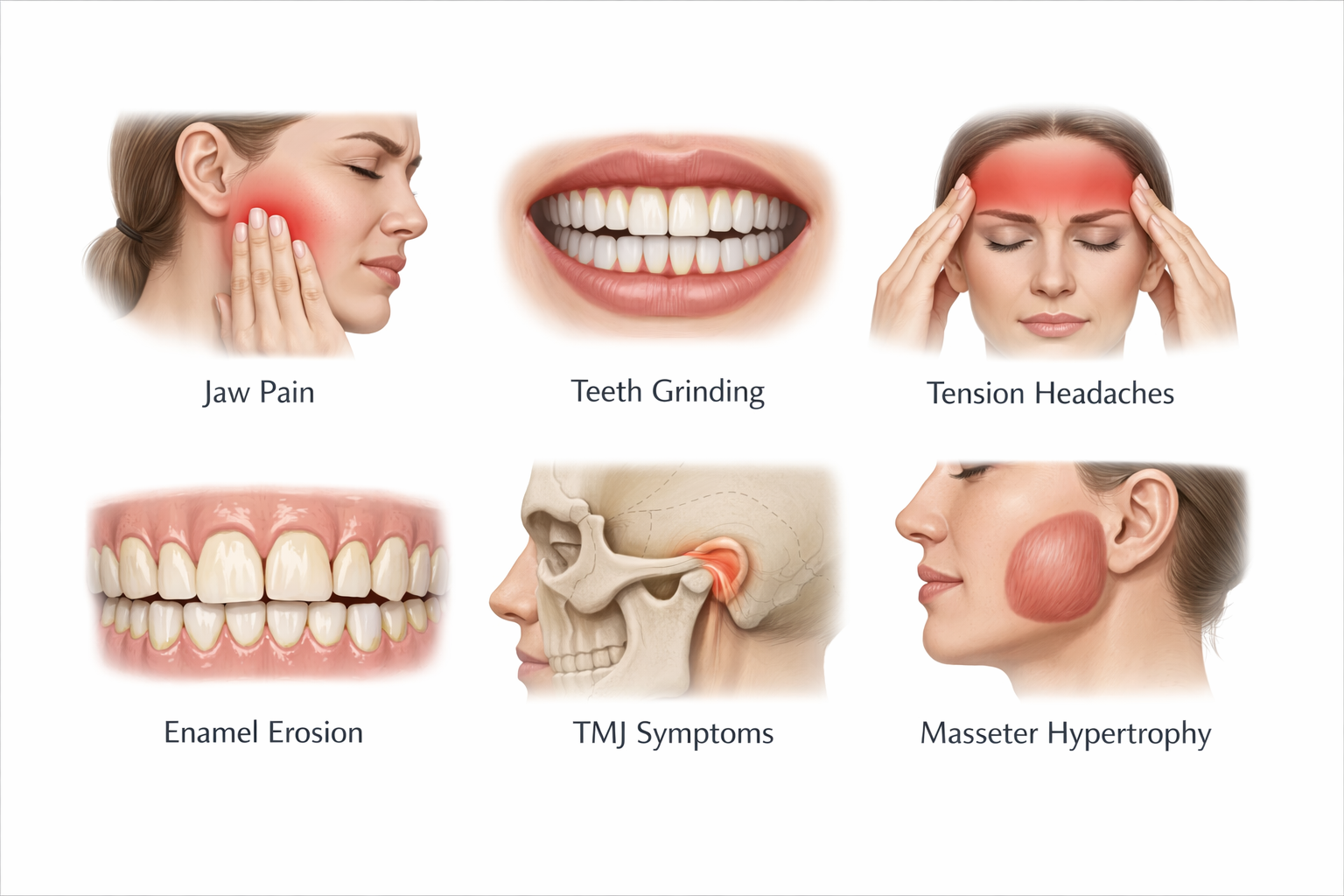
- Jaw pain, soreness, or aching — particularly in the morning after sleep bruxism
- Teeth grinding or jaw clenching confirmed by a dentist or sleep partner
- Tension headaches originating from jaw muscle overactivity
- Enamel erosion, tooth sensitivity, or tooth attrition caused by grinding
- TMJ dysfunction symptoms such as clicking, locking, or limited mouth opening
- Masseter hypertrophy causing discomfort or aesthetic concern
- Inadequate relief from a night guard or splint alone
Suitability depends on individual medical history and a clinical assessment. Masseter Botox is generally considered suitable for healthy adults without contraindications to botulinum toxin.
Who May Not Be Suitable
Masseter Botox is not appropriate for everyone. It is generally contraindicated or requires careful consideration in the following situations:
- Pregnancy or breastfeeding
- Known allergy or hypersensitivity to botulinum toxin or any product components
- Neuromuscular conditions such as myasthenia gravis or Lambert-Eaton syndrome
- Active infection at or near the planned injection site
- Certain medications that may interact with botulinum toxin (discuss all current medications with your practitioner)
- Unrealistic expectations about the degree of aesthetic or therapeutic change achievable
A thorough consultation is the appropriate setting to discuss personal medical history and determine whether treatment is suitable.
Risks and Side Effects
Masseter Botox has a generally low complication rate when performed by a qualified injector with sound knowledge of facial anatomy. However, no injectable treatment is without risk, and patients should be aware of the following possible side effects:
- Temporary difficulty chewing hard or chewy foods: Reduced masseter strength is expected. Most patients adapt within days, and normal chewing function returns as effects wear off.
- Mild injection-site discomfort, redness, or bruising: These are common and typically short-lived.
- Transient facial asymmetry: If the two sides respond differently to treatment, temporary asymmetry may occur. This usually resolves with the next treatment cycle.
- Inadvertent spread to adjacent muscles: If botulinum toxin spreads beyond the intended injection zone, it may temporarily affect nearby structures. This risk is minimised by precise injection technique.
- Paradoxical muscle weakness: Very rarely, patients report difficulty with specific jaw movements. This resolves as the treatment wears off.
Choosing a practitioner with specific training in facial anatomy and injectables is the single most important factor in minimising risk and achieving a predictable outcome. Always ask about the practitioner’s qualifications, experience with masseter injections specifically, and what to do if you experience unexpected effects after treatment.
What Happens If You Stop Treatment?
If repeat treatments are not continued, the effects of masseter Botox wear off gradually as the neurotoxin is metabolised — typically over three to six months. The masseter muscle will return to its previous level of activity, and any reduction in muscle size will reverse over time. Bruxism symptoms — jaw pain, grinding, tension headaches — are likely to return to their pre-treatment level once the botulinum toxin has fully cleared.
This is an important point for managing expectations. Masseter Botox provides a temporary reduction in muscular activity; it does not reprogramme the underlying tendency to grind or clench. Some patients find that with consistent treatment over a period of years, their bruxism symptoms are easier to manage, possibly because the muscle has undergone partial long-term atrophy — but this is not guaranteed, and the evidence on long-term muscle changes is still developing. Ongoing management of lifestyle triggers, stress, and sleep quality remains relevant regardless of whether Botox treatment is continued.
Frequently Asked Questions
Is masseter Botox FDA-approved for teeth grinding?
Botulinum toxin products such as Botox are FDA-approved for various medical and cosmetic uses, but their use in the masseter for bruxism is currently considered an off-label treatment. Off-label use of approved medicines is a normal and legal clinical practice when supported by evidence and carried out by a qualified clinician. The clinical evidence for BoNT-A in bruxism has grown substantially, including multiple systematic reviews published in 2024–2025, though it is not yet a licensed indication in most countries.
Will I still be able to chew normally?
Yes, for the vast majority of patients. Masseter Botox reduces excessive muscle contraction rather than eliminating chewing function. Normal, everyday chewing is preserved. Some patients notice that very hard or tough foods require slightly more effort in the weeks immediately following treatment, but this typically settles quickly and chewing function returns fully as the treatment wears off.
How many units are needed per side?
Dosage varies considerably depending on the size of the masseter, the severity of symptoms, and individual treatment goals. A typical range is 20 to 50 units per side, though your practitioner will assess your anatomy and tailor the dose accordingly. Note that units are not interchangeable between different botulinum toxin brands.
Can I combine masseter Botox with a night guard?
Yes, and for many patients this combination is clinically sensible. An occlusal splint protects the teeth from grinding damage, while masseter Botox addresses the underlying muscle overactivity causing pain, tension, and joint strain. Using both together may offer more comprehensive management than either approach alone, particularly for those with moderate to severe bruxism or established TMJ dysfunction.
How often will I need repeat treatments?
Most patients require repeat treatments every three to six months to maintain the therapeutic and aesthetic effects. With consistent treatment over time, some patients find the muscle responds more readily or that intervals can be extended slightly, but this varies between individuals. Your practitioner will advise on a maintenance schedule based on your response.
Does the treatment hurt?
Most patients describe the injections as mildly uncomfortable rather than painful. A fine needle is used, and the masseter is a large, accessible muscle. A topical anaesthetic can be applied beforehand if preferred, though many people find this unnecessary.
How should I choose a practitioner for masseter Botox?
Look for a qualified injector with documented training in facial anatomy and specific experience performing masseter injections. Relevant credentials vary by country but may include medical doctors, dentists, or registered nurses with postgraduate aesthetic medicine qualifications. Ask about their experience, what products they use, and what follow-up support they offer in case of concerns after treatment.
Is Masseter Botox the Right Approach for Your Jaw Grinding?
Masseter Botox offers a clinically supported, minimally invasive option for people whose jaw clenching and teeth grinding is causing meaningful pain, tooth damage, or quality-of-life disruption. The growing body of evidence — including recent systematic reviews and prospective clinical studies — supports its use for reducing jaw pain, bite force, and bruxism frequency, and many patients report significant relief from symptoms that a night guard alone had not adequately addressed.
At the same time, it is not a permanent solution or a standalone cure. Results require maintenance, bruxism may return when treatment stops, and the treatment is most effective as part of a broader management approach that considers lifestyle, stress, sleep quality, and dental protection. The aesthetic benefit — a slimmer, more contoured jawline — is a genuine secondary outcome for suitable patients, though the degree of change depends on individual anatomy.
If jaw pain, nocturnal bruxism, or masseter hypertrophy is affecting your daily life, a consultation with a qualified practitioner experienced in facial injectables is a useful starting point. They can assess your anatomy, discuss your symptoms, and help determine whether masseter Botox — alone or in combination with other approaches — is appropriate for your situation.
