
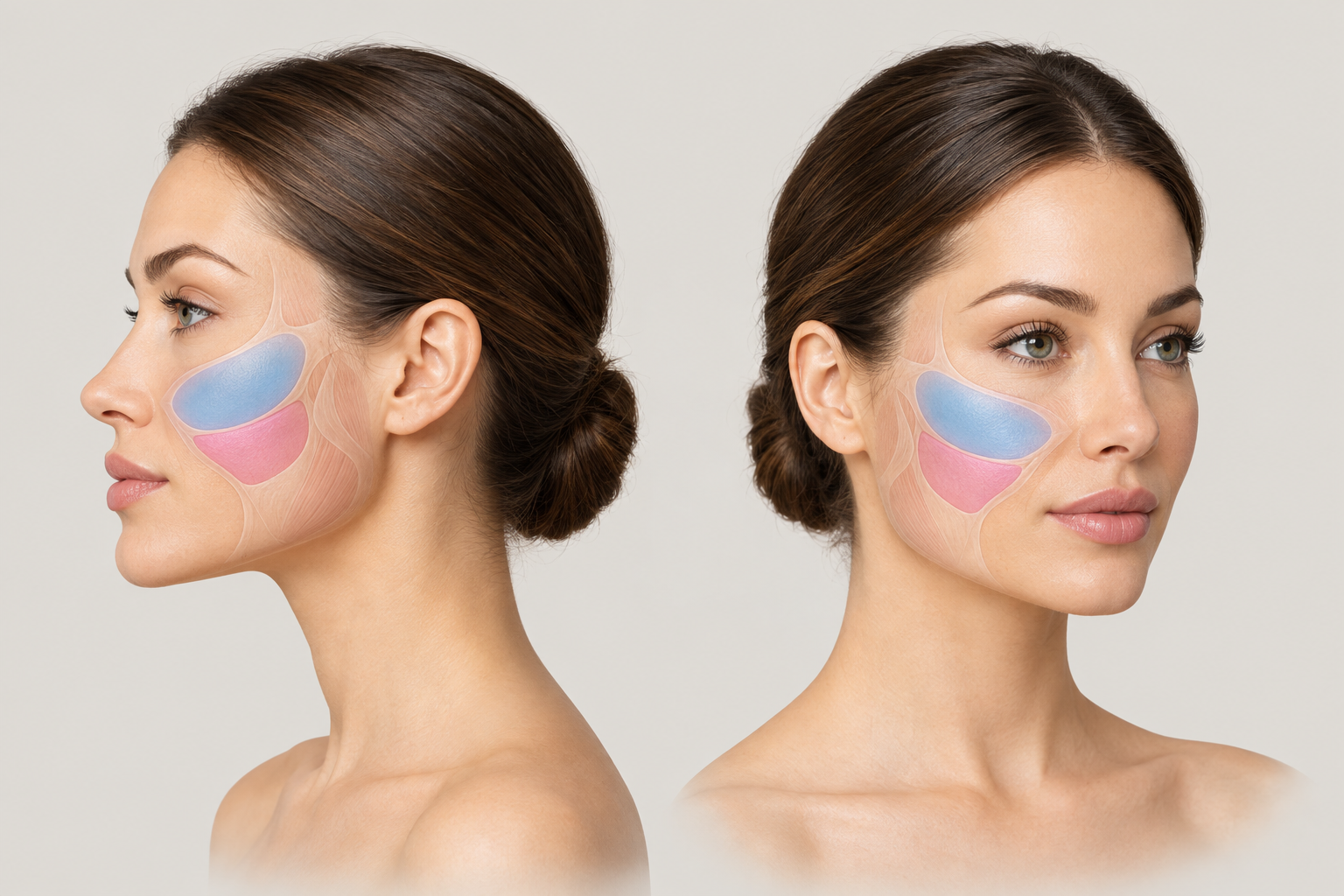

Cheek filler is one of the most commonly requested dermal filler treatments, used to restore volume, improve facial contour, and soften the appearance of mid-face hollowing. A question that almost every patient asks before booking is how long the results will actually last. The honest answer is that cheek filler longevity varies considerably from person to person, but understanding the factors involved can help you set realistic expectations and plan your treatment accordingly.
Key Takeaways
- Cheek filler results typically last between 12 and 24 months, though individual variation is significant and some patients see results fade sooner or later than this range.
- The type of filler product, the volume injected, your metabolism, lifestyle, and the injection technique used all influence how long results last.
- Hyaluronic acid fillers — the most widely used type for cheek augmentation — are temporary and can be partially or fully dissolved with hyaluronidase if needed.
- Maintenance top-up treatments are usually required to sustain results over time, and the interval between sessions varies by individual.
- A thorough consultation with a qualified practitioner is essential to assess suitability, discuss realistic outcomes, and choose the most appropriate product for your anatomy and goals.
What Is Cheek Filler and How Does It Work?
Cheek filler refers to injectable dermal filler placed in or around the mid-face region — including the cheekbones, the malar area, and the submalar hollow — to add volume, lift, and definition. The vast majority of cheek filler treatments use hyaluronic acid (HA) as the active ingredient. Hyaluronic acid is a naturally occurring substance found in skin and connective tissue, and when formulated as a gel and injected, it physically occupies space beneath the skin to create a volumising effect.
Different HA filler products are formulated with varying degrees of cross-linking, which affects their thickness, lifting capacity, and how long they remain in the tissue. Thicker, more cohesive gels are generally preferred for the cheek area because they provide structural support and resist compression. Some practitioners also use calcium hydroxylapatite (CaHA) fillers for cheek augmentation; these work partly through volume replacement and partly by stimulating the body's own collagen production over time. Poly-L-lactic acid (PLLA) is another biostimulatory option occasionally used in the mid-face, though it works differently from HA fillers and requires a series of sessions rather than a single treatment.
Understanding which type of filler has been used matters when thinking about longevity, because each category behaves differently in the tissue and degrades at a different rate.
How Long Does Cheek Filler Typically Last?
For hyaluronic acid cheek fillers, most patients can expect results to last somewhere between 12 and 18 months, with some individuals maintaining visible improvement for up to 24 months. This range reflects genuine clinical variability rather than a marketing estimate. The cheek area tends to support longer filler longevity than more mobile areas such as the lips, because the mid-face experiences less repetitive movement that would accelerate product breakdown.

Calcium hydroxylapatite fillers used in the cheeks may last a similar duration or slightly longer in some patients, partly because the collagen-stimulating effect continues after the carrier gel has degraded. Poly-L-lactic acid treatments in the mid-face are designed to build gradual volume over several months and may produce effects that persist for two years or more in some cases, though results depend heavily on the treatment protocol and individual response.
It is worth noting that filler does not disappear suddenly on a fixed date. Volume tends to reduce gradually as the product is metabolised, so many patients notice a slow softening of results rather than an abrupt change. This gradual fading means that the timing of a top-up appointment is often a matter of personal preference as much as clinical necessity.
Factors That Affect How Long Cheek Filler Lasts
Several interconnected factors influence cheek filler longevity, and no two patients will have exactly the same experience. Being aware of these variables helps explain why a friend's results may differ significantly from your own.

Filler Product and Formulation
Not all hyaluronic acid fillers are equivalent. Products designed specifically for volumising the mid-face tend to use a higher concentration of HA and a denser cross-linked structure, which generally supports longer duration compared with softer fillers intended for superficial lines. The specific brand and product line chosen by your practitioner — based on your anatomy and goals — will influence how long the result holds.
Volume of Filler Injected
A larger volume of filler placed in the cheek area may produce results that remain visible for longer, simply because there is more product present before the gradual degradation becomes noticeable. However, the appropriate volume is determined by your anatomy and the aesthetic goal, not by a desire to extend longevity. Overfilling carries its own risks, including an unnatural appearance and increased pressure on surrounding tissue.
Individual Metabolism
People with a faster metabolic rate tend to break down hyaluronic acid filler more quickly. This is one reason why some patients find their results last only 9 to 12 months while others maintain volume for closer to two years using the same product. Metabolic rate is largely outside your control, but it is a useful piece of information to share with your practitioner when planning a maintenance schedule.
Lifestyle and Physical Activity
High levels of physical activity, particularly intense cardiovascular exercise, may accelerate filler metabolism. Increased circulation and metabolic demand appear to contribute to faster breakdown of hyaluronic acid in some patients. Sun exposure and UV damage can also degrade the skin environment over time, potentially affecting how well filler integrates and how long it remains visible. Smoking is associated with accelerated skin ageing and may similarly affect filler longevity.
Injection Technique and Placement
The depth of injection, the distribution of product, and the specific anatomical landmarks targeted all influence how long cheek filler lasts and how natural the result appears. Filler placed at the correct depth within the tissue — typically in the deep fat compartments or on the periosteum in the cheek region — tends to integrate well and maintain its position. Superficially placed filler may migrate or degrade more quickly. Practitioner experience and anatomical knowledge are therefore directly relevant to the longevity and safety of the result.
Age and Skin Quality
As skin ages, it loses collagen, elastin, and natural hyaluronic acid. Patients with significant volume loss or skin laxity may find that filler results appear to fade more quickly, partly because the surrounding tissue provides less structural support. Conversely, younger patients with good skin quality and mild volume loss may find that a smaller amount of filler produces a result that lasts well.
What Happens During a Cheek Filler Appointment?
A cheek filler appointment typically begins with a consultation or review of your medical history, skin assessment, and a discussion of your aesthetic goals. Your practitioner will assess your facial anatomy, including bone structure, fat distribution, and skin quality, to determine the most appropriate product, volume, and injection points for your individual face.
The skin is usually cleaned and a topical anaesthetic cream may be applied to reduce discomfort. Most HA filler products used in the cheeks also contain lidocaine, a local anaesthetic, within the formulation, which helps manage discomfort during injection. The injections themselves are typically administered using either a fine needle or a blunt-tipped cannula, depending on the practitioner's technique and the specific area being treated. A cannula approach may reduce bruising risk in some cases.
The appointment usually takes between 30 and 60 minutes in total, including preparation and aftercare discussion. Some swelling and redness immediately after treatment is normal. Your practitioner should provide clear aftercare instructions, including advice on avoiding strenuous exercise, excessive heat, and pressure on the treated area for a short period after treatment.
When Will You See Results and How Long Do They Take to Settle?
Cheek filler results are often visible immediately after treatment, though the initial appearance may be affected by swelling. Most patients find that swelling reduces significantly within the first 48 to 72 hours, and the final result becomes clearer over the following one to two weeks as the filler integrates with the surrounding tissue and any residual swelling resolves. Bruising, if it occurs, typically fades within one to two weeks.
It is advisable to assess the final result at a review appointment approximately two to four weeks after treatment, rather than immediately after the procedure. This allows time for settling and gives both the patient and practitioner an accurate picture of the outcome before deciding whether any refinement is needed.
Risks and Side Effects of Cheek Filler
Cheek filler is a medical procedure and carries risks that should be understood before treatment. Common side effects include temporary swelling, bruising, redness, and tenderness at the injection sites. These typically resolve within one to two weeks without intervention.
Less common but more serious complications include infection, nodule formation, filler migration, and asymmetry. The most serious risk associated with any dermal filler treatment is vascular occlusion — where filler inadvertently enters or compresses a blood vessel, potentially restricting blood supply to surrounding tissue. In the mid-face region, this risk requires careful anatomical knowledge and technique on the part of the practitioner. Vascular occlusion is rare but can have significant consequences if not recognised and treated promptly. Choosing a qualified, experienced practitioner who is trained to recognise and manage complications is an important safety consideration.
Delayed-onset nodules and inflammatory reactions, though uncommon, can occur weeks or months after treatment. Hyaluronic acid fillers have the advantage of being dissolvable with hyaluronidase, an enzyme that breaks down HA, which provides a management option if complications arise or if the patient is unhappy with the result.
Who May Be Suitable for Cheek Filler?
Cheek filler may be appropriate for adults who have experienced mid-face volume loss, wish to improve cheekbone definition, or want to address hollowing beneath the cheekbones. It may also be considered as part of a broader facial rejuvenation approach. Suitability depends on a clinical assessment of your anatomy, skin quality, medical history, and aesthetic goals.
Cheek filler is generally not recommended during pregnancy or breastfeeding. It may not be suitable for individuals with active skin infections, certain autoimmune conditions, bleeding disorders, or a history of severe allergic reactions. Patients taking blood-thinning medications may have an increased risk of bruising. A thorough medical history review at consultation is essential to identify any factors that may affect suitability or increase risk.
Who May Not Be Suitable
Certain individuals may not be good candidates for cheek filler, or may need to delay treatment. This includes people with active acne, cold sores, or skin infections in the treatment area, as well as those with a history of keloid scarring or significant immune system conditions. Patients who have recently had facial surgery or other injectable treatments in the same area may need to wait before proceeding. Anyone with unrealistic expectations about what filler can achieve — for example, expecting results equivalent to surgical cheek implants — may benefit from a more detailed discussion about alternatives before proceeding.
Maintaining Cheek Filler Results Over Time
Because cheek filler is temporary, maintaining results requires periodic top-up treatments. The interval between maintenance sessions varies by individual, but many patients return every 12 to 18 months. Some practitioners suggest that patients who receive regular top-up treatments before the filler has fully degraded may require smaller volumes over time, as residual product from previous treatments may still be present in the tissue. However, this is not universally agreed upon and depends on the specific product used and individual metabolism.
It is also worth considering that facial anatomy changes over time with natural ageing. A maintenance plan that worked well at age 35 may need to be reassessed at age 45, as volume loss patterns, skin laxity, and bone remodelling evolve. Regular reviews with a qualified practitioner allow the treatment approach to be adjusted appropriately rather than simply repeating the same protocol indefinitely.
Alternatives to Cheek Filler
Cheek filler is not the only option for addressing mid-face volume loss or improving cheek definition. Understanding the alternatives helps patients make a more informed decision about which approach may best suit their goals.
- Surgical cheek implants: Provide permanent structural augmentation of the cheekbones. Results are long-lasting but involve surgical risks, recovery time, and a fixed outcome that cannot be easily adjusted.
- Fat transfer (lipofilling): Uses the patient's own fat, harvested from another area of the body, to restore volume in the mid-face. Results can be long-lasting, though some of the transferred fat is reabsorbed over time. This is a surgical procedure with associated recovery.
- Poly-L-lactic acid (PLLA) biostimulators: Stimulate collagen production gradually over several months. May suit patients who prefer a more gradual, natural-looking improvement and are comfortable with a multi-session protocol.
- Calcium hydroxylapatite (CaHA) fillers: An alternative injectable option that provides both immediate volume and longer-term collagen stimulation. Duration may be comparable to or slightly longer than HA fillers in some patients.
- Ultrasound or radiofrequency skin tightening: Non-injectable treatments that may improve skin laxity and mild volume loss through tissue tightening and collagen stimulation. Results are generally more subtle than filler and may suit patients with early-stage concerns rather than significant volume loss.
- Thread lifts: Absorbable threads inserted beneath the skin to provide a lifting effect in the mid-face. Results are temporary and the evidence base is still developing; suitability depends on anatomy and degree of laxity.
Each alternative has its own profile of benefits, limitations, risks, and longevity. A qualified practitioner can help you assess which option — or combination of options — may be most appropriate for your specific concerns and anatomy.
Frequently Asked Questions
Can cheek filler last longer than two years?
In some patients, particularly those with a slower metabolism or who have received biostimulatory fillers such as calcium hydroxylapatite or poly-L-lactic acid, results may persist beyond two years. However, this is not the norm for standard hyaluronic acid cheek fillers, and most patients will notice gradual fading within 12 to 18 months. Imaging studies have shown that small amounts of HA filler can sometimes be detected in tissue beyond the expected duration, but this does not necessarily mean the aesthetic result remains visible for that long.
Does cheek filler dissolve on its own?
Yes. Hyaluronic acid filler is gradually broken down by the body's own hyaluronidase enzymes over time. This natural degradation process is what makes HA fillers temporary. If you wish to accelerate this process — for example, if you are unhappy with the result or experience a complication — a practitioner can inject medical-grade hyaluronidase to dissolve the filler more quickly.
Will my face look worse after cheek filler wears off?
When cheek filler degrades naturally, the face generally returns to its pre-treatment appearance rather than looking worse than before. There is no reliable clinical evidence that temporary HA filler causes permanent structural changes that worsen the face's natural appearance after it dissolves. However, if you have become accustomed to the added volume, the return to baseline may feel noticeable by comparison.
Does exercise affect how long cheek filler lasts?
High-intensity exercise may accelerate filler metabolism in some individuals due to increased circulation and metabolic activity. This does not mean you need to avoid exercise after cheek filler, but it may be a contributing factor if you find your results fade more quickly than expected. Discussing your activity level with your practitioner can help set realistic expectations.
How soon after cheek filler can I have a top-up?
Most practitioners recommend waiting at least two to four weeks after the initial treatment before assessing whether a top-up is needed. This allows swelling to fully resolve and gives an accurate picture of the final result. Top-up treatments to maintain volume over the longer term are typically planned at 12 to 18 month intervals, though this varies by individual.
Is cheek filler painful?
Most patients describe cheek filler as mildly uncomfortable rather than significantly painful. Topical anaesthetic cream applied before treatment, combined with the lidocaine contained within most filler formulations, helps manage discomfort during the procedure. Individual pain tolerance varies, and some injection points may be more sensitive than others.
Planning Cheek Filler: What to Discuss at Your Consultation
Before proceeding with cheek filler, a thorough consultation with a qualified and experienced practitioner is the most important step. During this appointment, you should feel comfortable asking about the practitioner's qualifications and experience with mid-face filler, the specific product they recommend and why, the volume they propose, realistic expectations for your anatomy, the likely longevity of results in your case, and their approach to managing complications if they arise.
You should also disclose your full medical history, including any medications, supplements, previous facial treatments, and any history of cold sores or autoimmune conditions. This information helps your practitioner assess suitability and minimise risk. A practitioner who takes time to understand your goals, explains the limitations honestly, and does not pressure you into treatment is a positive indicator of a responsible approach to patient care.
Cheek filler can be a well-tolerated and effective option for mid-face volume restoration when performed by a skilled practitioner using an appropriate product for your anatomy. Understanding the realistic duration of results — and the factors that influence it — allows you to plan treatment with clear expectations rather than assumptions.
