


Testosterone replacement therapy (TRT) does not produce overnight results. Most men starting TRT notice the first changes within a few weeks, but meaningful improvements in energy, body composition, sexual function, and mood typically develop over several months. Understanding this timeline helps set realistic expectations and supports better conversations with a prescribing clinician.
Key Takeaways
- Different symptoms respond to TRT at different rates — libido and energy may improve within weeks, while changes to muscle mass and bone density take months to years.
- The speed and extent of improvement depend on baseline testosterone levels, the delivery method used, dosing, age, and individual physiology.
- TRT carries real risks and is not appropriate for everyone; a thorough clinical assessment, including blood tests, is required before starting.
- Regular monitoring of testosterone levels, haematocrit, and other markers is essential throughout treatment.
- Results vary considerably between individuals, and some symptoms may not fully resolve even with optimised therapy.
What Is Testosterone Replacement Therapy?
Testosterone replacement therapy is a medically supervised treatment designed to restore testosterone to a physiologically normal range in men whose bodies produce insufficient amounts of the hormone. Low testosterone — clinically referred to as hypogonadism — can result from primary testicular failure, problems with the pituitary gland or hypothalamus (secondary hypogonadism), or age-related decline. Symptoms associated with low testosterone include fatigue, reduced libido, erectile dysfunction, low mood, difficulty concentrating, reduced muscle mass, increased body fat, and decreased bone density.
TRT is available in several delivery forms, including intramuscular or subcutaneous injections, transdermal gels and patches, subcutaneous pellets, and oral or buccal preparations. Each method produces a different absorption profile and hormone fluctuation pattern, which can influence both the onset of effects and the consistency of symptom relief. The choice of delivery method is made in consultation with a clinician based on individual circumstances, preference, and clinical suitability.
How Does TRT Work in the Body?
Testosterone is an androgen hormone that acts on receptors throughout the body, influencing muscle protein synthesis, red blood cell production, bone mineralisation, fat distribution, mood regulation, and sexual function. When endogenous (naturally produced) testosterone is insufficient, supplementing it through TRT restores circulating levels and allows these physiological processes to function more normally.
The time it takes for TRT to produce noticeable effects depends partly on how quickly testosterone levels rise after starting treatment, and partly on how long each target tissue takes to respond. Some tissues — such as those involved in libido and mood — respond relatively quickly to hormonal changes. Others, such as bone and muscle, require sustained hormonal exposure over months before measurable structural changes occur. This explains why TRT produces a staggered timeline of improvements rather than a single moment of effect.
TRT Timeline: When to Expect Each Change
The following timeline reflects general patterns reported in clinical literature and practice. Individual responses vary, and not every person will experience every benefit listed. The timeline assumes that testosterone levels are successfully brought into a therapeutic range and that the underlying cause of symptoms is genuinely related to low testosterone.
Weeks 1–3: Early Hormonal Adjustment
In the first one to three weeks after starting TRT, testosterone levels begin to rise, but most men notice little obvious change. Some individuals report a modest early improvement in energy or a slight lift in mood, though this is not universal. The body is adjusting to the new hormonal environment, and receptor sensitivity may take time to recalibrate. Men using injectable testosterone may notice fluctuations in how they feel depending on where they are in their injection cycle, as levels peak shortly after injection and then gradually decline before the next dose.
Weeks 3–6: Libido and Sexual Function
Sexual desire is often one of the first symptoms to respond to testosterone replacement. Many men report a noticeable improvement in libido within three to six weeks of starting therapy. Erectile function may also begin to improve during this period, though the relationship between testosterone and erections is complex — erectile dysfunction has multiple contributing causes, and TRT alone may not fully resolve it if vascular or psychological factors are also involved. Morning erections, which are a useful clinical indicator of testosterone activity, may return or become more frequent during this phase.
Weeks 3–12: Energy, Mood, and Cognitive Function
Fatigue and low energy are among the most commonly reported symptoms of low testosterone, and these often begin to improve within the first one to three months of treatment. Mood stability, motivation, and a general sense of wellbeing may also improve during this period. Some men describe a reduction in irritability and an improvement in mental clarity. However, mood is influenced by many factors beyond testosterone, and TRT should not be viewed as a treatment for clinical depression or anxiety in the absence of confirmed hypogonadism.
Months 3–6: Body Composition Changes
Changes to muscle mass and body fat distribution take longer to become apparent. Testosterone promotes muscle protein synthesis and reduces fat accumulation, particularly visceral fat around the abdomen. However, these changes require consistent hormonal exposure combined with appropriate physical activity and nutrition. Most men begin to notice modest improvements in body composition — slightly increased lean mass and reduced fat — between three and six months into therapy. These changes are gradual and are unlikely to be dramatic without accompanying lifestyle effort.
Months 6–12: Continued Improvement and Stabilisation
By six months, many of the symptomatic benefits of TRT should be more firmly established. Energy levels, libido, mood, and body composition may all show meaningful improvement compared to baseline. Haematocrit (the proportion of red blood cells in the blood) typically rises during this period, which is one reason regular blood monitoring is essential. Some men find that their optimal dose requires adjustment during this phase as their clinician reviews blood test results and symptom response.
Beyond 12 Months: Bone Density and Long-Term Effects
Bone mineral density is one of the slowest outcomes to respond to testosterone replacement. Studies suggest that measurable improvements in bone density may take one to two years or longer to become apparent on imaging. This is clinically significant because low testosterone is associated with increased fracture risk, and TRT may help reduce this risk over time — though the evidence on fracture outcomes specifically remains an area of ongoing research. Long-term TRT also requires ongoing monitoring for cardiovascular markers, prostate health, and haematological changes.
Factors That Influence How Quickly TRT Works
Several variables affect both the speed and the extent of improvement on testosterone replacement therapy. Understanding these factors helps explain why two men starting TRT at the same time may have noticeably different experiences.
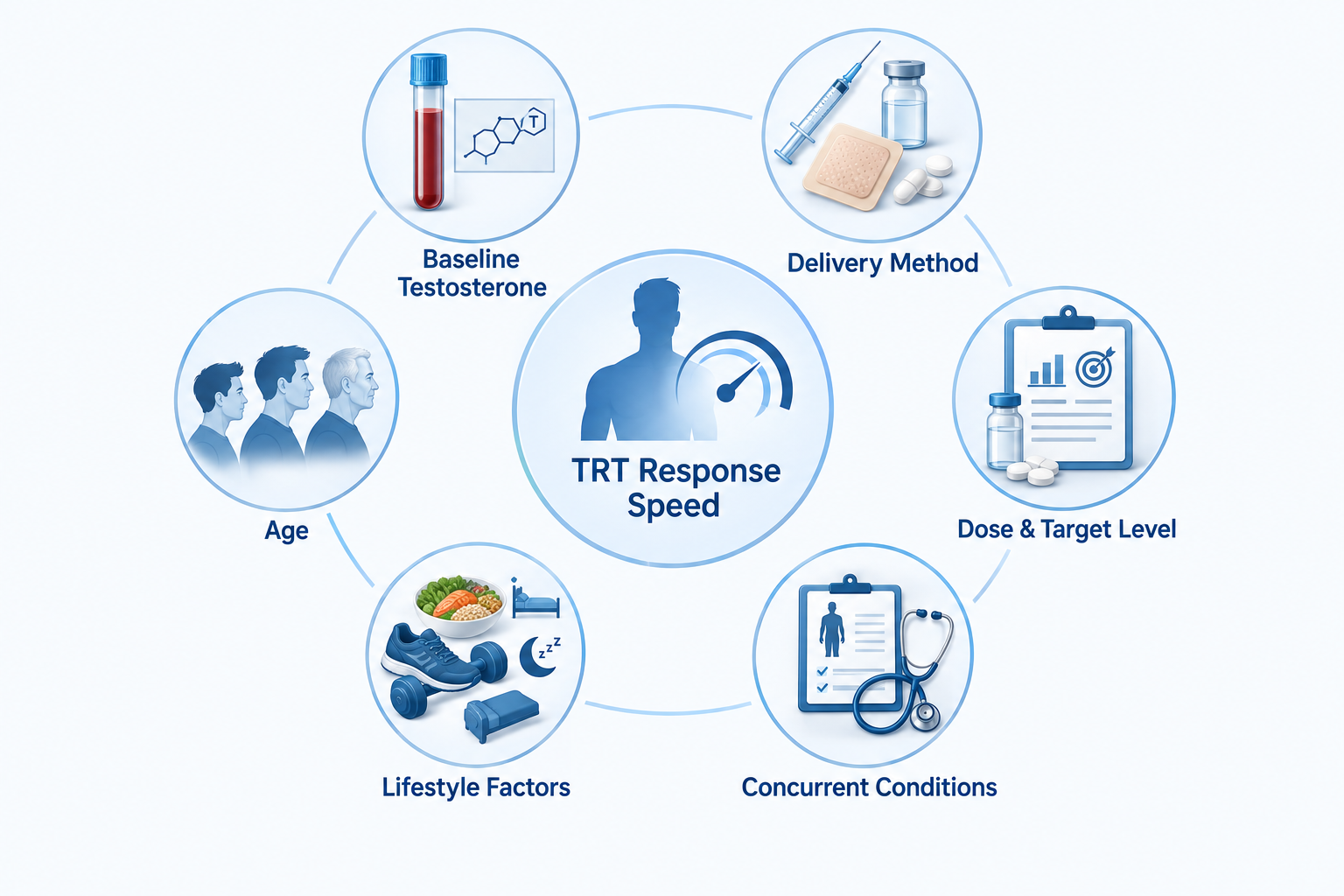
- Baseline testosterone level: Men with very low starting levels may notice more pronounced early improvements than those with borderline-low levels, simply because the hormonal deficit being corrected is larger.
- Delivery method: Injections produce higher peak levels and more pronounced fluctuations than gels or patches, which provide steadier daily absorption. Pellets, implanted subcutaneously, release testosterone slowly over several months. The delivery method affects both the consistency of symptom relief and the pattern of side effects.
- Dose and target level: Achieving a testosterone level within the therapeutic range — rather than simply above the lower limit of normal — is important for symptom resolution. Under-dosing may produce partial improvement only.
- Age: Older men may respond more slowly to some aspects of TRT, particularly body composition changes, partly because of age-related changes in muscle physiology and other hormonal factors.
- Underlying cause of hypogonadism: Primary hypogonadism (testicular failure) and secondary hypogonadism (pituitary or hypothalamic dysfunction) may respond differently to treatment.
- Lifestyle factors: Physical activity, nutrition, sleep quality, and alcohol consumption all influence how effectively the body responds to restored testosterone levels.
- Concurrent health conditions: Obesity, type 2 diabetes, thyroid dysfunction, and other conditions can blunt the response to TRT or contribute independently to symptoms such as fatigue and low libido.
TRT Delivery Methods and Their Effect on Onset
The method used to administer testosterone influences how quickly levels rise and how stable they remain over time. Intramuscular injections — typically administered every one to two weeks, or more frequently with shorter-acting preparations — produce a rapid rise in testosterone followed by a gradual decline. Some men find this fluctuation pattern leads to variable symptom control, feeling better shortly after injection and less well toward the end of the cycle. Subcutaneous injections of smaller, more frequent doses can produce a more stable profile.

Transdermal testosterone gels, applied daily to the skin, produce relatively stable levels and are generally well tolerated, though absorption can vary between individuals and there is a risk of inadvertent transfer to partners or children through skin contact. Testosterone patches work similarly but may cause local skin reactions. Subcutaneous pellets, inserted under the skin of the buttock or flank, release testosterone steadily over three to six months and eliminate the need for daily or weekly administration, though the insertion procedure carries a small risk of infection or pellet extrusion. Oral testosterone preparations are available in some countries and have improved in recent years, though they are less commonly used than injectable or transdermal options.
Risks, Side Effects, and Monitoring
TRT is not without risks, and these must be weighed carefully against the potential benefits during the clinical assessment process. Common side effects include acne, oily skin, fluid retention, and testicular atrophy (shrinkage of the testes due to suppression of natural testosterone production). Elevated haematocrit — an increase in red blood cell concentration — is a significant concern because it raises blood viscosity and may increase the risk of blood clots. Regular blood tests to monitor haematocrit, testosterone levels, and other markers are a standard part of responsible TRT management.
TRT suppresses the body’s own production of testosterone and, in men who wish to preserve fertility, this is an important consideration. Sperm production typically decreases significantly during TRT, and this effect may not fully reverse after stopping treatment, particularly after prolonged use. Men concerned about fertility should discuss this with their clinician before starting therapy, as alternative approaches — such as human chorionic gonadotropin (hCG) — may be considered in some cases.
The relationship between TRT and cardiovascular risk has been the subject of considerable research and debate. Earlier studies raised concerns about increased cardiovascular events, while more recent large-scale trials have provided more reassuring data in appropriately selected patients. However, TRT is generally used with caution in men with a history of recent cardiovascular events, and individual risk assessment is essential. The relationship between TRT and prostate health is also monitored carefully; TRT is contraindicated in men with known or suspected prostate cancer.
Other potential side effects include sleep apnoea worsening, breast tissue enlargement (gynaecomastia) due to conversion of testosterone to oestrogen, and mood changes. Monitoring oestradiol levels alongside testosterone can help identify and manage oestrogen-related side effects.
Who May Be Suitable for TRT
TRT is generally considered for men who have both confirmed low testosterone on blood testing and symptoms consistent with hypogonadism. A single low testosterone reading is usually insufficient for diagnosis; levels should be confirmed on at least two separate morning measurements, as testosterone follows a diurnal pattern and is highest in the morning. A thorough clinical assessment should also explore other potential causes of symptoms before attributing them to low testosterone alone.
Men who may be suitable for TRT include those with primary or secondary hypogonadism confirmed by blood tests, those whose symptoms are meaningfully affecting quality of life, and those without contraindications to treatment. Suitability depends on a full medical history, including cardiovascular health, prostate health, haematological status, and fertility intentions.
Who May Not Be Suitable for TRT
TRT is not appropriate for all men with low testosterone readings or symptoms that might suggest hormonal deficiency. Contraindications and situations requiring careful consideration include:
- Known or suspected prostate cancer or breast cancer
- Elevated prostate-specific antigen (PSA) without adequate urological evaluation
- Desire to preserve fertility in the near term
- Severe untreated obstructive sleep apnoea
- Polycythaemia (already elevated red blood cell count)
- Recent cardiovascular events such as heart attack or stroke
- Uncontrolled heart failure
- Men with testosterone levels in the normal range who are experiencing symptoms attributable to other causes
TRT is not a treatment for age-related testosterone decline in men whose levels remain within the normal reference range, and it is not appropriate as a general anti-ageing or performance-enhancement intervention outside of a clinical context.
Alternatives and Complementary Approaches
For men with borderline-low testosterone or symptoms that may have multiple contributing causes, lifestyle modification is an important first step. Weight loss in overweight men can meaningfully raise testosterone levels, as adipose tissue converts testosterone to oestrogen and excess body fat is associated with lower circulating testosterone. Resistance exercise, improved sleep, reduced alcohol consumption, and stress management may all contribute to modest improvements in testosterone and symptom burden.
For men with secondary hypogonadism — where the problem lies in the signalling from the brain to the testes rather than in the testes themselves — medications such as clomiphene citrate or hCG may stimulate the body’s own testosterone production. These approaches may be preferred in younger men or those wishing to preserve fertility, though they are not universally available or appropriate and require specialist assessment.
Some men explore supplements marketed as testosterone boosters, but the evidence supporting these products is generally weak, and they are not a substitute for medically supervised TRT in men with confirmed hypogonadism.
Frequently Asked Questions
How long does it take to feel the effects of TRT?
The first noticeable effects — often improved libido or a modest energy lift — may appear within three to six weeks for some men. More substantial changes to mood, body composition, and overall wellbeing typically develop over three to six months. Some benefits, such as improvements in bone density, may take a year or longer to become measurable.
What if TRT doesn’t seem to be working after several months?
If symptoms have not improved meaningfully after three to six months of treatment, the prescribing clinician should review blood test results to confirm that testosterone levels are within the therapeutic range. Under-dosing, poor absorption (particularly with gels), or an incorrect diagnosis may explain a lack of response. It is also possible that some symptoms have causes unrelated to testosterone that TRT cannot address.
Does the delivery method affect how quickly TRT works?
Yes. Injectable testosterone produces a faster initial rise in levels than gels or patches, which may mean some effects are noticed slightly sooner. However, injections also produce more pronounced fluctuations, which some men find affects symptom consistency. The best delivery method depends on individual circumstances and should be discussed with a clinician.
Can TRT improve erectile dysfunction?
TRT may improve erectile function in men whose erectile dysfunction is primarily related to low testosterone. However, erectile dysfunction is often multifactorial, involving vascular, neurological, and psychological components. TRT alone may not fully resolve erectile dysfunction if other contributing factors are present, and additional treatments may be needed.
Is TRT a permanent commitment?
TRT suppresses the body’s own testosterone production, and stopping treatment typically causes levels to fall again. For most men with genuine hypogonadism, TRT is a long-term commitment. Stopping treatment should be done under medical supervision, and levels should be monitored afterward. Some men with secondary hypogonadism may be able to transition to treatments that stimulate natural production.
Does TRT cause weight loss?
TRT is not a weight loss treatment. It may contribute to a gradual reduction in body fat and an increase in lean muscle mass over several months, particularly when combined with exercise and appropriate nutrition. However, these changes are modest and should not be the primary reason for pursuing TRT.
How often are blood tests needed during TRT?
Blood monitoring frequency varies by clinician and protocol, but typically involves testing at baseline, at three months after starting or adjusting treatment, and then every six to twelve months once levels are stable. Tests usually include testosterone, haematocrit, PSA, and liver function, among others.
Making an Informed Decision About TRT
Testosterone replacement therapy can offer meaningful improvements in quality of life for men with confirmed hypogonadism, but it is not a quick fix and it is not suitable for everyone. The timeline for results is gradual — some benefits may emerge within weeks, while others require sustained treatment over months or years. The extent of improvement depends on the severity of the hormonal deficit, the delivery method chosen, individual physiology, and lifestyle factors that support or limit the body’s response.
Before starting TRT, a thorough clinical assessment is essential. This should include at least two morning blood tests confirming low testosterone, a review of symptoms and their impact on daily life, an evaluation of potential contraindications, and a discussion of realistic expectations, risks, and alternatives. Ongoing monitoring is not optional — it is a core part of responsible TRT management that protects patient safety and helps optimise outcomes over time.
If you are experiencing symptoms that may be consistent with low testosterone, the appropriate first step is a consultation with a qualified clinician who can assess your hormone levels, review your overall health, and discuss whether TRT or another approach may be suitable for your individual circumstances.
