

Non-surgical rhinoplasty uses dermal filler injections to temporarily reshape the nose without surgery, and while the procedure itself is relatively quick, the aftercare period plays a meaningful role in how your results look and how safely you recover. Understanding what to expect in the hours, days, and weeks following treatment helps you protect your results, recognise normal side effects, and identify any signs that warrant prompt medical attention.
Key Takeaways
- Swelling, redness, and mild tenderness are normal in the first 24 to 72 hours after non-surgical rhinoplasty and usually resolve without intervention.
- Avoiding pressure on the nose, strenuous exercise, and heat exposure in the first two weeks helps protect filler placement and reduce complication risk.
- Vascular occlusion is a rare but serious complication; knowing the warning signs and having access to emergency aftercare is essential before undergoing treatment.
- Final results typically become visible once swelling has fully settled, which may take two to four weeks depending on the individual.
- A follow-up appointment with your practitioner allows assessment of the outcome and discussion of any concerns before considering maintenance treatment.
What Non-Surgical Rhinoplasty Involves
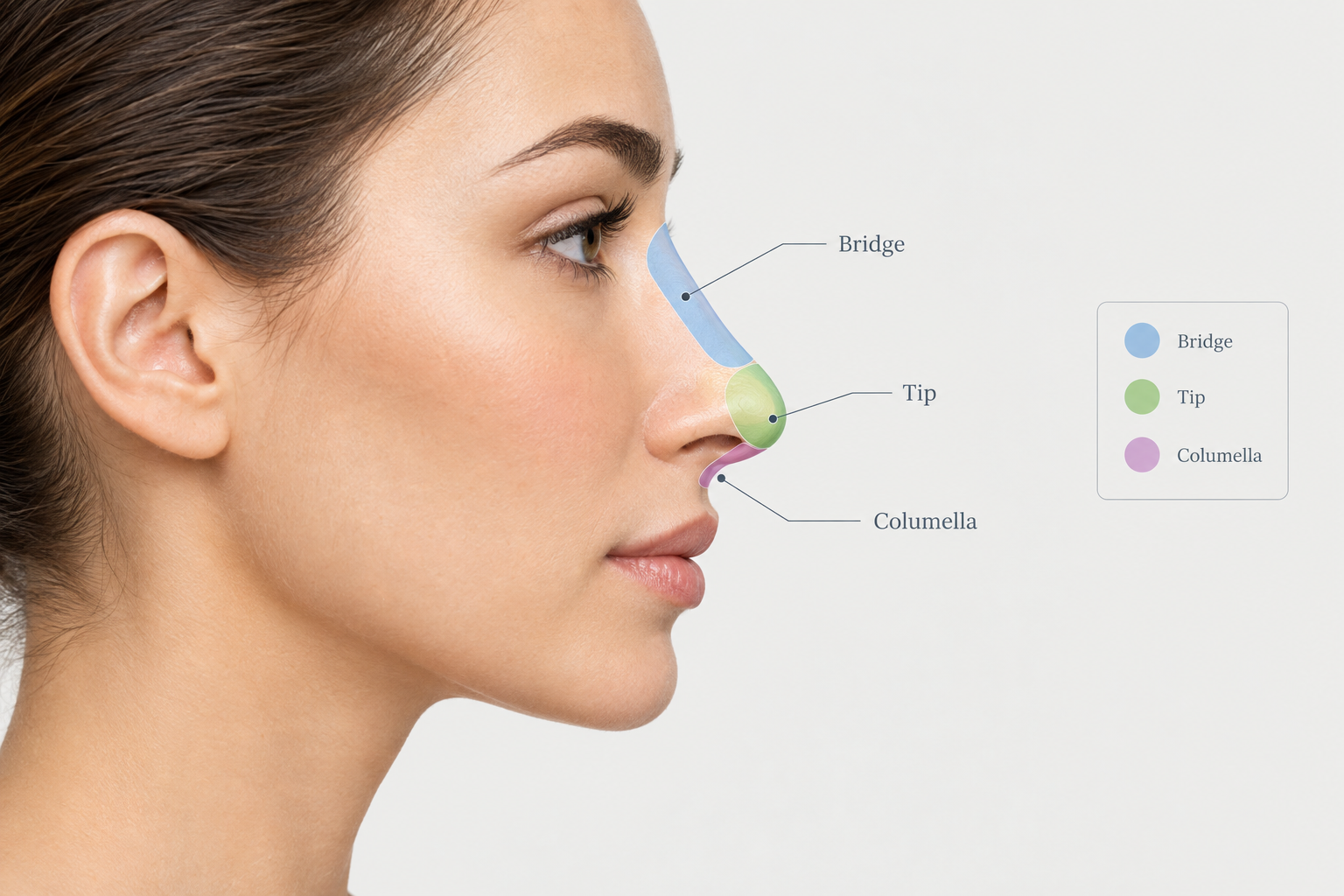
Non-surgical rhinoplasty, sometimes called a liquid nose job or non-surgical nose reshaping, involves the precise injection of hyaluronic acid filler into specific areas of the nose to alter its apparent shape. Practitioners may use filler to smooth a dorsal hump, lift a drooping nasal tip, improve symmetry, or refine the overall profile. The procedure typically takes between 15 and 30 minutes and is performed in a clinical setting using topical anaesthetic cream or a local anaesthetic block to reduce discomfort.
Because the nose has a dense network of blood vessels and relatively little soft tissue in some areas, the anatomy of this treatment zone is more complex than many other filler sites. This anatomical reality is directly relevant to aftercare: the nose requires careful post-treatment management, and any unusual symptoms should be taken seriously rather than dismissed as routine swelling.
What to Expect Immediately After Treatment
In the first hour after non-surgical rhinoplasty, the nose will often appear slightly swollen and may feel tender or firm at the injection sites. Some patients notice mild redness or small raised areas where the filler was deposited. These immediate reactions are a normal response to the injection process and the presence of the filler material, and they do not indicate a problem in most cases.
Bruising is possible, particularly around the nasal tip or along the bridge, and may develop over the first 24 hours rather than appearing immediately. The extent of bruising varies considerably between individuals and depends on factors including skin fragility, any medications or supplements that affect clotting, and the technique used by the practitioner. Arnica-based topical preparations are sometimes recommended to help reduce bruising, though evidence for their effectiveness is limited.
Some patients experience a sensation of pressure or fullness in the nose for the first day or two. This is generally related to swelling rather than the filler volume itself and tends to ease as the initial inflammatory response settles. If discomfort is significant, paracetamol is usually appropriate; aspirin and ibuprofen are generally avoided in the first 24 to 48 hours because of their blood-thinning effects, though you should follow the specific guidance given by your practitioner.
Non-Surgical Rhinoplasty Aftercare: The First 24 Hours
The first 24 hours after non-surgical rhinoplasty are the most important for protecting the filler while it begins to integrate with the surrounding tissue. During this period, the filler is still settling into position and is more susceptible to displacement from external pressure or significant changes in blood flow.
Practical aftercare steps during the first 24 hours typically include the following:
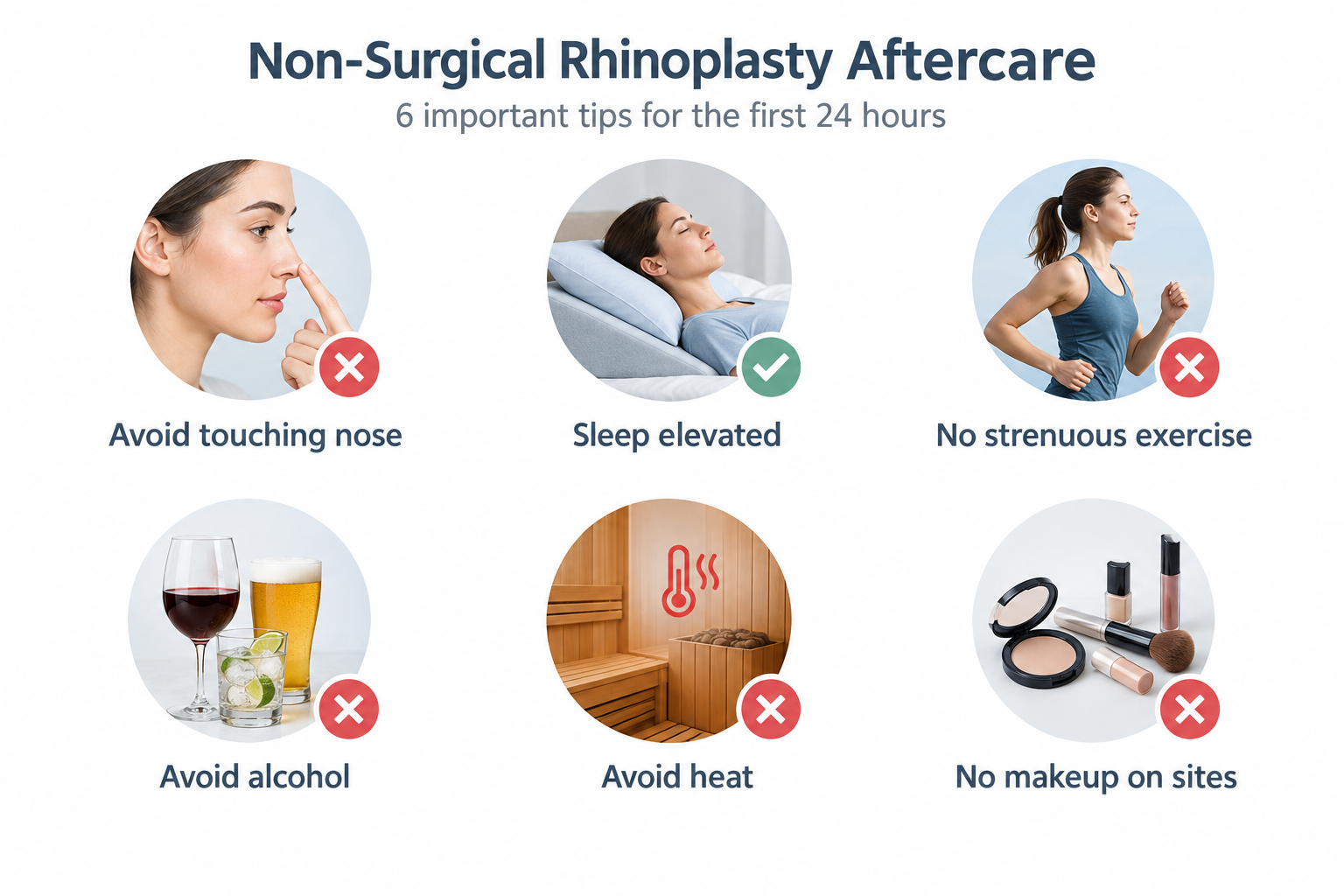
- Avoid touching or pressing the nose. Even gentle pressure can shift filler before it has stabilised. This includes resting glasses on the nose bridge, which should be avoided for at least one to two weeks.
- Sleep on your back with your head slightly elevated. Lying face down or on your side places pressure on the nose and may contribute to filler migration. Elevating the head also helps reduce swelling.
- Avoid strenuous physical activity. Increased heart rate and blood pressure from exercise can worsen swelling and bruising. Most practitioners advise avoiding vigorous exercise for at least 24 to 48 hours, with some recommending a longer pause of up to two weeks.
- Avoid alcohol. Alcohol causes vasodilation, which can increase swelling and bruising and may interact with the inflammatory response at the injection site.
- Avoid heat exposure. Hot showers, saunas, steam rooms, and sunbathing can increase blood flow to the face and worsen swelling. Cool or lukewarm water is preferable for washing the face in the first 24 to 48 hours.
- Do not apply makeup directly to the injection sites until any puncture marks have closed, typically after 12 to 24 hours, to reduce the risk of introducing bacteria.
Recovery Timeline: Days 1 to 14
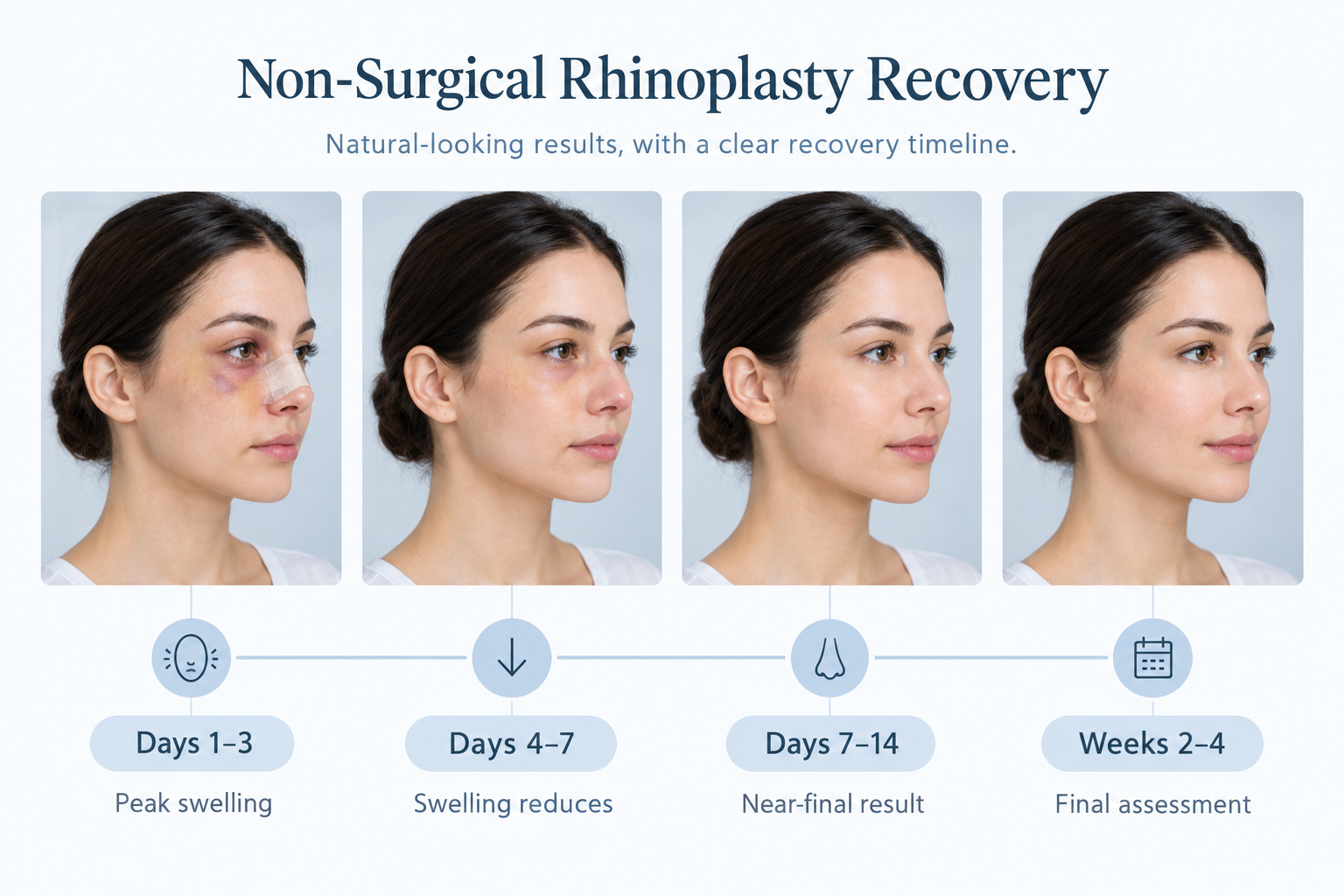
Non-surgical rhinoplasty recovery is generally considered mild compared with surgical rhinoplasty, but the nose can remain sensitive and slightly swollen for longer than patients sometimes expect. Understanding the typical recovery timeline helps set realistic expectations.
Days 1 to 3
Swelling is usually at its most noticeable during the first two to three days. The nose may look slightly larger or less defined than the intended final result during this phase, which can be concerning if you are not prepared for it. Bruising, if present, typically peaks around day two or three before beginning to fade. Tenderness at the injection sites is common and usually manageable without prescription medication.
Days 4 to 7
Swelling begins to reduce noticeably for most patients during this period. Bruising, if it occurred, generally starts to yellow and fade. The nose will begin to look closer to the intended outcome, though some residual swelling may still be present. Most patients feel comfortable returning to work and social activities within this window, provided they are not in a profession requiring heavy physical exertion.
Days 7 to 14
By the end of the second week, the majority of visible swelling has usually resolved. The filler has had time to settle and integrate, and the shape of the nose should be closer to the final result. Glasses can typically be reintroduced cautiously after two weeks, though some practitioners advise waiting longer depending on where filler was placed. Strenuous exercise is generally safe to resume after two weeks unless your practitioner advises otherwise.
Weeks 2 to 4
Subtle residual swelling can persist for up to four weeks in some patients, particularly around the nasal tip, which has less tissue to absorb the inflammatory response. The final result of non-surgical rhinoplasty is best assessed at the four-week mark, which is also when a follow-up appointment is typically most useful. If you feel the result is asymmetrical or not quite as expected, this is the appropriate time to discuss a review with your practitioner rather than immediately requesting additional filler.
Recognising Normal Side Effects Versus Warning Signs
Distinguishing between expected post-treatment side effects and signs of a serious complication is one of the most important aspects of non-surgical rhinoplasty aftercare. The nose is a high-risk area for filler treatment because of its proximity to the ophthalmic artery and the angular artery, and because the nasal skin has limited collateral blood supply in certain zones.
Normal side effects
- Mild to moderate swelling lasting up to two weeks
- Bruising that fades progressively over seven to fourteen days
- Tenderness or sensitivity at injection sites for two to five days
- Temporary firmness or lumpiness that softens as the filler settles
- Mild asymmetry during the swelling phase that resolves as swelling reduces
Warning signs requiring urgent contact with your practitioner
Vascular occlusion occurs when filler inadvertently compresses or enters a blood vessel, restricting blood flow to the surrounding tissue. In the nose, this can affect the nasal skin or, in rare cases, the retinal artery, with potentially serious consequences. Warning signs of vascular occlusion include skin that turns white, grey, or mottled shortly after injection; severe or worsening pain that is disproportionate to the procedure; skin that feels cold to the touch; or the development of a dusky, bluish discolouration. Any of these signs require immediate contact with your treating practitioner or emergency medical services. Hyaluronidase, an enzyme that dissolves hyaluronic acid filler, can be used to treat vascular occlusion if administered promptly, which is why choosing a practitioner who carries this emergency medication and has a clear protocol for managing complications is essential.
Other warning signs that warrant prompt assessment include increasing pain or swelling after the first 48 hours rather than improving, signs of infection such as warmth, pus, or fever, and any changes in vision, which should be treated as a medical emergency.
Longer-Term Aftercare Considerations
Once the initial recovery period has passed, there are several ongoing aftercare considerations that can help maintain your results and support skin health around the treatment area.
Sun protection
Ultraviolet exposure can contribute to skin inflammation and may affect the longevity of hyaluronic acid filler. Applying a broad-spectrum SPF 30 or higher sunscreen daily and avoiding prolonged direct sun exposure, particularly in the first few weeks after treatment, is generally advisable. This is good practice for overall skin health regardless of filler treatment.
Skincare products
Most standard skincare products can be reintroduced within 24 to 48 hours of treatment once injection sites have closed. Retinoids, chemical exfoliants, and other active ingredients are generally safe to resume after this period, though some practitioners advise a slightly longer pause if the skin is particularly sensitive. If you are unsure, check with your practitioner before reintroducing potent actives.
Dental and facial treatments
Dental procedures that require significant facial manipulation, as well as other facial aesthetic treatments such as radiofrequency, ultrasound-based skin tightening, or laser treatments near the nose, are generally best avoided for at least two to four weeks after non-surgical rhinoplasty. Heat-based energy devices in particular can affect filler integrity. Discuss the timing of any planned treatments with both your aesthetic practitioner and your dentist.
Glasses and eyewear
Wearing glasses that rest on the nasal bridge is one of the most commonly overlooked aftercare considerations. Consistent pressure from glasses frames can potentially indent or displace filler, particularly in the first two weeks when the material is still settling. Contact lenses are a practical alternative during this period. If glasses are unavoidable, some practitioners suggest using tape to redistribute the weight away from the nose bridge, though this should be discussed individually.
How Long Results Last and When to Consider Maintenance
Hyaluronic acid filler used in non-surgical rhinoplasty is gradually broken down by the body over time. The longevity of results varies depending on the type and volume of filler used, the specific areas treated, individual metabolism, and lifestyle factors. Results typically last between 9 and 18 months, though some patients find their results persist longer and others notice fading sooner. The nasal tip tends to metabolise filler more quickly than the bridge because of greater movement in that area.
Maintenance treatment is usually considered once the results have visibly diminished to a degree that the patient finds noticeable. There is no fixed schedule, and the decision to repeat treatment should be based on individual assessment rather than a predetermined interval. Some practitioners prefer to allow filler to fully dissolve before retreating, while others are comfortable adding small amounts of filler to maintain the result. Both approaches have clinical rationale, and the appropriate strategy depends on the individual anatomy and the amount of filler already present.
It is worth noting that repeated filler treatments in the nose over time can lead to an accumulation of product if filler is not fully metabolised between sessions. This can affect the appearance and texture of the nose and may complicate future treatment decisions. Discussing a long-term plan with your practitioner, rather than simply booking repeat sessions on demand, is a sensible approach.
Who May Need Additional Review After Treatment
A follow-up appointment is a standard part of responsible non-surgical rhinoplasty aftercare and is typically scheduled two to four weeks after the initial treatment. At this appointment, your practitioner can assess whether the result has settled as intended, whether any asymmetry requires correction, and whether the volume of filler is appropriate for your anatomy and goals.
Some patients may benefit from a small top-up of filler at the follow-up appointment if the initial result is slightly undercorrected. This is preferable to over-filling at the initial session, as it allows the practitioner to assess the settled result before adding more product. Not all patients will require a top-up, and many will be satisfied with the outcome at the four-week review.
If you have concerns before your scheduled follow-up, such as persistent asymmetry, unexpected firmness, or any of the warning signs described earlier, contact your practitioner promptly rather than waiting. Reputable clinics will have a clear aftercare protocol and a point of contact for post-treatment concerns.
Alternatives to Non-Surgical Rhinoplasty
Non-surgical rhinoplasty is not suitable for everyone, and understanding the alternatives helps patients make an informed decision about which approach may better match their goals.
Surgical rhinoplasty remains the only option for patients seeking permanent structural changes to the nose, including significant reduction of nasal size, correction of a deviated septum, or changes to the internal nasal anatomy. Surgical rhinoplasty involves a longer recovery period of several weeks to months and carries the risks associated with general anaesthesia and surgery, but it offers results that are not achievable with filler alone.
For patients who are uncertain about committing to filler treatment, or who have previously had filler dissolved and want to assess their natural anatomy before retreating, a period of observation without treatment is a reasonable option. Hyaluronidase can be used to dissolve existing hyaluronic acid filler if a patient is unhappy with their result or wishes to return to their baseline appearance, which is one of the practical advantages of hyaluronic acid over permanent or semi-permanent fillers.
Patients considering non-surgical rhinoplasty primarily for breathing difficulties or functional nasal concerns should be aware that dermal filler does not address internal nasal anatomy and is not a treatment for functional issues. A consultation with an ear, nose, and throat specialist or a rhinoplasty surgeon is more appropriate in those circumstances.
Frequently Asked Questions
How soon after non-surgical rhinoplasty can I wear glasses?
Most practitioners advise avoiding glasses that rest on the nasal bridge for at least two weeks after treatment. If glasses are essential, discuss options with your practitioner, such as redistributing weight away from the nose. Contact lenses are a practical alternative during the recovery period.
Is it normal for the nose to look worse before it looks better?
Yes, this is common. Swelling in the first two to three days can make the nose appear larger or less defined than the intended result. As swelling resolves over one to two weeks, the shape improves. The final result is best assessed at four weeks.
Can I exercise after non-surgical rhinoplasty?
Light walking is generally acceptable from the day after treatment, but strenuous exercise that significantly raises heart rate and blood pressure is usually advised against for at least 24 to 48 hours, and many practitioners recommend waiting up to two weeks. Follow the specific guidance given by your treating practitioner.
What should I do if I notice skin discolouration after treatment?
White, grey, or mottled skin discolouration after filler injection can be a sign of vascular occlusion, which is a medical emergency. Contact your practitioner immediately or seek emergency medical care. Do not wait to see if it resolves on its own.
How long does swelling last after non-surgical rhinoplasty?
Most visible swelling resolves within one to two weeks. Subtle residual swelling, particularly around the nasal tip, can persist for up to four weeks. Individual recovery varies depending on the amount of filler used, the areas treated, and individual factors such as skin sensitivity and circulation.
Can I have other facial treatments at the same time as non-surgical rhinoplasty?
Combining non-surgical rhinoplasty with other facial filler treatments on the same day is sometimes possible, but heat-based treatments such as laser, radiofrequency, or ultrasound-based procedures near the nose should generally be avoided for at least two to four weeks. Discuss any planned combination treatments with your practitioner in advance.
Will the filler move if I blow my nose?
Normal, gentle nose blowing is unlikely to displace well-placed filler, particularly after the first few days when the material has begun to integrate. Forceful blowing or significant pressure in the first 24 to 48 hours is best avoided. If you have a cold or allergies around the time of treatment, discuss the timing with your practitioner.
Planning Your Recovery Before You Book
Non-surgical rhinoplasty aftercare is most effective when patients understand what to expect before they attend their appointment rather than after. Reviewing the recovery timeline, knowing which activities to avoid and for how long, and understanding the warning signs of complications allows you to plan your schedule appropriately and respond quickly if anything unexpected occurs.
Choosing a practitioner who provides clear written aftercare instructions, carries hyaluronidase for emergency use, and offers accessible post-treatment support is as important as the procedure itself. The nose is a technically demanding treatment area, and the quality of aftercare guidance reflects the overall standard of care you can expect from a clinic. If you are considering non-surgical rhinoplasty, a thorough consultation that covers not only the expected results but also the recovery process, realistic limitations, and complication management will help you make a well-informed decision about whether this treatment is appropriate for your goals and circumstances.
