


Enlarged or visible pores are one of the most common skin concerns brought to aesthetic clinics, yet they are also one of the most misunderstood. Pores cannot be permanently closed or erased, but their appearance can often be meaningfully reduced through the right combination of skincare, in-clinic treatments, and realistic expectations. This article explains what causes enlarged pores, which approaches have the strongest evidence, what professional treatments involve, and how to decide whether a clinical consultation may be worthwhile for your skin.
Key Takeaways
- Pore size is largely determined by genetics, skin type, and age-related changes in skin elasticity — no treatment can permanently eliminate pores, but their visible appearance can often be reduced.
- Consistent skincare using ingredients such as retinoids, niacinamide, salicylic acid, and broad-spectrum SPF forms the foundation of pore management for most people.
- Professional treatments including chemical peels, microneedling, laser resurfacing, and radiofrequency may offer more significant improvement than skincare alone, particularly for deeper skin texture concerns.
- Results from both skincare and professional treatments require maintenance; improvement typically fades if the underlying causes — excess sebum, sun damage, or loss of collagen — are not addressed consistently.
- A qualified practitioner can assess your skin type, pore pattern, and contributing factors to recommend the most appropriate approach for your individual skin.
Why Pores Become More Visible
Every hair follicle on the skin surface has an opening called a pore. Pores serve an important function: they allow sebum, the skin’s natural oil, to reach the surface and help maintain the skin barrier. The size at which a pore appears to the naked eye depends on several interacting factors rather than a single cause.
Excess sebum production is one of the most significant contributors. When the sebaceous gland produces more oil than the follicle can efficiently clear, the pore walls stretch outward, making the opening appear larger. This is why oily and combination skin types tend to have more visibly enlarged pores, particularly across the nose, cheeks, and forehead — an area sometimes called the T-zone.
Collagen and elastin loss plays an equally important role. As skin ages, the structural proteins that keep pore walls firm and tight gradually break down. Without adequate support, the follicle opening widens and the surrounding skin loses the smooth texture that makes pores less noticeable. Chronic sun exposure accelerates this process by degrading collagen and thickening the outer layer of skin, which can make pores appear more prominent over time.
Comedones — blocked pores containing oxidised sebum and dead skin cells — also contribute to visible pore size. When a follicle is partially blocked, the material inside stretches the pore opening. Hormonal fluctuations, certain medications, and some skincare products that are comedogenic (pore-blocking) can worsen this effect. Understanding which factor is most relevant to your skin is an important first step before choosing any treatment approach.
Skincare Ingredients That May Help Reduce Pore Appearance
For many people, a well-structured skincare routine using evidence-supported active ingredients can produce a meaningful improvement in pore visibility without any professional intervention. The key is consistency and choosing ingredients matched to the underlying cause.

Retinoids
Topical retinoids — including prescription tretinoin and over-the-counter retinol — are among the most studied ingredients for skin texture and pore appearance. Retinoids work by accelerating cell turnover, which helps prevent dead skin cells from accumulating inside follicles, and by stimulating collagen production over time. Regular use may gradually tighten the appearance of pores and improve overall skin texture. Retinoids can cause initial dryness, redness, and sensitivity, particularly when first introduced, so a gradual approach is generally recommended. They are not suitable during pregnancy.
Salicylic Acid
Salicylic acid is a beta-hydroxy acid (BHA) that is oil-soluble, meaning it can penetrate into the follicle and dissolve the sebum and dead cell debris that contribute to blocked pores. Regular use of a salicylic acid cleanser or toner — typically at concentrations between 0.5% and 2% — may help keep pores clearer and reduce their visible size, particularly in oily skin types. It is generally well tolerated but can cause dryness if overused.
Niacinamide
Niacinamide, a form of vitamin B3, has been shown in clinical studies to help regulate sebum production and improve skin barrier function. Some research suggests it may reduce the appearance of enlarged pores over several weeks of consistent use, likely through its effect on oil control and skin texture. Niacinamide is generally well tolerated across skin types and can be combined with most other active ingredients.
Alpha-Hydroxy Acids
Alpha-hydroxy acids (AHAs) such as glycolic acid and lactic acid work at the skin surface to exfoliate dead cells and improve skin texture. Regular use may make pores appear less prominent by keeping the skin surface smoother and preventing the buildup of material that stretches pore openings. AHAs increase photosensitivity, so daily broad-spectrum sun protection is essential when using them.
Broad-Spectrum SPF
Daily use of a broad-spectrum sunscreen with SPF 30 or higher is not simply a preventive measure — it actively protects the collagen and elastin that keep pore walls firm. Chronic UV exposure is one of the most significant accelerators of the skin changes that make pores more visible with age. Consistent sun protection is considered a foundational step in any pore management plan.
Professional Treatments for Enlarged Pores
When skincare alone does not produce sufficient improvement, or when pore enlargement is more pronounced, a range of professional treatments may offer more significant results. Each works through a different mechanism and suits different skin types, concerns, and budgets. A thorough skin assessment by a qualified practitioner is important before choosing any in-clinic option.
Chemical Peels
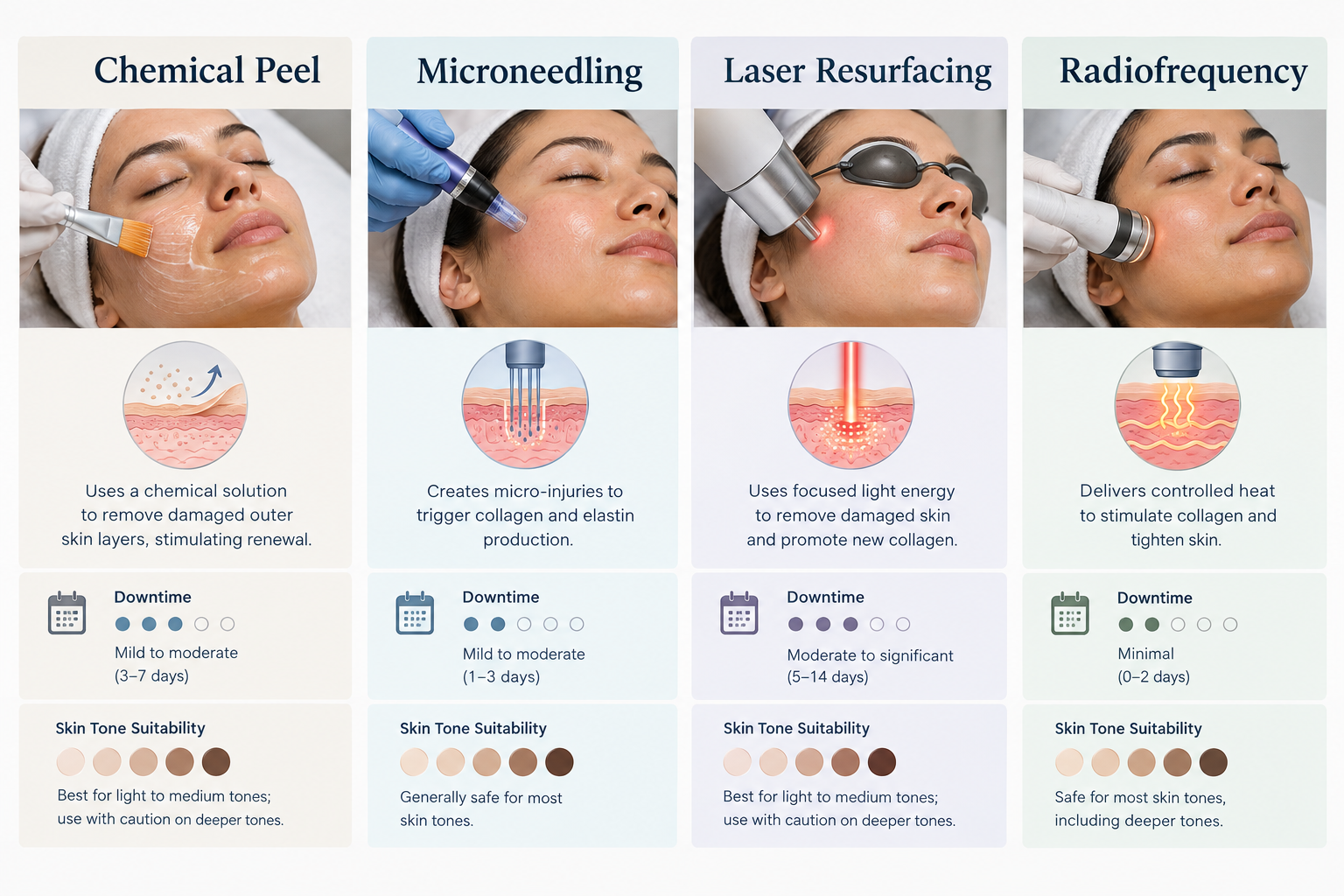
Chemical peels use controlled application of an acid solution — such as glycolic acid, salicylic acid, lactic acid, or trichloroacetic acid (TCA) — to remove the outer layers of skin and stimulate renewal. Superficial peels primarily improve skin texture and clarity, which can make pores appear less visible. Medium-depth peels penetrate further and may stimulate collagen remodelling, offering more noticeable improvement in pore appearance and skin tone. A course of treatments is typically recommended rather than a single session, and results require maintenance. Downtime ranges from minimal redness with superficial peels to several days of peeling and redness with medium-depth options. Chemical peels are not suitable for all skin tones without careful selection, as there is a risk of post-inflammatory hyperpigmentation in darker skin types.
Microneedling
Microneedling — also called collagen induction therapy — uses a device with fine needles to create controlled micro-injuries in the skin. This triggers the skin’s natural wound-healing response, stimulating collagen and elastin production. Over a course of treatments, microneedling may improve skin texture, firmness, and the appearance of enlarged pores by rebuilding the structural support around follicle walls. Most patients require three to six sessions spaced four to six weeks apart to see meaningful results. Temporary redness and mild swelling are common after each session, typically resolving within one to three days. Microneedling with radiofrequency (RF microneedling) combines needle-based collagen stimulation with radiofrequency energy delivered at depth, which may enhance skin tightening and pore reduction compared to standard microneedling alone.
Laser Skin Resurfacing
Laser treatments for enlarged pores work through two main mechanisms: ablative lasers remove the outer skin layers to stimulate resurfacing and collagen production, while non-ablative lasers deliver heat energy into the deeper dermis without removing the surface. Fractional laser devices — both ablative and non-ablative — treat a fraction of the skin at a time, which reduces downtime compared to fully ablative approaches while still stimulating meaningful collagen remodelling. Laser resurfacing may improve pore appearance, skin texture, fine lines, and pigmentation simultaneously. Downtime varies considerably depending on the device and settings used, ranging from a few days of redness with non-ablative fractional treatments to one to two weeks with more aggressive ablative options. Laser treatments require careful selection based on skin tone, as certain wavelengths carry a higher risk of pigmentation changes in darker skin.
Radiofrequency Skin Tightening
Radiofrequency (RF) treatments deliver controlled heat energy into the dermis to stimulate collagen contraction and new collagen formation. By improving dermal firmness and elasticity, RF treatments may help tighten the skin around pore openings and reduce their visible size. Results develop gradually over several months as collagen remodelling progresses. RF treatments are generally associated with minimal downtime and are considered suitable for a broader range of skin tones than some laser options, though individual assessment remains important.
HydraFacial and Medical-Grade Facials
HydraFacial is a multi-step treatment that combines cleansing, exfoliation, extraction of debris from pores, and infusion of hydrating and antioxidant serums. While HydraFacial is not a collagen-stimulating treatment, it may temporarily improve the appearance of pores by clearing congestion and improving skin hydration and clarity. It is generally well tolerated with no significant downtime and can be a useful maintenance option alongside more intensive treatments. Results are typically temporary and require regular sessions to maintain.
Topical Prescription Treatments
In some cases, a dermatologist or qualified prescriber may recommend prescription-strength topical treatments such as tretinoin or topical retinoids at concentrations higher than those available over the counter. These may produce more significant improvement in skin texture and pore appearance than non-prescription alternatives, particularly for patients with oily or acne-prone skin. Prescription options require medical assessment and are not appropriate for everyone.
What to Expect from Treatment: Realistic Results
One of the most important points to understand before pursuing any treatment for enlarged pores is that no approach — whether skincare or professional — can permanently eliminate pores or reduce them to zero. Pores are a normal and necessary part of skin anatomy. The realistic goal is a meaningful reduction in their visible appearance, improved skin texture, and a smoother overall complexion.
Improvement from skincare ingredients such as retinoids and niacinamide typically becomes noticeable after eight to twelve weeks of consistent use, with continued gradual improvement over several months. Professional treatments such as microneedling and laser resurfacing generally require a course of sessions, and the most significant results often develop over three to six months as collagen remodelling progresses. Individual response varies depending on skin type, age, the severity of pore enlargement, and how consistently the underlying causes — such as excess sebum and sun exposure — are managed.
Maintenance is an ongoing requirement for most approaches. Without continued skincare and periodic professional treatments, the factors that contribute to visible pores — sebum production, collagen loss, and UV damage — will continue to act on the skin, and improvement may gradually diminish over time.
Risks, Side Effects, and Limitations
All professional treatments carry some degree of risk, and it is important to understand these before proceeding. Common temporary side effects across most in-clinic treatments include redness, mild swelling, and skin sensitivity, which typically resolve within a few days. More significant risks depend on the specific treatment chosen.
Chemical peels and laser treatments carry a risk of post-inflammatory hyperpigmentation, particularly in patients with medium to darker skin tones (Fitzpatrick skin types IV–VI). Careful treatment selection, appropriate settings, and pre-treatment skin preparation can reduce but not eliminate this risk. Infection is a rare but possible complication of any treatment that disrupts the skin barrier, including microneedling and ablative laser procedures. Scarring is uncommon when treatments are performed by appropriately trained practitioners using suitable parameters, but the risk is not zero.
Skincare active ingredients also carry limitations. Retinoids can cause significant irritation, dryness, and photosensitivity, particularly during the initial weeks of use. AHAs increase UV sensitivity. Salicylic acid can cause dryness and mild irritation if used too frequently. Patch testing and a gradual introduction of new actives is generally advisable.
It is also worth noting that some factors contributing to enlarged pores — particularly genetics and intrinsic ageing — cannot be fully corrected by any currently available treatment. Managing expectations and focusing on realistic improvement rather than perfection is an important part of any treatment plan.
Who May Be Suitable for Professional Pore Treatments
Professional treatments for enlarged pores may be worth discussing with a qualified practitioner if skincare alone has not produced satisfactory improvement after several months of consistent use, or if pore enlargement is more pronounced and affecting confidence. Patients with oily or combination skin, a history of acne, or significant sun damage may be particularly likely to benefit from professional intervention.
Suitability for specific treatments depends on several individual factors, including skin type and tone, medical history, current medications, and whether there are any active skin conditions such as rosacea, eczema, or active acne. Pregnancy and breastfeeding are contraindications for many professional skin treatments and some topical actives including retinoids. A thorough consultation with a qualified practitioner is essential before any professional treatment to assess suitability and discuss the most appropriate options for your individual skin.
Alternatives and Complementary Approaches
For those who are not ready for professional treatments, or who want to complement in-clinic procedures, several additional approaches may help manage pore appearance. Makeup primers formulated with silicone can temporarily fill and blur the appearance of pores, though this is a cosmetic effect only and does not address the underlying cause. Clay masks used one to two times per week may help absorb excess sebum and temporarily reduce the appearance of congested pores. Double cleansing — using an oil-based cleanser followed by a water-based cleanser — can help remove excess sebum and makeup residue that might otherwise contribute to pore congestion.
Dietary and lifestyle factors are sometimes discussed in relation to skin health. While the evidence linking specific foods directly to pore size is limited, a diet high in refined sugars and dairy has been associated with increased sebum production in some research, and adequate hydration supports overall skin barrier function. These factors are unlikely to produce dramatic changes in pore appearance on their own but may support the effectiveness of other approaches.
Frequently Asked Questions
Can pores be permanently closed or eliminated?
No. Pores are a permanent and necessary part of skin anatomy — they cannot be permanently closed, removed, or reduced to zero. Treatments and skincare can meaningfully reduce their visible appearance and improve skin texture, but this requires ongoing maintenance rather than a one-time fix.
How long does it take to see results from skincare for pores?
Most evidence-based skincare ingredients for pore appearance, such as retinoids and niacinamide, require consistent use over eight to twelve weeks before noticeable improvement becomes visible. Continued improvement may occur over several months. Stopping the routine typically allows the skin to gradually return toward its previous state.
Is microneedling or laser better for enlarged pores?
Both microneedling and laser resurfacing can improve pore appearance, but they work through different mechanisms and suit different patients. Microneedling is generally associated with less downtime and a lower risk of pigmentation changes across skin tones. Laser treatments may offer more significant improvement in some patients but require more careful selection based on skin type. A qualified practitioner can assess which option is more appropriate for your individual skin.
How many professional treatment sessions are typically needed?
Most professional treatments for enlarged pores require a course of sessions rather than a single appointment. Microneedling typically involves three to six sessions; chemical peels are often performed as a series of four to six treatments. The exact number depends on the treatment chosen, the severity of the concern, and individual skin response. Periodic maintenance sessions are usually recommended to sustain results.
Are there any treatments that work quickly for pore appearance?
Treatments such as HydraFacial or superficial chemical peels may produce a temporary improvement in skin clarity and pore appearance relatively quickly, often visible within a day or two of treatment. However, these effects are not long-lasting. Treatments that stimulate collagen remodelling — such as microneedling and laser — produce more durable results but take longer to become visible as the skin gradually rebuilds its structural support.
Can enlarged pores be caused by skincare products?
Yes, in some cases. Comedogenic skincare products — those containing ingredients that can block follicles — may contribute to pore congestion and make pores appear larger. Choosing non-comedogenic formulations, particularly for moisturisers and sunscreens, is generally advisable for oily or pore-prone skin types.
Is it safe to use multiple active ingredients together for pore reduction?
Combining active ingredients requires care. Some combinations — such as retinoids with AHAs or high-concentration vitamin C — can increase irritation and skin sensitivity. A gradual approach, introducing one new active at a time and allowing the skin to adjust, is generally recommended. A dermatologist or qualified skincare professional can advise on a safe and effective routine for your specific skin type and concerns.
Making an Informed Decision About Pore Reduction
Reducing the appearance of enlarged pores is achievable for most people, but the most effective approach depends on understanding what is causing the problem in your specific skin. For mild to moderate pore visibility, a consistent skincare routine built around retinoids, salicylic acid, niacinamide, and daily SPF is a reasonable and evidence-supported starting point that does not require professional intervention. Results take time and require ongoing commitment, but the risk profile is generally low when products are introduced carefully.
For more pronounced pore enlargement, or when skincare has not produced satisfactory improvement after several months, professional treatments such as microneedling, chemical peels, or laser resurfacing may offer more significant and durable results. These treatments involve a greater investment of time and cost, carry a higher risk profile than topical skincare, and require a course of sessions followed by maintenance. They are not suitable for everyone, and individual assessment by a qualified practitioner is essential before proceeding.
If you are considering a professional approach, a consultation with a qualified aesthetic practitioner or dermatologist can help clarify which treatments are most appropriate for your skin type, tone, and specific concerns, and give you a realistic picture of what improvement you might expect. Approaching pore reduction with realistic expectations — focusing on meaningful improvement rather than perfection — is the most useful mindset for making a decision that is right for your skin and your goals.
