

Lip filler is one of the most requested aesthetic treatments, and one of the most common questions patients ask beforehand is how much it will hurt. Lip numbing cream — a topical anaesthetic applied to the skin before the procedure — is routinely used to reduce discomfort during lip filler injections. Understanding how it works, what it can realistically achieve, and where its limitations lie can help you approach your appointment with accurate expectations.
Key Takeaways
- Topical numbing cream applied before lip filler can meaningfully reduce surface discomfort, though it does not eliminate all sensation during injection.
- Most lip numbing creams contain lidocaine, prilocaine, or a combination of both, which temporarily block nerve signals in the skin.
- Many modern dermal fillers also contain lidocaine within the formulation itself, providing an additional layer of pain management during treatment.
- Application time matters: topical anaesthetic typically requires 20–45 minutes of contact time to reach adequate depth in lip tissue.
- Numbing cream is generally well tolerated, but allergic reactions and temporary skin changes are possible and should be discussed with your practitioner beforehand.
What Is Lip Numbing Cream?
Lip numbing cream is a topical anaesthetic preparation applied directly to the lip and surrounding skin before an injectable treatment such as dermal filler. The term covers a range of formulations, but the most widely used in clinical aesthetic settings contain lidocaine, prilocaine, or a eutectic mixture of both — commonly known as EMLA cream. Some formulations also include tetracaine or benzocaine, though lidocaine-based products remain the most prevalent in professional practice.
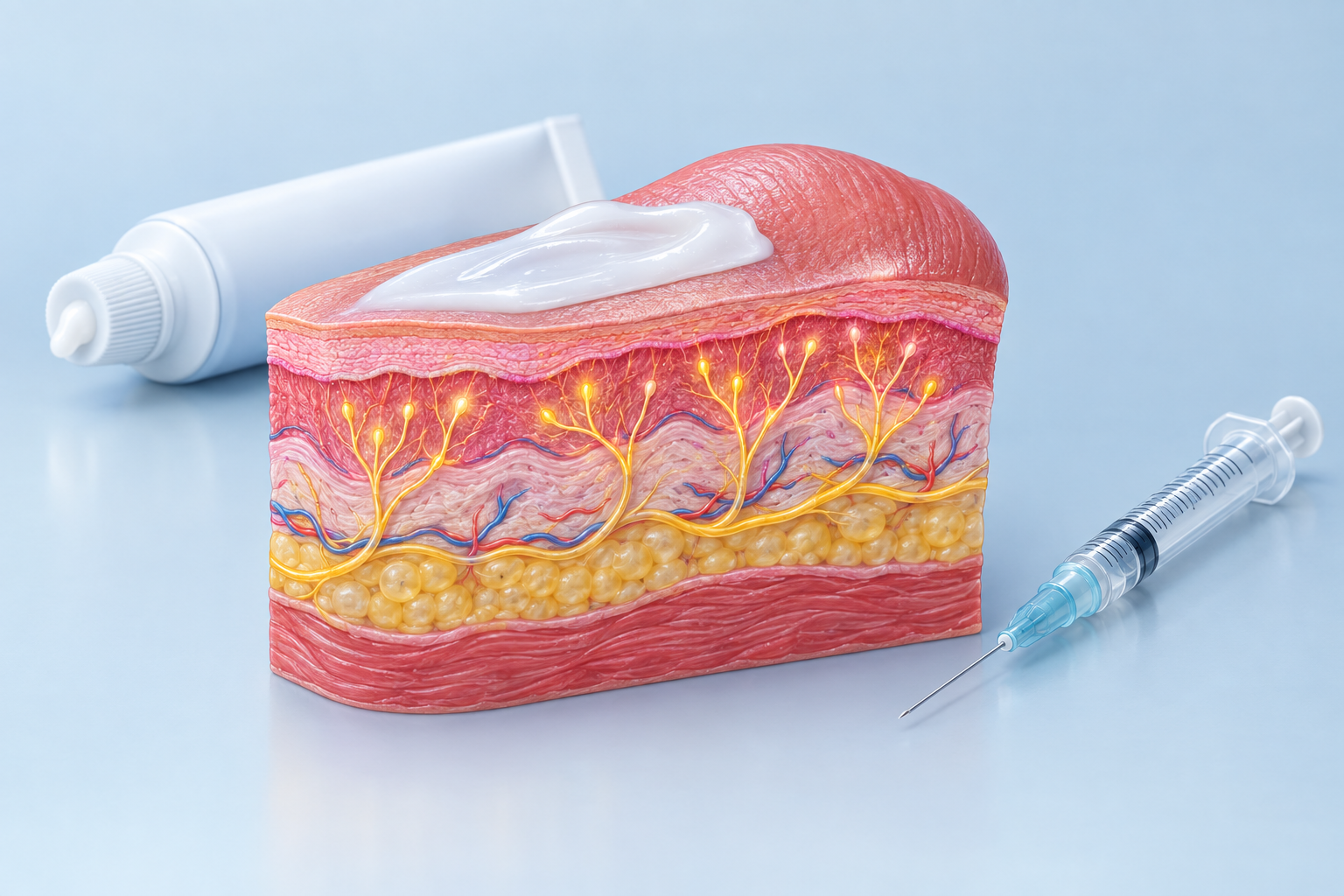
Topical anaesthetics work by temporarily blocking sodium channels in peripheral nerve endings near the skin surface. This interrupts the transmission of pain signals to the brain, reducing the sensation of needle penetration and the pressure associated with filler injection. The effect is localised to the area of application and wears off within one to two hours after removal, leaving no lasting change to nerve function.
It is important to understand that topical numbing cream acts primarily on superficial nerve endings. The lips are highly vascular and densely innervated, which is why lip filler tends to be more uncomfortable than filler in areas such as the cheeks. Numbing cream reduces but does not eliminate this sensitivity, and the degree of relief varies between individuals depending on skin thickness, application time, and personal pain tolerance.
How Numbing Cream Is Used Before Lip Filler
In most aesthetic clinics, the numbing process begins before the main consultation or immediately after it. A practitioner or trained member of staff applies a generous layer of topical anaesthetic cream to the lips and the skin immediately surrounding them. The area is then covered with an occlusive dressing or cling film in some protocols, which helps drive the active ingredient deeper into the tissue and improves efficacy.
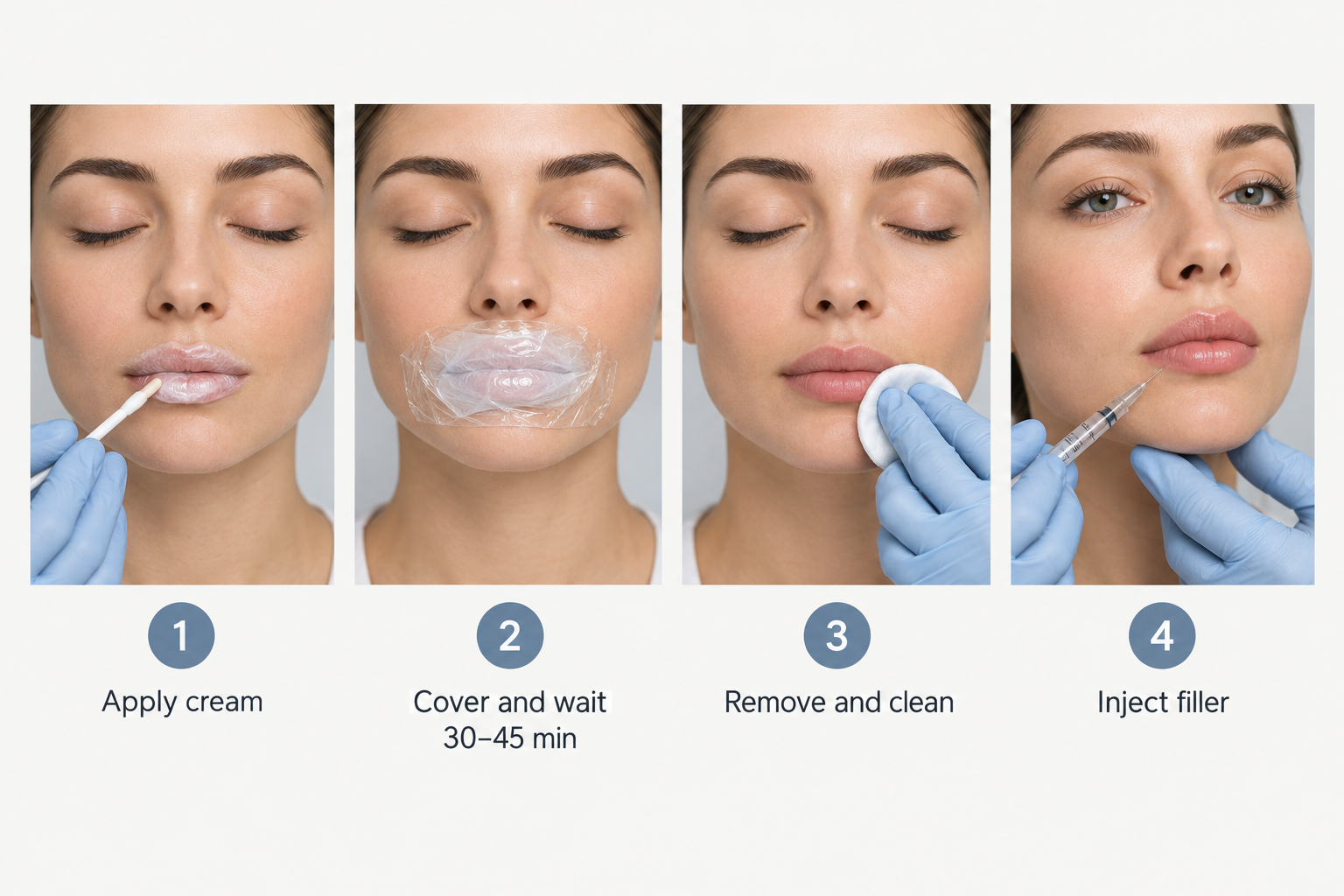
Application time is one of the most important factors in how well a lip numbing cream performs. Most lidocaine-prilocaine formulations require a minimum of 20 minutes to begin taking effect, and 30 to 45 minutes is generally considered more effective for lip tissue, which is thicker and more vascular than standard skin. Removing the cream too early is a common reason patients report inadequate numbing during their appointment.
Before the filler injections begin, the cream is wiped away and the area is cleaned with an antiseptic solution. The numbing effect typically persists for 30 to 60 minutes after removal, which is usually sufficient for a standard lip filler appointment. If the treatment takes longer than expected, some residual discomfort may return toward the end of the session.
Does Numbing Cream Make Lip Filler Painless?
Topical anaesthetic cream significantly reduces discomfort for most patients, but describing lip filler as painless after numbing cream alone would be inaccurate. The lips contain a high density of sensory nerve fibres, and the injection process involves both needle penetration and the physical pressure of filler being deposited beneath the surface. Numbing cream addresses the former more effectively than the latter.
Most patients describe the sensation during lip filler after numbing cream as pressure, a dull ache, or mild stinging rather than sharp pain. The degree of residual sensation varies considerably. Patients with thinner lips, those receiving larger volumes of filler, or those undergoing treatment in the vermilion border — the defined edge of the lip — may notice more discomfort than those receiving subtle volume enhancement in the body of the lip.
Individual pain tolerance also plays a meaningful role. Some patients find the procedure entirely comfortable after topical anaesthetic; others find it moderately uncomfortable despite adequate numbing. Anxiety can heighten pain perception, and practitioners experienced in managing patient comfort often use distraction techniques, slow injection speeds, and careful technique to complement the pharmacological effect of the numbing cream.
Lidocaine in the Filler Itself
Many modern hyaluronic acid dermal fillers — including several widely used brands — are formulated with lidocaine already incorporated into the gel. This is sometimes referred to as a lidocaine-containing filler or an anaesthetic-blended filler. As the product is injected, the lidocaine within it begins to anaesthetise the tissue from the inside, which can meaningfully reduce discomfort as the treatment progresses.
The practical effect of lidocaine-containing filler is that even if the topical numbing cream provides only partial surface anaesthesia, the discomfort often decreases after the first one or two injections as the in-product lidocaine takes effect. Patients frequently report that the initial needle entry is the most uncomfortable moment, with subsequent injections feeling progressively less noticeable.
Not all fillers contain lidocaine, and the concentration varies between products. Your practitioner can confirm whether the specific filler being used in your treatment includes an anaesthetic component. This information is relevant when discussing your pain management plan before the appointment.
Other Pain Management Options Used in Clinics
Topical numbing cream is the most common approach to managing discomfort during lip filler, but it is not the only option available. Clinics may use one or more of the following alongside or instead of topical anaesthetic, depending on the patient’s needs and the practitioner’s clinical judgement.
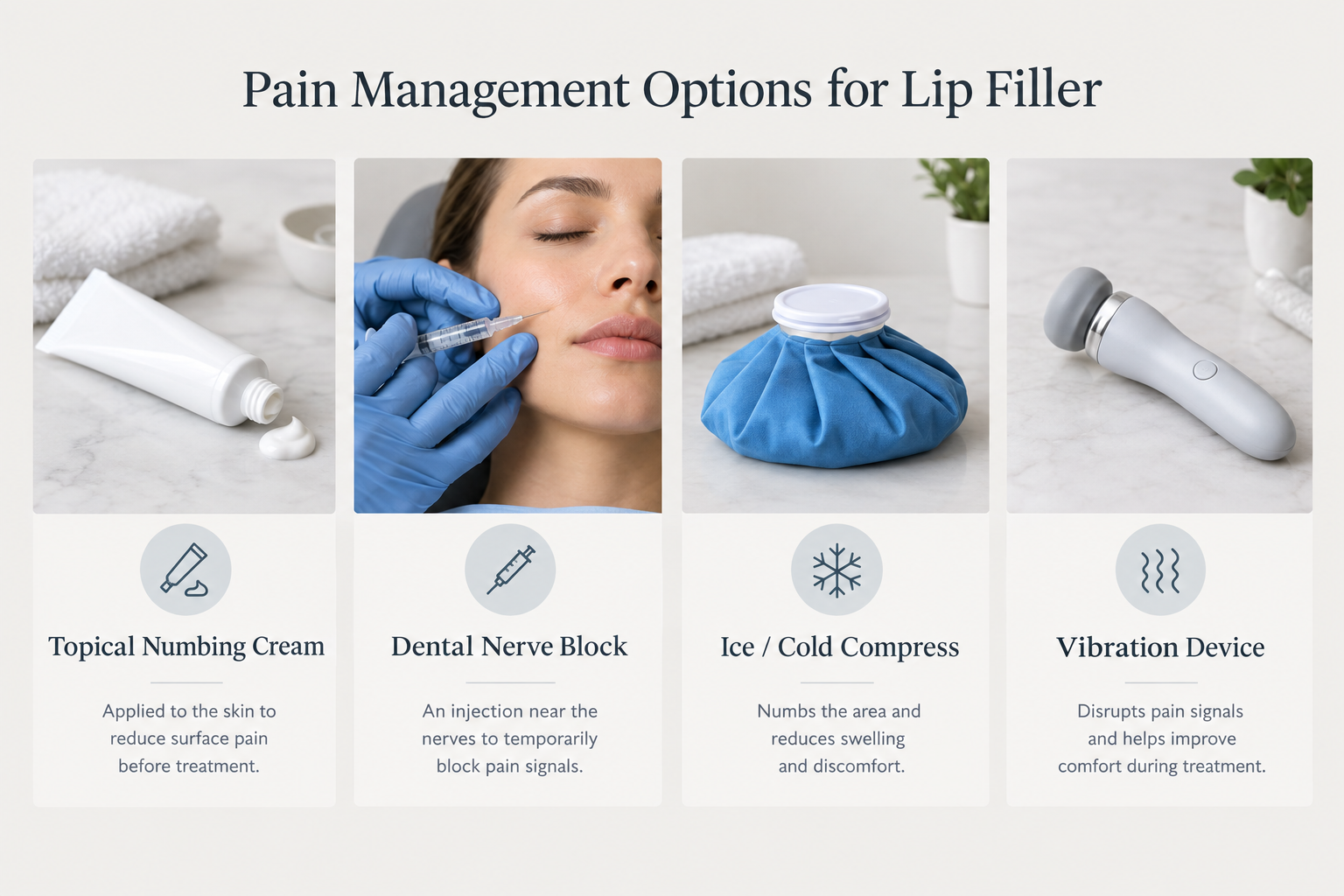
- Dental nerve block: A local anaesthetic injection administered by a qualified practitioner near the nerve branches supplying the lips. This provides a more complete and reliable block than topical cream alone, and is often used for patients with significant anxiety, those receiving larger volumes, or those who have found topical anaesthetic insufficient in previous appointments. It involves an additional injection, which some patients prefer to avoid.
- Ice or cold compresses: Applying cold to the lips immediately before injection can temporarily reduce surface sensitivity and may also help minimise bruising by causing vasoconstriction. Cold alone is unlikely to provide adequate anaesthesia for most patients but may be used as a supplementary measure.
- Vibration devices: Some practitioners use handheld vibration tools near the injection site. The vibration stimulates competing nerve signals that can partially mask pain perception — a principle sometimes described as gate control theory. Evidence for this technique in aesthetic injections is limited but some patients find it helpful.
- Slow injection technique: Practitioner technique significantly influences patient comfort. Injecting slowly, using fine-gauge needles or blunt-tipped cannulas where appropriate, and allowing adequate time between injection points can reduce discomfort independently of anaesthetic agents.
Risks and Side Effects of Topical Numbing Cream
Topical anaesthetic creams used before lip filler are generally well tolerated when applied correctly and for an appropriate duration. However, they are pharmacologically active preparations and carry a small but real risk of adverse effects that patients should be aware of before treatment.
Local skin reactions
The most common side effects are localised to the application area and include temporary redness, mild swelling, pallor (blanching of the skin), and a sensation of warmth or tingling. These effects are usually transient and resolve within minutes to an hour after the cream is removed. Blanching in particular is a normal response to the vasoconstrictive properties of some anaesthetic agents and does not indicate a problem with the skin.
Allergic contact dermatitis
True allergic reactions to lidocaine or prilocaine are uncommon but possible. Symptoms may include persistent redness, itching, swelling, or a rash that extends beyond the application area. Patients with a known allergy to amide-type local anaesthetics should inform their practitioner before any numbing cream is applied. A patch test may be recommended in cases of suspected sensitivity, though this is not standard practice for every patient.
Methaemoglobinaemia
Prilocaine, one of the active ingredients in EMLA cream, can in rare cases cause methaemoglobinaemia — a condition in which haemoglobin is converted to a form that cannot carry oxygen effectively. This risk is associated with large quantities of cream applied over extensive areas, prolonged application times, or use in infants and young children. For a standard lip filler application in a healthy adult, the quantity of cream used is small and the risk is considered very low. Patients with glucose-6-phosphate dehydrogenase deficiency or those taking certain medications such as dapsone may be at higher risk and should discuss this with their practitioner.
Interaction with filler assessment
An often-overlooked practical consideration is that topical anaesthetic cream can temporarily alter the appearance and texture of the lips. Blanching and mild swelling from the cream itself may make it slightly more difficult for the practitioner to assess lip symmetry and volume during treatment. Experienced practitioners account for this, but it is worth noting that the numbing process is not entirely without influence on the treatment environment.
Who May Not Be Suitable for Topical Numbing Cream
Most healthy adults undergoing lip filler are suitable candidates for topical anaesthetic cream. However, certain factors may affect whether a specific product is appropriate for a given patient.
- Known allergy to lidocaine, prilocaine, tetracaine, or other local anaesthetics
- Glucose-6-phosphate dehydrogenase deficiency (relevant to prilocaine-containing products)
- Broken, inflamed, or infected skin in the application area — active cold sores or lip infections are a contraindication to lip filler itself and also affect the safety of topical anaesthetic application
- Pregnancy or breastfeeding — the safety of topical anaesthetic creams during pregnancy has not been fully established; practitioners typically advise caution and may defer elective treatment
- Certain medications that interact with local anaesthetics, including some antiarrhythmic drugs
A thorough pre-treatment consultation should include a review of medical history and current medications to identify any factors that might affect the choice of numbing agent or the suitability of lip filler treatment overall.
What to Expect at Your Lip Filler Appointment
Understanding the sequence of events at a lip filler appointment can help reduce anxiety and set realistic expectations about the role of numbing cream within the overall experience.
Most appointments begin with a consultation or a review of your treatment plan, during which your practitioner will discuss the volume, technique, and product to be used. Numbing cream is typically applied at the start of this process so that adequate contact time is achieved before injections begin. You will usually sit with the cream on your lips for 20 to 45 minutes, during which time you may feel a mild tingling or cooling sensation.
Once the cream is removed and the area is cleaned, your practitioner will begin the injections. The number of injection points varies depending on the technique used — some practitioners use multiple needle entry points, while others use a cannula (a blunt-tipped flexible tube) that may require fewer entry points and is associated with a lower risk of bruising in some cases. The injection phase of a standard lip filler appointment typically takes between 10 and 30 minutes.
After treatment, the lips will usually appear swollen and may feel tender or numb for a short period. Swelling is normal and expected; it typically peaks within 24 to 48 hours and subsides over the following week. Bruising is possible and may take up to two weeks to fully resolve. The final result of lip filler is generally assessed at a review appointment two to four weeks after treatment, once swelling has fully settled.
Frequently Asked Questions
How long before lip filler should numbing cream be applied?
Most topical anaesthetic creams used before lip filler should be applied 30 to 45 minutes before the procedure begins. Applying the cream for less than 20 minutes is unlikely to produce adequate anaesthesia in lip tissue. Your clinic will usually manage this timing as part of the appointment schedule.
Can I buy numbing cream and apply it at home before my appointment?
Some patients ask whether they can apply numbing cream at home before travelling to their appointment. While over-the-counter topical anaesthetic products are available, this approach is generally not recommended without guidance from your practitioner. The concentration of active ingredient, application technique, and timing all affect efficacy and safety. Your clinic will typically provide and apply the appropriate product as part of your treatment preparation.
Will numbing cream affect how the filler looks?
Topical anaesthetic cream can cause temporary blanching and mild swelling of the lips during application. This may slightly affect the practitioner’s ability to assess lip symmetry in real time, though experienced injectors account for this. The cream itself does not affect the filler product or the final result once swelling from both the cream and the injections has resolved.
Is a dental block better than numbing cream for lip filler?
A dental nerve block provides more complete anaesthesia than topical cream alone and may be preferable for patients with significant anxiety, low pain tolerance, or those receiving larger volumes of filler. However, it involves an additional injection and may cause temporary numbness that extends beyond the lips. The most appropriate approach depends on individual patient factors and should be discussed with your practitioner during consultation.
Can I have lip filler without any numbing?
Some patients choose to proceed without topical anaesthetic, particularly for small touch-up treatments or when they have found previous appointments comfortable. Many modern fillers contain lidocaine within the formulation, which provides progressive anaesthesia during the injection process. Whether to use topical numbing cream is a decision best made in discussion with your practitioner based on your personal pain tolerance and treatment plan.
How long does the numbing last after the cream is removed?
The anaesthetic effect of topical lidocaine or lidocaine-prilocaine cream typically persists for 30 to 60 minutes after the cream is removed. This is usually sufficient for a standard lip filler appointment. If you notice the numbing wearing off during a longer treatment session, inform your practitioner so they can adjust their approach if needed.
Is numbing cream safe to use on the lips?
Topical anaesthetic creams are generally considered safe for use on lip tissue in healthy adults when applied in appropriate quantities and for the recommended duration. As with any pharmacologically active preparation, there is a small risk of local skin reactions or, rarely, allergic responses. Patients with relevant medical conditions or medication use should discuss suitability with their practitioner before treatment.
Making an Informed Decision About Comfort During Lip Filler
Lip numbing cream is a practical and widely used tool for managing discomfort during lip filler treatment. For most patients, topical anaesthetic meaningfully reduces the sensation of needle penetration and makes the overall experience more comfortable, even if it does not render the procedure entirely painless. When combined with a lidocaine-containing filler and a practitioner skilled in gentle injection technique, the majority of patients find lip filler tolerable.
The most important step is an open conversation with your practitioner before treatment. Discussing your pain tolerance, any relevant medical history, and your concerns about discomfort allows the clinical team to tailor the pain management approach to your individual needs — whether that means optimising topical anaesthetic application time, considering a dental nerve block, or choosing a filler formulation that includes lidocaine. Realistic expectations about what numbing cream can and cannot achieve will help you feel prepared and confident going into your appointment.
If you are considering lip filler and have questions about how discomfort is managed, a consultation with a qualified aesthetic practitioner is the appropriate next step. They can assess your suitability for treatment, explain the specific products and techniques they use, and ensure your comfort plan is appropriate for your circumstances.
