
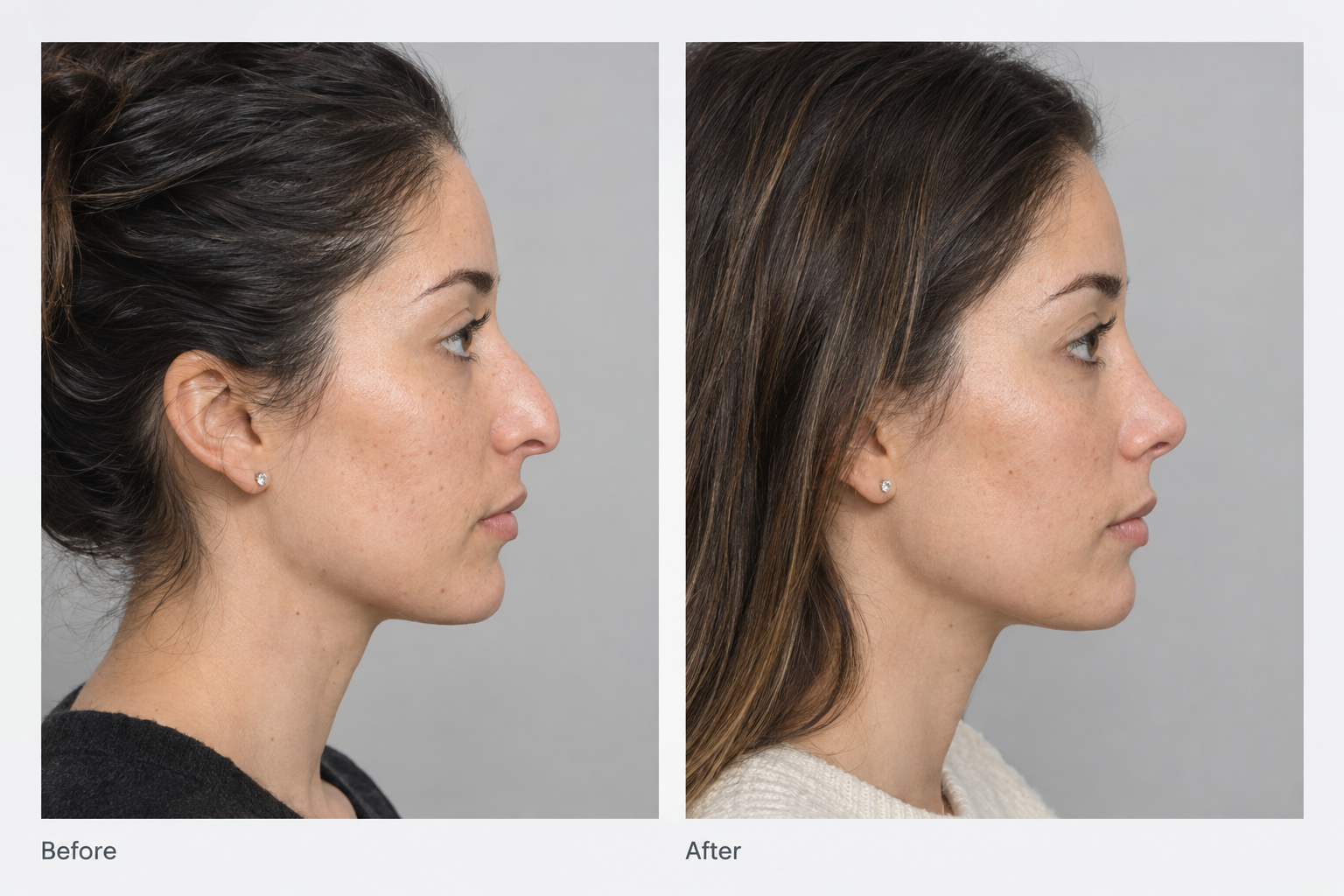

A Botox nose lift — sometimes called a non-surgical rhinoplasty or liquid nose job — uses small injections of botulinum toxin to subtly alter the appearance of the nose without surgery. Before committing to any procedure, most people want to understand what the results actually look like, how significant the change can be, and whether the outcome is likely to match their expectations. This article explains what botulinum toxin can and cannot achieve in the nasal area, what the before-and-after experience typically involves, and how this approach compares to other options.
Key Takeaways
- A Botox nose lift uses botulinum toxin injections to relax specific muscles around the nose, which can create a subtle lifting or refining effect — but results are modest and temporary.
- The most commonly reported improvements include a slightly elevated nasal tip, reduced downward pull of the nose when smiling, and a marginally smoother nasal profile in carefully selected patients.
- Results typically last between three and six months, after which the muscles gradually return to their previous activity and the effect fades.
- This technique is not suitable for everyone and cannot address structural concerns such as a prominent dorsal hump, wide nasal bones, or significant asymmetry.
- A thorough consultation with a qualified, experienced practitioner is essential to assess whether this approach may be appropriate for your anatomy and goals.
What Is a Botox Nose Lift?
The term “Botox nose lift” refers to the use of botulinum toxin — most commonly the brand Botox, though other formulations such as Dysport or Azzalure contain the same active ingredient — injected into specific muscles around the nose and upper lip. The goal is to temporarily reduce the pull of muscles that draw the nasal tip downward or cause the nose to drop when a person smiles. By relaxing these muscles, the nasal tip may appear slightly more elevated and refined in certain individuals.
It is important to distinguish this technique from non-surgical rhinoplasty using dermal fillers, which involves injecting hyaluronic acid or similar substances to reshape the nose by adding volume. A Botox nose lift works through muscle relaxation rather than volume addition, which means the mechanism — and therefore the type of result — is fundamentally different. Some practitioners combine both approaches, but they are not the same treatment.
The depressor septi nasi is the muscle most commonly targeted in this procedure. This muscle connects the base of the nasal septum to the upper lip and, when active, pulls the nasal tip downward — an effect that can become more pronounced during smiling or facial expression. Relaxing this muscle with botulinum toxin may reduce that downward movement and allow the tip to sit in a slightly higher resting position.
What Do Before-and-After Results Typically Show?
Before-and-after photographs of Botox nose lift treatments can be informative, but they require careful interpretation. The most realistic results visible in clinical before-and-after images tend to show a subtle upward shift of the nasal tip — often measured in millimetres rather than centimetres — and a reduction in the degree to which the tip drops during smiling. In patients where this dynamic drooping is the primary concern, the improvement can appear meaningful in photographs taken during animated expression.
What before-and-after images are less likely to show is a dramatic reshaping of the nose. Botulinum toxin does not alter bone, cartilage, or the overall size of the nose. If a patient’s concern is a dorsal hump, wide nostrils, or a nose that appears large in proportion to the face, a Botox nose lift is unlikely to produce a visible improvement in those areas. Before-and-after comparisons that appear to show dramatic structural changes should be viewed with caution, as lighting, camera angle, and expression can significantly influence how the nose appears in photographs.
Patients who tend to show the most noticeable before-and-after difference are those with a hyperactive depressor septi nasi muscle — meaning the nasal tip drops noticeably when they smile or speak — and those with a mildly drooping tip at rest. In these individuals, relaxing the relevant muscle can produce a result that is visible both in photographs and in everyday facial expression.
How the Treatment Works: The Mechanism Behind the Results
Botulinum toxin works by temporarily blocking the release of acetylcholine at the neuromuscular junction — the point where a nerve signal instructs a muscle to contract. When injected into the depressor septi nasi muscle, the toxin reduces that muscle’s ability to contract fully, which diminishes its downward pull on the nasal tip. The effect is not immediate; it typically begins to develop within three to five days and reaches its full expression at around two weeks after treatment.
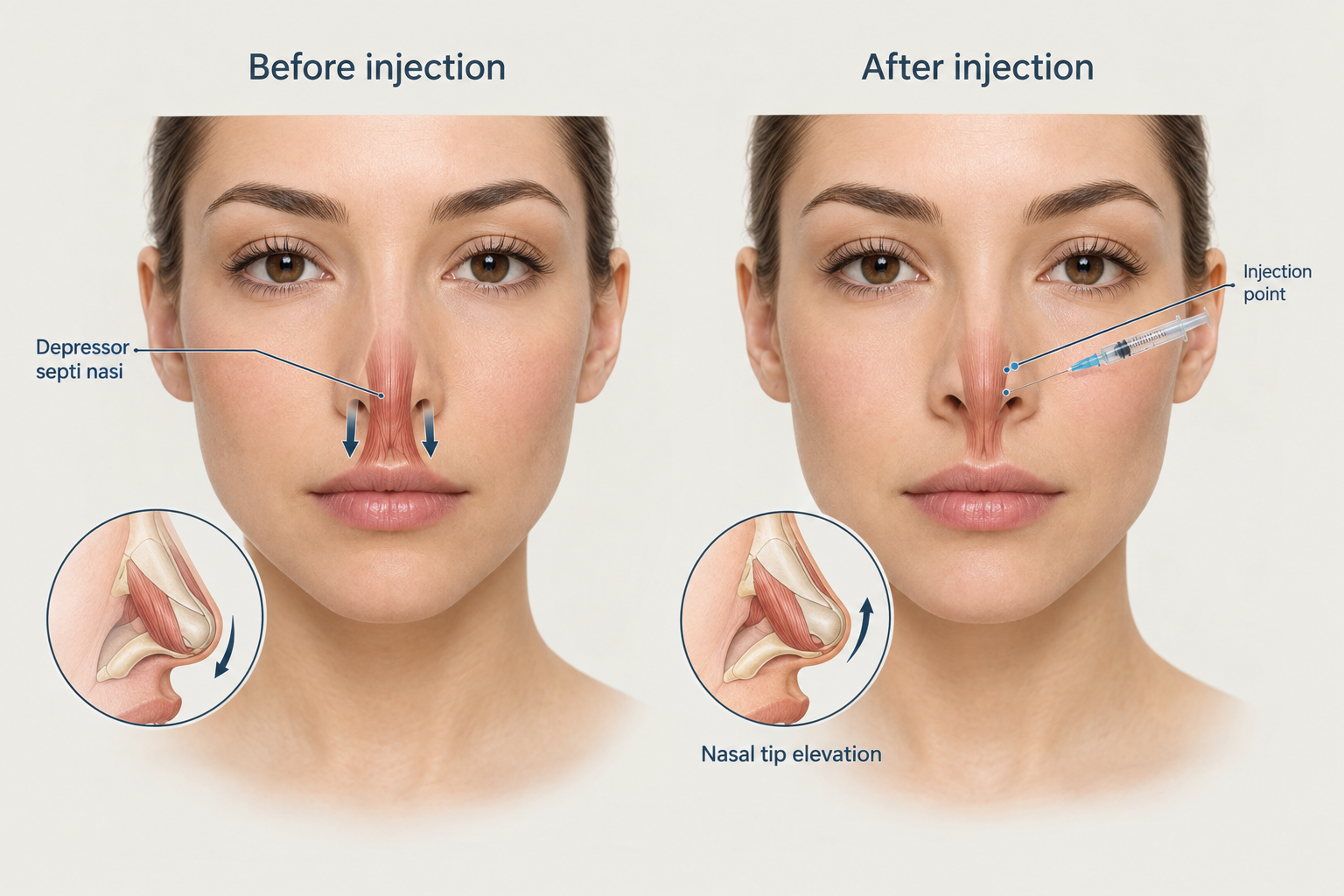
Because the mechanism relies on muscle relaxation rather than structural change, the results are inherently limited to concerns caused or worsened by muscle activity. A nasal tip that droops primarily because of cartilage position or skin laxity — rather than active muscle pull — is unlikely to respond as well to this approach. This is why a thorough assessment of the patient’s nasal anatomy and the specific cause of their concern is essential before treatment is considered.
The temporary nature of the result is a direct consequence of the mechanism. Over time, the nerve endings regenerate and the muscle gradually regains its normal function, which is why the effect fades over several months. This is not a flaw unique to nasal treatments; it is a fundamental characteristic of all botulinum toxin treatments regardless of the area being addressed.
What the Treatment Appointment Involves
A Botox nose lift appointment is typically brief. After a consultation to assess suitability and discuss goals, the practitioner will cleanse the treatment area and may apply a topical anaesthetic cream, though many patients find the injections tolerable without one. The injections themselves involve a very small volume of botulinum toxin delivered with a fine needle, usually at or near the base of the columella — the strip of tissue between the nostrils — where the depressor septi nasi muscle is accessible.
The number of injection points is generally small, and the appointment itself may take only a few minutes once the preparation is complete. Most patients can return to normal activities immediately afterwards. There is no incision, no general anaesthetic, and no surgical recovery period associated with this technique.
Some practitioners also inject a small amount of botulinum toxin into the muscles that cause the nose to widen or flare during expression, or into the procerus muscle at the bridge of the nose to reduce the appearance of bunny lines — the diagonal creases that appear on the nasal sides during certain expressions. These additional injection points may be discussed depending on the patient’s individual anatomy and concerns.
Realistic Benefits of a Botox Nose Lift
When patient selection is appropriate and expectations are realistic, a Botox nose lift may offer several meaningful benefits. The most commonly reported advantages include a subtle elevation of the nasal tip, a reduction in the downward movement of the tip during smiling, and a slightly more refined nasal profile when viewed from the side. For patients whose primary concern is a tip that drops noticeably during facial expression, this improvement can feel significant in everyday life even if it appears modest in static photographs.
The non-surgical nature of the treatment is a genuine practical advantage. There is no incision, no general anaesthetic, no surgical scarring, and no extended recovery period. The procedure can typically be performed in a clinic setting during a short appointment, and most patients experience only minor and temporary side effects such as mild redness or tenderness at the injection site.
The temporary nature of the result, while often listed as a limitation, can also be considered a benefit for patients who are uncertain about committing to a permanent change. If the result is not what the patient hoped for, it will naturally resolve over the following months without requiring reversal treatment. This is in contrast to some filler-based non-surgical rhinoplasty techniques, where dissolving the filler may be necessary if the result is unsatisfactory.
Limitations: What a Botox Nose Lift Cannot Do
Understanding the limitations of a Botox nose lift is as important as understanding its potential benefits. Botulinum toxin cannot alter the bone or cartilage structure of the nose. It cannot reduce the size of the nose, narrow the nasal bridge, smooth a dorsal hump, or correct significant asymmetry. Patients with these concerns are unlikely to see a meaningful improvement from this technique alone.
The degree of change achievable is inherently modest. A Botox nose lift is not a substitute for surgical rhinoplasty in patients who require structural correction. It is a technique suited to a specific and relatively narrow set of concerns — primarily dynamic tip drooping and mild resting tip ptosis in patients with appropriate anatomy. Expecting results comparable to surgical rhinoplasty from botulinum toxin injections is likely to lead to disappointment.
Results also vary between individuals. Factors including the patient’s muscle anatomy, the degree of existing tip drooping, skin thickness, and individual response to botulinum toxin all influence the outcome. Some patients may notice a clearly visible improvement; others may find the change too subtle to be satisfying. A qualified practitioner should discuss these variables honestly during the consultation rather than presenting the treatment as reliably transformative.
The temporary duration of results — typically three to six months — means that patients who wish to maintain the effect will need repeat treatments. Over time, this represents a recurring commitment of both time and cost that should be factored into the decision.
Risks and Side Effects
Like all botulinum toxin treatments, a Botox nose lift carries a risk of side effects, though serious complications are uncommon when the procedure is performed by a qualified and experienced practitioner. Common and generally mild side effects include temporary redness, swelling, bruising, or tenderness at the injection site. These typically resolve within a few days.
More significant risks relate to the precision required when injecting in the nasal area. If botulinum toxin spreads to adjacent muscles — a risk that depends on the volume used, the injection technique, and individual anatomy — it may temporarily affect nearby structures. Possible effects include asymmetry of the lip or smile, difficulty with certain lip movements, or an unintended change in facial expression. These effects are temporary and resolve as the toxin wears off, but they can be distressing while present.
Vascular complications — while rare — are a serious consideration with any injectable treatment in the nasal area. The nose has a complex blood supply, and although botulinum toxin injections carry a lower vascular risk than filler injections, treatment should only be performed by a practitioner with a thorough understanding of nasal anatomy and the ability to recognise and manage complications if they arise.
Patients should inform their practitioner of any relevant medical history, including neurological conditions, medications that may affect muscle function or bleeding, pregnancy or breastfeeding, known allergies, and any previous procedures in the treatment area. These factors may affect suitability for treatment.
Who May Be Suitable — and Who May Not
A Botox nose lift may be worth discussing with a qualified practitioner if your primary concern is a nasal tip that droops noticeably when you smile or speak, or a tip that sits slightly low at rest due to an overactive depressor septi nasi muscle. Patients with relatively good nasal structure who are seeking a subtle refinement rather than a dramatic change tend to be the most appropriate candidates.
This technique is generally less likely to be suitable for patients who have significant structural concerns such as a prominent dorsal hump, wide nasal bones, or substantial asymmetry. It is also unlikely to be appropriate for patients who have previously had surgical rhinoplasty that altered the nasal tip anatomy, as the muscle dynamics may be different. Patients with unrealistic expectations about the degree of change achievable are also poor candidates, regardless of their anatomy.
Individuals who are pregnant or breastfeeding, have a known allergy to botulinum toxin or its components, have certain neurological conditions, or are taking medications that interact with botulinum toxin should not undergo this treatment. A thorough medical consultation is necessary to assess individual suitability.
How Long Do Results Last?
Botox nose lift results are temporary. Most patients find that the effect lasts between three and six months, though individual variation is common. Factors that may influence duration include the patient’s metabolism, the specific botulinum toxin formulation used, the dose administered, and how frequently the patient has previously received botulinum toxin treatments. Some patients who have regular treatments over time report that results may last slightly longer, though this is not guaranteed.
As the botulinum toxin gradually loses its effect, the depressor septi nasi muscle regains its normal activity and the nasal tip returns to its previous position. There is no permanent change to the underlying anatomy, and the nose does not look worse after the treatment wears off than it did before treatment began. Patients who wish to maintain the result will need to schedule repeat appointments, typically every three to six months depending on how long their individual results last.
Alternatives to a Botox Nose Lift
For patients whose concerns cannot be adequately addressed by botulinum toxin alone, several alternatives are worth considering. Non-surgical rhinoplasty using dermal fillers — typically hyaluronic acid — can reshape the nose by adding volume to specific areas, such as smoothing a dorsal hump by building up the bridge above and below it, or improving tip definition. Filler-based non-surgical rhinoplasty can address a wider range of concerns than botulinum toxin alone, though it carries its own set of risks, including vascular complications that require prompt management, and results are also temporary.
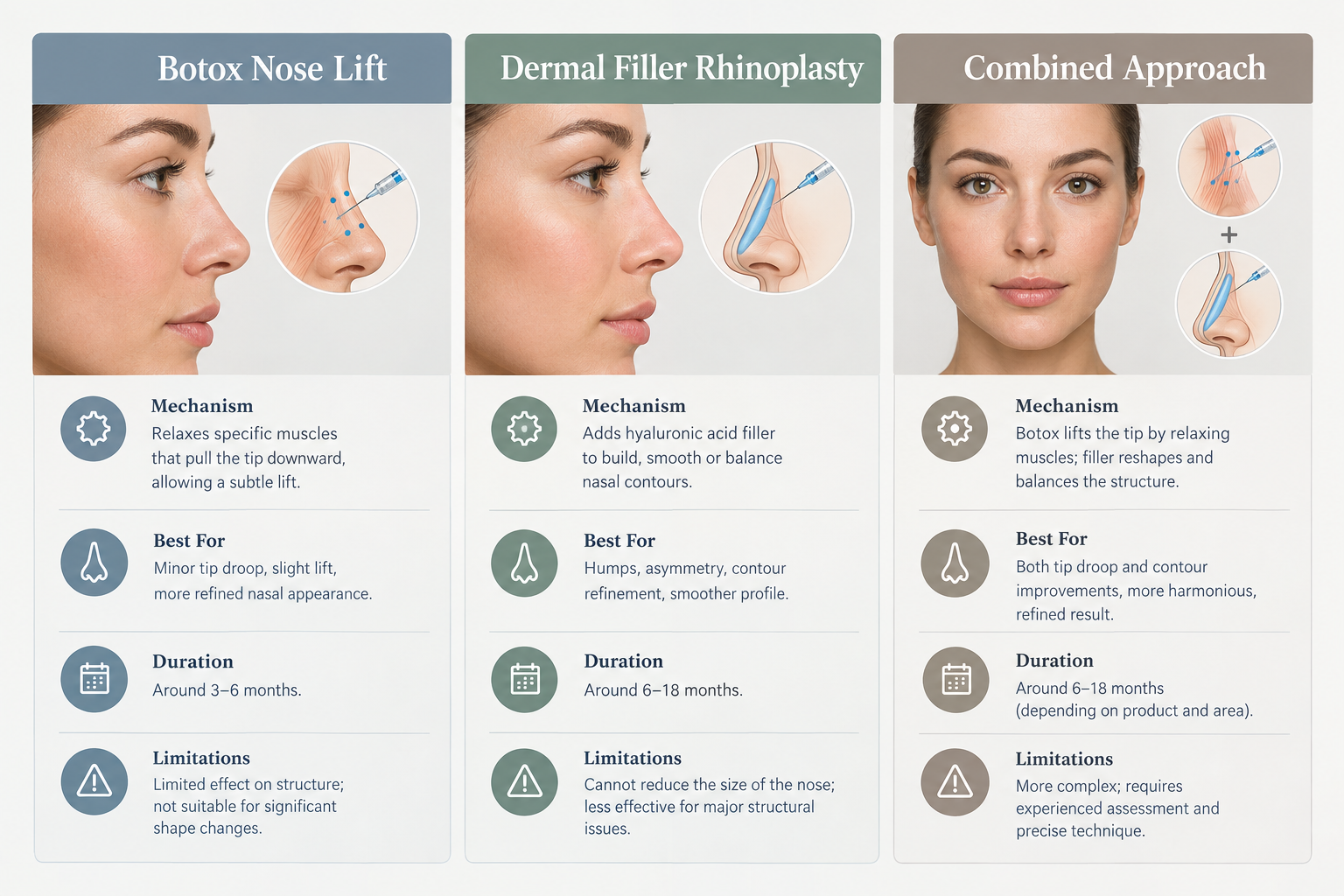
Some practitioners combine botulinum toxin and dermal filler techniques in the same appointment to address both dynamic muscle activity and structural concerns simultaneously. This combined approach may be appropriate for certain patients, but it also combines the risks of both treatments and requires a practitioner with expertise in both techniques.
Surgical rhinoplasty remains the most comprehensive option for patients with significant structural concerns. It offers permanent results and can address bone, cartilage, and soft tissue in ways that injectable treatments cannot. However, it involves general anaesthetic, a surgical recovery period, potential scarring, and a higher overall risk profile. The decision between surgical and non-surgical approaches depends on the nature and severity of the concern, the patient’s tolerance for risk and recovery, and their long-term goals.
Thread lifts for the nose — using absorbable sutures to mechanically lift the nasal tip — represent another non-surgical option that some practitioners offer. Evidence for this technique is more limited than for established injectable approaches, and the risk profile differs. Patients considering this option should seek detailed information about the evidence base and the practitioner’s specific experience.
Frequently Asked Questions
How soon will I see results after a Botox nose lift?
Botulinum toxin does not produce an immediate result. Most patients begin to notice a change within three to five days of treatment, with the full effect typically visible at around two weeks. If you are planning treatment before a specific event, it is advisable to allow at least two weeks for the result to develop fully.
Will the results look natural?
When performed by an experienced practitioner on a suitable candidate, the results of a Botox nose lift are generally subtle and unlikely to appear obviously treated. The change is typically a modest elevation of the nasal tip rather than a dramatic reshaping. However, if too much botulinum toxin is used or it spreads to adjacent muscles, the result may affect the natural movement of the lip or smile, which can look unnatural. Choosing a qualified and experienced practitioner reduces this risk.
Can a Botox nose lift fix a bump on my nose?
Botulinum toxin cannot remove or reduce a dorsal hump because it works by relaxing muscles, not by altering bone or cartilage. A dorsal hump is a structural feature that cannot be changed with muscle-relaxing injections. Dermal filler non-surgical rhinoplasty can sometimes create the visual impression of a smoother profile by adding volume above and below the hump, but this is an optical effect rather than a structural correction. Surgical rhinoplasty is the only approach that can permanently address a dorsal hump.
Is a Botox nose lift painful?
Most patients describe the injections as mildly uncomfortable rather than painful. The needles used are very fine, and the volume injected is small. A topical anaesthetic cream can be applied beforehand if preferred. Discomfort during the procedure is typically brief and resolves quickly.
How much does a Botox nose lift cost?
The cost varies depending on the clinic, the practitioner’s experience, the geographic location, and the specific botulinum toxin formulation used. Because results are temporary and repeat treatments are needed to maintain the effect, the ongoing cost over time should be considered alongside the initial appointment fee. A consultation with a qualified practitioner will provide a more accurate cost estimate based on your individual needs.
Can I combine a Botox nose lift with other treatments?
Some practitioners combine botulinum toxin with dermal fillers in the nasal area to address both dynamic muscle concerns and structural refinement in the same appointment. Whether this combination is appropriate depends on your individual anatomy, concerns, and medical history. Any combination of treatments should be discussed thoroughly during a consultation, including the combined risks and realistic expectations for the outcome.
What should I look for in a practitioner for this treatment?
Look for a practitioner with formal medical or dental qualifications, specific training and demonstrable experience in facial injectable treatments, a thorough understanding of nasal anatomy, and the ability to manage complications if they arise. A practitioner who takes time to assess your anatomy, discuss realistic expectations, and explain the risks honestly is more likely to deliver a safe and appropriate outcome than one who focuses primarily on selling the treatment.
Is a Botox Nose Lift the Right Choice for Your Concern?
A Botox nose lift is a genuinely useful technique for a specific and relatively narrow group of patients — primarily those whose nasal tip droops noticeably during facial expression due to an overactive depressor septi nasi muscle, or those with a mildly low-sitting tip at rest who are seeking a subtle, temporary improvement. For these patients, before-and-after results can show a meaningful and natural-looking change that improves confidence without surgery or significant downtime.
For patients with structural concerns — a dorsal hump, wide nasal bones, significant asymmetry, or a nose that appears disproportionately large — botulinum toxin alone is unlikely to deliver a satisfying result. In these cases, a filler-based non-surgical rhinoplasty, a combined injectable approach, or surgical rhinoplasty may be more appropriate depending on the degree of change required and the patient’s individual circumstances.
The most important step before any nasal treatment is an honest, thorough consultation with a qualified practitioner who can assess your anatomy, explain what is and is not achievable, and help you make an informed decision. Realistic expectations, appropriate patient selection, and practitioner expertise are the factors most likely to determine whether the before-and-after result meets your goals.
