
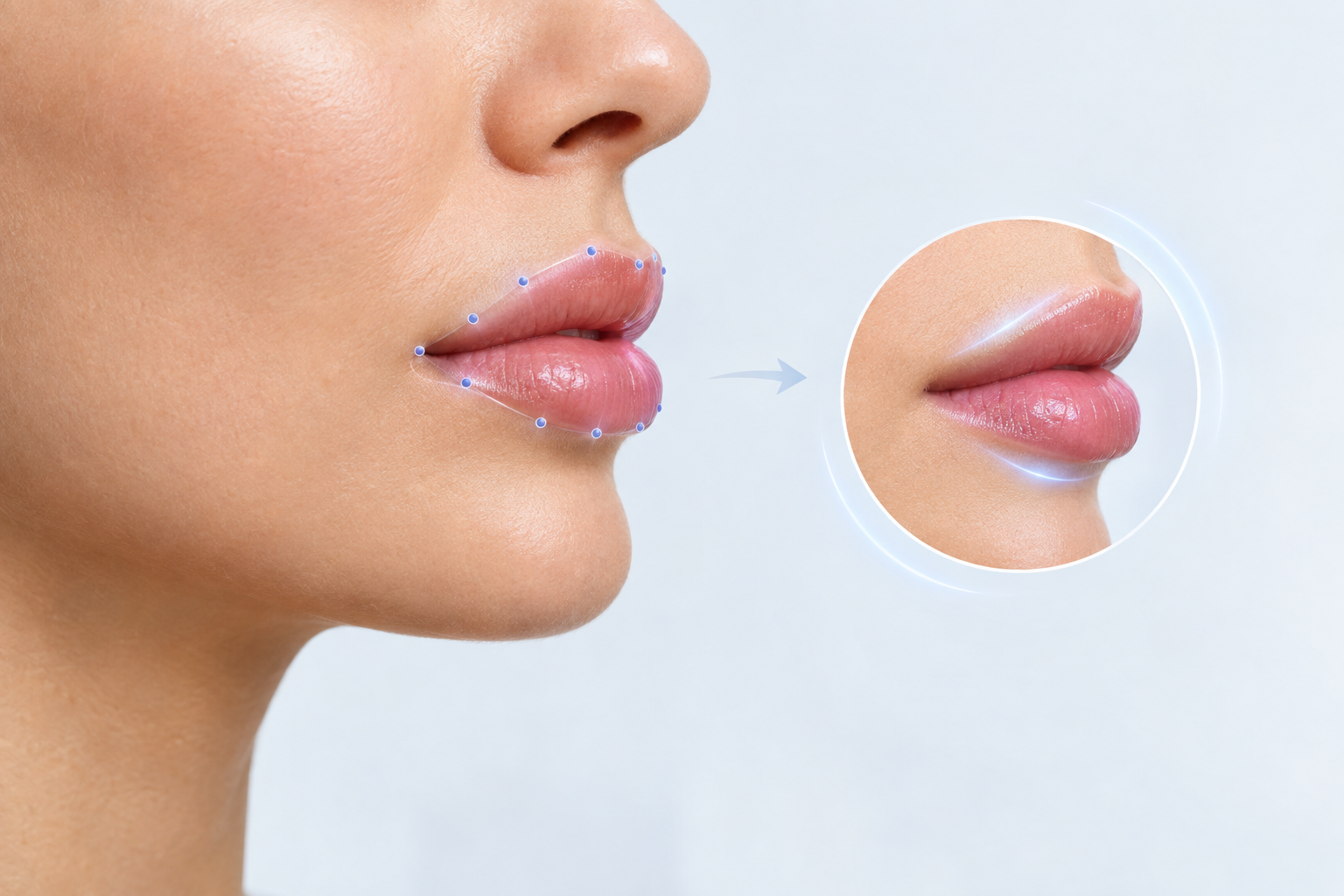

Lip filler aftercare plays a significant role in how comfortably you recover and how well your results turn out. Knowing what to do — and what to avoid — in the hours, days, and weeks after your injections can help reduce swelling and bruising, lower the risk of complications, and support the natural-looking results you came for. This guide covers everything from the first few hours post-treatment through to long-term maintenance habits, including some practical details that are rarely explained in full.
Key Takeaways
- Swelling peaks at 24–48 hours and typically settles within 1–2 weeks; the initial puffiness does not reflect your final result.
- Avoiding heat, strenuous exercise, alcohol, and pressure on the lips for at least 48 hours is among the most important steps you can take after treatment.
- A cold compress applied correctly can reduce swelling; direct ice contact with the skin should be avoided.
- Most hyaluronic acid fillers settle fully within 2–4 weeks, after which a follow-up appointment can assess whether a touch-up is needed.
- Certain warning signs — including severe or worsening pain, pale or bluish discolouration, or signs of infection — require prompt contact with your provider.
What to Expect Immediately After Lip Filler Injections
In the first hour or two after treatment, your lips will likely feel tender, look puffy, and may show small marks at each injection site. Some redness and numbness are normal at this stage, particularly if a topical anaesthetic was used. The lips may feel firm or uneven initially, which is a normal part of the early healing process rather than a sign that something has gone wrong.
One nuance worth knowing: if a dental block or topical numbing agent was applied, it may still be partially active for an hour or more after you leave the clinic. This means you may not feel heat as accurately as usual, so avoid hot drinks and hot food until full sensation has returned — not just to protect the injection sites, but to avoid an accidental burn to numb tissue. This detail is rarely mentioned but clinically relevant.
Avoid touching your lips during this early window. The filler has been placed precisely by your practitioner, and unnecessary pressure or manipulation in the first few hours carries a small risk of filler displacement before the product has begun to integrate with surrounding tissue.
The Swelling Stages: What Is Normal and When Does It Peak?
Swelling after lip filler injections follows a fairly predictable pattern. Mild puffiness begins almost immediately and typically peaks between 24 and 48 hours after treatment. During this phase — sometimes informally called the duck lip phase — the lips can look significantly larger than the intended final result. This is normal and does not mean you have been overfilled. Fluid pooling in the treated tissue is the main cause, not excess product.
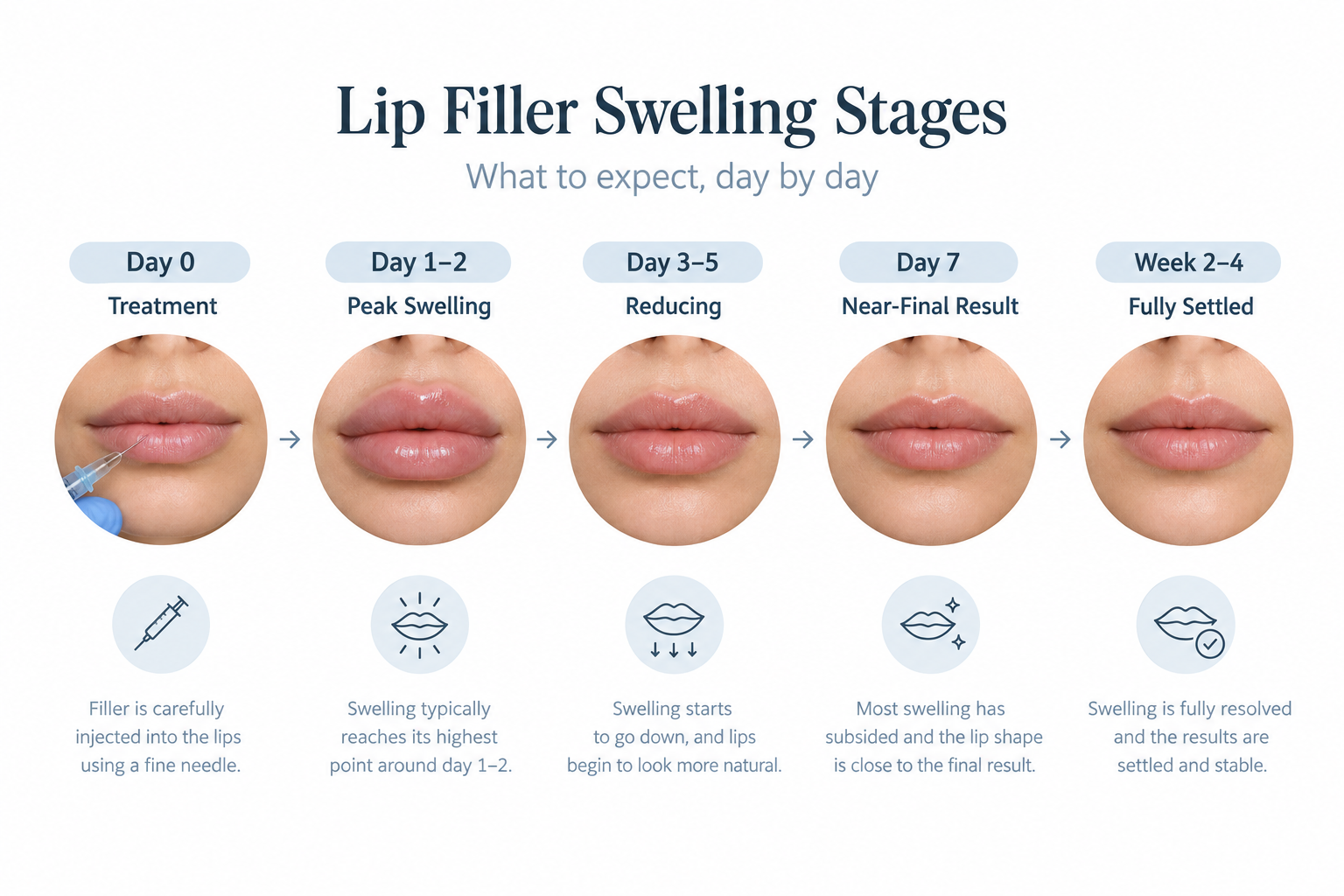
By days 3 to 5, swelling usually begins to reduce noticeably. Most patients find that by day 7 their lips look much closer to the expected outcome, though some residual swelling can persist for up to two weeks. Asymmetry during the swelling phase is also common and usually resolves on its own as the tissue settles. If significant unevenness remains after two weeks, raise it at your follow-up appointment rather than attempting to massage or manipulate the area yourself.
Morning swelling tends to be more pronounced than later in the day, particularly in the first few days. Sleeping with your head elevated — using an extra pillow — can help reduce overnight fluid accumulation and make the mornings more comfortable.
How to Reduce Swelling and Bruising After Treatment
A cold compress is one of the most effective tools for managing swelling in the first 24–48 hours. Apply a clean cloth-wrapped ice pack to the lips for 10–15 minutes at a time, with breaks in between. Never apply ice directly to the skin or injection sites, as this can cause tissue damage. Some practitioners advise against ice entirely if the skin is very sensitive; if you are unsure, ask your provider what they recommend for your specific situation.
Bruising at the injection site is common and results from small blood vessels being disrupted during the injection process. The bruise colour typically progresses from purple or red through green to yellow over several days before fading. To help reduce bruising, avoid blood-thinning medications such as aspirin and ibuprofen (NSAIDs) after treatment unless medically necessary — these can increase bleeding and worsen bruising. Acetaminophen (paracetamol) is generally considered a safer option for mild discomfort after lip filler injections, but always follow your provider's specific guidance.
Arnica gel or arnica tablets are widely used to support bruise resolution and are mentioned by many practitioners as a helpful adjunct. Vitamin K cream is another option some patients find useful. Neither replaces good aftercare, but both may help speed up the visible bruise colour cycle. Avoid alcohol for at least 24–48 hours, as it dilates blood vessels and can worsen both swelling and bruising.
Lip Filler Aftercare Do's and Don'ts
Clear guidance on what to do and what to avoid makes the recovery process considerably easier. The following covers the most important points for the first two weeks after treatment.
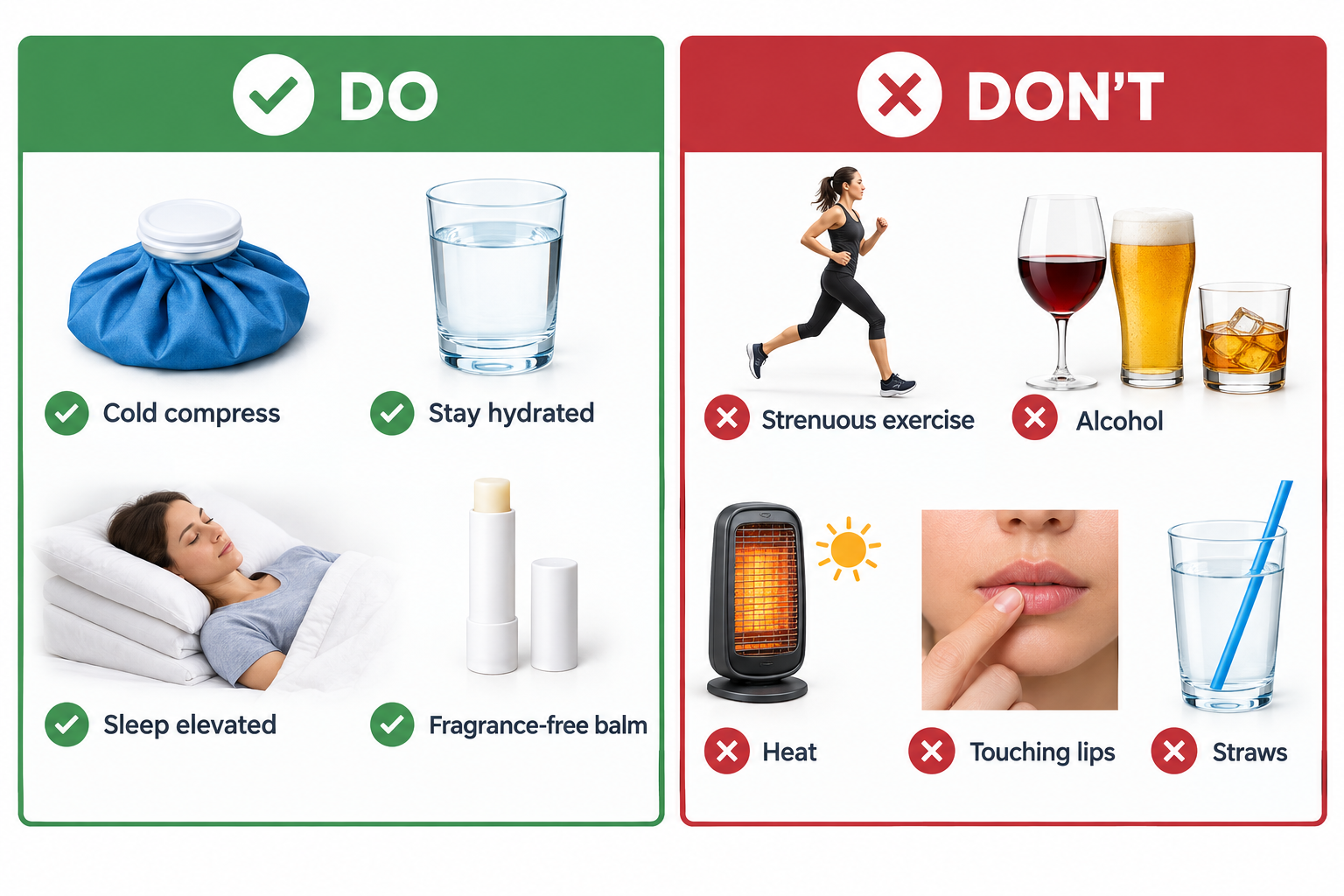
What to Do
- Apply a cold compress wrapped in a clean cloth for 10–15 minutes at a time during the first 24–48 hours to manage swelling.
- Stay hydrated. Hyaluronic acid filler attracts and binds water, so drinking plenty of water supports the filler settling process and overall tissue health.
- Sleep with your head elevated for the first few nights to reduce overnight swelling.
- Use a fragrance-free lip balm such as Aquaphor or Vaseline to keep the lips moisturised and protect the injection sites as they heal.
- Take acetaminophen if you need mild pain relief, unless your provider has advised otherwise.
- Attend your follow-up appointment as scheduled, typically 2–4 weeks after treatment, to assess the result and discuss whether a touch-up is appropriate.
- Keep the area clean using a gentle, fragrance-free cleanser and change your pillowcase regularly to reduce bacteria near the healing injection sites.
What to Avoid
- Avoid touching or massaging your lips unless specifically instructed to do so by your practitioner. Unnecessary pressure can cause filler migration or displacement.
- Avoid strenuous exercise for at least 24–48 hours. Elevated heart rate and blood pressure increase blood flow to the face, which can worsen swelling and bruising.
- Avoid alcohol for at least 24–48 hours post-treatment.
- Avoid blood-thinning medications such as aspirin and ibuprofen unless medically necessary.
- Avoid saunas, steam rooms, hot tubs, and hot yoga for at least one week. Heat causes vasodilation, which increases swelling and may affect filler integration.
- Avoid kissing and using straws for at least 24–48 hours. The suction motion and pressure involved can displace filler before it has fully settled.
- Avoid applying lipstick or lip makeup for at least 24 hours to reduce the risk of introducing bacteria to the injection sites.
- Avoid spicy or very salty foods for the first 48 hours. Spicy foods cause vasodilation, which can increase swelling; salty foods promote fluid retention.
- Avoid smoking and vaping. Beyond the general health implications, smoking impairs circulation and wound healing, may increase infection risk, and some evidence suggests it can accelerate the breakdown of hyaluronic acid filler over time.
- Avoid hot drinks and hot food until full sensation has returned to the lips, particularly if a numbing agent was used during treatment.
Flying After Lip Fillers: What You Should Know
Flying after lip filler treatment is a topic that rarely receives the attention it deserves. Cabin pressure in commercial aircraft is lower than at sea level, and the air inside the cabin is significantly drier than normal environments. Both factors can contribute to increased swelling and dehydration of the tissue in the days immediately following injections. Most practitioners suggest waiting at least five to seven days before flying if possible, particularly for long-haul flights. If you must fly sooner, staying well hydrated, avoiding alcohol on the flight, and applying a fragrance-free lip balm regularly can help manage discomfort. Inform your practitioner if you have a flight booked close to your treatment date so they can advise accordingly.
Dental Work After Lip Fillers
Dental procedures involve significant manipulation of the lips and surrounding tissue, and the mouth carries a high bacterial load. For these reasons, most practitioners recommend avoiding dental work — including routine check-ups and hygienist appointments — for at least two weeks after lip filler injections. Pressure on the lips during dental treatment can cause filler displacement, and the risk of introducing bacteria near the injection sites is a genuine concern during the early healing period. If dental work is urgent, inform both your dentist and your filler practitioner so they can advise on the safest approach.
Filler Settling and Long-Term Maintenance
The filler settling process continues beyond the first week. Most hyaluronic acid fillers integrate fully with the surrounding tissue over two to four weeks, after which the result becomes more stable and the texture softens. During this period, the lips may still feel slightly firm or uneven in places — this is normal and usually resolves without intervention.
For long-term maintenance, a few habits can help preserve your results. Applying SPF lip protection regularly is worthwhile because UV exposure can accelerate the breakdown of hyaluronic acid filler over time, just as it degrades collagen in the skin. Staying well hydrated supports the water-binding properties of HA filler. Avoiding smoking, excessive alcohol, and overtraining (which can increase systemic inflammation) may also contribute to longer-lasting results, though individual variation is significant.
Most hyaluronic acid lip fillers last between 6 and 12 months, depending on the product used, the amount injected, your metabolism, and lifestyle factors. A follow-up appointment at 2–4 weeks allows your practitioner to assess the settled result and discuss whether a top-up would be beneficial. Subsequent maintenance appointments are typically scheduled every 6–12 months, though this varies by individual.
Myths vs. Facts About Lip Filler Aftercare
A number of misconceptions circulate about what is and is not safe after lip filler treatment. Addressing these directly can reduce unnecessary anxiety and help you make better decisions during recovery.
- Myth: Drinking through a straw will dissolve your filler. Fact: Straws do not dissolve hyaluronic acid filler. The concern is mechanical — the suction and pursing motion can put pressure on the lips and potentially displace filler in the first 24–48 hours before it has settled. After that window, occasional straw use is generally fine.
- Myth: You must avoid all lip products for weeks. Fact: A fragrance-free, gentle lip balm such as Aquaphor can typically be applied from the day of treatment to keep the lips moisturised. The restriction applies mainly to lipstick and makeup products that could introduce bacteria to the injection sites in the first 24 hours.
- Myth: Lumps and bumps mean the filler was placed incorrectly. Fact: Small lumps and irregularities are common in the first one to two weeks and usually reflect swelling and the early filler settling process rather than a placement error. Most resolve on their own. Persistent lumps after two weeks should be assessed by your practitioner.
- Myth: Ice should never be used after lip fillers. Fact: Some sources advise against ice, but the concern is direct ice-to-skin contact, which can cause tissue damage. A cold compress wrapped in a clean cloth, applied in short intervals, is generally considered appropriate and helpful for managing swelling in the first 24–48 hours.
- Myth: The result you see on day one is your final result. Fact: The initial appearance reflects swelling, not the settled outcome. Most patients find their lips look significantly different — and closer to the intended result — after one to two weeks.
Warning Signs: When to Contact Your Provider
Most side effects after lip filler injections are mild and temporary. However, certain symptoms require prompt attention from your practitioner or, in urgent cases, medical care.
- Severe or worsening pain that does not improve with time or over-the-counter pain relief.
- Pale, white, or bluish discolouration of the lips or surrounding skin — this can be a sign of vascular compromise, where filler has inadvertently affected blood supply to the tissue. This is a rare but serious complication that requires immediate medical attention.
- Signs of infection at or around the injection site, including increasing redness, warmth, swelling that worsens after the first 48 hours, or any discharge.
- Prolonged or worsening lumps and bumps that do not improve after two weeks.
- Significant asymmetry that persists beyond two weeks after treatment.
- Fever or flu-like symptoms developing after treatment.
Vascular compromise is rare but represents the most serious potential complication of lip filler injections. Symptoms can include sudden blanching (whitening) of the skin, mottled discolouration, or severe pain. If you experience any of these, contact your provider immediately or seek emergency medical care. Hyaluronic acid filler can be dissolved with an enzyme called hyaluronidase, which is why choosing a qualified, medically trained practitioner who carries this reversal agent is an important safety consideration.
Preparing Before Your Appointment: Pre-Treatment Tips
Good aftercare actually begins before your appointment. In the 24–48 hours before treatment, avoiding blood-thinning medications such as aspirin, ibuprofen, and high-dose vitamin E supplements can reduce your risk of bruising. Avoiding alcohol for at least 24 hours before treatment has the same effect. Some practitioners also recommend starting arnica tablets a few days before the appointment to pre-emptively support bruise reduction, though you should confirm this with your provider first.
Arriving at your appointment with clean, makeup-free lips reduces the risk of bacteria being introduced during the injection process. If you have a history of cold sores (oral herpes), inform your practitioner in advance — lip filler injections can trigger an outbreak in susceptible individuals, and antiviral medication taken before treatment may be recommended as a precaution.
Frequently Asked Questions
When can I kiss after lip fillers?
Most practitioners recommend avoiding kissing for at least 24–48 hours after treatment. The pressure involved can displace filler before it has settled. After 48 hours, gentle kissing is generally considered acceptable, though you should follow your specific provider's guidance.
When can I wear lipstick after lip fillers?
Avoid applying lipstick or lip makeup for at least 24 hours after treatment to reduce the risk of introducing bacteria to the injection sites. After 24 hours, most patients can resume lip products, provided the injection sites appear to be healing normally.
When can I exercise after lip fillers?
Light walking is generally acceptable on the day of treatment. Strenuous exercise — including cardio, weightlifting, hot yoga, and any activity that significantly raises your heart rate or blood pressure — should be avoided for at least 24–48 hours. Some practitioners recommend waiting a full week before returning to intense training.
When can I drink alcohol after lip fillers?
Avoid alcohol for at least 24–48 hours after treatment. Alcohol dilates blood vessels, which can worsen swelling and bruising during the early healing process.
How long does swelling last after lip fillers?
Swelling typically peaks at 24–48 hours and begins to reduce noticeably by days 3–5. Most patients find swelling has largely resolved by day 7–10, though some residual swelling can persist for up to two weeks. The lips continue to settle and soften over the following two to four weeks.
Can I fly after lip fillers?
It is generally advisable to wait at least five to seven days before flying if possible. Cabin pressure and dry air can worsen swelling and dehydrate the tissue. If you must fly sooner, stay hydrated, avoid alcohol on the flight, and use a fragrance-free lip balm regularly.
Will my lips look normal after two weeks?
For most patients, the lips look close to the intended result by the end of the first week, with continued subtle improvement over the following two to four weeks as the filler fully integrates. Your follow-up appointment at 2–4 weeks is the appropriate time to assess the final result.
Making the Most of Your Lip Filler Recovery
Lip filler aftercare is not complicated, but it does require some attention in the first 48 hours and a few sensible habits over the following two weeks. The most important steps — avoiding heat, pressure, alcohol, and strenuous exercise in the early recovery period, staying hydrated, sleeping with your head elevated, and attending your follow-up appointment — are straightforward to follow and make a genuine difference to both comfort and outcome.
The duck lip phase and morning-after puffiness are real experiences that can feel alarming if you are not expecting them. Understanding that this is a normal part of the healing process, and that the initial appearance does not reflect your final result, can make the recovery period considerably less stressful. Most patients find that by the end of the first week, their lips look much closer to what they hoped for.
If you have any concerns during your recovery — particularly about warning signs such as unusual pain, discolouration, or signs of infection — contact your practitioner promptly rather than waiting. A qualified provider will always prefer to assess a concern early. And if you are still deciding whether lip filler is right for you, a consultation with a medically trained practitioner is the best starting point for understanding what to realistically expect before, during, and after treatment.
