

Rosacea is a chronic skin condition that causes persistent facial redness, visible blood vessels, and intermittent flushing — and for many people, topical creams and lifestyle adjustments alone are not enough to manage it. Laser treatment for rosacea has become one of the most clinically supported options for reducing diffuse redness and telangiectasia, particularly in the erythematotelangiectatic subtype. This guide explains how different lasers work, which devices are used, who may benefit, what the treatment involves, and what realistic outcomes look like.
Key Takeaways
- Laser and light-based treatments can significantly reduce facial redness and visible blood vessels in rosacea, but they do not cure the condition — maintenance treatments are typically needed over time.
- The pulsed dye laser (PDL) and intense pulsed light (IPL) are the most widely used options for erythematotelangiectatic rosacea; Nd:YAG laser is generally preferred for patients with darker skin tones.
- IPL is technically not a laser — it uses broadband light across a range of wavelengths rather than a single coherent beam, which affects how it is calibrated and who can safely receive it.
- Laser treatment has limited effectiveness for the papulopustular (acne-like) subtype of rosacea, where medical therapies such as topical ivermectin or oral antibiotics are usually the first-line approach.
- A consultation with a board-certified dermatologist or qualified laser practitioner is essential to determine the right device, settings, and treatment plan for your skin type and rosacea subtype.
How Laser Treatment Works on Rosacea
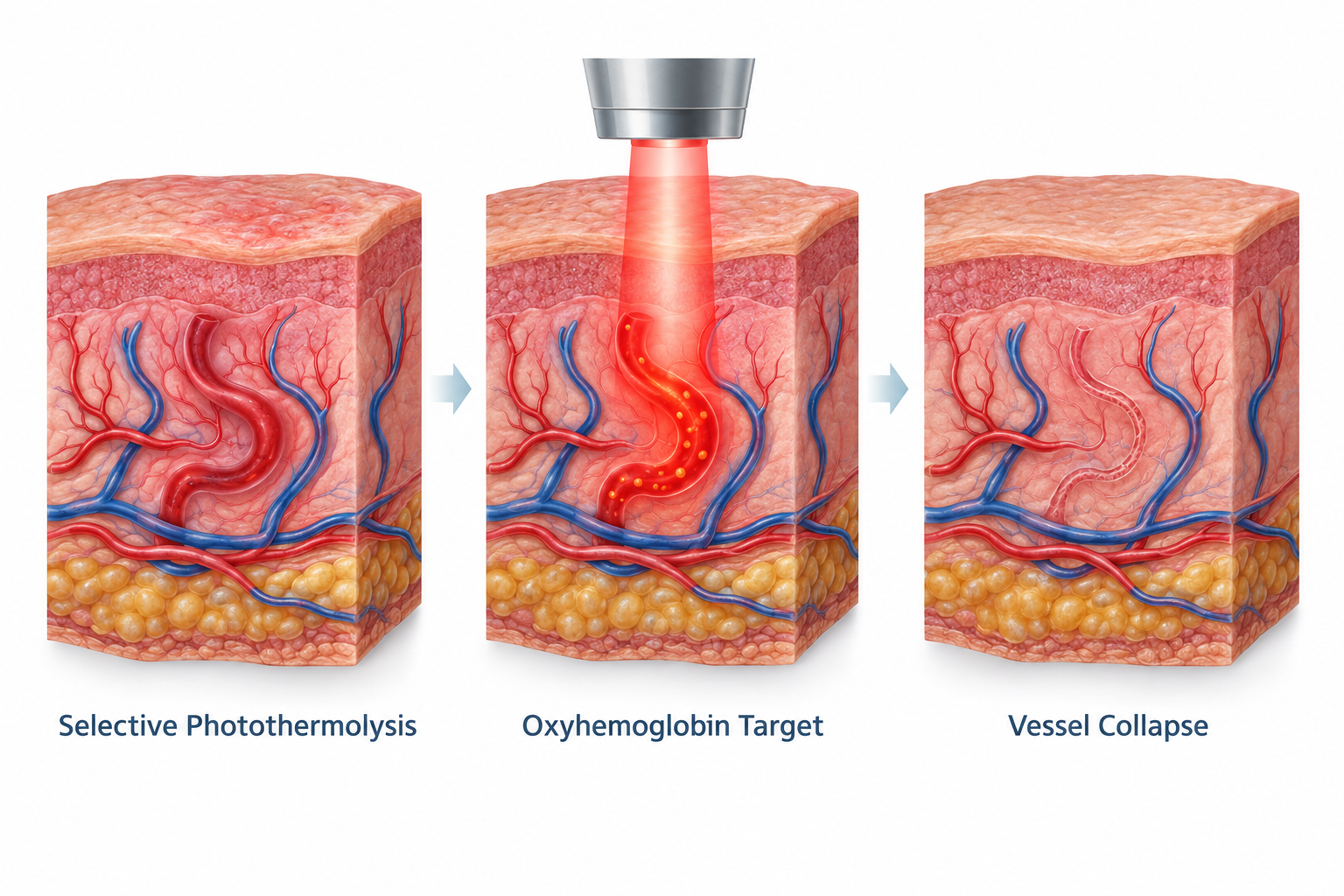
The scientific principle behind vascular laser treatment for rosacea is called selective photothermolysis. This means that a specific wavelength of light is chosen to be absorbed preferentially by a target chromophore — in this case, oxyhemoglobin, the pigment found in red blood cells inside the dilated vessels that cause rosacea redness. When the laser energy is absorbed, it generates localised heat within the vessel wall, causing it to collapse and be gradually reabsorbed by the body. Surrounding skin tissue is largely spared because it does not absorb that wavelength as strongly.
The result is a reduction in the number and visibility of superficial blood vessels, which translates to less persistent redness and fewer visible broken capillaries on the face. Some devices also stimulate collagen production in the dermis as a secondary effect, which can improve overall skin texture alongside the vascular improvements. It is important to understand that laser treatment addresses the visible consequences of rosacea — the dilated vessels and erythema — rather than the underlying neurovascular dysfunction that drives the condition.
Types of Lasers and Devices Used for Rosacea
Several different laser and light-based technologies are used to treat rosacea redness, each with different wavelengths, mechanisms, and suitability profiles. Choosing the right device depends on the specific rosacea subtype, the nature of the redness (diffuse versus discrete vessels), and the patient's Fitzpatrick skin type.
Pulsed Dye Laser (PDL)
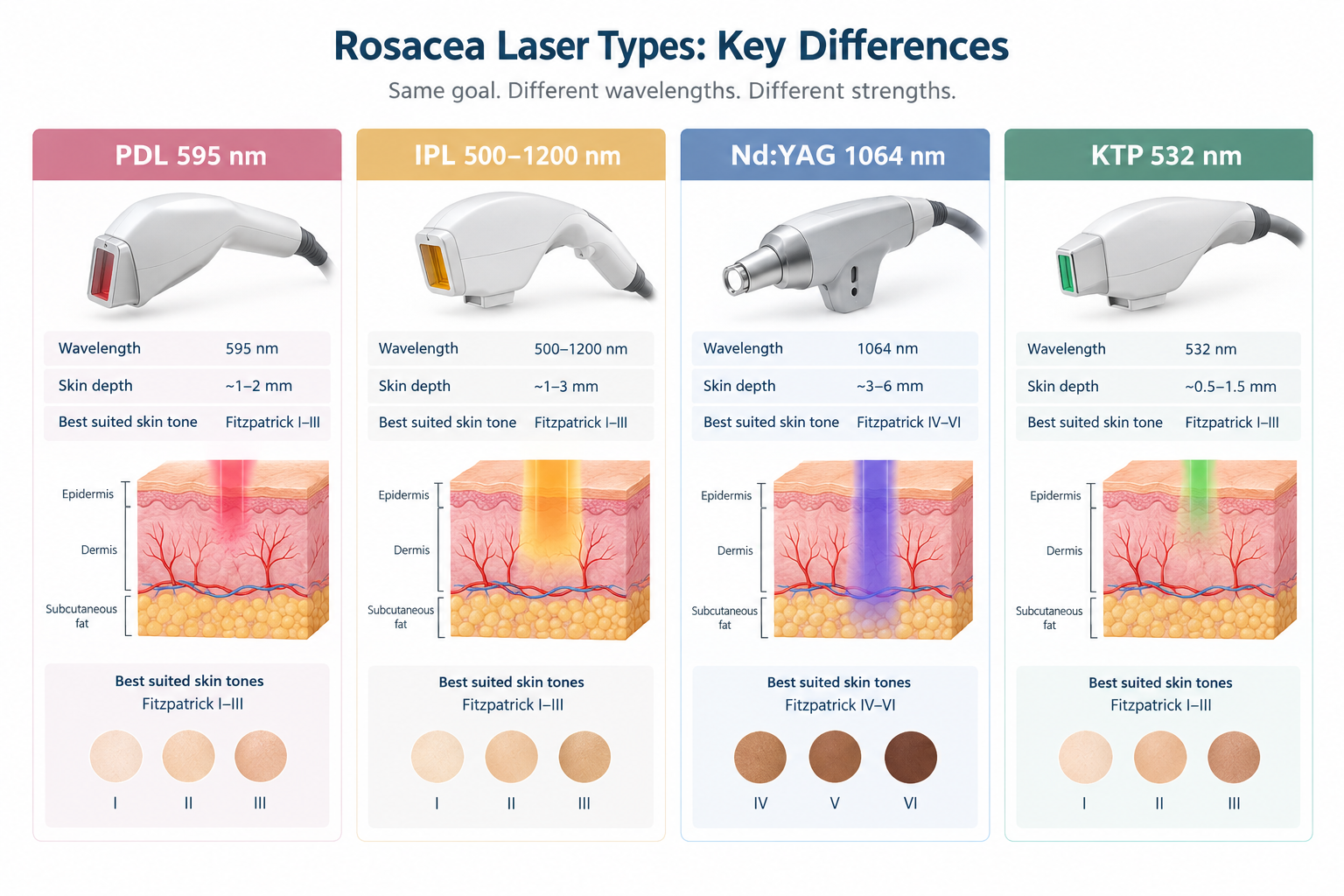
The pulsed dye laser, operating at 585–595 nm, is widely regarded as the gold-standard vascular laser for erythematotelangiectatic rosacea. Its wavelength is highly absorbed by oxyhemoglobin, making it very effective at targeting superficial blood vessels. PDL can be delivered at purpuragenic settings — which may cause temporary bruising — or at non-purpuragenic settings with lower fluence, which reduces downtime while still achieving meaningful improvement over a course of sessions. Well-known PDL devices include the Vbeam and Vbeam Perfecta. Most patients require three to six sessions spaced three to six weeks apart.
Intense Pulsed Light (IPL)
IPL is frequently grouped with lasers in patient-facing discussions, but it is technically distinct. Unlike a laser, which emits a single coherent wavelength, IPL devices emit a broad spectrum of light — typically 500–1200 nm — filtered to target specific chromophores. This makes IPL versatile for treating both redness and pigmentation simultaneously, but it also means that calibration is more complex and the risk of unintended melanin absorption is higher. IPL is generally well suited to fair skin (Fitzpatrick types I–III) and is less appropriate for darker skin tones without careful wavelength filtering. Devices such as BroadBand Light (BBL) represent advanced IPL platforms with more precise control.
Nd:YAG Laser (1064 nm)
The Nd:YAG laser operates at 1064 nm, a longer wavelength that penetrates more deeply into the skin and is less strongly absorbed by melanin than shorter-wavelength devices. This makes the Nd:YAG laser the preferred vascular option for patients with Fitzpatrick skin types IV through VI, where the risk of post-inflammatory hyperpigmentation from PDL or IPL is considerably higher. The Excel V is a commonly used device that combines a 532 nm KTP laser with a 1064 nm Nd:YAG in a single platform, allowing practitioners to treat both fine telangiectasia and deeper vessels.
KTP Laser (532 nm)
The potassium-titanyl phosphate (KTP) laser emits green light at 532 nm, which is strongly absorbed by oxyhemoglobin and well suited to treating fine, superficial telangiectasia. It is effective for discrete visible vessels but is generally less suitable for diffuse background redness compared to PDL. Like IPL, KTP lasers carry a higher risk of melanin absorption in darker skin tones and are typically used in patients with lighter complexions.
CO₂ and Er:YAG Lasers for Rhinophyma
Ablative lasers such as the CO₂ laser and Er:YAG laser are not used for vascular rosacea redness. Instead, they are reserved for phymatous rosacea — specifically rhinophyma, the thickening and enlargement of nasal skin tissue that can develop in some patients with long-standing rosacea. These ablative devices resurface and reshape the affected tissue. They carry more significant downtime and recovery requirements than non-ablative vascular lasers and are a distinct treatment category.
Laser Genesis and Other Non-Ablative Options
Laser Genesis uses a 1064 nm Nd:YAG laser delivered at low fluence in a gentle, non-purpuragenic manner. It is sometimes used for diffuse redness and mild rosacea, particularly in patients who cannot tolerate more aggressive settings. It also provides collagen stimulation as a secondary benefit. Clear + Brilliant is another mild non-ablative laser occasionally used as part of a broader skin rejuvenation approach in rosacea patients, though its primary indication is not vascular.
| Device / Technology | Wavelength | Best For | Skin Type Suitability | Typical Downtime |
|---|---|---|---|---|
| Pulsed Dye Laser (PDL) | 585–595 nm | Diffuse redness, telangiectasia, ETR | Fitzpatrick I–III (best) | 1–14 days (bruising possible) |
| IPL / BBL | 500–1200 nm (filtered) | Redness + pigmentation, ETR | Fitzpatrick I–III | 1–5 days |
| KTP Laser (532 nm) | 532 nm | Discrete fine vessels | Fitzpatrick I–III | 1–3 days |
| Nd:YAG (1064 nm) | 1064 nm | Deeper vessels, darker skin tones | Fitzpatrick I–VI | 1–3 days |
| CO₂ / Er:YAG | Ablative | Rhinophyma (skin thickening) | Varies; careful assessment needed | 1–3 weeks |
| Laser Genesis | 1064 nm (low fluence) | Mild diffuse redness, collagen | Fitzpatrick I–V | Minimal |
Which Rosacea Subtype Responds Best to Laser?
Rosacea is not a single uniform condition — it is classified into subtypes, and laser treatment is not equally effective across all of them. Understanding which subtype you have is one of the most important factors in determining whether laser is likely to help.
Erythematotelangiectatic rosacea (ETR) is the subtype that responds best to vascular laser treatment. ETR is characterised by persistent central facial redness, visible telangiectasia, and flushing. PDL and IPL have the strongest evidence base for this subtype, with multiple clinical studies demonstrating meaningful reductions in erythema and vessel visibility after a treatment course.
Papulopustular rosacea (PPR) presents with inflammatory papules and pustules resembling acne, alongside redness. Laser treatment has limited efficacy for the inflammatory component of PPR. The primary treatments for PPR are medical — topical agents such as metronidazole, ivermectin, and azelaic acid, or oral antibiotics such as doxycycline. Laser may be used as an adjunct to reduce background redness once the inflammatory component is controlled, but it should not be the first-line approach for active PPR.
An important nuance that is often overlooked: laser treatment is more effective at reducing persistent baseline redness than at controlling neurovascular flushing episodes. Flushing — the transient reddening triggered by heat, exercise, alcohol, or emotional stress — has a different physiological mechanism and may not respond as well to vascular laser treatment alone. Patients whose primary complaint is flushing rather than fixed redness should discuss this distinction with their practitioner before committing to a treatment course.
Who May Be a Suitable Candidate?
Laser treatment for rosacea is most appropriate for adults with persistent facial redness, visible blood vessels, or telangiectasia that has not responded adequately to topical treatments alone. Patients with lighter skin tones (Fitzpatrick types I–III) generally have the widest choice of devices and the most favourable safety profile for PDL and IPL.
Patients with darker skin tones (Fitzpatrick types IV–VI) can still be treated, but device selection is critical. The Nd:YAG laser at 1064 nm is generally the safest option for these patients because its longer wavelength is less absorbed by melanin, reducing the risk of post-inflammatory hyperpigmentation. Cooling protocols and conservative settings are also important. Patients with darker skin tones should seek a practitioner with specific experience in treating their skin type and should be cautious of clinics that use IPL or PDL at standard settings without adjusting for melanin competition.
Factors that may affect suitability or require discussion with a practitioner include:
- Active rosacea flare-up or significant skin inflammation at the time of treatment — most practitioners prefer to treat during a stable phase
- Recent sun exposure or tanned skin, which increases the risk of pigmentation changes
- Use of photosensitising medications, including certain antibiotics and retinoids
- Recent use of isotretinoin — a waiting period of typically six to twelve months is usually recommended before laser treatment
- Pregnancy or breastfeeding
- Blood-clotting disorders or anticoagulant medications, which may increase bruising risk
- History of keloid scarring
What Happens During a Laser Treatment Session?
A typical laser treatment course for rosacea begins with a consultation, during which the practitioner assesses the rosacea subtype, skin tone, medical history, and treatment goals. Photographs are usually taken for comparison, and a test spot may be performed to assess skin response before a full session.
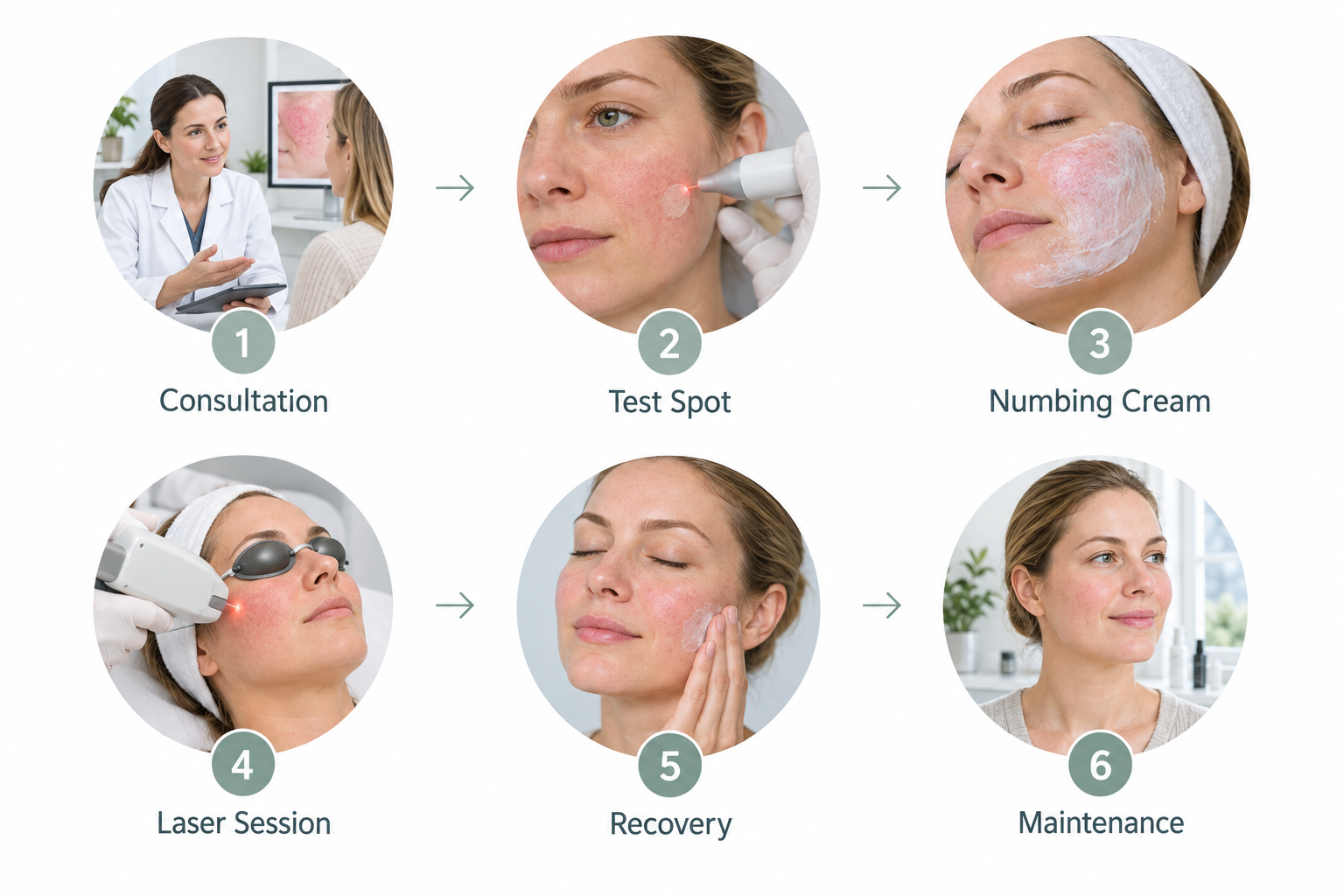
On the day of treatment, a topical numbing cream such as EMLA may be applied to the treatment area approximately 30–60 minutes before the session, though many patients find vascular laser treatment tolerable without it. Protective eyewear is worn throughout the procedure. The practitioner passes the laser handpiece over the treatment area, delivering pulses of light. Patients typically describe the sensation as a brief snapping or stinging feeling with each pulse, similar to a rubber band flicking against the skin.
Sessions generally last between 15 and 45 minutes depending on the size of the treatment area and the device used. Immediately after treatment, the skin will appear red and may feel warm, similar to mild sunburn. Some devices at higher settings may produce temporary purpura — a bruise-like discolouration — that resolves over one to two weeks. Most patients can return to normal activities the same day or the following day, though sun exposure should be avoided during recovery.
A full treatment course typically involves three to six sessions for PDL or IPL, spaced three to six weeks apart. Some patients with more extensive telangiectasia may require up to nine sessions. Results are usually visible after the second or third session, with continued improvement throughout the course.
Side Effects and Risks
Laser treatment for rosacea is generally well tolerated when performed by a qualified practitioner using appropriate settings for the patient's skin type. However, side effects are possible and patients should have a clear understanding of what may occur.
Common and expected side effects include temporary redness, swelling, and a warm or sunburn-like sensation immediately after treatment. These typically resolve within a few hours to a few days. At purpuragenic settings, PDL can cause bruising that lasts one to two weeks — this is a known and manageable outcome rather than a complication, but patients should plan their schedule accordingly.
Less common but possible risks include:
- Post-inflammatory hyperpigmentation (PIH): Darkening of the treated skin, more likely in patients with darker Fitzpatrick skin types or those treated with inadequate cooling or inappropriate settings
- Blistering or crusting: Usually associated with excessive fluence or inadequate cooling; resolves with appropriate aftercare
- Prolonged erythema: Redness lasting beyond the expected recovery period
- Scarring: Rare when treatment is performed correctly, but a risk with any energy-based device
- Pigmentation changes: Both hyperpigmentation and, less commonly, hypopigmentation (lightening) can occur
The risk of adverse effects is significantly reduced when treatment is performed by an experienced, board-certified dermatologist or qualified laser practitioner who selects appropriate device settings for the individual patient's skin type and condition.
Aftercare and Recovery
Aftercare following laser treatment for rosacea is straightforward but important for both safety and results. The treated skin is temporarily more sensitive and vulnerable to UV damage, so applying a broad-spectrum sunscreen with SPF 30 or higher — ideally SPF 50+ — every day is essential during the recovery period and beyond. Sun exposure should be minimised for at least two weeks after each session.
A gentle, fragrance-free moisturiser helps to soothe and support the skin barrier during recovery. Patients should avoid hot showers, saunas, vigorous exercise, and other heat sources for 24–48 hours after treatment, as these can exacerbate post-treatment redness. Skincare products containing active ingredients such as retinoids, acids, or exfoliants should be paused until the skin has fully settled, typically for one to two weeks.
Trigger avoidance remains important throughout and after the treatment course. Common rosacea triggers — including spicy food, hot drinks, alcohol, temperature extremes, and emotional stress — can provoke flushing and may affect how well the skin heals between sessions. Patients who combine laser treatment with consistent trigger avoidance tend to maintain their results for longer.
Combining Laser with Other Rosacea Treatments
Laser treatment works best as part of a broader rosacea management strategy rather than as a standalone solution. Combination therapy — pairing laser or light-based treatment with appropriate medical therapies — is supported by clinical evidence and can produce more durable results than either approach alone.
For patients with erythematotelangiectatic rosacea, topical agents such as azelaic acid or brimonidine gel can help manage background redness between laser sessions. For those with a papulopustular component, topical ivermectin or metronidazole addresses the inflammatory lesions that laser cannot effectively target. Oral doxycycline at sub-antimicrobial doses is sometimes used alongside laser treatment to reduce inflammation during the treatment course.
Photodynamic therapy (ALA-PDT) is an emerging option that combines a photosensitising agent with light activation and may have a role in more resistant rosacea cases, though evidence in this specific application is still developing. Microneedling radiofrequency (RF) is occasionally used as a complementary approach for skin texture and mild redness, though it is not a primary vascular treatment.
Maintenance treatments are a realistic expectation for most rosacea patients. Because rosacea is a chronic skin condition and new blood vessels can form over time, the improvements achieved with a treatment course will gradually diminish without periodic maintenance sessions — typically once or twice a year depending on the individual's response and disease activity.
Cost and Insurance Considerations
Laser treatment for rosacea is generally considered a cosmetic procedure and is not typically covered by health insurance in most countries, including the United Kingdom and the United States. Patients should expect to pay per session, with vascular laser sessions commonly ranging from approximately £150 to £500 per session in the UK, or $300 to $800 per session in the United States, depending on the device, clinic, geographic location, and practitioner experience. A full treatment course of three to six sessions therefore represents a meaningful financial commitment.
Some patients in the United States may be able to use Health Savings Account (HSA) or Flexible Spending Account (FSA) funds for laser rosacea treatment, though eligibility depends on the specific plan and whether a medical diagnosis is documented. It is worth confirming this with your benefits provider before booking. Maintenance sessions add to the long-term cost and should be factored into any financial planning.
Choosing the Right Provider
The safety and effectiveness of laser treatment for rosacea depend heavily on the experience and qualifications of the practitioner performing it. A board-certified dermatologist with specific training in laser and light-based devices is the most appropriate choice for most patients. Plastic surgeons and aesthetic physicians with documented laser training are also qualified providers in many settings.
Patients should be cautious of non-medical aesthetic clinics or beauty salons offering IPL or laser treatment without medical oversight, particularly for darker skin tones where the risk of post-inflammatory hyperpigmentation is higher. Red flags include practitioners who do not perform a thorough consultation, do not ask about medications or medical history, do not adjust settings based on skin type, or cannot clearly explain the device being used and its mechanism.
Useful questions to ask at a consultation include: Which device do you recommend for my skin type and rosacea subtype, and why? What settings will you use? What results are realistic for my situation? How many sessions do you anticipate? What are the risks specific to my skin tone? What aftercare will I need?
Frequently Asked Questions
Does laser treatment cure rosacea?
No. Laser treatment can significantly reduce visible redness, telangiectasia, and diffuse erythema, but it does not cure rosacea. The underlying condition persists, and new blood vessels can develop over time. Most patients require maintenance treatments periodically to sustain their results.
How many sessions will I need?
Most patients with erythematotelangiectatic rosacea require three to six sessions of PDL or IPL, spaced three to six weeks apart. Those with more extensive telangiectasia may need up to nine sessions. The exact number depends on the severity of the condition, the device used, and the individual's response to treatment.
Is laser treatment painful?
Most patients describe the sensation as a brief stinging or snapping feeling with each pulse — often compared to a rubber band flicking against the skin. Topical numbing cream can be applied beforehand to improve comfort. The level of discomfort varies depending on the device, settings, and individual pain tolerance.
Can laser treatment be used on darker skin tones?
Yes, but device selection is critical. The Nd:YAG laser at 1064 nm is generally the safest option for patients with Fitzpatrick skin types IV–VI because its longer wavelength is less absorbed by melanin, reducing the risk of post-inflammatory hyperpigmentation. Patients with darker skin tones should seek a practitioner with specific experience in treating their skin type.
How long do results last?
Results from a treatment course typically last six months to two years, depending on the individual, the severity of rosacea, and how well triggers are managed. Because rosacea is a chronic condition, maintenance sessions — usually once or twice a year — are generally needed to preserve the improvement over the long term.
Can I have laser treatment during a rosacea flare-up?
Most practitioners advise against treating during an active rosacea flare-up, as inflamed skin is more sensitive and the risk of adverse effects is higher. It is generally preferable to stabilise the skin with appropriate medical treatment before proceeding with laser sessions.
Is IPL the same as laser treatment?
No. IPL (intense pulsed light) uses a broad spectrum of light wavelengths rather than a single coherent beam, which is the defining characteristic of a true laser. Both can be effective for rosacea redness, but they work differently, require different calibration, and have different suitability profiles — particularly regarding skin tone.
Is Laser Treatment the Right Approach for Your Rosacea?
Laser and light-based treatments offer a clinically supported, non-surgical option for reducing the facial redness, visible vessels, and telangiectasia associated with rosacea — particularly the erythematotelangiectatic subtype. For many patients, a well-planned treatment course can produce meaningful and visible improvements that topical treatments alone cannot achieve. However, realistic expectations are essential: laser treatment manages rosacea rather than curing it, results require maintenance over time, and not every device is appropriate for every skin type or rosacea presentation.
The best outcomes tend to occur when laser treatment is combined with appropriate medical therapy, consistent broad-spectrum sunscreen use, and trigger avoidance as part of a long-term management plan. If you are considering laser treatment for rosacea, a consultation with a board-certified dermatologist or qualified laser practitioner is the appropriate starting point — they can assess your rosacea subtype, skin tone, and medical history to recommend the most suitable device and realistic treatment plan for your individual situation.
