

Key Takeaways
- Male botox uses botulinum toxin to temporarily relax overactive facial muscles, reducing forehead lines, glabellar lines, and crow’s feet with no downtime.
- Men typically require more units of Botox than women due to greater facial muscle strength and skin thickness, which affects both technique and cost.
- Results generally appear within 3–7 days, reach full effect by two weeks, and last approximately 3–5 months depending on the individual.
- Beyond cosmetic uses, Botox for men can address medical concerns such as excessive sweating, jaw clenching, and chronic migraine.
- Choosing a qualified injector with experience in male aesthetics is the single most important factor in achieving natural-looking results.
What Is Male Botox and How Does It Work?
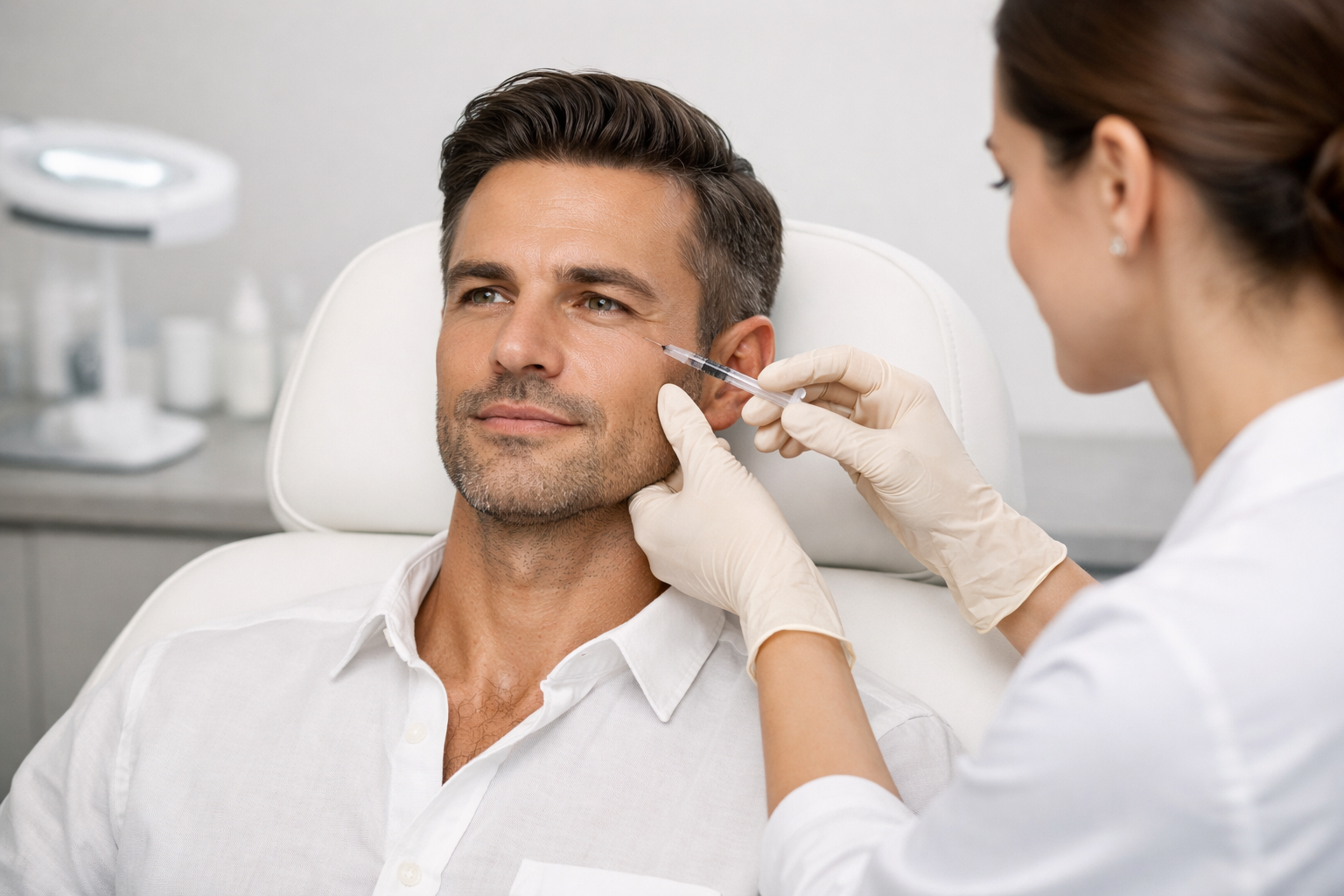
Male botox refers to the use of botulinum toxin type A — a purified neurotoxic protein — to temporarily reduce muscle activity in targeted areas of the face and body. The treatment involves injecting small, precise amounts of the neuromodulator into specific muscles using a very fine needle. Once administered, botulinum toxin blocks the nerve signals that cause those muscles to contract, which relaxes them and smooths the overlying skin.
The most widely recognised brand is Botox (manufactured by Allergan Aesthetics, an AbbVie company), though other FDA-approved neuromodulators such as Dysport, Xeomin, DAXXIFY, and Jeuveau work through the same basic mechanism. The treatment itself typically takes around 10 to 15 minutes and requires no anaesthesia, though a topical numbing cream may be offered for comfort.
The term “Brotox” has become a widely recognised shorthand for men’s aesthetic injectables, reflecting a broader cultural shift in which male grooming and anti-aging treatment have become increasingly mainstream. Men now account for a meaningful and growing proportion of all cosmetic injectable procedures globally, motivated by goals that include looking less tired or stressed, maintaining a competitive professional appearance, and addressing specific skin concerns before they deepen.
How Male Botox Differs from Female Treatment
Although the underlying mechanism is identical, botox for men is not simply a scaled-up version of female treatment. Masculine facial anatomy differs in several important ways that affect how a qualified injector plans and delivers treatment.
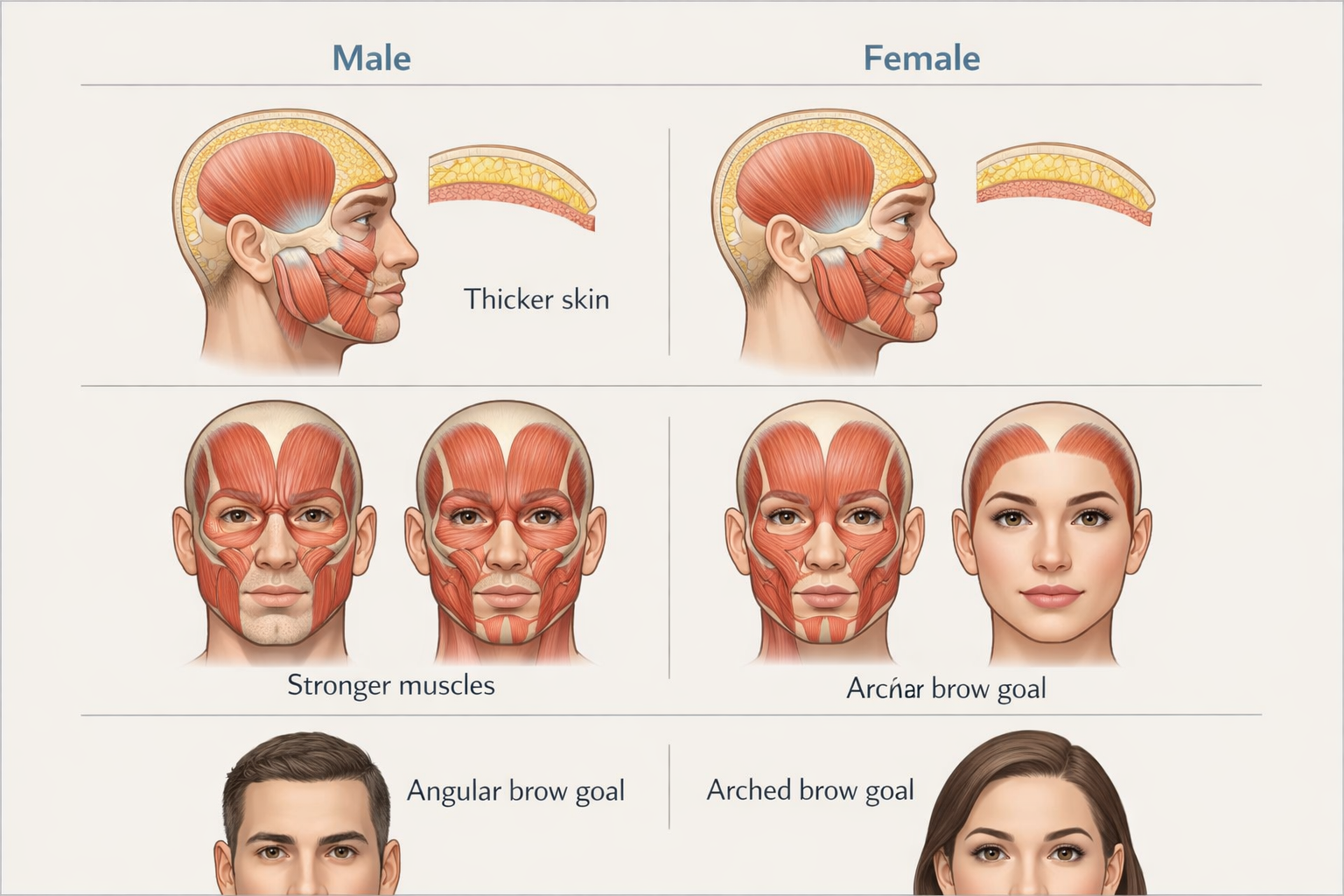
Men’s skin is generally thicker than women’s, and male facial muscles tend to be larger and stronger. These differences mean that men typically require a higher number of units of Botox per treatment area to achieve the same degree of muscle relaxation. In practical terms, this means both a greater total dose and, often, a higher overall cost per session compared with equivalent female treatment.
Aesthetic goals also differ meaningfully. A skilled injector treating a male patient will aim to preserve angular, masculine features rather than creating the more arched brow shape that is sometimes sought by female patients. Over-treating the brow area or using inappropriate technique can result in a softened, feminised appearance — an outcome most male patients specifically want to avoid. Preserving strong, natural-looking expressions while softening dynamic lines requires an approach calibrated to the individual’s facial structure, muscle mass, and aesthetic priorities.
Treatment Areas for Men
Forehead Lines and Glabellar Lines
The forehead and the area between the eyebrows — known as the glabella — are the most common treatment zones for male botox. Horizontal forehead lines develop from repeated brow raising, while glabellar lines, often called frown lines or the “11s”, result from repeated frowning or concentration. Both types of line can give the impression of looking tired, stressed, or angry even when the face is at rest. Botulinum toxin injections into these areas relax the responsible muscles, softening the lines without removing all expression when dosing is appropriate.
Crow’s Feet
Crow’s feet — the radiating fine lines at the outer corners of the eyes — form from years of squinting, smiling, and general facial movement. These lines are among the earliest visible signs of aging and respond well to botulinum toxin treatment. Because the muscle around the eye is relatively delicate, experienced injectors adjust dosage carefully to soften lines while maintaining a natural appearance.
Masseter Botox for Jaw Definition and Bruxism
Masseter botox — injection into the large chewing muscles at the sides of the jaw — is increasingly sought by male patients for two distinct reasons. The first is cosmetic: reducing the size of an enlarged masseter muscle can refine a square or wide jaw, creating a more defined lower-face contour. The second is therapeutic: many men grind their teeth (bruxism) or experience jaw tension and TMJ pain, and botulinum toxin can help reduce the force of involuntary clenching, relieving discomfort and protecting dental health. Masseter treatment typically requires a higher dose than upper-face areas and may be assessed separately at consultation.
Neck and Platysmal Bands
Vertical neck bands — known as platysmal bands — become more prominent with age as the platysma muscle loses elasticity. Botulinum toxin injected into these bands can soften their appearance and contribute to a more youthful neck profile. This area requires careful assessment by an experienced practitioner, as the anatomy near the neck involves structures that demand precise technique.
Medical Uses: Hyperhidrosis, Migraine, and More
Botox for men is not exclusively cosmetic. Excessive sweating — known as hyperhidrosis — particularly under the arms, can be significantly reduced by botulinum toxin injections that block the nerve signals triggering sweat glands. This is one of the most practically impactful applications for many male patients, with effects typically lasting longer than cosmetic facial treatments. Botulinum toxin is also used as a treatment for chronic migraine, administered as a series of injections across the head and neck by a specialist, and is a recognised option for managing bruxism and associated jaw discomfort.
Preventative Botox for Younger Men
Preventative botox is an approach increasingly discussed among men in their mid-20s to early 30s. The rationale is straightforward: lines that are still dynamic — meaning they appear only during expression — are easier to prevent from becoming static (permanently visible at rest) than to treat once they have already set into the skin. By reducing repetitive muscle movement before deep creases form, regular low-dose treatment in younger men may slow the visible progression of certain lines over time.
This approach is not universally recommended for all men in this age group; clinical assessment is necessary to determine whether treatment is appropriate and what dosage would be sensible. Some practitioners advocate for early intervention with minimal dosing, while others prefer to wait until lines are more established. If you are in your 20s or early 30s and curious about anti-aging for men, the most useful first step is a consultation with a qualified provider who can assess your individual facial dynamics.
How Much Does Male Botox Cost?
The cost of male botox depends on the number of units required, the treatment area, the provider’s experience, and the clinic’s location. Because men typically need more units per area due to greater facial muscle strength, the total cost of a male treatment session is often higher than an equivalent female session.
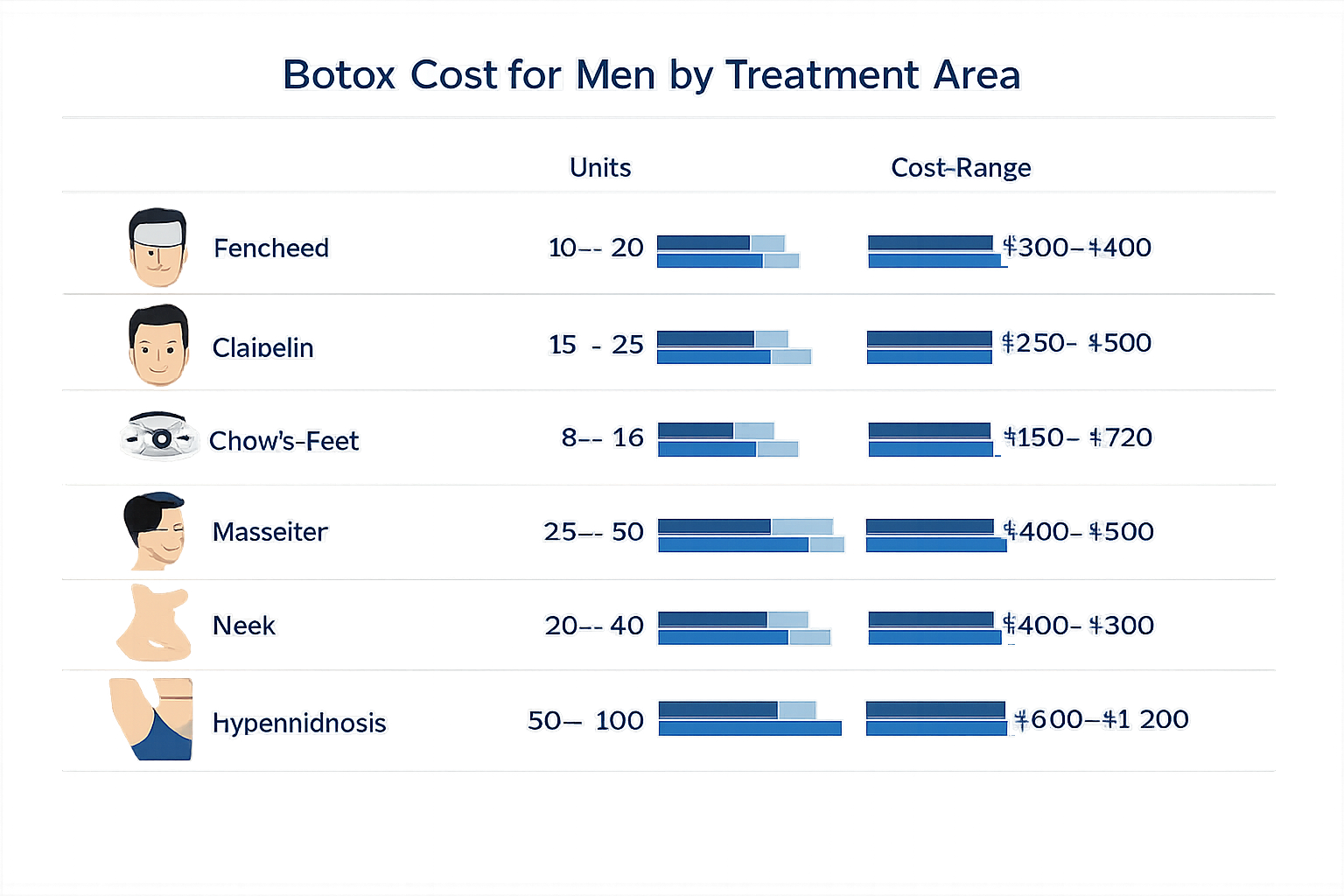
| Treatment Area | Typical Units (Men) | Estimated Cost Range |
|---|---|---|
| Forehead lines | 15–30 units | £150–£350 / $165–$450 |
| Glabellar lines (11s) | 20–40 units | £200–£450 / $220–$550 |
| Crow’s feet (both sides) | 20–30 units | £180–£350 / $200–$420 |
| Masseter / jaw | 40–60 units per side | £350–£700 / $400–$900 |
| Neck / platysmal bands | 25–50 units | £250–£550 / $280–$650 |
| Hyperhidrosis (underarms) | 50–100 units total | £400–£800 / $450–$1,000 |
Unit ranges above are indicative. Actual units required vary significantly between individuals based on muscle size, desired outcome, and the specific product used. Per-unit pricing varies by provider and location. Some clinics charge per area rather than per unit. Budgeting for three to four maintenance sessions per year gives a realistic picture of annual spend — a factor worth discussing openly at your initial consultation.
Loyalty programmes such as Allē Rewards (linked to Allergan products including Botox) and Aspire Rewards (associated with Galderma products including Dysport) allow patients to accumulate points toward future treatments, which can meaningfully reduce the long-term cost of regular appointments.
What to Expect During a Male Botox Appointment
A typical male botox appointment begins with a brief clinical assessment. Your injector will review your medical history, discuss your aesthetic goals, and assess your facial muscle activity, skin quality, and anatomy. This assessment shapes both the treatment plan and the number of units recommended.
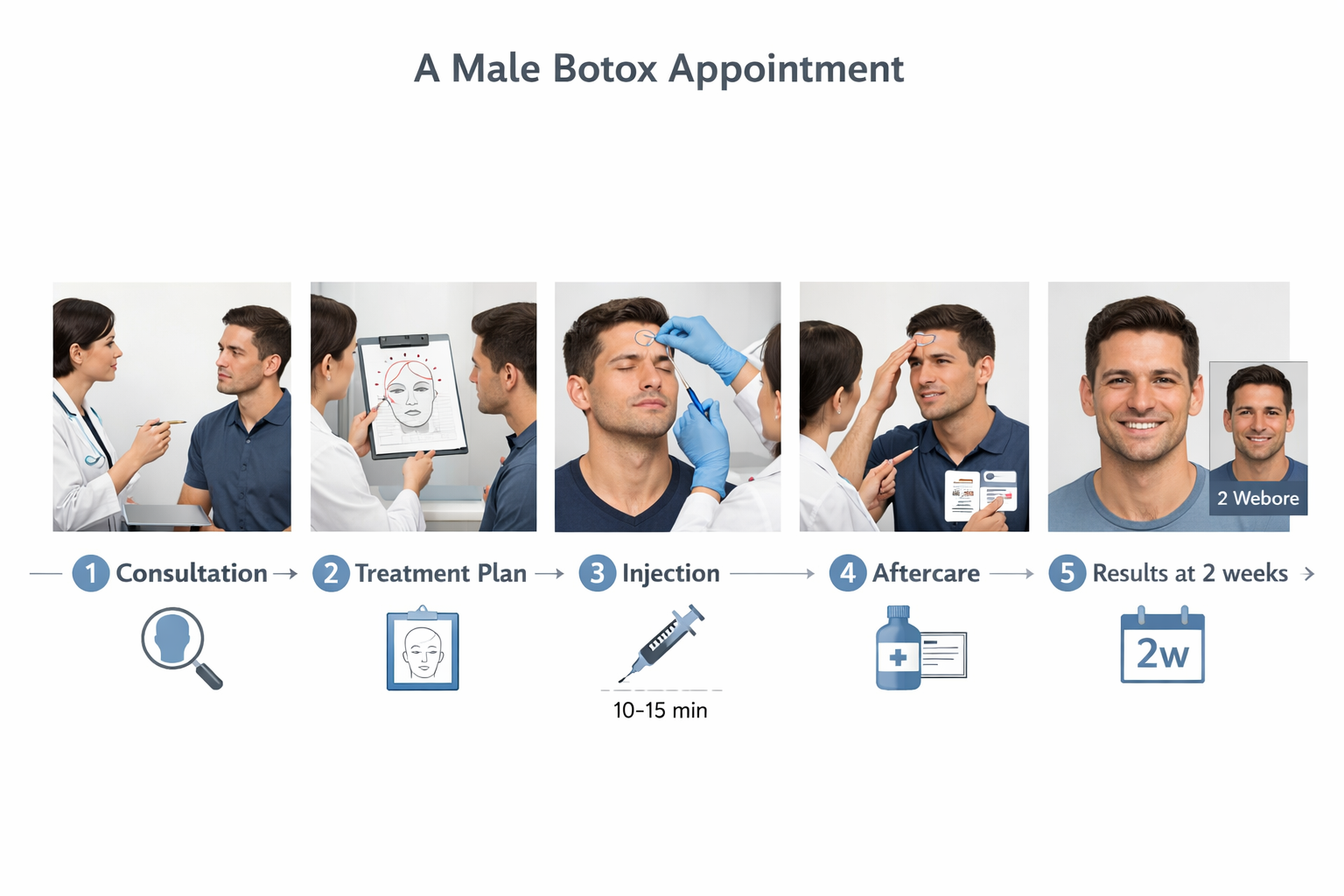
The injections themselves are delivered using a very fine needle into carefully selected points in the target muscles. Most patients describe the sensation as a mild sting that passes quickly. The entire injection process for a standard upper-face treatment generally takes around 10 to 15 minutes. There is no surgical recovery period; most men return to work or normal activity the same day, making this a practical option even for busy schedules.
Initial changes may become noticeable within 3 to 7 days as the botulinum toxin begins to take effect and the treated muscles relax. Full results are typically visible at around two weeks. The effects are temporary, generally lasting 3 to 5 months, after which muscle activity gradually returns and lines may begin to re-emerge. Most men who maintain treatment schedule sessions three to four times per year.
Risks and Side Effects
Botulinum toxin treatment has a well-established safety profile when performed by a qualified injector, but it carries potential side effects and risks that any prospective male patient should understand clearly.
Common and usually temporary side effects include redness, mild swelling, and bruising at injection sites. A mild headache in the hours following treatment is also occasionally reported. These effects typically resolve within a few days without intervention.
Less common side effects include temporary eyelid drooping (ptosis) or eyebrow heaviness, which can occur if botulinum toxin migrates slightly from the intended injection site. This is usually transient and resolves as the product wears off, but it underscores the importance of choosing an experienced provider who understands male facial anatomy.
Rare risks include allergic reactions and, with neck or lower-face treatments, difficulty swallowing if the product spreads to adjacent muscles. These outcomes are uncommon when treatment is performed correctly by a trained practitioner.
Botulinum toxin treatment is generally not recommended for individuals who are pregnant or breastfeeding, those with certain neuromuscular conditions such as myasthenia gravis or Lambert-Eaton syndrome, or those with a known hypersensitivity to botulinum toxin or its excipients. A thorough pre-treatment consultation should identify any relevant contraindications.
Aftercare Following Male Botox
Aftercare for botox for men is straightforward and does not require significant disruption to daily life. General guidance from most practitioners includes the following:
- Remain upright for at least four hours after treatment; avoid lying flat or bending forward for extended periods immediately post-procedure.
- Avoid vigorous exercise and significant physical exertion for 24 hours, as increased blood flow may potentially affect how the product settles.
- Do not rub, massage, or apply pressure to the treated areas for at least 24 hours.
- Avoid alcohol and blood-thinning medications or supplements in the days before and after treatment, where clinically appropriate, to reduce bruising risk.
- If you notice any unexpected asymmetry, drooping, or other concerning changes in the days following treatment, contact your clinic promptly.
Following your provider’s specific aftercare instructions is important; guidance may vary slightly depending on the areas treated and the product used.
Botox vs. Alternative Neuromodulators for Men
Botox is the most widely recognised brand of botulinum toxin type A, but it is not the only option. Dysport, Xeomin, DAXXIFY, and Jeuveau are all botulinum toxin type A products approved for cosmetic use, each with slightly different formulation characteristics that may influence onset speed, diffusion behaviour, and duration. It is important to note that units between different botulinum toxin brands are not directly interchangeable — a dose expressed in Botox units is not equivalent to the same number of Dysport or Xeomin units.
For most male patients, the choice of neuromodulator is less significant than the skill and experience of the injector. A practitioner experienced in male aesthetics will select the product they work with most effectively and adjust dosing accordingly. If you have a preference or have had good results with a specific product in the past, this is worth raising during your consultation.
Combining Botox with Other Treatments
Many men combine botulinum toxin with complementary treatments as part of a broader male aesthetics plan. Dermal fillers, for example, address volume loss and deeper structural lines that neuromodulators cannot reach — particularly around the cheeks, jawline, and nasolabial folds. While Botox relaxes muscles that cause dynamic wrinkles, fillers restore or enhance volume in areas where tissue has thinned over time.
Skin quality treatments such as HydraFacial, chemical peels, and laser therapies target pigmentation, texture, and overall skin tone, improving the results of injectable treatments by addressing surface-level concerns simultaneously. A practitioner experienced in male aesthetics can help identify which combination of treatments, if any, may address your specific concerns most effectively and efficiently.
How to Choose a Provider for Male Botox
The provider you choose matters more than any other single factor in achieving natural-looking results from male botox. Look for a board-certified dermatologist, plastic surgeon, or medically qualified aesthetic injector who has demonstrable experience treating male patients specifically. Male facial anatomy requires a different approach to dosing and placement, and a practitioner who primarily treats female patients may not be well-positioned to meet male-specific aesthetic goals.
Before booking, consider asking the following questions during your consultation: How many male patients do you treat regularly? Can I see examples of your work on male patients? Which areas do you recommend for my concerns, and why? What product will you use, and how will dosing be determined? What should I do if I’m unhappy with the results?
A qualified injector will never pressure you into booking immediately and will always conduct a thorough consultation before recommending treatment. Be cautious of providers offering significantly below-market pricing, as this may indicate the use of diluted products, unverified qualifications, or inadequate clinical assessment.
Frequently Asked Questions
Will male botox make me look frozen or unnatural?
Not when treatment is properly dosed by an experienced injector. The “frozen” appearance associated with botulinum toxin is almost always the result of excessive dosing or poor technique. A skilled provider familiar with masculine facial anatomy will use an amount calibrated to soften lines while preserving normal movement and expression. If you have concerns about this, ask your practitioner to show you examples of their male patient results and discuss your goals specifically.
How many units of Botox do men typically need?
Men generally require more units than women due to larger and stronger facial muscles and greater skin thickness. The exact number depends on the area being treated, the individual’s muscle mass, and the desired outcome. As a general reference, upper-face treatments for men (forehead, glabella, crow’s feet combined) may require 40–80 units or more in total — though this varies considerably. Your injector will recommend a specific amount following a facial assessment.
What age should men start Botox?
There is no universally correct age. Some men begin preventative botox in their mid-20s when dynamic lines first become noticeable with expression. Others wait until their 30s or 40s when lines become visible at rest. The appropriate starting point depends on your individual anatomy, how your lines are progressing, and your personal goals. A consultation with a qualified provider is the most reliable way to assess whether treatment is timely for you.
Does male botox hurt?
Most patients describe the injections as a brief, mild sting that passes quickly. The needles used are very fine, and the procedure is short. Discomfort is generally considered minimal and does not require sedation. Topical numbing cream can be applied beforehand if preferred.
Can men get Botox for excessive sweating?
Yes. Botulinum toxin injections into the underarm area are an established treatment for hyperhidrosis (excessive sweating) and are used by many male patients who find that antiperspirants are insufficient. The treatment works by blocking the nerve signals that activate sweat glands. Effects for hyperhidrosis often last longer than cosmetic facial treatment — typically six to twelve months — though individual results vary.
Is there any downtime after male botox?
There is no significant downtime. Most men resume normal daily activities, including work, immediately after treatment. Strenuous exercise is typically advised against for 24 hours. Mild redness or swelling at injection sites may be visible for a few hours but is usually not noticeable to others. This makes botox for men a practical option even for those with demanding schedules.
Is Male Botox Worth Considering for You?
Botox for men offers a well-established, low-downtime option for reducing dynamic facial lines, addressing specific medical concerns such as hyperhidrosis or bruxism, and supporting an overall male aesthetics approach. Results are temporary and require ongoing maintenance, and the investment in both time and cost accumulates over annual treatment cycles. These are practical factors to weigh honestly rather than dismiss.
For men whose concern is looking fresher, less fatigued, or more defined — without surgery or prolonged recovery — botulinum toxin remains one of the most clinically supported options available. The key to a satisfying outcome lies in realistic expectations, clear communication with your provider about your goals, and selecting a qualified injector who understands masculine facial anatomy and how to preserve it.
If you are considering male botox for the first time, a thorough consultation with an experienced, medically qualified practitioner is the logical starting point. A good consultation will help you understand whether treatment is appropriate for your concerns, what results you can reasonably expect, and what the full picture of cost and maintenance looks like over time.
