
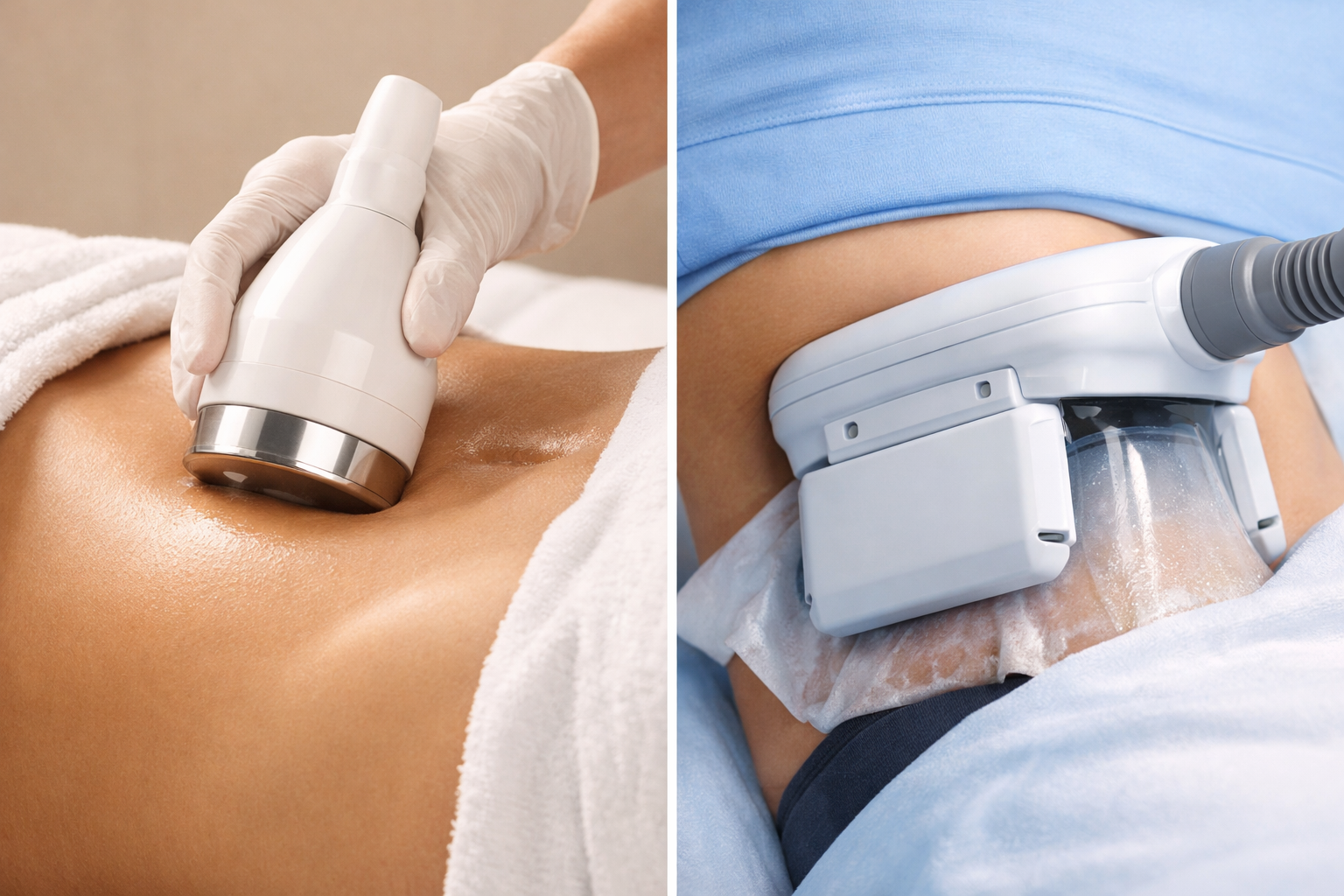

Quick Comparison
| Feature | Ultrasonic Cavitation | CoolSculpting (Cryolipolysis) |
|---|---|---|
| Mechanism | Low-frequency ultrasound waves disrupt fat cell membranes | Controlled cooling crystallises and destroys fat cells |
| Technical term | Ultrasonic lipolysis / cavi-lipo | Cryolipolysis |
| FDA status | Cleared as a general-purpose ultrasound device; less specific clinical trial data | FDA-cleared for multiple specific body areas |
| Sessions typically needed | 6–10 sessions per area | 1–3 sessions per area |
| Results onset | Gradual; visible changes from 2–4 weeks after first sessions | 2–4 months after treatment |
| Downtime | None to minimal | None to minimal |
| Comfort level | Warm, mild buzzing sensation | Intense cold and suction, temporary numbness |
| Approximate cost per session | £60–£200 per session | £600–£1,500+ per applicator cycle |
| Key risk to know | Burns, temporary skin sensitivity | Paradoxical adipose hyperplasia (rare but significant) |
| Often combined with | Radiofrequency skin tightening, lymphatic drainage | Used as a standalone treatment |
| Results longevity | Potentially long-term with lifestyle maintenance | Potentially long-term with lifestyle maintenance |
| Best suited for | Localised stubborn fat, multiple sessions over weeks | Pinchable fat pockets, fewer sessions preferred |
What Are These Treatments and Why Are They Compared?
Both ultrasonic cavitation and CoolSculpting are body contouring treatments designed to reduce stubborn fat deposits in specific areas without surgery. Neither is a weight-loss solution, and both are intended for adults who are at or near a healthy weight but have localised areas of fat that do not respond adequately to diet and exercise. Understanding how each technology works, what the evidence supports, and where the risks lie is essential before choosing between them.
Ultrasonic cavitation — also referred to as ultrasonic lipolysis or cavi-lipo — uses low-frequency ultrasound waves to mechanically disrupt fat cell membranes. CoolSculpting uses a process called cryolipolysis, applying controlled cooling through a suction applicator to trigger gradual fat cell death. Both approaches leave surrounding tissue largely unaffected and require no incisions, no anaesthesia, and no downtime in most cases. Despite these similarities, the two treatments differ considerably in mechanism, cost, session requirements, comfort profile, and risk considerations.
How Ultrasonic Cavitation Works
During an ultrasonic cavitation treatment, a handheld ultrasound transducer is moved over the skin surface above the target area. The device emits low-frequency ultrasound waves — typically in the 20 to 80 kHz range — that penetrate the skin and reach the subcutaneous fat layer beneath. These sound waves create rapid pressure fluctuations that generate microscopic bubbles within and around the fat cells, a process known as acoustic cavitation.
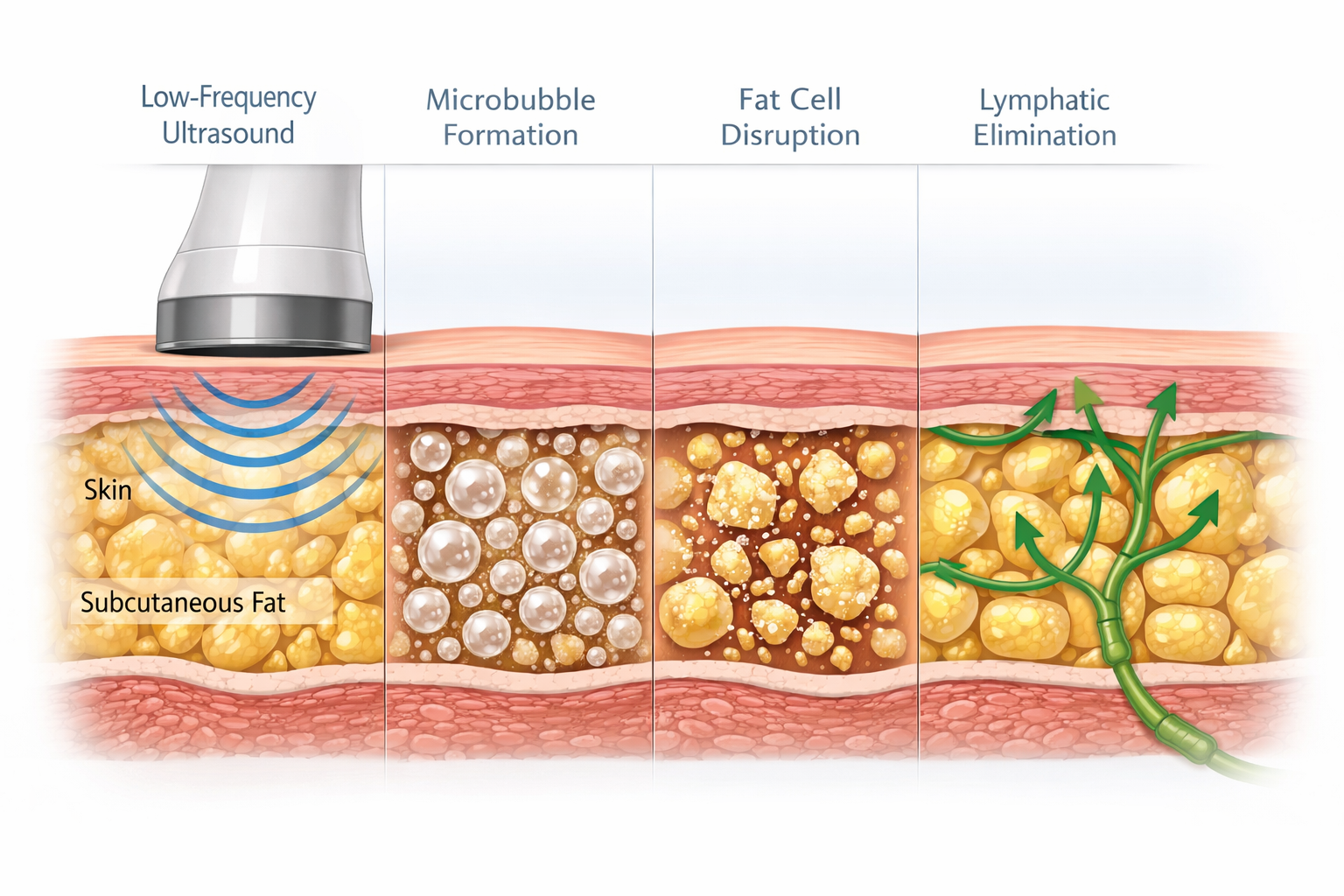
When these microbubbles expand and collapse in a process called implosion, the mechanical force disrupts the fat cell membranes. The contents of the fat cells — primarily triglycerides that break down into free fatty acids and glycerol — are released into the surrounding tissue. The lymphatic system then transports these byproducts away from the treatment site, and the liver processes them through the body’s natural metabolic process for elimination. The fat cells themselves do not immediately vanish; they are gradually cleared from the body over days to weeks following each session.
Because the process relies on lymphatic system elimination, practitioners typically advise patients to stay well hydrated before and after treatment, engage in light activity such as walking post-session, and avoid heavy meals immediately before treatment. These steps support efficient clearance of the released fatty acids and may improve visible outcomes.
How CoolSculpting Works
CoolSculpting works through cryolipolysis, a process in which fat cells are selectively destroyed by exposure to precisely controlled cooling. During treatment, a suction applicator is placed over the target area, drawing the tissue between two cooling panels. The temperature is reduced to a level that triggers fat cell crystallisation — a threshold at which fat cells begin to undergo a process of programmed cell death known as apoptosis — while leaving the overlying skin, nerves, and muscle largely unaffected.
Over the weeks following treatment, the body’s immune system gradually clears the damaged fat cells. Visible fat reduction typically becomes apparent between six and twelve weeks after a session, with final results often not fully evident until around three to four months post-treatment. Clinical studies have reported reductions of approximately 20 to 25 percent of fat in the treated area per session in some populations, though individual results vary considerably.
CoolSculpting holds FDA clearance for treating several specific body areas, including the abdomen, flanks, thighs, upper arms, chin, and back. This regulatory status reflects a stronger body of formal clinical trial evidence compared to ultrasonic cavitation, which has a growing but less extensive clinical literature base.
Treatment Areas: Where Can Each Be Used?
Both treatments can address many of the same common concern areas, though there are practical differences. Ultrasonic cavitation is commonly used on the abdomen, flanks, love handles, thighs, upper arms, and buttocks. The handheld probe allows a trained practitioner to move fluidly over larger surface areas and adjust pressure and angle, making it adaptable to various body shapes. However, it is less effective over areas with very little subcutaneous fat or over bony prominences.
CoolSculpting applicators are designed to treat pinchable fat — tissue that can be drawn into the suction cup. This means it works best for areas with a meaningful volume of soft, accessible fat. The chin and submental area can be targeted with a smaller applicator (CoolMini), making it suitable for concerns like a double chin that may be harder to address with cavitation. Areas with very firm or fibrous fat may not respond as well to either treatment.
Results: What to Expect and When
Ultrasonic cavitation typically requires a course of six to ten sessions, spaced at least 72 hours apart on the same body area to allow adequate recovery and lymphatic clearance between treatments. Early sessions may produce some visible inch loss as fluid and fat byproducts begin to clear, though the most noticeable changes in contour and circumference reduction usually develop progressively across the full treatment course and in the weeks after the final session. Results continue to improve as the body eliminates the disrupted fat cell contents.
CoolSculpting generally requires fewer sessions — often one to three per treated area — but each session’s results emerge more slowly. Patients typically begin to notice changes around six to eight weeks post-treatment, with optimal outcomes appearing at the three-to-four-month mark as apoptotic cells are fully cleared. Some people choose a second session on the same area after assessing their four-month result.
Both treatments can produce results that may last long term, provided the patient maintains a stable weight through a healthy diet and regular physical activity. Fat cells destroyed by either method do not regenerate, but remaining fat cells in the area can enlarge with weight gain, which may diminish the contouring effect over time.
Side Effects and Safety Considerations
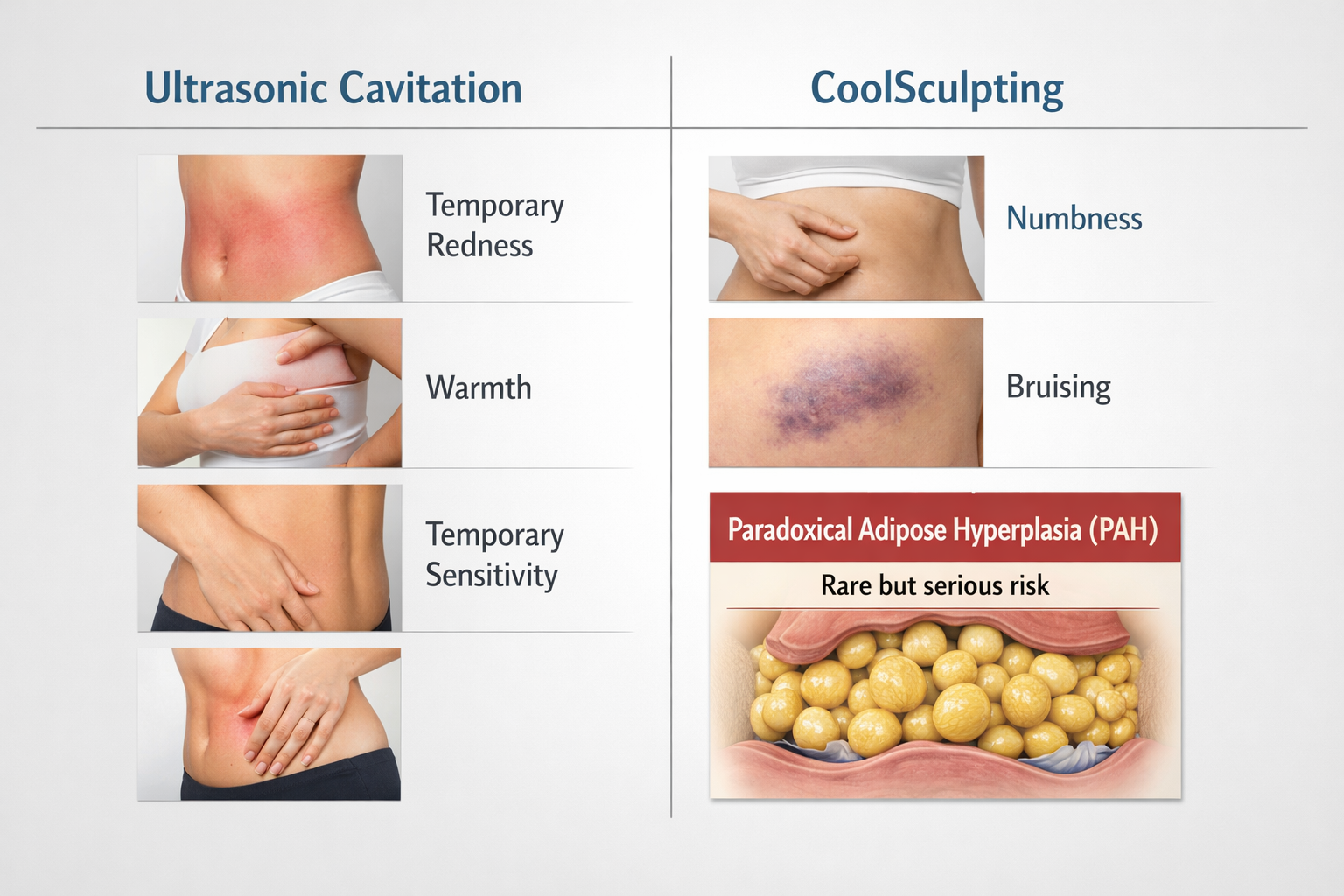
Ultrasonic cavitation is generally well tolerated. Common immediate effects include mild redness, warmth, and temporary skin sensitivity in the treated area. Some people notice a faint ringing in the ears during treatment, caused by the sound wave frequency — this typically resolves promptly after the session ends. Burns can occur if the device is held stationary for too long or used at an inappropriate intensity, which underscores the importance of choosing an experienced, properly trained practitioner with a calibrated professional-grade device. Liver function should be considered, as the organ processes the released fatty acids; those with liver disease or impaired liver function are generally advised against this treatment.
CoolSculpting’s most frequently reported side effects include temporary numbness, redness, bruising, tingling, and firmness in the treated area, most of which resolve within days to a few weeks. A more significant and widely publicised risk is paradoxical adipose hyperplasia (PAH) — a rare but serious complication in which the treated area develops increased and firmer fat tissue rather than reducing. PAH appears to occur more commonly in male patients, though it can affect anyone. It does not resolve on its own and may require surgical intervention such as liposuction to correct. This complication gained considerable media attention and prompted important safety conversations in 2023 and 2024. Anyone considering CoolSculpting should discuss PAH with their practitioner before proceeding.
Neither treatment is considered a risk-free procedure, and both carry contraindications that should be carefully reviewed before treatment.
Who May Be a Suitable Candidate?
The ideal candidate for either treatment is an adult who is at or near a healthy weight, has realistic expectations about what non-surgical body contouring can achieve, and has identifiable areas of stubborn fat that have not responded adequately to diet and exercise. Body contouring is not equivalent to weight loss, and neither treatment is designed to treat obesity or produce significant reductions in overall body weight.
A personalized treatment plan should account for individual anatomy, skin laxity, the volume and location of fat deposits, and relevant health factors. Ultrasonic cavitation may be a suitable option for those who prefer a gradual, lower-cost-per-session approach, are comfortable committing to multiple appointments, and want flexibility to combine the treatment with radiofrequency skin tightening or lymphatic drainage massage. CoolSculpting may suit those who prefer fewer clinic visits, want a treatment with a more established regulatory and clinical evidence profile, and have clearly pinchable fat pockets in the target areas.
Both men and women may be considered for these treatments. While much of the existing marketing targets female patients, both technologies have been used effectively for male body contouring concerns, particularly the abdomen and flanks. Practitioners should assess each patient individually regardless of gender.
Who May Not Be Suitable
A number of conditions represent contraindications or reasons for caution with either treatment. Patients should disclose their full medical history at consultation. The following are general considerations; a qualified practitioner will conduct a clinical assessment before recommending either treatment:
- Pregnancy and breastfeeding: Both treatments are contraindicated during pregnancy.
- Pacemakers or implanted metal devices: Ultrasonic cavitation is generally avoided in patients with pacemakers or metal implants near the treatment area.
- Active liver disease: Because cavitation byproducts are processed by the liver, impaired liver function may make the treatment inappropriate.
- Heart disease or circulation disorders: Relevant to both treatments; clinical assessment required.
- Skin conditions or open wounds in the treatment area: Treatment should not proceed over broken or inflamed skin.
- Coagulation disorders or blood-thinning medications: Relevant particularly to CoolSculpting given the potential for bruising.
- Severe obesity: Neither treatment is indicated as a primary intervention for significant weight reduction.
Combination Treatments: Enhancing Cavitation Results
One of the practical advantages of ultrasonic cavitation in a clinical setting is that it integrates well with complementary treatments. The most common combination is cavitation paired with radiofrequency skin tightening. Radiofrequency energy heats the deeper dermal layers, stimulating collagen production and improving skin firmness — an important consideration in areas where fat reduction may reveal some skin laxity. Because fat reduction alone does not tighten skin, combining these modalities may produce a more balanced contouring outcome.
Manual lymphatic drainage massage applied after a cavitation session is also commonly used to accelerate the clearance of released fatty acids through the lymphatic system, potentially improving efficiency and reducing any temporary swelling. Some clinics also offer LED light therapy or vacuum therapy as adjuncts to cavitation, though the additional benefit of these combinations is less well established in the clinical literature.
CoolSculpting is typically used as a standalone treatment and does not combine as easily with in-session adjuncts, though some practitioners follow up with massage immediately after removing the applicator, which has been suggested to enhance fat cell clearance in some protocols.
At-Home Ultrasonic Cavitation Devices
A growing number of handheld ultrasonic cavitation machines are marketed directly to consumers for home use. These devices operate at lower energy levels than professional clinical equipment, and the evidence for their effectiveness is considerably weaker than for clinical-grade treatments. Consumer devices may produce some superficial benefit — potentially improving product absorption or providing a mild massage-like effect — but they are unlikely to replicate the fat cell disruption achievable with professional equipment at appropriate frequencies and intensities. Individuals considering at-home devices should maintain realistic expectations and understand that these products are not equivalent to a professionally administered treatment course.
Preparing for Treatment and Aftercare
For ultrasonic cavitation, standard preparation advice includes drinking at least 1.5 to 2 litres of water in the 24 hours before and after each session, avoiding large meals immediately before treatment, and wearing comfortable clothing. After each session, light cardiovascular activity such as a 20-to-30-minute walk is commonly recommended to stimulate lymphatic drainage and assist in eliminating the released fat cell contents. Practitioners typically advise waiting at least 72 hours before treating the same area again to allow adequate recovery.
For CoolSculpting, preparation is minimal. The applicator is placed by the practitioner, and the main aftercare consideration is managing the temporary sensations — numbness, tingling, or temporary firmness — in the treated area. Avoiding anti-inflammatory medications before treatment may be relevant to some protocols, and practitioners will advise on any specific post-treatment care. Maintaining a stable weight and a balanced lifestyle after either treatment supports the longevity of results.
Cost Comparison
Cost is one of the most practically significant differences between these two treatments. Ultrasonic cavitation sessions are generally priced between approximately £60 and £200 per session in the UK, though pricing varies by location, clinic, and whether radiofrequency is included. A full course of six to ten sessions might cost between £500 and £1,800 in total. In the United States, per-session pricing typically ranges from around $100 to $350.
CoolSculpting is substantially more expensive per treatment cycle. A single applicator cycle in the UK typically costs between £600 and £1,500 or more, and treating multiple areas or requiring repeat sessions can bring total costs to several thousand pounds. The lower number of sessions required partially offsets the price difference, but CoolSculpting remains a considerably higher investment in most markets. Patients should request clear pricing information that specifies the number of applicator placements included, as treating the abdomen, for example, often requires more than one applicator position.
Clinical Evidence: How Do They Compare?
CoolSculpting has a more extensive body of published clinical trial evidence supporting its efficacy for fat reduction in specific treatment areas. Multiple peer-reviewed studies have reported measurable reductions in fat layer thickness and patient satisfaction outcomes. Its FDA clearance for specific body areas reflects this documented evidence base.
Ultrasonic cavitation has a growing clinical literature, including published studies and ongoing trials examining its use for circumference reduction and body contouring. However, the evidence base is less comprehensive and less standardised than that supporting cryolipolysis. Study populations, device specifications, treatment protocols, and outcome measures vary across the published research, making direct comparisons between trials difficult. This does not mean cavitation is ineffective — many patients report visible results — but it does mean that prospective patients should approach the clinical evidence with appropriate nuance and realistic expectations. A qualified practitioner should be able to discuss what the available evidence supports and where limitations exist.
Frequently Asked Questions
Is ultrasonic cavitation painful?
Most patients describe the sensation during ultrasonic cavitation as a warm, mild buzzing or vibration on the skin. It is not generally described as painful, though sensitivity varies. Some people notice a low humming sound in their ears during treatment, which stops as soon as the session ends. CoolSculpting involves an initial intense cold and suction sensation that most patients find more uncomfortable, followed by numbness as the area becomes desensitised.
How many sessions of ultrasonic cavitation will I need?
Most treatment protocols recommend six to ten sessions per target area, spaced at least 72 hours apart. The exact number depends on the amount of fat to be addressed, the area being treated, and how the individual responds. A practitioner should reassess progress after an initial course before recommending additional sessions.
Are the results of either treatment permanent?
Fat cells destroyed by ultrasonic cavitation or CoolSculpting do not regenerate. In this sense, the reduction in fat cells may be long lasting. However, weight gain can cause remaining fat cells to enlarge, which may reduce the visible contouring benefit over time. Maintaining results requires a stable weight and a balanced lifestyle.
What is paradoxical adipose hyperplasia and how common is it?
Paradoxical adipose hyperplasia (PAH) is a rare complication specific to cryolipolysis. Instead of reducing fat, the treated area develops increased, firmer fat tissue over the months following treatment. Its exact incidence is not fully established and may be underreported, but it appears to occur more frequently in male patients. PAH does not resolve without medical intervention and often requires surgical correction. It is an important consideration when weighing CoolSculpting’s risks and should be discussed openly at consultation.
Can ultrasonic cavitation help with cellulite?
Ultrasonic cavitation may provide some temporary improvement in the appearance of cellulite, partly through fluid redistribution and mild tissue effects. However, it is not a proven primary treatment for cellulite reduction, and any improvement is likely to be modest and temporary without ongoing maintenance. Cellulite has a structural cause involving fibrous connective tissue and fat, and no non-surgical treatment consistently resolves it.
Can these treatments be used if I am significantly overweight?
Neither ultrasonic cavitation nor CoolSculpting is suitable as a treatment for general excess weight or obesity. Both are body contouring treatments intended to address discrete stubborn fat deposits in people who are close to a healthy weight. A clinical assessment is required to determine candidacy.
Is ultrasonic cavitation safe for everyone?
Ultrasonic cavitation is not appropriate for everyone. Those who are pregnant, have a pacemaker or metal implants near the treatment area, have liver disease, or have certain cardiovascular conditions may not be suitable candidates. A full medical history review by a qualified practitioner before treatment is essential.
Choosing Between Ultrasonic Cavitation and CoolSculpting
Neither ultrasonic cavitation nor CoolSculpting is universally the better treatment. The right choice depends on your goals, anatomy, budget, tolerance for multiple sessions, and how you weigh up each treatment’s evidence profile and risk considerations.
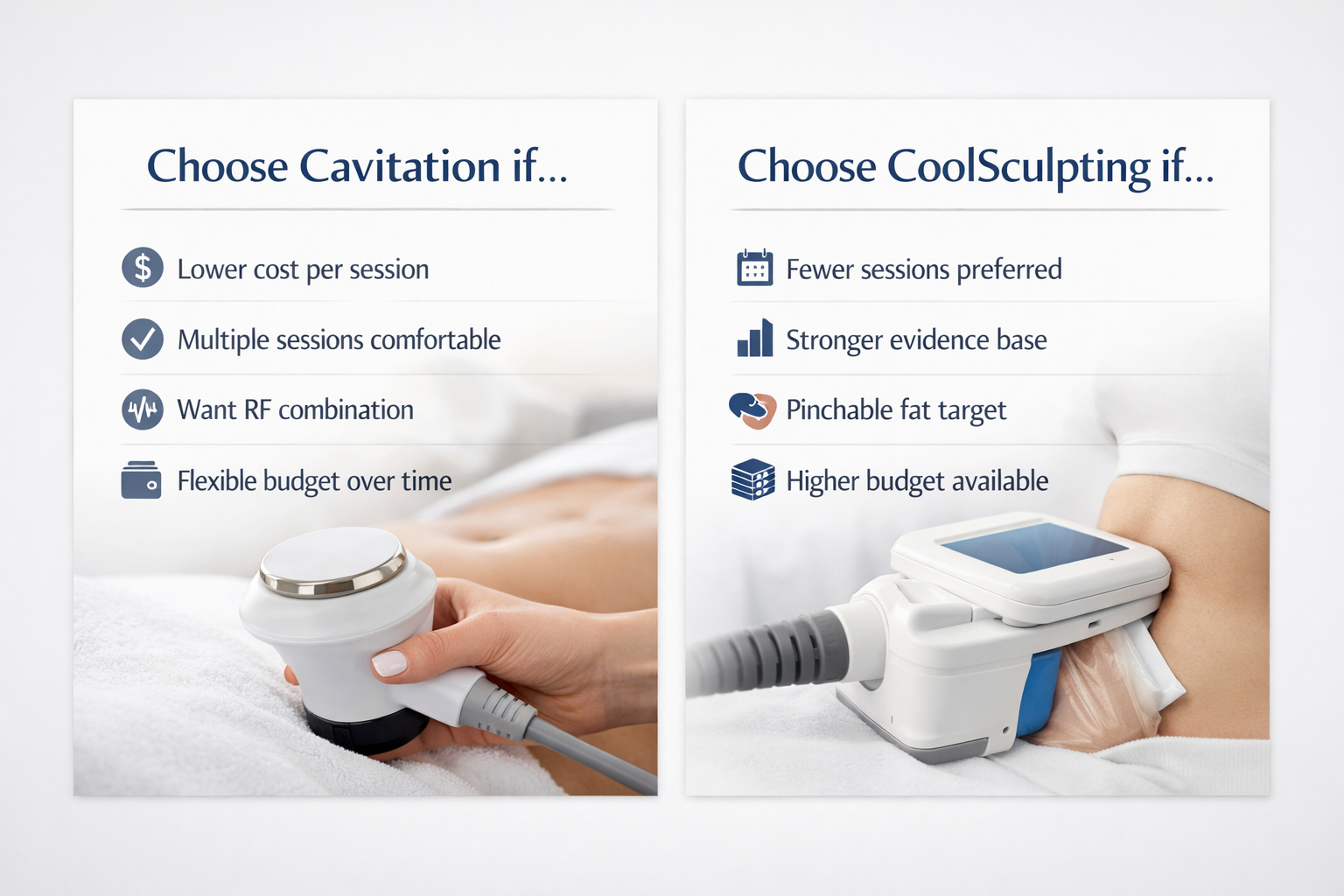
Ultrasonic cavitation may be worth discussing with a practitioner if you prefer a lower per-session cost, are comfortable attending multiple appointments over several weeks, and want the option to combine the treatment with radiofrequency skin tightening for added collagen stimulation. It may also suit those whose target areas respond better to a gradually applied, adaptable handheld approach. The caveat is that the clinical evidence base, while growing, is less robust than for CoolSculpting, and results depend significantly on practitioner skill and device quality.
CoolSculpting may be preferable if you want a treatment with a stronger formal evidence base and FDA clearance for specific areas, prefer fewer sessions, and have clearly pinchable fat in the target area. The higher cost per cycle and the rare but meaningful risk of paradoxical adipose hyperplasia are important factors that should be part of any informed conversation before committing to treatment.
The most important step before either treatment is a thorough consultation with a qualified, experienced practitioner who can assess your suitability, set realistic expectations, and recommend a personalized treatment plan based on your individual anatomy and goals. Body contouring treatments are most effective when chosen thoughtfully and supported by a healthy diet and active lifestyle.
