
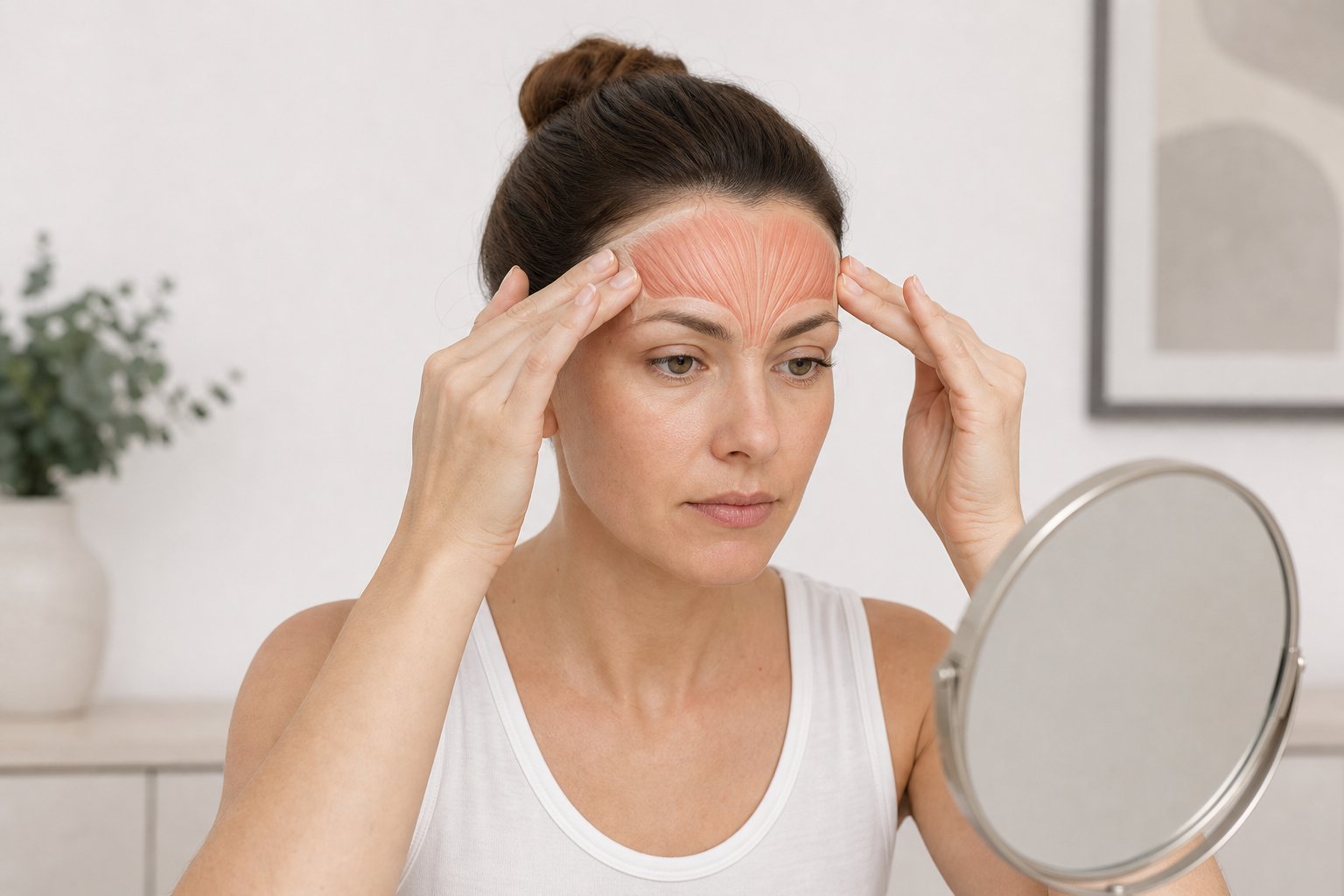

Noticing forehead wrinkles at 30 can feel alarming, but early forehead lines are far more common at this age than most people realise. The forehead is one of the first areas to show visible creasing because it combines a highly active muscle with relatively thin skin — a combination that accelerates the transition from temporary expression lines to more permanent furrows. Understanding why this happens, and what you can realistically do about it, puts you in a much stronger position to slow the process and make informed decisions about your skincare and any professional options you may be considering.
Key Takeaways
- Forehead wrinkles at 30 are often a normal result of the frontalis muscle’s constant activity combined with the natural decline in collagen and elastin that begins in the mid-twenties.
- Lines that disappear when your face is relaxed are dynamic wrinkles; lines visible at rest are static wrinkles — and each stage calls for a different prevention or treatment approach.
- Daily broad-spectrum SPF, a retinoid, and targeted hydrating ingredients form the evidence-based foundation of early forehead line prevention.
- Lifestyle factors including UV exposure, smoking, poor sleep, and chronic stress can meaningfully accelerate premature skin aging and deepen early forehead lines.
- Professional options such as preventive Botox, baby Botox, and skin-quality treatments may be appropriate for some people in their 30s, but individual assessment is essential before proceeding.
Why the Forehead Is Uniquely Vulnerable to Early Lines
The frontalis muscle runs vertically across the forehead and is responsible for raising the eyebrows — an expression most people make dozens of times every hour without realising it. Unlike muscles in the arms or legs, the frontalis contracts repeatedly throughout the day in response to surprise, concentration, conversation, and even screen-reading. Over time, these repetitive facial expressions crease the overlying skin in the same place, again and again.
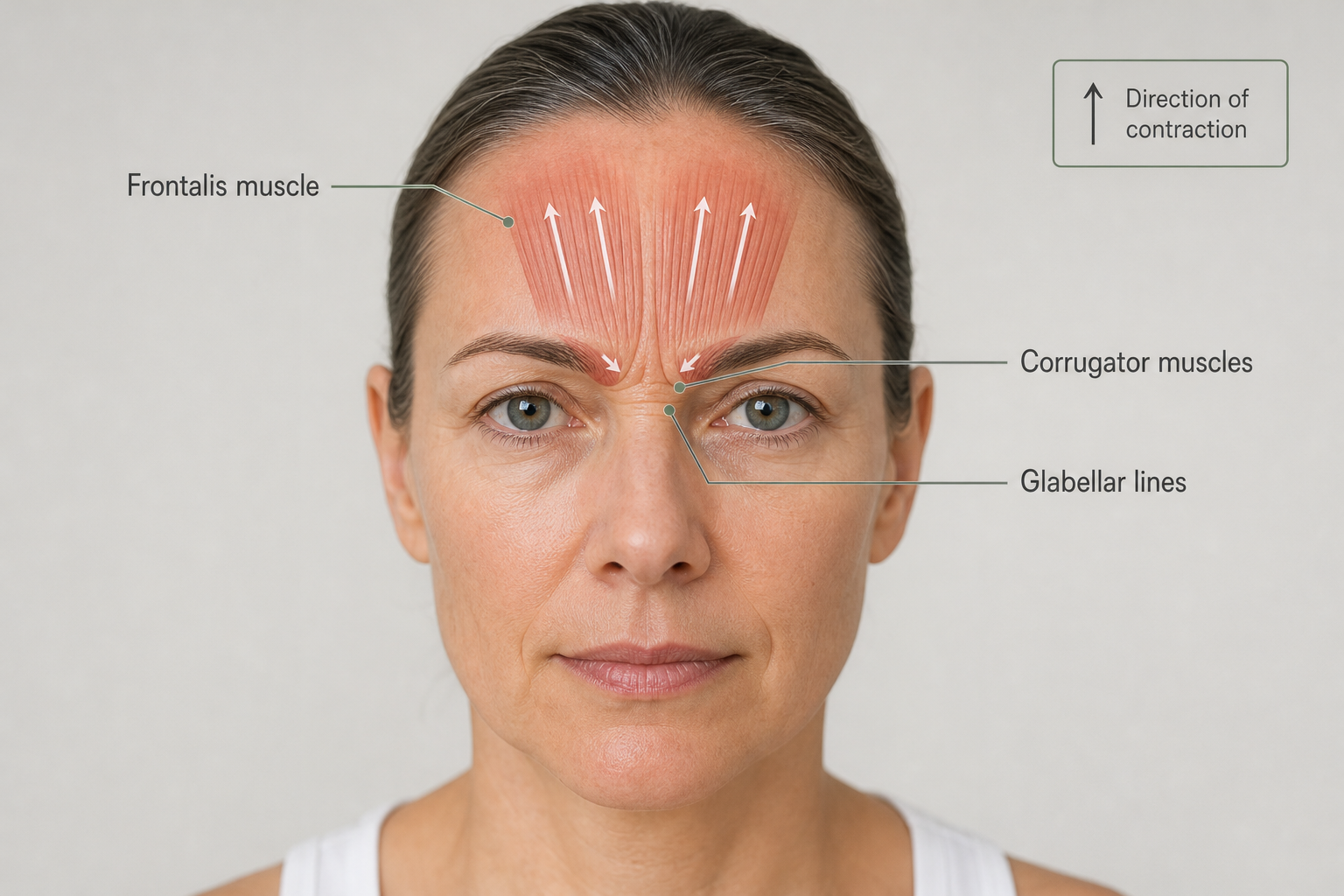
What makes the forehead particularly susceptible is the combination of this high-use muscle with skin that is naturally thinner than on the cheeks or jawline. Thinner skin has less structural cushioning, so the mechanical stress of muscle contraction translates more directly into visible surface creasing. The corrugator muscles between the brows contribute to glabellar lines — the vertical frown lines sometimes called the “11 lines” — through a similar mechanism.
Collagen and elastin decline begins gradually from around age 25, with collagen production falling by roughly 1% per year thereafter. By the early 30s, this cumulative loss starts to become noticeable: skin that once snapped back quickly after movement begins to hold the crease a little longer each time. This is the biological window during which dynamic wrinkles — those that appear only with movement — begin transitioning toward static wrinkles that remain visible even when the face is fully relaxed.
Dynamic Wrinkles vs. Static Wrinkles: What the Difference Means for You
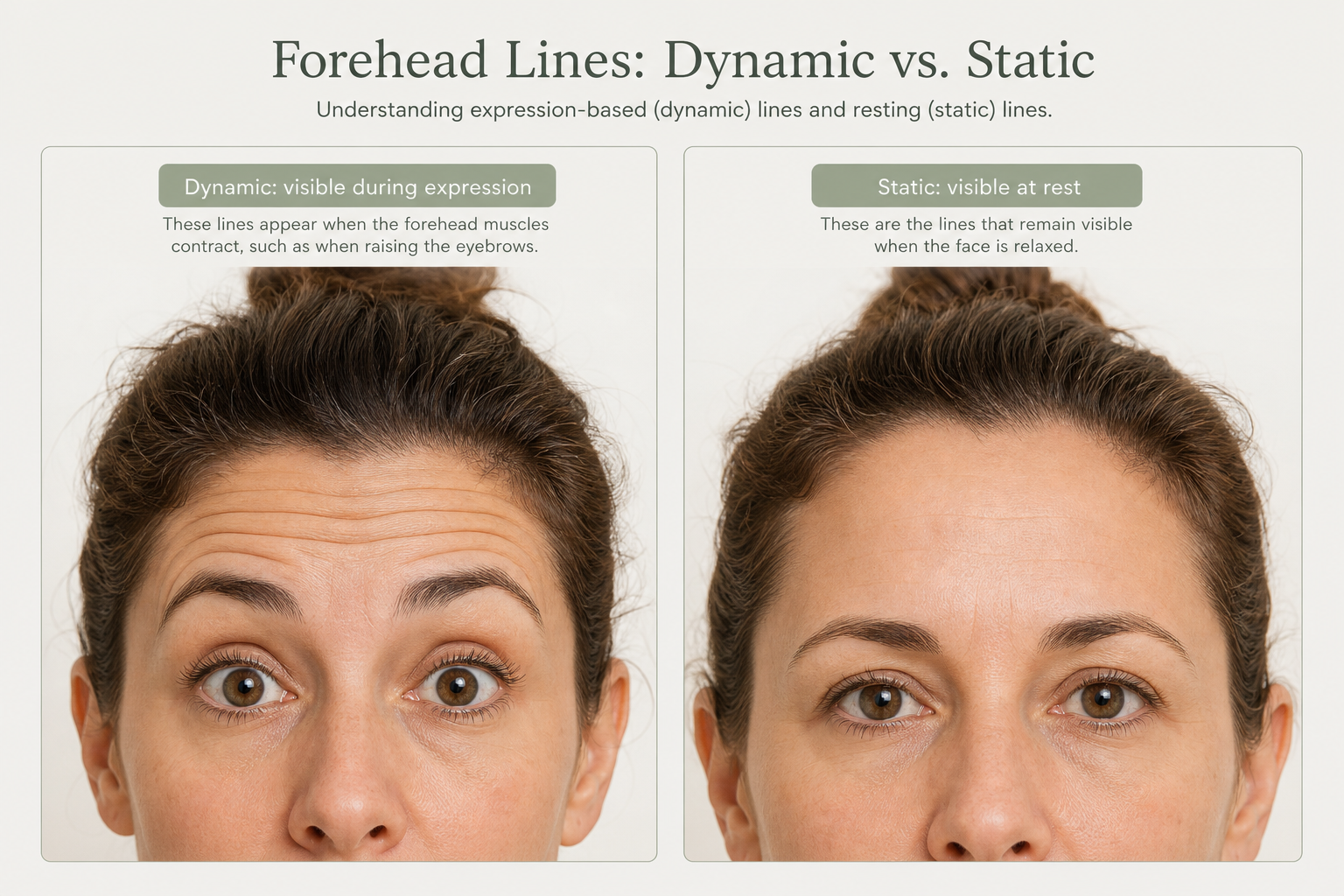
Understanding whether your forehead lines are dynamic or static is the most practical first step in deciding what to do about them. Dynamic wrinkles appear only when the frontalis muscle contracts — when you raise your eyebrows or furrow your brow — and disappear completely when your face is at rest. Static wrinkles are visible at rest without any muscle movement and represent a more established change in the skin’s structure.
| Feature | Dynamic Wrinkles | Static Wrinkles |
|---|---|---|
| When visible | During facial expression only | At rest and during expression |
| Primary cause | Repetitive muscle contraction | Collagen loss, UV damage, volume depletion |
| Typical age of onset | Mid-20s to early 30s | Late 30s onward, earlier with sun damage |
| Skincare response | Moderate — retinoids and SPF help slow progression | Limited — skincare improves texture but cannot erase deep lines |
| Professional treatment | Neuromodulators (e.g. botulinum toxin) most effective | Combination approach: neuromodulators, fillers, resurfacing |
| Reversibility | High at early stage | Partial — improvement possible, full reversal unlikely |
A simple self-assessment: relax your face completely, look in a mirror in natural light, and observe whether the forehead lines disappear. If they do, your lines are still in the dynamic phase — the most responsive stage for both skincare and preventive professional treatment. If lines remain visible at rest, they have begun to become static, which does not mean nothing can be done, but it does mean that skincare alone is unlikely to produce significant visible change.
What Causes Forehead Wrinkles to Appear Early?
Intrinsic Ageing and Collagen Decline
Intrinsic ageing refers to the biological changes that occur regardless of lifestyle. Collagen synthesis slows progressively after the mid-twenties, and elastin fibres — which give skin its ability to recoil after stretching — become less efficient over time. The dermal-epidermal junction, the boundary layer between the deeper dermis and the outer epidermis, also flattens with age, reducing the structural support that keeps skin looking smooth and firm. Genetics influence how quickly these changes occur, which is why some people in their 30s have noticeably more skin elasticity than others of the same age.
UV Damage and Photoageing
UV radiation is the single most significant external cause of premature skin aging. Cumulative sun exposure breaks down collagen and elastin through oxidative stress and triggers inflammatory pathways that accelerate the structural changes normally associated with intrinsic ageing. Photoageing can cause forehead lines to appear years earlier than they would from intrinsic ageing alone. Importantly, UV damage accumulates even on overcast days and through windows, which is why daily photoprotection matters regardless of season or weather.
Smoking and Oxidative Stress
Smoking introduces free radicals that directly damage collagen fibres and impair the skin’s ability to repair itself. Research consistently links smoking with earlier onset and greater severity of facial wrinkles, including forehead furrows. The repeated pursing and squinting associated with smoking also adds mechanical stress to the perioral and periorbital areas, though the biochemical damage to collagen is the more significant factor.
Stress, Cortisol, and Sleep Deprivation
Chronic psychological stress elevates cortisol, a hormone that, at persistently high levels, has been shown to inhibit collagen synthesis and accelerate its breakdown. This makes stress a meaningful but often underestimated accelerator of early forehead lines. Sleep is the period during which the skin undergoes its most active repair and cell renewal processes; poor sleep quality or insufficient sleep duration reduces this repair window and has been associated with increased signs of skin ageing. Addressing sleep and stress is not a cosmetic luxury — it is a genuine component of skin health.
Dehydration and Skin Barrier Disruption
A compromised skin barrier allows transepidermal water loss to increase, leaving skin less plump and more prone to surface creasing. Dehydration does not cause permanent wrinkles, but it makes existing lines appear more pronounced and reduces the skin’s resilience to mechanical stress. Maintaining adequate hydration — both through topical skincare and general fluid intake — supports the skin barrier and helps the skin look and function better.
Hormonal Changes
Hormonal fluctuations in the 30s, including changes in oestrogen levels, can affect collagen production and skin thickness. While this is more pronounced around perimenopause, some individuals notice changes in skin quality and elasticity during their 30s that have a hormonal component. This is worth discussing with a healthcare professional if skin changes seem disproportionate to other lifestyle factors.
The Collagen Decline Timeline: Why Your 30s Are a Critical Window
Collagen production begins declining at approximately age 25 at a rate of around 1% per year. By age 30, cumulative collagen loss is roughly 5%, and by 40 it is closer to 15% — before accounting for the additional acceleration caused by UV damage, smoking, or other extrinsic factors. This timeline matters because the 30s represent the period when the skin’s structural reserves are still relatively intact, making it the most effective window for prevention rather than correction.
Early intervention — whether through targeted skincare, photoprotection, or professional treatments — is more effective at this stage than attempting to reverse established static wrinkles later. This is not a reason for alarm; it is a reason to act thoughtfully and consistently now rather than waiting until lines become more deeply set.
Evidence-Based Skincare for Early Forehead Line Prevention
Broad-Spectrum Sunscreen: The Non-Negotiable Foundation
Daily application of a broad-spectrum SPF 30 or higher is the most evidence-supported single step for preventing premature skin aging, including early forehead lines. Broad-spectrum sunscreen protects against both UVA rays (which penetrate deeply and drive photoageing) and UVB rays (which cause burning). Applying sunscreen every morning — including on days spent mostly indoors — and reapplying after two hours of sun exposure provides meaningful cumulative protection over time. No other skincare ingredient has a stronger evidence base for wrinkle prevention.
Retinoids: The Gold Standard for Collagen Support
Retinol and prescription-strength retinoids such as tretinoin are vitamin A derivatives with the strongest clinical evidence for stimulating collagen synthesis, improving skin cell turnover, and reducing the appearance of fine lines. Retinoids work by binding to nuclear receptors in skin cells and upregulating genes involved in collagen production while inhibiting enzymes that break collagen down. Over-the-counter retinol is effective but works more gradually than prescription tretinoin; both are appropriate starting points depending on skin sensitivity and access to prescribing clinicians.
Retinoids should be introduced gradually — typically two to three nights per week initially — to allow the skin barrier to adapt and minimise irritation. They are best used in the evening, as they can increase photosensitivity. A broad-spectrum SPF the following morning is essential when using any retinoid.
Vitamin C: Antioxidant and Collagen Co-Factor
Vitamin C (ascorbic acid) serves two important functions in anti-ageing skincare: it neutralises free radicals generated by UV radiation and pollution, and it acts as a necessary co-factor in collagen synthesis. A stable vitamin C serum applied in the morning, before sunscreen, provides antioxidant protection that complements photoprotection. Vitamin C is most effective at concentrations between 10% and 20% and in formulations with a low pH that maintain stability.
Peptides and Hyaluronic Acid
Peptides are short chains of amino acids that can signal skin cells to produce more collagen and support the skin’s structural proteins. While the evidence for individual peptide ingredients varies, peptide-containing moisturisers are a reasonable addition to a prevention-focused routine. Hyaluronic acid is a humectant that draws water into the skin, improving surface hydration and temporarily reducing the appearance of fine lines. It does not rebuild collagen but supports the skin barrier and improves the skin’s overall appearance and resilience.
Niacinamide and Ceramides
Niacinamide (vitamin B3) supports the skin barrier, reduces inflammation, and has evidence for improving uneven skin tone and texture. Ceramides are lipid molecules that form part of the skin barrier’s protective structure; ceramide-containing moisturisers help maintain barrier integrity and reduce transepidermal water loss. Both ingredients are well-tolerated and complement retinoid use by supporting barrier recovery.
A Practical AM/PM Routine for Early 30s Skin
| Step | Morning | Evening |
|---|---|---|
| 1. Cleanse | Gentle low-pH cleanser | Gentle cleanser (double cleanse if wearing SPF/makeup) |
| 2. Antioxidant | Vitamin C serum (10–20%) | — |
| 3. Treatment | — | Retinol or retinoid (2–3 nights/week initially, building to nightly) |
| 4. Hydration | Hyaluronic acid serum | Hyaluronic acid serum or peptide serum |
| 5. Moisturise | Lightweight moisturiser with ceramides or niacinamide | Richer moisturiser with ceramides to support barrier repair |
| 6. Protect | Broad-spectrum SPF 30 or higher (last step) | — |
Important ingredient interaction note: Avoid applying retinol and vitamin C in the same routine without a buffer, as the combination can increase irritation. Using vitamin C in the morning and retinol in the evening is the standard approach. Similarly, avoid layering retinoids with AHAs such as glycolic acid or lactic acid on the same night until your skin has fully adapted to the retinoid, as this combination can significantly compromise the skin barrier.
Professional Treatment Options for Forehead Lines in Your 30s
Preventive Botox and Baby Botox
Botulinum toxin injections — commonly referred to by brand names such as Botox — work by temporarily reducing the activity of the frontalis muscle, limiting the repetitive contractions that deepen dynamic wrinkles over time. When used preventively in the early 30s, before lines become static, this approach is sometimes called prejuvenation: the goal is to slow the formation of permanent creasing rather than to correct established lines.
Baby Botox refers to the use of lower doses of botulinum toxin to achieve a subtle reduction in muscle movement while preserving natural expression. This approach is particularly relevant for people in their 30s who want to address early forehead lines without a frozen or over-treated appearance. Results typically last three to four months, after which the muscle activity gradually returns and retreatment is needed to maintain the effect. A qualified medical practitioner should assess facial anatomy, muscle strength, and individual goals before any botulinum toxin treatment.
Dermal Fillers
Hyaluronic acid dermal fillers are not typically the first-line treatment for forehead lines in the early 30s, as the primary driver at this stage is muscle movement rather than volume loss. However, in cases where static lines have become established, small amounts of filler placed carefully along deep furrows may soften their appearance. Filler in the forehead carries specific anatomical risks and should only be performed by a practitioner with advanced training in this area. A thorough consultation is essential to determine whether filler is appropriate for the specific pattern of lines present.
Microneedling and Radiofrequency
Microneedling creates controlled micro-injuries in the skin that stimulate the body’s natural collagen synthesis response. A course of treatments may improve skin texture, fine line depth, and overall skin quality. Radiofrequency microneedling combines this mechanical stimulation with heat energy to further support collagen remodelling. These treatments are generally more relevant for improving skin quality and early static lines than for addressing dynamic wrinkles, and multiple sessions are typically required to see meaningful results.
Chemical Peels and Laser Resurfacing
Superficial to medium-depth chemical peels using glycolic acid or lactic acid can improve skin cell turnover, surface texture, and the appearance of fine lines. Laser resurfacing treatments, ranging from non-ablative options with minimal downtime to ablative fractional lasers requiring a recovery period, can stimulate deeper collagen remodelling. These options are generally considered when skin quality concerns accompany the forehead lines, and suitability depends on skin type, tone, and the depth of lines present.
Myths Worth Addressing
Does drinking more water erase forehead lines? Adequate hydration supports skin barrier function and reduces the appearance of dehydration-related surface creasing, but it cannot reverse structural collagen loss or erase established static wrinkles. Hydration is a supporting factor, not a treatment.
Does screen time cause forehead wrinkles? Blue light from screens is a topic of ongoing research, but current evidence does not strongly support it as a significant driver of forehead wrinkles compared to UV radiation. The more relevant screen-related factor is the habitual furrowing or squinting some people do while looking at devices — a repetitive expression that can contribute to glabellar lines over time.
Does facial yoga help or worsen forehead lines? The evidence for facial yoga as a wrinkle treatment is limited and mixed. Some exercises may strengthen underlying muscles, but repetitive facial movements are precisely what create dynamic wrinkles in the first place. Exercises that involve repeated forehead raising or brow furrowing are unlikely to help and may accelerate creasing in susceptible individuals.
When to Consider a Professional Assessment
If forehead lines are visible at rest — not just during expression — before your early 30s, or if lines are deepening noticeably despite consistent SPF and retinoid use, a consultation with a qualified aesthetic practitioner or dermatologist is a reasonable next step. A professional assessment can determine whether your lines are dynamic, static, or a combination; identify any contributing factors specific to your anatomy or lifestyle; and discuss whether preventive Botox, baby Botox, or a skin-quality treatment may be appropriate for your situation.
Seeking assessment does not commit you to any treatment. It provides an informed basis for decision-making and allows a practitioner to identify the most appropriate approach for your specific pattern of lines, skin type, and goals.
Frequently Asked Questions
Is it normal to have forehead wrinkles at 30?
Yes. Dynamic forehead wrinkles — lines that appear during expression — are common from the mid-20s onward due to the frontalis muscle’s constant activity and the gradual decline in collagen and elastin that begins around age 25. Seeing early lines at 30 does not indicate a skin problem; it reflects normal biology that can be meaningfully slowed with consistent prevention.
Can forehead wrinkles at 30 be reversed with skincare alone?
Skincare can slow the progression of dynamic wrinkles and improve skin texture and hydration, but it cannot fully reverse established static wrinkles. Retinoids and broad-spectrum SPF have the strongest evidence for reducing the rate at which lines deepen. For lines already visible at rest, professional treatments are generally needed to achieve visible improvement.
At what age is preventive Botox worth considering?
There is no universal age threshold. Preventive botulinum toxin treatment may be worth discussing when dynamic forehead lines are consistently deep during expression and beginning to leave a faint impression at rest — a sign that static lines are starting to form. For many people this occurs in the late 20s to early 30s. A qualified practitioner can assess whether the timing and approach are appropriate for your individual anatomy.
How long does it take for retinol to improve forehead lines?
Visible improvement from retinol typically requires consistent use over three to six months. Prescription-strength tretinoin may produce results more quickly. Initial use often causes some dryness or flaking as the skin adapts; this usually settles within four to six weeks with gradual introduction and adequate moisturisation.
Do men get forehead wrinkles at 30 for the same reasons?
The underlying causes — frontalis muscle activity, collagen decline, UV damage — are the same in men and women. Men generally have thicker skin and higher baseline collagen density, which can delay the visible onset of lines slightly. However, men are statistically less likely to use daily SPF or retinoids, which can offset this biological advantage and result in comparable or earlier visible ageing in practice.
Can stress really cause forehead wrinkles?
Chronic stress elevates cortisol, which has been shown to inhibit collagen synthesis and accelerate its breakdown. While stress alone is unlikely to be the primary cause of forehead lines, it is a meaningful contributing factor — particularly when combined with poor sleep, which reduces the skin’s overnight repair capacity. Managing stress and prioritising sleep quality are legitimate components of a skin health strategy.
Starting Early: What a Realistic Prevention Strategy Looks Like
Forehead wrinkles at 30 are not a sign that significant damage has already been done — they are a signal that the skin’s structural reserves are beginning to be tested, and that consistent, evidence-based habits will make a meaningful difference over the coming decades. The most effective strategy at this stage combines daily broad-spectrum photoprotection, a gradually introduced retinoid, and barrier-supporting hydration as the non-negotiable foundation. Addressing lifestyle factors — particularly UV exposure, smoking, sleep quality, and stress — adds further protection that no topical product can fully replicate.
Professional options such as baby Botox or preventive neuromodulator treatment may be appropriate for some individuals in their 30s, particularly where dynamic wrinkles are consistently deep or beginning to leave a resting impression. These are not decisions to make based on general advice alone; a consultation with a qualified aesthetic practitioner allows for an assessment of your specific anatomy, skin quality, and goals before any treatment is considered. The earlier a thoughtful, consistent approach is established, the more effectively it can slow the progression from early expression lines to deeper, more established forehead furrows.
