
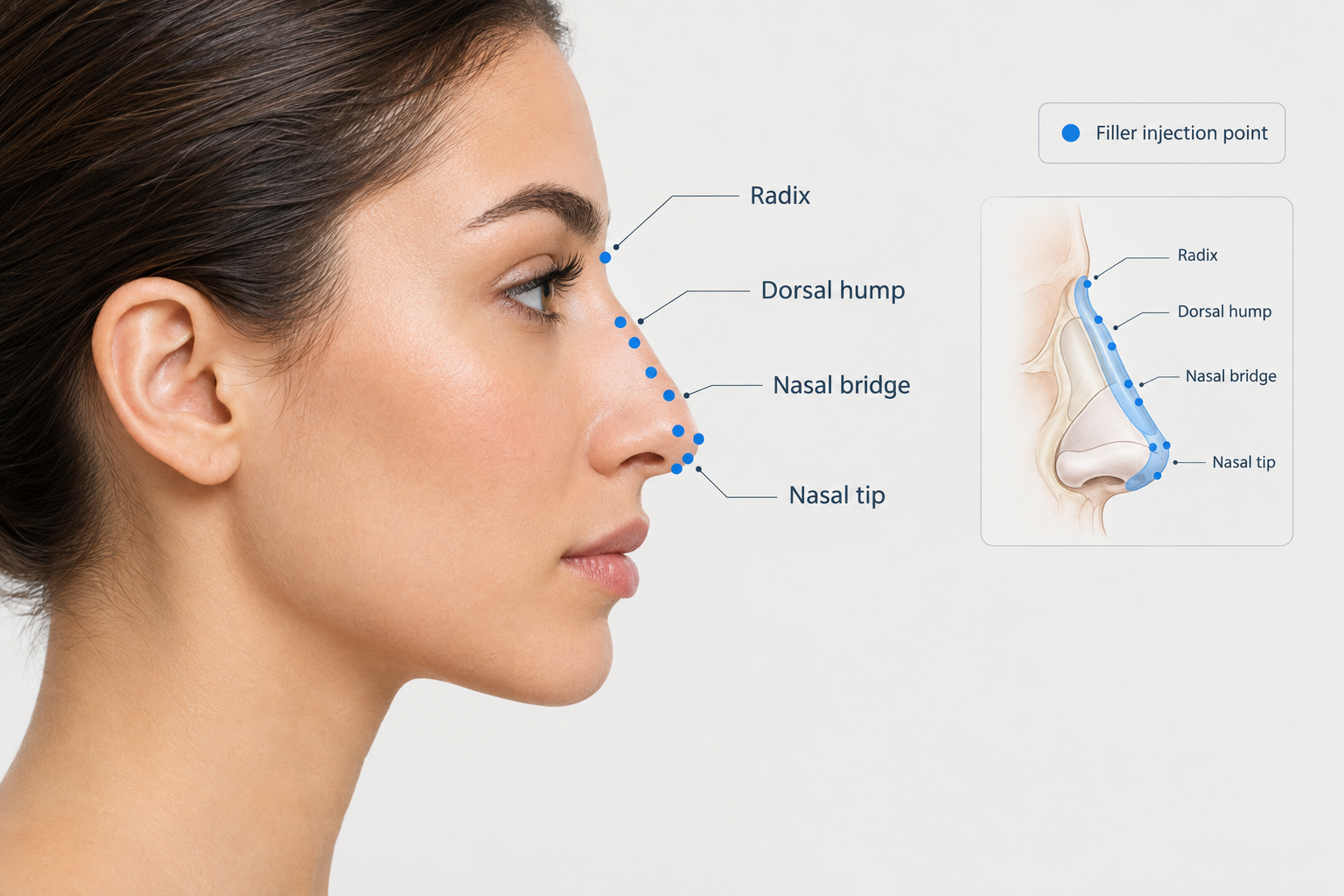

Non-surgical rhinoplasty — also called liquid rhinoplasty or a nose filler treatment — uses injectable dermal fillers to reshape the appearance of the nose without incisions, general anaesthesia, or surgical recovery. It has become one of the most requested minimally invasive facial procedures, largely because results are visible immediately and the treatment can be reversed if needed. This guide explains how the procedure works, what it can and cannot achieve, who may be a suitable candidate, what the risks involve, and how it compares to surgical rhinoplasty and alternative non-surgical approaches.
Key Takeaways
- Non-surgical rhinoplasty uses hyaluronic acid filler to alter the nose's appearance temporarily — it adds volume and creates optical illusions of improved contour but cannot reduce nose size.
- Results typically last 6–18 months depending on the filler used, the area treated, and individual metabolism; maintenance sessions are required to sustain the effect.
- The nose is a high-risk vascular area — vascular occlusion is a rare but serious complication that requires immediate treatment by an experienced injector with emergency hyaluronidase available.
- Ideal candidates have specific, minor concerns such as a dorsal hump, low nasal bridge, or drooping nasal tip — not those seeking size reduction or correction of breathing problems.
- Choosing a board-certified practitioner with nasal anatomy expertise and emergency protocols in place is the single most important safety decision a patient can make.
What Is Non-Surgical Rhinoplasty?
Non-surgical rhinoplasty is an outpatient procedure in which a qualified practitioner injects small amounts of dermal filler into precise locations on and around the nose to alter its shape, symmetry, or profile. The most widely used filler type is hyaluronic acid (HA), a naturally occurring substance that adds volume and can be dissolved with an enzyme called hyaluronidase if correction is needed. Because no surgery is involved, the treatment is sometimes called a lunchtime nose job — a colloquial term reflecting the short appointment time and minimal downtime involved.
The procedure works through strategic volume placement rather than tissue removal. By adding filler above or below a dorsal hump, for example, a practitioner can make the hump appear less prominent relative to the surrounding nasal profile. Similarly, filler placed at the nasal tip can improve tip projection or lift a drooping tip. These are optical refinements rather than structural changes — an important distinction that shapes realistic expectations for every patient considering this approach.
What Non-Surgical Rhinoplasty Can and Cannot Do
Understanding the capabilities and limitations of liquid rhinoplasty before booking a consultation helps patients arrive with realistic expectations and make a genuinely informed decision.
What It Can Address
- Dorsal hump camouflage: Filler placed above and below a bump on the nasal bridge can smooth the profile without removing bone or cartilage.
- Low or flat nasal bridge: Adding volume along the nasal bridge can create the appearance of greater height and definition — a concern particularly common among patients of East Asian, South Asian, and African descent.
- Drooping nasal tip: Strategic filler placement can improve nasal tip projection and lift the appearance of a downward-pointing tip.
- Minor nasal asymmetry: Small volume additions can reduce the visual impact of mild asymmetry along the nasal bridge or tip.
- Post-surgical irregularities: In some cases, filler is used to smooth minor contour irregularities following a previous surgical rhinoplasty — though this carries additional complexity and risk and requires a highly experienced injector.
- Nasal dips or depressions: Shallow depressions along the nasal bridge or radix (the root of the nose) can be filled to create a smoother contour.
What It Cannot Do
- Reduce nose size: Because the procedure adds volume, it cannot make the nose physically smaller — only create the visual impression of better proportion in some cases.
- Narrow wide nostrils: Nostril width is determined by soft tissue and bone structure that filler cannot alter.
- Correct a bulbous tip: A significantly rounded or bulbous nasal tip generally requires surgical reshaping of the underlying cartilage.
- Fix a deviated septum: Breathing difficulties and internal structural deviations are outside the scope of any injectable treatment.
- Produce permanent results: All currently available fillers used in this area are temporary; results require ongoing maintenance sessions.
How the Procedure Works
A typical non-surgical rhinoplasty appointment takes between 15 and 45 minutes from start to finish. Most practitioners follow a structured process designed to maximise both safety and aesthetic outcome.
- Consultation: The practitioner assesses nasal anatomy, skin thickness, and the patient's specific concerns. Photographs are usually taken. Medical history, medications, and previous procedures are reviewed. This is also the stage at which the practitioner should explain realistic outcomes and confirm suitability.
- Preparation: The treatment area is cleaned and a topical numbing cream is applied, typically for 15–30 minutes, to reduce discomfort. Some fillers also contain lidocaine, a local anaesthetic, within the formulation.
- Marking: Injection points may be marked on the skin to guide precise placement.
- Injection: The practitioner uses a fine needle or a blunt-tipped cannula to deliver small amounts of filler at targeted points. A cannula reduces the risk of accidentally entering a blood vessel compared with a sharp needle, though both techniques are used by experienced injectors depending on the area and clinical judgement.
- Moulding and review: The practitioner may gently massage the filler to refine the shape. The patient is then asked to sit upright and review the result in a mirror before leaving.
Most patients describe the procedure as mildly uncomfortable rather than painful, particularly after topical numbing cream has taken effect. The nose is a sensitive area, and some stinging or pressure during injection is normal.
Filler Types Used in Liquid Rhinoplasty
Hyaluronic acid fillers — including well-known brands such as Juvederm and Restylane — are the most commonly used products for non-surgical rhinoplasty. HA fillers are favoured because they are reversible: hyaluronidase (also known as Hyalase) can dissolve the filler rapidly in the event of a complication or an unwanted aesthetic result. This reversibility is a meaningful safety advantage in a high-risk vascular area.
Calcium hydroxyapatite filler, sold under the brand name Radiesse, is occasionally used in this area because it tends to produce longer-lasting results and stimulates some collagen production. However, calcium hydroxyapatite is not reversible with hyaluronidase, which is an important consideration given the vascular risks associated with nasal injections. Patients and practitioners should weigh this carefully.
It is worth noting that no dermal filler is specifically FDA-approved for use in the nose. Practitioners use these products off-label in this area, which is a common and accepted practice in aesthetic medicine but is a fact that patients deserve to know before consenting to treatment.
Who May Be a Suitable Candidate
Non-surgical rhinoplasty may be appropriate for adults who have specific, minor nasal concerns that fall within the procedure's capabilities, are in good general health, and hold realistic expectations about what injectable treatment can achieve. Patients who want to explore how a change might look before committing to surgical rhinoplasty sometimes use liquid rhinoplasty as a temporary test — though it is important to understand that the filler result will not perfectly predict a surgical outcome.
Candidacy is typically assessed on an individual basis. Factors that may support suitability include a low nasal bridge, a visible dorsal hump that the patient wishes to camouflage, mild nasal asymmetry, or a drooping nasal tip. Skin thickness also matters: very thin skin may make filler placement more visible, while very thick skin may limit the definition achievable.
The procedure is generally not suitable for patients who are pregnant or breastfeeding, have active skin infections or inflammation in the treatment area, have a history of severe allergic reactions to filler components, take blood-thinning medications without medical clearance, or have unrealistic expectations about size reduction or structural correction. Patients who have had previous surgical rhinoplasty require particularly careful assessment, as altered anatomy and scar tissue can change the vascular landscape and increase procedural risk.
Risks and Side Effects
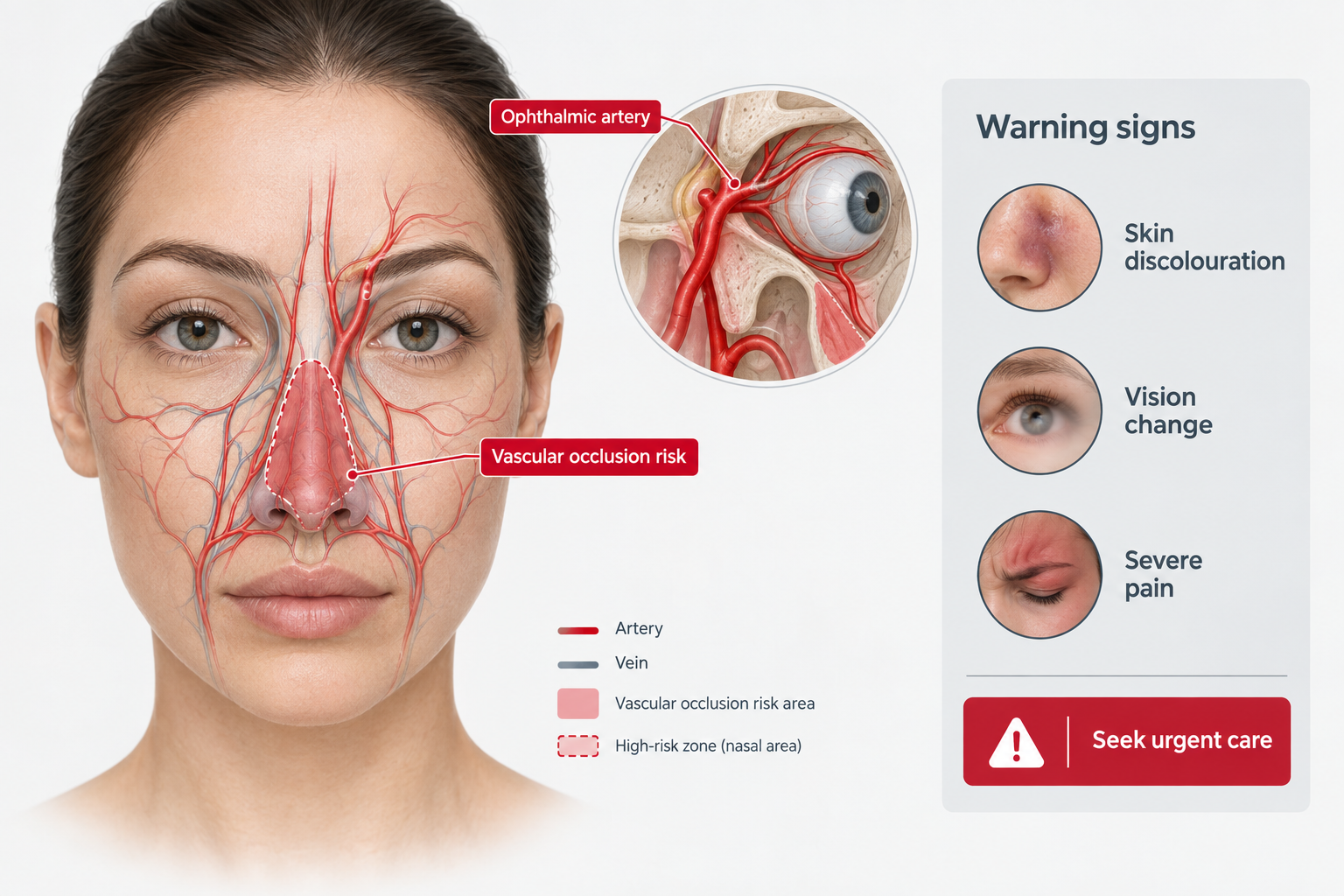
The nose contains a dense network of blood vessels with direct connections to the ophthalmic artery, which supplies blood to the eye. This anatomy makes non-surgical rhinoplasty one of the higher-risk areas for injectable filler treatment, and it is essential that patients understand this before proceeding.
Common Side Effects
Most patients experience some degree of swelling, bruising, redness, or tenderness at the injection sites. These effects are typically mild and resolve within a few days to two weeks. Temporary asymmetry immediately after treatment is also common as swelling settles unevenly.
Less Common but Serious Risks
- Vascular occlusion: This occurs when filler is inadvertently injected into or compresses a blood vessel, blocking blood flow to surrounding tissue. In the nose, this can lead to skin necrosis (tissue death) and, in rare cases, vision changes or blindness if the ophthalmic artery is affected. Vascular occlusion is a medical emergency requiring immediate treatment with hyaluronidase.
- Filler migration: Over time, filler may shift from its original placement, altering the shape of the nose in unintended ways. This risk increases with repeated treatments and cumulative filler volume.
- Infection: Any injectable procedure carries a small risk of infection. Signs include increasing redness, warmth, swelling, or discharge beyond the first 48 hours.
- Lumps or nodules: Irregularities in filler distribution can create visible or palpable lumps, which may require dissolving with hyaluronidase.
Warning Signs That Require Immediate Attention
Patients should seek urgent medical attention if they experience any of the following after treatment: skin that turns white, blue, or mottled (a sign of vascular compromise); severe or worsening pain disproportionate to the procedure; vision changes, blurring, or loss of vision; or signs of infection that worsen after 48 hours. A practitioner who has emergency hyaluronidase available and a clear emergency protocol in place is essential — not optional.
Aftercare and Recovery
Non-surgical rhinoplasty involves minimal downtime, but following aftercare guidance carefully in the days after treatment helps protect the result and reduce complication risk.
- Avoid touching, pressing, or massaging the nose for at least 24–48 hours after treatment.
- Do not wear glasses that rest on the nasal bridge for up to four weeks, as sustained pressure can displace filler. Patients who wear glasses regularly should discuss this with their practitioner before treatment and plan accordingly — contact lenses or glasses taped to the forehead are common temporary solutions.
- Avoid strenuous exercise for 24–48 hours to reduce swelling and the risk of filler displacement.
- Avoid alcohol, aspirin, ibuprofen, and other blood-thinning substances for at least 24 hours before and after treatment to minimise bruising.
- Avoid heat exposure — including saunas, steam rooms, and hot showers — for 24–48 hours.
- Sleep with the head slightly elevated for the first night or two to help reduce swelling.
- Attend any follow-up appointments recommended by the practitioner to review the result once initial swelling has settled.
How Long Do Results Last?
Results from hyaluronic acid nose filler typically last between 6 and 18 months, though individual variation is significant. The nose is an area of relatively high movement — breathing, facial expressions, and physical contact all affect how quickly filler metabolises. Filler placed at the nasal tip tends to break down faster than filler placed along the nasal bridge, where there is less dynamic movement.
Calcium hydroxyapatite fillers may last longer — sometimes up to two years — but the absence of reversibility with hyaluronidase makes this a more considered choice in the nasal area. Patients who choose to maintain their results will need repeat maintenance sessions, and the cumulative cost of ongoing treatment is worth factoring into any long-term decision about whether liquid rhinoplasty or surgical rhinoplasty better suits their goals and budget.
Non-Surgical vs. Surgical Rhinoplasty: How They Compare
Both approaches can improve nasal appearance, but they differ substantially in mechanism, scope, recovery, cost, and permanence. The right choice depends on the nature of the concern, the degree of change desired, and the patient's tolerance for recovery and risk.
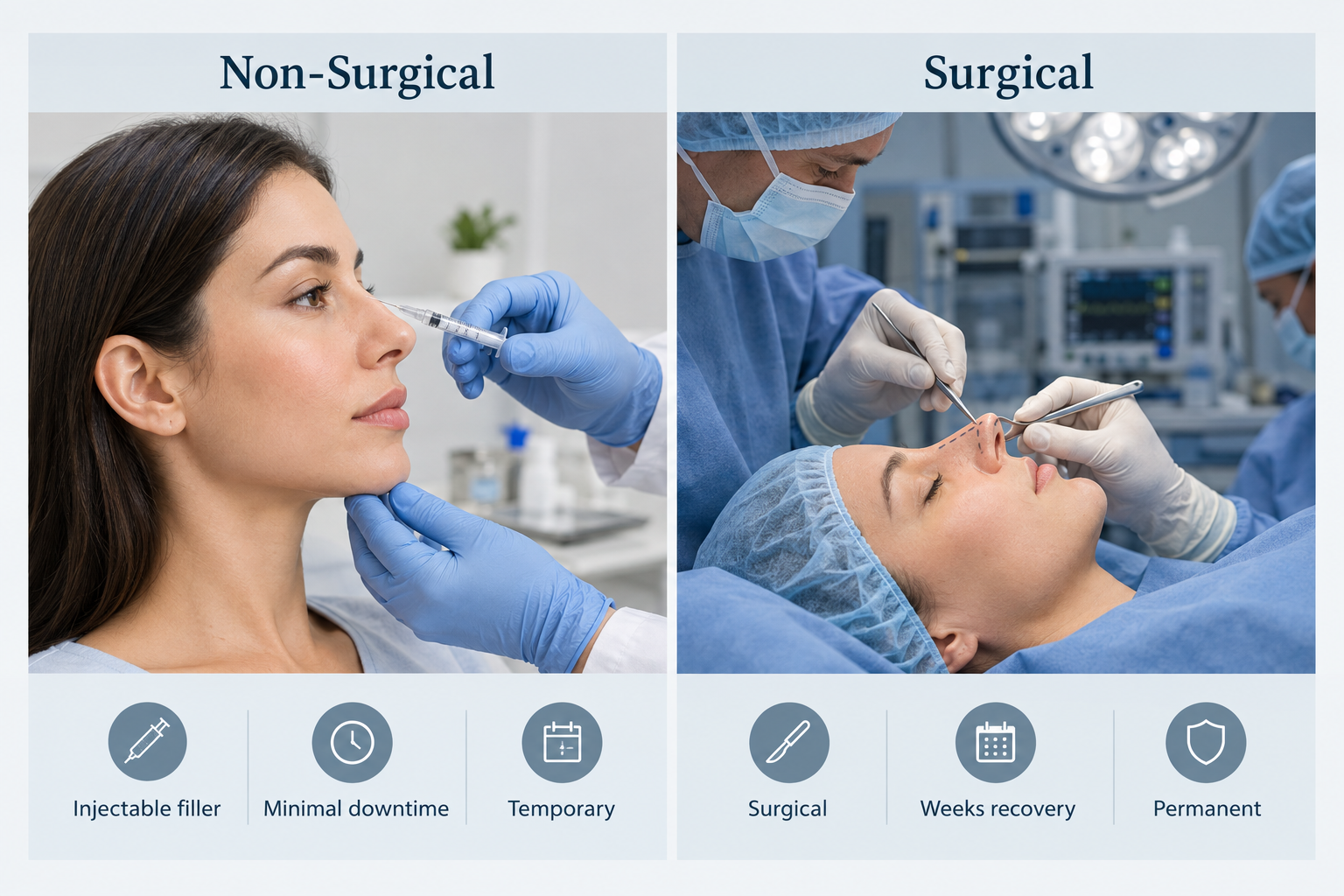
| Factor | Non-Surgical Rhinoplasty | Surgical Rhinoplasty |
|---|---|---|
| Mechanism | Injectable filler adds volume | Bone and cartilage are reshaped or removed |
| Anaesthesia | Topical numbing cream only | General or local anaesthesia |
| Downtime | Minimal (hours to a few days) | Weeks; splint worn for 1–2 weeks |
| Results duration | 6–18 months (temporary) | Permanent (with natural ageing) |
| Reversibility | Yes (HA filler with hyaluronidase) | No |
| Scope of change | Minor refinements only | Major structural reshaping possible |
| Can reduce nose size | No | Yes |
| Can correct breathing | No | Yes (septoplasty component) |
| Approximate cost | £300–£900 per session (UK); $600–$1,500 (US) | Significantly higher; typically 5–10× more |
| Maintenance required | Yes — repeat sessions needed | No ongoing treatment required |
One practical consideration that is often overlooked is the long-term cost of maintenance. A patient who has liquid rhinoplasty every 12 months at £600 per session will spend £3,000 over five years — a figure that begins to approach the lower end of surgical rhinoplasty costs in some markets. For patients with long-term goals, this cumulative investment is worth discussing with a practitioner before committing to either path.
Alternative Non-Surgical Options: Nose Thread Lift
The nose thread lift — sometimes called a HIKO lift — is an alternative non-surgical approach that uses PDO threads (dissolvable sutures made from polydioxanone) inserted along the nasal bridge or tip to create mechanical lift and structural definition. PDO threads also stimulate collagen production over time, which may contribute to longer-lasting structural support.
The nose thread lift is particularly useful for patients seeking tip elevation or bridge definition without adding significant volume. Results typically last 12–24 months. Unlike HA filler, PDO threads are not reversible once placed, but they carry a different risk profile — notably, the risk of vascular occlusion associated with filler injection does not apply to thread placement in the same way.
Some practitioners combine PDO threads with small amounts of hyaluronic acid filler in a hybrid approach — using threads for structural lift and filler for contour refinement. This combination is emerging in clinical practice but is not yet supported by extensive long-term outcome data, and patients considering it should ensure their practitioner has specific experience with both techniques.
Botulinum toxin injections are occasionally used as a complementary tool — for example, to relax the depressor septi nasi muscle, which pulls the nasal tip downward during smiling. This is a targeted application that may subtly improve tip position in appropriate candidates, and it is sometimes combined with filler treatment rather than used as a standalone nose reshaping procedure.
Ethnic Rhinoplasty Considerations
Non-surgical rhinoplasty is used by patients across a wide range of ethnic backgrounds, and nasal anatomy varies considerably between individuals of different heritage. Patients of East Asian, South Asian, Southeast Asian, Middle Eastern, and African descent often present with a lower nasal bridge or wider nasal base as their primary concern — areas where filler can be particularly effective for bridge augmentation. However, wider nostrils and a broader nasal base cannot be narrowed with filler, and practitioners should be transparent about this limitation during consultation.
Technique considerations also differ by anatomy. Patients with thicker nasal skin may require more filler to achieve visible definition, while those with thinner skin may show filler irregularities more readily. A practitioner with experience treating diverse nasal anatomy is better positioned to advise on realistic outcomes for each individual.
Choosing a Practitioner: What Matters Most
Provider selection is arguably the most important safety decision in non-surgical rhinoplasty. The nose is a high-risk injection zone, and the consequences of a vascular complication can be severe and rapid. Patients should look for a practitioner who is a qualified medical professional — such as a doctor, dentist, or nurse prescriber with advanced aesthetic training — and who has specific experience with nasal injections rather than general filler experience alone.
Before booking, it is reasonable to ask the following questions at consultation:
- What is your training and experience specifically with nasal filler injections?
- Do you have hyaluronidase available on-site, and are you trained to manage vascular occlusion emergencies?
- What filler product do you use in the nose, and why?
- What results are realistic for my specific concern, and what are the limitations?
- What aftercare will I need, and when should I contact you if I have concerns?
A practitioner who answers these questions clearly and without pressure, who declines to treat patients who are not suitable candidates, and who prioritises safety over volume of appointments is a meaningful indicator of professional standards. Avoid practitioners who cannot confirm hyaluronidase availability or who do not conduct a thorough pre-treatment assessment.
Frequently Asked Questions
Is non-surgical rhinoplasty painful?
Most patients find the procedure mildly uncomfortable rather than significantly painful. Topical numbing cream is applied beforehand, and many HA fillers contain lidocaine within the formulation. The nose is a sensitive area, so some stinging or pressure during injection is normal, but severe pain during the procedure is not expected and should be communicated to the practitioner immediately.
Can I wear glasses after nose filler treatment?
Glasses that rest on the nasal bridge should be avoided for up to four weeks after treatment, as sustained pressure can displace filler before it has fully settled. Patients who wear glasses daily should plan for this in advance — contact lenses or glasses secured with tape to the forehead are common temporary solutions. Discuss this with your practitioner before treatment.
How soon will I see results?
Results from liquid rhinoplasty are visible immediately after the procedure. However, initial swelling may temporarily alter the appearance, and the final settled result is usually more accurately assessed after 2–4 weeks once swelling has fully resolved.
Can non-surgical rhinoplasty be reversed?
Hyaluronic acid filler can be dissolved using hyaluronidase (Hyalase), which breaks down the filler relatively quickly. This reversibility is one of the key advantages of HA filler in this area. Calcium hydroxyapatite filler cannot be dissolved in the same way, which is why HA products are generally preferred for nasal injections.
Will repeated treatments cause long-term problems?
Repeated filler sessions in the nose carry a cumulative risk of filler migration, where product gradually shifts from its original placement over time. Excessive filler volume can also distort nasal shape and make subsequent correction — whether with more filler or surgery — more complex. Practitioners typically recommend using the minimum effective volume and allowing previous filler to fully dissolve before retreating.
Is non-surgical rhinoplasty suitable after a previous surgical nose job?
Filler can be used to address minor contour irregularities after surgical rhinoplasty, but this is a more complex and higher-risk application. Surgical scarring and altered anatomy change the vascular landscape of the nose, making precise injection more technically demanding. This application should only be undertaken by a practitioner with specific experience in post-surgical nasal anatomy.
Does the procedure affect breathing?
Non-surgical rhinoplasty does not improve breathing and is not a treatment for a deviated septum or other structural airway concerns. In rare cases, significant filler volume could theoretically affect airflow, though this is uncommon with appropriately conservative treatment. Patients with breathing concerns should be assessed by an ENT specialist or plastic surgeon.
Is Non-Surgical Rhinoplasty the Right Choice for You?
Non-surgical rhinoplasty offers a genuinely useful option for patients with specific, minor nasal concerns — particularly those seeking dorsal hump camouflage, improved nasal bridge definition, or subtle tip refinement — who want immediate, reversible results without surgical recovery. The procedure is quick, requires minimal downtime, and can be dissolved if the outcome is not as expected. For patients who are uncertain about surgical rhinoplasty, it can also serve as a temporary way to explore how a change might look.
However, liquid rhinoplasty is not a substitute for surgery when significant structural change is the goal. It cannot reduce nose size, narrow wide nostrils, correct a bulbous tip, or address breathing problems. Results are temporary, and the cumulative cost of maintenance sessions over several years is a practical factor worth weighing against the one-time cost of surgery for patients with long-term goals.
The most important step before proceeding is a thorough consultation with a board-certified practitioner who has specific nasal injection experience, emergency hyaluronidase on-site, and a clear approach to patient safety. Realistic expectations, honest communication, and careful provider selection are the foundations of a safe and satisfying outcome. If you are considering this procedure, a consultation with a qualified medical professional is the appropriate starting point for understanding whether it suits your individual anatomy and goals.
