

A non-surgical facelift is not a single procedure — it is a personalised combination of minimally invasive and energy-based treatments designed to address the visible signs of facial ageing without incisions, general anaesthesia, or significant recovery time. For many patients experiencing mild to moderate signs of ageing, these approaches can produce meaningful improvements in skin firmness, facial contour, and overall radiance. Understanding what each treatment can and cannot achieve is essential before deciding whether this route is right for you.
Key Takeaways
- Facial ageing involves three distinct problems — volume loss, skin laxity, and muscle dynamics — and effective non-surgical treatment usually requires addressing more than one of these.
- No single non-surgical treatment replicates the structural correction of a surgical facelift; results are typically more subtle and require ongoing maintenance.
- The most effective non-surgical outcomes usually come from a staged treatment approach combining two or more complementary modalities.
- Realistic expectations and a thorough consultation with a qualified, board-certified or appropriately credentialled practitioner are essential for safe, satisfying outcomes.
- Non-surgical options are best suited to patients with mild to moderate laxity; significant structural descent may ultimately require surgical assessment.
Understanding Why the Face Ages: The Three-Pillar Framework
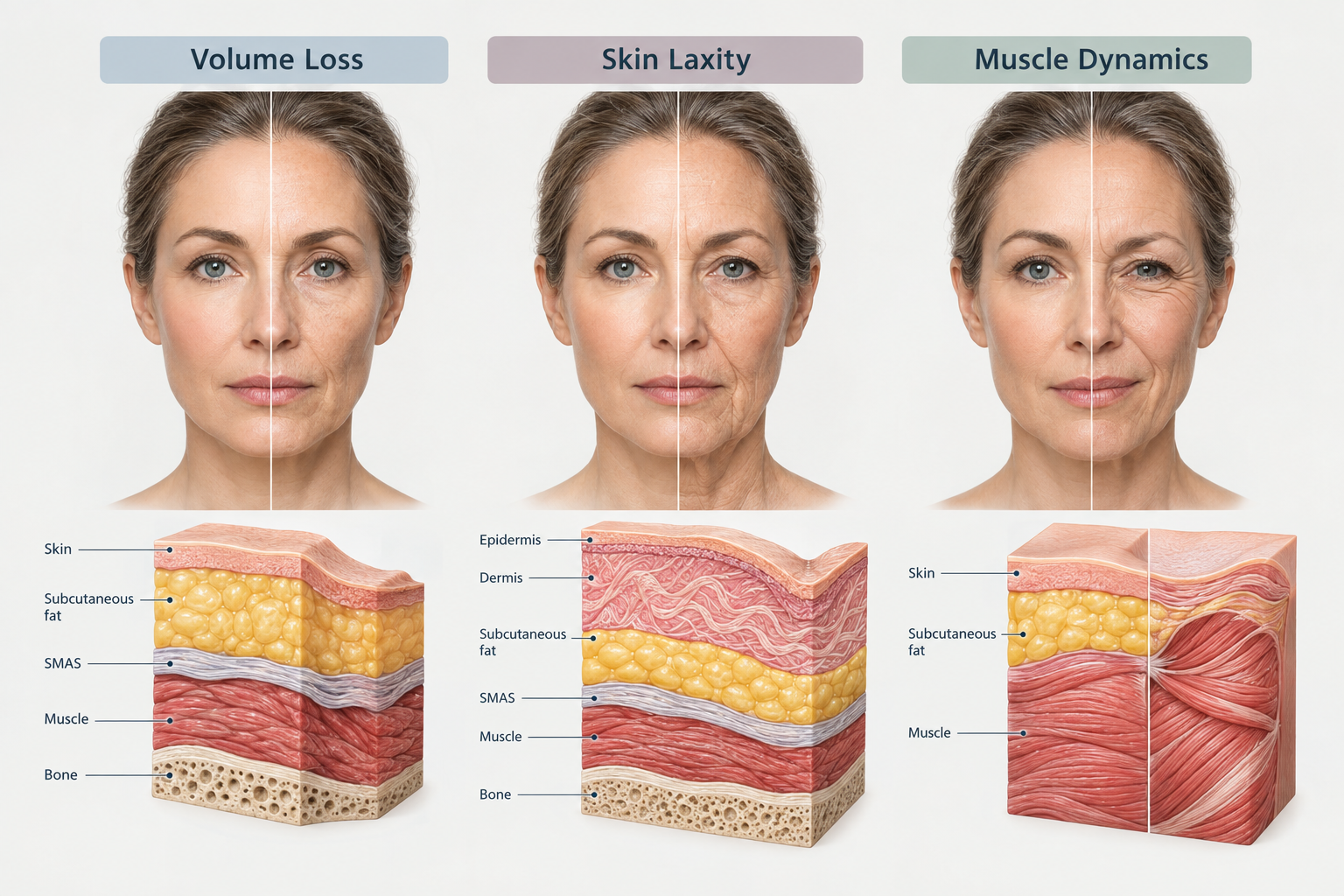
Most discussions of non-surgical facial rejuvenation focus on treatments without first explaining what is actually happening to the face over time. Facial ageing is driven by three overlapping processes, and understanding them helps clarify why different treatments are needed for different concerns.
The first pillar is volume loss. Fat compartments in the cheeks, temples, and under-eye area gradually diminish, causing the face to appear hollowed, deflated, or sunken. Bone resorption also contributes to this structural change over time. The second pillar is skin laxity — the progressive loss of collagen and elastin, the structural proteins that keep skin firm and resilient. As collagen and elastin production slows with age, skin becomes thinner, looser, and less able to spring back. The third pillar is muscle dynamics: repeated facial expressions create dynamic wrinkles such as frown lines, crow's feet, and forehead lines, while changes in muscle tone can contribute to jowling and brow descent.
Effective non-surgical facial rejuvenation addresses whichever combination of these pillars is most relevant to the individual patient. A treatment plan focused only on volume restoration, for example, will not correct poor skin texture or dynamic lines — which is why a combination approach is so frequently recommended by experienced practitioners.
Non-Surgical vs Surgical Facelift: How Do They Compare?
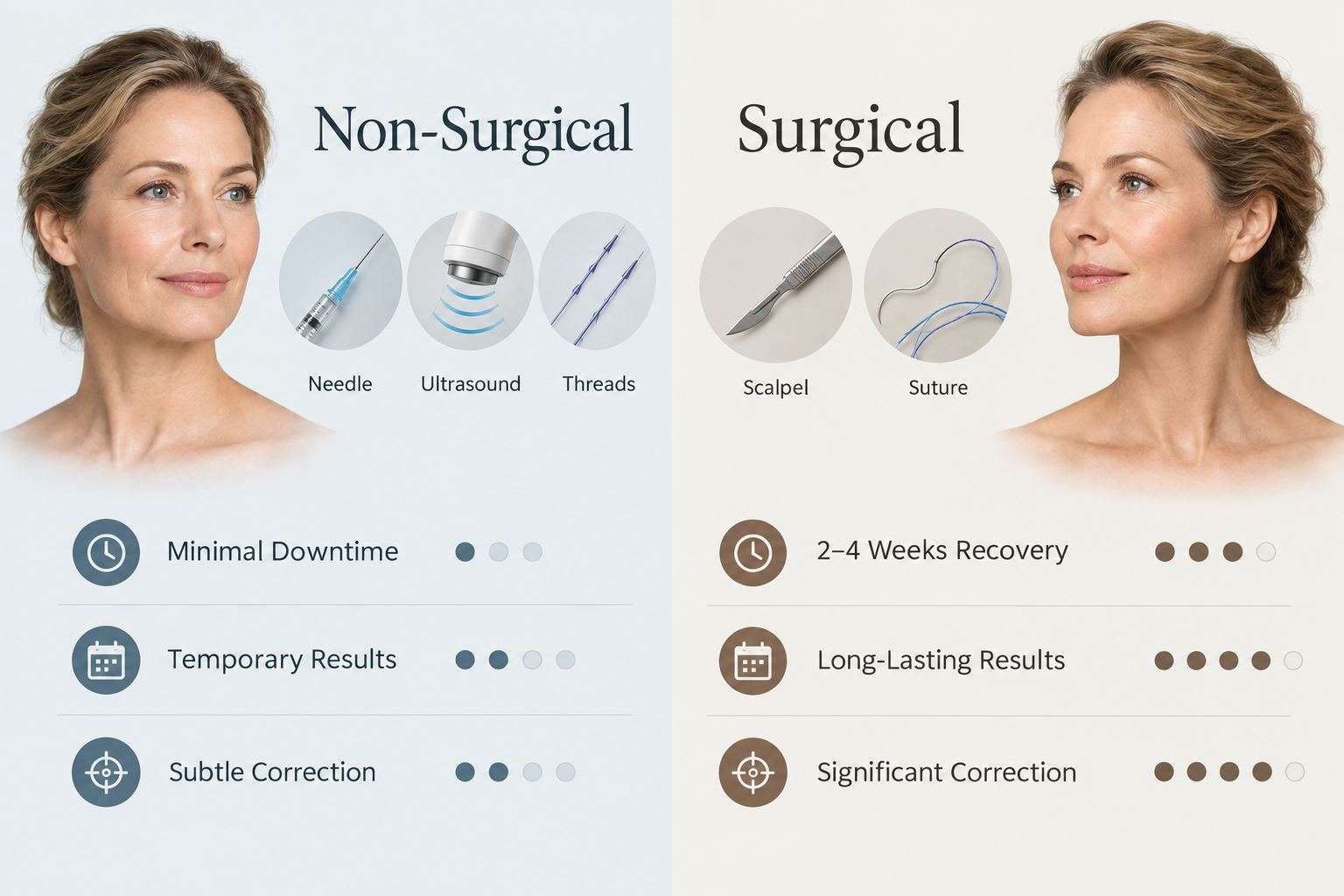
A surgical facelift directly repositions the deeper structural layer of the face known as the SMAS layer (superficial muscular aponeurotic system), removes or redistributes excess skin, and can produce long-lasting structural correction. Non-surgical treatments work at the surface and mid-tissue levels, stimulating the body's own repair processes or adding volume, but they do not physically reposition descended tissue in the same way.
| Factor | Non-Surgical Facelift | Surgical Facelift |
|---|---|---|
| Anaesthesia | Topical or local (most treatments) | General or sedation |
| Incisions | None or minimal (threads) | Yes |
| Downtime | Minimal to none (most options) | 2–4 weeks typical |
| Results onset | Immediate (fillers) to 3–6 months (energy devices) | Visible after swelling resolves, 4–8 weeks |
| Longevity | 6 months to 2+ years depending on treatment | 5–10+ years |
| Degree of correction | Mild to moderate improvement | Significant structural correction |
| Maintenance required | Yes — regular top-ups needed | Less frequent, though ageing continues |
| Typical cost per session | Lower per session; cumulative costs add up | Higher upfront; fewer repeat procedures |
| Best suited to | Mild to moderate laxity, preventative ageing | Moderate to severe laxity, significant descent |
It is worth noting that the cumulative cost of non-surgical maintenance over a decade can approach or exceed the cost of a single surgical procedure. This does not make one option better than the other, but it is a factor worth discussing honestly with your practitioner during the planning stage.
The Main Non-Surgical Facelift Treatments
Several well-established treatment categories are used in non-surgical facial rejuvenation, each targeting different aspects of the ageing process. The most appropriate options depend on your individual anatomy, skin condition, and goals.
Botulinum Toxin (Botox and Neuromodulators)
Botulinum toxin injections — commonly known by brand names such as Botox or Dysport — temporarily relax specific facial muscles to soften dynamic wrinkles. These include frown lines between the brows, forehead lines, and crow's feet around the eyes. When used strategically, neuromodulators can also achieve a subtle brow lift, reduce the appearance of neck bands, and contribute to overall facial balance. Results typically appear within a few days to two weeks and generally last three to four months, after which repeat treatment is needed to maintain the effect.
Dermal Fillers and the Liquid Facelift
Dermal fillers — most commonly based on hyaluronic acid — are injectable gels used for volume restoration in areas such as the cheeks, temples, jawline, and nasolabial folds. When multiple filler placements are combined to restore facial structure and contour, this is often referred to as a liquid facelift. Hyaluronic acid fillers are reversible using an enzyme called hyaluronidase, which adds a meaningful safety advantage. Longer-lasting collagen stimulators such as Sculptra work differently, triggering the body's own collagen production over several months rather than providing immediate volume. Results from hyaluronic acid fillers typically last 9–18 months depending on the product and area treated; Sculptra effects may last up to two years or more.
PDO Thread Lift
A PDO thread lift uses fine absorbable sutures made from polydioxanone (PDO) — the same material used in surgical stitches — to physically lift and reposition sagging tissue. Threads are inserted under the skin using a fine needle or cannula, and barbed or cog threads grip the tissue to create an immediate mechanical lift. Over the following weeks, the threads also stimulate collagen production around the insertion points, providing a secondary skin-tightening benefit. Results are typically visible for 12–18 months as the threads gradually dissolve. Thread lifts are best suited to patients with mild to moderate skin laxity; they are not a substitute for surgical lifting in patients with significant tissue descent.
HIFU and Ultherapy
High-Intensity Focused Ultrasound (HIFU), delivered by devices such as Ultherapy, uses precisely focused ultrasound energy to heat tissue at specific depths beneath the skin — including the SMAS layer — without damaging the surface. This controlled thermal injury triggers neocollagenesis, the biological process by which the body produces new collagen in response to tissue remodelling. The result is a gradual tightening and lifting effect that develops over two to three months and may continue improving for up to six months after treatment. A single session is often sufficient for suitable candidates, with results lasting approximately one to two years. HIFU is particularly useful for brow lifting, jawline definition, and addressing laxity in the neck and décolletage.
Radiofrequency Treatments
Radiofrequency (RF) energy heats the deeper layers of the skin to stimulate collagen and elastin remodelling. Thermage CPT delivers monopolar RF energy to tighten skin across the face and body in a single session. Morpheus8 combines RF with microneedling, delivering energy directly into the dermis and subdermal fat layer through fine needles — this approach can address both skin laxity and early fat layer remodelling simultaneously. FaceTite uses RF energy delivered via a small internal probe and an external electrode, providing more significant tightening than surface-only devices. All RF-based treatments work through neocollagenesis and typically require several weeks before results become visible, with continued improvement over three to six months.
Emerging Technologies
Several newer energy-based devices are gaining clinical attention. Sofwave uses parallel beam ultrasound technology to target the mid-dermis with a more comfortable treatment experience than some earlier HIFU devices. EMface and TriLift use a combination of radiofrequency and electrical muscle stimulation to simultaneously tighten skin and tone facial muscles — addressing both skin laxity and muscle dynamics in a single session. Ellacor uses micro-coring technology to physically remove small cores of skin tissue, producing a tightening effect without thermal energy. These technologies represent an evolving area of aesthetic medicine, and while early clinical data are encouraging, long-term evidence continues to develop.
Skin Quality Treatments
Treatments such as microneedling, PRP (platelet-rich plasma) therapy, chemical peels, and CO2 laser resurfacing do not lift the face structurally but significantly improve skin texture, tone, and radiance. These skin resurfacing approaches are frequently incorporated into a broader non-surgical treatment plan to enhance the overall result, particularly when skin quality concerns such as fine lines, pigmentation, or dullness are present alongside laxity.
Who May Be a Suitable Candidate?
Non-surgical facelift treatments are generally most effective for patients with mild to moderate signs of ageing — typically those in their 30s through to their early 60s, though individual anatomy matters more than age alone. Suitable candidates usually have some degree of skin laxity, early volume loss, or dynamic wrinkles, but retain enough skin elasticity for energy-based treatments to produce a meaningful response.
Non-surgical options are also increasingly used as a preventative ageing strategy in patients in their late 20s and 30s, before significant laxity develops. Starting collagen-stimulating treatments earlier may help slow the visible progression of ageing, though this approach requires realistic expectations about the degree of change achievable at this stage.
Patients who may not be suitable for certain treatments include those who are pregnant or breastfeeding, have active skin infections or inflammatory conditions in the treatment area, have implanted electrical devices such as pacemakers (relevant for RF treatments), or have a history of severe allergic reactions to injectable products. A thorough medical history and facial assessment are essential before any treatment is planned.
Skin Type and Ethnicity Considerations
Skin tone and ethnicity are clinically relevant factors that are often overlooked in general guides to non-surgical facial rejuvenation. Laser and certain light-based resurfacing treatments carry a higher risk of post-inflammatory hyperpigmentation in patients with darker skin tones (Fitzpatrick skin types IV–VI). Radiofrequency and ultrasound-based energy-based devices are generally considered safer across a wider range of skin tones because they do not target melanin. If you have a darker complexion, it is particularly important to consult a practitioner with specific experience treating your skin type, as device settings and treatment protocols may need to be adjusted accordingly.
Combining Treatments for Comprehensive Results
A combination approach — using two or more complementary treatments in a planned sequence — consistently produces more comprehensive facial rejuvenation than any single modality. A common example might involve botulinum toxin to address dynamic wrinkles and achieve a subtle brow lift, dermal fillers for volume restoration in the cheeks and jawline, and a HIFU or RF treatment to improve overall skin tightening. Skin resurfacing with microneedling or a chemical peel may then be added to refine skin texture.
A staged treatment approach spaces these interventions over weeks or months, allowing each treatment to take effect before the next is introduced. This also helps manage cost, recovery, and the risk of over-treatment. An experienced practitioner will assess your facial anatomy carefully and design a sequenced plan that addresses your specific combination of concerns rather than applying a generic protocol.
What Does a Realistic Maintenance Schedule Look Like?
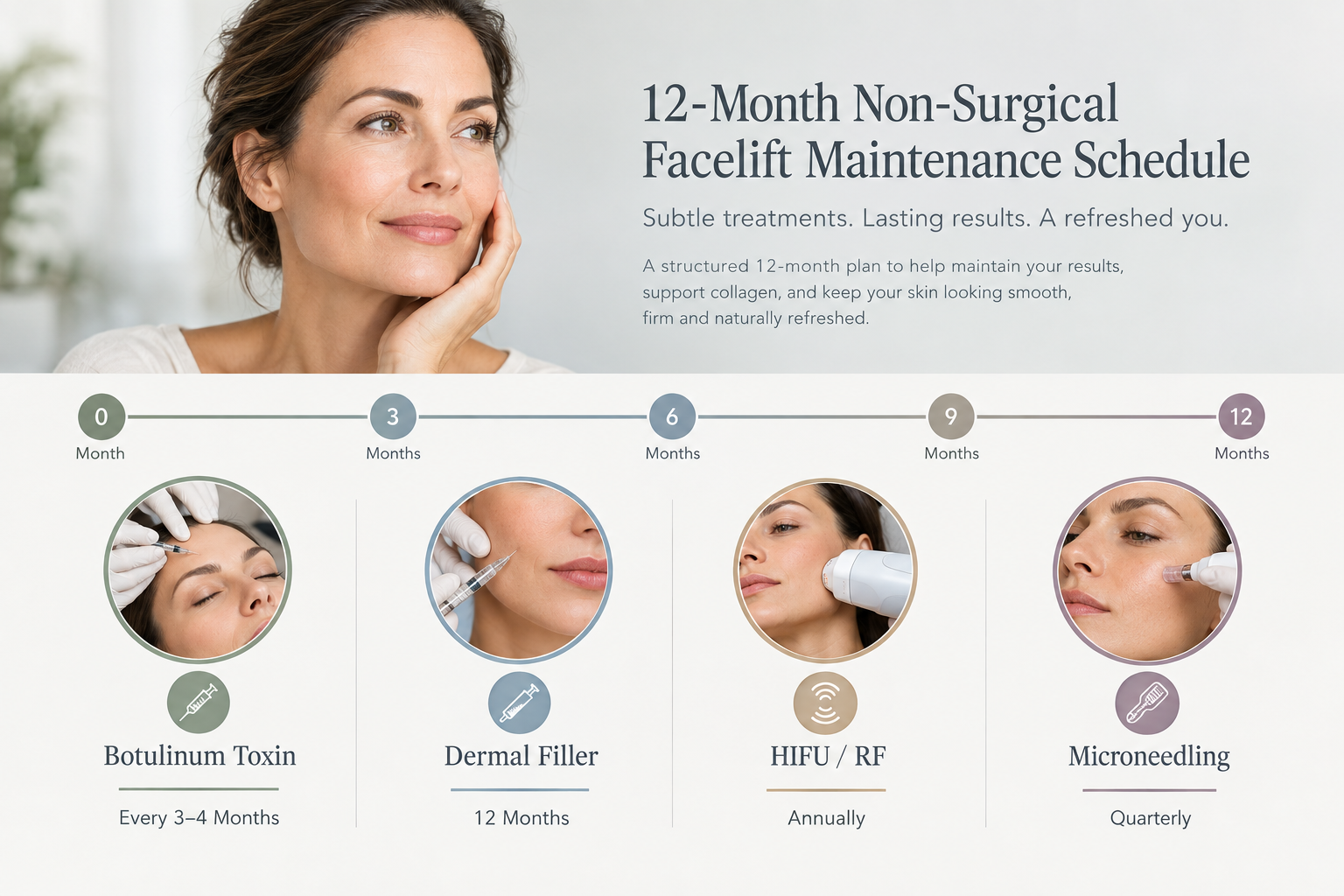
Non-surgical results are temporary, and maintaining them requires a consistent treatment schedule. A typical maintenance plan might include botulinum toxin every three to four months, hyaluronic acid filler top-ups every 12–18 months, and an annual HIFU or RF session to sustain collagen levels. Skin quality treatments such as microneedling or chemical peels may be scheduled two to four times per year depending on the concern being addressed. Over time, some patients find that their maintenance requirements reduce slightly as cumulative collagen stimulation builds, though this varies considerably between individuals.
Lifestyle Factors That Affect Your Results
The longevity and quality of non-surgical results are meaningfully influenced by lifestyle. Chronic sun exposure accelerates collagen breakdown and counteracts the collagen-stimulating effects of energy-based treatments; consistent use of broad-spectrum SPF is therefore not optional — it is a clinical necessity. Smoking significantly impairs collagen synthesis and skin healing, reducing the effectiveness of most non-surgical treatments. A diet poor in antioxidants and protein may also limit the skin's ability to produce new collagen following treatment. Conversely, a well-structured skincare routine including retinoids and antioxidants can support and extend treatment results between sessions.
When Non-Surgical Treatment Is Not Enough
Non-surgical treatments have meaningful limitations, and it is important to be honest about them. Patients with significant structural descent — deep jowling, substantial neck laxity, or heavily descended brow and midface tissue — are unlikely to achieve satisfying results from non-surgical approaches alone. In these cases, a surgical consultation is the more appropriate next step. Attempting to correct severe laxity with repeated non-surgical treatments can result in over-filled or unnatural-looking outcomes without addressing the underlying structural problem. A practitioner who is willing to refer you for a surgical opinion when appropriate is demonstrating good clinical judgement, not a limitation of their skills.
Risks and Side Effects
Non-surgical treatments are generally associated with fewer and less severe risks than surgery, but they are not without potential complications. Common and usually temporary side effects include redness, swelling, bruising, and tenderness at the treatment site. These typically resolve within a few days to two weeks depending on the treatment.
More significant risks vary by treatment type. Injectable fillers carry a small but serious risk of vascular occlusion — where filler inadvertently enters or compresses a blood vessel — which requires immediate treatment. This risk is minimised by choosing a practitioner with thorough knowledge of facial anatomy and who uses appropriate injection techniques. Thread lifts can occasionally cause visible thread migration, asymmetry, or dimpling. Energy-based devices may cause burns, blistering, or nerve discomfort if used incorrectly or at inappropriate settings for the patient's skin type. Allergic reactions to injectable products, while uncommon, can occur.
Choosing a qualified, board-certified or appropriately credentialled practitioner with specific training in the treatments being offered is the single most important factor in minimising risk.
Questions to Ask at Your Consultation
- Which specific concerns are you addressing, and which treatments do you recommend for each?
- What results can I realistically expect, and over what timeframe?
- What are the risks specific to my skin type, anatomy, and medical history?
- How many sessions will I need, and how often?
- What does a realistic maintenance schedule and annual cost look like for my goals?
- At what point would you recommend a surgical consultation instead?
- What qualifications and specific training do you have in these treatments?
- What happens if I am not satisfied with the result, or if a complication occurs?
Frequently Asked Questions
How long do non-surgical facelift results last?
Longevity varies significantly by treatment. Botulinum toxin typically lasts three to four months. Hyaluronic acid fillers generally last 9–18 months. Thread lifts provide visible results for approximately 12–18 months. HIFU and RF treatments produce collagen remodelling that may last one to two years. Most patients require a combination of treatments on different maintenance schedules to sustain their overall result.
Is a non-surgical facelift painful?
Most treatments involve minimal discomfort. Topical anaesthetic cream is routinely applied before injectable treatments and many energy-based procedures. HIFU treatments can cause a warm or prickling sensation during the session. Thread lifts are performed under local anaesthesia. Tolerance varies between individuals, and practitioners can adjust their approach to improve comfort.
Can non-surgical treatments be reversed?
Hyaluronic acid fillers can be dissolved using hyaluronidase, making them reversible. Botulinum toxin effects are temporary and will wear off naturally. Thread lifts, HIFU, and RF treatments are not reversible, though their effects are temporary. This is one reason why starting with reversible options and building a treatment plan gradually is often advisable for new patients.
At what age should I start non-surgical facial treatments?
There is no universal answer. Some patients in their late 20s and 30s use collagen-stimulating treatments as a preventative ageing strategy, while others begin in their 40s or 50s when visible changes become more apparent. The right time depends on your individual concerns, skin condition, and goals — not a specific age. A qualified practitioner can assess whether treatment is appropriate and proportionate at your stage of ageing.
Can men have non-surgical facelift treatments?
Yes. Demand for non-surgical facial rejuvenation among men is growing. The same treatment categories apply, though male facial anatomy differs from female anatomy in meaningful ways — including greater skin thickness, different fat distribution, and distinct aesthetic goals. It is important to choose a practitioner experienced in treating male patients, as injection techniques and treatment plans should be adapted accordingly to achieve natural-looking results.
How do I know if I need surgery instead?
If you have significant jowling, substantial neck laxity, or heavily descended facial tissue, non-surgical treatments are unlikely to produce the degree of correction you are hoping for. A practitioner who conducts an honest facial assessment should be able to advise you on whether non-surgical options are appropriate for your level of concern, or whether a surgical consultation would better serve your goals.
Is a Non-Surgical Facelift the Right Approach for You?
A non-surgical facelift can deliver meaningful facial rejuvenation for the right candidate — particularly those with mild to moderate signs of ageing who want natural-looking results with minimal downtime. The most effective outcomes come from a carefully planned combination approach that addresses volume loss, skin laxity, and muscle dynamics in a coordinated way, rather than relying on a single treatment to do everything.
The limitations are equally important to understand. Results are temporary, maintenance is ongoing, and the degree of correction achievable without surgery has a ceiling. For patients with more advanced ageing changes, a surgical consultation may ultimately provide a more satisfying and durable outcome. Honest, realistic expectations — established through a thorough consultation with a qualified practitioner who understands your facial anatomy and individual goals — are the foundation of any successful treatment plan.
If you are considering non-surgical facial rejuvenation, the most useful first step is a detailed consultation with a board-certified or appropriately credentialled aesthetic practitioner who can assess your specific concerns, explain your options clearly, and help you decide whether a non-surgical approach, a surgical referral, or a combination of both is most appropriate for you.
