
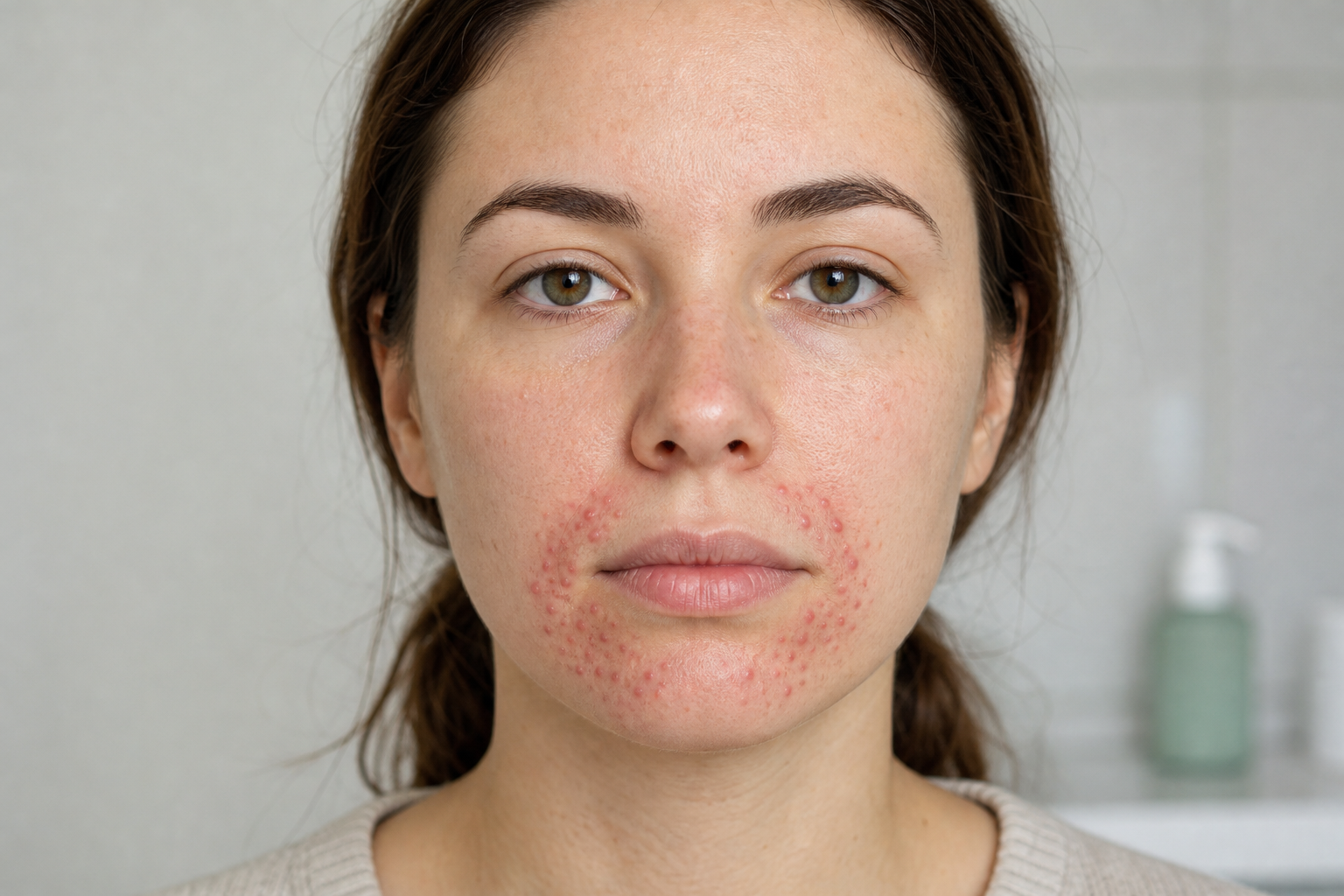

Spots around the mouth that keep returning despite your usual skincare routine can be frustrating and confusing. They may look like acne, but behave differently — resisting the treatments that normally clear breakouts and sometimes worsening when you apply more products. In many cases, the culprit is perioral dermatitis, an inflammatory skin condition that is frequently misidentified and, as a result, frequently mistreated. This guide explains what perioral dermatitis is, how to distinguish it from acne and other common causes of facial spots, what triggers it, and what treatment approaches are currently used.
Key Takeaways
- Perioral dermatitis produces clusters of small red bumps, papules and pustules around the mouth, nose, and sometimes eyes — and is often mistaken for acne or rosacea.
- A characteristic pale ring of unaffected skin along the lip border (the Grenz zone) is one of the most useful diagnostic clues.
- Topical steroids are the single most common trigger; stopping them is essential to recovery, even though symptoms may temporarily worsen before improving.
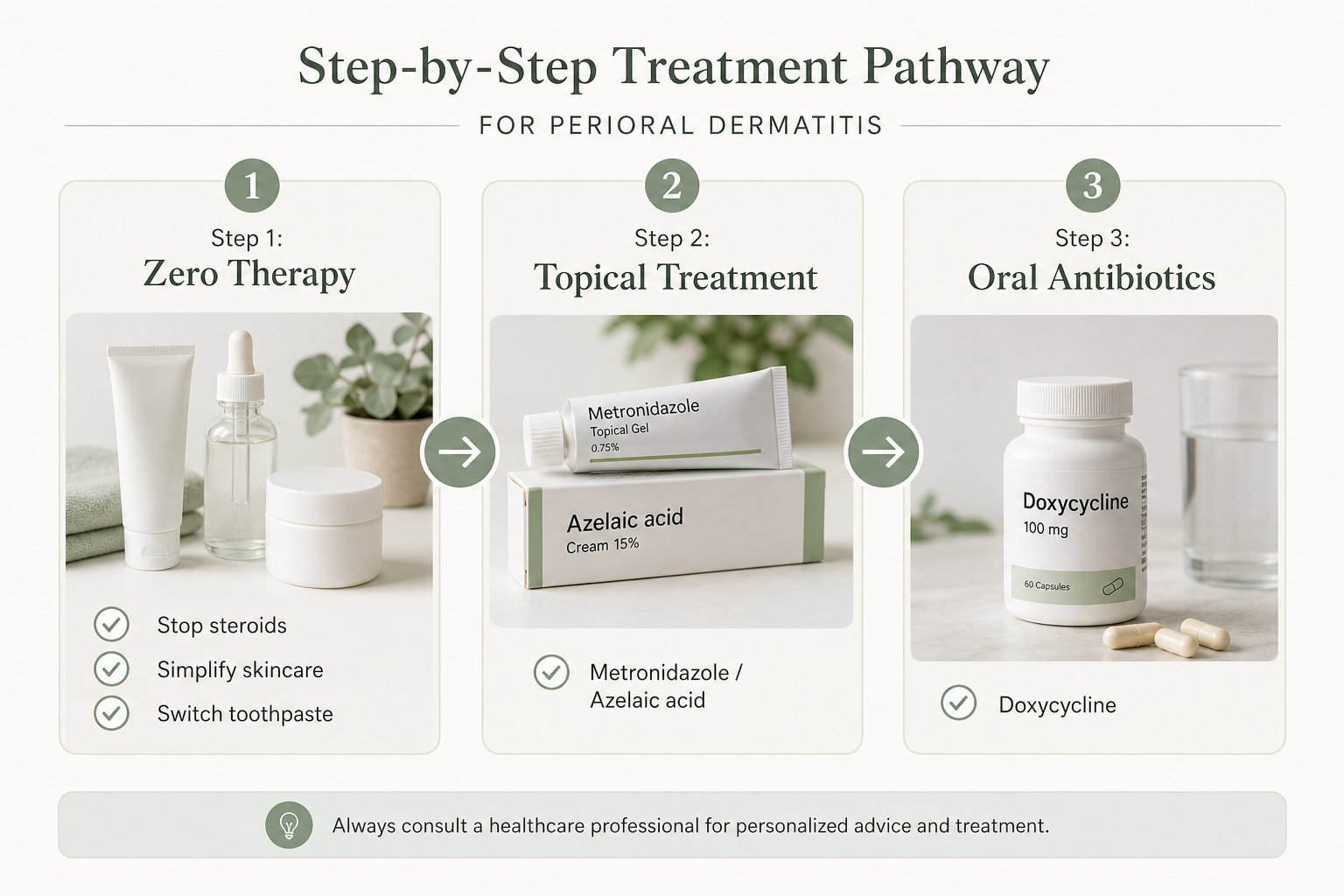
- Treatment typically follows a staged approach: skincare simplification (zero therapy), followed by topical antibiotics such as metronidazole or azelaic acid, and oral antibiotics such as doxycycline for more persistent cases.
- A dermatologist or qualified clinician should assess any persistent rash around the mouth before you begin treatment, particularly if you have been using topical corticosteroids.
What Is Perioral Dermatitis?
Perioral dermatitis is a chronic inflammatory skin condition characterised by a rash around the mouth consisting of small, raised bumps — typically papules and pustules — that cluster around the lips, chin, and nasolabial folds. The broader medical term is periorificial dermatitis, which reflects the fact that the rash can also appear around the nose and, less commonly, around the eyes. Despite its name, perioral dermatitis is not caused by a bacterial infection in the way that acne is, and it does not respond reliably to standard acne treatments.
The condition predominantly affects women between the ages of 16 and 45, though it can occur in men and children. In children, a variant called granulomatous perioral dermatitis (GPD) is recognised, which tends to present with skin-coloured or yellowish-brown bumps rather than the red papules seen in adults, and may require a different treatment approach. Perioral dermatitis is not contagious and does not spread from person to person, though it can spread to adjacent areas of the face if triggers are not addressed.
What Does Perioral Dermatitis Look Like?
The rash typically appears as clusters of 1–2 mm red or pink papules and pustules grouped around the mouth, often extending towards the chin and the creases beside the nose. The skin between the bumps may appear slightly red, dry, or flaky, and some people experience a burning sensation, itching, or tightness rather than significant pain. On darker skin tones, the bumps may appear skin-coloured, brown, or with a violet hue rather than the classic red, which means the condition is sometimes missed or diagnosed later in people with deeper skin phenotypes.
One of the most diagnostically useful features is lip border sparing — a narrow pale ring of unaffected skin, sometimes called the Grenz zone, that separates the rash from the vermilion border of the lips. This clear margin is rarely seen in acne or rosacea and can help a clinician distinguish perioral dermatitis from other conditions. Unlike acne vulgaris, perioral dermatitis does not produce blackheads or whiteheads (comedones), which is another important distinguishing feature.
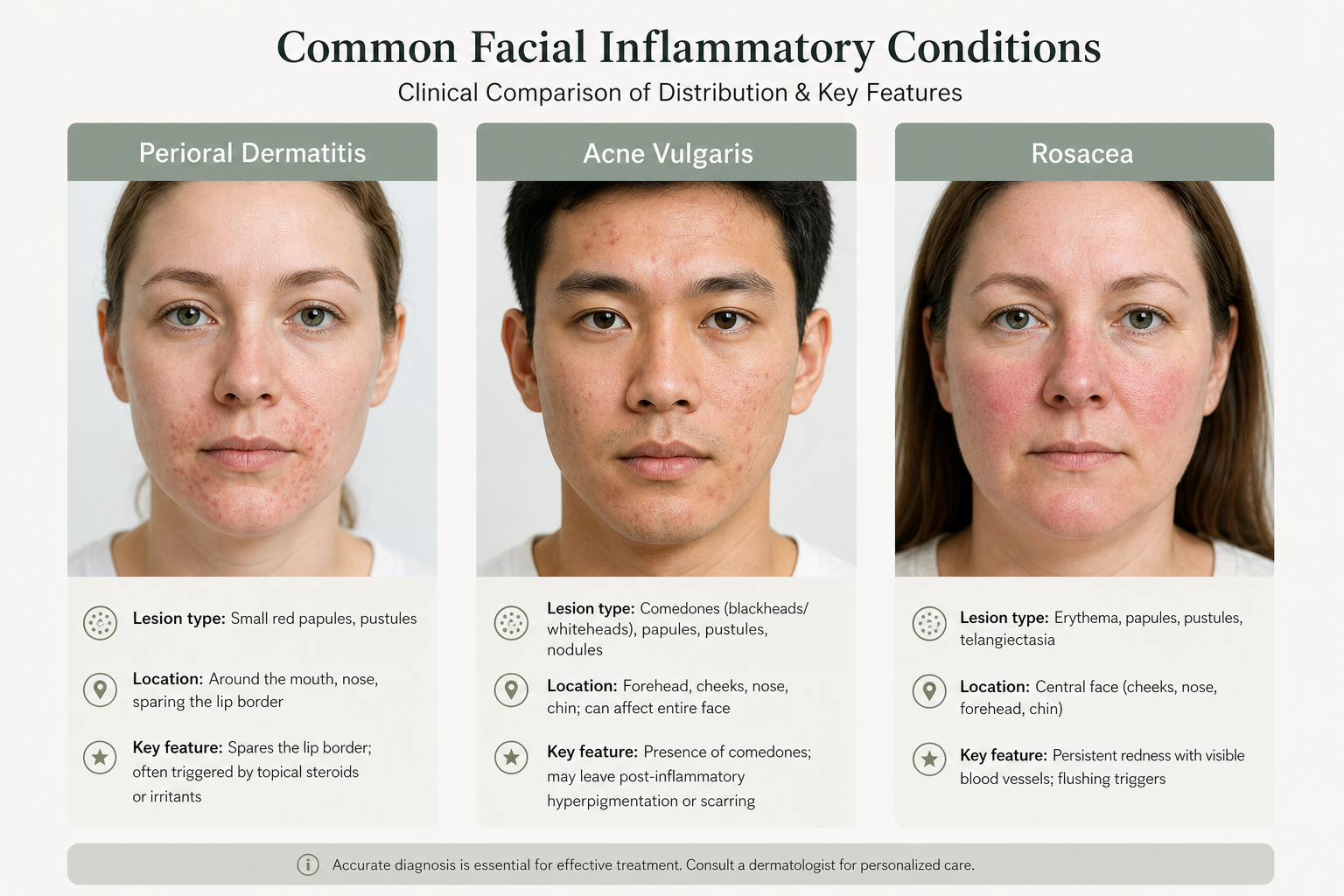
Perioral Dermatitis vs. Acne vs. Rosacea: Key Differences
Because spots around the mouth can have several causes, understanding the differences between the most common conditions helps clarify why the right diagnosis matters before starting any treatment.
| Feature | Perioral Dermatitis | Acne Vulgaris | Rosacea |
|---|---|---|---|
| Primary lesions | Papules, pustules (no comedones) | Papules, pustules, blackheads, whiteheads | Papules, pustules, flushing, telangiectasia |
| Typical location | Around mouth, nose, sometimes eyes | Face, chest, back, shoulders | Central face: cheeks, nose, forehead, chin |
| Lip border sparing | Characteristic (Grenz zone) | Absent | Absent |
| Comedones present | No | Yes (often) | No |
| Flushing / blushing | Uncommon | Uncommon | Common |
| Common triggers | Topical steroids, fluoride toothpaste, occlusive products | Hormonal changes, sebum, bacteria | Heat, alcohol, UV, spicy food |
| Responds to topical steroids | Temporarily, then worsens | No benefit | Temporarily, then worsens |
Other conditions that can cause spots around the mouth include angular cheilitis (cracking and soreness at the corners of the mouth, often linked to a fungal or bacterial infection), contact dermatitis (a reaction to an allergen or irritant in a product), seborrheic dermatitis (a flaky, greasy rash that tends to affect the nasolabial folds and eyebrows), and cold sores caused by herpes simplex virus. Each of these has a distinct appearance and requires a different management approach, which is why a clinical assessment is important before self-treating.
Common Causes and Triggers
The exact cause of perioral dermatitis is not fully established, but several well-recognised triggers are consistently associated with the condition. Identifying and removing these triggers is the foundation of treatment.
Topical Steroids
Topical corticosteroids — including mild over-the-counter hydrocortisone creams — are the most strongly implicated trigger for perioral dermatitis. Using a topical steroid on the face, even briefly, can initiate or perpetuate the condition. Inhaled corticosteroids used for asthma and nasal steroid sprays have also been associated with perioral dermatitis in some cases. Importantly, topical steroids may temporarily suppress the rash, which can create a cycle where the patient applies more steroid when the rash returns, inadvertently worsening the underlying condition over time.
Fluoride Toothpaste and Oral Care Products
Fluoride toothpaste is a frequently cited trigger, and switching to a fluoride-free alternative is often recommended as part of initial management. Sodium lauryl sulphate (SLS), a foaming agent found in many toothpastes and cleansers, may also contribute to skin barrier disruption around the mouth. Lip balms, particularly those with occlusive or fragranced formulations, have similarly been associated with flare-ups.
Occlusive Skincare and Heavy Moisturisers
Thick, occlusive creams and heavy moisturisers applied to the face can disrupt the skin barrier and create an environment that promotes the condition. This is particularly relevant because people who develop a rash around the mouth often respond by applying more moisturiser, which may worsen rather than improve the situation. Skincare simplification — using only a gentle fragrance-free cleanser and a light, non-comedogenic moisturiser — is a core part of the management approach.
Hormonal Changes and Other Factors
Hormonal changes, including those associated with the menstrual cycle and oral contraceptives, may influence flare-ups in some individuals, though the evidence for this is less robust than for topical steroid use. UV exposure, heat, wind, stress, and certain makeup products have also been reported as contributing factors. Emerging research has explored a possible role for Demodex folliculorum (microscopic mites that naturally inhabit facial skin) and Candida albicans in some cases, though this remains an area of ongoing investigation rather than established clinical consensus. Mask-wearing — particularly prolonged use of occlusive face masks — has also been identified in some studies as a potential trigger, likely due to increased heat, humidity, and friction around the lower face.
The Steroid Rebound Cycle: Why Stopping Can Feel Worse
One of the most important — and least explained — aspects of perioral dermatitis management is what happens when topical steroids are discontinued. Many patients find that stopping the steroid causes a temporary but significant flare of redness and bumps, sometimes worse than the original rash. This is known as steroid rebound or steroid withdrawal, and it is a predictable physiological response rather than a sign that the skin is getting worse in the long term.
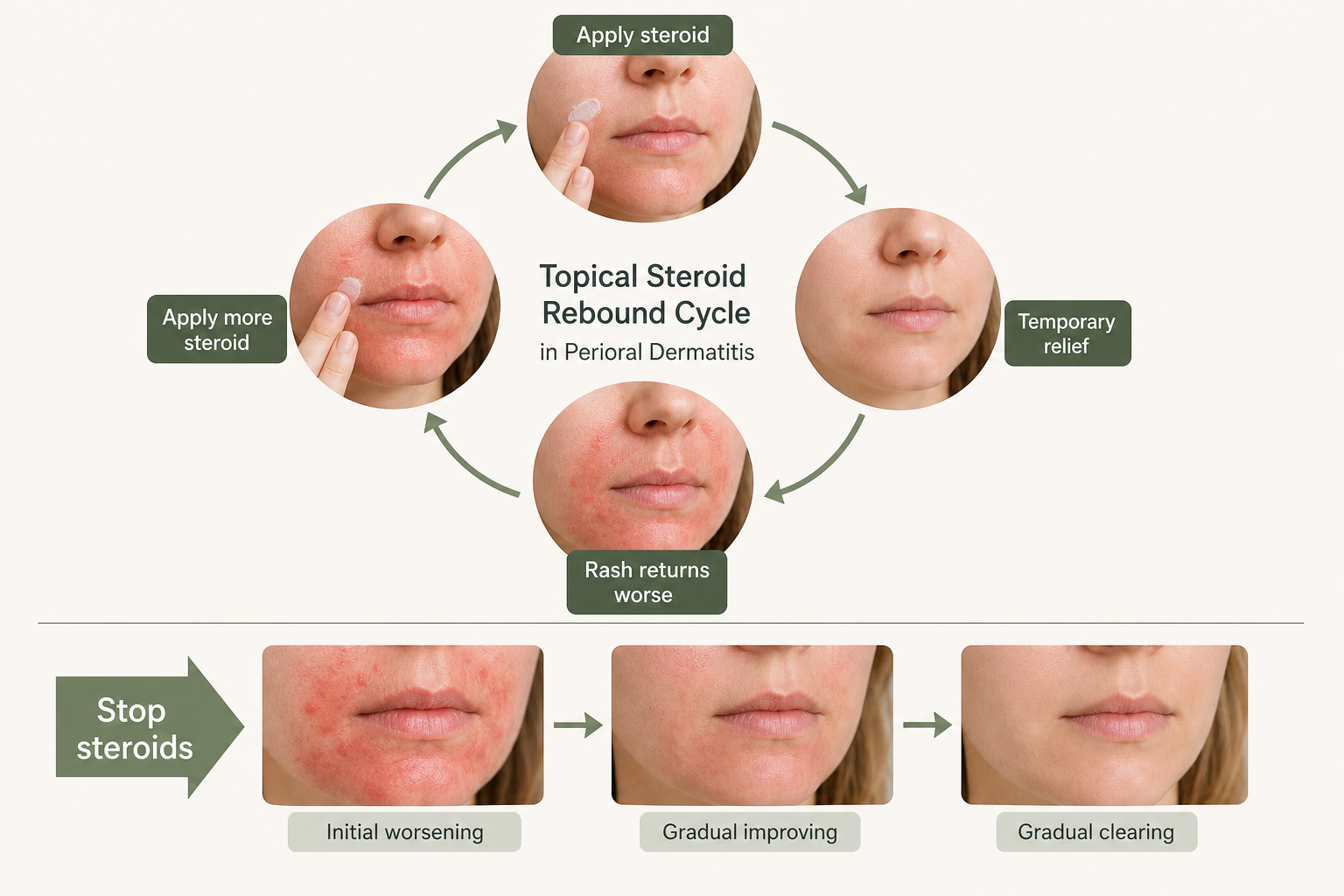
During steroid use, the skin becomes dependent on the anti-inflammatory effect of the medication. When the steroid is removed, the underlying inflammation resurfaces — often more intensely than before. This rebound phase typically lasts several weeks and can be distressing, but it is a necessary part of recovery. Understanding this process in advance helps patients persist through the initial worsening rather than restarting steroid use, which would perpetuate the cycle. A dermatologist can advise on how to manage this phase and whether any supportive treatment is appropriate during the withdrawal period.
What Not to Use During a Flare
Certain ingredients and product types are best avoided during an active perioral dermatitis flare, as they can aggravate the skin barrier and prolong the rash. These include:
- Topical corticosteroids of any strength on the affected area
- Benzoyl peroxide — commonly used for acne but often too irritating for perioral dermatitis
- Salicylic acid — similarly irritating during active inflammation
- Retinoids (retinol, tretinoin) — may worsen irritation during a flare, though they are sometimes used in maintenance phases under clinical guidance
- Fragranced products — including scented cleansers, toners, and moisturisers
- SLS-containing toothpastes and cleansers
- Heavy occlusive creams and thick balms applied around the mouth
This does not mean these ingredients are universally harmful, but during an active flare they are likely to worsen rather than help the condition. A simplified, minimal routine is generally more effective than adding more products.
How Perioral Dermatitis Is Diagnosed
Perioral dermatitis is usually diagnosed clinically — meaning a dermatologist or qualified clinician examines the skin and identifies the characteristic pattern of papules and pustules around the mouth, the absence of comedones, and the presence of lip border sparing. No specific blood test or swab is required in most cases. A skin biopsy is rarely needed but may be performed if the diagnosis is uncertain or if the rash does not respond as expected to treatment. Patch testing may be considered if contact dermatitis is suspected as a contributing factor.
Because the condition can resemble acne-like breakouts, rosacea, and other facial rashes, an accurate diagnosis before starting treatment is important. Applying acne treatments to perioral dermatitis may not help and could irritate the skin further, while applying topical steroids — sometimes prescribed for other facial rashes — is likely to worsen the condition over time.
Treatment Approaches for Perioral Dermatitis
Treatment for perioral dermatitis typically follows a staged approach, beginning with trigger elimination and progressing to topical or oral medications depending on severity and response.
Zero Therapy: Skincare Simplification First
The first step in managing perioral dermatitis is zero therapy — the systematic removal of potential triggers. This means stopping all topical steroids, switching to a fluoride-free toothpaste, replacing fragranced or occlusive skincare products with a gentle fragrance-free cleanser and a minimal moisturiser, and avoiding heavy makeup around the affected area. For some people with mild perioral dermatitis, trigger elimination alone leads to gradual improvement over several weeks, though patience is required as the skin adjusts.
Topical Treatments
When zero therapy alone is insufficient, topical prescription treatments are typically introduced. Metronidazole 0.75% gel or cream is one of the most commonly used topical antibiotics for perioral dermatitis and has a reasonable evidence base for reducing papules and pustules. Azelaic acid 15–20% is another option with anti-inflammatory and mild antimicrobial properties, and it is generally well tolerated. Topical clindamycin and erythromycin are also used in some cases. For patients who do not respond to antibiotics, topical calcineurin inhibitors such as pimecrolimus or tacrolimus may be considered, though these are typically used under specialist guidance.
Oral Antibiotics
For moderate to severe perioral dermatitis, or cases that do not respond adequately to topical treatment, oral antibiotics are often prescribed. Doxycycline is the most commonly used oral antibiotic for this condition, typically at a low anti-inflammatory dose rather than a full antimicrobial dose. Tetracycline and minocycline are alternatives in the same drug class. These medications are generally used for a defined course — often eight to twelve weeks — rather than indefinitely, and they work primarily through their anti-inflammatory properties rather than by eliminating a specific bacterial infection. Oral antibiotics are not appropriate during pregnancy, and alternatives should be discussed with a clinician in this situation.
Healing Timeline
Recovery from perioral dermatitis is gradual and non-linear. Most patients experience an initial worsening phase — particularly if topical steroids are being withdrawn — before improvement begins. Visible improvement with topical treatment typically becomes apparent after four to eight weeks, though complete clearance may take three to four months or longer. Oral antibiotics may produce faster results in more severe cases. Recurrence is possible, particularly if triggers are reintroduced, and some individuals experience a chronic or relapsing course. Maintaining a simplified skincare routine and avoiding known triggers is the most effective long-term prevention strategy.
Perioral Dermatitis in Children and on Darker Skin Tones
In children, perioral dermatitis most commonly presents as the granulomatous variant, where the bumps tend to be skin-coloured or yellowish-brown rather than red, and may have a firmer texture. This variant can be more challenging to diagnose and may require a longer treatment course. Oral antibiotics in the tetracycline class are generally avoided in children under eight years of age due to effects on developing teeth, so alternative treatments are used.
On darker skin tones, perioral dermatitis may not present with the classic red rash. The papules may appear skin-coloured, brown, or with a violet tint, and post-inflammatory hyperpigmentation — darkening of the skin after inflammation — can be a significant concern. This means the condition may be underdiagnosed or diagnosed later in people with deeper skin phenotypes. Clinicians experienced in treating skin of colour are better placed to identify these presentations and to choose treatments that minimise the risk of pigmentation changes.
When to See a Dermatologist
A rash around the mouth that persists for more than two to three weeks, spreads, or does not improve with basic skincare simplification warrants a professional assessment. You should seek clinical advice promptly if you have been using a topical steroid on your face — even a mild one — as steroid withdrawal needs to be managed carefully. Similarly, if you are pregnant, breastfeeding, or have a history of skin conditions such as rosacea or seborrheic dermatitis, a dermatologist can help clarify the diagnosis and recommend appropriate treatment options. Self-treating with over-the-counter acne products or topical steroids without a confirmed diagnosis risks prolonging the condition.
Frequently Asked Questions
Is perioral dermatitis contagious?
No. Perioral dermatitis is an inflammatory skin condition, not an infection, and it cannot be passed from one person to another through contact. It is not caused by a contagious pathogen in the way that cold sores or impetigo are.
Will perioral dermatitis go away on its own?
Mild cases may improve with trigger elimination alone, but many cases require topical or oral treatment to resolve fully. Without addressing the underlying triggers — particularly topical steroid use — the condition tends to persist or recur. A clinician can advise on whether a watch-and-wait approach is appropriate for your specific situation.
Can diet affect perioral dermatitis?
Some sources suggest that spicy or salty foods may aggravate the condition in certain individuals, but there is currently no robust clinical evidence establishing a direct causal link between specific dietary choices and perioral dermatitis. Avoiding known skin irritants and triggers remains more evidence-based than dietary restriction alone.
Can perioral dermatitis turn into rosacea?
Perioral dermatitis and rosacea are distinct conditions, and there is no established evidence that one directly causes the other. However, they can coexist, and some of the same triggers — including topical steroid use — can worsen both conditions. If you are concerned about overlapping symptoms, a dermatologist can assess whether both conditions are present.
Is fluoride-free toothpaste always necessary?
Switching to a fluoride-free toothpaste is a commonly recommended first step because fluoride toothpaste is a recognised trigger for some people. However, not everyone with perioral dermatitis is sensitive to fluoride, and the decision should be made in the context of your overall dental health. Discussing this with both your dermatologist and dentist is advisable.
Can I wear makeup if I have perioral dermatitis?
Heavy or fragranced makeup products applied around the mouth may aggravate the condition. During an active flare, minimising makeup use in the affected area and choosing fragrance-free, non-comedogenic formulations is generally recommended. Removing makeup thoroughly with a gentle fragrance-free cleanser is also important.
Getting the Right Diagnosis Before Starting Treatment
Spots around the mouth are common, but the cause matters enormously when it comes to choosing the right treatment. Perioral dermatitis is one of the most frequently mismanaged facial skin conditions precisely because it can look like acne-like breakouts or a general rash, and because the instinctive response — applying more products, using a steroid cream, or reaching for acne treatments — often makes it worse. The most important step is an accurate clinical diagnosis from a dermatologist or qualified clinician who can confirm whether perioral dermatitis, acne, rosacea, or another condition is responsible for your symptoms.
Once the diagnosis is confirmed, treatment is generally effective. Most people see meaningful improvement within two to three months of starting an appropriate regimen, and many achieve full clearance. The key is persistence through the initial adjustment phase, commitment to skincare simplification, and avoiding the triggers — particularly topical steroids — that sustain the cycle. If you have been struggling with a persistent rash around the mouth that has not responded to standard skincare or acne treatments, a specialist assessment is a practical and worthwhile next step.
