

A burst blood vessel on the face is a common concern that can appear suddenly or develop gradually, leaving visible red, purple, or thread-like marks on the skin. While these marks are almost always harmless, many people find them cosmetically bothersome and want to understand what caused them and whether anything can be done. This article explains the difference between the various types of facial vascular changes, what contributes to them, and which professional treatments may help reduce their appearance.
Key Takeaways
- A burst blood vessel on the face usually refers to a broken capillary or small dilated blood vessel visible beneath the skin, rather than a serious medical event.
- Common causes include sun damage, rosacea, physical trauma, and repeated pressure changes such as sneezing or vomiting.
- Broken capillaries do not heal on their own once they become permanently dilated, but professional treatments such as laser therapy and intense pulsed light may reduce their appearance.
- A sudden, painless red patch that appears after straining is typically a subconjunctival-style surface bleed and usually resolves without treatment within one to two weeks.
- A clinical assessment is recommended before any treatment to confirm the cause and identify the most appropriate approach.
What Does a Burst Blood Vessel on the Face Actually Mean?
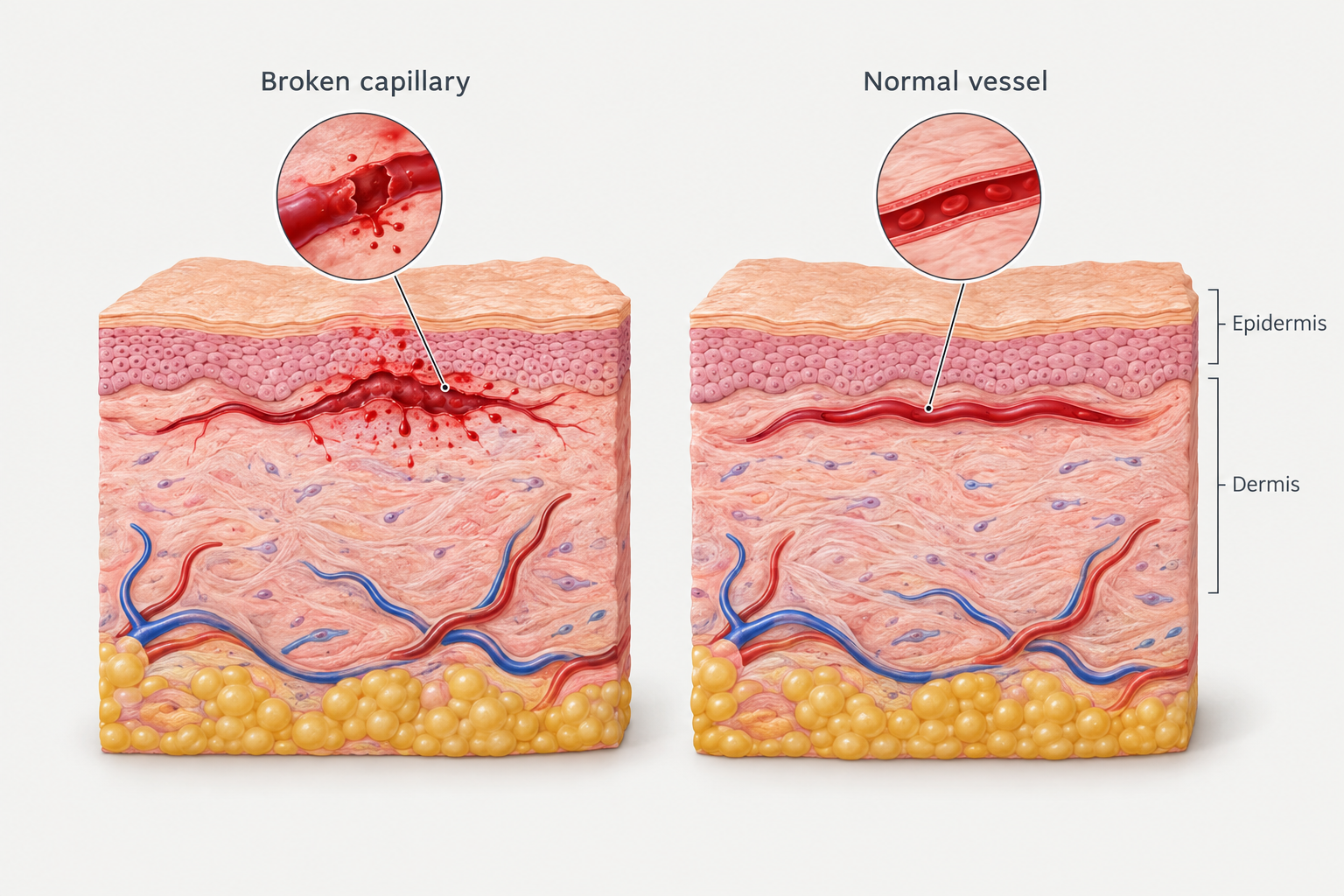
The phrase “burst blood vessel on the face” is used to describe several different things, and distinguishing between them matters for understanding what to expect. The most common scenario is a broken capillary, also called a telangiectasia, where a tiny superficial blood vessel becomes permanently dilated and visible through the skin as a fine red or pink thread. These are not dangerous and do not bleed under the skin; they simply remain open and visible.
A second scenario is a petechial or purpuric haemorrhage, where a small amount of blood leaks from a vessel into the surrounding tissue. This typically appears as a flat red or purple spot that does not blanch when pressed. On the face, this can occur after intense straining, coughing, or vomiting, and the resulting mark usually fades within one to two weeks as the body reabsorbs the leaked blood.
A third scenario is a bruise, or ecchymosis, which occurs when a larger amount of blood leaks into the tissue following trauma. Bruises on the face typically change colour over several days, moving from red or purple through green and yellow before fading. These also resolve without treatment in most cases, though the timeline varies depending on the extent of the injury and individual factors such as skin tone and medication use.
Understanding which type of vascular change is present helps determine whether professional treatment is needed, whether the mark will resolve on its own, and whether any underlying condition should be investigated.
Common Causes of Broken Capillaries and Facial Vascular Changes
Broken capillaries on the face develop when the walls of small blood vessels weaken or lose their elasticity, causing the vessel to dilate and remain visible beneath the skin surface. Several factors can contribute to this process.
Sun Damage
Cumulative ultraviolet exposure is one of the most significant contributors to broken capillaries on the face. UV radiation degrades collagen and elastin in the skin, weakening the structural support around blood vessels. Over time, this allows superficial vessels to dilate and become permanently visible, particularly on the nose, cheeks, and chin. People with fair skin who have had significant sun exposure over many years are especially likely to develop this pattern of facial redness.
Rosacea
Rosacea is a chronic inflammatory skin condition that causes persistent facial redness, flushing, and the development of visible blood vessels, particularly across the central face. The vascular subtype of rosacea is characterised by prominent telangiectasia and a tendency to flush easily in response to triggers such as heat, alcohol, spicy food, and emotional stress. Broken capillaries associated with rosacea tend to be more widespread and may recur after treatment if the underlying condition is not managed.
Physical Trauma and Pressure Changes
A single traumatic event, such as a blow to the face, can rupture small vessels and cause localised bruising or petechiae. More commonly, repeated or sudden increases in pressure within the facial vessels can cause small vessels to burst. This can happen during intense vomiting, prolonged coughing, heavy weightlifting, or even forceful sneezing. The resulting red spots or patches typically appear around the eyes or on the cheeks and usually resolve within one to two weeks without any intervention.
Skin Type and Genetics
People with naturally fair, thin, or sensitive skin are more prone to visible broken capillaries because the skin provides less optical coverage over superficial vessels. A family history of rosacea or facial redness also increases the likelihood of developing telangiectasia. Skin that flushes easily in response to temperature changes or emotional triggers tends to experience more repeated vascular dilation, which over time can lead to permanently dilated vessels.
Environmental and Lifestyle Factors
Repeated exposure to extreme temperatures, including cold wind and excessive heat, can stress the walls of superficial blood vessels. Regular alcohol consumption causes repeated vasodilation and may contribute to persistent facial redness and broken capillaries over time. Certain topical products, particularly those containing strong acids or irritants used without appropriate guidance, can also aggravate sensitive facial vessels.
Ageing
As skin ages, it becomes thinner and loses collagen, reducing the structural support around blood vessels. This makes superficial vessels more visible and more susceptible to dilation. Age-related broken capillaries are particularly common on the nose and cheeks and often develop gradually over many years.
How Broken Capillaries Differ from Bruising
Broken capillaries and bruises are both caused by changes in facial blood vessels, but they behave differently and require different approaches. A bruise results from blood leaking out of a vessel into surrounding tissue following trauma. The blood is gradually broken down and reabsorbed by the body, which is why bruises change colour and fade over one to three weeks. Broken capillaries, by contrast, involve a vessel that remains open and intact but permanently dilated. No blood has leaked into the tissue; the vessel itself is simply visible through the skin. Because the vessel remains open, it does not fade on its own once it has become established.
This distinction is clinically important because it determines the treatment approach. Bruises require time and supportive care, while established broken capillaries generally require a targeted professional treatment to reduce their visibility.
Professional Treatments That May Help
Several professional treatments are used to reduce the appearance of broken capillaries and facial telangiectasia. The most appropriate option depends on the type and extent of the vascular change, the patient’s skin type, and any underlying conditions such as rosacea. A qualified practitioner should assess the skin before recommending a specific approach.
Laser Therapy
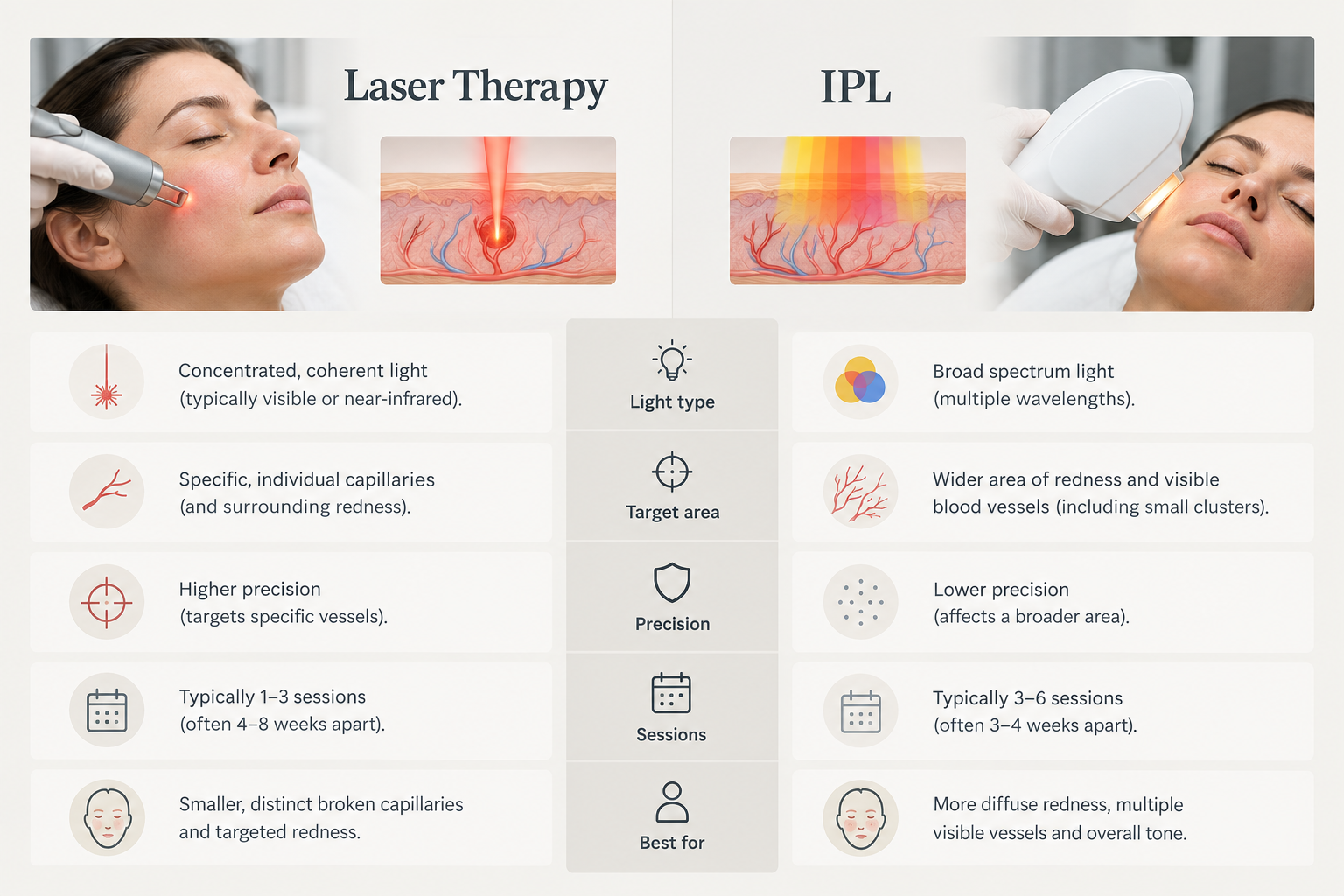
Laser treatments targeting vascular lesions work by delivering a specific wavelength of light that is selectively absorbed by oxyhaemoglobin, the pigment in red blood cells. This causes the vessel wall to heat and collapse without damaging the surrounding skin, a process known as selective photothermolysis. The collapsed vessel is then gradually cleared by the body’s natural processes. Commonly used laser types for broken capillaries include the pulsed dye laser and Nd:YAG laser. Results vary depending on the depth and size of the vessels, skin type, and the number of sessions completed. Some patients notice improvement after a single session, while others may require two or more treatments.
Intense Pulsed Light (IPL)
Intense pulsed light therapy uses broad-spectrum light filtered to target haemoglobin in superficial blood vessels. IPL is not a laser but uses a similar principle of selective absorption to heat and close dilated vessels. It is commonly used for diffuse facial redness, rosacea-associated telangiectasia, and scattered broken capillaries across the cheeks and nose. IPL may be less precise than laser for individual thread veins but can be effective for treating larger areas of generalised redness. Multiple sessions are typically recommended, and maintenance treatments may be needed, particularly for patients with rosacea where new vessels can continue to develop.
Electrocautery and Diathermy
Electrocautery uses a fine probe to deliver a small electrical current directly to a broken capillary, causing the vessel to coagulate and close. This technique can be effective for individual thread veins but is less suitable for large areas of diffuse redness. It requires precision and is typically performed by an experienced practitioner. Minor crusting or redness at the treatment site is common and usually resolves within a few days.
Sclerotherapy
Sclerotherapy involves injecting a solution directly into a blood vessel to irritate and close it. While sclerotherapy is widely used for leg veins, it is less commonly used for facial vessels due to the small calibre of facial capillaries and the proximity to important structures. Laser and IPL are generally preferred for facial broken capillaries.
Topical Treatments and Skincare
No topical product can permanently close a broken capillary, but certain skincare ingredients may help reduce redness and support the skin barrier. Niacinamide, azelaic acid, and green tea extracts have some evidence for reducing facial redness and supporting vascular stability. For patients with rosacea, topical prescription treatments such as brimonidine or metronidazole may help manage background redness, though these do not eliminate established telangiectasia. Topical approaches are generally considered supportive rather than curative for visible broken capillaries.
What to Expect During and After Treatment
Before any professional treatment for broken capillaries, a practitioner will typically review the patient’s medical history, assess the skin, and discuss realistic expectations. Patients taking blood-thinning medications, those with active skin infections, or those who are pregnant may not be suitable candidates for certain treatments, and a thorough consultation is essential.
During laser or IPL treatment for facial broken capillaries, most patients experience a sensation described as a brief snap or warmth at the treatment site. Topical anaesthetic cream is not always required but may be offered for comfort. The appointment duration depends on the size of the area being treated and typically ranges from fifteen to forty-five minutes.
After laser or IPL treatment, the treated area may appear temporarily redder or slightly swollen. Some patients notice that treated vessels appear darker immediately after the session before fading over the following one to three weeks. Sun protection is important during the recovery period, and patients are usually advised to avoid heat exposure, strenuous exercise, and irritating skincare products for a short period following treatment. Downtime is generally minimal, though individual responses vary.
Results from professional vascular treatments are not always permanent, particularly in patients with rosacea or ongoing sun exposure. Maintenance sessions may be needed to manage new vessel development over time.
When a Burst Blood Vessel on the Face Needs Medical Attention
Most broken capillaries and minor facial bleeds are harmless and do not require urgent medical attention. However, certain presentations warrant prompt assessment by a healthcare professional. These include a sudden appearance of multiple petechiae or purpura across the face without an obvious cause such as straining, broken capillaries accompanied by other symptoms such as joint pain, fatigue, or unexplained bruising elsewhere on the body, facial redness that is rapidly worsening or associated with pain and swelling, and any vascular change that does not follow the expected pattern of gradual fading.
In rare cases, widespread petechiae can indicate a blood clotting disorder, a reaction to medication, or another systemic condition that requires investigation. If there is any uncertainty about the cause of a facial vascular change, a medical assessment is the appropriate first step before considering any cosmetic treatment.
Reducing the Risk of Broken Capillaries
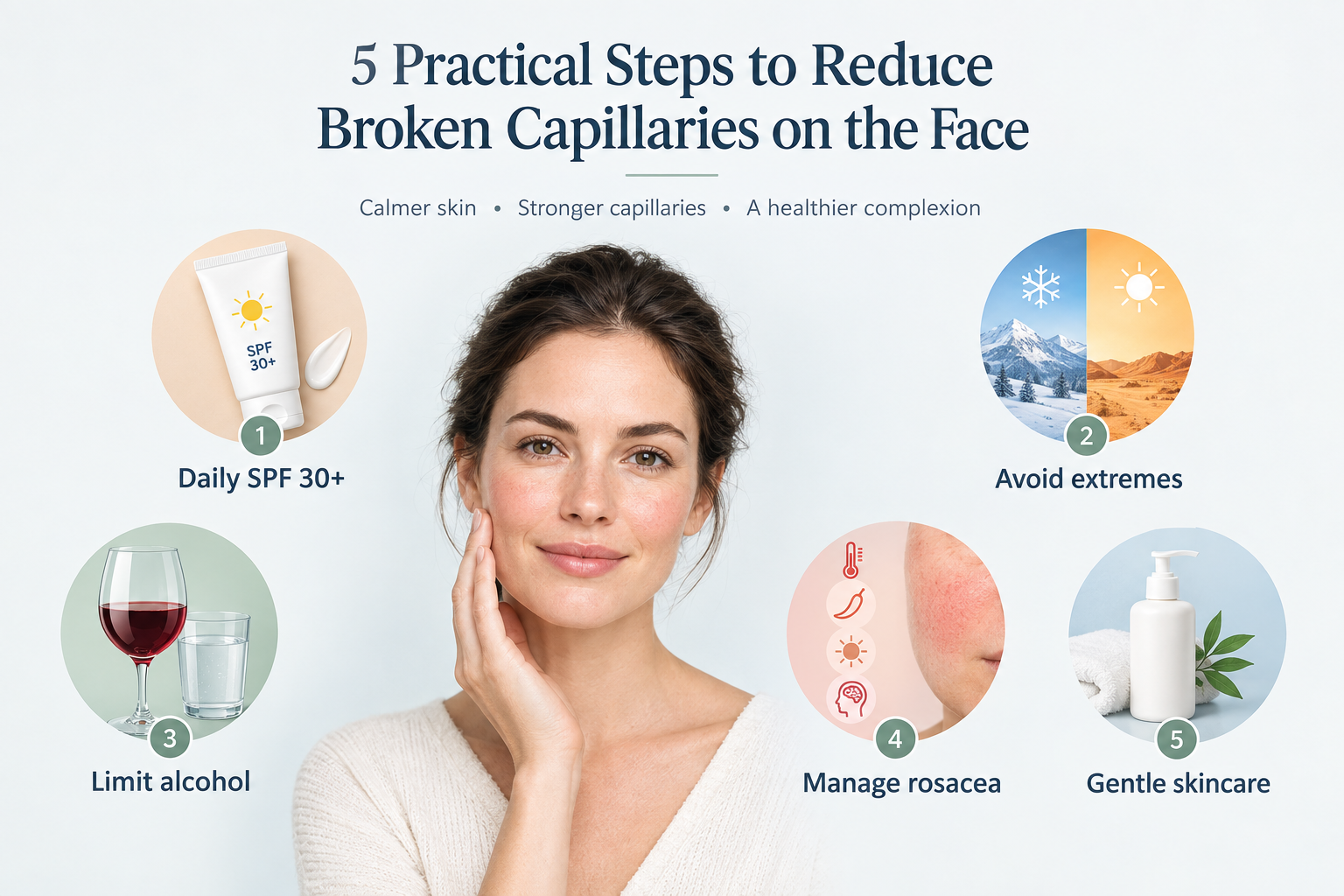
While some factors such as genetics and skin type cannot be changed, several practical measures may help reduce the likelihood of developing new broken capillaries on the face. Daily broad-spectrum sun protection with an SPF of at least 30 is one of the most evidence-supported steps for preserving skin integrity and reducing UV-related vascular damage. Avoiding prolonged exposure to extreme heat or cold, managing rosacea triggers where relevant, and limiting alcohol consumption may also help reduce repeated vascular stress. Gentle skincare that avoids harsh physical exfoliation or highly irritating ingredients is generally advisable for those with sensitive or redness-prone skin.
Frequently Asked Questions
Will a burst blood vessel on my face go away on its own?
It depends on the type. A bruise or petechial bleed caused by straining or trauma will typically fade and resolve within one to two weeks as the body reabsorbs the leaked blood. An established broken capillary or telangiectasia, where the vessel itself is permanently dilated, will not resolve on its own and generally requires professional treatment to reduce its appearance.
Is a burst blood vessel on the face dangerous?
In most cases, no. Broken capillaries and minor surface bleeds on the face are almost always harmless. However, if multiple spots appear suddenly without an obvious cause, or if the change is accompanied by other symptoms such as unexplained bruising, fatigue, or joint pain, a medical assessment is advisable to rule out an underlying condition.
How many laser or IPL sessions will I need?
The number of sessions required varies depending on the extent of the vascular change, the treatment type, and individual response. Some patients see meaningful improvement after one or two sessions, while others with more widespread or deeper vessels may need three or more. A practitioner can give a more specific estimate after assessing the skin in person.
Can broken capillaries come back after treatment?
Yes, particularly in patients with rosacea or ongoing sun exposure. Professional treatments can close existing vessels, but they do not prevent new ones from forming if the underlying cause continues. Maintenance sessions and protective skincare measures are often recommended to manage recurrence.
Are there any risks associated with laser treatment for broken capillaries?
Laser and IPL treatments for facial broken capillaries are generally well tolerated, but potential side effects include temporary redness, swelling, bruising, and in rare cases, changes in skin pigmentation. The risk of adverse effects is influenced by skin type, the device used, and the experience of the practitioner. A thorough consultation and patch test where appropriate can help identify any concerns before proceeding.
Can I wear makeup after treatment for broken capillaries?
Most practitioners advise avoiding makeup for at least twenty-four hours after laser or IPL treatment to allow the skin to settle. After this period, gentle mineral-based makeup is usually acceptable, though specific aftercare guidance will depend on the treatment used and the individual’s skin response.
Does diet affect broken capillaries on the face?
There is limited direct evidence linking specific dietary choices to broken capillaries, but regular alcohol consumption is associated with repeated facial vasodilation and may contribute to persistent redness and vessel dilation over time. For patients with rosacea, certain dietary triggers such as spicy foods and hot drinks can provoke flushing, which may worsen vascular visibility. A balanced diet supporting overall skin health is generally advisable.
Deciding Whether to Seek Treatment for a Burst Blood Vessel on the Face
For many people, a burst blood vessel on the face is a temporary and self-resolving event that requires nothing more than time. A bruise or petechial bleed following a bout of coughing or vomiting will typically fade within one to two weeks without any intervention. If the mark is causing significant cosmetic concern or does not resolve as expected, a consultation with a qualified practitioner is a reasonable next step.
Established broken capillaries and telangiectasia are a different matter. These do not resolve on their own, and for patients who find them cosmetically distressing, professional treatments such as laser therapy or IPL may offer meaningful improvement. The most appropriate treatment depends on the extent of the vascular change, the patient’s skin type, and whether an underlying condition such as rosacea is contributing. Realistic expectations are important: results vary between individuals, maintenance may be needed, and no treatment can guarantee complete elimination of all visible vessels.
If you are considering treatment for broken capillaries or persistent facial redness, a consultation with a qualified aesthetic practitioner or dermatologist is the appropriate starting point. A clinical assessment will help identify the cause, confirm suitability for treatment, and outline the most realistic options for your specific situation.
