

Chin filler has become one of the more frequently requested non-surgical facial treatments, largely because small changes to chin projection and shape can meaningfully alter the overall balance of the face. If you are researching before and after chin filler results, you likely want to understand what kind of improvement is realistic, how long it lasts, what the treatment involves, and whether the risks are worth considering. This article covers all of those questions in practical, evidence-informed terms so you can approach a consultation with realistic expectations.
Key Takeaways
- Chin filler uses hyaluronic acid or other injectable fillers to add projection, improve symmetry, or refine chin shape without surgery.
- Visible results typically appear immediately, with final results settling within two to four weeks once swelling resolves.
- Results commonly last between nine and eighteen months depending on the product used, the volume injected, and individual metabolism.
- Chin filler carries real risks including bruising, asymmetry, vascular complications, and filler migration, which is why practitioner selection matters significantly.
- Chin filler is not a substitute for surgical genioplasty in patients with significant skeletal discrepancy, and a thorough clinical assessment is essential before treatment.
What Chin Filler Actually Does
Chin filler involves injecting a dermal filler product, most commonly a hyaluronic acid-based gel, into or around the chin to alter its shape, projection, or definition. Hyaluronic acid is a naturally occurring substance in the body, and when formulated as a cross-linked gel, it can add volume and structure to soft tissue. Some practitioners use calcium hydroxylapatite-based fillers for the chin because of their firmer consistency and longer duration, though product choice depends on the individual anatomy and the practitioner’s clinical judgement.
The chin sits at the base of the lower face and plays a significant role in facial proportion. From a profile view, the relationship between the chin, lips, and nose determines whether the lower face appears balanced or recessed. From the front, chin width and symmetry affect how the jaw and lower face are perceived. Chin filler can address a chin that appears short, weak, or asymmetric, and it can also refine a chin that has a visible cleft or irregular contour. What it cannot do is correct significant skeletal underdevelopment or reposition the jaw, which are concerns that may require orthodontic or surgical intervention.
Before and After Chin Filler: What Changes Are Visible?
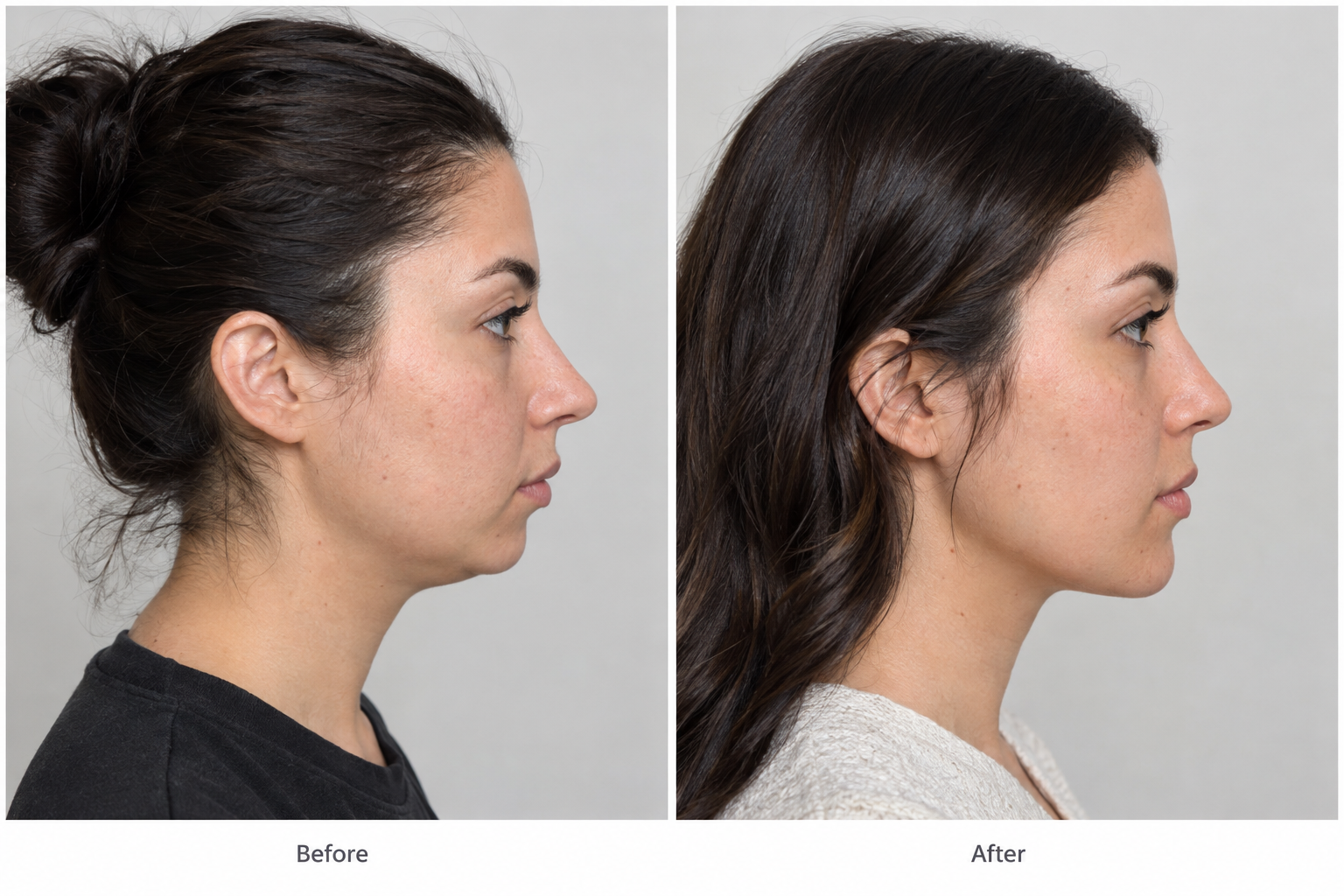
The most commonly reported changes seen in before and after chin filler comparisons involve increased forward projection of the chin when viewed from the side, improved definition of the chin point, and a more balanced relationship between the chin and the rest of the lower face. In patients with a mildly recessed chin, even a modest increase in projection can make the nose appear proportionally smaller and the neck-to-jaw angle appear more defined, without any treatment being applied to those areas.
From the front, chin filler can improve symmetry if one side of the chin is slightly more prominent than the other, and it can smooth a dimpled or irregular chin surface. In patients where the chin appears narrow or pointed, filler placed laterally can widen the chin base for a more balanced appearance. Conversely, in patients where the chin appears broad, targeted placement can help define the central chin point.
It is important to understand that before and after photographs shared by clinics or on social media represent individual outcomes and are not a guarantee of what any particular patient will experience. Lighting, angle, makeup, and post-processing can all influence how dramatic a result appears in photographs. Realistic improvement is typically subtle to moderate rather than transformative, and the goal of a well-performed chin filler treatment is usually to enhance natural facial balance rather than to create an obviously altered appearance.
The Treatment Experience: What Happens During a Chin Filler Appointment
A chin filler appointment typically begins with a consultation, which may be on the same day or at a separate visit depending on the clinic’s protocol. During the consultation, the practitioner should assess your facial anatomy, discuss your goals, review your medical history, and explain the realistic outcomes and risks for your specific situation. Photographs are usually taken before treatment for comparison purposes.
Before the injections begin, a topical anaesthetic cream is commonly applied to the chin area and left for around twenty to thirty minutes to reduce discomfort. Many hyaluronic acid filler products also contain lidocaine, a local anaesthetic, within the formulation, which further reduces discomfort during injection. The injections themselves are typically administered using a fine needle or a blunt-tipped cannula, depending on the technique the practitioner prefers and the area being treated. A cannula approach may reduce the risk of bruising in some cases, though both techniques are used by experienced practitioners.
The appointment itself usually takes between thirty and sixty minutes in total, including preparation time. Most patients describe the sensation as mild pressure or a brief stinging feeling rather than significant pain. After the injections, the practitioner will typically mould and assess the result before you leave, and you will be given aftercare instructions.
Immediate Results Versus Final Results
One of the most useful things to understand about chin filler results is the difference between what you see immediately after treatment and what the final outcome looks like. Immediately after injection, the chin will show the added volume, but it will also have some swelling from the injection process itself. This means the result directly after treatment may look slightly more pronounced than the settled outcome.
Swelling typically peaks within the first twenty-four to forty-eight hours and then gradually subsides over the following one to two weeks. Minor swelling can persist for up to four weeks in some patients. The final result, once all swelling has resolved, is generally considered the true before and after comparison point. Bruising, if it occurs, usually resolves within seven to fourteen days. Patients are generally advised to avoid assessing the final result until at least two weeks after treatment.
Some patients also notice that the filler feels slightly firm or uneven in the first few weeks as it integrates with the surrounding tissue. This usually settles as the product softens and adapts to the area. If asymmetry or irregularity persists beyond four weeks, a review appointment with the treating practitioner is appropriate.
How Long Do Chin Filler Results Last?
Chin filler longevity varies depending on several factors, including the type of filler product used, the volume injected, the individual’s metabolism, and the specific area of placement. Hyaluronic acid fillers used in the chin typically last between nine and eighteen months in most patients, though some individuals metabolise filler more quickly and may notice results fading sooner. Calcium hydroxylapatite-based fillers may last somewhat longer in some patients, though individual variation applies here as well.
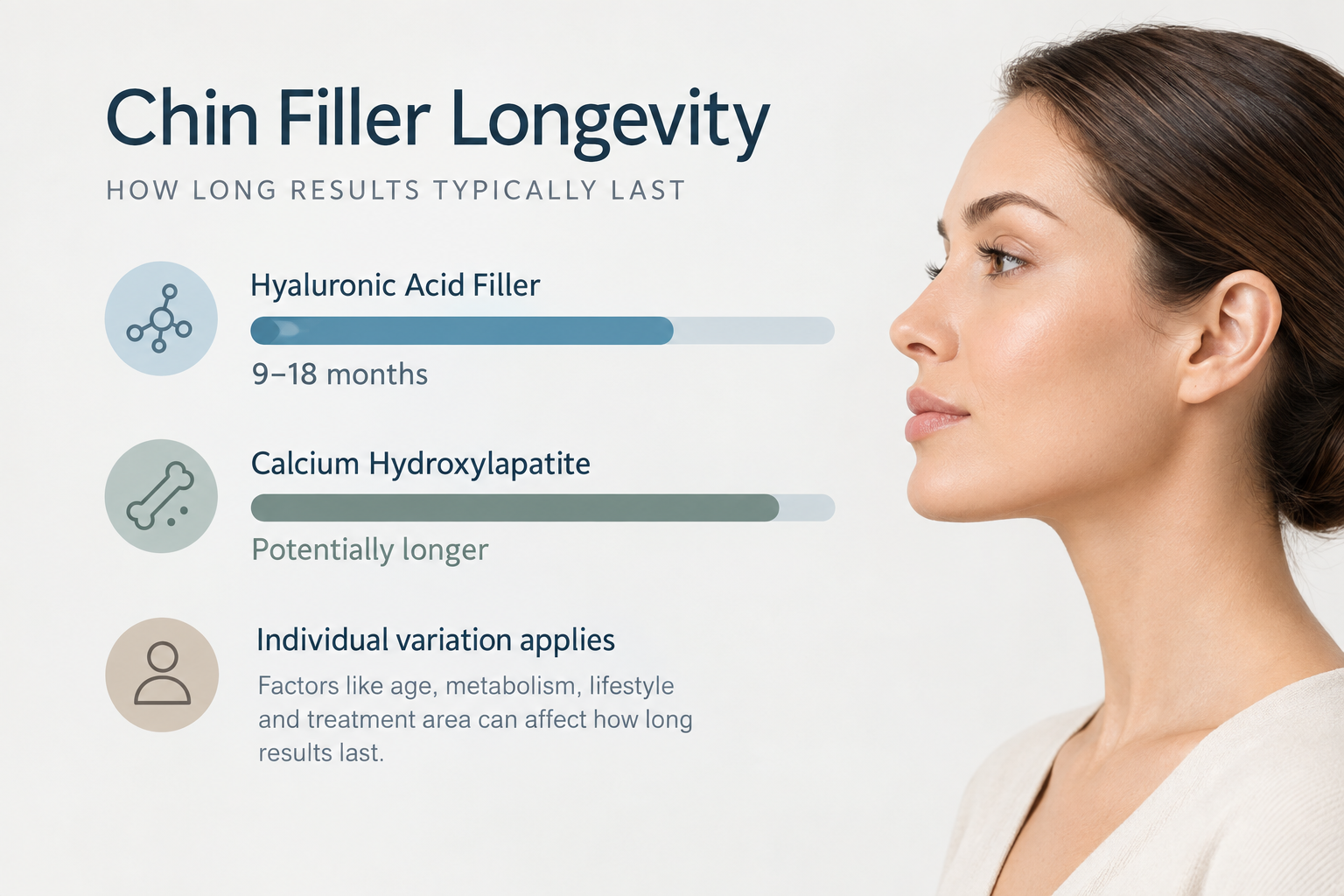
The chin is a relatively low-movement area compared to the lips or nasolabial folds, which means filler placed in the chin tends to be broken down more slowly than in high-movement areas. This is one reason the chin is considered a good area for filler longevity. However, repeated treatments over time may lead to some degree of filler accumulation, and practitioners should assess the existing filler volume at each follow-up appointment before adding more product.
Hyaluronic acid filler can be dissolved using an enzyme called hyaluronidase if the result is unsatisfactory or if a complication arises. This reversibility is one of the reasons hyaluronic acid fillers are often preferred for patients who are new to chin filler treatment.
Risks and Side Effects of Chin Filler
Chin filler carries a range of possible side effects and risks that any prospective patient should understand before proceeding. Common and expected side effects include temporary swelling, bruising, redness, and tenderness at the injection site. These typically resolve within one to two weeks and are considered a normal part of the treatment process.
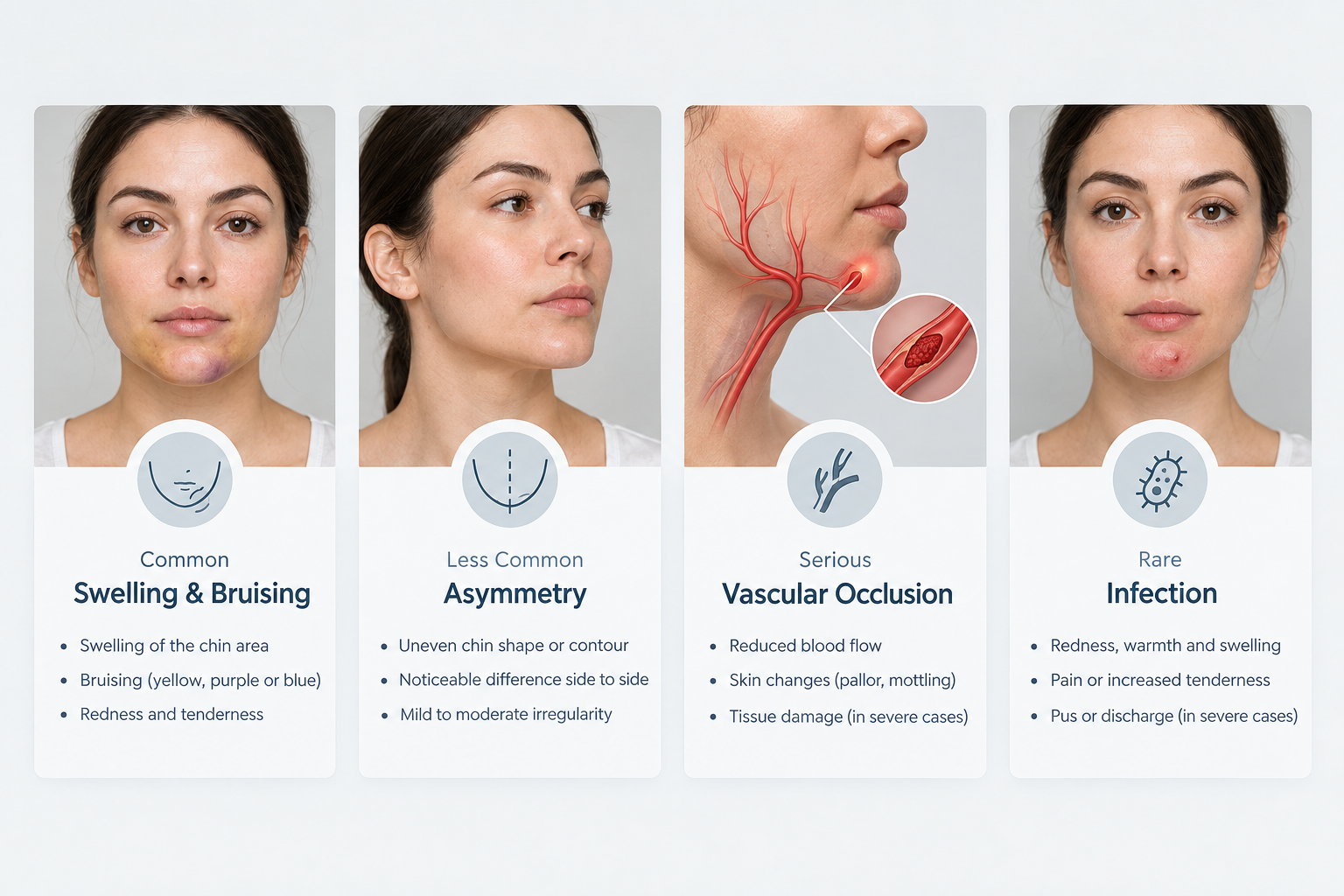
Less common but more significant risks include asymmetry, where the filler is not distributed evenly, and nodule formation, where small lumps develop under the skin. Filler migration, where the product moves from the intended placement area over time, can also occur, particularly if excessive volume is used or if the product is not well-suited to the area. These complications may require dissolving with hyaluronidase or, in some cases, further treatment.
The most serious risk associated with any dermal filler injection is vascular occlusion, which occurs when filler is inadvertently injected into or compresses a blood vessel, potentially restricting blood flow to the surrounding tissue. In the chin and jaw area, the relevant vascular anatomy includes branches of the facial artery and the mental artery. Vascular occlusion is rare but can cause tissue damage if not recognised and treated promptly. This is why chin filler should only be performed by a qualified and experienced medical practitioner who understands the relevant anatomy and has access to hyaluronidase for emergency use.
Infection is another possible risk, though it is uncommon when treatment is performed in a clinical setting with appropriate hygiene protocols. Patients with a history of cold sores should inform their practitioner, as injection trauma can occasionally trigger a herpes simplex outbreak in susceptible individuals.
Who May Be Suitable for Chin Filler
Chin filler may be worth discussing with a qualified practitioner if you have a mildly recessed or underprojected chin, mild chin asymmetry, an irregular chin contour, or a chin that appears short relative to the rest of your face. It may also be considered by patients who want to improve the profile appearance of the lower face without undergoing surgery.
Suitable candidates are generally adults in good general health who have realistic expectations about the degree of improvement achievable with a non-surgical approach. A thorough clinical assessment is required to determine whether chin filler is appropriate for your specific anatomy and goals.
Chin filler may not be suitable for patients who are pregnant or breastfeeding, those with active skin infections or inflammation in the treatment area, patients with certain autoimmune conditions or bleeding disorders, those taking blood-thinning medications, or individuals with a history of severe allergic reactions to filler components. Patients with significant skeletal jaw discrepancy may achieve better results through orthodontic treatment or surgical genioplasty rather than soft tissue filler alone. A qualified practitioner should discuss all relevant options during the consultation.
Chin Filler Versus Surgical Alternatives
Chin filler and surgical chin augmentation address similar aesthetic concerns but differ significantly in their mechanism, permanence, recovery, and suitability. Surgical genioplasty involves repositioning the chin bone and is typically performed under general anaesthesia with a recovery period of several weeks. Chin implants involve placing a silicone implant over the chin bone through a small incision, also under anaesthesia, with a longer recovery than filler but a more permanent result.
Chin filler offers a non-surgical option with minimal downtime, immediate visible results, and the ability to dissolve the product if the outcome is unsatisfactory. However, it requires ongoing maintenance treatments as the filler is gradually absorbed, and it cannot replicate the degree of structural change achievable through surgery in patients with significant skeletal concerns. The choice between filler and surgery depends on the degree of change desired, the patient’s anatomy, their tolerance for downtime and surgical risk, and their preference for a reversible versus permanent solution. A consultation with both a non-surgical aesthetic practitioner and, where relevant, a maxillofacial or plastic surgeon may help clarify the most appropriate approach.
Aftercare and Recovery Following Chin Filler
Recovery after chin filler is generally straightforward for most patients. In the first twenty-four hours, it is advisable to avoid touching or pressing on the treated area, avoid strenuous exercise, avoid alcohol, and avoid exposure to extreme heat such as saunas or hot baths, as these can increase swelling and bruising. Sleeping with the head slightly elevated on the first night may also help reduce swelling.
Most patients are able to return to work and normal daily activities the same day or the following day, though visible bruising or swelling may be a consideration depending on the individual’s circumstances. Makeup can generally be applied after twenty-four hours if there are no open injection sites. Dental procedures should ideally be avoided for two weeks after chin filler, as pressure on the area could potentially displace the product before it has fully integrated.
A follow-up appointment two to four weeks after treatment allows the practitioner to assess the settled result and determine whether any minor adjustments are needed. Patients should contact their clinic promptly if they experience unusual pain, skin colour changes, prolonged swelling, or any signs of infection after treatment.
Frequently Asked Questions
How much does chin filler cost?
Chin filler pricing varies depending on the clinic, the practitioner’s experience, the product used, and the volume required. In the UK, chin filler treatments typically range from around £250 to £600 or more per session. Price alone should not be the primary factor in choosing a provider, as practitioner qualifications and clinical experience are more important considerations for safety and outcome quality.
Can chin filler make my nose look smaller?
Increasing chin projection can improve the overall balance of the profile, which may make the nose appear proportionally smaller in relation to the rest of the face. This is a well-recognised effect of improving lower face projection and is sometimes referred to as a non-surgical rhinoplasty adjunct. However, chin filler does not alter the nose itself, and patients with significant nasal concerns may need to consider separate treatments.
Is chin filler painful?
Most patients describe chin filler as mildly uncomfortable rather than significantly painful. Topical anaesthetic cream applied before treatment and lidocaine within the filler product itself help to reduce discomfort during the procedure. Individual pain tolerance varies, and some patients find certain injection points more sensitive than others.
Can chin filler be dissolved if I don’t like the result?
Hyaluronic acid chin filler can be dissolved using hyaluronidase, an enzyme that breaks down hyaluronic acid. This is one of the key advantages of hyaluronic acid-based products over non-reversible fillers. Dissolution is typically effective, though multiple sessions may occasionally be needed for complete removal. Non-hyaluronic acid fillers such as calcium hydroxylapatite cannot be dissolved in the same way.
How soon can I see the final result after chin filler?
An initial result is visible immediately after treatment, but the final settled outcome is best assessed two to four weeks after the appointment, once swelling has fully resolved. Assessing the result too early may give a misleading impression of the final appearance.
Will chin filler look natural?
When performed by an experienced practitioner using an appropriate volume and product for the individual’s anatomy, chin filler is generally intended to produce a natural-looking enhancement rather than an obviously altered appearance. Overfilling or using an inappropriate product can lead to an unnatural result, which is one reason why choosing a qualified and experienced injector is important.
How often will I need to repeat chin filler treatment?
Most patients require a top-up treatment every nine to eighteen months to maintain their results, though this varies depending on the individual’s metabolism and the product used. Some patients find that after several treatments, results appear to last slightly longer, possibly because of collagen stimulation in the area, though this is not guaranteed.
Is Chin Filler the Right Option for Your Goals?
Chin filler can offer a meaningful, low-downtime improvement in chin projection, symmetry, and definition for patients with mild to moderate concerns about their lower face profile. Before and after results in suitable candidates can show a noticeable improvement in facial balance, particularly in profile view, without the recovery time or permanence of surgical options. The treatment is reversible with hyaluronic acid products, which provides a degree of reassurance for patients who are uncertain about committing to a permanent change.
However, chin filler is not without risk, and the quality of the outcome depends heavily on the practitioner’s anatomical knowledge, injection technique, and product selection. Realistic expectations are essential: chin filler can refine and balance, but it cannot replicate the structural changes achievable through surgery in patients with significant skeletal concerns. It also requires ongoing maintenance to sustain results over time.
If you are considering chin filler, a consultation with a qualified medical aesthetic practitioner who can assess your specific anatomy, discuss your goals honestly, and explain the realistic outcomes for your situation is the appropriate starting point. A practitioner who takes time to discuss both the benefits and the limitations of treatment, and who is transparent about when filler may not be the most appropriate option, is more likely to deliver a result that genuinely suits your face.
