
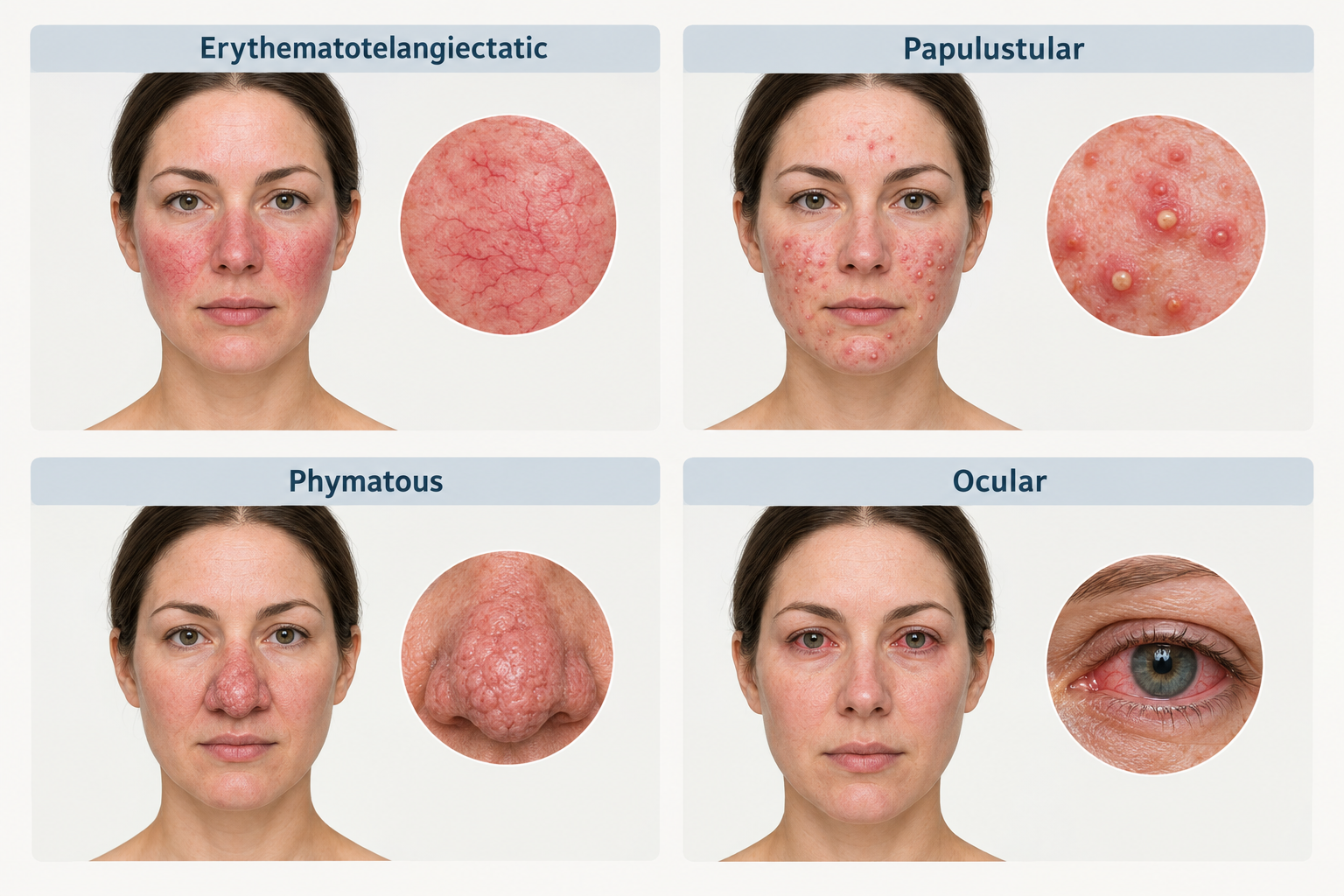

Rosacea is a chronic inflammatory skin condition that affects millions of people worldwide, yet it is frequently misunderstood because it does not look the same in every person. Some people experience persistent facial redness, others develop acne-like breakouts, and some notice thickened skin or eye irritation. These differences exist because rosacea is classified into four distinct subtypes, each with its own pattern of symptoms, triggers, and treatment approach. Understanding which subtype — or combination of subtypes — is present is an important first step toward managing the condition effectively.
Key Takeaways
- Rosacea is divided into four recognized subtypes: erythematotelangiectatic, papulopustular, phymatous, and ocular rosacea, each with distinct features.
- More than one subtype can occur simultaneously, and the condition can progress or change over time without appropriate management.
- Identifying triggers — such as sun exposure, heat, alcohol, and certain skincare ingredients — is central to controlling flare-ups across all subtypes.
- Treatment options range from topical and oral medications to laser and light-based therapies, and the right approach depends on the specific subtype and severity.
- A confirmed diagnosis from a qualified dermatologist or aesthetic medicine practitioner is essential before beginning any treatment programme.
What Is Rosacea and Why Does It Present Differently in Different People?
Rosacea is a long-term skin condition primarily affecting the central face — the cheeks, nose, chin, and forehead. It tends to follow a relapsing and remitting pattern, meaning symptoms flare up periodically and may settle between episodes. The exact cause of rosacea is not fully understood, but current evidence points to a combination of genetic predisposition, an overactive innate immune response, abnormalities in the skin’s neurovascular system, and the presence of certain microorganisms on the skin, including Demodex mites and Helicobacter pylori. Dysregulation of the cathelicidin antimicrobial peptide pathway is also thought to contribute to the inflammatory response seen in rosacea.
The condition is more commonly reported in people with lighter skin tones, though it can affect individuals of any ethnicity. It is worth noting that rosacea may be underdiagnosed in people with darker skin, partly because redness and flushing can be less visually apparent. Women are diagnosed with rosacea more frequently than men, but men are more likely to develop the more severe phymatous subtype. Rosacea typically appears in adults between the ages of 30 and 60, though it can occur outside this range.
The National Rosacea Society and the global ROSCO (Rosacea COnsensus) panel have both supported a classification system that groups rosacea into four primary subtypes. This framework helps clinicians tailor treatment rather than applying a one-size-fits-all approach, and it helps patients understand why their experience of rosacea may differ significantly from someone else’s.
Subtype 1: Erythematotelangiectatic Rosacea (ETR)
Erythematotelangiectatic rosacea, often abbreviated to ETR, is characterized by persistent central facial redness, flushing, and visible blood vessels known as telangiectasia. The flushing associated with ETR can be intense and may be accompanied by a sensation of warmth, stinging, or burning. Unlike a temporary blush, the redness in ETR does not fully resolve between episodes and tends to become more fixed over time.
Visible dilated capillaries — fine red or purple thread-like lines — are a hallmark feature of this subtype. These telangiectasias typically appear across the nose and cheeks and do not fade with topical treatments alone. The skin in ETR is often sensitive and reactive, with many patients reporting that common skincare products, temperature changes, exercise, spicy food, alcohol, and sun exposure all trigger or worsen flushing episodes.
Treatment for erythematotelangiectatic rosacea focuses on reducing vascular reactivity and visible redness. Topical brimonidine tartrate gel works by temporarily constricting superficial blood vessels, reducing the appearance of redness for several hours after application. Topical oxymetazoline is another option used for the same purpose. For longer-term improvement of persistent redness and telangiectasia, vascular laser treatments — particularly the pulsed dye laser (PDL) and intense pulsed light (IPL) therapy — are widely used. These light-based treatments target haemoglobin in dilated vessels, causing them to collapse and be reabsorbed. Multiple sessions are typically required, and results vary between individuals. Broad-spectrum sun protection is considered essential for all rosacea subtypes but is particularly important in ETR, where ultraviolet exposure is a consistent trigger.
Subtype 2: Papulopustular Rosacea
Papulopustular rosacea is the subtype most commonly confused with acne vulgaris. It presents with inflammatory papules (small, raised red bumps) and pustules (pus-filled spots) on the central face, often alongside the background redness seen in ETR. Unlike acne, papulopustular rosacea does not typically produce blackheads or whiteheads (comedones), and it tends to affect a slightly older age group. The absence of comedones is one of the key distinguishing features that helps clinicians differentiate between the two conditions.
The inflammatory lesions in papulopustular rosacea are thought to result from an exaggerated immune response involving toll-like receptor 2 (TLR2) activation and the release of pro-inflammatory cytokines. Demodex folliculorum mites, which are present in higher numbers on the skin of people with rosacea, are believed to contribute to this inflammatory cascade, though the precise relationship is still being studied.
Treatment for papulopustular rosacea often involves a combination of topical and oral agents. Topical metronidazole, azelaic acid, and ivermectin cream are among the most commonly prescribed topical treatments. Ivermectin 1% cream has shown efficacy in reducing inflammatory lesion counts in clinical trials and is thought to work both through its anti-inflammatory properties and its action against Demodex mites. For moderate to severe cases, oral antibiotics — particularly doxycycline at a sub-antimicrobial dose — are frequently used. This low-dose approach is intended to harness the anti-inflammatory properties of doxycycline without promoting antibiotic resistance. In more resistant cases, oral isotretinoin may be considered, though this requires careful patient selection and monitoring. Patients should be aware that papulopustular rosacea is a chronic condition; treatment typically controls rather than cures the condition, and maintenance therapy is often necessary.
Subtype 3: Phymatous Rosacea
Phymatous rosacea is the least common but often most visually distinctive subtype. It involves thickening of the skin and irregular surface nodularities caused by sebaceous gland hyperplasia (overgrowth of oil-producing glands) and fibrosis of the connective tissue. The nose is the most commonly affected area, producing a condition known as rhinophyma — a gradual enlargement and distortion of the nasal shape that can become quite pronounced if left untreated. Phymatous changes can also affect the chin (gnathophyma), forehead (metophyma), ears (otophyma), and eyelids (blepharophyma), though these sites are less frequently involved.
Rhinophyma is significantly more common in men than in women, and it tends to develop after years of untreated or inadequately managed rosacea. It is important to note that rhinophyma is not caused by alcohol consumption, despite a longstanding cultural misconception. While alcohol can trigger rosacea flares, it does not cause phymatous changes directly.
Early phymatous rosacea may respond to oral isotretinoin, which can reduce sebaceous gland activity and slow the progression of skin thickening. However, once significant tissue changes have occurred, medical therapy alone is unlikely to reverse the structural alterations. Surgical and procedural interventions are typically required for established rhinophyma. Options include carbon dioxide (CO2) laser resurfacing, electrosurgery, dermabrasion, and surgical excision. These procedures aim to reshape the nose by removing excess tissue and allowing the skin to re-epithelialise. Results can be significant, but the procedures carry risks including scarring, pigmentation changes, and infection, and they should be performed by experienced practitioners. Early intervention — before extensive fibrosis develops — generally produces better outcomes.
Subtype 4: Ocular Rosacea
Ocular rosacea affects the eyes and surrounding structures and is estimated to occur in a substantial proportion of people with cutaneous rosacea, though it is often underrecognised. Symptoms include redness, dryness, burning, grittiness, and a sensation of a foreign body in the eye. The eyelid margins may become inflamed — a condition called blepharitis — and small cysts known as chalazia can develop on the eyelids. In more severe cases, ocular rosacea can affect the cornea, potentially leading to keratitis, which may threaten vision if not managed appropriately.
Ocular rosacea can precede, accompany, or follow the development of skin symptoms, and in some individuals it may be the primary or only manifestation of the condition. This means that a person presenting with chronic eye irritation and no obvious facial redness may still have rosacea affecting their eyes. Diagnosis typically requires assessment by an ophthalmologist or a clinician experienced in ocular surface disease.
Management of ocular rosacea involves a combination of eyelid hygiene measures — such as warm compresses and lid scrubs to reduce meibomian gland dysfunction — and lubricating eye drops to relieve dryness. Topical cyclosporine eye drops may be prescribed for more significant ocular surface inflammation. Oral doxycycline is commonly used for its anti-inflammatory effects on the meibomian glands, which produce the oily layer of the tear film. Patients with ocular rosacea should be monitored regularly, and any deterioration in vision warrants prompt ophthalmological review.
Can You Have More Than One Subtype at the Same Time?
It is entirely possible — and in fact quite common — for a person to experience features of more than one rosacea subtype simultaneously. For example, someone may have the persistent redness and telangiectasia of ETR alongside the inflammatory papules and pustules of papulopustular rosacea. Similarly, a person with phymatous changes may also have significant ocular involvement. This overlap means that treatment plans often need to address multiple aspects of the condition at once, and a single therapeutic approach may not be sufficient.
Rosacea can also evolve over time. A person who initially presents with only flushing and mild redness may later develop inflammatory lesions or, in some cases, phymatous changes. This progression is not inevitable, and appropriate management — including trigger avoidance, consistent skincare, and medical treatment — may help slow or prevent worsening. Regular review with a qualified practitioner allows treatment to be adjusted as the condition changes.
Common Rosacea Triggers Across All Subtypes
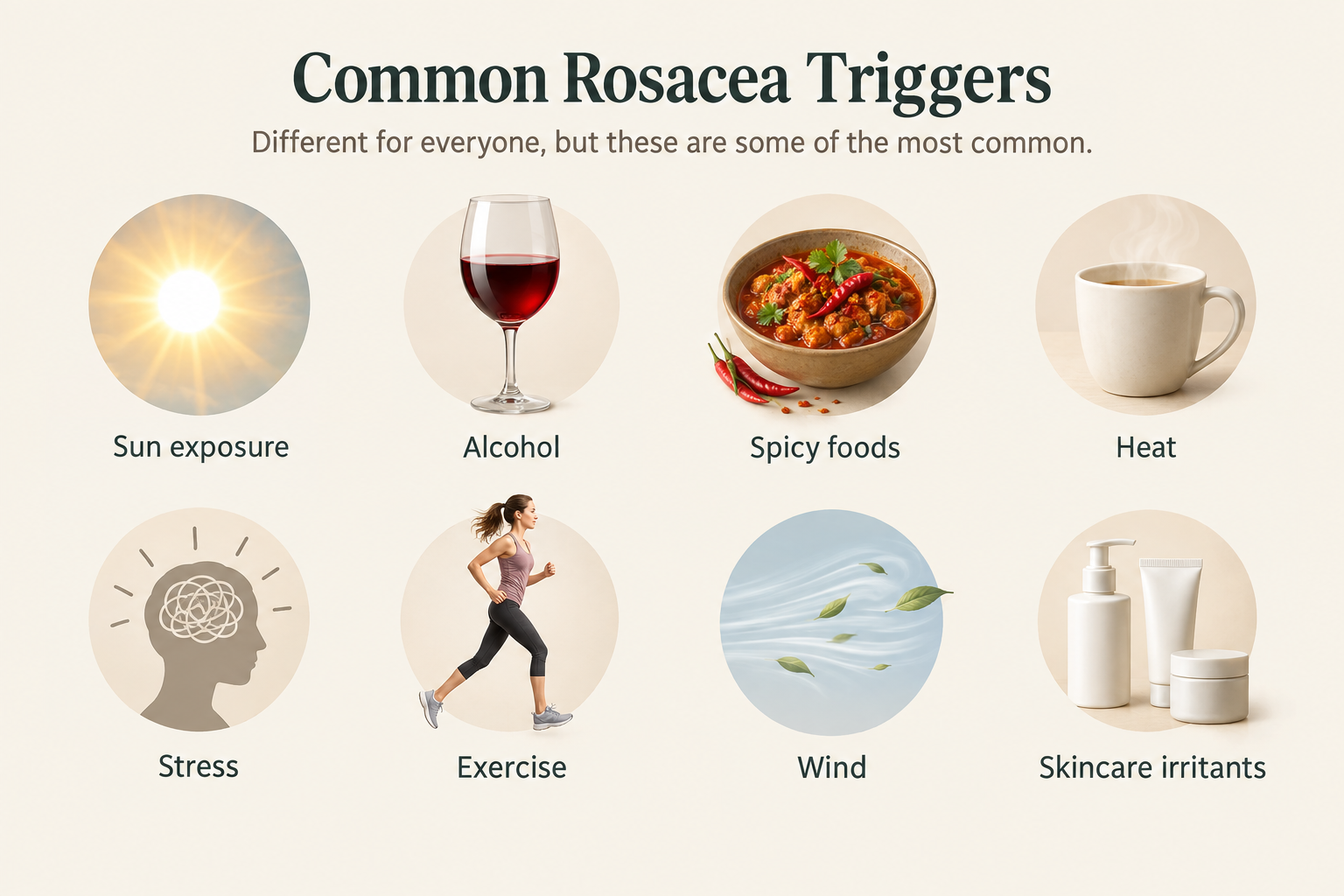
Regardless of subtype, most people with rosacea find that certain factors reliably worsen their symptoms. Identifying and managing personal triggers is a cornerstone of rosacea management and can significantly reduce the frequency and severity of flare-ups. Common triggers include:
- Sun exposure: Ultraviolet radiation is one of the most consistently reported triggers across all subtypes. Daily broad-spectrum SPF 30 or higher is widely recommended.
- Heat and temperature extremes: Hot weather, saunas, hot baths, and central heating can all provoke flushing and redness.
- Alcohol: Particularly red wine, which contains histamine and other vasodilatory compounds.
- Spicy foods and hot beverages: These can stimulate the same neural pathways involved in flushing.
- Exercise: Vigorous physical activity raises core body temperature and can trigger flushing, though gentle exercise is generally manageable.
- Emotional stress: Anxiety and stress are frequently reported as triggers, likely through neurogenic mechanisms.
- Certain skincare products: Products containing alcohol, fragrance, menthol, witch hazel, or exfoliating acids can irritate rosacea-prone skin.
- Wind and cold: Environmental exposure to wind and cold temperatures can provoke reactivity, particularly in ETR.
Keeping a trigger diary can help individuals identify their specific pattern of reactivity, as triggers vary considerably between people. Not every person with rosacea will react to every common trigger.
Skincare Considerations for Rosacea-Prone Skin
Skincare plays a meaningful supporting role in rosacea management, though it cannot replace medical treatment for active disease. People with rosacea generally benefit from a simplified, gentle routine that avoids known irritants. A mild, non-foaming cleanser, a fragrance-free moisturiser to support the skin barrier, and a mineral-based broad-spectrum sunscreen are typically recommended as a foundation.
Niacinamide has shown some evidence of benefit for rosacea-prone skin, with anti-inflammatory properties and the ability to support the skin barrier. Azelaic acid, available both as a prescription topical and in lower concentrations in some cosmetic formulations, may help with redness and inflammatory lesions. Ingredients to approach with caution include retinoids (which can initially cause irritation, though some patients tolerate them well under guidance), alpha-hydroxy acids, and physical or chemical exfoliants. Green-tinted colour-correcting primers and foundations can help camouflage redness in the short term, though these are cosmetic measures rather than treatments.
It is advisable to introduce new skincare products one at a time and to patch-test before applying them to the full face, as rosacea-prone skin can react unpredictably to new formulations.
Laser and Light-Based Treatments for Rosacea
Laser and light-based therapies are an important part of the treatment landscape for certain rosacea subtypes, particularly erythematotelangiectatic rosacea. Pulsed dye laser (PDL) targets oxyhaemoglobin in superficial blood vessels, causing selective photothermolysis — the targeted destruction of dilated vessels while leaving surrounding tissue largely unaffected. Intense pulsed light (IPL) uses a broad spectrum of light wavelengths and can address both redness and some pigmentation concerns simultaneously. Nd:YAG laser is sometimes used for deeper or larger vessels that do not respond adequately to PDL or IPL.
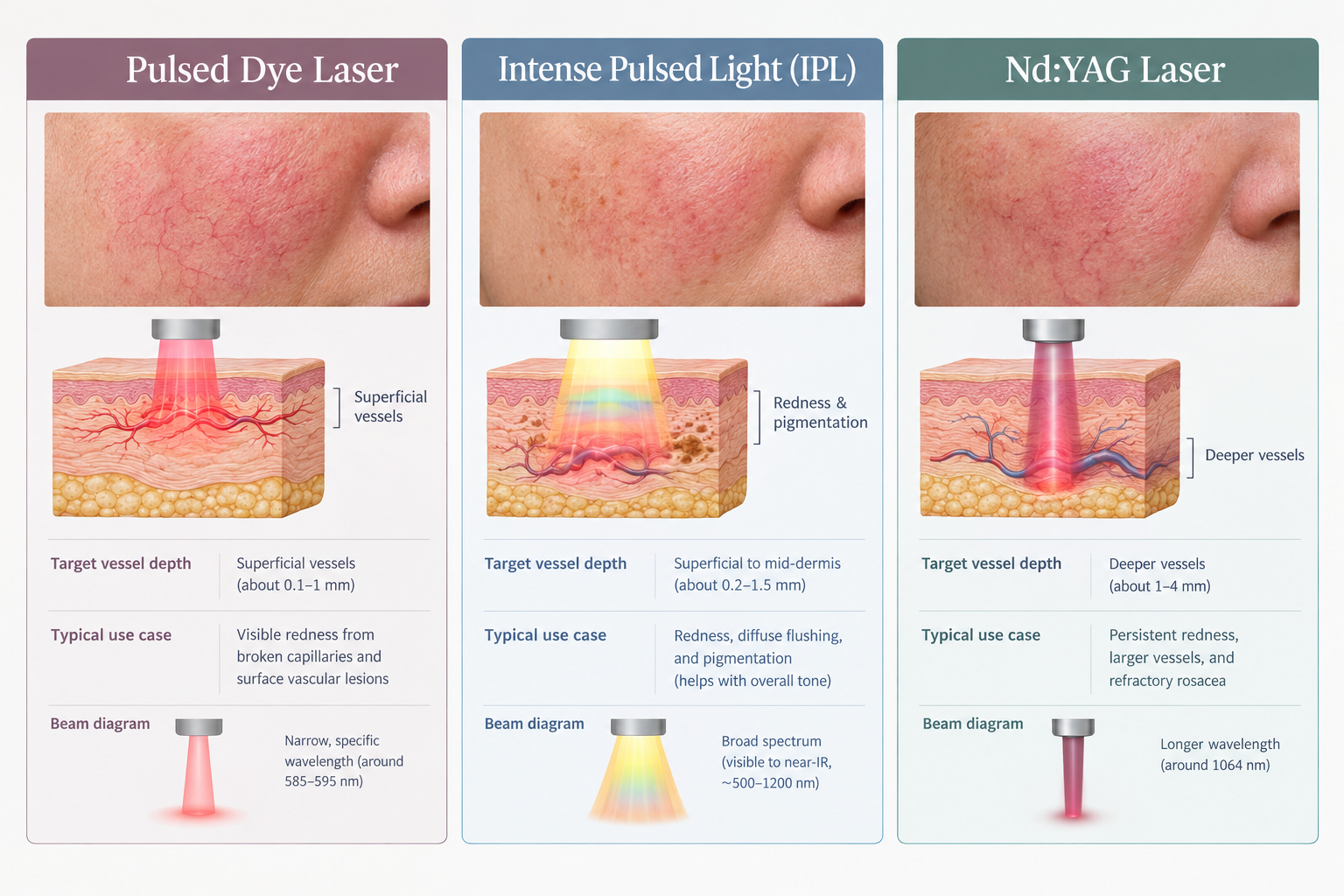
These treatments are generally performed in a series of sessions spaced several weeks apart. Mild redness, swelling, and bruising are common in the days following treatment, and results typically become more apparent over several weeks as the treated vessels are cleared. Maintenance sessions may be needed periodically, as rosacea is a chronic condition and new vessels can develop over time. Laser and light-based treatments are not suitable for everyone; skin tone, medication use, and the presence of active infection or inflammation are among the factors that influence suitability. A thorough consultation and skin assessment are necessary before proceeding.
Frequently Asked Questions
Is rosacea the same as sensitive skin?
Rosacea and sensitive skin share some features — both can involve reactivity to skincare products and environmental factors — but they are not the same condition. Rosacea is a recognized chronic inflammatory skin disorder with specific subtypes and clinical features, whereas sensitive skin is a broader, less precisely defined term. A person with rosacea will often have sensitive skin, but not everyone with sensitive skin has rosacea. A clinical assessment is needed to distinguish between the two.
Can rosacea be cured?
There is currently no cure for rosacea. However, the condition can be effectively managed in most cases with appropriate treatment, trigger avoidance, and consistent skincare. Many people achieve good long-term control of their symptoms with the right combination of approaches. The goal of treatment is to reduce the frequency and severity of flare-ups and to prevent progression where possible.
Does rosacea always get worse over time?
Rosacea does not inevitably worsen, and progression is not guaranteed. With appropriate management, many people maintain stable symptoms over long periods. However, without treatment or trigger management, some individuals do experience gradual worsening, including the development of more persistent redness, increased inflammatory lesions, or, in a minority of cases, phymatous changes. Early diagnosis and consistent management are associated with better long-term outcomes.
Can rosacea affect areas other than the face?
Rosacea primarily affects the central face, but it can occasionally involve the neck, chest, and scalp. Ocular rosacea affects the eyes and eyelids. Extra-facial involvement is less common but should be assessed by a clinician if suspected.
Are there any foods that help rosacea?
There is limited clinical evidence supporting specific dietary interventions for rosacea. Some research suggests that an anti-inflammatory diet rich in omega-3 fatty acids, antioxidants, and fibre may be broadly beneficial for inflammatory skin conditions, but this has not been conclusively demonstrated for rosacea specifically. Avoiding personal dietary triggers — such as alcohol, spicy foods, and hot drinks — is more consistently supported by patient-reported evidence and clinical guidance.
Is rosacea linked to other health conditions?
Some research has suggested associations between rosacea and certain systemic conditions, including cardiovascular disease, gastrointestinal disorders, and neurological conditions, though the nature and strength of these associations are still being investigated. Rosacea should not be assumed to indicate the presence of any other condition, but it is worth discussing overall health with a doctor if there are concerns.
Choosing the Right Approach for Your Rosacea Subtype
Understanding which type of rosacea is present — and whether more than one subtype is involved — is the essential starting point for effective management. Erythematotelangiectatic rosacea responds well to vascular laser and light-based treatments alongside topical vasoconstrictors and diligent sun protection. Papulopustular rosacea typically requires topical anti-inflammatory agents and, in moderate to severe cases, oral therapy. Phymatous rosacea benefits most from early medical intervention to slow progression, with procedural options available for established tissue changes. Ocular rosacea requires specific eyelid hygiene measures and, in many cases, systemic anti-inflammatory treatment.
No single treatment works equally well for all subtypes, and what helps one person may not be appropriate for another. Self-diagnosis and self-treatment carry the risk of using products or approaches that are unsuitable for the specific subtype, potentially worsening the condition. A consultation with a dermatologist or a qualified aesthetic medicine practitioner experienced in rosacea management allows for an accurate diagnosis, a personalised treatment plan, and appropriate monitoring over time. If you are experiencing persistent facial redness, inflammatory lesions, skin thickening, or eye irritation that you suspect may be rosacea, seeking a professional assessment is a reasonable and worthwhile step.
