
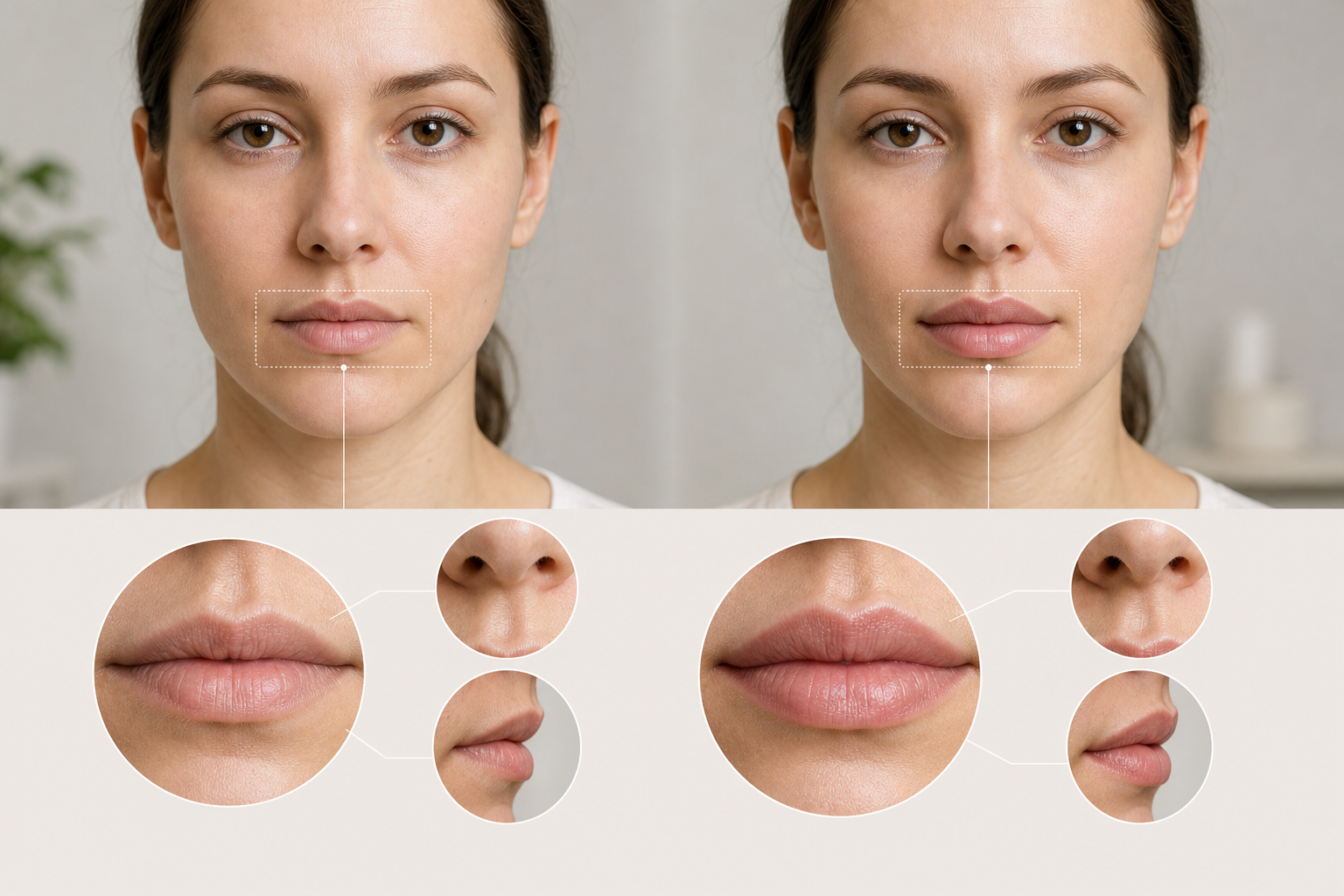

Most people associate lip fillers with one outcome: bigger lips. While volume enhancement is certainly one option, the benefits of lip fillers extend well beyond size. Modern hyaluronic acid fillers can refine lip shape, restore age-related changes, smooth perioral lines, improve lip texture and hydration, and support self-confidence — often without adding noticeable volume at all. This article explores the full range of what lip filler treatment can realistically achieve, who may benefit, and what to consider before booking a consultation.
Key Takeaways
- Lip fillers based on hyaluronic acid can address definition, symmetry, texture, fine lines, and age-related volume loss — not just overall size.
- Many patients seek lip rejuvenation to restore what they have lost rather than to enlarge their lips beyond their natural proportions.
- Results are temporary and reversible, which makes lip filler one of the more flexible minimally invasive aesthetic treatments available.
- Realistic outcomes depend on individual anatomy, the injector’s technique, the product used, and the patient’s specific goals.
- A thorough consultation with a qualified practitioner is essential to determine whether lip filler is appropriate and what results are achievable.
How Hyaluronic Acid Lip Fillers Work
Hyaluronic acid is a naturally occurring molecule found throughout the body, including in skin and connective tissue. Its primary function is to bind and retain water — a single molecule can hold many times its own weight in moisture. When a hyaluronic acid filler is injected into or around the lips, it integrates with the surrounding tissue, adding structure, hydration, and support from within. Over time, the body gradually breaks down the filler through normal enzymatic activity, which is why results are temporary rather than permanent.
Different HA filler formulations have different physical properties. Thicker, more cohesive gels tend to provide lift and projection, while softer, more fluid formulations are better suited to fine surface detail, lip texture improvement, and subtle definition. Products such as Juvéderm Volbella, Juvéderm Ultra XC, Restylane Silk, and Restylane Kysse are each designed with specific lip applications in mind, and an experienced injector will select the appropriate product based on the patient’s anatomy and goals. Most modern formulations also contain lidocaine, a local anaesthetic, which helps to reduce discomfort during the procedure.
Injection technique matters as much as product choice. Approaches such as linear threading, serial puncture, and microdroplet techniques allow practitioners to place filler precisely where it is needed — whether that is along the vermilion border, within the body of the lip, or in the perioral area around the mouth. The result is that lip filler treatment can be highly targeted, addressing specific concerns rather than simply inflating the entire lip.
Benefit 1: Enhanced Lip Definition and Shape
One of the most clinically meaningful benefits of lip fillers is the ability to improve lip definition without necessarily increasing overall volume. The vermilion border — the distinct edge that separates the lip from the surrounding skin — naturally loses sharpness with age, sun exposure, and collagen decline. When this border becomes indistinct, lips can appear flat, undefined, or older than they are. A small amount of filler placed precisely along the vermilion border can restore crispness and clarity to the lip outline.
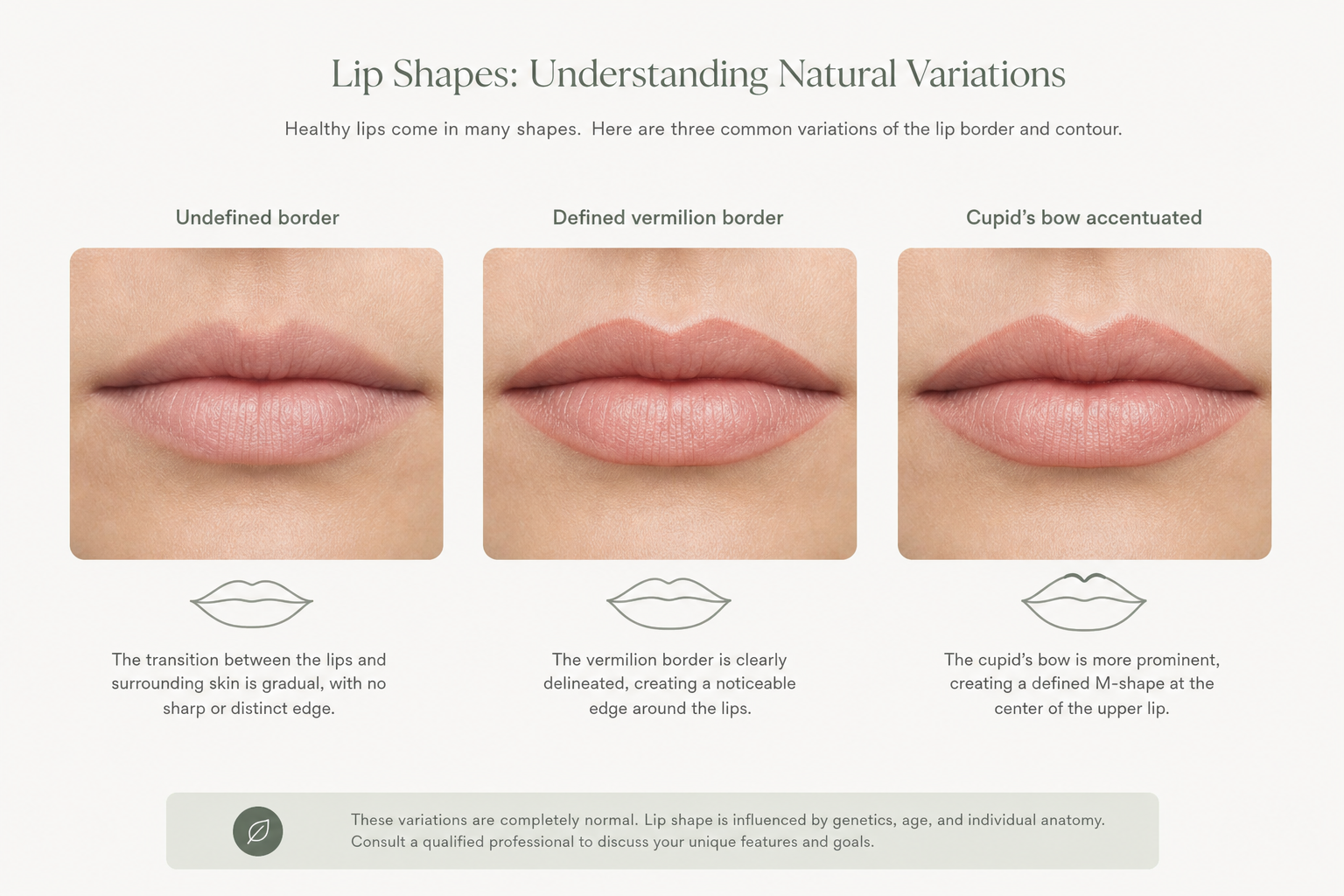
The Cupid’s bow, the double-curved peak of the upper lip, is another area where targeted filler placement can make a meaningful difference. Flattening or asymmetry of the Cupid’s bow is a common concern, and careful filler application can accentuate its shape without making the lips look artificially large. Similarly, the philtral columns — the two vertical ridges running from the nose to the upper lip — can be subtly enhanced to restore a more youthful lip architecture. These structural refinements contribute to what most patients describe as natural-looking results: lips that appear more defined and balanced rather than obviously treated.
Lip definition is also relevant for patients who find that lipstick or lip liner no longer sits cleanly on the lip edge, or that colour bleeds into the fine lines around the mouth. Restoring a clear vermilion border can improve how cosmetics wear, which is a practical benefit that is often underappreciated in discussions of lip filler outcomes.
Benefit 2: Correcting Lip Asymmetry
Lip asymmetry is extremely common. Most people have some degree of difference between the left and right sides of their lips, or between the upper and lower lip in terms of proportion. In many cases this asymmetry is subtle and goes unnoticed, but for some patients it is a source of genuine self-consciousness. Lip filler can be used to address both horizontal asymmetry — where one side of the lip is fuller or higher than the other — and vertical proportion, such as an upper lip that is significantly thinner than the lower.
Correcting lip symmetry requires careful assessment before treatment. A skilled practitioner will evaluate the lips at rest and in motion, since dynamic asymmetry caused by underlying muscle activity may not be fully correctable with filler alone and might benefit from a combination approach involving botulinum toxin. Where asymmetry is structural rather than muscular, filler can be placed selectively to balance the lip shape and improve overall facial harmony. The goal is not mathematical perfection — which can look unnatural — but a more balanced appearance that suits the patient’s individual features.
Benefit 3: Smoothing Perioral Lines and Smoker’s Lines
Fine lines radiating outward from the lips — commonly called perioral lines, smoker’s lines, barcode lines, or lipstick bleed lines — are among the more difficult signs of facial ageing to address. These vertical lines form as a result of repeated muscle movement, collagen loss, and thinning of the skin around the mouth. They are not exclusive to smokers; they develop in many people with age, particularly in those with fair skin or significant sun exposure history.
Hyaluronic acid filler can be injected superficially into these lines to soften their appearance. Because the skin in this area is thin and delicate, very soft, low-viscosity filler formulations are typically used, and technique is critical to avoid visible lumps or an unnatural result. Filler for perioral lines is often combined with botulinum toxin injections to the orbicularis oris muscle, which reduces the repetitive movement that deepens the lines over time. This combination approach tends to produce more durable and natural-looking results than either treatment alone.
It is important to set realistic expectations: deep, established perioral rhytids may be softened but are unlikely to be completely eliminated with filler. Patients with significant skin laxity or very deep lines may benefit from a broader treatment plan that includes skin resurfacing or other modalities alongside injectable treatment.
Benefit 4: Restoring Age-Related Volume Loss
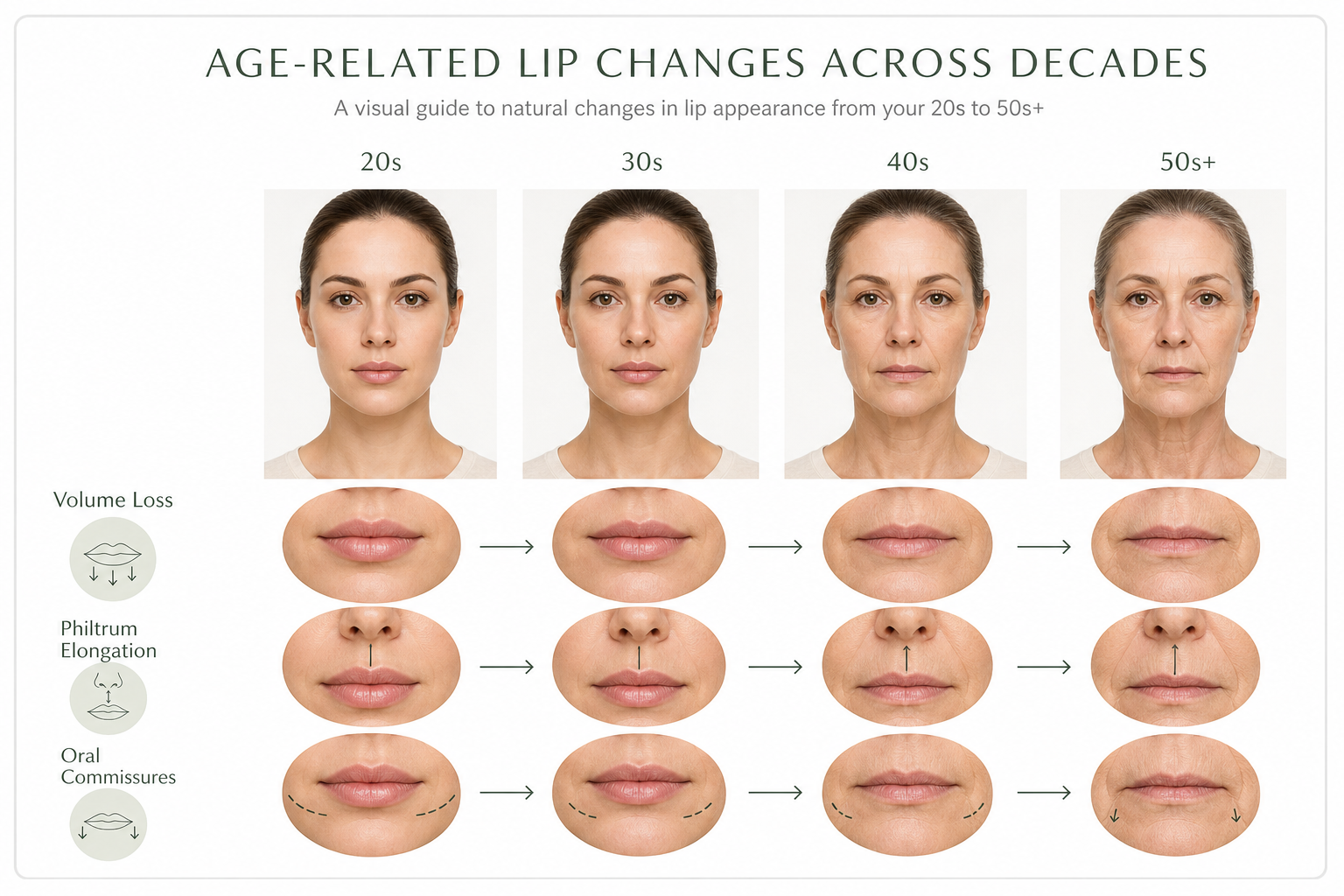
Lip thinning is a predictable consequence of ageing. From the mid-twenties onward, the body produces progressively less collagen and elastin, and the fat compartments of the face — including those that support the lips — gradually diminish. The upper lip is particularly affected: it tends to elongate and flatten as the philtrum lengthens and the vermilion recedes. The corners of the mouth, known as the oral commissures, may also begin to turn downward, contributing to a tired or unhappy resting expression.
For patients in their thirties, forties, and beyond, lip filler is often less about augmentation and more about lip rejuvenation — restoring the lip volume and proportions that existed naturally in earlier years. This distinction matters because the treatment goal, the amount of filler used, and the injection approach are all different when the aim is restoration rather than enlargement. Restorative treatment typically uses conservative volumes and focuses on re-establishing the natural upper-to-lower lip ratio and the gentle eversion of the lip edge, rather than creating a dramatically fuller appearance.
Age-related volume loss also affects the area around the mouth more broadly. Filler placed at the oral commissures can lift the corners of the mouth slightly, reducing the appearance of downturned corners without the recovery associated with surgical options. This is a subtle but meaningful change that can significantly affect how a person’s resting expression is perceived by others.
Benefit 5: Improving Lip Texture and Hydration
Hyaluronic acid’s water-binding properties have a direct effect on lip texture and hydration. Lips that have lost moisture and structural support can appear crepey, chapped, or dull even when well cared for. Injecting a soft HA filler into the lip tissue introduces a reservoir of hydration from within, which can improve the surface quality of the lip in ways that topical products cannot fully replicate.
Patients often report that their lips feel softer and appear smoother in the weeks following treatment, and that they are less prone to dryness and chapping. This improvement in lip texture and hydration is a genuine biological effect of hyaluronic acid rather than a cosmetic illusion, and it is one of the benefits that patients frequently mention as a pleasant surprise if they came to treatment primarily for shape or volume reasons.
There is also emerging evidence from clinical research that hyaluronic acid fillers may stimulate collagen production in the surrounding tissue through mechanical pressure on fibroblasts — the cells responsible for producing collagen and elastin. If this collagen stimulation effect is confirmed by further research, it would suggest that repeated filler treatments over time could have a cumulative benefit on the structural quality of the perioral skin, though this remains an area where evidence is still developing and should not be overstated.
Benefit 6: Supporting Self-Confidence and Psychological Wellbeing
The psychological dimension of lip filler treatment is supported by clinical research, not just anecdotal reports. A study published in the Journal of Cutaneous and Aesthetic Surgery examined quality of life and self-esteem outcomes in women undergoing hyaluronic acid lip filler treatment and found meaningful improvements in self-reported confidence and body image satisfaction following treatment. These findings are consistent with broader research on the psychological effects of aesthetic procedures, which generally shows that when patients have realistic expectations and are appropriately selected, minimally invasive treatments can contribute positively to self-image and social confidence.
Self-confidence is listed here as a genuine benefit rather than a superficial one. For patients who have felt self-conscious about their lip appearance — whether due to asymmetry, thinning, or undefined shape — addressing that concern through a safe, reversible treatment can have a meaningful effect on how they feel in social and professional situations. It is worth noting, however, that aesthetic treatment is not a substitute for addressing underlying psychological concerns, and practitioners should assess patient motivation carefully during consultation to ensure that expectations are realistic and that the patient’s goals are achievable through the proposed treatment.
Benefit 7: Customisable, Reversible, and Minimally Invasive
One of the practical advantages of hyaluronic acid lip fillers over surgical alternatives such as lip implants or a surgical lip lift is the degree of control they offer. Results can be built gradually across multiple appointments, allowing patients to assess their response to treatment and adjust the approach over time. This is particularly valuable for patients who are new to lip filler and want to start conservatively before deciding whether to add more volume or definition.
Hyaluronic acid fillers are also reversible. If a patient is unhappy with their result, or if a complication arises, the filler can be dissolved using an enzyme called hyaluronidase, which breaks down hyaluronic acid relatively quickly. This reversibility is a meaningful safety feature that distinguishes HA fillers from permanent or semi-permanent alternatives, and it is one of the reasons that hyaluronic acid has become the dominant material used in lip augmentation worldwide.
The procedure itself is typically completed within thirty minutes, requires minimal downtime, and produces results that are visible immediately — though some initial swelling is expected in the first few days. Most patients return to normal activities the same day or the following day. Results from lip filler generally last between six and twelve months, though this varies depending on the specific product used, the volume injected, the injection location, and individual factors such as metabolism and lifestyle. Patients who smoke or have significant sun exposure may find that results do not last as long.
The Preventive Angle: Starting Earlier Than You Might Think
An underappreciated aspect of lip filler treatment is its potential role as a preventive measure rather than purely a corrective one. Collagen loss in the perioral area begins gradually in the mid-to-late twenties. Some practitioners and researchers suggest that maintaining lip structure and hydration with conservative filler treatment during this period may help to slow the visible progression of lip thinning and perioral line formation, rather than waiting until more significant changes have occurred.
This preventive framing is not yet supported by long-term controlled clinical trials, and it should not be used to pressure younger patients into treatment they do not need. However, for patients in their late twenties or thirties who are already noticing early changes in lip definition or texture, a conservative approach to lip filler may be worth discussing with a qualified practitioner as part of a broader skin health strategy. The key distinction is that preventive treatment, when appropriate, uses very small volumes focused on maintaining structure rather than creating a noticeably different appearance.
Age-Specific Considerations: What Changes and What Filler Can Address
| Life Stage | Common Lip Concerns | Typical Filler Goals |
|---|---|---|
| 20s | Undefined vermilion border, flat Cupid’s bow, minor asymmetry | Definition, shape refinement, symmetry correction |
| 30s | Early volume loss, early perioral lines, asymmetry becoming more noticeable | Subtle volume restoration, border definition, early line softening |
| 40s | Significant volume loss, upper lip elongation, established perioral lines, downturned corners | Restorative volume, perioral line treatment, commissure lifting, lip rejuvenation |
| 50s and beyond | Marked lip thinning, deep perioral rhytids, loss of lip projection, skin laxity | Conservative restoration, combination treatment with botulinum toxin or resurfacing |
Combination Treatments for Comprehensive Results
Lip filler is frequently most effective when used as part of a broader treatment plan rather than in isolation. The botulinum toxin lip flip — where small amounts of botulinum toxin are injected into the upper lip muscle — can complement filler by relaxing the muscle slightly, causing the upper lip to roll outward and appear fuller without adding volume. This approach is particularly useful for patients who want more lip show without significant augmentation, and it can be combined with a small amount of filler for a more complete result.
For patients with significant perioral lines, combining lip filler with botulinum toxin injections to the orbicularis oris muscle addresses both the static lines (visible at rest) and the dynamic component (lines that deepen with movement). Skin resurfacing treatments such as laser or chemical peels can further improve the surface texture of the perioral skin, which filler alone cannot address. PDO thread treatments have also been explored in combination with HA fillers for perioral rejuvenation, with some clinical research suggesting that the combination may support collagen stimulation more effectively than either treatment alone, though evidence in this area is still emerging.
A practitioner who takes a holistic view of facial harmony — considering the lips in the context of the overall face rather than as an isolated feature — is more likely to recommend a combination approach when appropriate, and to advise against over-treatment of the lips when other areas of the face would benefit more from attention.
Risks, Limitations, and Who May Not Be Suitable
Lip filler is a medical procedure and carries real risks that should be understood before treatment. Common side effects include swelling, bruising, tenderness, and redness at the injection sites, most of which resolve within a few days to two weeks. Less common but more serious complications include vascular occlusion — where filler inadvertently enters or compresses a blood vessel — which can cause tissue damage if not recognised and treated promptly. This is a rare but serious risk that underscores the importance of choosing a qualified, experienced practitioner who is trained to recognise and manage complications.
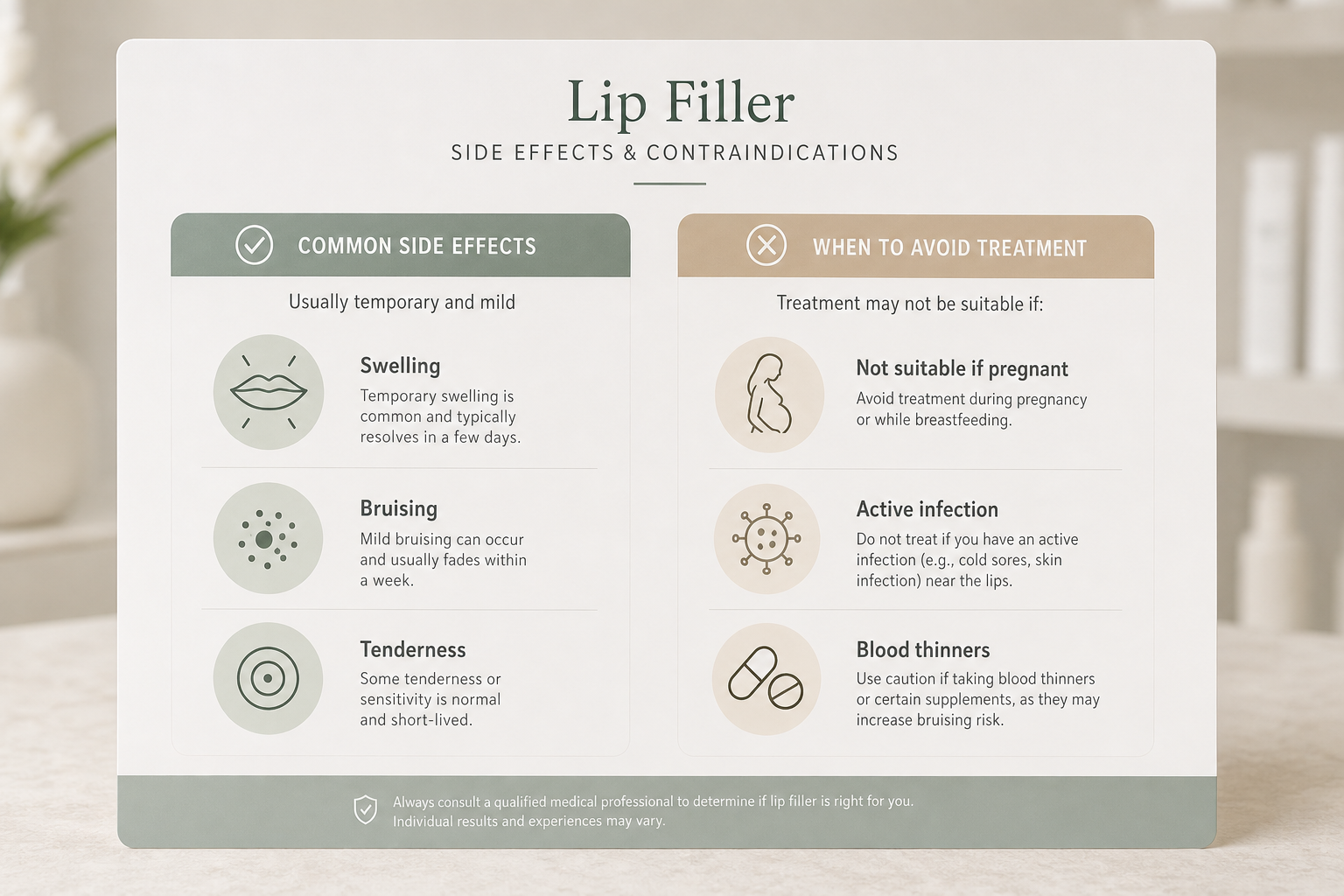
Other potential concerns include asymmetry, visible lumps or irregularities, the Tyndall effect (a bluish discolouration caused by superficially placed filler), infection, and allergic or hypersensitivity reactions. The reversibility of hyaluronic acid filler with hyaluronidase provides an important safety net for many of these issues, but it does not eliminate risk entirely.
Lip filler may not be suitable for patients who are pregnant or breastfeeding, have active infection or inflammation in the treatment area, have certain autoimmune conditions, are taking blood-thinning medications, or have a history of severe allergic reactions. Patients with a history of cold sores (herpes simplex) should inform their practitioner, as the procedure can trigger an outbreak and prophylactic antiviral medication may be recommended. A thorough medical history and consultation are essential before any injectable treatment.
Frequently Asked Questions
How long do lip fillers last?
Results from hyaluronic acid lip fillers typically last between six and twelve months, though this varies between individuals. Factors that influence longevity include the specific product used, the volume injected, the injection location, individual metabolism, and lifestyle factors such as smoking and sun exposure. Filler placed in areas of high movement, such as the body of the lip, may break down more quickly than filler placed along the vermilion border.
Can lip fillers correct asymmetry?
Lip filler can improve structural asymmetry by selectively adding volume or definition to the less prominent side. However, asymmetry caused by underlying muscle activity may not be fully correctable with filler alone. A practitioner may recommend combining filler with botulinum toxin to address dynamic asymmetry. A thorough assessment before treatment is important to understand the cause of the asymmetry and set realistic expectations.
Will lip fillers make my lips look obviously done?
This depends largely on the volume used, the technique applied, and the patient’s natural anatomy. Conservative treatment focused on definition, symmetry, and subtle restoration tends to produce natural-looking results that are not immediately identifiable as filler. The trend in aesthetic medicine has moved significantly toward refined, balanced outcomes rather than the overfilled appearance associated with earlier approaches. Communicating clearly with your practitioner about your goals — and starting with a conservative amount — reduces the risk of an outcome that looks unnatural.
Is lip filler painful?
Most modern lip filler formulations contain lidocaine, which helps to reduce discomfort during injection. A topical anaesthetic cream is often applied to the lips before treatment as well. Most patients describe the sensation as mild to moderate discomfort rather than significant pain, though individual pain tolerance varies. The lips are a sensitive area, and some degree of discomfort during injection is normal.
Can lip filler be dissolved if I don’t like the result?
Yes. Hyaluronic acid fillers can be dissolved using hyaluronidase, an enzyme that breaks down hyaluronic acid. Dissolution is generally effective and relatively quick, though it may require more than one treatment session for complete reversal. This reversibility is one of the key safety advantages of HA fillers over permanent or semi-permanent alternatives.
Are lip fillers suitable for older patients?
Lip filler can be appropriate for patients of a wide range of ages, including older patients seeking lip rejuvenation rather than augmentation. In older patients, the focus is typically on restoring lost volume and structure conservatively, and on addressing perioral lines and downturned corners. Patients with significant skin laxity may benefit from a combination approach that includes other treatments alongside filler. Suitability depends on individual anatomy, health history, and goals, and should be assessed during a thorough consultation.
Is Lip Filler the Right Choice for Your Goals?
The benefits of lip fillers are broader and more nuanced than the volume-focused conversation that dominates most discussions of the treatment. Lip definition, symmetry correction, perioral line softening, age-related restoration, improved lip texture and hydration, and meaningful gains in self-confidence are all achievable outcomes — provided that the treatment is approached with realistic expectations, appropriate product selection, and skilled technique.
Lip filler is not suitable for everyone, and it is not a treatment that should be undertaken lightly. The risks are real, the results are temporary, and the outcome depends heavily on the practitioner’s expertise and the patient’s individual anatomy. For patients who are good candidates, however, a well-executed lip filler treatment — whether focused on subtle definition, restorative volume, or perioral rejuvenation — can be a genuinely worthwhile non-surgical lip enhancement option.
If you are considering lip filler, the most important first step is a thorough consultation with a qualified aesthetic practitioner who can assess your anatomy, understand your goals, and recommend an approach that is appropriate for you. Bring clear examples of what you hope to achieve, ask about the practitioner’s experience and training, and do not hesitate to ask questions about the products, techniques, and risks involved before proceeding.
