

Key Takeaways
- Upper lip lines form due to a combination of repetitive muscle movement, collagen loss, photodamage, and structural changes in the bone and fat beneath the skin.
- Multiple non-surgical treatments are available, including dermal fillers, botulinum toxin, laser resurfacing, RF microneedling, skin boosters, chemical peels, and prescription topicals.
- No single treatment addresses every aspect of perioral ageing; a combination treatment approach often produces the most balanced and natural-looking results.
- Treatment suitability depends on the severity of lines, skin tone, lifestyle, downtime tolerance, and individual anatomy — a qualified practitioner assessment is essential.
- Consistent sun protection and a structured skincare routine support and extend the results of any in-clinic procedure.
Why Upper Lip Lines Form
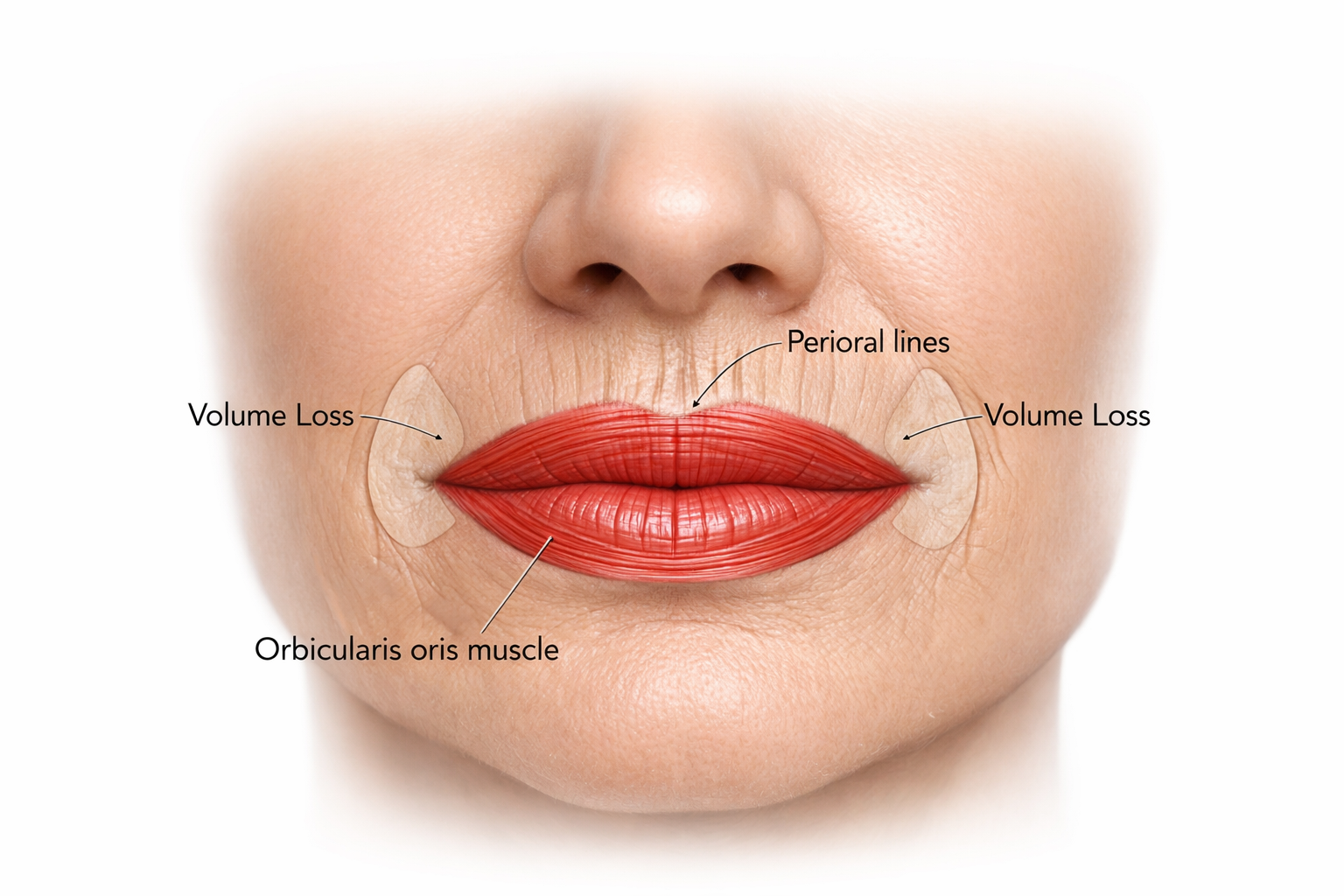
The skin around the mouth is thinner than most areas of the face and is subject to continuous movement. Every time you speak, smile, sip from a cup, or purse your lips, the orbicularis oris muscle — the ring-shaped muscle encircling the mouth — contracts, repeatedly folding the overlying skin. Over years, these folds become etched in, initially appearing only with movement and later becoming visible at rest.
Intrinsic ageing progressively reduces the skin’s ability to bounce back from these repetitive stresses. Collagen and elastin production slows from the mid-twenties onward, meaning the structural scaffold that keeps skin smooth and firm gradually weakens. Loss of subcutaneous fat and bone resorption in the jaw and maxilla remove the structural support underneath the lip, allowing skin to buckle into the characteristic vertical lip lines sometimes called barcode lines or smoker’s lines — though non-smokers develop them too.
Photodamage accelerates this process considerably. UV radiation degrades collagen fibres and disrupts normal skin cell renewal, meaning people with significant lifetime sun exposure typically develop perioral lines earlier and more deeply than those who have consistently protected their skin. Smoking compounds the problem further, introducing oxidative stress and free radicals that break down collagen at an accelerated rate while also promoting repeated lip pursing.
Understanding these overlapping causes matters for treatment planning, because lines driven primarily by muscle movement respond differently to treatment than those caused mainly by volume loss or skin quality changes.
Treatment Comparison at a Glance
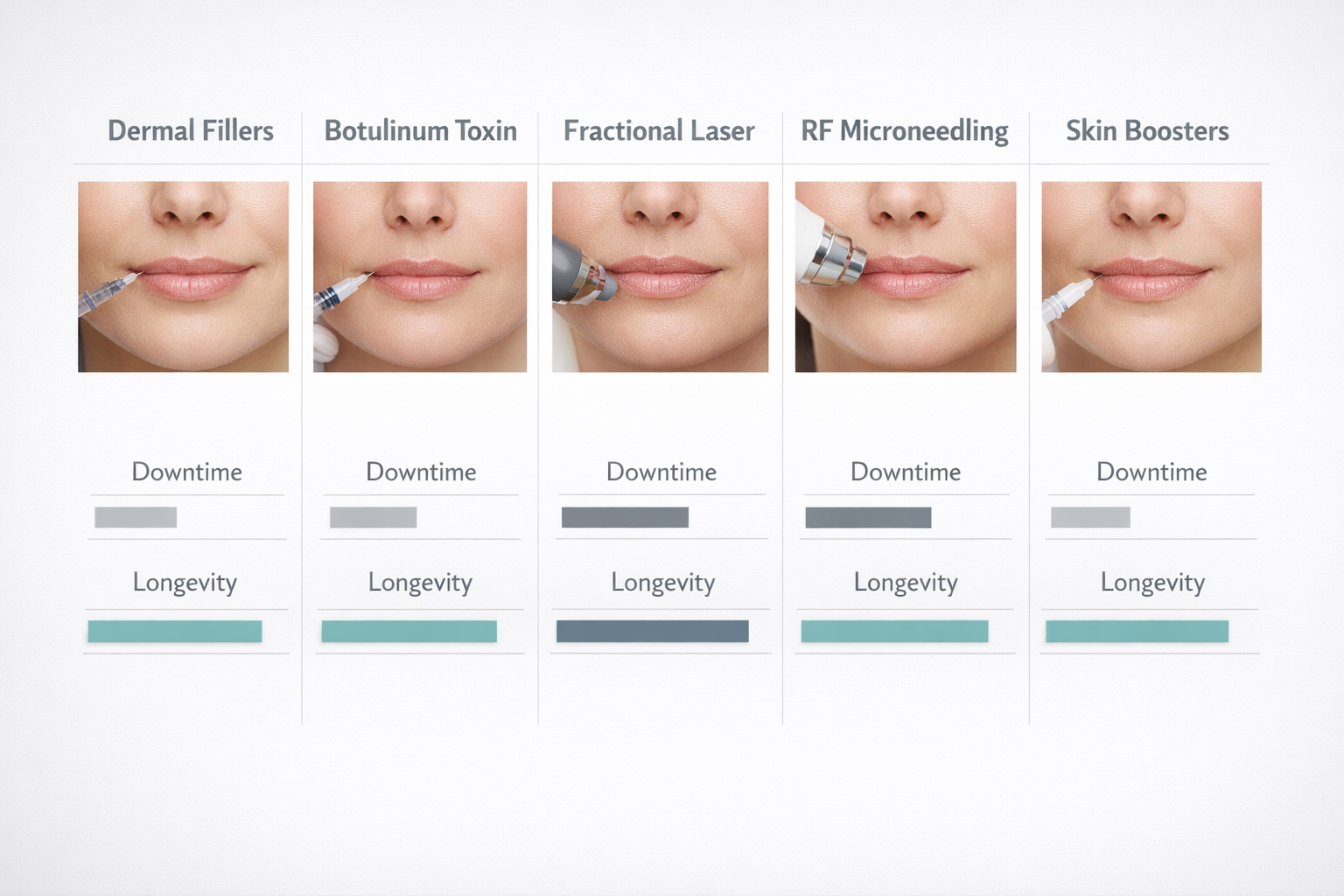
| Treatment | Primary Mechanism | Best For | Downtime | Longevity |
|---|---|---|---|---|
| Hyaluronic acid dermal fillers | Volume replacement, hydration | Deep etched lines, volume loss | Minimal (1–3 days bruising) | 6–18 months |
| Botulinum toxin (neuromodulator) | Muscle relaxation | Fine dynamic lines, lip flip | None to minimal | 3–4 months |
| Fractional laser resurfacing | Controlled skin injury, collagen remodelling | Surface texture, photodamage, fine–moderate lines | 3–10 days depending on depth | 1–3 years |
| RF microneedling | Collagen stimulation via heat and micro-injuries | Skin laxity, fine–moderate lines, all skin tones | 2–5 days | 12–18 months |
| Hyaluronic acid skin boosters / Profhilo | Deep hydration, collagen stimulation | Skin quality, fine lines, dull or dehydrated skin | Minimal | 6–9 months |
| Polynucleotides (PDRN) | Tissue repair, fibroblast stimulation | Skin quality, fine lines, collagen regeneration | Minimal | 6–12 months |
| Chemical peel | Controlled exfoliation, cell turnover | Fine lines, surface photodamage, skin texture | 2–7 days depending on depth | Months; maintenance needed |
| Prescription retinoids / tretinoin | Cellular turnover, collagen stimulation | Early and mild lines, long-term maintenance | None (initial skin adjustment period) | Ongoing with daily use |
The longevity and downtime figures above are indicative ranges. Individual results vary depending on the treatment depth, practitioner technique, skin characteristics, and aftercare.
Dermal Fillers: Restoring Volume and Smoothing Deep Lines
Hyaluronic acid (HA) dermal fillers are among the most widely used treatments for perioral rejuvenation. HA is a substance naturally present in the skin that attracts and retains water, so injecting it into or around the lip area restores lost volume and provides structural support that lifts and softens the appearance of deeper lines.
For upper lip lines specifically, practitioners may use a fine-gauge needle or cannula to place small amounts of filler directly into the body of the lines, a technique sometimes called direct linear threading. Filler can also be placed along the vermilion border — the edge where the lip meets the surrounding skin — to restore definition and create a gentle barrier that prevents lipstick bleeding. More broadly placed filler in the perioral area addresses the volume loss that causes the skin to sag inward, indirectly reducing the appearance of vertical lines.
Brands such as Juvederm Volbella, Restylane Kysse, and Teosyal are commonly used in this area due to their softer, more spreadable formulations that suit the delicate lip tissue. Results typically last six to eighteen months depending on the product used and the individual’s metabolism of the filler. Conservative dosing is important around the mouth, where overfilling can create an unnatural appearance or, in rare cases, contribute to filler migration. Temporary side effects include bruising, swelling, and tenderness; serious complications such as vascular occlusion are rare but possible, making practitioner experience and safety knowledge critical.
Botulinum Toxin: Relaxing the Muscle Behind the Lines
Botulinum toxin — most commonly known by the brand name Botox, though alternatives such as Dysport and Xeomin exist — works differently from fillers. Rather than adding volume, it temporarily reduces the activity of the orbicularis oris muscle, softening the repetitive contractions that create and deepen dynamic lines over time.
When used around the upper lip, small doses of this neuromodulator are placed in targeted points to relax the puckering action without significantly impairing normal lip function. This is sometimes called a lip flip, as the gentle relaxation of the muscle can cause the lip to roll slightly outward, making it appear fuller. The treatment is particularly effective for fine, dynamic lines that appear with movement rather than deeply etched static lines present at rest.
Results typically last three to four months before repeat treatment is needed. The dose used in the perioral area is intentionally small compared with other facial areas, which limits diffusion and reduces the risk of affecting speech or eating. Because the margin for error is relatively narrow around the mouth, this treatment requires a practitioner experienced in lip anatomy. Side effects at conservative doses are usually mild and temporary, but asymmetry, difficulty with certain lip movements, and inadvertent muscle weakness are possible if placement is not precise.
Fractional Laser Resurfacing: Rebuilding Skin Quality
Fractional laser resurfacing delivers controlled energy to thousands of microscopic treatment zones in the skin while leaving surrounding tissue intact. This controlled injury triggers the skin’s natural healing response, stimulating new collagen and elastin production and accelerating the replacement of sun-damaged, thinned skin cells with healthier ones.
Ablative lasers — particularly fractional CO2 and erbium lasers — resurface the upper layer of the skin more aggressively and can produce significant improvements in fine-to-moderate perioral lines, surface texture irregularities, and photodamage. Non-ablative and hybrid fractional options cause less disruption to the skin surface, meaning shorter downtime but typically requiring more sessions to achieve comparable results. Emerging options such as the OMAR laser have been developed specifically to address the challenging perioral zone.
Laser treatment suitability depends significantly on skin tone. Ablative lasers carry a higher risk of post-inflammatory hyperpigmentation in patients with darker skin tones on the Fitzpatrick scale, making careful pre-treatment assessment essential. Most patients can expect three to ten days of redness, swelling, and skin shedding after ablative fractional treatment; non-ablative options involve considerably less downtime. The results of a single well-performed fractional laser session can last one to three years, making it a worthwhile investment for patients who can tolerate the recovery period.
RF Microneedling: Combining Two Mechanisms
RF microneedling combines the micro-injury stimulus of traditional microneedling with radiofrequency (RF) energy delivered directly into the dermis via the needles. The dual stimulus promotes both immediate collagen contraction and longer-term collagen and elastin remodelling, making it effective for improving skin laxity, fine-to-moderate lines, and overall skin texture in the perioral area.
Devices such as Morpheus8 can be used around the mouth area, where the controlled depth of RF delivery allows practitioners to target the dermis without significant surface disruption. Unlike ablative lasers, RF microneedling is generally considered suitable across a wider range of skin tones because the energy is delivered beneath the skin surface, reducing the risk of surface pigmentation changes. Typical downtime is two to five days of redness and minor swelling. A course of two to three sessions spaced four to six weeks apart is usually recommended before assessing final results, with maintenance sessions possible every twelve to eighteen months.
Hyaluronic Acid Skin Boosters and Polynucleotides
Hyaluronic acid skin boosters such as Profhilo are injected into the skin in multiple small depots rather than being placed to create volume as traditional fillers do. They spread through the dermis, delivering deep hydration and stimulating fibroblasts — the cells responsible for producing collagen and elastin. The result is improved skin quality, plumpness, and a reduction in fine surface lines rather than structural volumisation. For patients whose primary concern is skin dullness, dehydration, and early fine lines rather than deep etched grooves, skin boosters can be an effective and minimally disruptive option.
Polynucleotides (also referred to as PDRN) are an emerging injectable treatment gaining increasing clinical interest. Derived from highly purified fish DNA, polynucleotide injections work by stimulating tissue repair pathways and promoting fibroblast activity, supporting the skin’s own collagen regeneration. Early clinical experience suggests potential benefit for improving skin quality and reducing fine lines in the perioral area, though this is still a relatively new modality and long-term evidence continues to develop. Polynucleotides are often described as complementary to other treatments rather than a standalone solution for deeper lines.
PRP (platelet-rich plasma) injections follow a similar regenerative principle, using growth factors extracted from the patient’s own blood to stimulate collagen production. Evidence for PRP in perioral line treatment exists, though it is generally considered more suitable as part of a broader treatment programme than as a primary standalone intervention for significant lip lines.
Chemical Peels: Surface Renewal for Fine Lines
Chemical peels use carefully formulated acids — such as glycolic acid, trichloroacetic acid (TCA), or phenol — to remove the outermost layers of skin in a controlled manner, triggering fresh cell turnover and stimulating collagen production. For upper lip lines, medium-depth peels can produce noticeable improvements in fine surface lines and photodamage, while superficial peels offer a gentler option with minimal downtime but more modest results.
The perioral area is well suited to chemical peel treatment because the skin can tolerate medium-depth formulations, and the precise application by an experienced practitioner allows targeted treatment of lip lines without affecting surrounding areas unnecessarily. Mild redness and peeling typically last three to seven days depending on peel depth. As with lasers, skin tone considerations apply: deeper peels carry a higher risk of pigmentation changes in patients with darker skin, and careful patient selection is important. A course of superficial peels, rather than a single deeper treatment, may be a more appropriate starting point for some patients.
The Role of a Combination Treatment Approach
In clinical practice, the most effective perioral rejuvenation outcomes typically come from addressing multiple causes simultaneously rather than relying on a single modality. A common example is combining low-dose botulinum toxin to soften dynamic muscle activity with small amounts of HA filler to address volume loss and directly treat deeper grooves, followed by a course of RF microneedling or fractional laser to improve overall skin quality and collagen density.
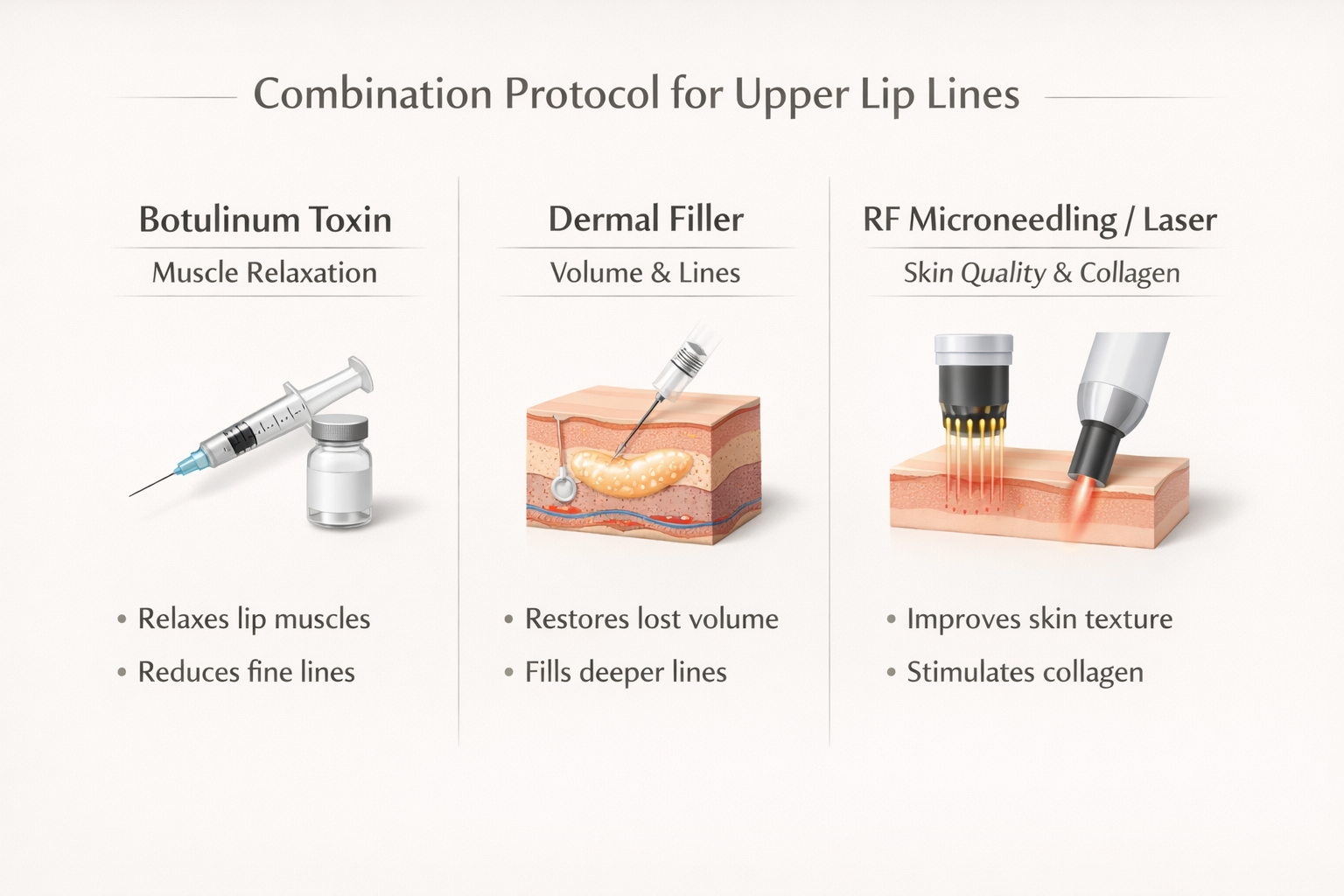
A personalised treatment plan developed during a thorough consultation allows a practitioner to sequence treatments appropriately — for instance, completing any laser or energy-based treatment before injecting filler, to avoid disrupting placed product. The choice of which combination to use depends on the patient’s primary concerns, skin type, downtime tolerance, budget, and treatment history. A well-designed combination approach respects these individual factors and avoids over-treating any single aspect of the perioral area.
Prescription Topicals and At-Home Skincare
Prescription retinoids, particularly tretinoin (also known as Retin-A), remain the most evidence-supported topical treatment for reducing fine lines and improving skin texture. Tretinoin works by accelerating cellular turnover, promoting collagen synthesis, and partially reversing the structural changes caused by photodamage over time. It is available on prescription and requires gradual introduction because it commonly causes initial dryness, redness, and sensitivity — effects that usually settle over four to eight weeks as the skin adapts.
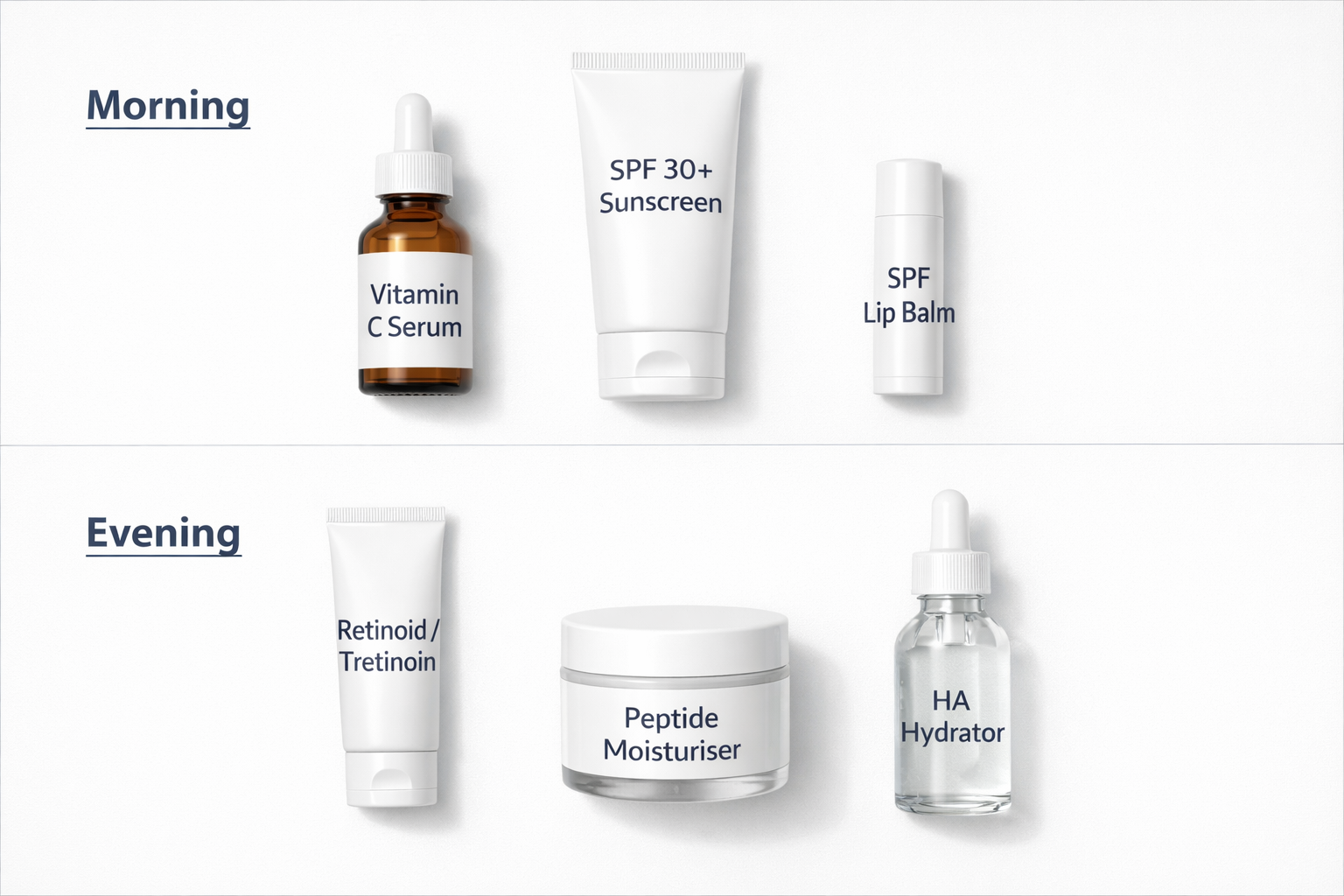
An effective at-home routine that supports in-clinic treatment for upper lip lines typically includes a vitamin C serum in the morning to neutralise free radicals and support collagen synthesis, a broad-spectrum SPF of at least 30 applied daily (including to the lip area using an SPF lip balm), retinol or prescription tretinoin in the evening, and a hydrating moisturiser containing hyaluronic acid and peptides to support the skin barrier. This routine does not replace professional treatment for established lines, but it meaningfully extends treatment results and helps prevent further photodamage from accelerating the ageing process.
What Non-Surgical Treatments Cannot Fully Address
Honest patient education includes acknowledging what these treatments are unable to achieve. Very deep, long-established perioral lines — particularly in patients with significant volume loss, advanced bone and fat atrophy, or heavily sun-damaged, textured skin — may see only partial improvement from non-surgical approaches. In such cases, the result of non-surgical treatment may be a meaningful improvement in appearance rather than complete elimination of lines, which remains an important and realistic outcome for many patients.
Patients should also understand that all non-surgical results are temporary. Botulinum toxin requires maintenance every three to four months, fillers every six to eighteen months depending on the product and area, and energy-based treatments may need refreshing every one to two years. The cumulative benefit of consistent treatment and good skincare can be significant over time, but discontinuing treatment will allow the natural ageing process to resume.
Preventing Further Upper Lip Lines
Prevention is most effective when started early, but it contributes meaningfully at any age. Daily broad-spectrum sun protection is the single most impactful preventive step, as UV radiation is a primary driver of premature collagen breakdown in the perioral area. Avoiding smoking, or stopping if currently smoking, significantly reduces both oxidative damage and the repetitive pursing motion that deepens lip lines. Staying well hydrated, maintaining a nutrient-rich diet with adequate antioxidants, and being mindful of habits such as prolonged straw use can reduce unnecessary repetitive muscle stress on the lip area.
Frequently Asked Questions
Is Botox or filler better for upper lip lines?
Neither is universally better — they work differently and address different aspects of the problem. Botulinum toxin reduces the dynamic muscle activity that creates lines with movement, making it particularly useful for fine, superficial lines in patients who notice them mainly when speaking or smiling. Dermal fillers restore lost volume and directly fill deeper, static lines. Many practitioners recommend combining both for a more comprehensive result, using conservative doses of each to maintain natural appearance and function.
Can upper lip lines be completely reversed without surgery?
Non-surgical treatments can produce significant and clinically meaningful improvements, but complete reversal is not a realistic expectation for most patients, particularly those with deep, long-established lines or advanced volume loss. The goal is a natural-looking reduction in the severity of lines and an improvement in overall skin quality, not perfection. Very deep perioral lines in the context of significant structural change may ultimately require a surgical approach to achieve further improvement.
How young is too young to treat perioral lines?
There is no single correct age, but treatment is generally considered appropriate when lines have become a noticeable concern, whether they appear only with movement or are visible at rest. Younger patients may benefit from preventive approaches such as SPF, retinoids, and occasional small-dose botulinum toxin to reduce the cumulative effect of repetitive muscle movement, rather than corrective filler treatment. A consultation with a qualified practitioner is the appropriate way to assess individual suitability.
Does drinking through a straw cause lip lines?
Repetitive pursing of the lips — regardless of the activity causing it, whether drinking through a straw, smoking, or playing a wind instrument — does contribute to the formation and deepening of vertical lip lines over time. The orbicularis oris muscle contracts with each of these movements, and the cumulative effect over years of repetition can be measurable. Reducing unnecessary straw use is a sensible preventive measure, though it is one factor among several.
How many sessions of RF microneedling are needed for lip lines?
Most treatment protocols for RF microneedling in the perioral area involve a course of two to three sessions spaced approximately four to six weeks apart. Final results become fully apparent approximately three months after the last session, as collagen remodelling is a gradual biological process. Maintenance sessions are typically recommended every twelve to eighteen months to sustain the improvement.
Are there skin tone considerations for laser treatment of lip lines?
Yes, and this is an important safety point. Ablative fractional lasers such as CO2 and erbium carry a greater risk of causing post-inflammatory hyperpigmentation in patients with Fitzpatrick skin types IV to VI. Practitioners experienced in treating diverse skin tones will typically recommend non-ablative, fractional, or RF-based alternatives for these patients, or use ablative devices at lower settings with careful pre-treatment preparation. Skin tone assessment is an essential part of any laser consultation.
Choosing the Right Treatment for Your Upper Lip Lines
The best non-surgical treatment for upper lip lines is rarely a single option — it depends on the type and severity of your lines, the underlying causes, your skin tone and overall skin health, and practical factors such as how much downtime you can accommodate. Fine, movement-related lines in a younger patient may respond well to conservative botulinum toxin and a structured skincare routine. Deeper, static lines in a patient with significant volume loss may benefit most from a carefully planned combination of HA filler, a neuromodulator, and collagen-stimulating energy treatment. Patients with predominantly sun-damaged, textured skin may find that fractional laser resurfacing or RF microneedling provides the greatest improvement in overall perioral appearance.
What all effective plans share is a commitment to consistency — both in professional treatment and in daily protection and skincare. If upper lip lines are a concern you would like to address, a consultation with a qualified and experienced aesthetic practitioner is the appropriate starting point. A thorough assessment of your anatomy, skin type, and goals will allow a practitioner to recommend a realistic, tailored approach and discuss what results you can reasonably expect.
