
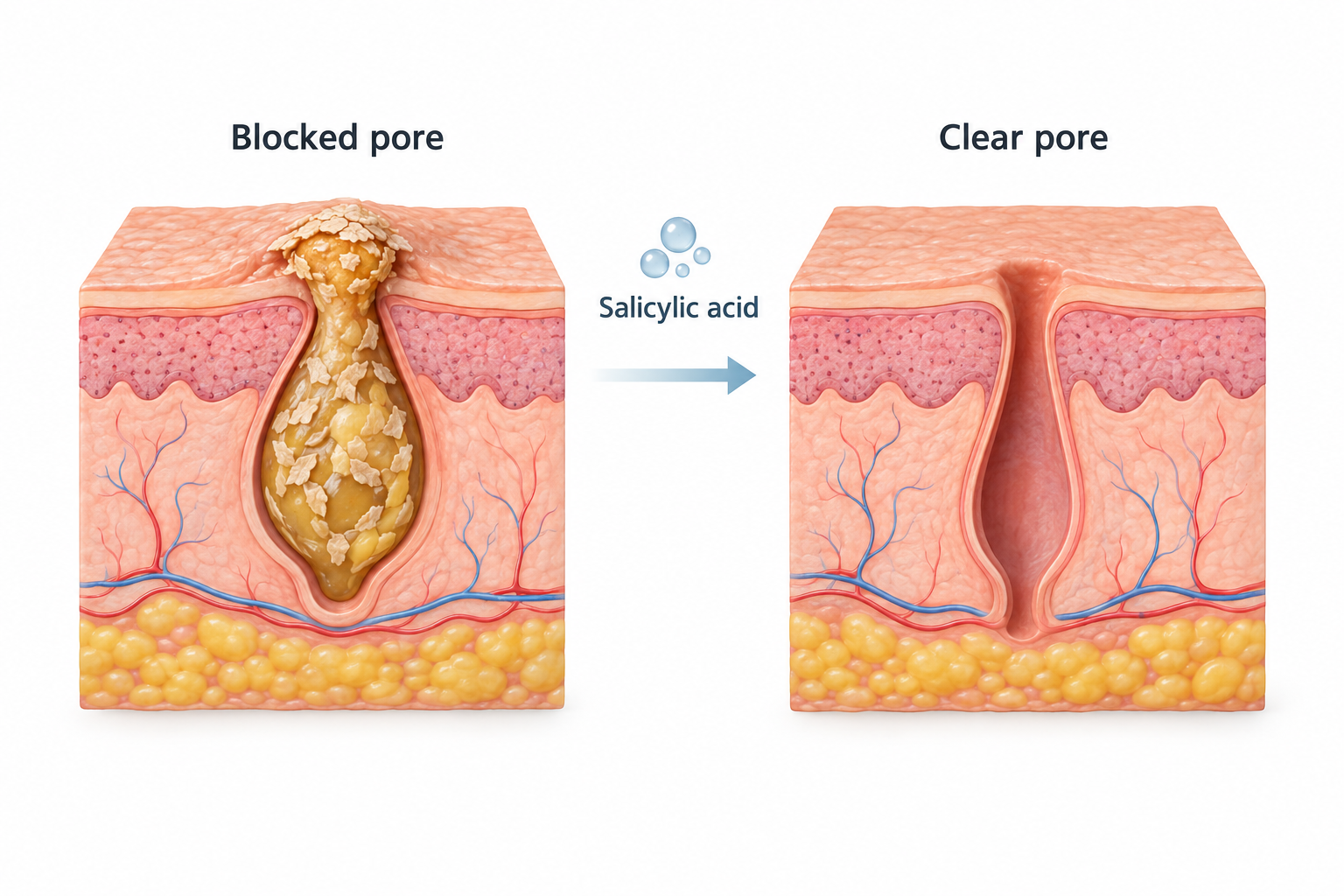

Salicylic acid is one of the most widely used active ingredients in acne skincare, appearing in cleansers, toners, spot treatments, and professional chemical peels. Many people reach for it as a first-line option when breakouts appear, but understanding exactly what it can and cannot do helps set realistic expectations and avoid frustration when results fall short.
Key Takeaways
- Salicylic acid is a beta-hydroxy acid (BHA) that works primarily by exfoliating inside the pore, helping to clear blockages that lead to blackheads, whiteheads, and mild inflammatory acne.
- It is most effective for comedonal and mild-to-moderate acne; it is unlikely to resolve severe nodular or cystic acne on its own.
- Consistent, ongoing use is generally required to maintain results, as salicylic acid manages acne rather than permanently curing it.
- Side effects such as dryness, irritation, and peeling are common, particularly when starting treatment or using higher concentrations.
- For moderate-to-severe acne, salicylic acid is often used alongside other treatments rather than as a standalone solution.
What Is Salicylic Acid and How Does It Work?
Salicylic acid is a naturally derived beta-hydroxy acid originally found in willow bark. Unlike alpha-hydroxy acids (AHAs) such as glycolic acid, which are water-soluble and work primarily on the skin’s surface, salicylic acid is oil-soluble. This chemical property allows it to penetrate into the sebaceous follicle — the pore — and work from within, which is the key reason it is particularly relevant to acne-prone skin.
Inside the pore, salicylic acid performs two main functions. First, it acts as a keratolytic agent, meaning it loosens and dissolves the bonds between dead skin cells (corneocytes) that would otherwise clump together and block the follicle opening. Second, it has mild comedolytic properties, helping to break down existing comedones — the plugs of sebum and dead skin that form blackheads and whiteheads. By keeping the pore lining exfoliated and reducing the accumulation of debris, salicylic acid helps prevent the conditions that allow acne-causing bacteria, particularly Cutibacterium acnes, to thrive in an oxygen-poor environment.
Salicylic acid also has mild anti-inflammatory properties, which may help reduce the redness and swelling associated with early inflammatory spots. However, this anti-inflammatory effect is relatively modest compared with prescription-strength treatments, and it does not directly kill acne bacteria in the way that benzoyl peroxide does.
What Types of Acne Can Salicylic Acid Treat?
Acne exists on a spectrum, and salicylic acid’s effectiveness varies considerably depending on the type and severity of breakouts present.
Comedonal Acne
Comedonal acne — characterized by open comedones (blackheads) and closed comedones (whiteheads) — is where salicylic acid tends to perform best. Because comedones form when dead skin cells and sebum block the follicle opening, the oil-soluble exfoliating action of salicylic acid directly addresses the underlying mechanism. Regular use can visibly reduce the number of blackheads and whiteheads over several weeks, and many people with predominantly comedonal acne find it a useful long-term maintenance ingredient.
Mild-to-Moderate Inflammatory Acne
For mild papules and pustules — the small red spots and pus-filled lesions that most people associate with typical acne — salicylic acid can provide meaningful improvement, particularly when used consistently. By preventing pore blockages from forming, it reduces the frequency of new inflammatory lesions. However, it does not eliminate existing bacteria or directly treat the inflammatory cascade in the way that topical antibiotics or benzoyl peroxide do, so results for inflammatory acne are often more modest than for comedonal acne.
Severe or Cystic Acne
Nodular and cystic acne involves deep, painful lesions that develop well below the skin’s surface. Salicylic acid, applied topically, cannot penetrate deeply enough to meaningfully affect these lesions. Using salicylic acid alone for severe acne is unlikely to produce adequate results and may delay access to more appropriate treatments. Severe acne generally requires assessment by a dermatologist or qualified clinician, who may recommend prescription options such as topical or oral retinoids, antibiotics, or in some cases isotretinoin.
Salicylic Acid Concentrations: Over-the-Counter vs Professional Treatments
The concentration of salicylic acid in a product significantly influences both its effectiveness and its potential for irritation. Over-the-counter (OTC) products available without a prescription typically contain between 0.5% and 2% salicylic acid. At these concentrations, the ingredient is generally well tolerated for daily use and is suitable for ongoing maintenance in most skin types, though people with sensitive or dry skin may still experience dryness or peeling, particularly when starting out.
Professional salicylic acid chemical peels, performed in a clinical setting, use higher concentrations — commonly between 20% and 30%, though formulations vary. These in-clinic treatments deliver a more intensive exfoliation and can produce faster visible improvement in skin texture, pore appearance, and acne lesion count. Professional peels are typically applied for a controlled period and then neutralized or removed, and they require appropriate aftercare. They are not suitable for all skin types and should only be performed by a trained practitioner who can assess suitability and manage any adverse reactions.
It is worth noting that higher concentration does not automatically mean better results for every individual. Skin tolerance, acne type, and overall skincare routine all influence how well any concentration of salicylic acid performs.
How Long Does Salicylic Acid Take to Work?
Realistic timelines are important when starting any acne treatment. With consistent daily use of an OTC salicylic acid product, most people begin to notice some improvement in skin texture and a reduction in new comedones within four to six weeks. More meaningful reductions in overall acne lesion count typically require eight to twelve weeks of regular use.
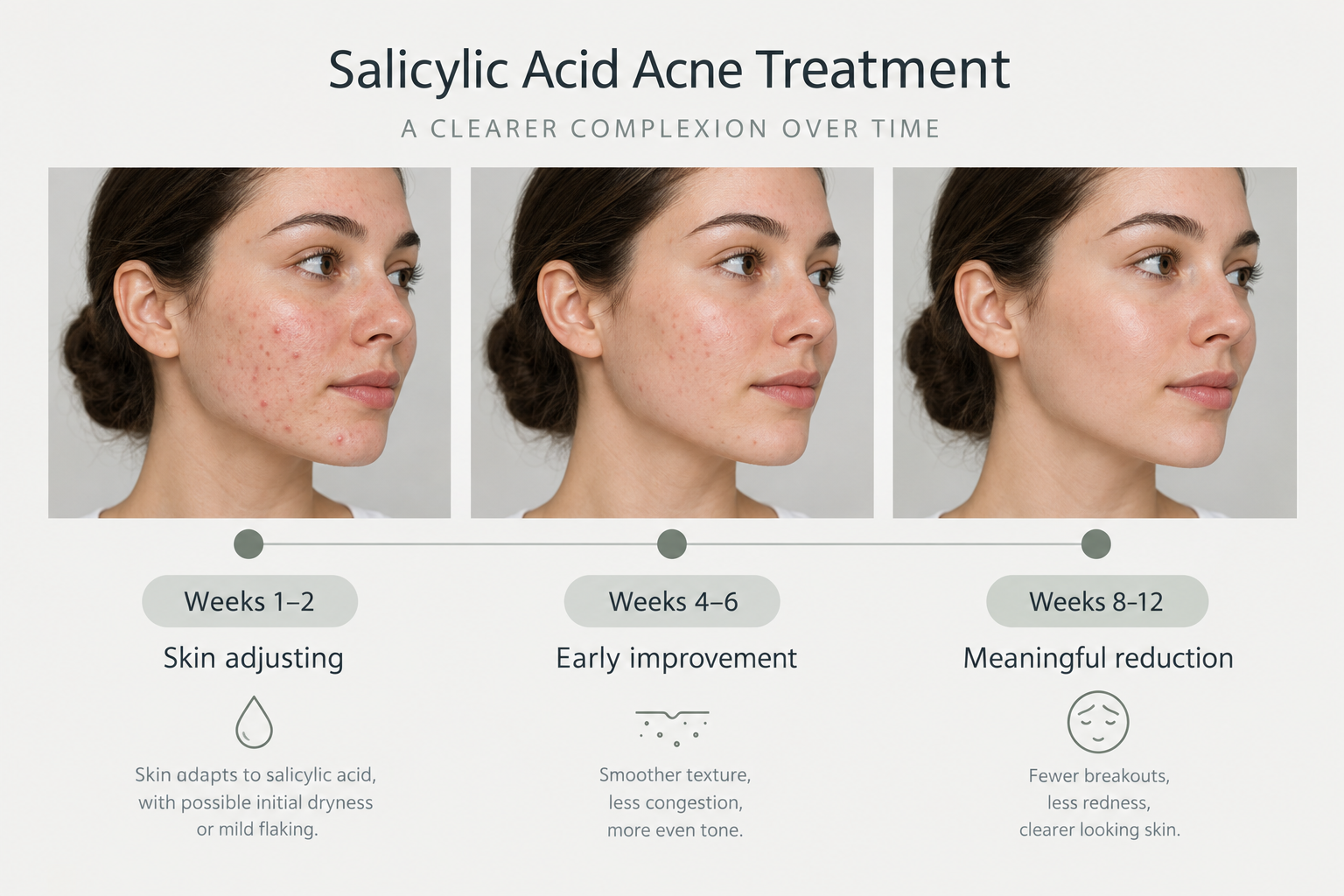
Some individuals experience a temporary increase in breakouts during the first two to four weeks of use — sometimes called a purging phase — as accelerated cell turnover brings existing congestion to the surface more quickly. This is not universal, and it can be difficult to distinguish from a genuine worsening reaction, so monitoring skin response carefully during this period is advisable. If irritation is significant or breakouts worsen substantially beyond four weeks, it is worth reviewing the product and seeking professional advice.
Professional salicylic acid peels may produce faster visible results, but a course of treatments — often spaced two to four weeks apart — is usually recommended rather than a single session, particularly for acne management rather than one-off skin brightening.
Potential Side Effects and Skin Reactions
Salicylic acid is generally considered safe for topical use at recommended concentrations, but side effects are common, particularly when beginning treatment or using products with higher concentrations.
- Dryness and peeling: The exfoliating action of salicylic acid can strip moisture from the skin, leading to flaking, tightness, and visible peeling. Using a non-comedogenic moisturizer alongside salicylic acid products can help manage this.
- Redness and irritation: Some individuals, particularly those with sensitive or compromised skin barriers, may experience stinging, burning, or persistent redness. Starting with a lower concentration and less frequent application can reduce this risk.
- Increased sun sensitivity: Salicylic acid increases the skin’s sensitivity to ultraviolet radiation. Daily broad-spectrum sunscreen use is strongly recommended when using salicylic acid regularly, particularly during professional peel recovery.
- Contact dermatitis: Although uncommon, some individuals may develop an allergic reaction to salicylic acid. Signs include intense itching, swelling, or a rash that extends beyond the application area, and these warrant prompt medical review.
- Salicylate toxicity: This is a rare concern with topical use at standard concentrations, but applying salicylic acid over large body surface areas — particularly under occlusion — can increase systemic absorption. This is more relevant to professional treatments and is why clinical oversight matters.
Who May Be Suitable for Salicylic Acid Treatment?
Salicylic acid is broadly suitable for many people with acne-prone or oily skin, but individual factors influence whether it is the right choice and at what concentration.
People with oily or combination skin and predominantly comedonal or mild inflammatory acne are generally the best candidates for salicylic acid-based skincare. Those with normal skin experiencing occasional breakouts may also benefit from targeted spot treatment use rather than full-face daily application.
Individuals with dry or sensitive skin can sometimes use low-concentration salicylic acid products, but they may find that the drying effect outweighs the benefit, particularly if their acne is not primarily comedonal. In these cases, alternative ingredients or formulations may be more appropriate.
Salicylic acid is generally not recommended during pregnancy, as salicylates belong to a class of compounds that carry precautionary guidance around systemic absorption. Anyone who is pregnant or breastfeeding should consult a healthcare professional before using salicylic acid products, particularly at higher concentrations or over large areas. People with aspirin sensitivity should also exercise caution, as salicylic acid is chemically related to aspirin.
How to Use Salicylic Acid Effectively
Getting the most from salicylic acid involves more than simply applying a product containing it. The formulation, frequency of use, and the rest of the skincare routine all affect outcomes.
Leave-on products such as serums, toners, and spot treatments generally deliver more sustained contact with the skin than rinse-off products like cleansers, which are washed away before the active ingredient has significant time to work. For acne management, a leave-on formulation is typically more effective than a salicylic acid cleanser used alone, though cleansers can still contribute to overall pore hygiene.
Starting with a lower frequency — for example, every other day or a few times per week — and gradually increasing to daily use as the skin adapts can reduce the risk of irritation. Layering multiple exfoliating acids simultaneously, such as combining salicylic acid with a glycolic acid product, increases the risk of over-exfoliation and barrier disruption, and is generally not advisable without professional guidance.
Pairing salicylic acid with a gentle, non-comedogenic moisturizer and a broad-spectrum SPF 30 or higher sunscreen is considered good practice and helps maintain skin barrier integrity during treatment.
Salicylic Acid Compared with Other Acne Treatments
Understanding how salicylic acid compares with other commonly used acne treatments helps clarify when it may be the right choice and when alternatives or combinations may be more appropriate.
Benzoyl peroxide is an antimicrobial agent that directly kills Cutibacterium acnes bacteria and also has some keratolytic properties. It tends to be more effective than salicylic acid for inflammatory acne but is more likely to cause bleaching of fabrics and can be more irritating. The two ingredients are sometimes used together — for example, a salicylic acid toner in the morning and a benzoyl peroxide treatment at night — though this combination requires careful monitoring for over-irritation.
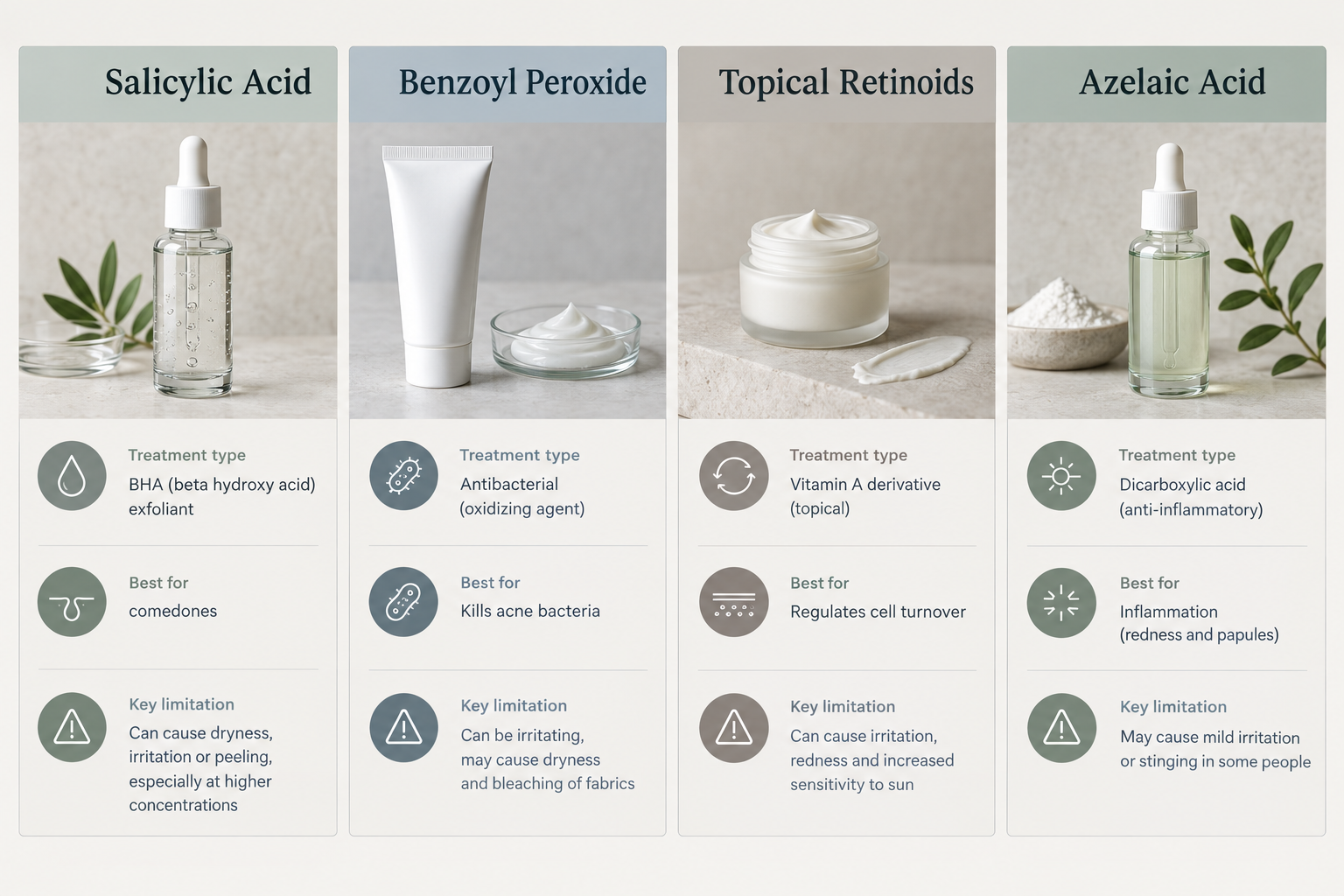
Topical retinoids such as adapalene (available OTC in some countries) and tretinoin (prescription-only) are among the most evidence-supported topical treatments for acne. Retinoids regulate cell turnover, reduce comedone formation, and have anti-inflammatory effects. They are generally considered more potent than salicylic acid for both comedonal and inflammatory acne, though they also carry a higher risk of initial irritation and require sun protection. Salicylic acid and retinoids are sometimes used in complementary routines, but combining them requires care to avoid excessive dryness.
Topical antibiotics such as clindamycin or erythromycin target acne bacteria and are typically available by prescription. They are more appropriate for moderate inflammatory acne and are usually prescribed alongside other agents to reduce the risk of antibiotic resistance.
Azelaic acid is another over-the-counter option with both antibacterial and anti-inflammatory properties. It is often better tolerated than salicylic acid by people with sensitive or rosacea-prone skin and also has some evidence for reducing post-inflammatory hyperpigmentation — the dark marks that acne can leave behind.
Professional treatments such as chemical peels using salicylic acid, glycolic acid, or trichloroacetic acid (TCA), as well as light-based therapies and extraction procedures, may be considered for acne that does not respond adequately to topical products alone. These are best discussed with a qualified aesthetic practitioner or dermatologist who can assess the skin and recommend an appropriate treatment plan.
Managing Acne Scarring and Post-Inflammatory Marks
Salicylic acid is sometimes used to help improve the appearance of post-inflammatory hyperpigmentation — the flat, discoloured marks that remain after an acne lesion has healed. By promoting cell turnover, salicylic acid may help these marks fade more quickly than they would without treatment. However, it has limited effect on true acne scarring, which involves structural changes to the dermis such as ice-pick scars, boxcar scars, or rolling scars.
For established acne scars, more targeted treatments are typically required. These may include microneedling, fractional laser resurfacing, dermal fillers for atrophic scars, or professional chemical peels at concentrations beyond what is available over the counter. A clinical assessment is necessary to determine which approach, or combination of approaches, is most appropriate for the type and severity of scarring present.
Frequently Asked Questions
Can salicylic acid completely clear acne?
Salicylic acid can significantly reduce acne lesions in people with comedonal or mild-to-moderate inflammatory acne, but it is unlikely to completely clear acne in all cases. Results depend on acne type, severity, skin type, and consistency of use. For many people, it is a useful part of an acne management routine rather than a complete solution on its own.
How often should I use salicylic acid for acne?
Most OTC salicylic acid products are formulated for once or twice daily use, though starting less frequently and building up gradually is advisable for those with sensitive skin. The appropriate frequency depends on the product concentration, formulation, and individual skin tolerance. A qualified skincare professional or dermatologist can provide personalised guidance.
Is salicylic acid safe for dark skin tones?
Salicylic acid is generally considered suitable for all skin tones when used at appropriate concentrations. However, people with darker skin tones should be aware that over-exfoliation or irritation can trigger post-inflammatory hyperpigmentation, making careful use and sun protection particularly important. Professional peels at higher concentrations should be performed by a practitioner experienced in treating darker skin.
Can I use salicylic acid every day?
Daily use of low-concentration salicylic acid products is common and generally well tolerated by oily or acne-prone skin types. People with drier or more sensitive skin may find that daily use causes excessive dryness or irritation, in which case reducing frequency or switching to a lower concentration is advisable.
Does salicylic acid work on body acne?
Salicylic acid can be effective for acne on the back, chest, and shoulders, where follicular blockages are a common cause of breakouts. Body washes and sprays containing salicylic acid are available for this purpose. The same principles apply regarding concentration, consistency of use, and the importance of sun protection on treated areas.
What should I do if salicylic acid is not working for my acne?
If acne does not improve after eight to twelve weeks of consistent salicylic acid use, or if it is moderate to severe from the outset, it is worth seeking a professional assessment. A dermatologist or qualified aesthetic clinician can evaluate the type and severity of acne and recommend prescription treatments or professional procedures that may be more appropriate.
Is Salicylic Acid the Right Choice for Your Acne?
Salicylic acid is a well-established, evidence-supported ingredient for managing comedonal and mild-to-moderate acne. Its oil-soluble nature gives it a genuine advantage over surface-only exfoliants for pore-related breakouts, and its availability in a wide range of OTC formulations makes it accessible as a starting point for many people dealing with acne-prone skin.
That said, salicylic acid is not a universal solution. It works best when the acne is primarily driven by pore blockages rather than deep bacterial infection or hormonal factors, and it requires consistent, ongoing use to maintain results. For moderate-to-severe acne, or for acne that has not responded to OTC treatments after a reasonable trial period, a professional consultation is a sensible next step. A qualified dermatologist or aesthetic clinician can assess the underlying causes of your acne, identify whether salicylic acid is playing a useful role in your routine, and recommend additional or alternative treatments tailored to your skin’s specific needs.
