
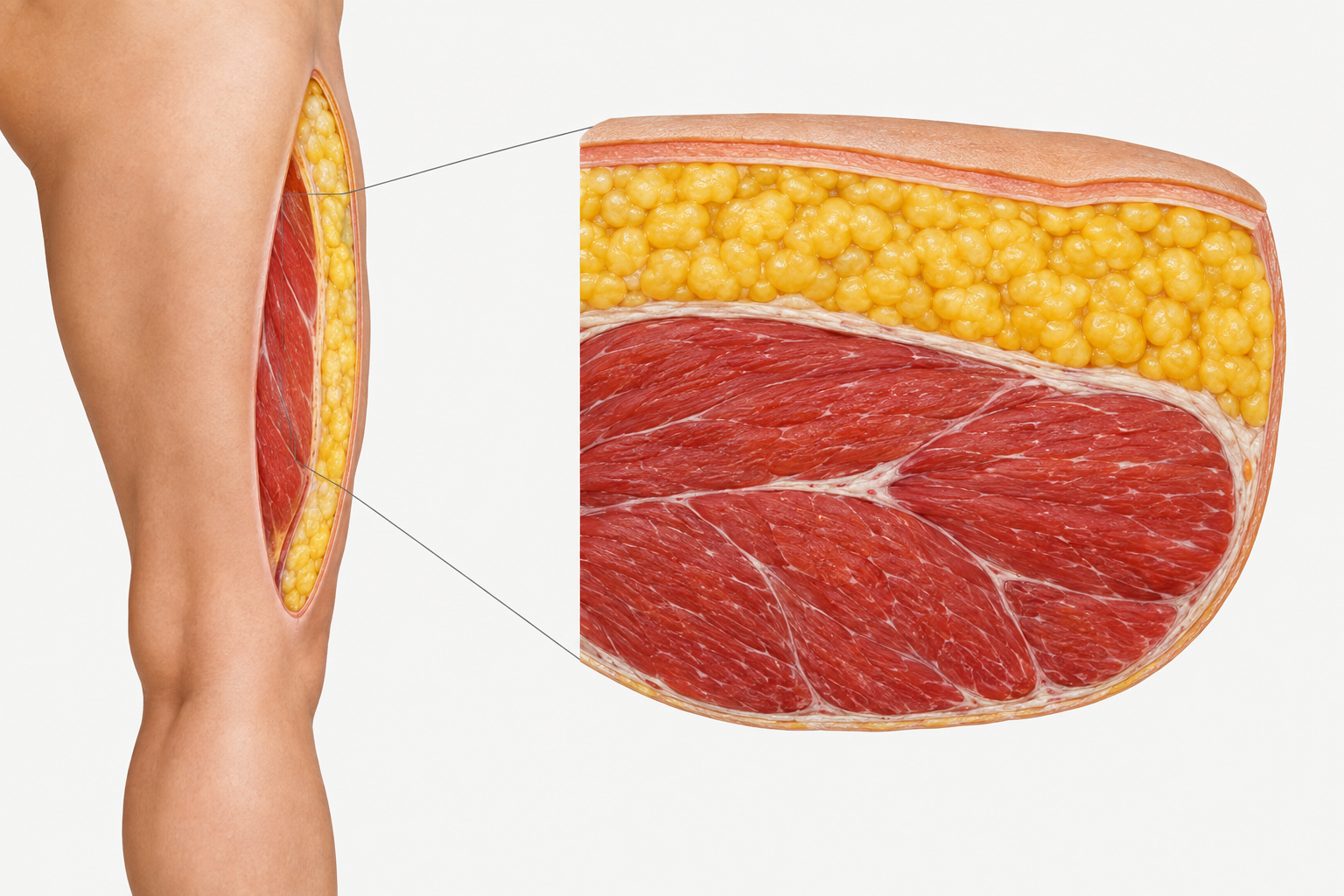

Thigh fat is one of the most common aesthetic concerns for both men and women, and it is also one of the most resistant to diet and exercise alone. Understanding why fat accumulates in the thighs, which approaches may help reduce it, and what realistic outcomes look like can help you make a more informed decision before pursuing any treatment or lifestyle change.
Key Takeaways
- Spot reduction of thigh fat through exercise alone is not supported by evidence; fat loss tends to occur across the body rather than in one targeted area.
- Non-surgical body contouring treatments such as cryolipolysis, radiofrequency, and injectable fat dissolvers may help reduce localised thigh fat in suitable candidates, but results vary and multiple sessions are often needed.
- Surgical options such as liposuction offer more significant fat reduction but carry greater risks and require recovery time.
- No treatment eliminates the need for a healthy lifestyle; body contouring works best as a complement to, not a replacement for, sustainable habits.
- A clinical assessment is essential before choosing any treatment, as suitability depends on individual anatomy, skin quality, and health history.
Why Thigh Fat Is Difficult to Lose
Fat distribution in the body is largely determined by genetics, hormones, and sex. The thighs and hips are common sites of subcutaneous fat storage, particularly in women, due to the influence of oestrogen on adipose tissue distribution. This type of fat sits beneath the skin but above the muscle and tends to be metabolically stable, meaning the body is slower to mobilise it for energy compared with visceral fat stored around the organs. This is why many people find that even with consistent exercise and a calorie-controlled diet, the inner thighs, outer thighs, and saddlebag areas remain stubbornly unchanged.
It is also important to understand that exercise cannot selectively burn fat from one area of the body. Research consistently shows that fat loss occurs systemically in response to an overall energy deficit, not in the specific muscles being worked. Squats and lunges will strengthen and tone the thigh muscles, which can improve the overall appearance of the legs, but they do not directly reduce the overlying fat layer. This distinction matters when evaluating which approaches are likely to produce visible results.
Lifestyle Approaches: What the Evidence Supports
A sustained calorie deficit achieved through a combination of dietary changes and increased physical activity remains the most evidence-based approach to overall fat reduction, including in the thighs. While the rate and pattern of fat loss will vary between individuals, consistent lifestyle changes over time can lead to meaningful reductions in body fat percentage, which may include the thigh area.
Cardiovascular exercise such as walking, cycling, swimming, and running increases overall energy expenditure and supports fat loss when combined with appropriate nutrition. Resistance training, including exercises that target the lower body, helps preserve and build muscle mass, which can improve the shape and definition of the thighs even as fat reduces. A higher proportion of lean muscle mass also supports a higher resting metabolic rate over time.
Dietary approaches that reduce overall calorie intake without eliminating essential nutrients tend to be more sustainable than highly restrictive diets. Reducing ultra-processed foods, added sugars, and excess dietary fat while maintaining adequate protein intake can support both fat loss and muscle preservation. However, the pace of change in the thigh area specifically will depend on individual genetics and hormonal factors, and results are rarely as rapid or as localised as many people hope.
Non-Surgical Body Contouring for the Thighs
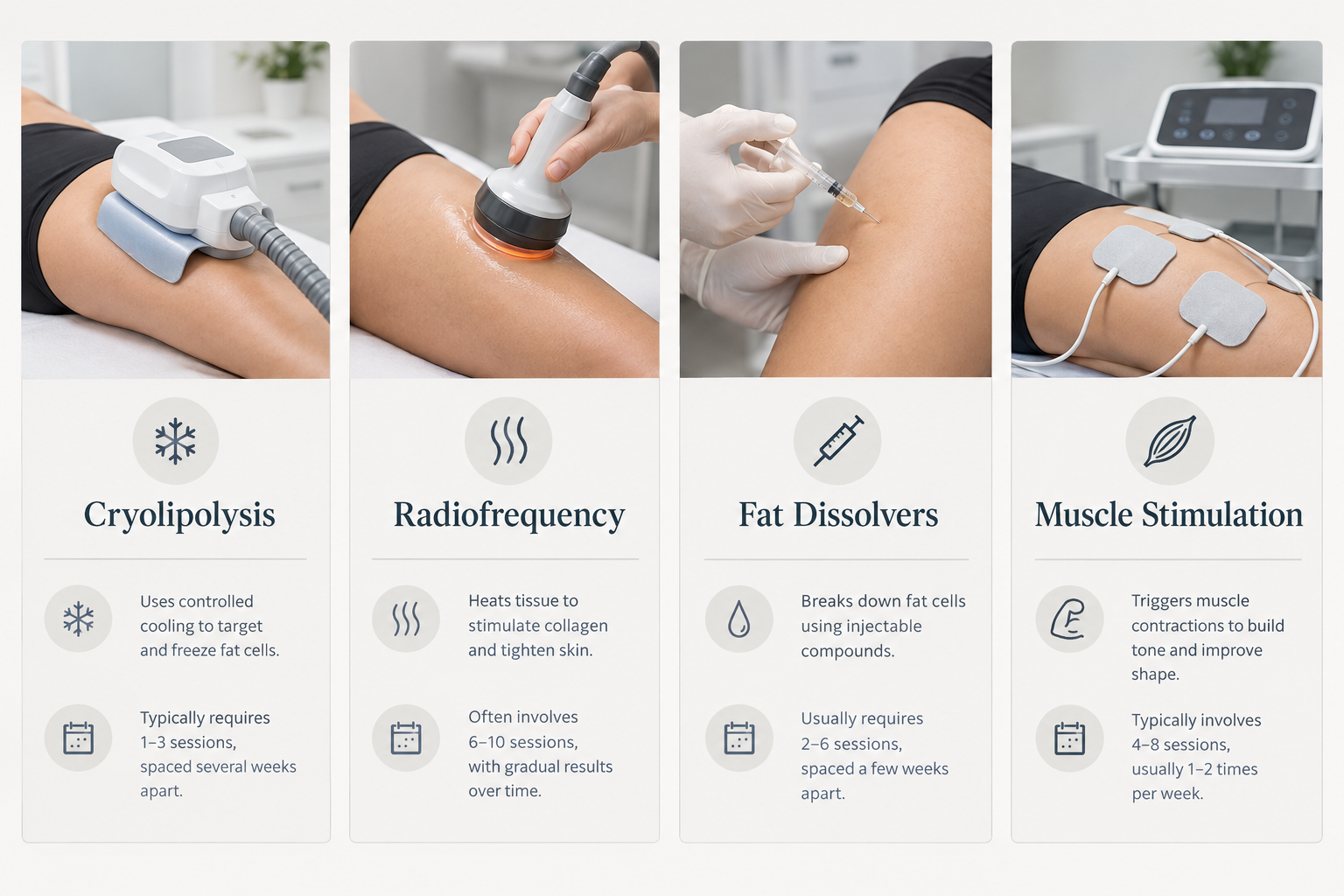
For individuals who have already made meaningful lifestyle changes but continue to have localised areas of thigh fat that do not respond to diet and exercise, non-surgical body contouring treatments may offer an additional option. These treatments are designed to reduce subcutaneous fat in specific areas rather than to produce overall weight loss, and they work best in candidates who are close to their target weight with identifiable pockets of stubborn fat.
Cryolipolysis (Fat Freezing)
Cryolipolysis, commonly known by the brand name CoolSculpting, uses controlled cooling to target and destroy fat cells in a localised area. The device applies a precisely calibrated cold temperature to the treatment area, causing fat cells to undergo a process called apoptosis, or programmed cell death, over the following weeks. The body then gradually clears the damaged fat cells through its natural lymphatic and metabolic processes, with results typically becoming visible over two to four months after treatment.
Cryolipolysis has been studied in clinical trials and is considered an established non-surgical fat reduction method for suitable candidates. It can be applied to the inner thighs and outer thighs, though the anatomy of the area and the amount of pinchable fat available will influence whether the treatment is technically feasible. Common side effects include temporary redness, bruising, numbness, and tenderness in the treated area. A rare but recognised complication called paradoxical adipose hyperplasia, in which the treated area enlarges rather than reduces, has been reported and should be discussed with a practitioner before proceeding.
Radiofrequency and High-Intensity Focused Ultrasound
Radiofrequency (RF) treatments use thermal energy to heat the deeper layers of the skin and subcutaneous tissue, which may help disrupt fat cells and stimulate collagen production. Some RF devices are designed primarily for skin tightening, while others are intended to address both fat reduction and skin laxity simultaneously. This dual effect can be particularly relevant for the thighs, where loose or crepey skin may accompany fat deposits, especially after weight loss.
High-intensity focused ultrasound (HIFU) directs ultrasound energy to a precise depth within the tissue, generating heat that may damage fat cells without affecting the overlying skin. Both RF and HIFU treatments for fat reduction typically require a course of sessions, and results tend to be more modest than those achieved with cryolipolysis or surgical methods. Evidence for their effectiveness in thigh fat reduction specifically is less extensive than for some other body areas, and outcomes vary considerably between individuals.
Injectable Fat Dissolvers
Injectable fat-dissolving treatments use compounds such as deoxycholic acid or phosphatidylcholine-based formulations to break down fat cell membranes in a targeted area. Deoxycholic acid is a bile acid that occurs naturally in the body and disrupts the structural integrity of fat cells when injected into subcutaneous tissue. Once the fat cells are destroyed, the body clears the released lipids over several weeks.
In many countries, deoxycholic acid injections are licensed specifically for submental fat (under the chin), and their use in the thighs would typically be considered off-label. Phosphatidylcholine-based products such as Aqualyx are used in some clinics for body contouring in areas including the thighs, though the regulatory status and evidence base varies by country. Injectable fat dissolvers for the thighs tend to be most appropriate for small, well-defined pockets of fat rather than large areas, and multiple treatment sessions are usually required. Side effects can include significant swelling, bruising, tenderness, and temporary firmness in the treated area.
Muscle Stimulation Devices
Devices such as Emsculpt use high-intensity focused electromagnetic (HIFEM) technology to induce powerful involuntary muscle contractions in the treatment area. These contractions are more intense than those achievable through voluntary exercise and are intended to build muscle mass and improve muscle tone. Some devices combine HIFEM with radiofrequency energy, such as Emsculpt Neo, which aims to simultaneously reduce fat and build muscle.
It is important to distinguish between muscle stimulation and fat reduction. While some HIFEM devices may produce a modest reduction in the subcutaneous fat layer over the treated muscle, their primary intended effect is muscle building and toning rather than significant fat removal. For individuals whose main concern is excess thigh fat rather than muscle definition, a muscle stimulation device alone may not produce the fat reduction they are seeking. These treatments may be more relevant for individuals who want to improve muscle tone in the thighs alongside other fat reduction approaches.
Surgical Options for Thigh Fat Reduction
Liposuction remains the most established surgical method for removing localised deposits of subcutaneous fat, including in the inner thighs, outer thighs, and knee area. The procedure involves making small incisions and using a cannula to suction out fat cells from the targeted area. Various techniques exist, including tumescent liposuction, laser-assisted liposuction, and ultrasound-assisted liposuction, each with slightly different mechanisms and recovery profiles.
Liposuction can produce more significant and immediate fat reduction than non-surgical alternatives, and the results are generally long-lasting because the removed fat cells do not regenerate. However, remaining fat cells can still enlarge with weight gain, so maintaining a stable weight after the procedure is important for preserving results. Liposuction carries the risks associated with any surgical procedure, including infection, scarring, contour irregularities, fluid accumulation, and anaesthetic risks. Recovery typically involves several weeks of reduced activity, compression garment use, and gradual return to normal function.
A thigh lift, or thighplasty, is a more extensive surgical procedure that removes both excess fat and loose skin from the thigh area. It is generally considered for individuals who have significant skin laxity, often following substantial weight loss, rather than for fat reduction alone. The procedure leaves visible scars and requires a longer recovery period than liposuction.
Skin Laxity and the Thighs
Reducing thigh fat, whether through lifestyle changes or treatment, does not automatically improve skin quality. In some cases, particularly when fat loss is significant or occurs rapidly, the skin in the thigh area may appear looser or less firm after treatment. This is because the skin’s ability to contract and adapt depends on its elasticity, which is influenced by age, genetics, sun exposure, and the degree of fat reduction.
For individuals concerned about skin laxity alongside fat reduction, treatments that combine fat reduction with skin tightening, such as certain radiofrequency devices, may be worth discussing with a practitioner. In cases of significant skin excess, surgical skin tightening may be the only option that produces a meaningful improvement in skin contour. A thorough clinical assessment should evaluate both the fat layer and the skin quality before any treatment plan is recommended.
Who May Be Suitable for Thigh Fat Treatments
Non-surgical body contouring treatments for the thighs are generally most appropriate for adults who are at or near a healthy body weight, have identifiable and pinchable areas of localised subcutaneous fat that have not responded to sustained lifestyle changes, have reasonable skin elasticity in the treatment area, and have realistic expectations about the degree of improvement that is achievable without surgery.
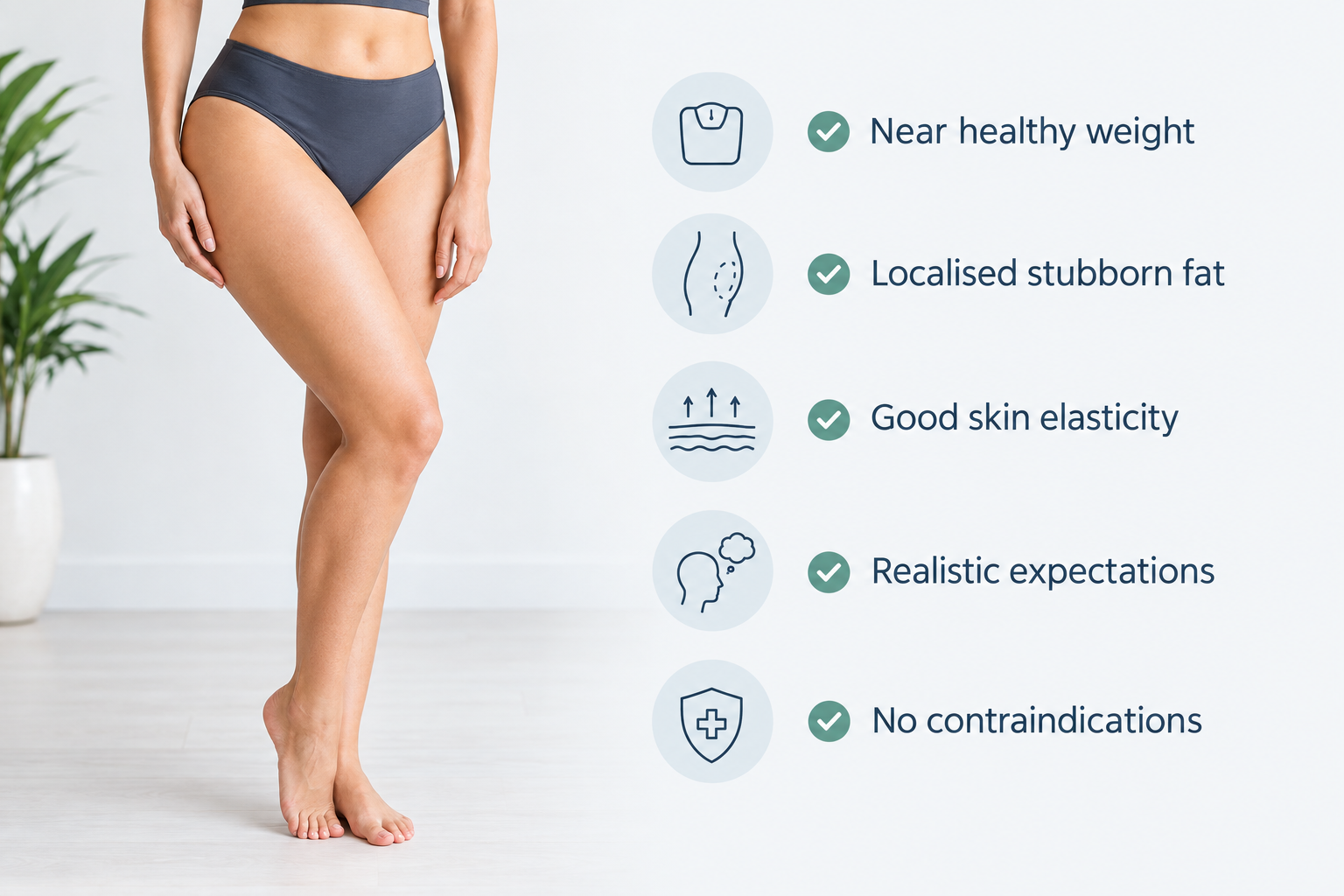
These treatments are not intended as a method of weight loss and are not appropriate for individuals with obesity or those seeking to reduce large volumes of fat. Suitability also depends on individual medical history, including any conditions affecting circulation, nerve function, or immune response, as well as medications and previous procedures in the area. Pregnancy and breastfeeding are contraindications for most body contouring treatments. A qualified practitioner should conduct a thorough assessment before recommending any specific approach.
Risks and Limitations to Consider
Every treatment option for thigh fat reduction carries potential risks and meaningful limitations that should be understood before making a decision. Non-surgical treatments generally carry lower risks than surgery but also tend to produce more modest results. Results from non-surgical body contouring are not guaranteed, vary between individuals, and may require multiple sessions to achieve a visible change. Maintenance may be needed over time, particularly if weight fluctuates.
Surgical options offer greater fat reduction but involve the risks inherent to any operative procedure, including anaesthetic complications, infection, haematoma, seroma, nerve damage, and contour irregularities. The thigh area can be technically challenging for liposuction due to the proximity of important anatomical structures and the tendency for the skin in this region to show surface irregularities after treatment.
It is also worth noting that no treatment can change the underlying genetic tendency to store fat in the thighs. Significant weight gain after any fat reduction treatment can diminish or reverse the results, as remaining fat cells in the area can enlarge. Managing expectations and understanding the role of ongoing lifestyle habits is an important part of any treatment discussion.
Frequently Asked Questions
Can you target thigh fat specifically with exercise?
Spot reduction of fat through targeted exercise is not supported by scientific evidence. Exercises that work the thigh muscles will improve muscle tone and strength in that area, but fat loss occurs across the body in response to an overall energy deficit rather than in the specific area being exercised. A combination of cardiovascular exercise and resistance training, alongside appropriate nutrition, supports overall fat reduction that may include the thighs over time.
How many sessions of non-surgical treatment are typically needed?
The number of sessions required depends on the specific treatment, the size of the area being treated, and the individual’s response. Cryolipolysis may produce noticeable results after one or two sessions per area, while injectable fat dissolvers and radiofrequency treatments often require three to six or more sessions. A practitioner should provide a realistic treatment plan based on your individual assessment rather than a fixed number.
How long do results from non-surgical thigh fat reduction last?
When fat cells are destroyed by treatments such as cryolipolysis or injectable fat dissolvers, those specific cells do not return. However, the remaining fat cells in the area can still enlarge with weight gain, which can reduce or reverse the visible improvement. Maintaining a stable weight after treatment is important for preserving results. Skin tightening effects from radiofrequency treatments may diminish over time as the natural ageing process continues.
Is liposuction on the thighs permanent?
Liposuction removes fat cells from the treated area, and those cells do not regenerate. In this sense, the reduction in fat cell number is permanent. However, the remaining fat cells in the thighs and elsewhere in the body can still increase in size if overall body weight increases significantly after the procedure. Maintaining a stable weight is therefore important for preserving the results of liposuction.
Are fat-dissolving injections safe for the thighs?
Injectable fat dissolvers used in the thighs, such as phosphatidylcholine-based products, are used in clinical practice in some countries but may be considered off-label use depending on local regulations. Side effects including swelling, bruising, tenderness, and temporary firmness are common and can be pronounced in the thigh area. Serious complications are less common but possible. The safety and appropriateness of these treatments should be discussed with a qualified and experienced practitioner who can assess your individual suitability.
Will reducing thigh fat improve cellulite?
Cellulite is caused by the structural arrangement of fibrous connective tissue bands beneath the skin, which pull the skin surface downward and create a dimpled appearance. It is distinct from the overall volume of subcutaneous fat, and reducing fat in the thighs does not reliably improve cellulite. Some treatments specifically designed to address the fibrous bands, such as subcision or certain radiofrequency devices, may improve the appearance of cellulite, but this is a separate concern from fat reduction and should be discussed as a distinct treatment goal.
Making an Informed Decision About Thigh Fat Reduction
Reducing thigh fat is achievable for many people, but the most appropriate approach depends on how much fat is present, the quality of the overlying skin, individual health factors, and what level of change is realistic given the available options. For most people, a sustained commitment to a healthy diet and regular physical activity remains the foundation of any fat reduction effort, and non-surgical or surgical treatments work best when used to address residual localised fat rather than as a primary weight loss strategy.
If you are considering a clinical treatment for thigh fat, a consultation with a qualified aesthetic practitioner or plastic surgeon is an important first step. A thorough assessment of your anatomy, skin quality, medical history, and goals will help determine which options, if any, are appropriate for you and what realistic outcomes you might expect. Approaching the decision with accurate information and balanced expectations gives you the best foundation for a result you will be satisfied with.
