

Tess Daly has been one of the most recognisable faces on British television for over two decades, co-hosting Strictly Come Dancing from its debut in 2004 until her departure in 2025. Throughout that time, speculation about cosmetic surgery has followed her persistently — yet the reality is more nuanced than most celebrity gossip articles suggest. Tess has publicly confirmed one non-invasive skin treatment, spoken openly about her skincare philosophy, and consistently denied going under the knife. This article separates what is confirmed from what remains unverified speculation, explains the treatment she has acknowledged, and provides context for anyone curious about how she maintains a youthful appearance at 57.
Key Takeaways
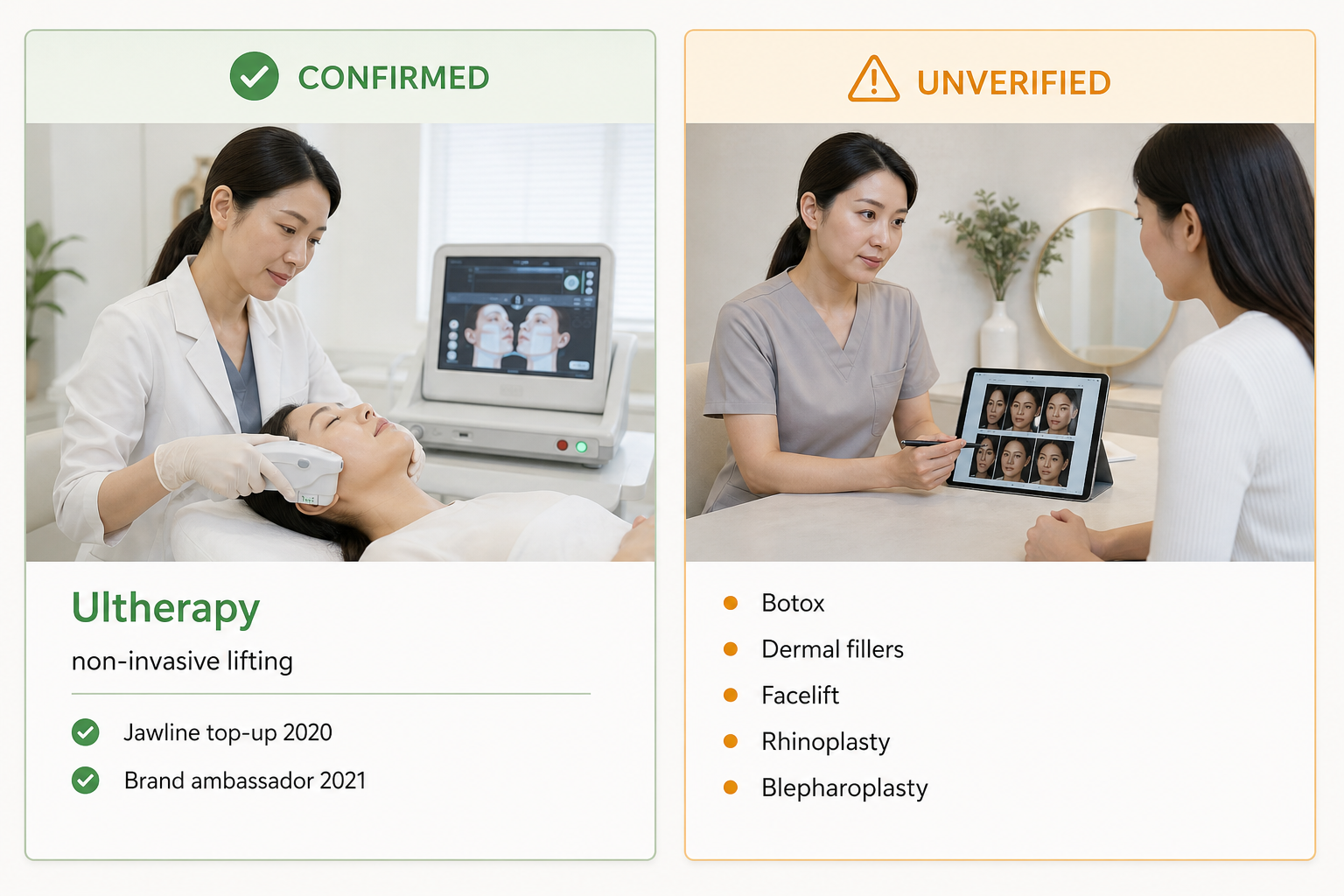
- Tess Daly has publicly confirmed undergoing Ultherapy, a non-invasive skin tightening and lifting treatment — this is the only cosmetic procedure she has acknowledged.
- Rumours of Botox, dermal fillers, facelift, rhinoplasty, and blepharoplasty remain unverified speculation; Tess has not confirmed any of these.
- She became an Ultherapy brand ambassador in 2021 after being impressed with her own results, having first undergone the treatment approximately 18 months prior.
- Her youthful appearance at 57 is attributed by Tess herself to consistent skincare habits, SPF use, gut health, and moderate exercise — alongside her confirmed Ultherapy treatment.
- Responsible commentary on celebrity appearance requires clearly distinguishing confirmed facts from unverified claims, which most existing coverage fails to do.
Has Tess Daly Had Plastic Surgery? Separating Fact from Rumour
The short answer is that Tess Daly has not publicly confirmed any surgical cosmetic procedure. Rumours circulating online — including speculation about a facelift, rhinoplasty (nose job), and blepharoplasty (eyelid surgery) — are based on visual comparisons and forum commentary rather than any statement from Tess or a verified clinical source. Celebrity surgery tracking sites list these procedures as unconfirmed or not applicable. Without a reliable public statement or credible clinical disclosure, these claims remain unverified speculation and should be treated as such.
What Tess has confirmed is a non-invasive skin treatment: Ultherapy. This is a meaningful distinction. Ultherapy does not involve incisions, anaesthesia, or surgical recovery. It is a collagen-boosting ultrasound treatment designed to lift and tighten skin without the risks or downtime associated with surgery. Tess has spoken about it in interviews with publications including The Telegraph and has been transparent about her experience — which is precisely why it stands apart from the rumours surrounding her appearance.
It is also worth noting the cultural context. Public commentary on Tess’s face has ranged from admiring to critical, with some online observers describing her skin as appearing unusually smooth for her age. Such observations are not clinical assessments. A face that looks well-rested and luminous can reflect good skincare, professional make-up, lighting, and non-surgical treatments — none of which require going under the knife.
Confirmed vs. Rumoured Procedures: A Clear Overview
| Procedure | Status | Source |
|---|---|---|
| Ultherapy (non-invasive lifting) | Confirmed by Tess Daly | The Telegraph interview; Ultherapy ambassadorship (2021) |
| Botox (botulinum toxin) | Unverified speculation | Online forums; no public confirmation from Tess |
| Dermal fillers | Unverified speculation | Online forums; no public confirmation from Tess |
| Facelift (rhytidectomy) | Unverified speculation | Listed as N/A on celebrity surgery tracking sites |
| Rhinoplasty (nose job) | Unverified speculation | Listed as N/A on celebrity surgery tracking sites |
| Blepharoplasty (eyelid surgery) | Unverified speculation | Listed as N/A on celebrity surgery tracking sites |
This table reflects publicly available information as of late 2026. Absence of confirmation is not the same as denial, and individuals are under no obligation to disclose cosmetic treatments. However, responsible reporting requires acknowledging what is known versus what is assumed.
Tess Daly and Ultherapy: What She Actually Confirmed
Tess Daly’s connection to Ultherapy is the most substantiated element of any discussion about her appearance. She underwent her first Ultherapy treatment approximately 18 months before speaking publicly about it, and later had a smaller follow-up treatment focused on her jawline in November 2020. The results impressed her sufficiently that she became the official Ultherapy brand ambassador in 2021 — a role that involved speaking openly about the treatment rather than keeping it private.
In an interview with The Telegraph’s beauty director, Tess — who was 52 at the time — described her experience with the treatment at The Cosmetic Skin Clinic, which has been recognised as a leading Ultherapy provider in the UK. She noted that as someone constantly in the public eye, she could not afford the downtime associated with more aggressive skin treatments, making a non-invasive option particularly appealing. Her decision to speak about it publicly reflects a broader shift in attitudes: getting some work done is no longer the taboo subject it once was, and Tess’s transparency helped normalise the conversation around non-surgical cosmetic procedures.
The jawline top-up she mentioned is consistent with how Ultherapy is typically used in clinical practice — an initial full-face or targeted treatment followed by maintenance sessions to address specific areas of concern as collagen production continues to evolve over several months.
What Is Ultherapy and How Does It Work?
Ultherapy is a non-invasive skin treatment that uses focused ultrasound energy to stimulate the body’s own collagen production in the deeper layers of the skin and underlying tissue. Unlike laser treatments, which work at the skin’s surface, Ultherapy targets the same foundational layer addressed in surgical facelifts — the superficial musculoaponeurotic system (SMAS) — without any incisions. This makes it a genuinely distinct option from surgical lifting procedures.
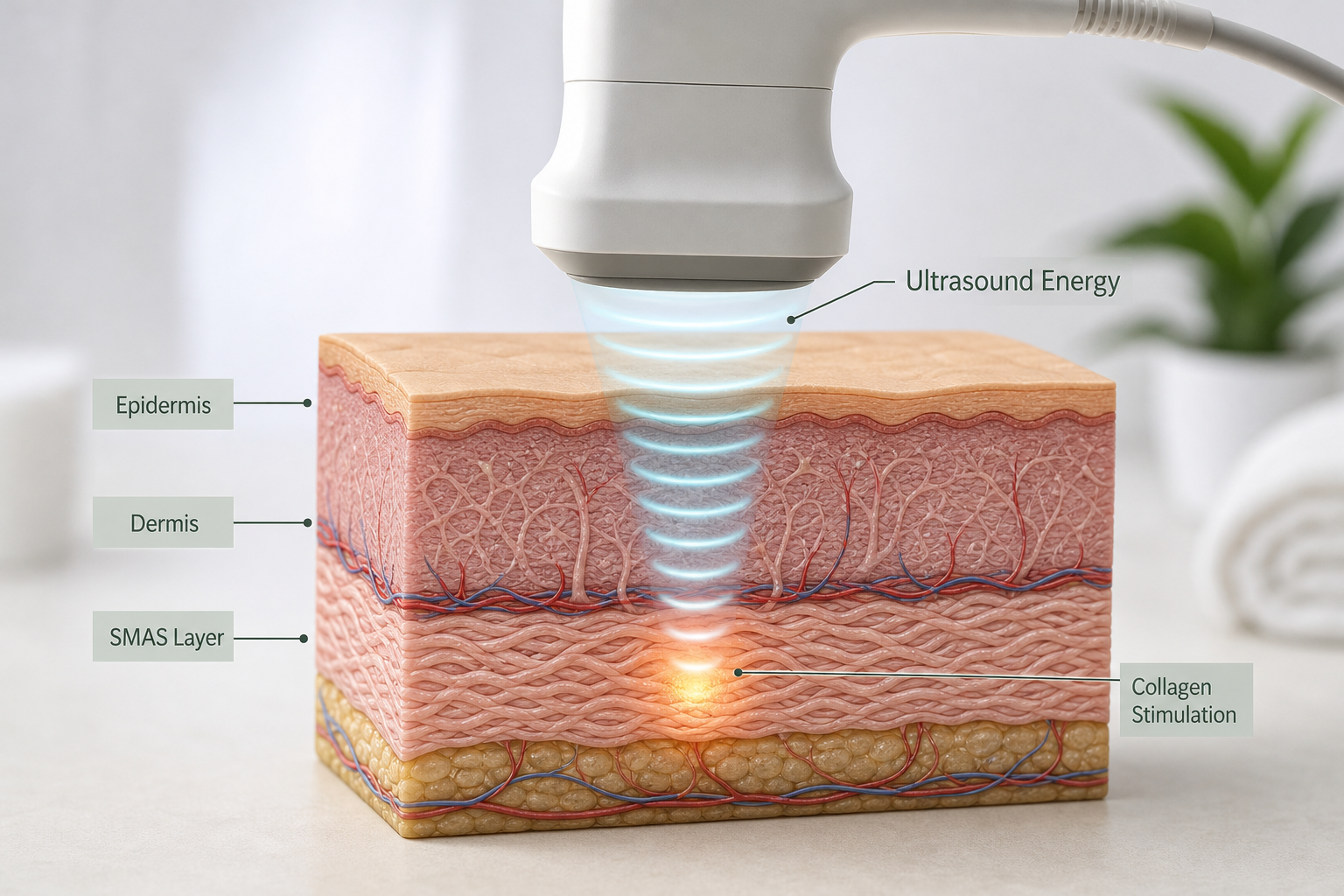
During an Ultherapy session, a handheld device delivers precise ultrasound energy to targeted depths beneath the skin. The controlled thermal effect triggers a natural wound-healing response, prompting the body to produce new collagen over the following weeks and months. Patients typically begin to notice skin tightening and lifting effects gradually, with results often becoming more apparent two to three months after treatment and continuing to develop for up to six months. Because the improvement is driven by the body’s own biological processes rather than an injected substance or implant, results tend to appear natural rather than dramatically altered.
Ultherapy is most commonly used on the face, neck, and décolletage. It is particularly suited to patients experiencing mild to moderate skin laxity who want skin rejuvenation without surgical downtime. It is not a replacement for a surgical facelift in cases of significant tissue laxity, and results vary depending on the individual’s skin condition, age, and the area treated. A single session is often sufficient for initial treatment, with maintenance sessions recommended as the natural ageing process continues.
In terms of the treatment experience, Ultherapy can cause discomfort during the procedure — patients often describe a warming or prickling sensation as the ultrasound energy is delivered. Temporary redness, mild swelling, or tingling may occur after the session, but these effects typically resolve within a few hours to days. There is no significant downtime, which aligns with Tess Daly’s stated reason for choosing it over more invasive options.
The Botox and Filler Speculation: What the Evidence Actually Shows
Botulinum toxin treatments (commonly referred to by the brand name Botox) and dermal fillers are among the most widely speculated-about cosmetic procedures when it comes to any television presenter who appears to age slowly. In Tess Daly’s case, online commentary has suggested she may use one or both — but she has not confirmed this, and no credible clinical source has verified it.
It is worth understanding why such speculation is so common. Botulinum toxin relaxes the muscles responsible for dynamic wrinkles — lines that form through repeated facial expressions such as frowning or squinting. When used conservatively, the results can be subtle enough that observers notice a smoother appearance without being able to identify a specific treatment. Dermal fillers, meanwhile, restore volume to areas that lose fullness with age, such as the cheeks, temples, and lips. Again, when administered by an experienced practitioner, the outcome can look entirely natural.
The absence of visible lines or wrinkles that some observers have commented on in Tess’s appearance could reflect botulinum toxin use — but it could equally reflect consistent SPF use since her modelling days, professional make-up application, good genetics, and the collagen-stimulating effects of Ultherapy. Attributing a smooth complexion to a specific injectable treatment without confirmation is not clinically sound reasoning. An independent cosmetic surgeon assessing photographs rather than examining a patient in person cannot reliably determine which treatments, if any, have been used.
Tess Daly’s Skincare Routine and Beauty Philosophy
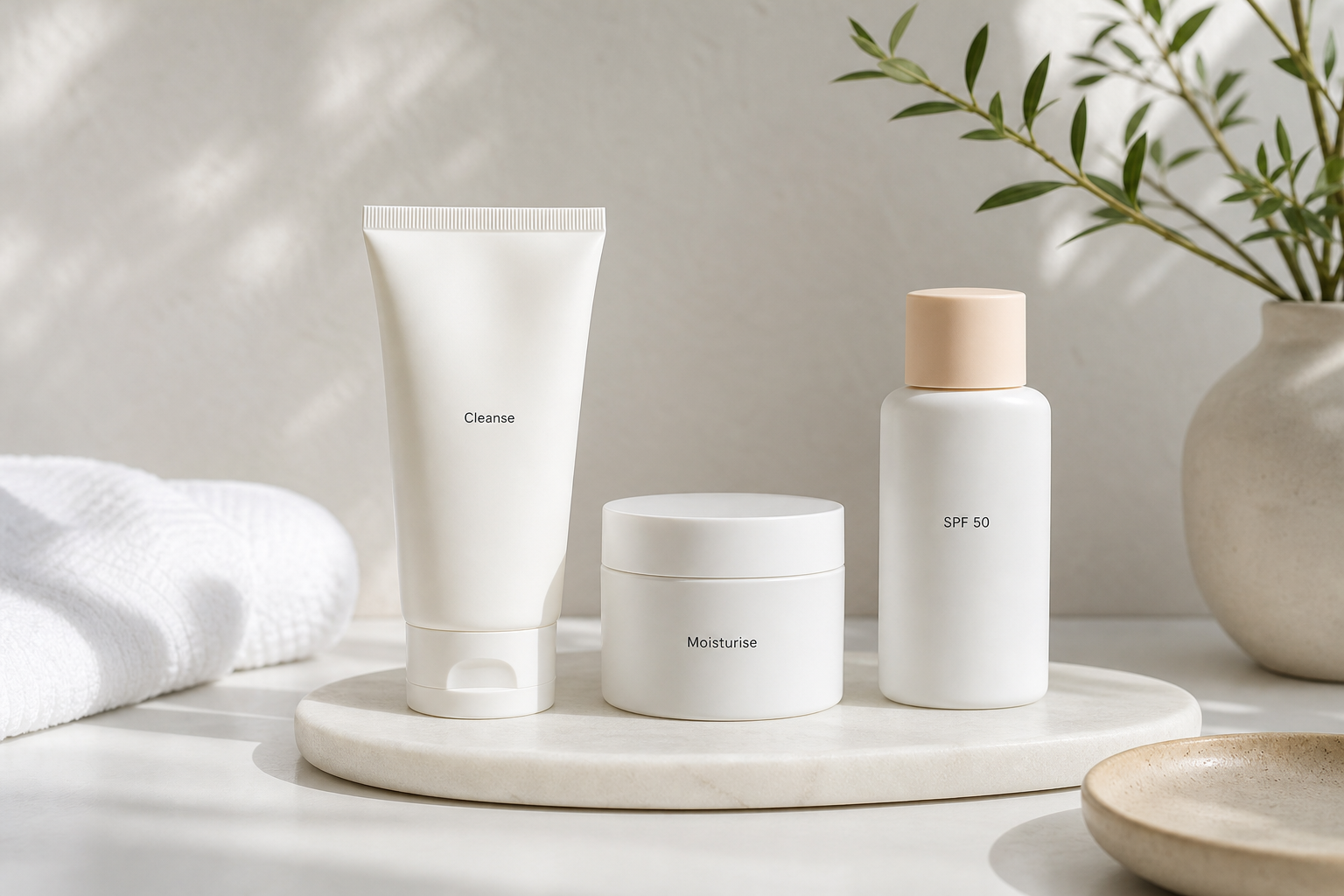
Tess Daly has spoken about her skincare approach in several interviews, and her habits are notably consistent and unglamorous. She has described her daily routine as “dead basic” — focused on cleansing, moisturising, and above all, sun protection. She credits make-up artists she worked with during her modelling career, which began at age 17, for instilling the importance of keeping skin clean and well-hydrated.
SPF is her self-described number-one product. She has specifically mentioned La Roche-Posay Anthelios SPF 50 as a staple, and her commitment to daily sun protection is consistent with dermatological evidence that ultraviolet exposure is one of the primary drivers of visible skin ageing. Regular, high-factor SPF use from an early age can meaningfully reduce the accumulation of UV-related skin damage over decades — which may partly explain why her skin appears well-preserved relative to her age.
Beyond topical skincare, Tess has spoken about being “big into gut health” and maintaining a balanced lifestyle. She exercises for less than an hour, twice a week, and allows herself a glass of wine at weekends — an approach she describes as sustainable rather than extreme. This kind of moderate, consistent lifestyle is broadly consistent with what dermatologists and general practitioners recommend for overall skin health, even if it is not a substitute for clinical treatment when skin laxity becomes a concern.
Her skincare philosophy, combined with her confirmed Ultherapy treatment, presents a coherent picture: a person who has invested in preventive skincare habits over many years and has supplemented those habits with a targeted non-invasive skin treatment when she felt it was appropriate. This is a realistic and achievable approach for many people, and it does not require surgery.
How Tess Daly’s Approach Compares to Other UK TV Presenters
Tess Daly is not alone among UK television presenters in being open about non-surgical cosmetic treatments. The broader cultural shift away from secrecy around aesthetic procedures has been visible across the industry. Simon Cowell has publicly acknowledged using Botox and fillers. Amanda Holden and Davina McCall have both spoken about their skincare regimens and, in some cases, non-surgical treatments. Holly Willoughby has faced similar appearance-related speculation throughout her career.
What distinguishes Tess Daly’s situation is the specificity of her disclosure. Rather than speaking vaguely about “looking after herself,” she named a specific treatment, described her experience, and became a brand ambassador — a level of transparency that is relatively uncommon. This makes her case useful as a reference point for understanding the difference between confirmed cosmetic enhancements and the unverified speculation that surrounds most public figures.
The broader pattern among UK presenters suggests that non-invasive treatments are increasingly the preferred option for those who want to maintain their appearance without the risks or recovery time of surgery. Skin tightening and lifting treatments, collagen-boosting procedures, and professional skincare regimens are now mainstream topics rather than whispered secrets — a shift that benefits patients by making it easier to have informed conversations with qualified practitioners.
Why Celebrity Cosmetic Surgery Rumours Persist — and Why They Matter
Celebrity beauty speculation is among the most consistently popular content online, and the reasons are understandable. Public figures are seen regularly over many years, making changes in their appearance more noticeable than they might be for private individuals. Social media amplifies before and after transformation comparisons, and the availability of high-resolution images makes it easier to scrutinise faces in detail.
However, this scrutiny carries risks. Attributing a person’s appearance to specific surgical procedures without evidence can be inaccurate, unfair, and potentially harmful — both to the individual being discussed and to readers who may draw unrealistic conclusions about what surgery can or cannot achieve. When a celebrity’s smooth skin is attributed to a facelift they have not confirmed, it can create a distorted impression of what surgical procedures look like in practice, and may discourage people from considering the non-surgical options that are actually responsible for the results they admire.
From a clinical perspective, the more useful question is not “has this person had surgery?” but rather “what treatments and habits contribute to healthy, well-maintained skin at this age?” That question has more actionable answers — and in Tess Daly’s case, those answers include consistent SPF use, a simple but disciplined skincare routine, and a clinically recognised non-invasive skin treatment.
Frequently Asked Questions
Has Tess Daly had Botox?
Tess Daly has not publicly confirmed receiving botulinum toxin injections. Online speculation exists, but without a statement from Tess or a verified clinical source, this remains unverified. Her smooth complexion may reflect a combination of consistent SPF use, professional skincare, and her confirmed Ultherapy treatment rather than injectables.
What is Ultherapy and does it work?
Ultherapy is a non-invasive skin tightening and lifting treatment that uses focused ultrasound energy to stimulate collagen production in the deeper layers of the skin. Clinical evidence supports its effectiveness for mild to moderate skin laxity, particularly on the face, neck, and décolletage. Results develop gradually over two to six months and vary between individuals. It is not equivalent to a surgical facelift for significant tissue laxity.
How does Tess Daly look so young at 57?
Based on her own public statements, Tess attributes her appearance to consistent daily skincare — particularly SPF use since her modelling days — a balanced lifestyle, gut health awareness, and her confirmed Ultherapy treatment. Good genetics and professional make-up also play a role that is difficult to separate from any clinical treatment.
Has Tess Daly confirmed any cosmetic procedures?
Yes. Tess Daly has confirmed undergoing Ultherapy, a non-invasive collagen-boosting ultrasound treatment. She had her first session approximately 18 months before speaking publicly about it, followed by a jawline top-up in November 2020. She became the official Ultherapy brand ambassador in 2021. No surgical procedures have been confirmed.
What is The Cosmetic Skin Clinic?
The Cosmetic Skin Clinic is a UK aesthetic clinic where Tess Daly underwent her Ultherapy treatment. It has been recognised as a leading provider of Ultherapy in the UK. Tess’s association with the clinic became public when she spoke about her treatment experience in an interview with The Telegraph.
Is Ultherapy painful?
Ultherapy can cause discomfort during the procedure, often described as a warming or prickling sensation as the ultrasound energy is delivered to deeper tissue layers. The level of discomfort varies between individuals and treatment areas. Temporary redness, mild swelling, or tingling may occur after the session but typically resolve within hours to a few days. There is no significant downtime.
Could I achieve similar results to Tess Daly without surgery?
Non-invasive treatments such as Ultherapy, combined with a consistent skincare routine and daily SPF use, can produce meaningful improvements in skin quality and firmness for many people. However, results depend on individual factors including skin condition, age, and the degree of laxity present. A consultation with a qualified aesthetic practitioner is the appropriate starting point for assessing which treatments may be suitable for your specific concerns.
What Tess Daly’s Story Can Teach Us About Non-Surgical Skin Care
Tess Daly’s approach to her appearance offers a useful case study in the difference between surgical and non-surgical cosmetic care. She has maintained a youthful appearance at 57 through a combination of disciplined preventive skincare, a balanced lifestyle, and a targeted non-invasive skin treatment — without, as far as the public record shows, going under the knife. Her transparency about Ultherapy has helped shift the conversation around celebrity beauty secrets from speculation to something more grounded and informative.
For anyone considering non-invasive skin treatments, the key lesson is that results are most convincing when they build on a foundation of good skincare habits rather than replacing them. Ultherapy and similar collagen-boosting treatments work with the body’s own biology, which means the quality of the skin being treated matters. Starting with consistent SPF use, adequate hydration, and a simple cleansing routine creates the conditions in which non-invasive treatments can deliver their best outcomes.
If you are curious about whether a non-invasive skin tightening treatment such as Ultherapy might be appropriate for your concerns, a consultation with a qualified aesthetic practitioner is the right first step. A practitioner can assess your skin condition, discuss realistic expectations, and recommend a treatment plan tailored to your individual needs — rather than one based on what worked for a celebrity with a different skin type, age, and starting point.
