

Laser treatment for dark spots has become one of the most requested procedures in aesthetic medicine, yet the range of available technologies — each with different wavelengths, pulse durations, and ideal candidates — can make choosing the right option genuinely confusing. This guide explains how pigment-targeting lasers work, which technologies are best suited to specific conditions and skin tones, and what realistic outcomes look like, so you can approach a consultation with a clearer picture of what to expect.
Key Takeaways
- Different laser technologies target pigment at different skin depths — matching the right wavelength to your specific condition and Fitzpatrick skin type is essential for both safety and effectiveness.
- Picosecond lasers and Q-switched Nd:YAG lasers are currently the most widely used options for hyperpigmentation, each with distinct advantages depending on the concern being treated.
- Melasma is a chronic, relapsing condition — laser is an adjunct to management, not a permanent cure, and carries a real risk of rebound hyperpigmentation if not approached carefully.
- People with darker skin tones can be treated safely, but technology selection, energy settings, and provider experience are critical factors that require careful clinical assessment.
- Consistent broad-spectrum SPF use before and after treatment is not optional — new spots will form without ongoing sun protection regardless of how successful the laser sessions are.
How Lasers Target Pigment in the Skin
The scientific principle underlying all pigment-targeting laser treatments is selective photothermolysis — the ability to deliver a specific wavelength of light that is preferentially absorbed by a target chromophore (in this case, melanin) while leaving surrounding tissue largely unaffected. When melanin absorbs the laser energy, it heats rapidly. If the pulse duration is shorter than the thermal relaxation time of the pigment particle — the time it takes to dissipate heat — the energy is confined to the target rather than spreading to adjacent skin.
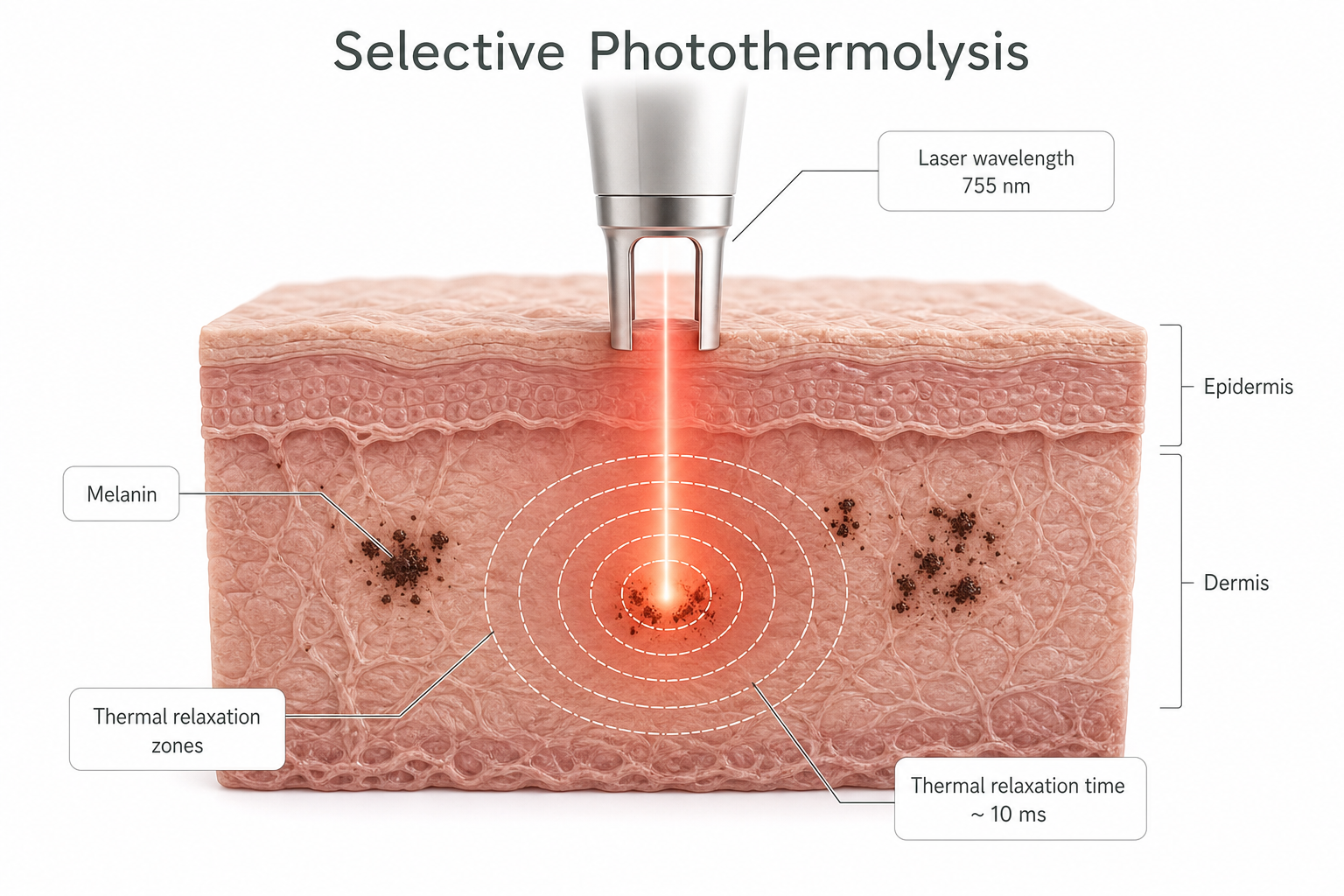
Older nanosecond-range lasers, such as Q-switched devices, rely primarily on this photothermal mechanism to shatter pigment granules into smaller fragments that the body’s lymphatic system can then clear. Newer picosecond lasers operate on an even shorter pulse duration, generating a photoacoustic shattering effect — a pressure wave that mechanically fragments melanin particles into finer dust-like pieces, often with less heat deposited in surrounding tissue. In practical terms, this can mean a reduced risk of thermal side effects, though it does not eliminate them entirely.
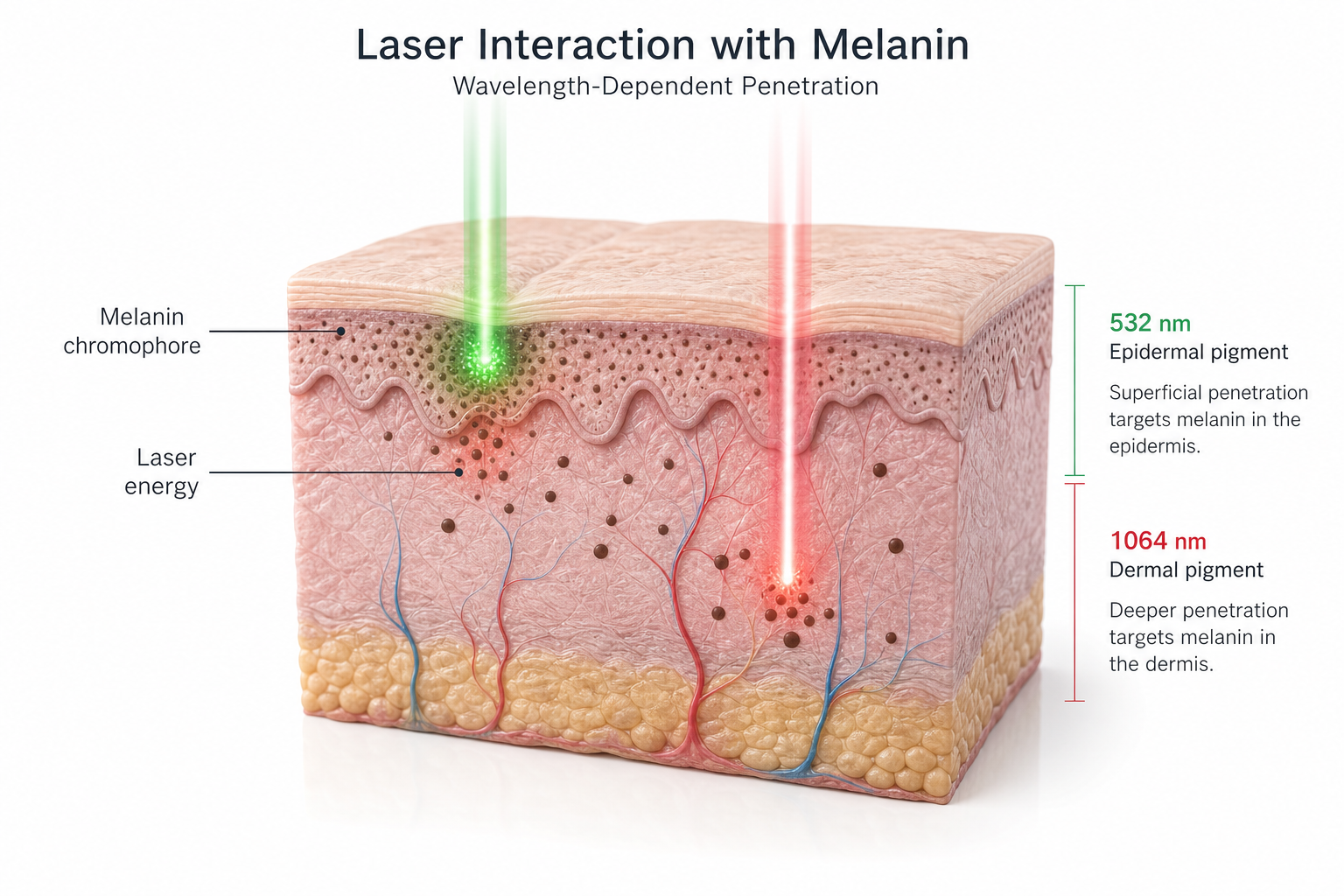
The wavelength chosen also determines how deeply the laser energy penetrates. Shorter wavelengths such as 532 nm are absorbed strongly by superficial melanin in the epidermis, making them well suited to flat, surface-level spots. Longer wavelengths such as 1064 nm pass through the epidermis with less absorption and reach the dermis, where deeper pigment deposits — such as those found in certain birthmarks or dermal melasma — reside. Understanding this epidermal vs. dermal pigment distinction is one of the most clinically important factors in treatment planning, yet it is rarely explained clearly to patients.
Types of Laser and Light Technologies for Dark Spots
Several distinct technologies are used to treat hyperpigmentation, and they are not interchangeable. The table below summarises the main options, their primary mechanisms, and their general suitability.
| Technology | Wavelength(s) | Pulse Duration | Best Suited For | Skin Type Caution | Typical Downtime |
|---|---|---|---|---|---|
| Q-switched Nd:YAG | 1064 nm / 532 nm | Nanosecond | Solar lentigines, dermal pigment, laser toning for melasma | Relatively safe for darker tones at 1064 nm | 3–7 days (crusting) |
| Picosecond Nd:YAG / Alexandrite | 1064 nm / 755 nm / 532 nm | Picosecond | Stubborn pigment, melasma adjunct, PIH, freckles | Emerging evidence for darker skin; provider skill critical | 1–5 days |
| Ruby laser | 694 nm | Nanosecond / Q-switched | Ephelides, solar lentigines, Nevus of Ota | Higher PIH risk in Fitzpatrick IV–VI | 5–10 days |
| Fractional non-ablative (e.g. Fraxel 1550 nm) | 1550 nm / 1927 nm | Millisecond | Diffuse pigmentation, skin texture, actinic damage | Use with caution in darker phototypes | 3–7 days |
| IPL (Intense Pulsed Light) | 515–1200 nm (broadband) | Millisecond | Mild sun spots, redness, diffuse photodamage in fair skin | Higher risk in Fitzpatrick IV–VI; not recommended | 3–5 days |
| Fractional CO₂ / Erbium | 10,600 nm / 2940 nm | Millisecond | Skin resurfacing, actinic lentigos, texture | Significant PIH risk in darker skin; generally avoided | 7–14+ days |
Q-Switched Nd:YAG Laser
The Q-switched Nd:YAG laser remains one of the most widely used devices for pigmentation globally, partly because its 1064 nm wavelength is less aggressively absorbed by epidermal melanin, making it comparatively safer across a broader range of skin tones. At 532 nm, the same device targets superficial pigment more selectively, which is useful for lighter-skinned patients with discrete solar lentigines or age spots. A technique called low-fluence laser toning — delivering multiple passes at lower energy settings — has been used as an adjunct for melasma, though evidence for its long-term efficacy remains mixed and the risk of paradoxical depigmentation with repeated sessions is a recognised concern.
Picosecond Lasers
Picosecond devices such as PicoSure (755 nm alexandrite) and PicoWay (1064 nm and 532 nm Nd:YAG) have expanded the treatment options available for complex pigmentary disorders. The ultrashort pulse duration generates the photoacoustic shattering effect described above, which may fragment melanin more efficiently and with less collateral thermal damage than nanosecond devices. A 2025 clinical review noted promising outcomes for picosecond lasers in treating difficult pigmentation including post-inflammatory hyperpigmentation and certain dermal lesions, though the authors emphasised that evidence quality varies and that results depend heavily on the specific condition, wavelength used, and patient skin type. Emerging wavelengths such as 675 nm and 785 nm picosecond options are being investigated for melasma and pigmentation in darker skin tones, though these remain less established in routine clinical practice.
IPL Is Not a Laser — An Important Distinction
Intense Pulsed Light (IPL) is frequently grouped with laser treatments, but the two are fundamentally different. A laser emits a single, coherent wavelength of light that can be precisely calibrated to a specific chromophore. IPL emits a broad spectrum of light across multiple wavelengths simultaneously, relying on filters to reduce — but not eliminate — off-target absorption. This makes IPL less selective than a true laser. For patients with fair skin and mild, diffuse sun damage or redness, IPL can be a reasonable option. However, for patients with skin of color or Fitzpatrick types IV–VI, IPL carries a meaningfully higher risk of burns, blistering, and post-inflammatory hyperpigmentation (PIH) and is generally not recommended for these individuals. Understanding this distinction before booking a treatment is important.
Matching the Right Laser to Your Pigmentation Concern
Solar Lentigines and Age Spots
Solar lentigines — commonly called sun spots, age spots, or liver spots — are flat, well-defined patches of excess melanin caused by cumulative UV exposure. They are typically epidermal, making them among the most straightforward pigmentation concerns to treat with laser. Q-switched devices at 532 nm or 1064 nm, picosecond lasers, and even IPL (in suitable skin types) can produce significant clearance, often within one to three sessions. Patients should expect temporary darkening and crusting of the treated spots over the first seven to fourteen days — a normal part of the process as fragmented pigment rises to the surface before flaking away. This temporary darkening is not a sign of worsening; it reflects the body beginning to clear the disrupted melanin.
Melasma
Melasma deserves particular attention because it is frequently misrepresented as straightforwardly treatable by laser. In reality, melasma is a chronic, relapsing condition driven by a combination of UV exposure, heat, hormonal influences, and genetic predisposition. The melanocyte cells responsible for melasma are inherently more reactive than those producing simple sun spots, and any stimulus — including laser heat — can trigger a flare. This means laser is best approached as one component of a broader combination protocol that typically includes topical agents such as hydroquinone, tranexamic acid, kojic acid, or retinoids, alongside strict broad-spectrum SPF use.
Low-fluence Q-switched Nd:YAG toning has been used for melasma, particularly in Asian skin types, with variable results. Picosecond lasers are increasingly used as an adjunct, with some studies showing improvement when combined with topical therapy. However, rebound hyperpigmentation — a worsening of melasma following laser treatment — is a well-documented risk, particularly when energy settings are too aggressive or when post-treatment sun protection is inadequate. Patients with melasma should be counselled that laser may improve the appearance of their pigmentation but is unlikely to produce permanent clearance without ongoing management.
Post-Inflammatory Hyperpigmentation (PIH)
Post-inflammatory hyperpigmentation develops after skin injury or inflammation — acne, eczema, insect bites, or previous cosmetic procedures — and is particularly common in individuals with Fitzpatrick types III–VI. Treating PIH with laser requires considerable care because the laser itself is a form of skin injury that can generate new PIH if settings are not appropriate. Picosecond lasers at 1064 nm are generally considered among the safer options for PIH in darker skin tones, and the 1927 nm thulium fractional laser has shown promise in clinical studies for PIH in skin of color, though evidence remains developing. Topical agents are often the first-line approach, with laser reserved for cases that have not responded adequately.
Freckles, Café au Lait Spots, and Deeper Lesions
Freckles (ephelides) are superficial and respond well to Q-switched and picosecond lasers, though they tend to recur with sun exposure because the underlying genetic tendency remains. Café au lait spots and deeper lesions such as Nevus of Ota, Hori’s nevus (also called acquired bilateral nevus of Ota-like macules, or ABNOM), and Becker’s nevus involve dermal pigment and typically require multiple sessions with longer-wavelength devices. These conditions are more complex to treat and outcomes are less predictable; a thorough consultation with a dermatologist experienced in pigmented lesions is particularly important before proceeding.
Laser Safety for Darker Skin Tones
One of the most important — and underserved — areas of patient education around laser for dark spots is safety for individuals with darker skin tones. The Fitzpatrick scale classifies skin from type I (very fair, always burns) to type VI (deeply pigmented, never burns). For Fitzpatrick types IV through VI, the higher baseline level of epidermal melanin means that laser energy intended for pigmented lesions is also partially absorbed by the surrounding normal skin, increasing the risk of burns, hypopigmentation, and PIH.
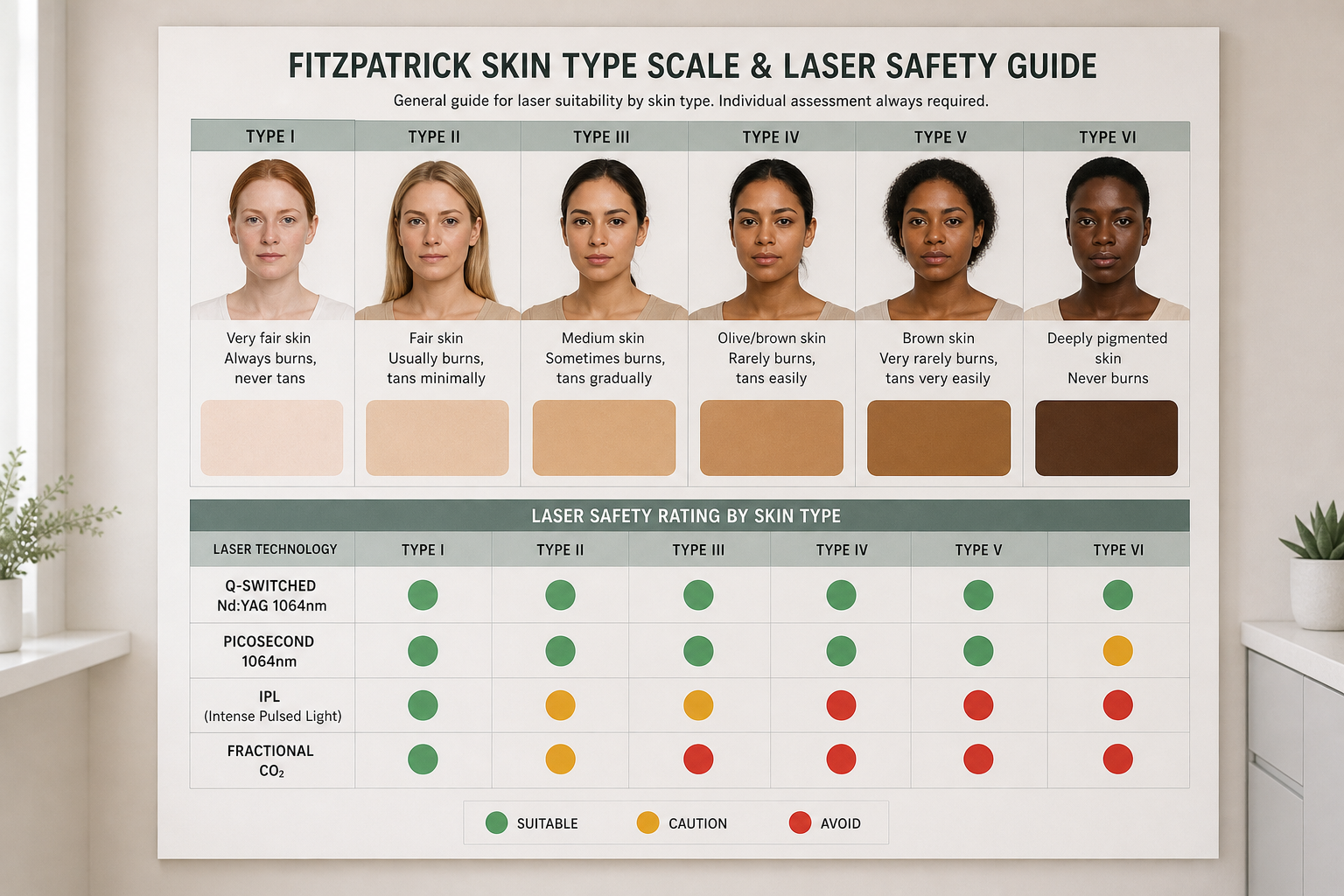
This does not mean laser treatment is unavailable for darker skin — it means that technology selection and provider expertise become even more critical. The Q-switched Nd:YAG at 1064 nm and picosecond Nd:YAG at 1064 nm are generally considered the most appropriate options for Fitzpatrick IV–VI patients because the longer wavelength bypasses much of the epidermal melanin competition. Lower fluence settings, longer intervals between sessions, and thorough test spots before full treatment are standard precautions. Ablative lasers such as fractional CO₂ and erbium, as well as IPL, carry substantially higher risks in darker phototypes and are generally avoided for pigmentation in these individuals.
If you have a darker skin tone and are considering laser treatment, it is reasonable to ask your provider specifically which device and wavelength they intend to use, whether they have experience treating your skin type, and whether a test spot will be performed before a full session. A provider who cannot answer these questions clearly warrants caution.
What to Expect: The Treatment Journey
Before Treatment
A thorough consultation should include assessment of your pigmentation type, skin tone, medical history, and current medications. Certain medications — including photosensitising drugs, hormonal therapies, and some supplements — may affect suitability or require a pause before treatment. A combination protocol often begins with topical agents such as hydroquinone or tranexamic acid in the weeks before laser to suppress melanocyte activity and reduce the risk of PIH. Broad-spectrum SPF 50 use is typically required for several weeks prior to treatment, and active sun exposure should be avoided.
During the Session
Most pigment-targeting laser sessions last between fifteen and forty-five minutes depending on the area being treated. A topical anaesthetic cream is commonly applied beforehand to reduce discomfort. The sensation varies by device — Q-switched lasers are often described as a sharp snapping feeling, while picosecond devices may feel similar or slightly less intense. Immediately after treatment, the skin may appear red, slightly swollen, or show whitening of the treated spots (a phenomenon called immediate whitening or frosting), which typically resolves within hours.
Recovery and the “Darkening Before Clearing” Phase
In the days following treatment, treated spots commonly darken and may form a fine crust or scab. This is a normal and expected part of the process — the fragmented melanin is being drawn toward the skin surface before it flakes away. This phase typically lasts seven to fourteen days. Picking or scrubbing the crusts can increase the risk of scarring or PIH and should be avoided. Gentle cleansing, a bland moisturiser, and consistent broad-spectrum SPF application are the cornerstones of aftercare during this period. Makeup can usually be applied once any crusting has resolved.
Results Timeline
Visible improvement in discrete spots such as solar lentigines may be apparent within two to four weeks of the first session as the skin clears the fragmented pigment. For more diffuse or complex pigmentation such as melasma or PIH, meaningful improvement typically requires multiple sessions spaced three to six weeks apart, with continued improvement over the following months as the lymphatic system clears residual pigment. Most patients require between two and six sessions depending on the condition, its severity, and the technology used.
Risks, Limitations, and Realistic Expectations
Laser treatment for dark spots is generally well tolerated when performed by an experienced provider using appropriate technology for the patient’s skin type, but it is not without risk. The most common side effects include temporary redness, swelling, and the expected darkening and crusting described above. More significant risks include PIH — which is more likely in darker skin tones, with aggressive settings, or with inadequate sun protection — and hypopigmentation (lightening of the treated area), which can be permanent in some cases. Scarring is rare but possible, particularly with ablative devices or if aftercare instructions are not followed.
Paradoxical darkening — a worsening of pigmentation rather than improvement — can occur, particularly with melasma treated at inappropriate energy levels or in patients who resume sun exposure too quickly. This underscores why melasma management requires a structured, long-term approach rather than a single laser session.
It is also important to understand that laser treatment addresses existing pigmentation but does not prevent new spots from forming. Without consistent broad-spectrum SPF use and, where relevant, ongoing topical maintenance, new areas of hyperpigmentation are likely to develop over time. Maintenance sessions — typically once or twice a year — are often recommended to manage recurrence, particularly for patients with a tendency toward solar lentigines or melasma.
Laser vs. Non-Laser Alternatives
Laser is not the only option for hyperpigmentation, and for some patients — particularly those with mild pigmentation, darker skin tones, or a history of PIH — non-laser approaches may be preferable as a starting point. Topical agents including hydroquinone, azelaic acid, kojic acid, tranexamic acid, and retinoids have a well-established evidence base for reducing hyperpigmentation with a lower risk profile than laser, though they require consistent long-term use. Chemical peels using glycolic acid, lactic acid, or trichloroacetic acid (TCA) can improve pigmentation but also carry PIH risk in darker skin types. Microneedling combined with topical brightening agents is another option being explored for melasma and PIH. The most effective approach for many patients is a combination protocol that integrates topical therapy, sun protection, and laser rather than relying on laser alone.
Cost and Practical Considerations
The cost of laser treatment for dark spots varies considerably depending on the technology used, the size of the treatment area, the number of sessions required, and the geographic location of the clinic. Q-switched laser sessions typically range from around £150 to £500 per session in the UK, while picosecond laser sessions tend to cost more — often £300 to £800 or higher — reflecting the higher capital cost of the equipment. Fractional laser treatments for more diffuse pigmentation can cost significantly more per session. While picosecond devices carry a higher per-session price, their potential to achieve results in fewer sessions may offset some of the cost difference for certain conditions, though this varies by individual response and should not be assumed.
Provider expertise is arguably as important as technology selection. A clinic with the most advanced device but limited experience in treating your specific skin type and condition may produce worse outcomes than a more experienced provider using an older but well-understood technology. Asking about a provider’s specific experience with your skin tone and pigmentation concern is a reasonable and important part of the consultation process.
Frequently Asked Questions
How many laser sessions are needed to treat dark spots?
The number of sessions depends on the type of pigmentation, its depth, and the technology used. Discrete solar lentigines on fair skin may respond in one to three sessions. Melasma, PIH, and deeper lesions typically require four to six or more sessions, often combined with topical therapy. Your provider should give you a realistic estimate after assessing your specific concern.
Is laser treatment for dark spots permanent?
Laser can clear existing pigmentation effectively, but it does not prevent new spots from forming. Without consistent sun protection and, in some cases, ongoing topical maintenance, hyperpigmentation is likely to recur — particularly in patients prone to melasma or those with significant sun exposure. Maintenance sessions are often recommended.
Is laser safe for dark skin tones?
Laser can be used safely on darker skin tones, but technology selection is critical. Q-switched Nd:YAG at 1064 nm and picosecond Nd:YAG are generally considered the most appropriate options for Fitzpatrick IV–VI. IPL and ablative lasers carry substantially higher risks in darker phototypes and are generally avoided. Provider experience with skin of color is an essential factor.
Why do dark spots get darker after laser treatment before they improve?
This temporary darkening is a normal part of the healing process. Laser fragments melanin particles, which are then drawn toward the skin surface as the body begins to clear them. The darkened area typically forms a fine crust that flakes away over seven to fourteen days, revealing clearer skin beneath. Picking at the crust increases the risk of scarring and PIH.
Can laser make melasma worse?
Yes, laser can worsen melasma if settings are too aggressive, if the wrong technology is used, or if post-treatment sun protection is inadequate. Rebound hyperpigmentation is a recognised risk. Melasma is best managed as a chronic condition using a combination of topical agents, strict sun protection, and carefully selected laser as an adjunct — not as a standalone cure.
What is the difference between a pico laser and a Q-switched laser?
Both target melanin, but they differ in pulse duration. Q-switched lasers operate in the nanosecond range and work primarily through photothermal destruction of pigment. Picosecond lasers deliver energy in even shorter bursts, generating a photoacoustic shattering effect that may fragment pigment more finely with potentially less thermal spread. Picosecond devices are generally newer and more expensive, and evidence suggests they may offer advantages for certain complex pigmentation concerns, though Q-switched lasers remain effective for many conditions.
Choosing the Right Laser Treatment for Your Dark Spots
There is no single laser that is universally best for dark spots. The right choice depends on the type of pigmentation you have, how superficial or deep it sits in the skin, your Fitzpatrick skin type, your medical history, and your tolerance for downtime and cost. Discrete solar lentigines on fair skin are among the most straightforward concerns to treat, while melasma and PIH in darker skin tones require considerably more nuanced planning.
A consultation with a dermatologist or aesthetic practitioner experienced in pigmentation and in treating your skin type is the essential first step. A thorough assessment should include identification of the pigmentation type, discussion of realistic outcomes and the number of sessions likely needed, explanation of the risks specific to your skin tone, and a plan for pre- and post-treatment care including sun protection and topical agents. If a provider recommends a single laser session as a complete solution for melasma, or does not discuss your skin type’s specific risk profile, it is worth seeking a second opinion. Laser for dark spots can produce meaningful, lasting improvement — but realistic expectations, the right technology, and consistent aftercare are what make that outcome achievable.
