

Lymecycline is one of the most commonly prescribed oral antibiotics for acne vulgaris in the UK and Europe, yet many patients start a course with limited information about what to expect. Understanding the full safety profile — from everyday nuisances like nausea to rare but serious reactions — helps you take the medication correctly, recognise warning signs early, and have more informed conversations with your prescriber.
Key Takeaways
- Lymecycline (sold as Tetralysal) is a tetracycline antibiotic prescribed for moderate-to-severe acne vulgaris; most side effects are mild and resolve on their own.
- The most common lymecycline side effects are gastrointestinal — nausea, stomach discomfort, and diarrhoea — and photosensitivity, which requires daily sun protection throughout the course.
- Rare but serious reactions include intracranial hypertension, DRESS syndrome, hepatotoxicity, and drug-induced lupus; these require immediate medical attention.
- NICE guidelines (NG198) recommend a 12-week course alongside a topical non-antibiotic agent; antibiotic stewardship principles limit treatment to six months maximum.
- Several important contraindications and drug interactions apply, including concurrent use of isotretinoin, antacids, and certain anticoagulants.
What Is Lymecycline and How Does It Work?
Lymecycline is a broad-spectrum tetracycline antibiotic available in the UK and Europe under the brand name Tetralysal. It is not currently available in North America, where doxycycline and minocycline are more commonly used. Lymecycline works by inhibiting bacterial protein synthesis, which prevents Cutibacterium acnes (the bacterium central to inflammatory acne) from multiplying within the pilosebaceous unit. Beyond its bacteriostatic action, lymecycline also has direct anti-inflammatory properties that help reduce the redness and swelling associated with acne lesions — an effect that is partly independent of its antibacterial activity.
The standard adult dose is 408 mg once daily, a once-daily dosing schedule that offers a practical advantage over older tetracyclines such as oxytetracycline, which required twice-daily administration. Better adherence to a once-daily regimen may also reduce the risk of subtherapeutic drug levels that can contribute to antimicrobial resistance. Lymecycline is a prescription-only medication and should only be taken under medical supervision.
Common Lymecycline Side Effects
The majority of patients who take lymecycline experience only mild side effects, and many tolerate the medication well throughout a standard course. The following effects are considered common, meaning they may affect up to one in ten people.
Gastrointestinal Effects
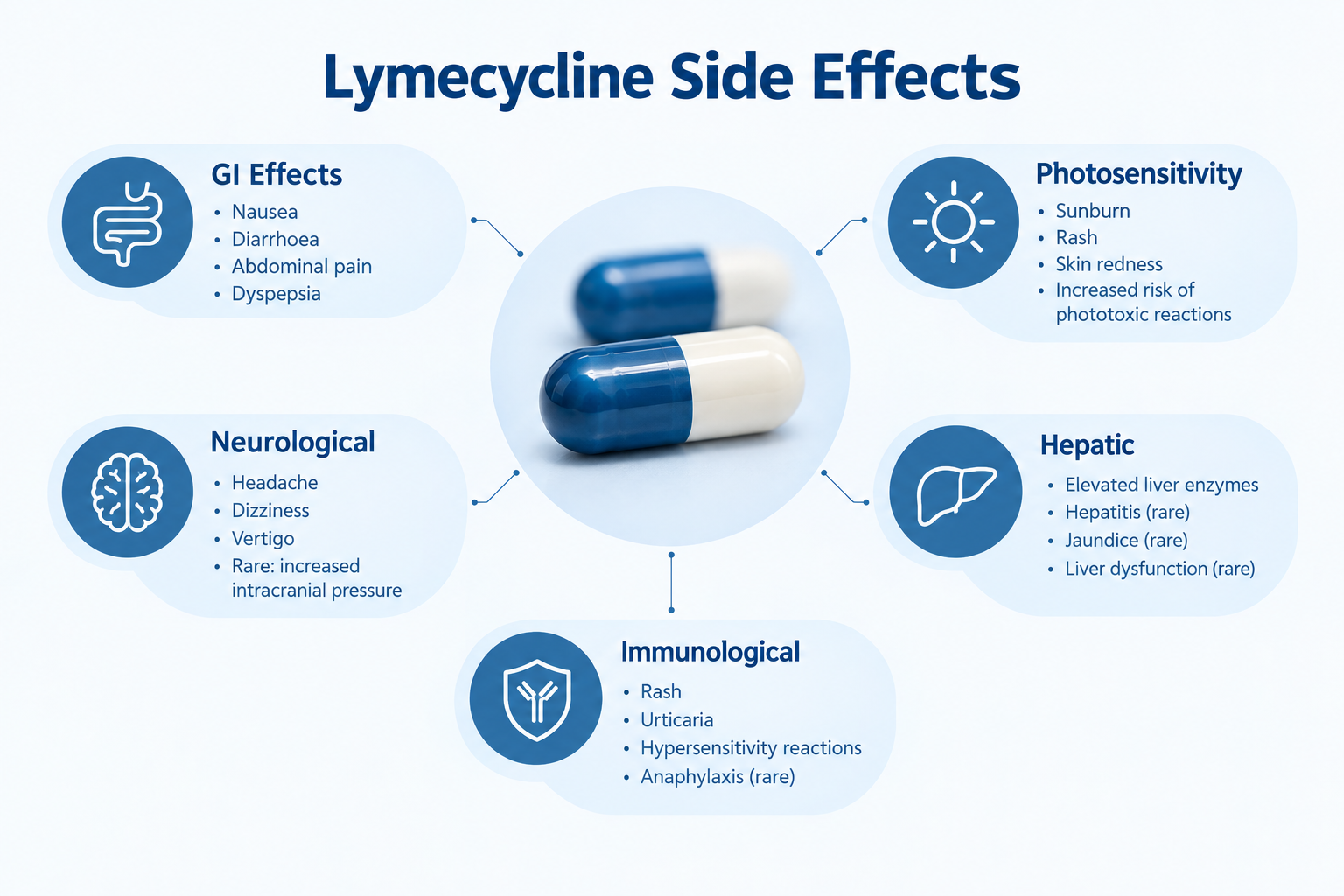
Nausea, stomach pain, diarrhoea, and vomiting are the most frequently reported lymecycline side effects. These typically occur in the first one to two weeks and often improve as the body adjusts. Taking lymecycline with food or a full glass of water can reduce gastric irritation, although absorption is slightly better on an empty stomach. Oesophageal irritation or ulceration is possible if the capsule is swallowed without adequate fluid or taken immediately before lying down; patients should remain upright for at least 30 minutes after each dose.
Photosensitivity
Photosensitivity — an exaggerated skin reaction to ultraviolet light — is a well-recognised class effect of tetracycline antibiotics. Lymecycline carries a lower photosensitivity risk than doxycycline, but the risk is not negligible. Patients may develop sunburn more easily than usual, and in some cases a phototoxic rash can appear on sun-exposed areas. A less commonly discussed but documented effect is photo-onycholysis, where prolonged UV exposure causes the nail plate to separate from the nail bed. Practical sun protection throughout the course means applying a broad-spectrum SPF 30 or higher sunscreen daily, wearing protective clothing, avoiding peak UV hours (typically 11am–3pm), and avoiding sunbeds entirely.
Headache and Fatigue
Mild headache and fatigue are reported by some patients, particularly in the early weeks of treatment. These symptoms are usually transient. However, a persistent or severe headache — especially one accompanied by visual disturbances or nausea — should not be dismissed as a routine side effect, as it may indicate a more serious neurological reaction (see below).
Gut Dysbiosis and Yeast Infections
Like all broad-spectrum antibiotics, lymecycline can disrupt the gut microbiota, reducing populations of beneficial bacteria and allowing opportunistic organisms to proliferate. This gut dysbiosis can manifest as loose stools, bloating, or, in some patients, a secondary yeast infection (candidiasis). Vaginal thrush is a recognised complication in women, caused by disruption of the normal Lactobacillaceae-dominant vaginal flora. Some clinicians suggest probiotic supplementation during antibiotic courses, though the evidence for this specifically in lymecycline users remains limited. If symptoms of candidiasis develop, they should be assessed and treated separately.
Uncommon and Rare Lymecycline Side Effects
Less frequent side effects deserve careful attention because, although rare, some can be serious. The following effects are uncommon (affecting up to one in 100 people) or rare (up to one in 1,000), but patients should be aware of the warning signs.
Intracranial Hypertension
Intracranial hypertension — raised pressure within the skull — is a rare but potentially serious neurological side effect associated with tetracycline antibiotics including lymecycline. It typically presents as a severe, persistent headache, visual disturbances (such as blurred or double vision), and in some cases pulsatile tinnitus. The condition is more common in women of childbearing age and in those who are overweight. Symptoms usually resolve after stopping the antibiotic, but delayed diagnosis can lead to permanent visual impairment. Any patient experiencing severe or worsening headaches with visual changes while taking lymecycline should stop the medication and seek urgent medical review.
DRESS Syndrome
DRESS syndrome (Drug Reaction with Eosinophilia and Systemic Symptoms) is a rare but potentially life-threatening hypersensitivity reaction that can occur with lymecycline and other tetracyclines. It typically develops two to eight weeks after starting the medication and presents with a widespread skin rash, fever, swollen lymph nodes, and internal organ involvement — most commonly the liver, kidneys, or lungs. DRESS syndrome requires immediate discontinuation of the drug and urgent hospital assessment. Because it can be mistaken for a viral illness in its early stages, awareness of the timing and combination of symptoms is important.
Hepatotoxicity and Autoimmune Hepatitis
Hepatotoxicity — liver damage — is an uncommon but documented risk with lymecycline, particularly with prolonged use. Cases of autoimmune hepatitis triggered by lymecycline have been reported in the medical literature, sometimes occurring months after the course has ended. Warning signs include jaundice (yellowing of the skin or eyes), dark urine, persistent upper abdominal pain, and unexplained fatigue. Patients with pre-existing liver conditions should discuss this risk with their prescriber before starting treatment. Routine liver function monitoring is not standard practice for short courses, but any concerning symptoms should prompt prompt investigation.
Drug-Induced Lupus
Drug-induced lupus erythematosus is a rare immunological reaction associated with several medications, including tetracycline antibiotics. It can cause joint pain, skin rashes (particularly a butterfly-shaped rash across the cheeks), and systemic symptoms. Unlike idiopathic systemic lupus erythematosus, drug-induced lupus typically resolves after the causative medication is stopped. Minocycline carries a higher reported risk of drug-induced lupus than lymecycline, but the possibility with lymecycline should not be entirely discounted.
Allergic Reactions
Hypersensitivity reactions ranging from mild urticaria (hives) to anaphylaxis are possible with any antibiotic. Patients with a known allergy to tetracycline antibiotics should not take lymecycline. A new rash, facial swelling, difficulty breathing, or a rapid drop in blood pressure after taking lymecycline requires immediate emergency medical attention.
A Rare Paradoxical Reaction: Acne Fulminans
A rarely discussed but clinically documented paradoxical reaction is the development of acne fulminans — a severe, ulcerating form of acne — in patients taking lymecycline, particularly when it is prescribed alongside or just before isotretinoin. Acne fulminans is characterised by sudden onset of painful, crusting lesions, systemic symptoms such as fever and joint pain, and significant scarring risk. Although uncommon, this reaction underscores the importance of careful monitoring in the early weeks of treatment and the contraindication against combining lymecycline with oral retinoids.
Side Effect Frequency at a Glance
| Frequency | Side Effects |
|---|---|
| Common (≥1 in 100) | Nausea, diarrhoea, stomach pain, vomiting, headache, photosensitivity, fatigue |
| Uncommon (≥1 in 1,000) | Oesophageal irritation, yeast infection (candidiasis), skin rash, dizziness |
| Rare (≥1 in 10,000) | Intracranial hypertension, hepatotoxicity, autoimmune hepatitis, DRESS syndrome, drug-induced lupus, photo-onycholysis, allergic reaction/anaphylaxis |
| Very rare / case reports | Acne fulminans (paradoxical worsening), haematological changes (anaemia, leukopenia with long-term use) |
Contraindications: Who Should Not Take Lymecycline?
Several contraindications apply to lymecycline, and a thorough medical history is essential before prescribing. Lymecycline must not be used in the following situations:
- Pregnancy: Tetracyclines cross the placenta and can cause permanent tooth discolouration, enamel hypoplasia, and inhibition of bone growth in the developing foetus. Lymecycline is contraindicated throughout pregnancy.
- Breastfeeding: Lymecycline passes into breast milk and may affect the infant's developing teeth and bones.
- Children under 12 years (for acne use): Tetracyclines can cause permanent tooth staining and affect bone development in younger children. NICE NG198 recommends lymecycline only for patients aged 12 and over.
- Known tetracycline allergy: Any previous hypersensitivity reaction to a tetracycline antibiotic is an absolute contraindication.
- Concurrent isotretinoin use: Combining lymecycline with oral isotretinoin significantly increases the risk of intracranial hypertension and is contraindicated. A washout period is required between courses.
- Severe renal impairment: Lymecycline should be used with caution or avoided in patients with significantly reduced kidney function, as accumulation may increase toxicity risk.
- Concurrent vitamin A supplementation at high doses: High-dose vitamin A can independently raise intracranial pressure; combining it with lymecycline compounds this risk.
Important Drug Interactions
Lymecycline has several clinically significant drug interactions that can either reduce its effectiveness or increase the risk of adverse effects. Patients should inform their prescriber and pharmacist of all medications, supplements, and herbal products they are taking.
| Interacting Agent | Clinical Effect | Recommendation |
|---|---|---|
| Antacids (aluminium, magnesium, calcium) | Chelation reduces lymecycline absorption significantly | Separate doses by at least 2 hours |
| Iron, zinc, and mineral supplements | Chelation reduces absorption of both lymecycline and the mineral | Separate doses by at least 2–3 hours |
| Isotretinoin / oral retinoids | Additive risk of intracranial hypertension | Contraindicated; do not use concurrently |
| Warfarin / anticoagulants | Lymecycline may enhance anticoagulant effect, increasing bleeding risk | Monitor INR closely; dose adjustment may be needed |
| Lithium | May elevate serum lithium levels | Monitor lithium levels during co-administration |
| Penicillins / beta-lactam antibiotics | Bacteriostatic action of lymecycline may antagonise bactericidal penicillins | Avoid concurrent use where possible |
| Carbamazepine, phenytoin, barbiturates | Enzyme induction reduces tetracycline plasma levels | Reduced efficacy; consider alternative antibiotic |
| Methoxyflurane (anaesthetic agent) | Risk of fatal renal toxicity | Contraindicated; inform anaesthetist |
| Dairy products / calcium-rich foods | Moderate reduction in absorption | Take on an empty stomach where tolerated, or with a light non-dairy meal |
Does Lymecycline Cause Skin Purging?
Skin purging — an initial worsening of acne before improvement — is a concept more commonly associated with topical retinoids such as adapalene, which accelerate skin cell turnover and temporarily bring congestion to the surface. Lymecycline does not work through this mechanism, so a true purging response is not expected. However, some patients notice that their acne appears unchanged or slightly worse in the first two to four weeks of treatment. This is more likely to reflect the time lymecycline needs to reach therapeutic levels and begin reducing the bacterial load and inflammation within the pilosebaceous unit, rather than a purging effect. Visible improvement typically begins around four to six weeks, with more meaningful results at eight to twelve weeks. If acne is significantly worsening after four weeks, this should be reviewed by a prescriber.
Lymecycline vs Doxycycline vs Minocycline
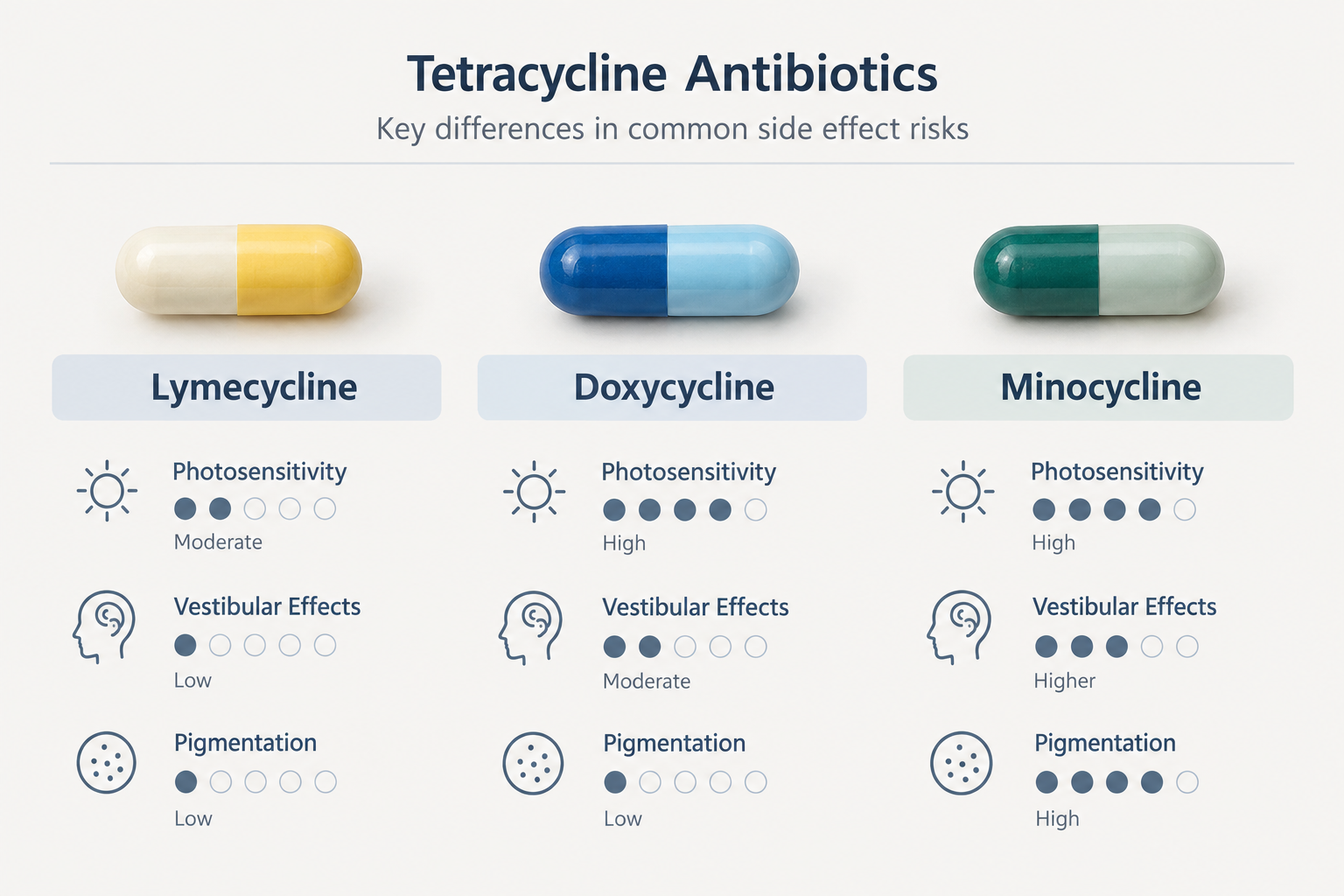
All three are tetracycline antibiotics used for acne, but they differ meaningfully in their side effect profiles, dosing, and availability. Understanding these differences can help patients and clinicians make more informed prescribing decisions.
| Feature | Lymecycline (Tetralysal) | Doxycycline | Minocycline |
|---|---|---|---|
| Typical dose | 408 mg once daily | 100 mg once daily | 100 mg once or twice daily |
| Photosensitivity risk | Lower | Higher (most of the three) | Moderate |
| GI side effects | Moderate | Moderate (similar) | Moderate |
| Vestibular side effects (dizziness, vertigo) | Low | Low | Higher (most of the three) |
| Skin/tissue pigmentation | Rare | Rare | More common with long-term use |
| Drug-induced lupus risk | Low | Low | Higher |
| Availability | UK/Europe (not North America) | Worldwide | Worldwide |
| Cost (approximate) | Moderate | Lower | Higher |
Lymecycline's lower photosensitivity risk compared to doxycycline is a clinically relevant distinction, particularly for patients who spend significant time outdoors or are treated during summer months. Minocycline's higher rates of vestibular side effects, tissue pigmentation, and drug-induced lupus make it a less preferred option in current UK prescribing practice, despite its long history of use. Sarecycline, a narrow-spectrum tetracycline available in some markets, may offer reduced gut microbiome disruption due to its more targeted spectrum, but it is not currently available in the UK.
NICE Guidelines, Treatment Duration, and Antibiotic Stewardship
NICE guidelines (NG198, published 2021) provide clear direction on how lymecycline should be used for acne vulgaris. The guidance recommends a 12-week first-line course for moderate-to-severe acne, always in combination with a topical non-antibiotic agent such as adapalene or benzoyl peroxide. Antibiotic monotherapy — using lymecycline without a concurrent topical treatment — is not recommended, partly because the combination improves outcomes and partly because topical benzoyl peroxide helps reduce the risk of antibiotic resistance developing.
Antibiotic stewardship is a central principle in NICE NG198. The guidance limits oral antibiotic courses to a maximum of six months in exceptional circumstances, with 3-monthly clinical reviews to assess response and justify continuation. This reflects growing concern about antimicrobial resistance: prolonged or repeated antibiotic courses can select for resistant strains of Cutibacterium acnes, reducing the effectiveness of antibiotics not only for the individual patient but across the wider population. Patients should be aware that lymecycline is not a long-term maintenance therapy; once the course ends, maintenance is typically managed with topical agents alone.
A practical consideration that is often underexplored is what happens after the antibiotic course finishes. Some patients experience a rebound in acne activity when lymecycline is stopped, particularly if no maintenance topical regimen is in place. Continuing adapalene or benzoyl peroxide after the antibiotic course ends is an important part of sustaining the improvement achieved during treatment.
Practical Tips for Reducing Side Effects
- Take with food or a full glass of water to reduce nausea and protect the oesophagus; remain upright for at least 30 minutes after each dose.
- Apply SPF 30+ sunscreen daily throughout the course, even on cloudy days; avoid sunbeds and limit midday sun exposure.
- Separate antacids, iron, and mineral supplements from lymecycline by at least two hours to avoid absorption interference.
- Avoid dairy-heavy meals immediately before or after taking the capsule if you notice reduced effectiveness, though the interaction is less pronounced than with older tetracyclines.
- Do not stop the course early without medical advice; incomplete courses contribute to antibiotic resistance and may allow acne to return more quickly.
- Report persistent or severe headaches, visual changes, or jaundice to your prescriber promptly — these symptoms warrant urgent review.
- Use contraception reliably if there is any possibility of pregnancy; lymecycline is contraindicated in pregnancy and the prescriber should be informed immediately if pregnancy occurs during treatment.
Frequently Asked Questions
How long do lymecycline side effects last?
Most common side effects such as nausea and mild stomach discomfort tend to improve within the first two to four weeks as the body adjusts. Photosensitivity persists throughout the entire course and resolves after stopping. Rare serious reactions such as intracranial hypertension or DRESS syndrome require medical management and may take longer to resolve.
Can lymecycline make acne worse before it gets better?
A temporary plateau or mild worsening in the first two to four weeks is possible as the antibiotic reaches therapeutic levels, but this is not the same as the purging response seen with topical retinoids. Significant worsening beyond four weeks should be reviewed by a prescriber, as it may indicate the need to reassess the treatment plan.
Is lymecycline safe to take long-term?
NICE guidelines recommend a maximum of six months in exceptional circumstances, with 3-monthly reviews. Long-term use increases the risk of antibiotic resistance, gut dysbiosis, and rare adverse effects such as hepatotoxicity. Lymecycline is not intended as indefinite maintenance therapy.
Can I drink alcohol while taking lymecycline?
Moderate alcohol consumption is not formally contraindicated with lymecycline, but alcohol can worsen nausea and gastrointestinal side effects. Patients with any liver concerns should exercise particular caution and discuss this with their prescriber.
Does lymecycline affect the contraceptive pill?
Current evidence does not support a clinically significant interaction between lymecycline and combined hormonal contraceptives. Earlier guidance suggesting antibiotics reduced pill efficacy has been largely revised. However, patients should discuss their specific contraceptive method with their prescriber, particularly given the absolute contraindication of lymecycline in pregnancy.
What should I do if I miss a dose?
Take the missed dose as soon as you remember, unless it is nearly time for the next dose — in which case skip the missed dose and continue as normal. Do not take a double dose to make up for a missed one.
Is lymecycline available in the United States?
Lymecycline is not currently approved or available in the United States or Canada. Patients in North America are typically prescribed doxycycline or minocycline for acne. Lymecycline is primarily available in the UK, Ireland, and parts of continental Europe.
Starting Lymecycline: What to Discuss With Your Prescriber
Lymecycline has a well-established safety record for moderate-to-severe acne vulgaris when used appropriately and for the recommended duration. The majority of patients experience only mild, manageable side effects, and the once-daily dosing of Tetralysal supports consistent adherence. However, the full safety profile — including rare but serious reactions such as intracranial hypertension, DRESS syndrome, and hepatotoxicity — means that informed use and regular clinical review are important throughout the course.
Before starting lymecycline, it is worth discussing your full medication list, any history of liver or kidney conditions, your contraceptive method, sun exposure habits, and your plans for topical maintenance therapy after the antibiotic course ends. NICE NG198 recommends combining lymecycline with a topical non-antibiotic agent from the outset, and this combination approach both improves outcomes and supports responsible antibiotic stewardship. If you develop any symptoms that concern you during treatment — particularly severe headaches, visual changes, a widespread rash with fever, or signs of jaundice — contact your prescriber promptly rather than waiting for a scheduled review.
