
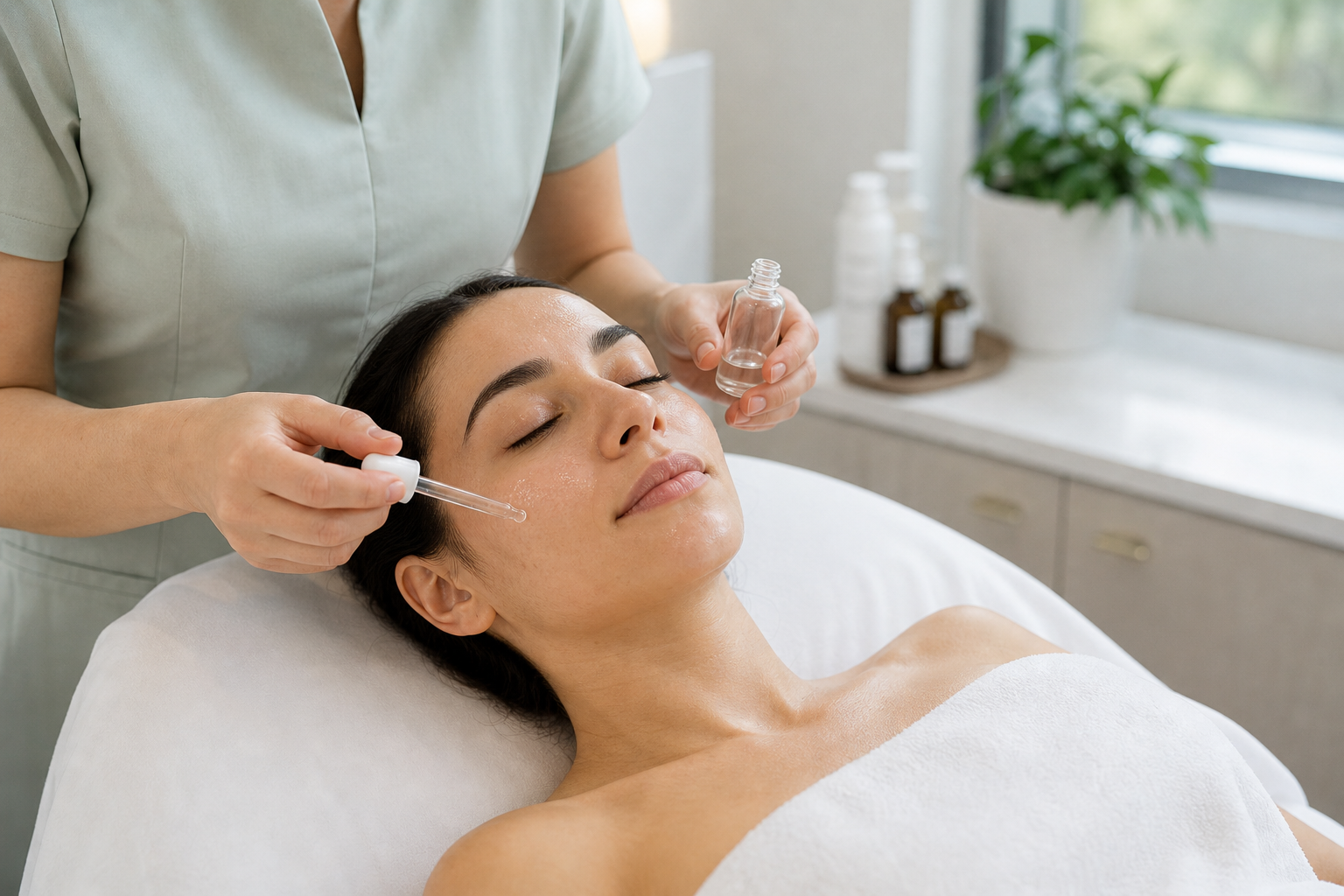

A skin brightening facial is a professional treatment designed to reduce the appearance of dark spots, uneven skin tone, and dullness by targeting the underlying causes of discolouration and sluggish cell turnover. Whether your concern is post-inflammatory hyperpigmentation from past breakouts, sun-related pigmentation, or a general loss of radiance, understanding which type of brightening facial suits your skin — and what it can realistically achieve — is the most important step before booking a session.
Key Takeaways
- Skin brightening facials work by combining exfoliation, brightening actives, and targeted ingredients to reduce melanin production and improve cell turnover, resulting in a more even complexion over time.
- Dullness caused by dehydration and dullness caused by pigmentation have different root causes and respond better to different treatment approaches.
- Most people see a meaningful improvement after a course of 4–6 sessions spaced 2–4 weeks apart, though surface pigmentation responds faster than deeper dermal discolouration.
- Daily broad-spectrum SPF is non-negotiable after any brightening treatment — without it, results fade significantly faster.
- Persistent melasma, suspected hormonal pigmentation, or pigmentation that does not respond to professional facials warrants assessment by a dermatologist rather than continued escalation of facial treatments.
What Is a Skin Brightening Facial?
A skin brightening facial is a professional treatment that combines physical or chemical exfoliation with concentrated brightening actives to address discolouration, uneven skin tone, and dull skin. Unlike a standard hydrating or anti-ageing facial, a brightening facial is specifically formulated to interrupt melanin production, accelerate the shedding of pigmented dead skin cells, and deliver ingredients that suppress the enzymes responsible for dark spot formation. The result, over a course of sessions, is a progressively more radiant, even complexion.
It is worth distinguishing a brightening facial from a whitening or lightening facial. Brightening treatments aim to restore the skin’s natural luminosity and reduce visible discolouration — they do not alter your natural skin tone or ethnicity. Responsible brightening facials work within the skin’s normal biology rather than attempting to suppress melanin production permanently or indiscriminately.
Pigmentation-Driven Dullness vs. Dehydration-Driven Dullness
Not all dull skin has the same cause, and choosing the right treatment depends on identifying which type you are dealing with. Pigmentation-driven dullness occurs when an accumulation of dark spots, post-inflammatory hyperpigmentation, or diffuse melanin deposits creates an uneven, shadowed appearance across the skin. This type of dullness tends to look patchy or blotchy and is often more pronounced in areas exposed to sunlight.
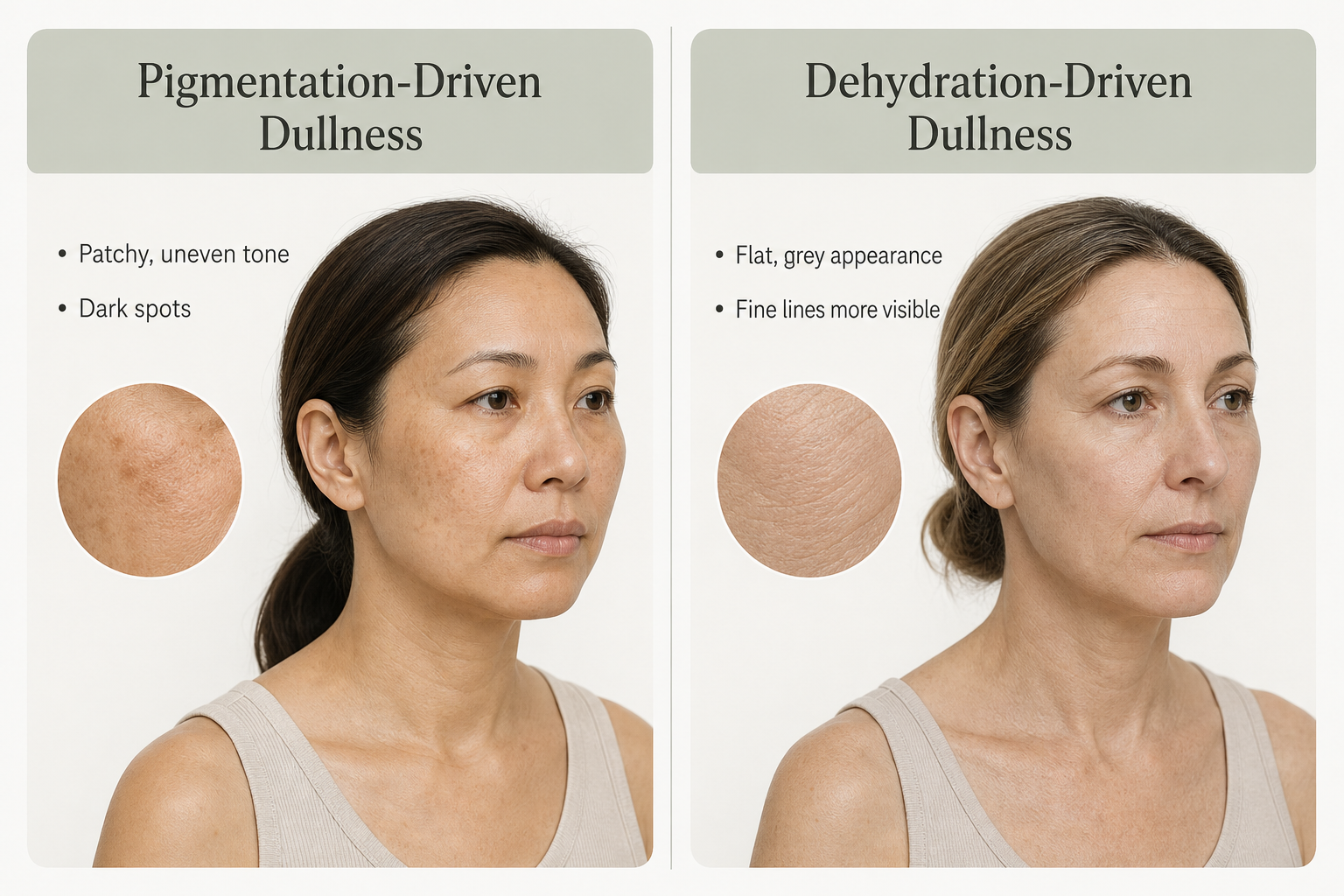
Dehydration-driven dullness, by contrast, results from a compromised skin barrier, insufficient water content in the skin, or poor circulation. The skin appears flat, grey, or lacklustre rather than patchy, and fine lines may look more pronounced. This type responds well to hydrating brightening facials that restore moisture and support barrier function, whereas pigmentation-driven dullness requires treatments that actively target melanin production and accelerate cell turnover. Many patients have a combination of both, which is why a thorough skin assessment before treatment is valuable.
Common Causes of Pigmentation and Dullness
Understanding what drives your skin concern helps set realistic expectations for treatment. The most frequent causes include:
- UV and sun damage: Repeated sun exposure stimulates melanocytes to overproduce melanin, leading to sunspots, freckles, and diffuse photo-ageing discolouration.
- Post-inflammatory hyperpigmentation (PIH): Inflammation from acne, eczema, or skin injury triggers localised melanin overproduction, leaving dark marks after the original lesion has healed.
- Melasma: A hormonally influenced form of hyperpigmentation that produces symmetrical patches, typically on the cheeks, forehead, and upper lip. Melasma is notoriously difficult to treat and frequently recurs.
- Slow cell turnover: As skin cell renewal slows with age or environmental stress, pigmented and dead skin cells accumulate on the surface, dulling the complexion.
- Oxidative stress and pollution: Environmental pollutants generate free radicals that damage skin cells and accelerate pigmentation and ageing.
- Dehydration and barrier disruption: A weakened skin barrier loses moisture rapidly, reducing the skin’s natural reflectivity and contributing to a flat, dull appearance.
Types of Skin Brightening Facials
Several distinct facial types are used to address pigmentation and dullness, each with different mechanisms, suitable skin types, and expected downtime. The right choice depends on your skin concern, skin tone, and tolerance for post-treatment sensitivity.
Vitamin C Infusion Facial
A vitamin C infusion facial delivers high-concentration ascorbic acid or a stabilised vitamin C derivative directly into the skin using techniques such as ultrasound, iontophoresis, or manual massage. Vitamin C is both a potent antioxidant and a melanin inhibitor — it interferes with the tyrosinase enzyme pathway that drives melanin production, while simultaneously supporting collagen production and neutralising free radicals from UV exposure. This facial suits most skin types and is particularly effective for mild sun damage, general dullness, and early dark spots. Downtime is minimal, making it a practical option for regular maintenance.
Chemical Peel Facial
A chemical peel uses alpha hydroxy acids (AHAs) such as glycolic acid or lactic acid, beta hydroxy acids (BHAs) such as salicylic acid, or stronger agents such as trichloroacetic acid (TCA) to dissolve the bonds between dead skin cells and accelerate exfoliation. By removing the outermost layers of the skin, chemical peels reduce the concentration of surface pigmentation, stimulate cell turnover, and allow brightening actives to penetrate more effectively. Superficial peels are suitable for most skin types with minimal downtime, while medium-depth peels produce more significant results but require several days of recovery. For oily or acne-prone skin, salicylic acid peels are particularly useful because salicylic acid also addresses the congestion that contributes to post-inflammatory hyperpigmentation.
Enzyme Peel Facial
Enzyme peels use fruit-derived enzymes — most commonly papain from papaya or bromelain from pineapple — to gently digest dead skin cells without the chemical action of AHAs or BHAs. Because enzyme exfoliation is milder and does not alter skin pH significantly, it is well suited to sensitive skin types and to patients with darker Fitzpatrick skin tones (IV–VI) who face a higher risk of post-inflammatory hyperpigmentation from more aggressive treatments. Results are subtler than chemical peels, but enzyme facials can be performed more frequently and with less risk of irritation.
HydraFacial with Brightening Boosters
A HydraFacial is a multi-step device-based treatment that combines vacuum-assisted cleansing, gentle exfoliation, and simultaneous infusion of customised serums. When paired with brightening boosters — typically containing vitamin C, niacinamide, or kojic acid — a HydraFacial addresses both dehydration-driven and pigmentation-driven dullness in a single session. The treatment is suitable for most skin types, involves no downtime, and produces an immediate improvement in skin texture and radiance. It is a practical option for patients who want a comfortable, low-risk brightening treatment with visible results after a single session.
LED Light Therapy Facial
LED (light-emitting diode) light therapy uses specific wavelengths of light to influence cellular activity. Green LED wavelengths are most commonly used for pigmentation concerns, as they may help reduce melanin production and calm the skin. LED facials are non-invasive, painless, and suitable for all skin types including sensitive and reactive skin. They are often used as an add-on to other brightening treatments rather than as a standalone therapy, and the evidence for LED as a primary pigmentation treatment remains developing.
Microdermabrasion Facial
Microdermabrasion uses fine crystals or a diamond-tipped wand to physically exfoliate the outermost layer of the skin, removing dead skin cells and stimulating cell turnover. It is effective for mild surface pigmentation, rough skin texture, and general dullness, but it does not penetrate deeply enough to address dermal pigmentation such as deep melasma. Microdermabrasion is suitable for most skin types and involves minimal downtime, though it is generally less effective for significant hyperpigmentation than chemical peels or device-based treatments.
IPL and Laser Facials
Intense Pulsed Light (IPL) and laser treatments such as Q-switched lasers or fractional lasers target pigmented lesions with precision, breaking down melanin deposits that are then cleared by the body’s immune system. These treatments can produce significant improvement in sun damage, age spots, and diffuse pigmentation, but they carry a higher risk of post-inflammatory hyperpigmentation in patients with darker skin tones (Fitzpatrick IV–VI). For this reason, IPL and laser facials require careful patient selection and should only be performed by trained practitioners who can assess Fitzpatrick skin type and adjust parameters accordingly. These treatments fall at the clinical end of the brightening spectrum and are more appropriately described as medical aesthetic procedures than traditional facials.
Key Brightening Ingredients and How They Work
The effectiveness of a skin brightening facial depends heavily on the active ingredients used. The following are the most clinically relevant brightening agents and their mechanisms:
| Ingredient | Mechanism | Best For |
|---|---|---|
| Vitamin C | Antioxidant; inhibits tyrosinase enzyme; supports collagen production | Sun damage, general dullness, early dark spots |
| Niacinamide | Inhibits melanosome transfer from melanocytes to skin cells; supports skin barrier | Uneven skin tone, PIH, sensitive skin |
| Kojic acid | Tyrosinase inhibitor; chelates copper needed for melanin synthesis | Sunspots, age spots, mild melasma |
| Alpha arbutin | Suppresses melanin production; gentler than hydroquinone | PIH, general hyperpigmentation |
| Tranexamic acid | Interrupts UV-induced melanin stimulation; reduces melasma and PIH | Melasma, PIH, reactive pigmentation |
| Licorice root extract | Contains glabridin, a gentle tyrosinase inhibitor; anti-inflammatory | Sensitive skin, mild pigmentation, redness |
| Glycolic acid / Lactic acid | AHA exfoliants; dissolve dead skin cell bonds; improve cell turnover | Surface pigmentation, dullness, rough texture |
| Salicylic acid | BHA; exfoliates inside pores; anti-inflammatory | Acne-related PIH, oily skin |
Ingredient combinations matter as much as individual actives. Niacinamide and tranexamic acid work well together for melasma and PIH. Vitamin C pairs effectively with broad-spectrum SPF to protect against further UV-induced melanin production. However, combining high-concentration vitamin C with strong AHAs in the same session can cause irritation, and retinoids should generally be paused for several days before a chemical peel to reduce the risk of over-exfoliation and sensitivity.
Understanding Pigmentation Depth: When a Facial Is Enough
One of the most important — and least discussed — factors in choosing a brightening treatment is the depth of the pigmentation. Epidermal pigmentation, which sits in the upper layers of the skin, responds well to professional facials, chemical peels, and topical brightening actives. This includes most forms of PIH, mild sun damage, and surface-level dark spots. Patients with epidermal pigmentation typically see meaningful improvement within a course of 4–6 professional sessions.
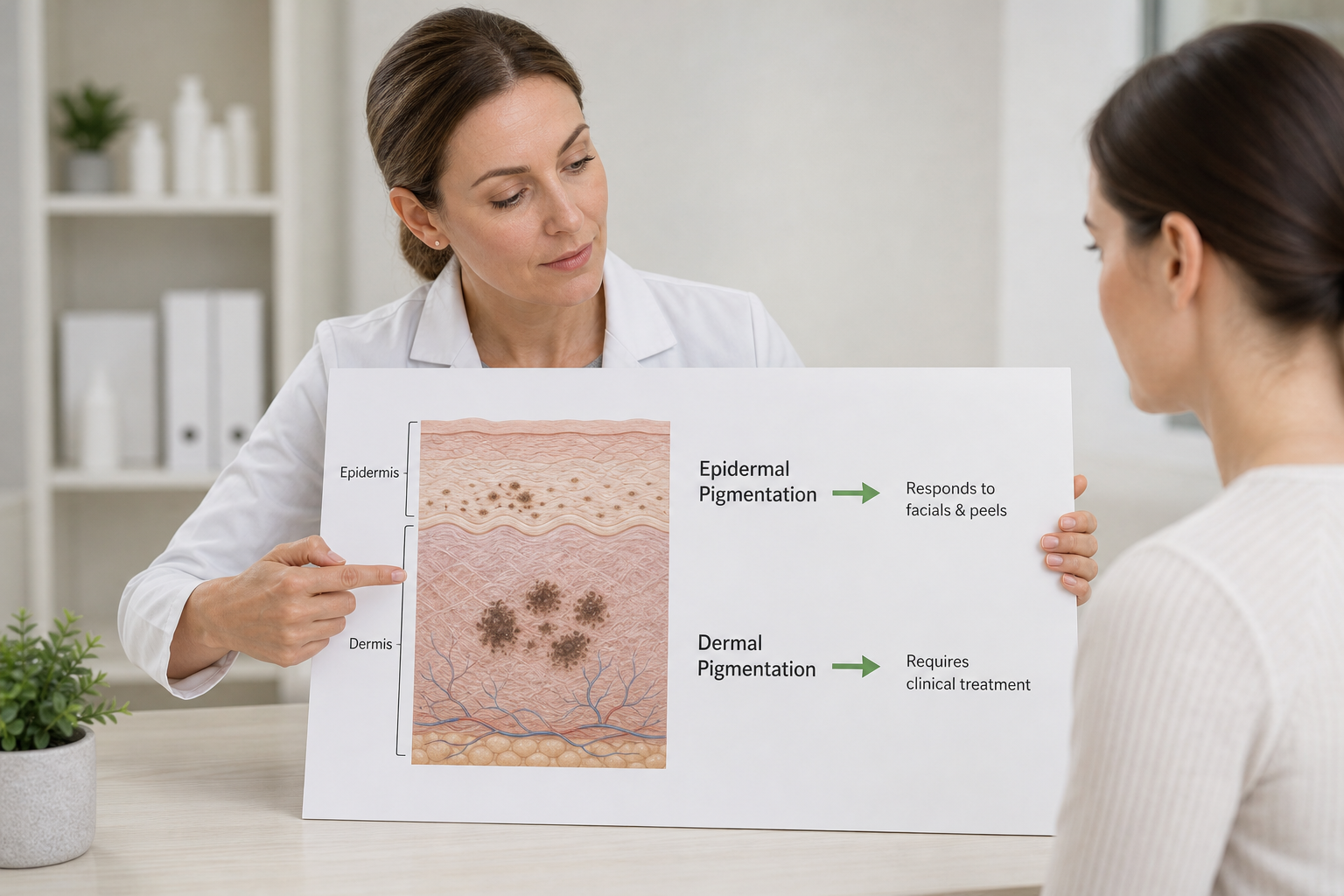
Dermal pigmentation, which sits deeper in the skin, is significantly harder to treat with facials alone. Deep melasma, in particular, involves melanin deposits in the dermis that topical exfoliation and surface-level brightening actives cannot reliably reach. Patients with dermal or mixed melasma may see limited improvement from facials and are more likely to benefit from clinical interventions such as tranexamic acid prescribed orally or topically, Q-switched laser treatment, or combination medical therapy under dermatological supervision. If a course of professional brightening facials produces little visible change in pigmentation, this is a signal to seek a dermatologist’s assessment rather than simply intensifying the facial treatment.
Skin Tone Considerations and Safety
Skin tone is a critical factor in treatment selection for brightening facials. The Fitzpatrick scale classifies skin from Type I (very fair, always burns) to Type VI (deeply pigmented, never burns), and this classification has direct implications for treatment safety. Patients with Fitzpatrick Types IV–VI have a higher baseline risk of developing post-inflammatory hyperpigmentation as a response to aggressive exfoliation, heat-based treatments, or laser energy. In these patients, a treatment intended to reduce dark spots can paradoxically create new ones if the skin is over-stimulated.
For patients with medium to deep skin tones, safer options include enzyme peels, HydraFacial with brightening boosters, niacinamide and tranexamic acid-based treatments, and low-level LED therapy. Chemical peels can be used but should be introduced gradually, starting with lower concentrations and shorter contact times. IPL and laser treatments require careful parameter adjustment and should only be performed by practitioners experienced in treating darker skin tones. Always disclose your full skin history, including any previous reactions to exfoliating treatments, before proceeding.
What to Expect: Session by Session
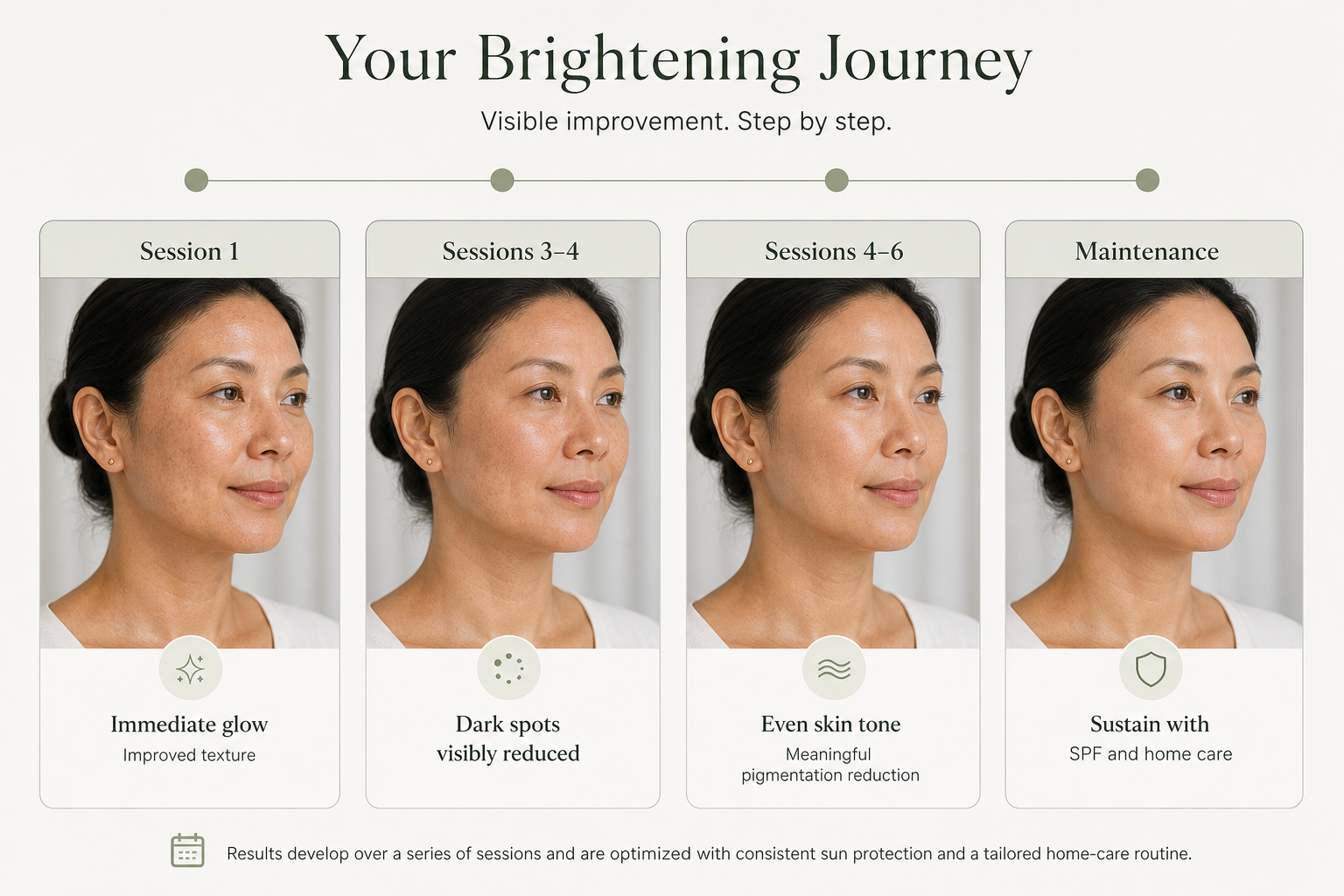
A single skin brightening facial typically produces an immediate improvement in radiance and skin texture — the skin looks fresher and more luminous directly after treatment, largely due to the removal of dead skin cells and improved surface hydration. However, this initial glow does not represent a change in underlying pigmentation.
Visible brightening of dark spots and a more even skin tone generally become apparent after 3–4 sessions. It is worth noting that some patients experience a temporary darkening of existing pigmentation in the early sessions of a chemical peel course — this occurs because the peel draws pigment toward the surface before it is shed, and it is a normal part of the process rather than a sign of worsening. By sessions 4–6, most patients with surface-level pigmentation see a meaningful reduction in dark spots and a more consistent complexion. A full correction course typically spans 3–6 months for pigmentation-driven concerns, with maintenance sessions every 4–8 weeks thereafter to sustain results.
Aftercare and Maintaining Results at Home
Post-treatment care has a direct impact on how long brightening results last and whether pigmentation returns. The most important aftercare step is daily application of a broad-spectrum SPF 30–50+. UV exposure is the primary driver of melanin production, and without consistent sun protection, dark spots will return regardless of how effective the in-clinic treatment was. SPF should be applied every morning and reapplied during prolonged sun exposure.
In the 48 hours immediately after a brightening facial, avoid using AHAs, BHAs, retinoids, or physical scrubs, as the skin barrier is temporarily more vulnerable to irritation. Use a gentle, fragrance-free moisturiser and avoid direct sun exposure for 2–3 days. Between sessions, a home routine that includes a vitamin C serum in the morning and a niacinamide or tranexamic acid serum in the evening can meaningfully extend the results of professional treatment. Staying well hydrated and using a barrier-supporting moisturiser also helps maintain the skin’s reflectivity between appointments.
When to See a Dermatologist Instead of an Esthetician
Professional brightening facials performed by a qualified esthetician are appropriate for mild to moderate surface pigmentation, general dullness, and maintenance of previously treated skin. However, certain presentations warrant medical assessment rather than continued facial treatment. These include melasma that has not responded to a full course of professional facials, pigmentation that appears to be worsening despite treatment, suspected hormonal pigmentation linked to contraceptive use or pregnancy, and any pigmented lesion that has changed in size, shape, or colour — the latter should always be evaluated by a doctor to rule out dermatological conditions unrelated to cosmetic pigmentation.
A dermatologist can offer prescription-strength topical agents, combination therapies, and clinical procedures that go beyond the scope of a facial. Seeking medical advice early for complex pigmentation is more effective than escalating facial treatments that may not address the underlying cause.
Seasonal and Environmental Triggers to Plan Around
Pigmentation is not a static concern — it fluctuates with UV intensity, hormonal changes, and environmental exposure. Planning a brightening facial course during autumn or winter, when UV levels are lower and sun exposure is reduced, generally produces better outcomes because the skin is less likely to be re-stimulated by sunlight between sessions. Patients who spend significant time outdoors during summer may find that pigmentation returns more quickly despite treatment, making consistent SPF use and antioxidant support even more important during high-UV months. Hormonal fluctuations associated with the menstrual cycle, pregnancy, or hormonal contraception can also trigger or worsen melasma, which is why addressing hormonal factors alongside topical treatment often produces more durable results.
Frequently Asked Questions
How many sessions of a skin brightening facial do I need?
Most patients require 4–6 sessions to see meaningful improvement in pigmentation and uneven skin tone, with sessions typically spaced 2–4 weeks apart. Maintenance sessions every 4–8 weeks help sustain results. The exact number depends on the type and depth of pigmentation, the treatment used, and how consistently aftercare is followed.
Can a brightening facial completely remove dark spots?
A professional brightening facial can significantly reduce the appearance of surface-level dark spots and post-inflammatory hyperpigmentation, but complete removal is not guaranteed and depends on the depth and cause of the pigmentation. Deeper dermal pigmentation, such as established melasma, may require clinical intervention beyond facial treatments.
Is a skin brightening facial safe for sensitive skin?
Yes, with appropriate treatment selection. Enzyme peels, HydraFacial with gentle brightening boosters, and LED light therapy are well tolerated by sensitive skin types. Strong chemical peels and laser-based treatments carry a higher risk of irritation and should be introduced cautiously or avoided in very reactive skin.
How long do the results of a brightening facial last?
Results typically last 4–6 months with consistent aftercare, including daily broad-spectrum SPF and a supportive home skincare routine. Without sun protection, pigmentation is likely to return more quickly. Maintenance sessions help prolong the improvement achieved during a correction course.
Can I have a brightening facial if I have melasma?
Some brightening facials — particularly those using tranexamic acid, niacinamide, and gentle exfoliation — may help manage melasma, but melasma is a complex, often recurring condition that does not always respond fully to facial treatments alone. If melasma is your primary concern, a dermatologist assessment is advisable to determine whether prescription treatment or clinical procedures are more appropriate.
What should I avoid before a brightening facial?
Inform your practitioner if you are using retinoids, prescription topical agents, or have recently had any other skin treatments. Retinoids are typically paused 3–5 days before a chemical peel to reduce sensitivity. Avoid prolonged sun exposure in the days before treatment, and do not use strong exfoliating products immediately before your appointment.
Is there any downtime after a brightening facial?
Downtime varies by treatment type. Vitamin C infusion facials, enzyme peels, and HydraFacial treatments involve little to no downtime. Superficial chemical peels may cause mild redness and flaking for 2–5 days. Medium-depth peels and laser-based treatments involve more significant recovery and should be planned accordingly.
Choosing the Right Brightening Facial for Your Skin
A skin brightening facial can be a genuinely effective approach to reducing dark spots, improving uneven skin tone, and restoring radiance — provided the treatment is matched to the actual cause and depth of your skin concern. Surface pigmentation and dehydration-driven dullness respond well to professional facials when the right combination of exfoliation and brightening actives is used consistently. Deeper pigmentation, persistent melasma, or concerns that do not improve after a full course of treatment are better addressed through a dermatologist-led approach.
Before committing to a course of treatment, a thorough skin assessment by a qualified practitioner is the most reliable way to identify your pigmentation type, determine your Fitzpatrick skin tone, and select the facial type and ingredients most likely to produce safe, visible results for your specific skin. If you are ready to take that step, a consultation with an experienced aesthetic practitioner or clinical esthetician is a practical starting point.
