
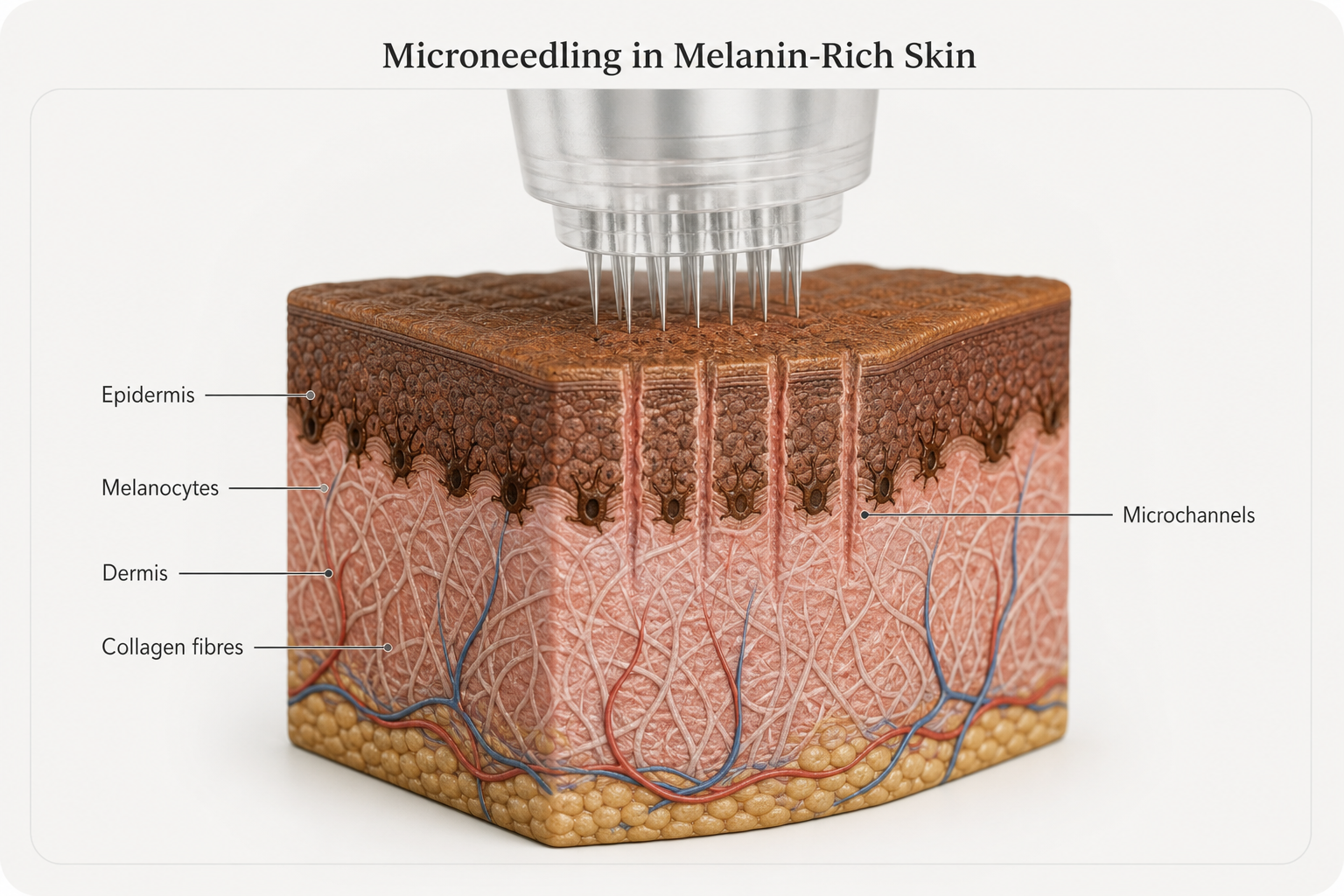

Microneedling is one of the most widely requested skin treatments for people with darker complexions, and for good reason — it addresses acne scars, uneven skin tone, enlarged pores, and skin texture without relying on the heat-based mechanisms that make many laser treatments unsuitable for melanin-rich skin. However, microneedling on Black and darker skin is not a one-size-fits-all procedure. The risk of post-inflammatory hyperpigmentation (PIH), the importance of practitioner experience, and the need for protocol adjustments all make informed decision-making essential before booking a session.
Key Takeaways
- Microneedling is generally considered suitable for Fitzpatrick skin types IV–VI when performed correctly, but the risk of post-inflammatory hyperpigmentation is real and must be actively managed.
- A mechanical (not heat-based) treatment, standard microneedling carries a lower pigmentation risk than ablative lasers or IPL for darker skin tones — but it is not risk-free.
- Conservative needle depth, appropriate session spacing, and pre-treatment brightening agents are the three pillars of a safe protocol for skin of color.
- RF microneedling introduces thermal energy and requires additional caution — insulated needles and carefully calibrated energy settings are essential for darker skin.
- Choosing a qualified practitioner with documented experience treating darker skin tones is as important as the treatment itself.
Why Darker Skin Requires a Different Approach
The Fitzpatrick scale classifies skin into six phototypes based on melanin content and the skin’s response to ultraviolet exposure. Fitzpatrick skin types IV–VI — which include many people of South Asian, Middle Eastern, Latin American, East Asian, and African descent — contain a higher density of melanocytes, the cells responsible for producing melanin. These reactive melanocytes are more easily triggered by inflammation or trauma, which is precisely what microneedling intentionally creates in a controlled way.
When the skin experiences a micro-injury, the body’s wound-healing response can stimulate melanocytes to overproduce pigment as a protective reaction. This is the mechanism behind post-inflammatory hyperpigmentation — a darkening of the skin at the site of inflammation that can persist for weeks or months if not properly managed. For people with Fitzpatrick types IV–VI, this response is more likely and can be more pronounced than in lighter skin types, which is why the standard protocols used for fairer skin are not automatically appropriate.
Importantly, this does not mean microneedling is unsafe for Black skin or other darker complexions. It means the treatment must be adapted — in terms of needle depth, session frequency, pre-treatment preparation, and aftercare — to account for how melanin-rich skin responds to controlled injury.
How Microneedling Works and Why It Suits Skin of Color
Microneedling — also called collagen induction therapy — uses a device fitted with fine needles to create thousands of microscopic channels in the skin’s surface. These controlled micro-injuries trigger the body’s natural wound-healing cascade, stimulating the production of collagen and elastin without removing or ablating the skin. The result, over a series of sessions, is improved skin texture, reduced acne scarring, refined pores, and a more even complexion.
The key advantage for skin of color is that microneedling is a mechanical (not heat-based) treatment. Unlike ablative lasers, fractional CO2 lasers, or intense pulsed light (IPL), microneedling does not deliver thermal energy into the dermis. Heat-based treatments carry a significantly higher risk of hypopigmentation — permanent lightening of the skin — in darker skin types, because the thermal damage can destroy melanocytes irreversibly. Microneedling avoids this mechanism entirely, making it one of the more appropriate collagen-stimulating options for Fitzpatrick types IV–VI when performed with the correct protocol.
Medical-grade microneedling devices, such as the FDA-cleared SkinPen, are designed for clinical use and allow precise control over needle depth — a critical variable when treating darker skin. At-home dermarollers, by contrast, offer no such precision and carry a meaningfully higher risk of uneven trauma, infection, and PIH in darker skin tones. Needles longer than 0.25 mm should not be used at home on any skin type, and this caution is especially relevant for melanin-rich skin.
Conditions Microneedling May Help With on Darker Skin
Microneedling has a broad range of applications that are particularly relevant to concerns common in darker skin tones. Atrophic acne scars — the depressed, pitted scars left by inflammatory acne — respond well to collagen induction therapy because the new collagen produced during healing gradually fills and remodels the scar tissue. Multiple clinical studies have demonstrated meaningful improvement in acne scarring across a range of Fitzpatrick types, including types IV and V.
Hyperpigmentation and uneven skin tone are among the most frequently cited concerns in people with darker complexions, and microneedling can help by improving cell turnover and enhancing the absorption of topical brightening agents applied during or after treatment. Melasma — a form of hormonally influenced hyperpigmentation — can also be addressed with microneedling, though this condition requires particular care because aggressive treatment can worsen pigmentation rather than improve it.
Additional conditions that may respond to microneedling include enlarged pores, fine lines, skin laxity, stretch marks on the body, and hair loss (when combined with appropriate topical treatments). The treatment is also used on body areas such as the shoulders, back, and décolletage — areas where acne scarring and stretch marks are common — though body microneedling on darker skin follows the same conservative principles as facial treatment.
The Risks: What Darker Skin Needs to Watch For
Post-inflammatory hyperpigmentation is the primary risk of microneedling for people with Fitzpatrick types IV–VI. Estimates from clinical practice suggest PIH occurs in approximately 2–5% of standard microneedling cases across all skin types, but this figure rises in darker skin tones, particularly when needle depth is too aggressive, sessions are spaced too closely, or aftercare is inadequate. PIH is not permanent in most cases, but it can take several months to resolve and may require active treatment with brightening agents.
Keloid formation is a separate concern for individuals with a personal or family history of keloid scarring. Keloids are raised, thickened scars that grow beyond the original wound boundary and are significantly more common in people of African, Asian, and Hispanic descent. Anyone with a history of keloid or hypertrophic scarring should discuss this explicitly with their practitioner before undergoing microneedling, as the controlled trauma of the procedure could theoretically trigger keloid formation in susceptible individuals. This is not an absolute contraindication for everyone, but it requires careful individual assessment.
Hypopigmentation — lightening of the skin — is a rare risk with standard microneedling but becomes more relevant with RF microneedling, where thermal energy is involved. Other risks applicable to all skin types include infection, prolonged redness, and skin sensitivity, all of which are minimised by proper technique, sterile equipment, and appropriate aftercare.
RF Microneedling for Darker Skin: Additional Considerations
RF microneedling combines the mechanical action of standard needling with radiofrequency energy delivered through the needle tips into the dermis. This dual mechanism can produce more significant skin tightening and collagen remodelling than standard microneedling alone, making it appealing for concerns such as skin laxity and deeper acne scars. However, the thermal component introduces additional risk for darker skin tones.
The radiofrequency energy in RF microneedling generates heat in the dermis, and if that heat reaches the epidermis — where melanocytes are concentrated — it can trigger PIH or, in more severe cases, hypopigmentation. Devices designed for use on darker skin use insulated needles, which confine the thermal energy to the deeper dermal layers and reduce epidermal heating. Energy settings must also be calibrated conservatively for Fitzpatrick types IV–VI. Clinical data suggests PIH rates with RF microneedling in darker skin may be higher than with standard microneedling, with some estimates in the range of 10–15% when protocols are not appropriately adjusted.
RF microneedling can be used safely on darker skin tones, but it demands a practitioner with specific experience in treating skin of color with this technology. Devices such as the Vivace and Profound are used in this context, and the choice of device, energy level, needle depth, and session spacing should all be tailored to the individual’s Fitzpatrick type and skin history.
Pre-Treatment Preparation for Darker Skin Tones
A structured pre-treatment period of four to eight weeks is strongly recommended for people with Fitzpatrick types IV–VI before undergoing microneedling. The goal of this preparation phase is to reduce baseline melanocyte activity so that the skin is less reactive when the treatment is performed.
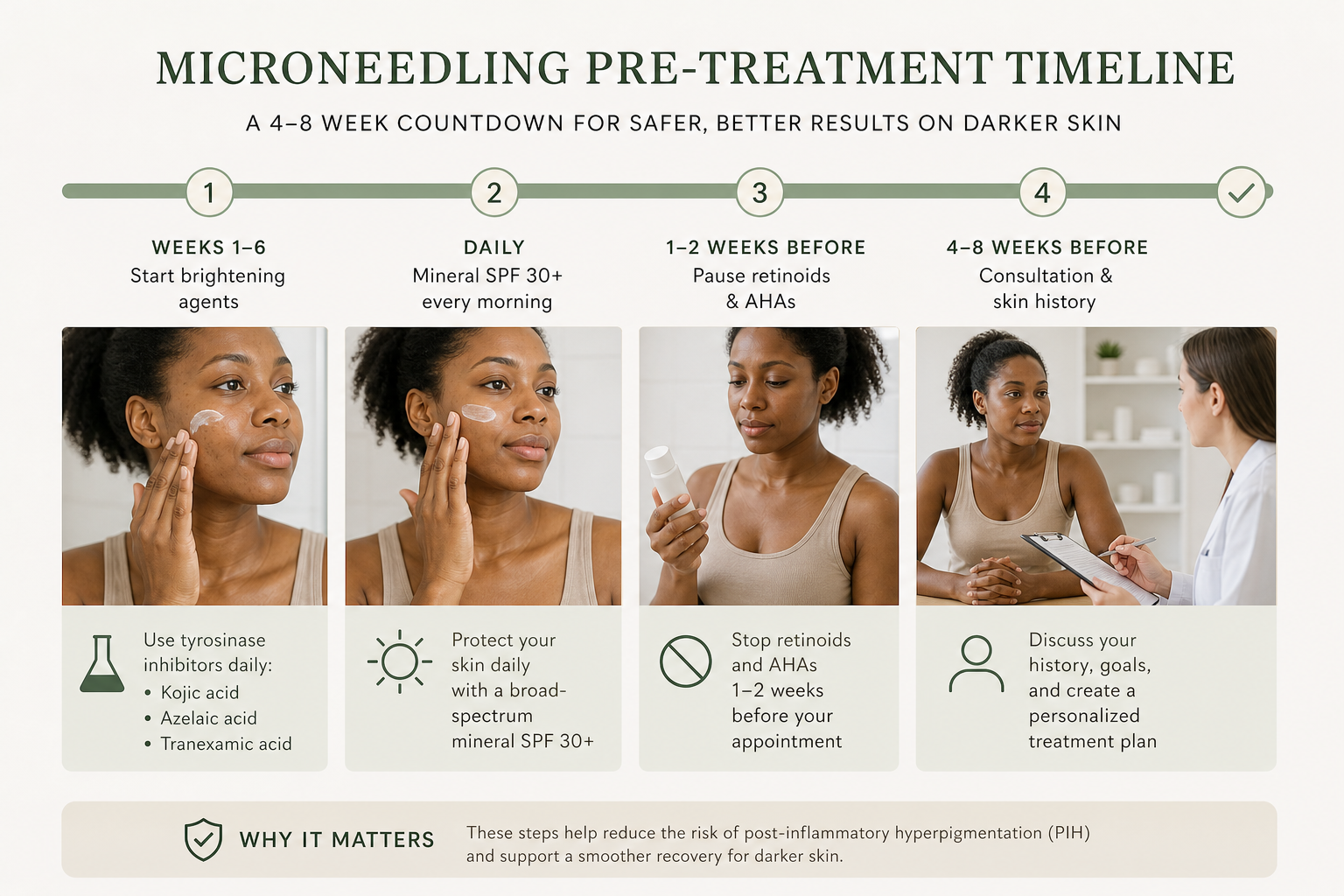
Pre-treatment brightening agents — also called tyrosinase inhibitors — work by blocking the enzyme tyrosinase, which is essential for melanin production. Commonly used agents include hydroquinone (typically at 2–4% concentration), kojic acid, azelaic acid, tranexamic acid, vitamin C (ascorbic acid), and niacinamide. A qualified practitioner will recommend an appropriate combination based on the individual’s skin type, sensitivity, and any existing pigmentation concerns. These agents are typically applied nightly or twice daily during the pre-treatment window and are paused in the days immediately before the procedure.
Retinoids and exfoliating acids (AHAs and BHAs) should generally be paused one to two weeks before treatment, as they increase skin sensitivity and can heighten the inflammatory response. Sun protection is non-negotiable throughout the pre-treatment period — daily application of a broad-spectrum mineral sunscreen with SPF 30 or higher, ideally containing zinc oxide or titanium dioxide, helps prevent existing pigmentation from worsening and reduces the skin’s baseline inflammatory state.
A thorough consultation should include a review of keloid history, current medications (including blood thinners and isotretinoin), any active skin conditions, and recent procedures. Active acne, active herpes simplex, or any open skin infection are contraindications that must be resolved before treatment proceeds.
The Low and Slow Protocol: What It Means in Practice
The phrase “low and slow” describes the guiding principle for microneedling on darker skin: use a conservative needle depth, lower energy settings (for RF), and longer intervals between sessions rather than attempting aggressive results in fewer treatments. This approach prioritises skin safety over speed and is supported by clinical experience in treating Fitzpatrick types IV–VI.
For darker skin tones, a conservative needle depth of 0.25–0.75 mm is typically recommended for facial treatment, compared to depths of up to 2.5 mm that may be used on lighter skin types for deeper scar remodelling. Shallower depths reduce the degree of epidermal trauma and the associated inflammatory response, lowering the risk of PIH without eliminating the collagen-stimulating benefit of the treatment.
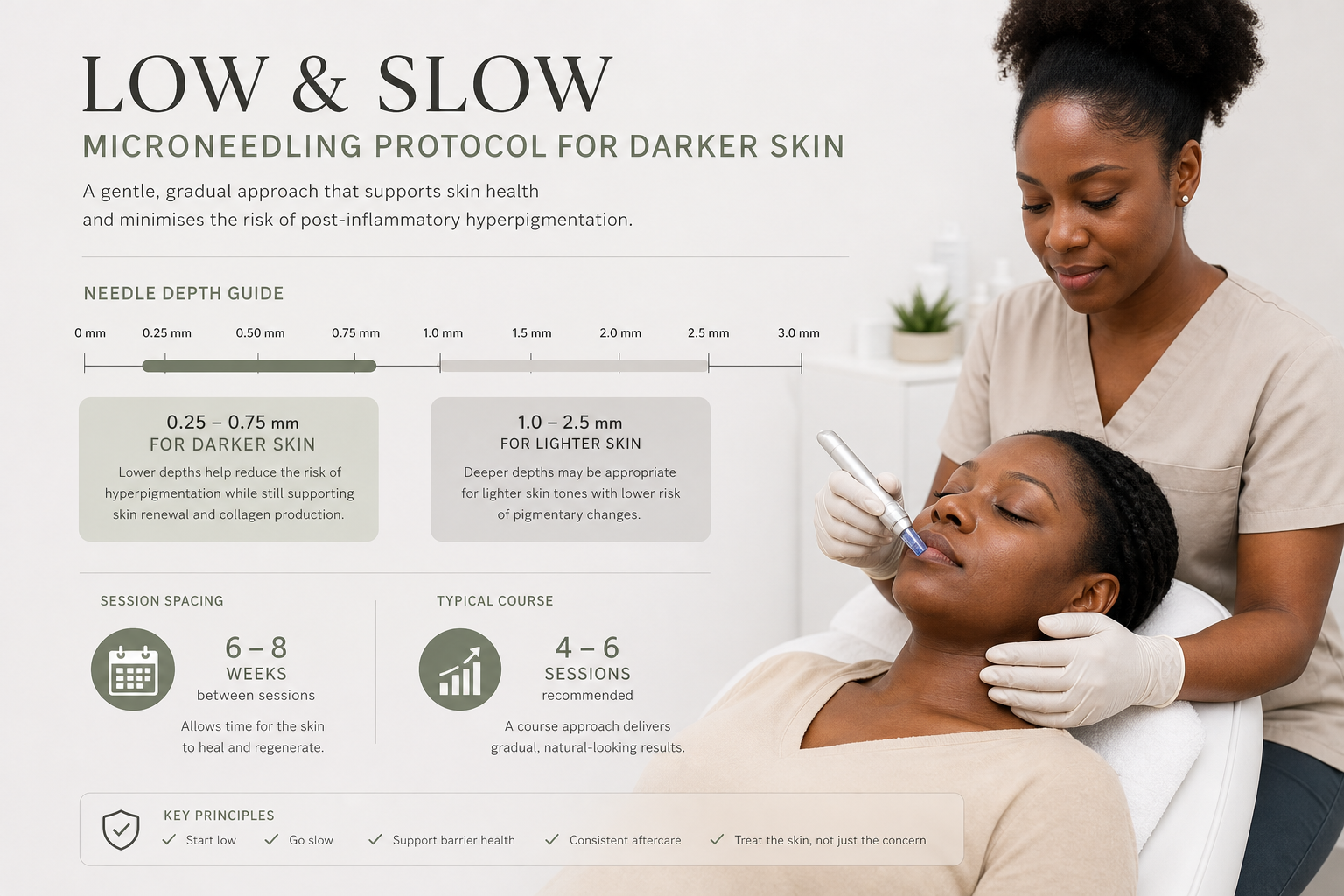
Session spacing for darker skin is generally six to eight weeks, compared to the four-week intervals sometimes used for lighter skin types. This extended interval allows the skin to complete its healing cycle fully before the next treatment is introduced. A typical course for acne scarring or significant hyperpigmentation may involve four to six sessions, with visible improvement often becoming apparent after the second or third session. Results continue to develop for several months after the final session as new collagen matures.
The stamping technique — where the device is pressed vertically into the skin rather than dragged across it — is generally preferred over gliding for darker skin, as it produces more uniform micro-injuries and reduces the risk of epidermal tearing or uneven trauma that could trigger PIH.
Post-Treatment Aftercare for Melanin-Rich Skin
The 24–72 hours immediately after microneedling are the period of highest PIH risk for darker skin tones, because the skin’s inflammatory response is at its peak. Aftercare during this window should focus on calming the skin, maintaining hydration, and avoiding anything that could prolong or intensify inflammation.
Avoid washing the face for six to eight hours after treatment. When cleansing does resume, use a gentle, fragrance-free cleanser and lukewarm water. Calming serums containing growth factors, aloe vera, centella asiatica (cica), or hyaluronic acid can be applied to support the skin barrier and reduce redness. Retinoids, AHAs, BHAs, and vitamin C in its more acidic forms should be avoided for at least one week post-treatment to prevent irritation.
Broad-spectrum mineral sunscreen — specifically formulations containing zinc oxide or titanium dioxide — should be applied daily from the day after treatment and continued throughout the recovery period. Chemical sunscreen filters can be irritating to freshly treated skin, making mineral formulations the preferred choice. Sun exposure should be minimised for at least two weeks post-treatment, as UV exposure on inflamed skin is one of the most reliable triggers for PIH in darker skin tones.
If PIH does develop despite these precautions, it is important not to panic or attempt aggressive self-treatment. A practitioner experienced in skin of color can recommend appropriate brightening agents, adjust the protocol for subsequent sessions, or extend the interval between treatments. PIH following microneedling is typically manageable and resolves with appropriate care, though the timeline varies between individuals.
Microneedling vs. Laser Treatments for Darker Skin
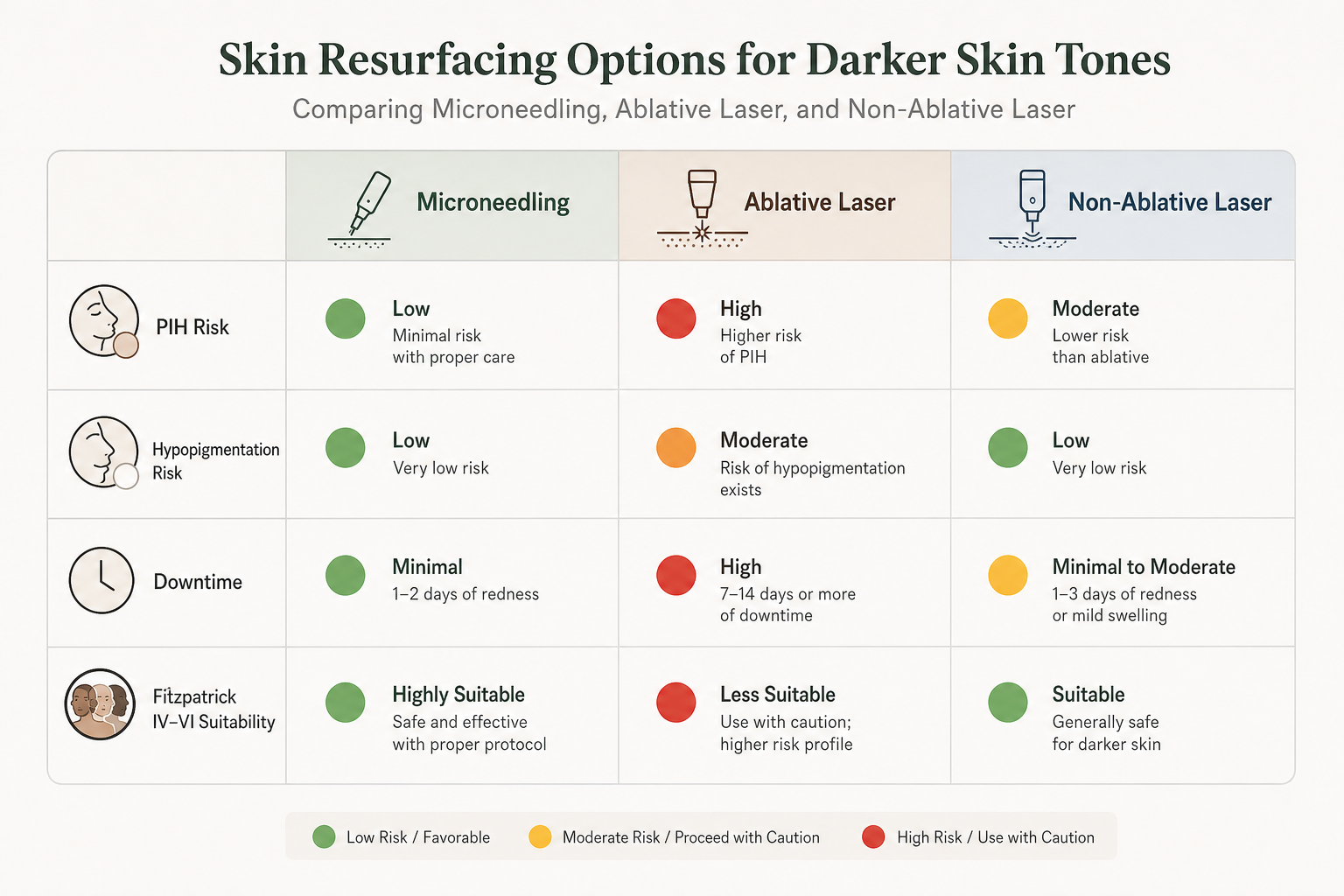
| Feature | Standard Microneedling | Ablative Laser (e.g., CO2) | Non-Ablative Laser (e.g., Nd:YAG) |
|---|---|---|---|
| Mechanism | Mechanical micro-injury | Thermal ablation of skin layers | Targeted thermal energy, no ablation |
| PIH risk (darker skin) | Low–moderate (2–5%) | High | Moderate (device and settings dependent) |
| Hypopigmentation risk | Very low | High (can be permanent) | Low–moderate |
| Suitability for Fitzpatrick IV–VI | Generally suitable with adjusted protocol | Generally not recommended | Suitable for some types with caution |
| Downtime | 1–3 days redness | 7–14 days or more | 1–5 days |
| Sessions typically needed | 3–6 | 1–3 | 3–6 |
| Collagen stimulation | Yes | Yes (significant) | Yes (moderate) |
Ablative laser resurfacing is generally not recommended for Fitzpatrick types IV–VI because the thermal damage it causes to the epidermis carries a high risk of both PIH and permanent hypopigmentation. Non-ablative lasers such as the Nd:YAG and pico lasers are more appropriate for darker skin tones and are sometimes used alongside microneedling in combination protocols, but they still require careful calibration and an experienced operator. Microneedling remains one of the most accessible and lower-risk collagen-stimulating options for darker skin when performed correctly.
How to Choose a Practitioner for Darker Skin
The practitioner’s experience with skin of color is arguably the most important factor in determining whether microneedling is safe and effective for a darker-skinned patient. A qualified practitioner treating Fitzpatrick types IV–VI should be able to demonstrate specific knowledge of PIH prevention, appropriate needle depth selection, and pre- and post-treatment protocols for melanin-rich skin.
When vetting a provider, consider asking the following questions during consultation: How many patients with Fitzpatrick types IV–VI have you treated? What pre-treatment protocol do you recommend for my skin type? What needle depth will you use, and why? What is your approach if PIH develops after treatment? Do you use insulated needles for RF microneedling? A practitioner who cannot answer these questions clearly, or who proposes the same protocol for all skin types, may not have sufficient experience with skin of color.
Green flags include a practitioner who recommends a pre-treatment brightening phase, who proposes a conservative initial session to assess the skin’s response, and who has before-and-after photographs of patients with similar skin tones. Red flags include a practitioner who dismisses PIH risk, who proposes aggressive needle depths at the first session, or who has no visible experience treating darker skin tones. Seeking out practitioners who specifically advertise expertise in skin of color, or who are listed in directories focused on this area, can help narrow the search.
Myths About Microneedling and Dark Skin
Myth: Microneedling always causes darkening on Black skin. This is not accurate. PIH is a risk, not an inevitability. With appropriate pre-treatment preparation, conservative technique, and diligent aftercare, many people with Fitzpatrick types V and VI complete a full course of microneedling without developing significant PIH. The risk is real and must be managed, but it does not make the treatment universally unsuitable.
Myth: Darker skin cannot benefit from microneedling because it is already thick and resilient. Skin thickness and resilience are not the same as immunity to treatment side effects. Darker skin tones have reactive melanocytes that respond to inflammation differently from lighter skin types — this is a biological characteristic, not a sign of fragility or strength. The treatment works through the same collagen induction mechanism in all skin types; the protocol simply needs to be adjusted.
Myth: At-home dermarollers are a safe alternative to clinic microneedling for darker skin. At-home rollers with needles longer than 0.25 mm carry a meaningful risk of uneven trauma, infection, and PIH in darker skin tones. They cannot replicate the precision of a medical-grade device, and they are used without the pre-treatment preparation and post-treatment monitoring that a clinical setting provides. For Fitzpatrick types IV–VI, professional treatment is strongly preferable.
Frequently Asked Questions
Is microneedling safe for African American skin?
Microneedling can be safe for African American skin — which typically falls within Fitzpatrick types V and VI — when performed by an experienced provider using a conservative needle depth, appropriate session spacing, and a structured pre- and post-treatment protocol. The primary risk is post-inflammatory hyperpigmentation, which can be significantly reduced with proper preparation and aftercare. A thorough consultation is essential before proceeding.
Why is my skin darker after microneedling?
Temporary darkening after microneedling in darker skin tones is usually post-inflammatory hyperpigmentation — the skin’s melanocytes have responded to the controlled trauma by producing excess pigment. This is more likely if the needle depth was too aggressive, sessions were too close together, sun protection was inadequate, or the skin was not properly prepared beforehand. In most cases, PIH resolves over weeks to months with appropriate brightening agents and sun protection. Contact your practitioner if you notice significant darkening after treatment.
How many microneedling sessions are needed for acne scars on darker skin?
Most people with acne scarring on darker skin tones require four to six sessions spaced six to eight weeks apart to see meaningful improvement. Results continue to develop for several months after the final session as collagen remodelling progresses. The exact number of sessions depends on the depth and type of scarring, the individual’s skin response, and the needle depth used per session.
Can microneedling help with hyperpigmentation on dark skin?
Microneedling may help improve hyperpigmentation by stimulating cell turnover and enhancing the penetration of topical brightening agents. However, it must be approached carefully, as the treatment itself can trigger PIH if not performed correctly. Melasma in particular requires a cautious approach, as aggressive treatment can worsen this condition. A practitioner experienced in skin of color should assess whether microneedling is appropriate for your specific type of hyperpigmentation.
Is RF microneedling safe for dark skin?
RF microneedling can be used on darker skin tones, but it requires additional precautions compared to standard microneedling. Insulated needles, conservative energy settings, and an experienced practitioner are essential to minimise the risk of PIH and hypopigmentation from the thermal component of the treatment. The PIH risk with RF microneedling is generally considered higher than with standard microneedling in darker skin types when protocols are not carefully adjusted.
What should I put on my skin before microneedling if I have dark skin?
A pre-treatment course of tyrosinase inhibitors — such as hydroquinone, kojic acid, azelaic acid, tranexamic acid, or niacinamide — is typically recommended for four to eight weeks before microneedling on darker skin. These agents reduce baseline melanocyte activity and lower the risk of PIH. Retinoids and exfoliating acids should be paused before treatment. Daily broad-spectrum mineral sunscreen is essential throughout the pre-treatment period. Your practitioner should prescribe or recommend a specific regimen based on your skin type and concerns.
Making an Informed Decision About Microneedling for Your Skin
Microneedling is a well-established collagen induction therapy that can deliver meaningful improvements in acne scarring, skin texture, hyperpigmentation, and pore size for people with darker skin tones — including Fitzpatrick types IV, V, and VI. Its mechanical rather than thermal mechanism gives it a meaningful safety advantage over ablative lasers for melanin-rich skin, and the evidence base for its use in skin of color continues to grow.
The treatment is not without risk. Post-inflammatory hyperpigmentation is a genuine concern that requires active management through pre-treatment preparation, conservative technique, appropriate session spacing, and diligent aftercare. Keloid history, RF microneedling’s thermal component, and the choice of practitioner are all factors that must be carefully considered before proceeding.
If you have darker skin and are considering microneedling, the most important step is to book a consultation with a qualified practitioner who has demonstrable experience treating skin of color. Bring your skin history, discuss your concerns openly, and ask specifically about the protocol they would use for your Fitzpatrick type. A practitioner who takes these questions seriously and provides clear, individualized answers is far more likely to deliver a safe and effective outcome than one who applies a generic approach to all skin tones.
